The Rebbe & The Printers
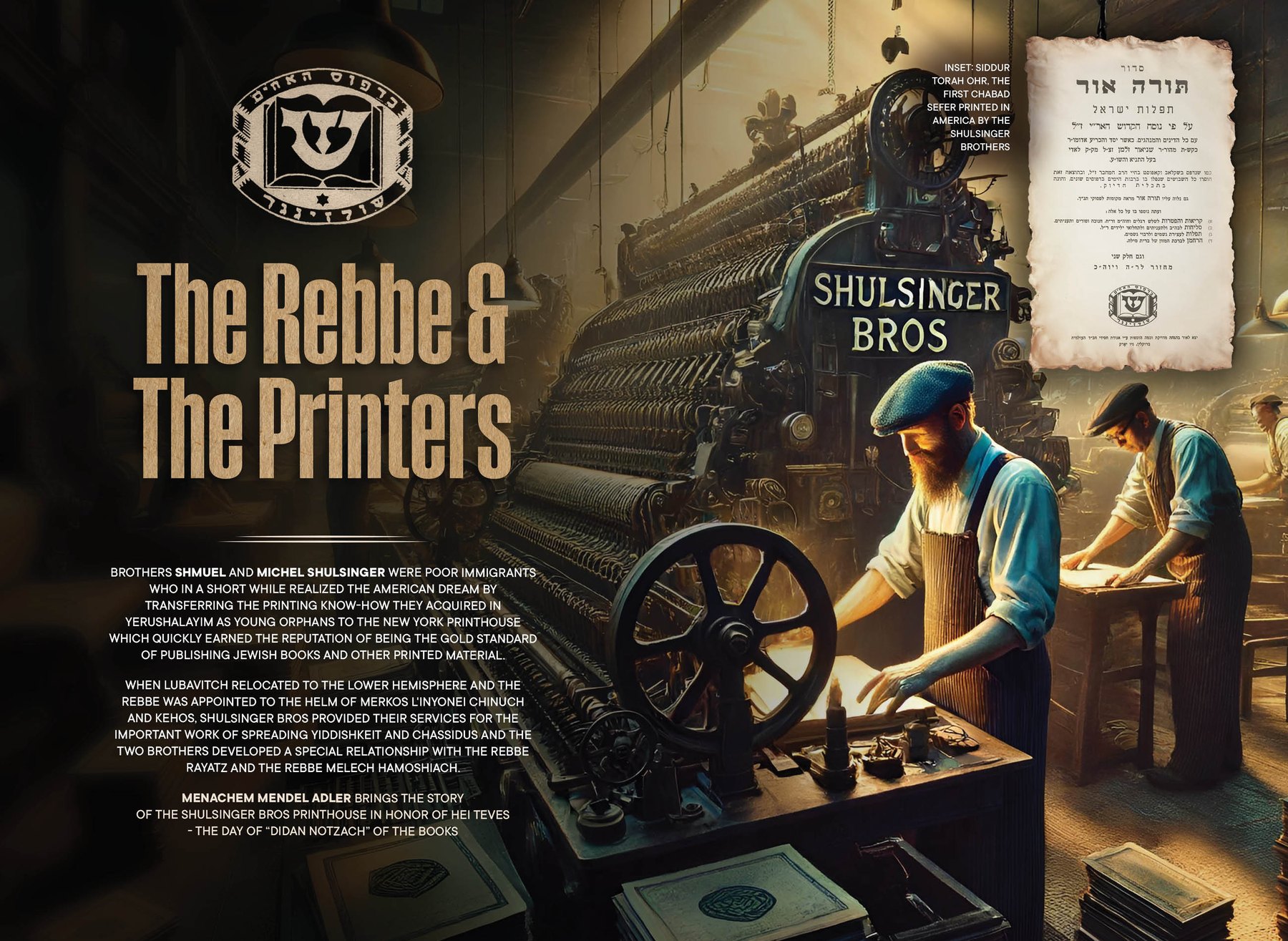
Brothers Shmuel and Michel Shulsinger were poor immigrants who in a short while realized the American dream by transferring the printing know-how they acquired in Yerushalayim as young orphans to the New York printhouse which quickly earned the reputation of being the gold standard of publishing Jewish books and other printed material. When Lubavitch relocated to the lower hemisphere and the Rebbe was appointed to the helm of Merkos L’Inyonei Chinuch and Kehos, Shulsinger Bros provided their services for the important work of spreading Yiddishkeit and Chassidus and the two brothers developed a special relationship with the Rebbe Rayatz and the Rebbe Melech HaMoshiach. Menachem Mendel Adler brings the story of the Shulsinger Bros printhouse in honor of Hei Teves – the day of “Didan Notzach” of the books
On Yerushalayim’s Rechov Yaffo there was a printing house. This print shop was ancient and run by Refael Chaim Cohen, a communal figure of Persian origin and a member of the Sefardic community committee in the city. His print shop was founded in 5673/1913 and printed important and valuable sefarim. He was a pioneer in Eretz Yisrael in printing calendars with pages that were pulled off.
Two boys worked at the print shop as apprentice printers, Shmuel and Michel Yehoshua Shulsinger, the grandchildren of R’ Shmuel Houminer, one of the builders of the first neighborhoods outside the walls of the Old City. They did all the dirty work with the machines. Thanks to their talent and diligence they eventually learning the printing trade.
In 5688, the brothers used their father’s American citizenship to get American visas and emigrated to America. Upon their arrival, they settled in Brooklyn where Shmuel ran a small print shop called “National Printing Co.” After some time, he bought the store and had his brother join him as his partner. The shop’s name was changed, to “Shulsinger Bros.” a name which came to be the brand name in the world of Jewish printing.
In its early years, the store moved among several locations in East New York where the first books were printed under the new name. In 5697, the store moved to Manhattan. In its new location, it became more firmly established and became a significant publishing house among American Jewry. Some considered it the continuation of the famous Romm print house of Europe.
The brothers had good business sense and they decided to expand the print shop and also publish their own books. The first book of their own that they printed was, Yid un Velt which was followed by many other sefarim including the Shisha Sidrei Mishna which was printed in 1944.
The brothers’ expertise was in publishing quality reprints of old sefarim. The printing process including a careful cleaning and polishing of the original print, along with exacting proofing. In addition, over many years, the print shop was close to being the exclusive producer of Jewish calendars used by mosdos and organization in the U.S.
The Holocaust greatly affected the printing of sifrei kodesh in Europe from where many sefarim were imported to the US. The Shulsinger brothers, seeing the urgent need, filled the vacuum and began printing from scratch many sifrei kodesh which were immediately grabbed up. Over the years, the print shop became a known and esteemed firm and was even known as the “biggest Jewish print house in the world.”
They printed monumental fundamental works that could be found in every Orthodox Jewish home in America like the Five Books of the Torah, Shas Bavli, Mishnayos, etc. According to a cautious assessment, over the years in operation they printed over 100 million volumes.
Within A Week, I Brought 1000 Siddurim
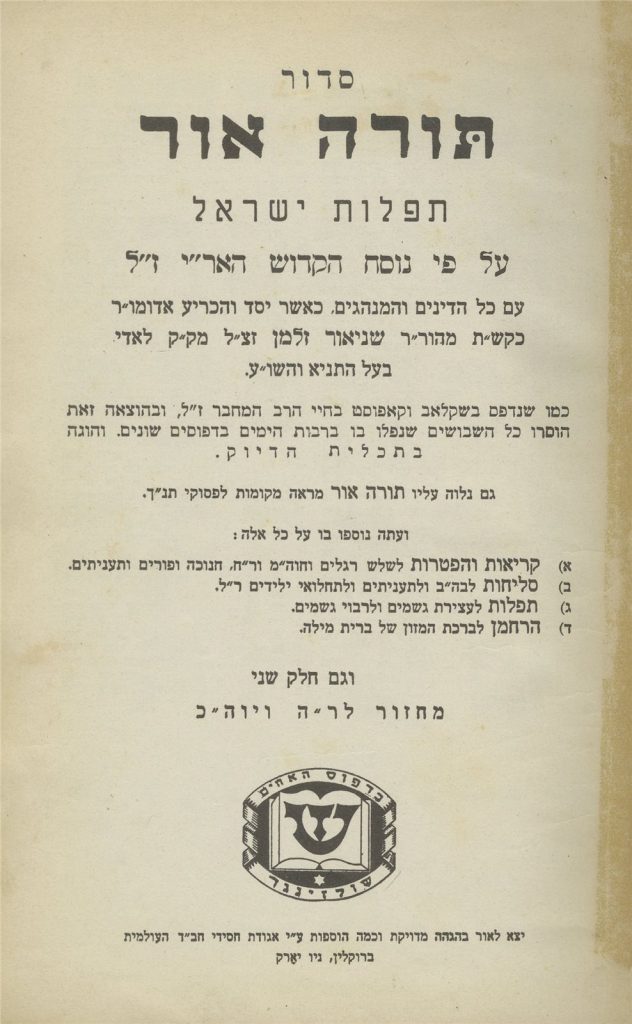
The Shulsinger’s connection with Lubavitch began some time after the Rebbe Rayatz arrived in the US. One of the vital things the Rebbe dealt with was reprinting the Chabad siddur in the nusach of the Alter Rebbe. The Rebbe Rayatz said to print the Torah Ohr siddur that was composed by Rabbi Avrohom Dovid Lavat, grandfather of the Rebbe, about fifty years earlier.
The work of having the siddur printed was given to the Rebbe. During the summer of 1941, the Rebbe carefully reviewed dozens of minhagim, various versions, grammar and printing mistakes, and fixed them. He was helped by the Rebbe Rayatz and the elder Chassidim.
In Elul 5701, after concerted effort, the Rebbe asked the Shulsinger brothers to print the siddur. Along with a list of corrections and additions that he put together, he gave them a list of precise instructions regarding the type of paper, binding, number of copies, etc. In addition, the Rebbe surprised them and asked the brothers to print and bind the siddur within one week so he could pray from it on the Yomim Noraim.
That was a great surprise but despite the great difficulty involved, the brothers managed to do a task which was nearly impossible. “We said we would do all we could to fill this order at the requested time,” Mr. Shmuel Shulsinger later said. “I got the siddur and within a week, I brought 1000 printed, bound siddurim.” It was printed by Rosh Hashana 5702.
Over the years, the Rebbe challenged the Shulsinger brothers quite a bit with tight schedules and complicated jobs. Although they weren’t Lubavitcher Chassidim, they did all they could to satisfy the Rebbe and fill his requests.
The Chassidic writer, R’ Yehoshua Dubrawsky, who worked for many years at the Shulsinger print shop, testified, “More than once we saw them go all out to fulfill the Rebbe’s wishes. They were willing to print a sefer or kuntrus with the greatest possible speed, even if the speed involved seemed impossible. It’s important to remember that in those days, the printing work was done manually, with cast lead, and not with the speedy computerized systems of today. Thanks to this, they were privileged to have very warm kiruvim from the Rebbe Rayatz and as a natural result and continuation, from the Rebbe.”

The Rebbe, on his part, valued and cherished the work of the Shulsinger brothers and in one of his letters praised their professional work, “The famous printers, the Shulsinger brothers, who merited and succeeded in publishing the Torah of Rishonim and Acharonim with splendor and beauty, external and internal, starting from the Chamisha Chumshei Torah, Shas Bavli, etc. They are also the first to print the Alter Rebbe’s Likkutei Torah in addition to other sifrei Chassidus.”
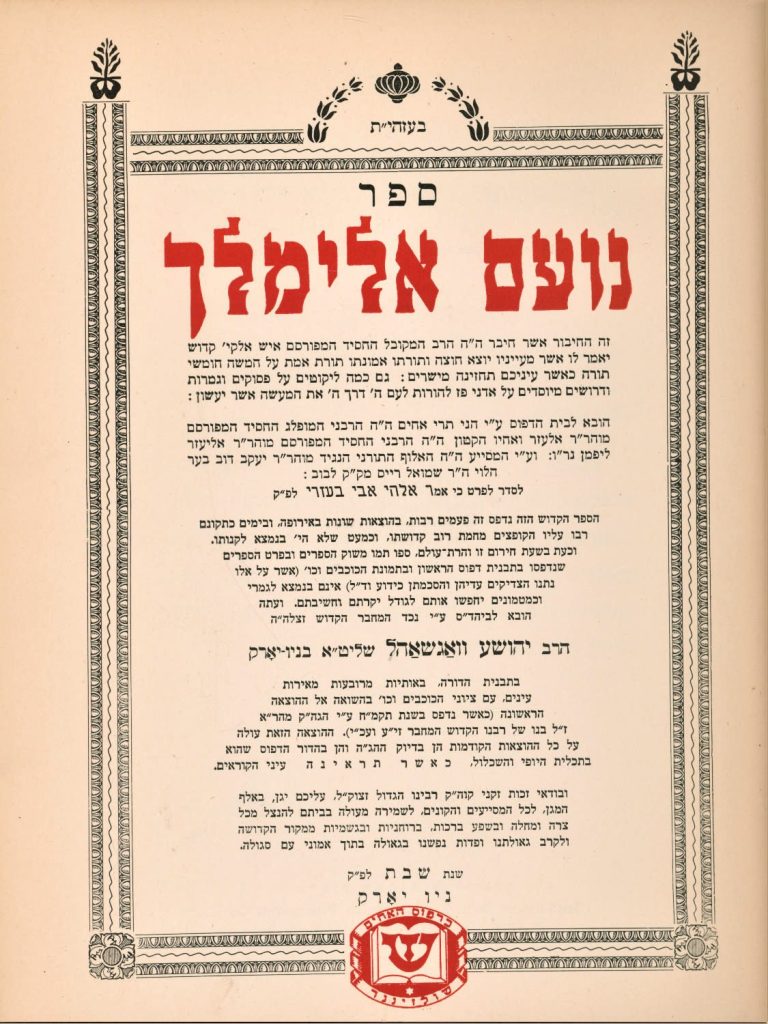
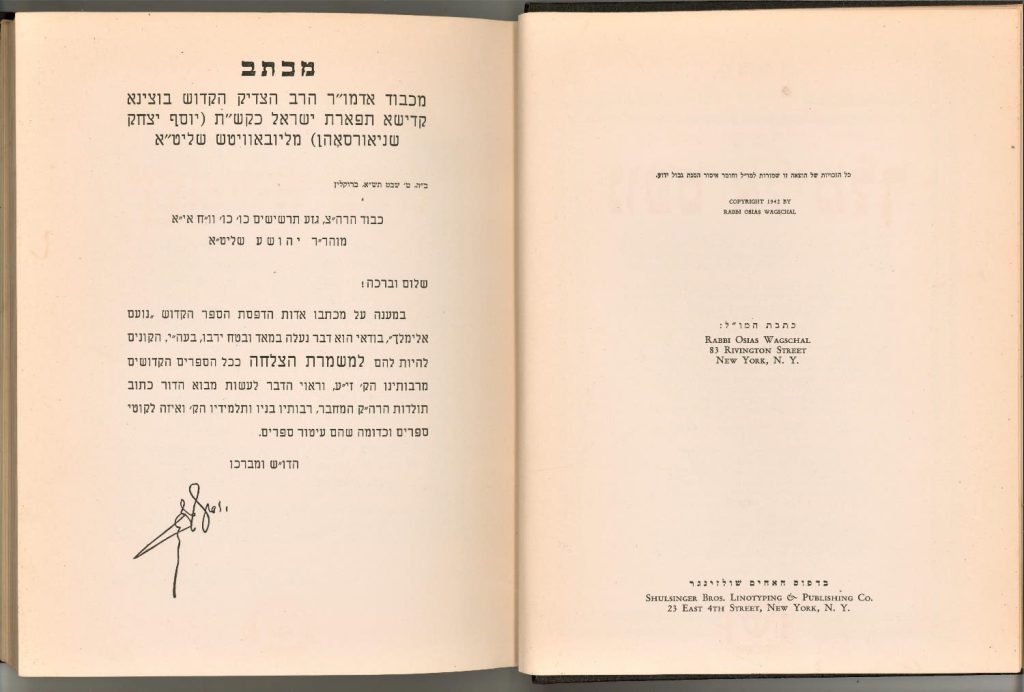
Worthy of mention is also the rare, special commendation they received from the Rebbe Rayatz for the sefer Noam Elimelech that they printed. “In response to your letter about printing the holy book Noam Elimelech it is surely a very lofty thing, and certainly there will be many, with Hashem’s help, who will buy it so that it be for them a protection for hatzlacha, like all the holy sefarim from our holy Rebbeim, may their merit protect us.”
Long Conversations
The Rebbe Rayatz founded Kehot in 5702 and the Rebbe was appointed editor in chief. That set the stage for the printing of many additional Chabad sefarim at the print shop as well as kuntreisim, maamarei Chassidus and sichos of the Rebbe Rayatz which were published occasionally.
“Since that time, we became close as friends,” wrote Mr. Shmuel Shulsinger in his memoirs about his relationship with the Rebbe, “and we were the printers for Kehot and all the other publications of Lubavitch Chassidim. In addition to books, we published a monthly in Yiddish, Shmuesen far Kinder and in English, Talks and Tales. All these were printed in large quantities and even distributed for free in order to spread Lubavitch Chassidus among the masses.
“While R’ MM was still the head secretary of his father-in-law, the Admor, R’ Yosef Yitzchok, we would always meet in the office and talk about print matters and our expenses. Even when he was crowned as Admor of Lubavitch, he would invite me to his office where he received petitioners. We would sometimes talk until the morning without paying attention to the secretary’s ringing. He once even said in Yiddish, ‘Let us speak.’ And twice a year, before Rosh Hashana and Pesach, he would send us divrei bracha.”
A number of Chabad Chassidim worked at the print shop over the years and they contributed to the cooperative efforts between the print shop and Kehot, and helped produce special editions that needed to be published within designated times as the Rebbe requested. Besides R’ Dubrawsky there was also R’ Tzvi Hirsh Gansbourg.
The brothers’ print shop not only controlled the local market of Torah sefarim, they also handled the publication of scholarly Torah journals published by various Jewish organizations in America. This is how R’ Dubrawsky was exposed to the content of these journals before they were printed. He occasionally came across articles critical of Chabad and he would try to delay the publication until the offending article was deleted or, alternatively, he submitted an article reacting to it within the same publication so as not to create a situation in which an article would be publicized against Lubavitch without an immediate, appropriate response.
Since these were important Torah journals that were written by the cream of Judaism in America, R’ Dubrawsky did not rely on himself and usually reported to the Rebbe about the articles and what he thought the response should be. The Rebbe often edited his responses and there were even times that the Rebbe practically dictated the entire response which was later published under some pen name.
Difference In Prints
In the winter of 5709, the in-house publications gradually began moving to a different print shop, someplace cheaper and closer. First, it was the kuntreisim that were printed there and slowly the rest of Kehot’s sefarim were printed there.
R’ Mordechai Schusterman, who dealt with the printing of the kuntreisim in the new print shop, spoke about the system that evolved.
“Among the kuntreisim that the Shulsinger brothers printed and among those I printed, there was a difference in pagination. As is known, the Rebbe would add sources to a maamar at the bottom of the page. At Shulsinger brothers, they would use a little alef, beis, gimmel etc. to mark the footnote within the maamar. At my typesetting shop, I didn’t have those little letters, so what did I do? Before the source cited in the footnote, I would add two or three words from the maamar that the footnote pertained to in italics. The disadvantage was that in the maamar itself there was no indication that there was a footnote at the bottom of the page.
“After I brought the lead plates of the Kuntrus of Beis Nissan 5709 to the print house in Manhattan, which had to be printed the next morning, Rabbi Chodakov called me and said he had just spoken to the Rebbe Rayatz who asked why there was no indication in the maamar indicating a footnote at the bottom of the page.
“R’ Chodakov suggested that I add an asterisk within the maamar between the words that the footnote belonged to. I somehow arranged the rows with asterisks and early the next morning I bought them to the print shop in Manhattan and exchanged the old rows with the new ones with asterisks. After that, that’s how it was done.”
Over the years, the relationship between the Rebbe and the Shulsinger brothers was maintained in unique fashion.
Pleasantly And Firmly
It was an ordinary day in one of the early years of the Rebbe’s nesius. R’ Dubrawsky went to work as usual and saw that the Shulsinger brothers were agitated. In loud tones they railed against Lubavitch and said the Rebbe was more zealous than the Satmar Rebbe. It took them time to calm down and only then, could they relate what happened.
At that time, the Shulsinger Brothers were pioneers, and for quite some time they were the only ones, who published Jewish calendars. They printed tens of thousands of calendars for Jewish organizations and Jewish communities in America. The Shulsinger Brothers always wrote “Yom HaAtzmaut” (Israel’s Independence Day) for the date 5 Iyar. When they brought the proofs for the Chabad calendar to R’ Chodakov, he noticed those two words near the date for 5 Iyar and he erased them so vigorously that not a trace remained of them.
When the proofs were back at the printer and they noticed this correction, they went crazy. They were simply furious and they resolved that this would not be allowed. They set off for 770, went into R’ Chodakov office, and began shouting: How could he?! They screamed all the reasons why noting Yom HaAtzmaut on the calendars was a sacred principle for them. R’ Chodakov, in his usual unflappable manner, heard them out and when they were done, he responded calmly though resolutely, saying that it was out of the question for those words to appear on a Chabad calendar. Without getting into a debate with them, he let them know that if they would stand on their principle, Chabad’s order was canceled.
The brothers realized they had wasted their efforts in the wrong place because he wouldn’t change his mind, and they decided to go over his head. Within a short time they had an appointment with the Rebbe. This is what the Shulsinger brothers told R’ Dubrawsky that day: First of all, how could Yom HaAtzmaut be erased from the calendar? The day the state was established was in the way of “ischalta d’Geula” (the beginning of Geula)! How could it be ignored?! The Rebbe responded sharply: “Ischalta d’Geula”? Chas v’shalom! It was not the ischalta d’Geula!
The brothers began arguing: Nu, fine, it wasn’t the beginning of the complete Geula, but it was still a day of salvation and redemption for the Jewish people! Why should it be erased?
Again, the Rebbe responded sharply: No! It was not a day of salvation and redemption for the Jewish people! (There were some other phrases which I don’t remember now). The brothers remained dissatisfied and even raised their voices (as they themselves told me), and tried to plead with the Rebbe that even if it wasn’t an actual yeshuah for the Jewish people, it was at least a festive day, and it represented salvation for many Jews.
The Rebbe also raised his voice. The talmidim in the yeshiva who sat in the small zal, not far from the yechidus room, said that they could hear the voices of the brothers the entire time, but then suddenly they could hear the Rebbe speaking loudly.
This is what the Rebbe said which the brothers repeated to me: “Not only is it not the ischalta d’Geula, not only is it not a yom tov and a day of salvation for the Jewish people, etc. – but it delayed the Geula for [such and such] a number of decades!”
The brothers said that they couldn’t remember the number of years the Rebbe said, even though it was just a day or two after the yechidus.
That was when the brothers finally understood how the Rebbe regarded Zionism, with a “fanaticism that was greater than Satmar’s” – while at the same time, how precious every Jew is to the Rebbe, even those who still believe in Zionism.
He Angrily Refused To Approach
The Purim farbrengen of 5717 took place a few months after the war in Sinai, when Israel was victorious and captured large parts of the Sinai desert. But under pressure from the UN, they were forced to concede them.
The Rebbe was deeply involved in what was going on during the war and at the Purim farbrengen he said, “There are those who claim that the main means of sustaining the existence of the Jewish people during galus is through diplomatic means and other natural means such as politics… One needs to know that the sustained existence of the Jewish people was never dependent on diplomacy and goyim never had a say and power over Jews. The only balabus over Jews is G-d.”
The Rebbe expanded on this and sharply insisted that the sustained existence of Eretz Yisrael depends solely on G-d, and its existence can only be in a supernatural manner.
The Shulsinger brothers were present during this sicha. At the end of the sicha, Michel Yehoshua went over to the Rebbe and received cake from him. When the Rebbe asked where his brother Shmuel was, he began to stammer. The Rebbe turned to the secretary, Rabbi Leibel Groner and saw him laughing. Seeing this, the Rebbe also began to laugh and said that they needed to see to it that the brother didn’t run away. R’ Groner said the other brother was upset with the Rebbe.
The Rebbe said, “He should come over to me and then he will feel more appeased.” Despite this, he still refused to go over and the Rebbe said, “He doesn’t want to greet me? Ach!”
The Rebbe’s sharpness in the sicha was not pleasing to Shmuel who was a Zionist, heart and soul.
The next day, R’ Groner went to the Rebbe’s room and the Rebbe said, “Why should he [Shmuel Shulsinger] be angry about what was said at the farbrengen? I spoke about saving Eretz Yisrael and what does he care how this happens, whether through G-d or, l’havdil, through Eisenhower? The main thing is that Eretz Yisrael be saved.”
The Rebbe added as far as diplomacy, “It is the case that if they go the way of diplomacy, there will be tzaros. What can I do when he doesn’t hold of this?” The Rebbe concluded with a smile, “I don’t hold of diplomacy.”
R’ Groner said to the Rebbe that Shmuel Shulsinger’s complaint was that the Rebbe said that Eretz Yisrael won’t be able to sustain its existence further if it went through diplomatic means. To this, the Rebbe reacted, “Indeed, according to the natural order this is so, and this is what I said on Sunday [at the Purim farbrengen], that in Eretz Yisrael it can only be supernatural. What can I do when he doesn’t hold of this way? With him it’s only stubbornness! I have no reason to change my view! I already said my view!”
During the farbrengen, a photographer took two photos. In one, the Rebbe is seen looking at him and smiling broadly, with the crowd looking in that direction. In the other picture, the Rebbe is smiling toward R’ Groner.
The Rebbe’s Personal Concern
Despite the polar differences in views, the Rebbe kept up with the Shulsinger brothers throughout the years, taking a personal interest in how they were doing, their health, work and their families.
In Cheshvan 5716, Michel Yehoshua’s son became bar mitzva. The Rebbe sent a non-standard letter in which he blessed the bar mitzva boy and his family:
“I was pleased to find out that your son Amiel will enter the yoke of mitzvos on Thursday of parshas Vayeira. I hereby express my wishes for you and your wife that your son always recognize that his bar mitzva is only the start of his acceptance of the yoke of Torah and the yoke of mitzvos and may he go from strength to strength in Torah study and the fulfillment of mitzvos.”
The Rebbe went on to address the parsha when the boy would have an aliya to the Torah, learning lessons from it and strengthening the message that Torah is eternal and it is specifically through it that one attains success.
In 5719, Michel Yehoshua visited Eretz Yisrael. His health at the time wasn’t that good and the Rebbe wrote to him, “I inquired by his brother about him and his health and the main thing, his state of mind. I hope that when you receive my letter there would have already been a significant improvement, especially knowing his love for our holy land, may it be built and established speedily in our days by Moshiach Tzidkeinu. Surely the air of Eretz Yisrael ought to affect him in the desired direction, not only with health and an increase of strength in the neshama but also in the health and added strength of the body, which are dependent on one another. I would be pleased to receive good news from you in all that was mentioned.”
In the same letter, the Rebbe asked him to visit the Vocational School in Kfar Chabad and the fledgling printing house that was founded there, citing his expertise and experience as the basis for his ability to advise and direct them in this undertaking.
The Rebbe’s care and concern about his health were also expressed in other ways, as can be seen from the telegram that the Rebbe sent to Rabbi Ezriel Zelig Slonim asking him to speak to a top doctor in Yerushalayim, Professor Halperin, to treat Michel Yehoshua.
Interestingly, when the letter was submitted to the Rebbe for his signature, the Rebbe added between the words “I know him” and the word “personally” in his own handwriting.
The Shulsinger brothers visited the print shop at the Vocational School and then submitted their impressions to R’ Chodakov. R’ Chodakov wrote their professional opinion to the dean of the yeshiva, R’ Efraim Wolf, who requested better protection of the machines and maintaining them. “In general, the report was satisfactory, but they also noted some necessary improvements that they certainly pointed this out to you as well,” wrote R’ Chodakov.
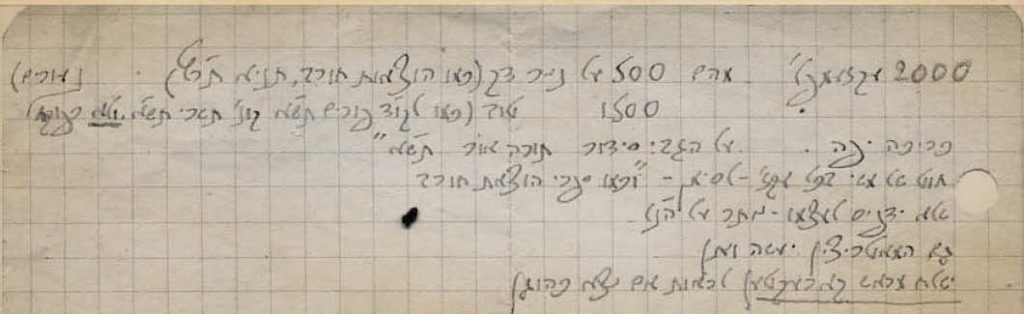
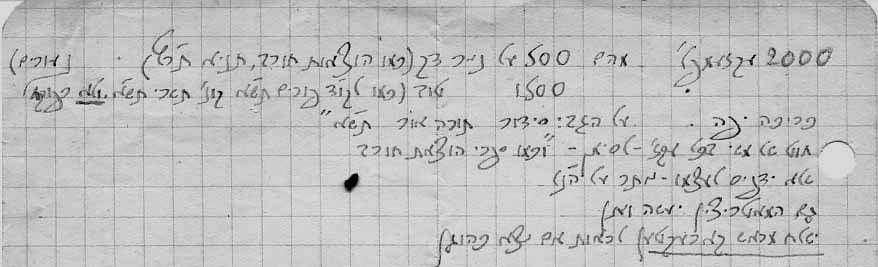
A few years later, in 5726, Shmuel went to visit Eretz Yisrael again and this time too, he visited the print shop in Kfar Chabad. As a result of his visit, he pledged to donate $500 to buy letters which were needed for the print work.
All The Effort Is Worthwhile For A ‘Yashar Koach’ From The Rebbe
One of the sefarim published by Shulsinger was Kesser Shem Tov in the edition that was published in 5733. At the time, hardly any Kehot sefarim were printed at their print house, but then something unusual occurred.
It began the morning of 24 Kislev. The members of the Vaad L’Hafotzas Sichos were called to R’ Chodakov’s office and he gave them instructions from the Rebbe to print the sefer Kesser Shem Tov in a new edition so it would be ready within a month, for 24 Teves.
In order for the sefer to be ready on time, a lot of work was needed to collect material and cite sources as well as resetting the entire sefer anew for print. In addition, the Rebbe wanted the sefer to be printed with letterpress printing which was better quality and more expensive, but it was considered a slow and complex machine.
Since there was no way to complete the printing on a machine like this in a small print shop, they began looking for a larger print shop that had several of these machines so they could work simultaneously.
The Rebbe came into the picture at this point and said the sefer should be printed by Shulsinger. The only problem was the union which did not allow employees to work more than one shift, until four in the afternoon. This sefer needed to be worked on twenty-four hours a day.
R’ Zalman Chanin went to the print house to meet with Shmuel Shulsinger. He related:
“I spoke with the Mr. Shulsinger and he said he wasn’t at all interested in a project like this where the work was exhausting and time was short, and the print shop was usually closed during the gentile holidays and which goy, or l’havdil a Jew, would want to work on their day off? Mr. Shulsinger ended the meeting by saying he could not accept a job that he did not believe could be finished on time, especially when he knew that the Rebbe wanted the sefer by a certain time. ‘I don’t want to disappoint the Rebbe,’ he said. He suggested that we check the possibility of printing the sefer with offset machines.’”
In the end, it was decided to divide the work; the difficult work of preparing the lead plates would be done by Empire Press, and the actual printing would be done by Shulsinger. However, the Shulsinger brothers asked for a promise that they would be paid as soon as the work was completed without their having to bother to go to the offices of Merkos L’Inyonei Chinuch, which was customary in those days.
When Empire Press finished the work on the lead plates, the plates were taken to be printed at Shulsinger. Unfortunately, the trip was filled with bumps in the road and the lead letters jumped off the plates and the letters became jumbled.
R’ Dubrawski was the only employee of Shulsinger who could fix the letters and plates. For several days he worked on fixing the plates and ultimately restored the order. In the meantime, they managed to convince the Shulsinger brothers to allow workers to stay for a second and third shift and operate all the printing machines simultaneously for twenty-four hours.
In the end, the sefer was ready on time and gave much nachas ruach to the Rebbe.
R’ Zalman Chanin continued to relate:
“When I submitted the expenses to R’ Chodakov, I got it over the head. He did not want to consider the urgency of the job, the extra hours and the night shifts for which we had to pay many times more. He could not accept an amount of money like that. He wanted me to explain to the Shulsinger brothers that a price like that, ‘is not normal.’ Obviously, I didn’t go. I had personally promised them the money as soon as the job was done, without any arguments or complaints.
“I was young, married for half a year, and I had to pay for the printing in order to keep my word, but I didn’t have the nerve to argue with the Rebbe’s secretary. Having no choice I took all the bills and sent them directly to the Rebbe, circumventing R’ Chodakov.
“Thursday morning, Shmuel Shulsinger came to 770. He explained that he had accepted printing the sefer not to earn money, because from a business standpoint it wasn’t worthwhile; he accepted it just for the Rebbe. He knew that the Rebbe appreciated and valued exacting work like that which was done wholeheartedly and with the maximum speed. He added that he came to 770 to see the Rebbe’s satisfaction with his own eyes, as he put it, ‘In order to receive thanks and recognition from the Rebbe by a glance, one must come in person. You don’t get this in the mail.’
“When the Rebbe entered for the Torah reading, he met Mr. Shulsinger and said to him with a big smile, ‘Sholom and yashar koach for the sefarim.’
“Right after the Torah reading I received all the checks for all the printing expenses,” concluded R’ Zalman Chanin.
Shmuel Shulsinger attended the Yud Shevat farbrengen the following year. Between sichos, the Rebbe told him to say l’chaim and exchanged a few words with him regarding the printing of sifrei Chassidus.
Send Immediately To Shulsinger
One day, the Rebbe told R’ Aharon Chitrik to print the second booklet of “Likutei Pirushim U’Marei Mekomos l’Tanya” that he edited, by Pesach. The regular print house which printed the sefarim of Kehot said they could not do it within such a short amount of time.
The Rebbe issued a sharp response expressing his distress that a print house owned by members of Anash decided that it was impossible and instructed that he “deliver immediately to Shulsinger and tell him that this is in continuation of our discussion (during the farbrengen) – together with my request to publish soonest, and if possible for Rosh Chodesh Nissan, and following this they should give over to him the publication of the Ohr HaTorah from now on.”
R’ Aharon Chitrik related what happened next: “I arrived at the Shulsinger print house with work material. Shmuel Shulsinger did not recognize me and he called R’ Chodakov to find out whether I had the authority to give things to print on behalf, and at the expense, of Kehot. R’ Chodakov affirmed that Kehot was responsible to pay whatever I gave to print.
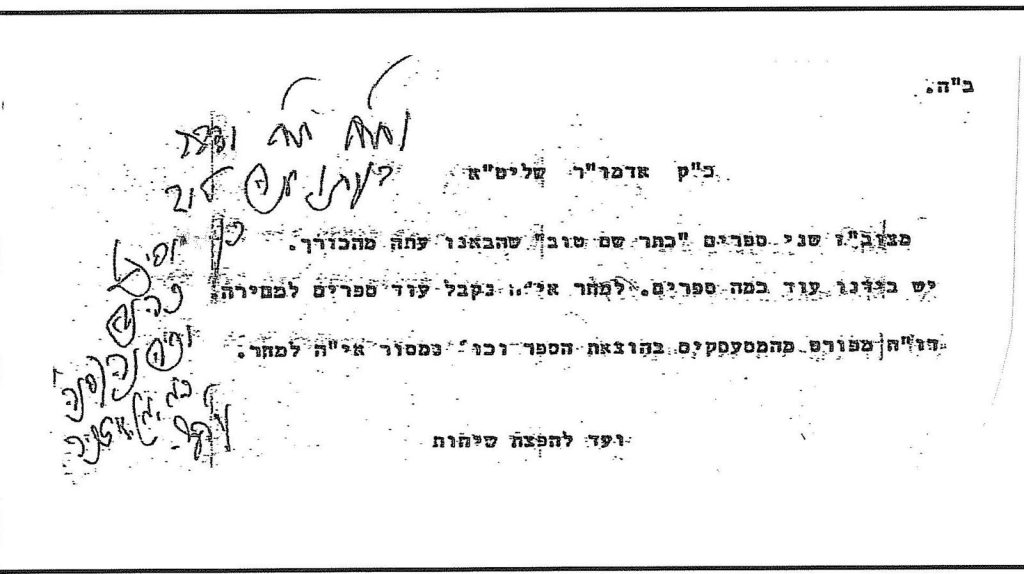
“Hearing this, Shmuel Shulsinger stopped all other jobs that were in print and began to prepare the publication of the booklet. This time, we even managed to get it done early. The booklet was ready by Shabbos Mevorchim Nissan.”
Printing The Talmud Yerushalmi
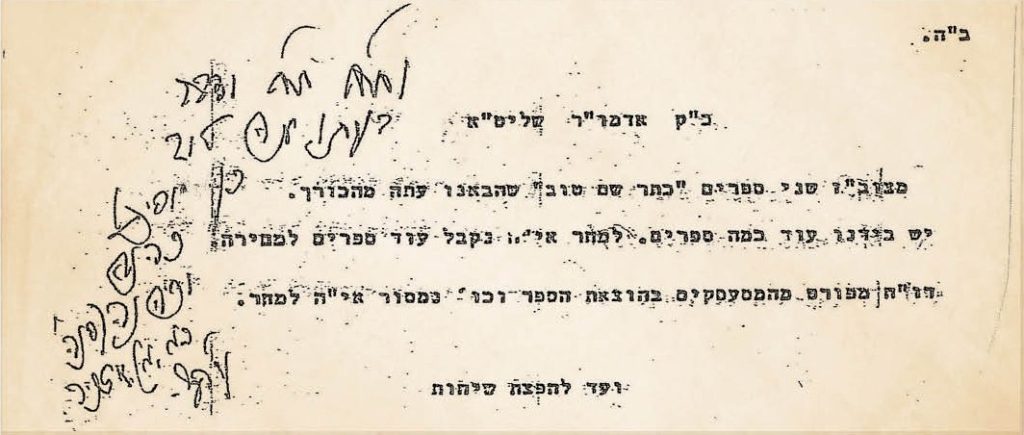
On 25 Teves 5732, the Rebbe wrote a thank-you letter to the Shulsinger brothers for the Avodas Yisrael siddur which they printed and sent to him. He also encouraged them to print more sefarim as they did in the past. Likewise, the Rebbe directed them to print the Talmud Yerushalmi in a beautiful manner as they did with other sefarim that they published.
* * *
Shmuel Shulsinger moved to Eretz Yisrael in the seventies and left the running of the print shop to his daughter. His brother, Michel Yehoshua, passed away in 5742 and the popular print shop lost its prestigious stature, although it continued to operate on a smaller scale.
Beis Moshiach #1441 • pp. 10-20
© 2026 Beis Moshiach Magazine. All rights reserved.
This article originally appeared in Beis Moshiach #1441. You are welcome to share it with friends and family by email or in print, provided that you do not change, add to or omit any part of it, you credit the author and Beis Moshiach, and you include a link to archive.bmoshiach.org (written out in full in printed copies).
To republish this article in a newspaper, magazine, book or website, please request permission in advance at [email protected].