Tell Him I See Nothing
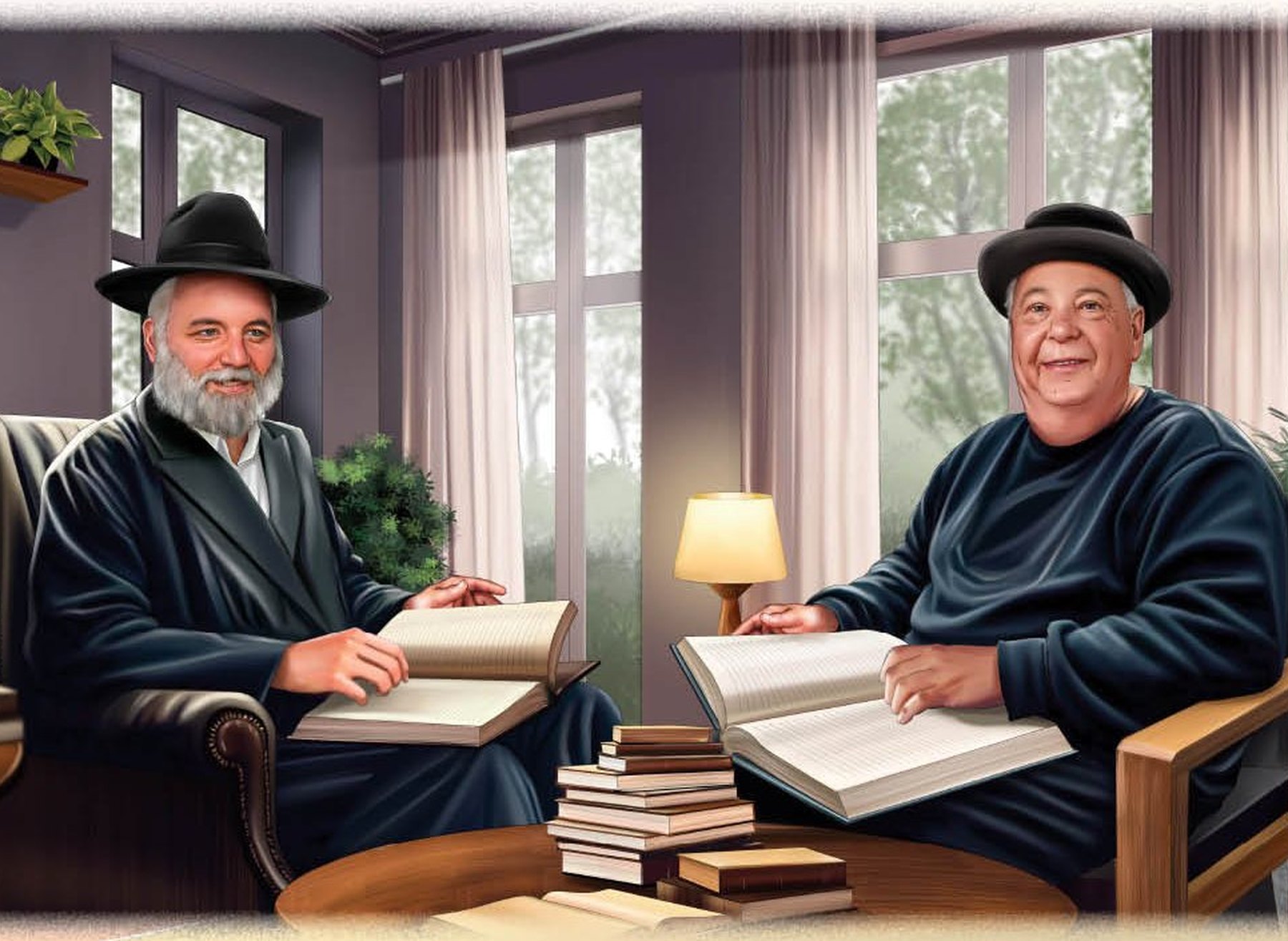
From the TzaddikStory.org collection
Hi, my name is Rabbi Pinchas Baumgarten. Today, I’m a shliach of the Rebbe in Buenos Aires, Argentina, where I work with the Jewish community. Last week I told you a miracle story of the Rebbe that I witnessed with my own eyes and was even zoche to take a part in it. Today, I want to tell you about two more miracle stories of the Rebbe that came about through my story!
* * *
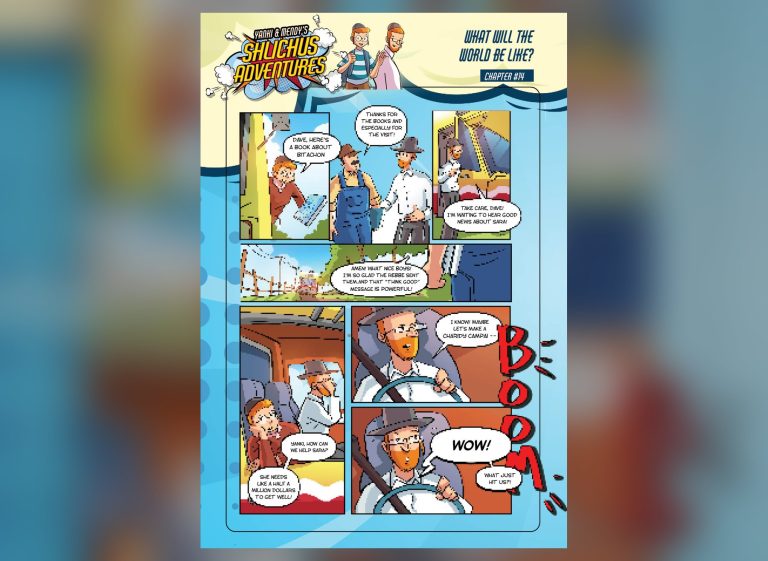
My cousin, Rabbi Levi Baumgarten, and his wife, Leah, work on an amazing project called Chabad on Wheels. They drive a special motorhome called a Mitzvah Tank all around Manhattan. Mitzvah Tanks are like little shuls on wheels, where people can stop by to do mitzvos, like putting on tefillin or getting a set of Shabbos candles to light at home in honor of Shabbos.
Manhattan is a super busy and crowded place, so it’s not always easy. But the Rebbe promised the “tankisten”—the people running the tanks—that he would be with them every step of the way, helping them succeed.
One day, while talking to someone on the Mitzvah Tank, my cousin met Charlie. Charlie put on tefillin for the first time, and quickly, they became good friends. From that day on, they stayed in close contact, and Charlie’s connection to Yiddishkeit kept growing.
* * *
Charlie was always full of questions, and over time, he and Rabbi Levi grew really close, like family. One summer, Levi invited Charlie to a barbecue at his home. As everyone sat around enjoying the food and chatting, Charlie turned to Rabbi Levi and asked, “Why should I eat only kosher? What’s the point?”
Rabbi Levi put down his plate, leaned back in his chair, and said, “You know, that’s a great question, Charlie. Let me share a story with you.”
He leaned in closer, speaking softly but with so much feeling. “Years ago, my cousin, Rabbi Pinny Baumgarten, brought a family to meet the Rebbe. The father in the family was very sick, and the doctors had told him there was no hope. When they met the Rebbe, the first thing he asked the man was, Will you keep kosher? The man didn’t even hesitate—he said yes right away.
“The Rebbe asked to see his stomach. He leaned in, looked closely, and said, I see nothing. After talking a bit more, the Rebbe asked him again, Will you keep kosher? The man promised. The Rebbe looked at his stomach a second time and repeated, I see nothing.
“Later, when the man returned to the doctor, he couldn’t believe what he was seeing. He compared two scans—one from before, showing how sick he was, and the new one, completely clear. The illness was gone.
“For a few months, the family kept kosher. But then, on one vacation, they decided to eat non-kosher food. Within days, he was sick again, and soon, the man passed away after all.
“That family never forgot the Rebbe’s words. Keeping kosher wasn’t just a promise—it brought blessings into their lives.”
Charlie sat quietly for a moment, his burger untouched. “It’s not just about food, is it?” he said softly. “It’s about something bigger.”
Rabbi Levi nodded, “Exactly,” he said with a gentle smile. “Eating kosher isn’t just about food—it’s about connecting with Hashem. When we eat kosher, we’re making a choice only to eat the foods Hashem wants us to eat. And when we wait between milk and meat, we’re following what Hashem has asked us to do. It turns something as simple as eating into a mitzva – a special way to bring Hashem’s blessings into our lives.”
“Think about it – we eat many times a day. Breakfast, lunch, dinner, snacks… It’s something we do all the time, and most people don’t even think about it. But when we eat the right way, with kosher food, and brachos, it’s not just eating anymore—it becomes something holy, something that makes Hashem happy. Every bite can be a huge mitzva, and that’s pretty amazing!

That barbecue changed everything for Charlie. Three years later, he still keeps kosher. Sometimes, he calls Rabbi Levi to ask about a kosher recipe or to double-check a kosher symbol on a package. It all began with one simple question, and one story that left a lasting impression. For Charlie, in that moment, he saw something—he saw something much deeper.
* * *
Story #3: When Rabbi Baumgarten from South America shared his incredible story, it quickly spread among other shluchim. It was so inspiring, it reminded me of something similar that happened in my own life.
My name is Rabbi Eliezer Gurkow, and I’m a shliach of the Rebbe in Canada. I’d like to share a story about my friend Larry, a man from my community who recently passed away—this last summer, just before the events of Simchas Torah 5785 (October 7th). But this story really began many years ago.
One day, I got a phone call from Larry. His voice sounded heavy with sadness, and his words shook me to my core. “Rabbi,” he said, “I’m just calling because I… wanted to say goodbye.”
“Goodbye…?” I asked, confused and concerned. “Why would you say that? Are you leaving the community? Are you going on a trip?”
He paused before explaining, “The doctors have diagnosed me with a rare and serious disease. There are only fifteen cases like mine in the entire world, and most of those people didn’t live more than six weeks after their diagnosis. It’s almost certain I’m going to die – so I just wanted to say goodbye while I still can.”
My heart sank. “Six weeks?” I asked, barely able to process what I was hearing.
“Yes,” he said quietly.
That very same day, I went to visit Larry at his home, determined to lift his spirits. His situation was heartbreaking – his wife had passed away not long before, and if the worst happened, his young children would be left alone, R”L.
I visited him often, trying my best to give him hope and strength during such a dark time. Each visit, I prayed that somehow, Hashem would send him the miracle he so desperately needed.
* * *
“The doctors want to try something new,” Larry explained, looking really worried. “It’s a treatment they’ve never tried on anyone with my issue before. They want me to be the first, like an experiment. They’re really pushing me to say yes. They even said that if I say no, it could make things worse – like people might think they’re not good doctors… But I don’t know if it’s the right thing to do.”
I thought for a moment. This wasn’t an easy decision. It was something that could affect Larry’s whole life. Finally, I told him, “I think you should write to the Rebbe, through the Igros Kodesh.”
I explained to him how, even though we cannot see the Rebbe physically, we can still ask for his advice and blessings by writing a letter and placing it in one of the Rebbe’s holy books of letters, the Igros Kodesh.
To be honest, I was a little nervous. This was such a serious situation. What if the page we opened wasn’t helpful or wasn’t connected to his problem? I didn’t want to give him false hopes or send him the wrong way. So, I said, “Don’t make your entire decision based on this. Use it as one piece of guidance, along with the advice you’ve already gotten from your doctors.”
He nodded and agreed. Together, we wrote a letter to the Rebbe, putting all his hopes and worries into words. I took the letter home, went to my set of Igros Kodesh, and opened a book at random. My heart was racing—would the Rebbe’s words feel like an answer just for Larry?
The answer we found was… amazing. The Rebbe had written to someone whose wife was very sick. In the letter, the Rebbe said not to try new, untested treatments, unless the main doctor could explain the idea to two other doctors, and all three agreed it was the right thing to do. The Rebbe also suggested sticking to the regular, proven treatments in the meantime – taking the regular pills instead of trying something new and risky.
When Larry read those words, his eyes lit up. “This is exactly what I needed to hear, Rabbi! It’s such a good answer! I have a plan now!” he said, sounding so relieved. It felt like the Rebbe’s guidance was meant just for him, even though it had been written many years before. It was late fall, or maybe early winter, but to us, it felt like a Chanuka miracle had just happened.
* * *
On Purim, I went to Larry’s house to read the Megilla for him. Somehow, he’d made it far past the six weeks the doctors had said he wouldn’t survive. It was a real miracle – everything the doctors knew about his illness said he shouldn’t have lived that long.
By Pesach, Larry felt well enough to join my family for the Seder. I remember sitting with him late at night, talking about life and the miracles he’d experienced. After that, I got busy, and I didn’t think about him as much.
A week before Shavuos, I called Larry to invite him for the holiday. When he answered the phone, he sounded different. “Rabbi, I’ve been in the hospital for six weeks,” he said.
I was shocked. It had been over a year since the doctors said he only had six weeks left to live, but he was still here!
When we met up, he told me that after the Pesach Seder, he started feeling sick and went to the hospital. The doctors found a serious blood problem they hadn’t known about before.
“I asked the doctors about that treatment they wanted me to do last year,” Larry said. “Now that they know about my blood issue, they admitted it would have been very dangerous. They said if I had done it, I definitely wouldn’t be alive today.”
His voice shook as he continued. “Rabbi, the doctors told me straight: if I’d done the treatment, I wouldn’t be here now. It would have been a disaster.”
He paused, then added with deep emotion, “Following the Rebbe’s advice saved my life!”
Then he said something I’ll never forget. “Rabbi, you need to believe more in your Rebbe,” he said, looking me right in the eye. “You told me to treat the Rebbe’s advice as just one idea, but I made it the only thing I listened to—and that’s what saved me.”
Honestly, until then, I felt that writing to the Rebbe through the Igros Kodesh could offer some comfort and some general advice… But this made me think differently. It showed me that the Rebbe’s words can be directed to very individual people and their issues and literally change lives, even now.
* * *
When I first met Larry, he didn’t care much about anything Jewish. His wife was more involved—she even made sure their sons had a Bar Mitzva – but Larry stayed in the background and didn’t really join in.
After his big miracle and a tough year of health problems, Larry started to change. Not overnight, but he began putting on tefillin every day. That was a huge step for him! He got more involved with our community, and we talked a lot about his story and the amazing things he’d been through. Even when he had more health problems, Larry had a special way of handling them. He would look at a picture of the Rebbe and say, “Rebbe, this isn’t okay. You’re a tzaddik, and you can help me – please take care of this.” And many times, his problems suddenly got better! His strong emuna in Tzaddikim was amazing for anyone to see.
Even when things were hard, Larry didn’t give up. During COVID, I had to tell him not to come to shul because it was too dangerous for him. But as soon as he could, he came back, even though it was really hard for him to walk. Larry always pushed himself to do more for his Yiddishkeit, even when he was very sick.
Larry lived more than 10 years longer than the doctors said he would. He followed the Rebbe’s words and trusted them completely. His life was truly a walking miracle.
As confirmed and heard first hand from Rabbi Pinny Baumgarten, Rabbi Levi Baumgarten, and Rabbi Eliezer Gurkow.
Beis Moshiach #1443 • pp. 53-57
© 2026 Beis Moshiach Magazine. All rights reserved.
This article originally appeared in Beis Moshiach #1443. You are welcome to share it with friends and family by email or in print, provided that you do not change, add to or omit any part of it, you credit the author and Beis Moshiach, and you include a link to archive.bmoshiach.org (written out in full in printed copies).
To republish this article in a newspaper, magazine, book or website, please request permission in advance at [email protected].