
An Irreplaceable Loss
During the shiva for Rebbetzin Chaya Mushka, hundreds of rabbanim and public figures came to be menachem avel the Rebbe Melech HaMoshiach. One of the topics the Rebbe emphasized when speaking with the comforters was about eshes ne’urim, explaining that the mourning over a person’s wife from youth is greater than any other. The editor of the Torah periodical Hamaor, Rabbi Meir Amsel, for example, mentioned the Gemara in Yoma about preparing another wife for the Kohen Gadol before Yom Kippur (so he could immediately remarry and do the avoda if his wife passed away), showing the Kohen Gadol needed such strength of character that despite his wife’s passing he could do the avoda of Yom Kippur properly, and do it b’simcha. He wondered, “How is this possible?” The Rebbe responded: “I cannot argue with you, as there’s an entire sugya in Sanhedrin (22a) about eshes ne’urim, stating ‘everything has a replacement except for eshes ne’urim.’” The sugya continues with the pasuk “And when I came from Padan, Rochel died,” showing that even though Yaakov still had other wives and children after Rochel’s passing, he still mourned Rochel’s passing because of the special quality of eshes ne’urim. To R’ Leib Tziviak, the Skolye Rebbe’s grandfather who mentioned being at the Rebbe’s chasuna, the Rebbe said marriage is eternal, and even after the histalkus, since the Gemara says nothing can replace eshes ne’urim, meaning she’s never forgotten – it’s eternal. The Rebbe shared similar ideas with Rav Yechezkel Grubner, saying the connection with eshes ne’urim never changes or fades, adding this has eternal power from the start of the marriage. The following is the Rebbe’s response to someone who apparently made certain suggestions to the Rebbe after the Rebbetzin’s histalkus. The Rebbe invoked the idea of eshes ne’urim in response:
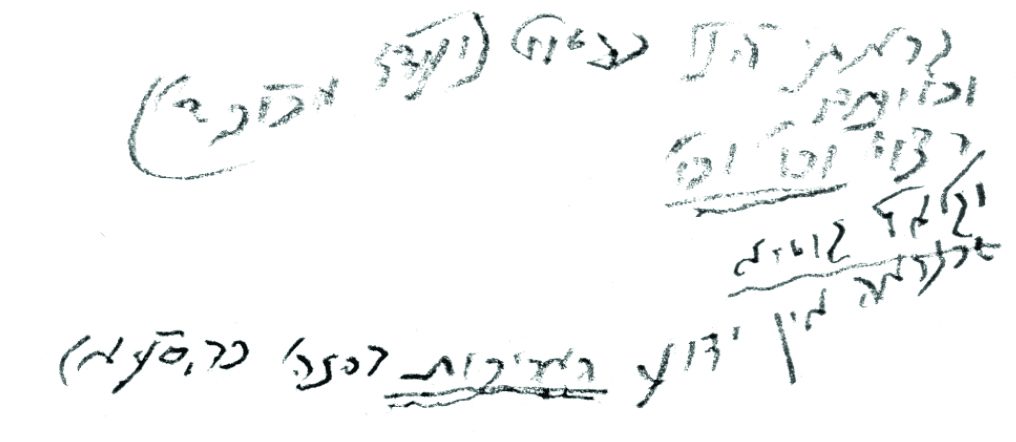
קראתי הנ”ל כפשוט (ועד”ז מכו”כ [ועל-דרך-זה מכמה וכמה] שי’) וכוונתם רצוי’ וכו’ וכו’
וקלאץ קושיא שכנראה אין ידוע האריכות בסנה’ (כב, סע”א)
Of course I read the above (as well as similar sentiments from many others שיחיו) and their good intentions are desirable etc. etc.
But there’s a klotz kashya (=an obvious and unignorable question) that the lengthy discussion in Sanhedrin (22a) discussing how an eshes ne’urim is irreplaceable is seemingly unknown to you.
Beis Moshiach #1448 • pp. 6-7
© 2026 Beis Moshiach Magazine. All rights reserved.
This article originally appeared in Beis Moshiach #1448. You are welcome to share it with friends and family by email or in print, provided that you do not change, add to or omit any part of it, you credit the author and Beis Moshiach, and you include a link to archive.bmoshiach.org (written out in full in printed copies).
To republish this article in a newspaper, magazine, book or website, please request permission in advance at [email protected].

