When the Words Get Stuck
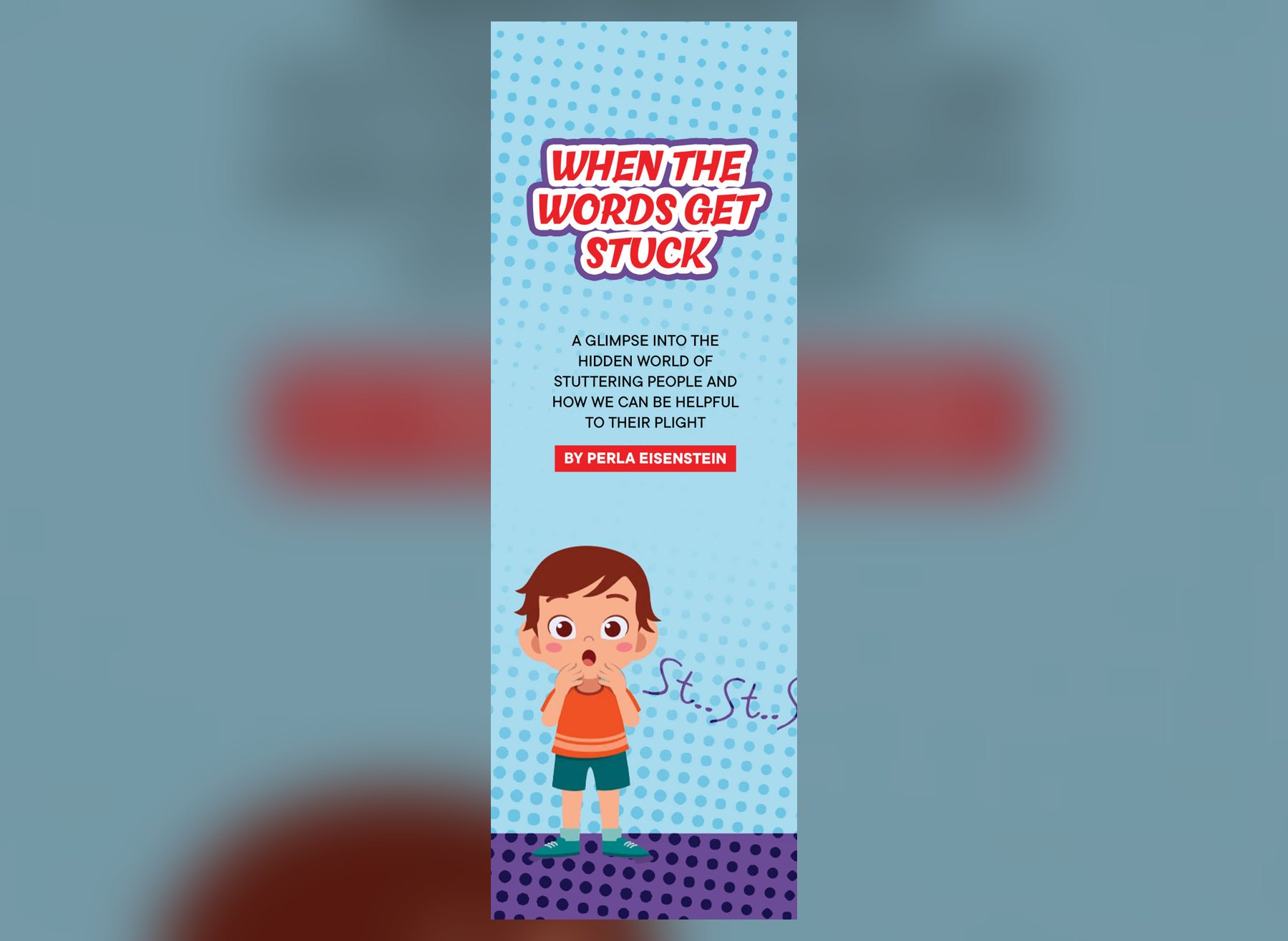
A Glimpse into the Hidden World of Stuttering People and How We Can Be Helpful to Their Plight
Stuttering is a speech disorder. Stuttering affects speech fluency, and people who stutter find it difficult to produce words freely and fluently. The phenomenon manifests in speech blocks and delays, repetition of syllables, or elongation of sounds and words, and it can occur in various circumstances. Stuttering appears with high frequency in children, but many people cope with the phenomenon throughout their lives.
Shira: I was born completely healthy, started speaking like everyone else, but something around age four began to change. It was a completely ordinary day in kindergarten, the teacher asked a question, and I very much wanted to answer. I started to answer, and suddenly I felt that it was difficult for me to get the sentence out of my mouth and it came out as a kind of stutter. At that moment, I saw everyone’s puzzled looks. One girl started laughing and everyone followed. I felt terrible. I ran to the side crying, I was very scared, I felt humiliated.
From that moment on, I was afraid to utter a word, and I only spoke when I had to. After some time, I saw the teacher talking to my mother with a serious face, I heard words like ‘speech therapist’ and ‘child development institute’… To a little girl, this sounded very frightening. I became a sad and withdrawn child. Playing less with friends, not participating, I just felt sad in my heart and became filled with fear about the future.
Complex Difficulty
The complexity of stuttering isn’t just physical. People who stutter may feel the impact of stuttering on various aspects of their lives:
The Physical Aspect: Stuttering manifests in physical speech blocks, which prevent the person from producing words in sequence. The block can occur in an early stage of vocal production (like difficulty producing initial sounds) or at a later stage (like repetitions of syllables or words).
Shira: My stuttering manifests in difficulty producing initial sounds, and it’s very hard, because when you need to say something, and your speech gets stuck, you think many times about what to say and try to be as concise as possible.
The Emotional Aspect: People who stutter may experience shame or social anxiety, especially when there’s a gap between their desire to speak and the physical difficulty that accompanies speech. The tension and anxiety may worsen the stuttering. Many people who stutter experience challenges with self-confidence. The difficulty in speaking fluently damages confidence during conversation (especially if there are negative reactions from the environment, like impatience or unpleasant comments). Moreover, stuttering can harm one’s sense of competency and sometimes cause internal conflicts, especially if the person who stutters experiences frustration or lack of success in coping with the difficulty. Many people project ‘strength’ outwardly, but sometimes the feeling of inner pain and emotional difficulties are a great challenge.
Shira: Today, children with fluency issues sometimes receive a support teacher in kindergarten, but in the past, the system gave less support to struggling children, and I was alone in coping. I was so ashamed to be different, to not succeed in doing the basic thing that every human being does – speaking. There were always girls who laughed at me, but over the years there were good friends who defended me and good teachers who gave me warm and patient treatment.
The Social Aspect: Stuttering can affect social communication. People who stutter may fear judgment and criticism and avoid expressing their opinions or avoid social situations that require speaking, such as: lectures, conversations, or social meetings. Often there are judgmental or impatient reactions toward people who stutter, and the feeling of alienation or lack of acceptance can make things even harder, increasing feelings of loneliness or low self-worth.
The Occupational Aspect: People who stutter may feel they receive fewer opportunities in employment, or that they encounter additional difficulties in achieving their professional goals. If speaking is part of the professional role (such as in sales, teaching, management, or advertising), stuttering creates many challenges.
Shira: After I finished my studies, I chose a job that requires almost no speaking. I preferred to earn a living from typing and transcription projects so that I wouldn’t have to face customers or students and speak. I started dating early, because I was sure it would take me a long time… The period indeed lasted about three years, until the shidduch was made with my husband, who also deals with some kind of problem. We built a home, and after two years our sweet daughter was born. We had fears about her speech, but, boruch Hashem, she speaks excellently. When she grew up, she realized that I stutter and worried that her friends would laugh at her. She preferred that I not come to places where her friends might be.
How Do We Cope?
Coping with stuttering, like dealing with any physical or emotional difficulty, requires support and understanding. If stuttering begins in childhood, it’s important for parents to seek ways to help the child and provide support. At a later age, the person who stutters can search for ways to cope and develop. There are several ways to help people who stutter deal with the difficulty:
Speech therapy: Treatment with a speech therapist specializing in stuttering can help develop techniques to improve speech and reduce stuttering.
Emotional support: Psychological treatment or group support can help deal with anxiety or shame that accompany stuttering.
Personal empowerment: Strengthening self-confidence and recognizing that stuttering doesn’t define the person can contribute to a healthy sense of self-worth.
Social support: A supportive and accepting environment can help a person who stutters feel more secure and better cope with challenges.
Shira: My dear parents gave me all the support needed to help me succeed in dealing with stuttering. They took me to sessions with a speech therapist, enrolled me in support groups, empowered me daily. When I became closer to Chabad and studied the Rebbe’s sichos, I found a great light, a light that empowered me and gave me strength to cope with my stuttering. Here’s an example of one of the Rebbe’s talks that enlightened me:
In ‘Dvar Malchus’ Parshas Bo 5752, the Rebbe explains that Moshe stuttered because his speech vessels couldn’t contain his high spiritual lights. At that moment I understood: I have a shlichus in the world, I have a message to convey to the world, I have ‘very high lights’ that the world finds difficult to contain. This gave me a feeling of great confidence. I also heard lectures about trust in Hashem and that “there is nothing besides Him.” I understood that Hashem creates the world anew every moment, and if He decides every moment anew to sustain me, Shira, as I am with the stutter, it means this is best and this is how He wants me to fulfill my shlichus in the world and bring the true and complete Geula very soon.
Summary:
Stuttering is not just a physical difficulty, but also an emotional and social challenge that can affect self-worth, confidence, and success of the person who stutters. Dealing with stuttering requires not just technical speech treatment, but also emotional and social support. With proper treatment, support, and self-understanding, people who stutter can find ways to cope with the difficulty and live full and satisfying lives.
Shira: In conclusion, coping with stuttering isn’t easy at all, but with time you find appropriate ways to cope. I expect society to learn to accept and be tolerant of those who are different, after all it’s written “don’t judge your fellow until you’ve reached his place.” I don’t wish for anyone to experience stuttering, I just ask not to judge, not to show how funny or strange or disturbing it is – so as not to embarrass others. I’ll use this platform to address anyone dealing with an issue of being different or even a regular difficulty: Is it hard for you? Study the Rebbe’s sichos, seek professional help, don’t let shame and fear close in on you. You will grow.
The Rebbe’s Advice
The Rebbe provides advice and wisdom to Jews dealing with stuttering, here are some examples:
In response to his letter… in which he writes about his speech difficulties. Generally, this comes from a nervous condition (‘nerven’), therefore it’s advisable to consult a specialist doctor about this and follow his instructions. From the above, it’s understood that the more one strengthens their trust in the Creator and Director of the world, who watches over each person with individual providence, therefore there is no place for worry and agitation etc., since G-d stands over him and protects him, and G-d is the essence of good, whose nature is to do good, the agitation and fear will decrease, and through this speech will also improve.
Among the technical advice for this is also, if one feels that a word they are about to [say] is difficult to pronounce, they shouldn’t force themselves to pronounce it right now, but rather start from one or two words before it, or speak about something else, and when the tension drops, then improvement happens naturally. And since everything needs heavenly assistance, one should keep the custom of saying the daily portion of Tehillim every day after Shacharis, and every weekday before Shacharis set aside some coins for tzedaka, and also check their tefillin, that they should be kosher according to halacha. (Igros Kodesh 18, p. 93)
…and regarding his writing about stuttering – since a person must do what depends on them in the natural way, they should ask and follow a doctor’s opinion, but most importantly, they should increase their diligence and persistence in studying Torah, both Nigleh and Chassidus, and the study should be as our Sages instructed – leading to action in hiddur mitzvos, which in addition to being the main thing as it is G-d’s command, this is also the way to receive blessing from He who heals all flesh and does wonders and the human doctor is His agent.
And we see tangibly that regarding stuttering, strengthening one’s trust in G-d, who watches over each person with hashgacha pratis, is particularly helpful, since an important cause of the mentioned ailment is the lack of spiritual tranquility and self-confidence as needed. (Igros Kodesh 24, p. 170)
Beis Moshiach #1448 • pp. 48-51
© 2026 Beis Moshiach Magazine. All rights reserved.
This article originally appeared in Beis Moshiach #1448. You are welcome to share it with friends and family by email or in print, provided that you do not change, add to or omit any part of it, you credit the author and Beis Moshiach, and you include a link to archive.bmoshiach.org (written out in full in printed copies).
To republish this article in a newspaper, magazine, book or website, please request permission in advance at [email protected].