Where Was the Sixth Boy?
Previously: Six boys in a secret underground yeshiva in Berditchev are arrested during a 24 Teves farbrengen in 5698 (1938). The six younger boys are sent to a Soviet orphanage where they try to make them leave Torah and mitzvos. Reb Michoel Teitelbaum plans an escape for them that, with a rav’s permission due to pikuach nefesh, is scheduled for Shabbos.
From the TzaddikStory.org collection
On Shabbos, the boys waited in the orphanage nervously. They had to leave right before the trains left the station, so the police wouldn’t have enough time to catch them.
When the time came, the boys quietly snuck out and met R’ Michoel near the gates.
“Follow me,” he whispered.
The boys walked in pairs, leaving space between each other so they wouldn’t look like a group. Every second felt scary, but the boys kept walking. They whispered Tefillos to Hashem, asking Him to keep them safe.
When they reached the train station, R’ Michoel pointed to a small hiding spot behind some crates. “Stay here until it’s almost time for the trains to leave,” he told them. “The guards won’t find you there.”
The boys huddled together, their hearts pounding. They listened for footsteps and the voices of guards. Every sound made them jump.
Finally, just a few minutes before the trains were about to leave, R’ Michoel motioned to them. “Now!” he whispered.
The boys raced out of their hiding spot and climbed aboard, each pair hopping a different train, just like they’d planned.
R’ Michoel stayed behind, watching from the shadows. He didn’t leave until he saw each train pull away, knowing the boys were safe.
Back at the orphanage, the guards soon realized the boys were gone. “Find them!” one guard shouted angrily. The guards searched the building and nearby streets, but it was too late. The boys were already far away.
As soon as Shabbos ended, R’ Michoel quietly left the city, disappearing into the night, as if he’d never been there.
Meanwhile, back home, the boys’ families were still living in fear. When the boys were first arrested, some parents had packed their belongings and fled their homes. They were afraid the police might come after them next.
“Do you think the police will figure out where they went?” one mother asked her husband, nervously.
Her husband shook his head. “I don’t know, but if the police do catch them again, they’ll come looking for us, too. We have to stay hidden for now.”
For weeks, the parents didn’t know if their children were safe. Even after the boys escaped, they worried the police might still track them down and punish their families.
On the trains, the boys sat quietly, avoiding eye contact with anyone. They whispered Tefillos: “Thank you, Hashem, for helping us get this far. Please keep protecting us—and our families, too.”
Though the danger wasn’t over, the boys felt a spark of hope. With Hashem’s help, they had taken the first step toward freedom.
* * *
Years passed. Four of the boys—Zev Averbuch, Heschel Ceitlin, Refael Wilschanski, and Yechezkel Brod—managed to escape from Russia. They eventually grew up and were able to live openly as Yidden.
Based on a story from Reb Heschel Ceitlin, it is believed that Sholom Dovber Pevsner, one of the brave boys who risked everything to learn Torah, was sadly killed during the Holocaust. No one knows for sure, but he was missing after the war.
And what about the sixth boy, Refael Bruk?
Nobody knew what happened to him. For many years, his story remained a mystery.
* * *
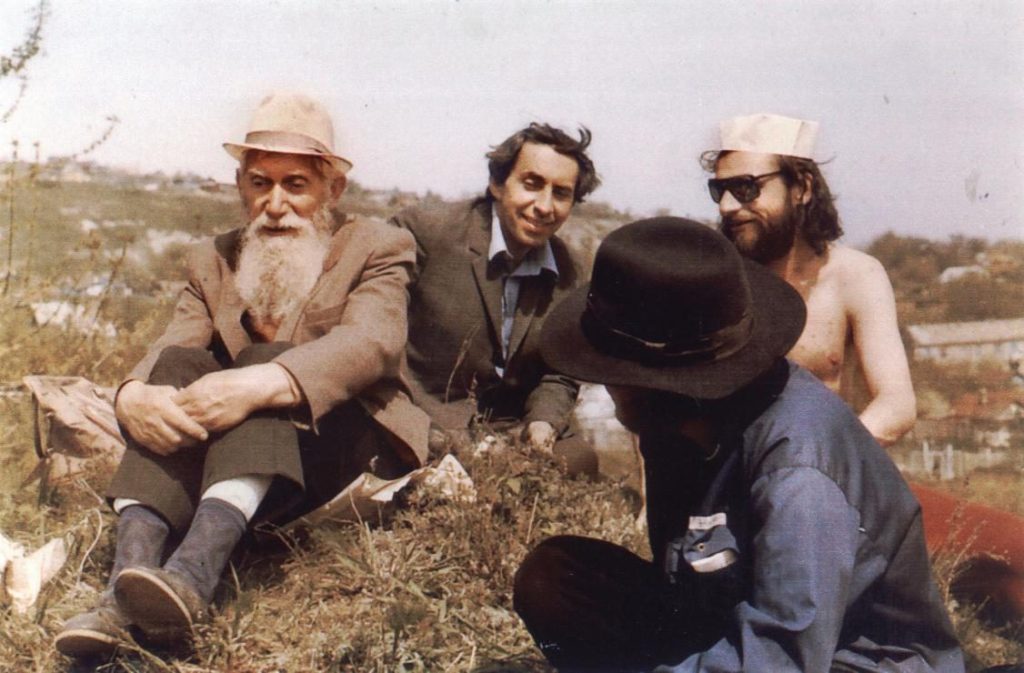
In 5749 (1989), when the Soviet Union began to fall apart, R’ Moshe Tamarin, a shochet in Moscow, got an unexpected phone call.
“This is Refael Bruk, from Saratov,” an old man said on the other end. “I heard you’re a Shochet. Can you come and shecht chickens for the Yidden in my town before Rosh Hashanah?”
“Saratov?!” R’ Moshe exclaimed. “That’s so far away!”
“Please,” Refael begged. “I know it’s a seventeen-hour train ride from Moscow, but we need you.”
R’ Moshe couldn’t say no. He was always ready to help another Yid. After a long, exhausting trip, he arrived in Saratov.
When Refael saw him, his face lit up. “Shalom Aleichem!” he greeted him warmly. R’ Moshe was very happy — and surprised — to meet a Yid with a full beard after so many years of Communism.
R’ Moshe got straight to work, shechting chickens for Refael and the other Jewish families in the town. As he worked, he asked, “What do you usually eat during the year?”
Refael sighed. “We have a Shochet, but he’s not very careful with yiras Shamayim. All year, we have no choice but to use his Shechita. But for Rosh Hashanah, I wanted the Yidden here to have the Shechita of a Chassid.”
R’ Moshe was amazed. Refael had lived all alone in this faraway town, yet he’d stayed completely Frum. He even cared for the other Yidden, making sure they had proper Shechita for Yom Tov!
When the shechting was done, Refael brought an old pair of Tefillin to R’ Moshe. “Can you also check if these are still Kosher?” he asked.
R’ Moshe looked at the Tefillin. They were worn, and the straps were faded. “Why don’t I bring you a new pair?” he suggested.
Tears filled Refael’s eyes. “These Tefillin are special,” he said softly. “They are Tefillin of mesiras nefesh.”
He invited R’ Moshe to sit down and began to tell his story.
“Many years ago, my father sent me to a Chabad Yeshiva,” Refael began. “R’ Michoel Teitelbaum told him, In Chabad Yeshivas, there’s mesiras nefesh for Torah and Mitzvos. That’s why my father agreed—to make sure I would grow up with mesiras nefesh.”
He paused and then continued. “Six of us were caught by the Communists. They sent us to a terrible orphanage, where they tried to force us to give up Torah and Mitzvos. But we stayed strong.
“One day, two boys went back to Berditchev to get clothes. They brought back Tefillin too, which we hid in the forest. Every day, even in the freezing Russian winter, we went to the forest to put on Tefillin. Our hands were frozen, but our hearts were warm. We felt so close to Hashem.”
Refael held up the Tefillin. “These are the Tefillin we used. I’ve kept them all these years.”
R’ Moshe was moved. “What happened to the other boys?” he asked.
Refael looked sad. “I don’t know,” he said quietly. “When we escaped, we went in different directions. I haven’t heard from the others since. Maybe they left Russia… or maybe they were caught. I have no idea.”
* * *
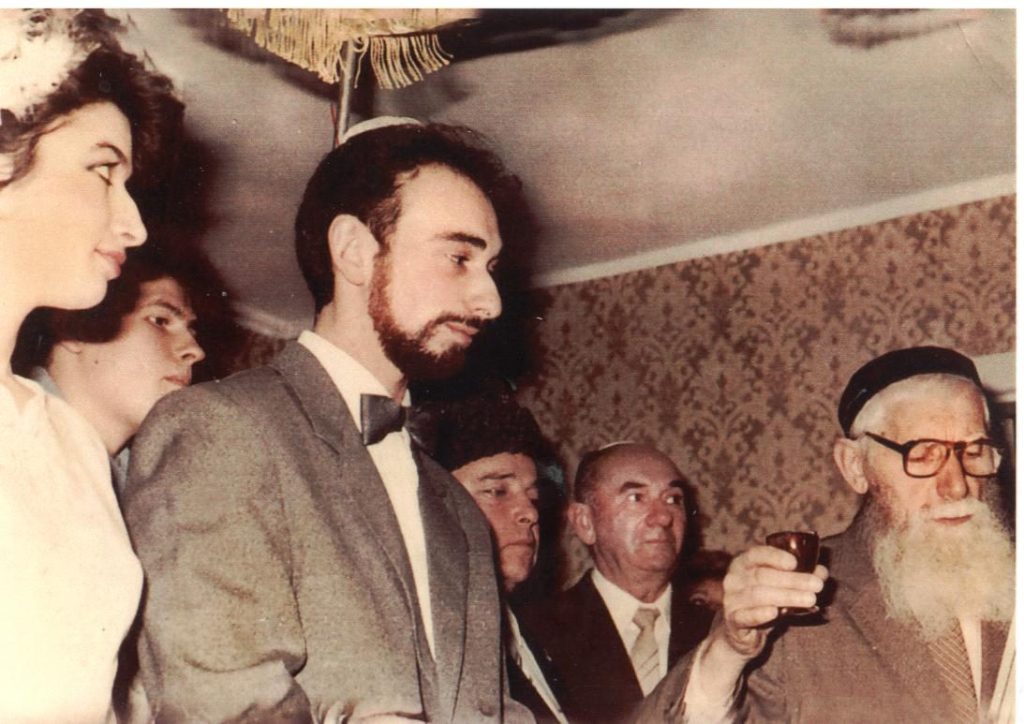
A year later, in 5750 (1990), R’ Aharon Eliezer Ceitlin visited Moscow and met R’ Moshe.
“Ceitlin?” R’ Moshe asked. “Are you related to Heschel Ceitlin, one of the boys arrested in Berditchev?”
“Yes, he was my father,” R’ Aharon Eliezer replied.
R’ Moshe told him about Refael Bruk. R’ Aharon Eliezer was thrilled. “My father always wanted to find the sixth boy! He always wanted to know what happened to him,” he exclaimed.
He called Refael.
“How are the others?” Refael asked, his voice trembling. “They must have learned so much Torah and Chassidus by now.”
Refael’s voice grew sad. “I’ve been alone here for many years. No teachers, no Sefarim. I wish I could have learned more.”
“Why didn’t you leave Russia to join the Rebbe in America or Eretz Yisrael?” R’ Aharon Eliezer asked.
Refael’s voice was firm. “If I left Russia, then who would take care of the Yidden in Saratov? I knew something, at least. If I left, who would make sure they had Kosher food, a Lulav and Esrog, or Matzah for Pesach? No, I couldn’t leave them. I had to stay and help.”
R’ Aharon Eliezer was amazed. “You must visit Crown Heights to meet the Rebbe! You have so much to tell him!” he said.
After some convincing, Refael agreed. He packed his bags and prepared for the trip.
But just days before leaving, on the 12th of Tishrei, Refael’s Neshama returned to Shamayim. He passed away.
Even in his last days, he’d spent time setting up a Sukkah for the Yidden in Saratov to use. Until the end, he stayed devoted to helping others keep Torah and Mitzvos, using all he’d learned in his early years in Yeshiva.
From risking his life to learn Torah in an orphanage to dedicating his life to the Yidden in Saratov, R’ Refael Bruk’s story was full of mesiras nefesh.
* * *
And you know what? We live in a time when we can learn Torah and do Mitzvos freely. But that doesn’t mean we can’t have mesiras nefesh too!
Think about it: Have you ever woken up tired and still Davened with Kavanah? That’s mesiras nefesh. Have you ever been tempted to skip a Mitzvah, like saying Brachos or washing Negel Basser, but did it anyway? That’s mesiras nefesh.
When we choose to do what’s right, even when it’s hard—like learning Torah instead of playing another game, or being kind to someone even when we’re upset at them—we are living with mesiras nefesh.
And just like Refael Bruk helped other Yidden, no matter how hard it was, his whole life, we can do the same. Maybe it’s helping a friend who feels left out, giving up your time to make someone else happy, or teaching someone a new Mitzvah.
Every little thing we do lights up the world and brings us closer to Moshiach.
Beis Moshiach #1448 • pp. 58-62
© 2026 Beis Moshiach Magazine. All rights reserved.
This article originally appeared in Beis Moshiach #1448. You are welcome to share it with friends and family by email or in print, provided that you do not change, add to or omit any part of it, you credit the author and Beis Moshiach, and you include a link to archive.bmoshiach.org (written out in full in printed copies).
To republish this article in a newspaper, magazine, book or website, please request permission in advance at [email protected].