The Chassid Who Brought Bikkurim to 770
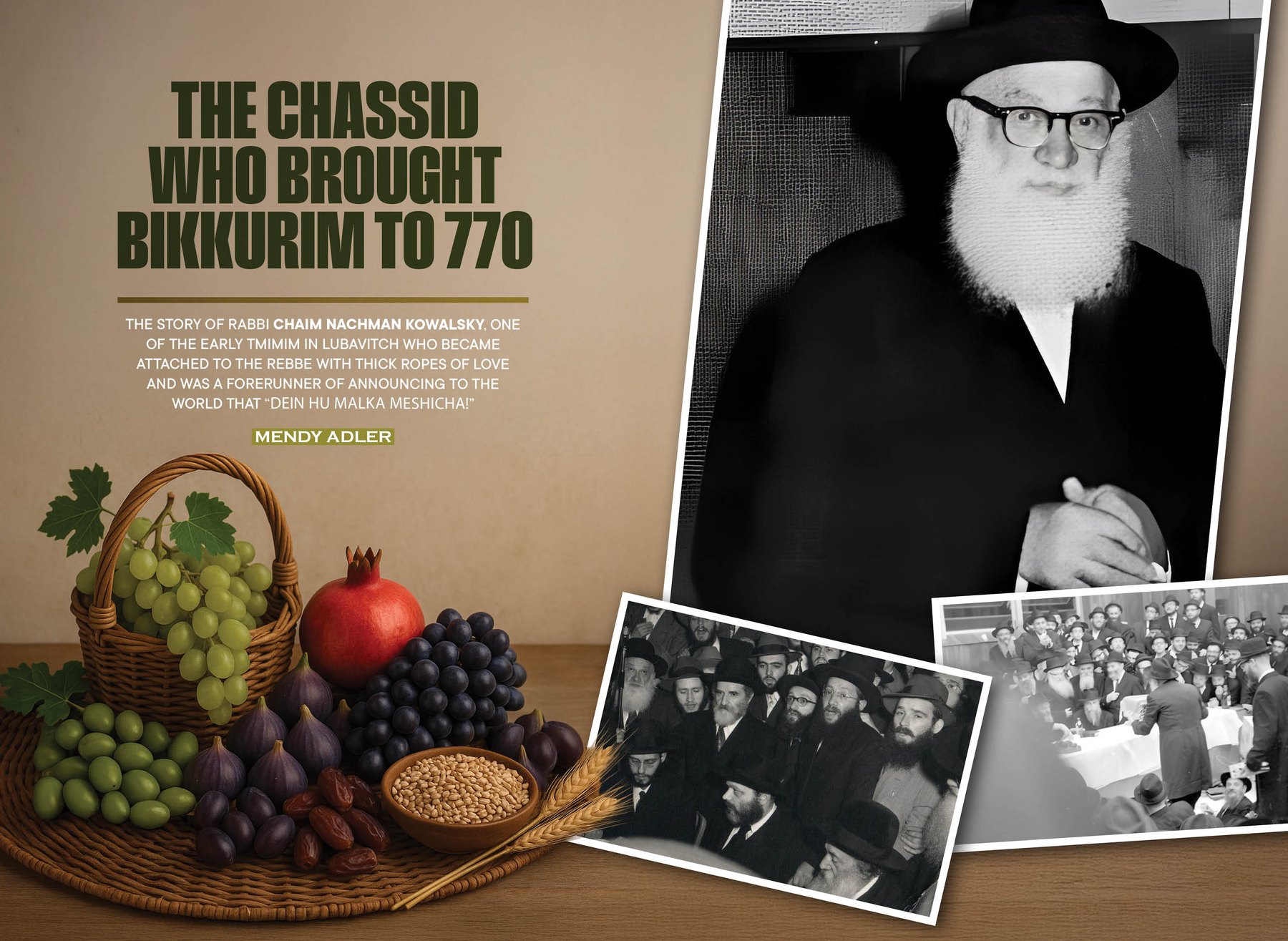
The story of Rabbi Chaim Nachman Kowalsky, one of the early Tmimim in Lubavitch who became attached to the Rebbe with thick ropes of love and was a forerunner of announcing to the world that “Dein Hu Malka Meshicha!”
The peak of the farbrengen. All ears are tuned intently to the voice of the Rebbe, striving not to miss a single sacred word. People came from near and far to 770 to participate in the Shavuos farbrengen and to experience a semblance of the “Giving of the Torah” in our times.
During the farbrengen, between the sichos, an elderly, dignified-looking Jew suddenly stood up. In his hands, he held a magnificent basket of fruits and cakes – true bikkurim (first fruits) – and began walking along the table toward the Rebbe’s place. The surprised eyes of many guests didn’t miss him, but the veteran Chassidim were quick to explain: This was a long-standing custom. Reb Chaim Nachman Kowalsky, a regular at 770, would bring bikkurim to the Rebbe every year during the Shavuos farbrengen, just as the Jewish people once did when the Beis HaMikdash stood, when they were oleh regel.
When Reb Chaim Nachman reached the Rebbe and presented the decorated fruit baskets, the Rebbe instructed him to distribute some of the fruit to the crowd and blessed him with a special bracha: “You should merit to bring bikkurim to the Beis HaMikdash.”
When asked about the reason for this custom, Reb Chaim Nachman explained beautifully: “770 is the place of the Mikdash; the Rebbe, may he live long, is the Kohen Gadol of our generation. Even though we live outside of Eretz Yisrael, the Rebbe’s place is certainly considered like the Land of Israel…”
A Veteran of Tomchei Tmimim
Rabbi Chaim Nachman Kowalsky a’h, was one of the elder Chassidim in New York. He arrived even before Lubavitch established itself in the U.S. The older residents of the neighborhood still knew him, but not everyone was familiar with his fascinating life story, steeped in hiskashrus.
He was born in Warsaw in 5655/1895 to Reb Moshe and Mrs. Rochel Kowalsky. Reb Moshe was one of the yoshvim by the Admor of Sochatchov, the author of Avnei Nezer, son-in-law of the Rebbe of Kotzk. Their home was run in the spirit of these Chassidic courts.
At around age 18, Chaim Nachman was ‘captured’ by Lubavitch and its Chassidic teachings under the influence of Chabad Chassidim in Warsaw, such as Rabbi Shraga Feivish Zalmanov, who taught him Chassidus and imbued him with the Chassidic way of life. Eventually, they sent him to the Rebbe Rashab who was then in Lubavitch.
When his father heard that his son had traveled to Lubavitch, he was astonished: “What is Lubavitch?” He immediately decided to go and bring his son home. But after spending a Shabbos in the Rebbe Rashab’s court and hearing a maamar directly from the Rebbe, he was instantly captivated and declared: “My son will stay here.” And so it was.
Between 1913–1915 (approximately), Chaim Nachman studied in Tomchei Tmimim in Lubavitch. Afterward, he returned to Warsaw and became a full-fledged Chabad Chassid. He later married Rivka, the daughter of a Sochatchov Chassid from Otwock, Reb Elazar Mokotovsky. In 1920, their son, Rabbi Shalom Dovber, was born – possibly the first child named after the Rebbe Rashab.
Rabbi Shalom Dovber would later serve as the rabbi of the Young Israel congregation in the Hillcrest neighborhood of Queens and was a member of the Rabbinical Council of America. His connections with the Rebbe formed a fascinating and lesser-known chapter.
One of the First Chabad Chassidim in the United States
In 1920, Reb Chaim Nachman emigrated to the United States alone, leaving his family in Poland with the intention of bringing them over once he had become financially stable. When his son grew older, he was sent to study with his grandfather in Otwock, near Warsaw, in the spirit of Sochatchov Chassidus. Yet Reb Chaim Nachman pushed strongly for his son to study in Tomchei Tmimim and sent many letters requesting his father-in-law to arrange it. Eventually, the son transferred to the Chabad yeshiva in Warsaw.
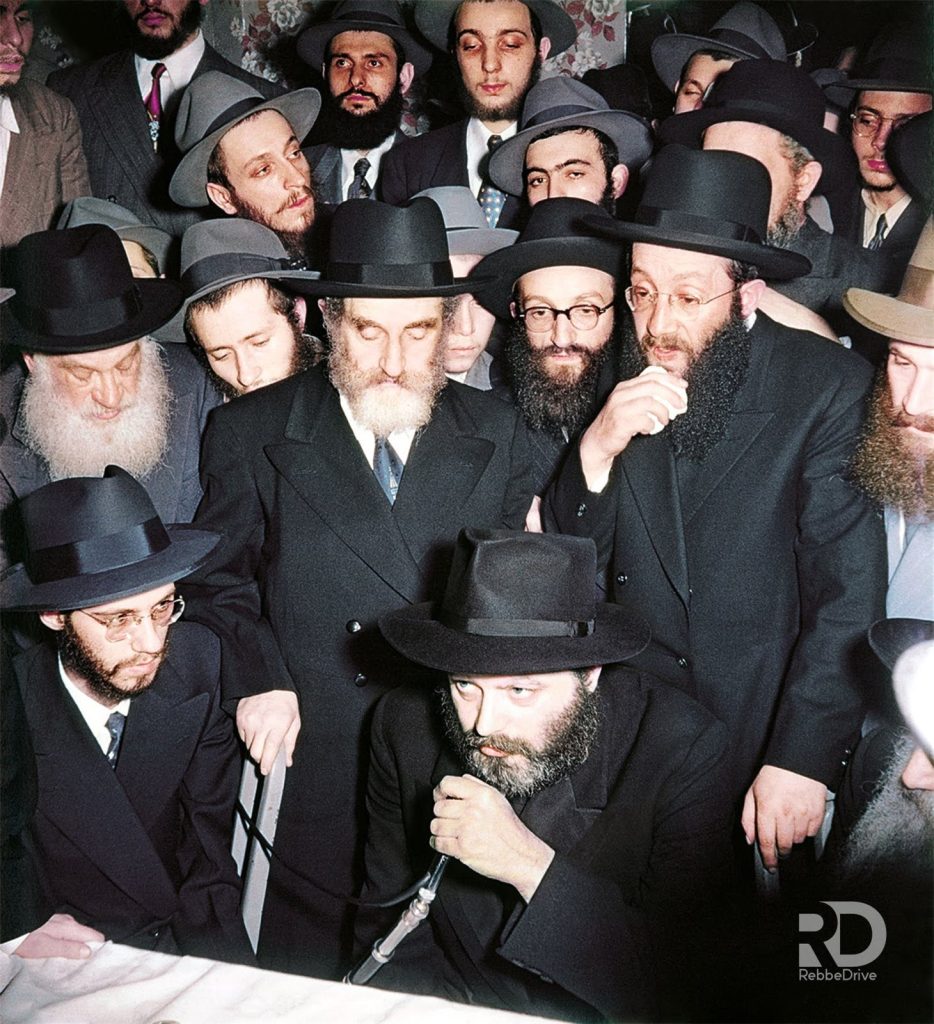
Before World War II broke out in 1939, Shalom Dovber returned to America. Since there was not yet a Tomchei Tmimim in America, he enrolled in the Litvishe Ner Yisrael yeshiva in Baltimore.
When the Rebbe Rayatz arrived in New York in 1940, Shalom Dovber wanted to greet him but was not granted permission by the yeshiva. Instead, he sent a telegram blessing the Rebbe upon his arrival. Before Pesach that year, he visited his parents in New York and entered the Rebbe Rayatz’s room for a private audience. The Rebbe greeted him warmly: “Thank you for the telegram.”
At that audience, the Rebbe instructed him to transfer to the newly established Tomchei Tmimim in New York. However, due to various circumstances, this did not happen, and he remained in Baltimore.
That Pesach, Reb Chaim Nachman and his son joined the Rebbe in Lakewood and were among those who sat closest to the Rebbe at the Seder table.
The Scent of Bikkurim
Reb Chaim Nachman began his custom of bringing bikkurim during Shavuos farbrengens early in the Rebbe’s leadership and continued it for many years, even after moving to Eretz Yisrael. He would bring baskets of expensive fruits and cakes – costing hundreds of dollars – and walk along the long farbrengen table until he reached the Rebbe, presenting the “first fruits” to the “Kohen of the generation.”
The first known time he did this was Shavuos 1953. He placed a bottle of wine on the Rebbe’s table, saying it was bikkurim. The Rebbe responded with a unique sicha: “It is said that one who fills the throats of Torah scholars with wine is as if he brought bikkurim to the Beis HaMikdash… What is the specific emphasis here – specifically bikkurim, wine, and Torah scholars?”
The Rebbe then elaborated on the differences between bikkurim and other gifts to the Kohanim according to Nigleh, emphasizing the joy associated with bikkurim – so much so that people would decorate the ox leading the procession to Yerushalayim with golden horns.
In connection with this, the Rebbe also told the story of the Chassidim of the Alter Rebbe who were on their way to the Rebbe. During the trip, other Chassidim joined them so that they numbered many thousands. The Chassidim took an ox whose horns they covered in gold and that’s how they went to the Alter Rebbe as the bikkurim brought to the Beis HaMikdash is described. This was a special acknowledgment by the Rebbe to the bikkurim of Reb Chaim Nachman.
In another year, when Reb Chaim Nachman presented the baskets, the Rebbe remarked, “There is no reiach nichoach (pleasing aroma).” He immediately understood: he had not immersed in the mikva that day due to illness and old age. When he asked the Rebbe if that was the reason, the Rebbe confirmed it.
The Rebbe’s Neighbor
From the time Reb Chaim Nachman arrived in the United States, he never ceased supporting Torah institutions, yeshivas, and similar holy causes. In the “occupation” field on the registration card he filled out for the “Book of Chassidim,” he wrote that his occupation was “a meshulach (fundraiser) for yeshivas.”
Indeed, in one of the letters from the Rebbe Rayatz to him, he blesses him for this: “May G-d strengthen your health and the health of your wife and the health of your children and household members, and grant everyone good, abundant livelihood, and may you succeed in your work for the benefit of the Tomchei Tmimim Lubavitch yeshivas.”
Besides the Tomchei Tmimim yeshivas, Reb Chaim Nachman collected funds for the Ner Israel Yeshiva in Baltimore, where he also lived for an extended period. For this purpose, he would travel to many communities throughout the United States throughout the year, and was warmly received wherever he went. Evidence of this can be seen in his many donors who continued to send their contributions through him even after he retired from fundraising work. Reb Chaim Nachman also made sure to donate to the people of the Old Yishuv in Yerushalayim, and we find a letter from the then Chief Rabbi of the Edah HaChareidis, Rabbi Zelig Reuven Bengis, blessing him for his generous donations to establish and strengthen the yishuv.
His most well-known contribution is undoubtedly for the establishment of the Chabad Lubavitch shul ‘Ahavas Yisrael’ on Rashi Street in Bnei Brak, as Reb Chaim Nachman lived in this city for a period of his life and worked there to establish the shul. Her contributed his wealth and energy to the establishment of the shul and also assisted in purchasing the land on which the shul stands.
This fact is mentioned by the Rebbe in a special letter to the congregants and gabbaim of the shul dated the 18th of Elul, 5728 (1968):
“To the honorable mispalelim, and the gabbaim at their head, of the Ahavas Yisrael – Chabad shul in Bnei Brak in our Holy Land, may it be built and established through our righteous Moshiach speedily in our days, may G-d be upon them and may they live. Peace and blessing!
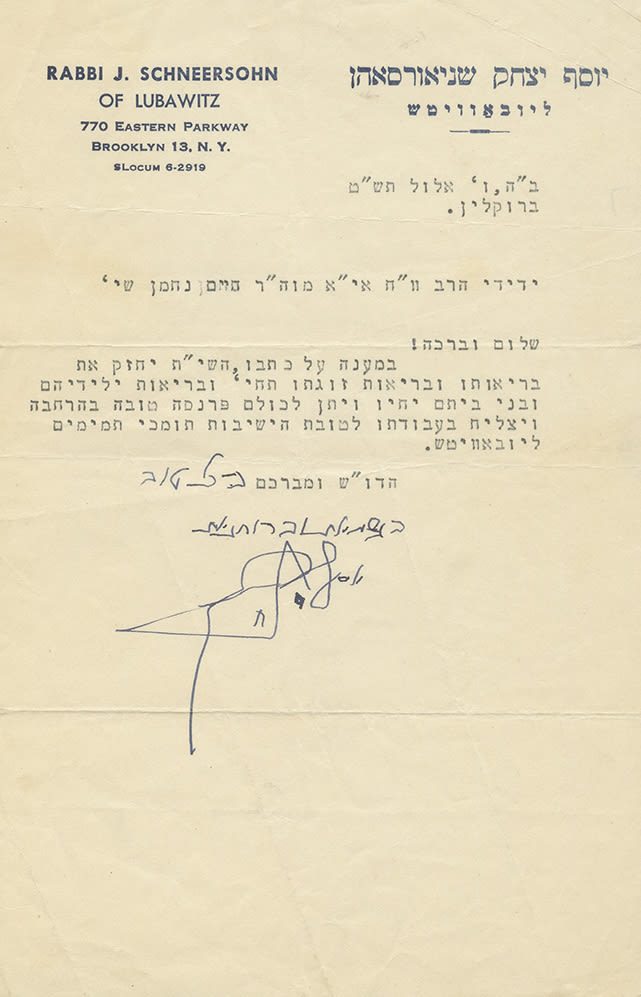
“On the birthday of the two great luminaries, the honorable holy Rabbi Yisroel Baal Shem Tov, after whom your shul is named, and the honorable holy Rabbi Shneur Zalman, founder of the Chabad approach, I express my wishes and hope that certainly your shul and Beis Medrash is going from strength to strength… And especially according to the information I received from the Chassid… man of good character, RC” N Kowalsky, may he live, one of the organizers of the shul and Beis Medrash and its administration, surely you will continue to go with this strength with greater vigor to ascend in holiness from one elevation to another.”
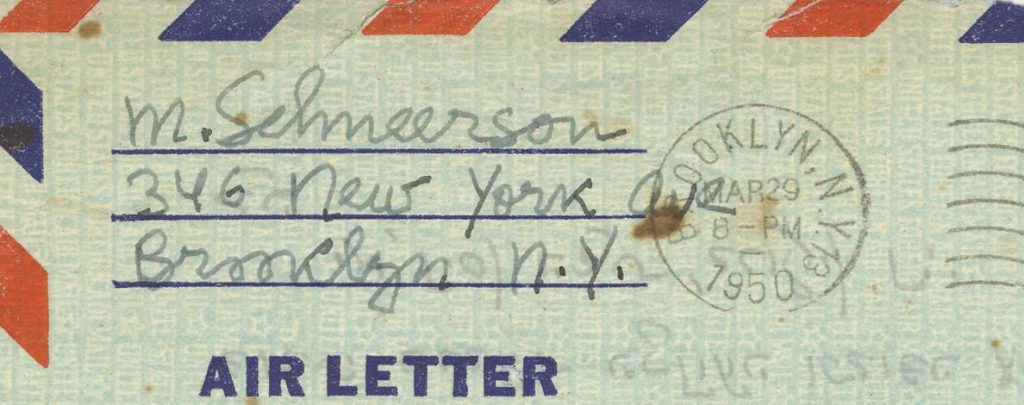
It is worth noting that among his private assets was the building at 346 New York Avenue, which housed the apartment of the Rebbe and Rebbetzin where they lived in the early years after arriving in New York. Reb Chaim Nachman and his family themselves lived in one of the apartments in the building, and he personally ensured that the daily routine of the Rebbe and Rebbetzin would not be disturbed.
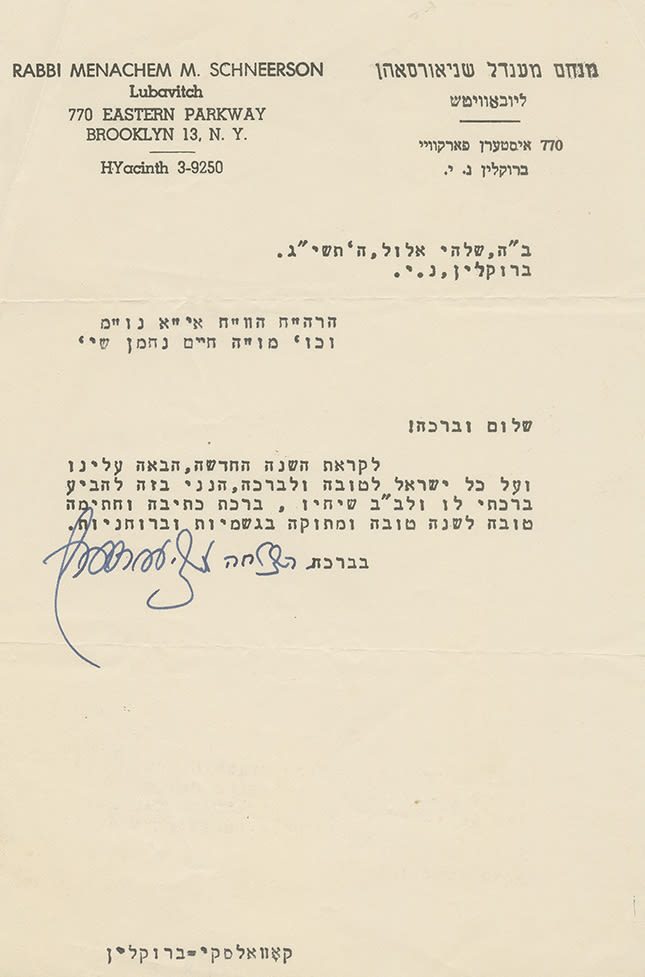
Years later, his daughter recounted that once when the Rebbe was returning home, she waited at the entrance to the building so she could hold the door wide open for the Rebbe. As he entered, the Rebbe asked her with a radiant countenance: “Are you Reb Chaim Nachman’s daughter?”…
Inscribed Forever
When the Rebbe – with his household – arrived in New York, he was appointed by the Rebbe Rayatz to head the institutions ‘Machne Israel,’ ‘Merkos L’Inyonei Chinuch,’ and the publishing house ‘Kehot.’ It is understood that the founding of all these institutions was accompanied by the holy directives of the Rebbe Rayatz.
One of the directives given by the Rebbe Rayatz regarding Kehot publications was to print the names of donors or their loved ones who contributed from their wealth for the printing of sefarim. In line with the saying of our Sages, “What He does, He tells others to do,” the Rebbe Rayatz himself donated for the printing of the first Kehot sefarim – these were the maamarim of the Rebbe Maharash with dedications testifying to this.
One of those who merited this was Reb Chaim Nachman Kowalsky – whose name was inscribed forever in the annals of the early history of the first Kehot publications, by dedicating the printing of Seder Tefillos L’Chol HaShana or in its common name – Siddur Im Dach.
“Rebbe, It’s Time to Reveal Yourself!”
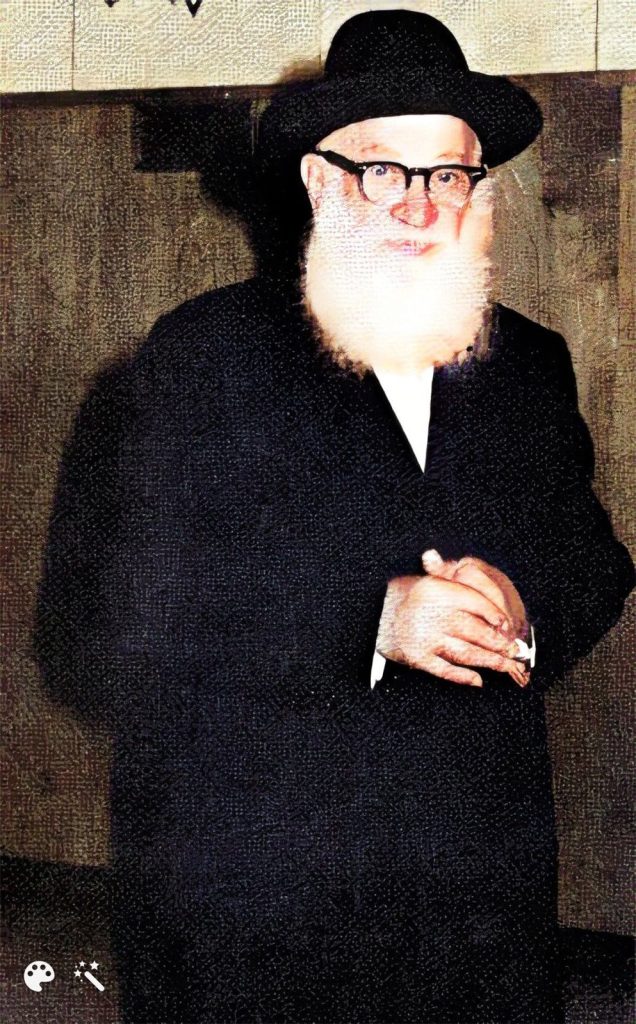
His son, Rabbi Shalom Dov Ber Kowalsky, recounted:
“My father always believed that the Rebbe is Moshiach Tzidkeinu. He used to say that the Rebbe is perfect in all areas, and that all the qualities written in Rambam about Moshiach match him perfectly, except that the Rebbe does not agree to reveal himself, and therefore we must ask him and implore him until he agrees.
“Once, during a farbrengen of the Rebbe at 770 (I think it was in 1970), my father stood on the large table and proclaimed thus: ‘Lubavitcher Rebbe! Jews are suffering. After such a difficult and bitter war – it’s time for you to be revealed!’ After he finished his words, the Rebbe became very serious and replied: ‘Reb Nachman, don’t talk like that, and don’t make me leave the Beis Medrash’…”
An earlier occasion was at the farbrengen of Yud Shevat 5723 (1963). It was after the sixth sicha in which the Rebbe spoke about the signs of Melech HaMoshiach enumerated in Rambam. Reb Chaim Nachman suddenly stood up and proclaimed that the Rebbe is Moshiach. At this time, the Rebbe was not comfortable with such a proclamation being made aloud about this matter, and therefore, in the sicha following Rabbi Chaim Nachman’s proclamation, the Rebbe said:
“In general, there is here the order that ‘each man does what is upright in his own eyes’; everyone considers himself important, a gabbai, an authority, and does as he wishes. Therefore, we must declare once and for all that it is impossible to be responsible for everyone’s behavior… The Rebbe [Rayatz] once told about the conduct in the shul in Lubavitch, that there were also practices not in accordance to the spirit of his father, the Rebbe [Rashab], despite the fact that he was then (not abroad, but) in Lubavitch and in the shul, but he was not responsible for it. And seemingly it is not understood: why did the Rebbe [Rayatz] need to say such a thing?! – This is a sign that the same can happen in the year 5723 (1963)!… And the stated rule regarding us – (the Rebbe laughed and said:) that all the proclamations made by others, I am not responsible for them, and you are not responsible for them, and the proclaimer himself – as said – is not responsible for it…”
Nevertheless, the inyan of the Rebbe’s revelation as Moshiach ‘burned’ very strongly within Reb Chaim Nachman. When he entered for a private audience on the 30 Cheshvan 5725 (1964), he said to the Rebbe that the time had come for him to reveal himself, and requested – “Galei kevod malchuscha” (reveal the honor of your kingship). The Rebbe answered – “Soon.”
“My father,” his son recounted years later, “was among the elder Chassidim and allowed himself to express himself this way in public, in a style that today has already become common. But since the Rebbe’s comment, he stopped expressing himself openly in such a style.”
In his great anticipation for the Geula, Reb Chaim Nachman worked extensively over the years to bring the Geula closer, apart from his many activities in raising funds and donating them for tzedaka and chessed.
Within a year after his passing, his family published a special compilation he had edited on the subject of Ahavas Yisrael, with the purpose of the collection being, as stated in the introduction, to bring about the coming of Moshiach. This collection received the approbation of the great rabbis of the time such as Rabbi Moshe Feinstein, Rabbi Yaakov Yitzchok Ruderman, Rabbi Levi Yitzchok Greenwald, the Pupa Rebbe, and others.
In his introduction, Reb Chaim Nachman wrote: “The events of the recent period in the world in general and in our Holy Land in particular teach us that we are facing an unusual period. This is the period before the revelation of Moshiach Tzidkeinu – ‘Behold, he stands behind our wall.’ The anticipation for the footsteps of Moshiach has not departed from the Jewish people for thousands of years. By virtue of faith and hope, the Jewish people live and exist. However, the division of hearts among us is one of the central things delaying the Geula… Let us all unite under the flag of the Torah so that we will be a united people, as it is said, ‘And Israel encamped there’ as one person and with one heart to our Father in Heaven, and thereby we will bring closer the coming of our righteous Moshiach, Amen, speedily in our days.”
* * *
Rabbi Chaim Nachman passed away on the 24th of Teves 5738 (1978), and was buried in the Montefiore Cemetery near the resting place of the Rebbe Rayatz.
On his matzeiva is engraved: “Mekushar with all his heart to our Rebbeim until the last day.”
Beis Moshiach #1462 • pp. 10-17
© 2026 Beis Moshiach Magazine. All rights reserved.
This article originally appeared in Beis Moshiach #1462. You are welcome to share it with friends and family by email or in print, provided that you do not change, add to or omit any part of it, you credit the author and Beis Moshiach, and you include a link to archive.bmoshiach.org (written out in full in printed copies).
To republish this article in a newspaper, magazine, book or website, please request permission in advance at [email protected].