The Name That Saved a Life
From the TzaddikStory.org collection
The year was 5723 (1963). I was just a little boy—three and a half years old.
My name was Yaakov Shmuel Orimland. You wonder why I saw “my name was Yaakov Shmuel”? That’s a good question. When you finish the story, you will understand.
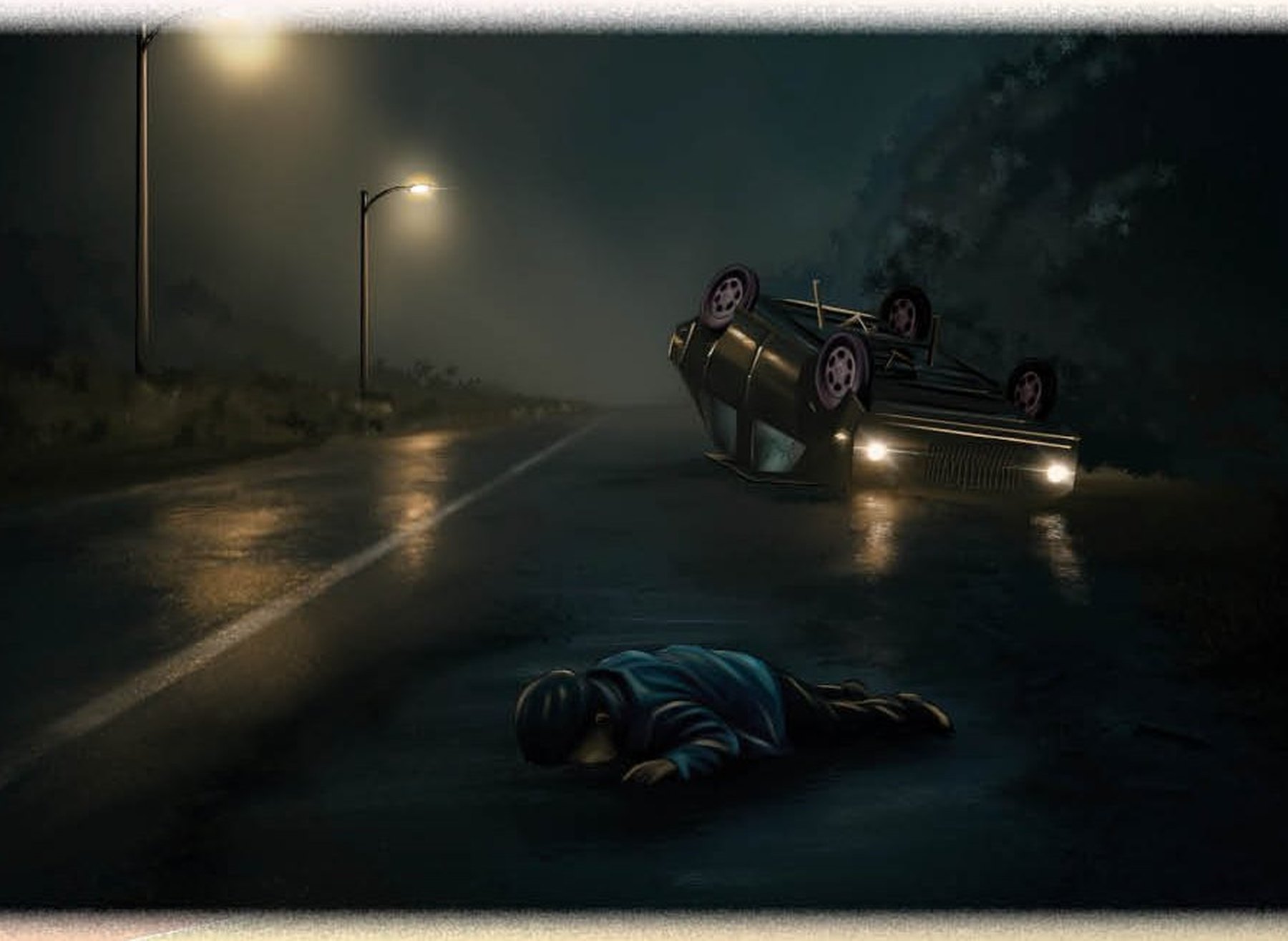
I was a three-and-a-half-year-old boy lying face-down in a puddle. It was a freezing cold night in Elul. Rain poured from the sky. I was on the side of the road.
What happened?
My grandparents had been driving me home. My father was a rabbi for a small community near Atlantic City, New Jersey. But that night, the weather was terrible. The sky was dark. The roads were slippery. And then—suddenly—there was a crash.
One car tried to pass another and ended up hitting a few cars. Our car spun, and then flipped over.
I flew out of the windshield and landed headfirst into a puddle on the side of the road.
My grandmother was thrown out too. She was very badly hurt. But when she saw me lying there, with my face underwater in the puddle, she knew I was drowning. Even in her pain, she crawled over and turned me onto my back, lifting my face out of the water.
She saved my life.
After that, I don’t remember anything.
* * *
My father once told me what happened next.
So now, let’s switch the story to him.
My father’s name is Rabbi Gimpel Orimland.
When he got the phone call, he ran straight to the hospital. The doctors had told him there was a terrible crash. His son—that’s me—was in very bad shape. His father-in-law had passed away at the scene. My grandmother, baruch Hashem, would recover, they said. But me… they weren’t so sure about it.
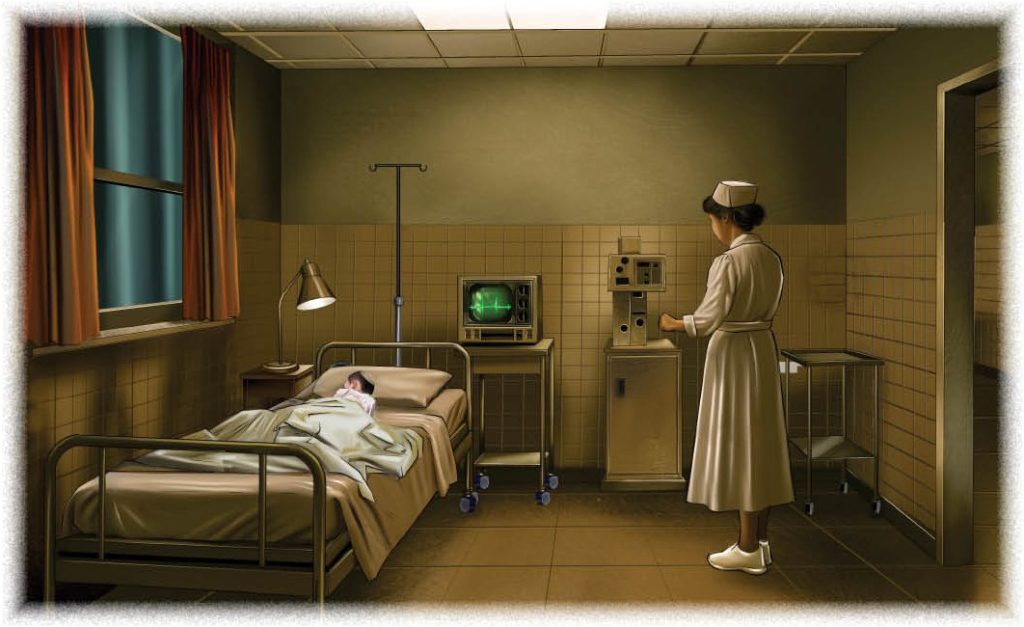
When my father walked into the hospital room, he saw me lying very still in the bed. I didn’t move. I didn’t talk. I didn’t even open my eyes.
I was in something called a coma. That meant I wasn’t awake, and I didn’t know what was happening around me. It’s like being stuck in the deepest sleep, where you don’t even dream, and no one can wake you up—not even with loud noises or a shake.
But my situation was even worse than a coma.
The doctors said I was in what they call a “vegetative state.” That means my body was alive, but they didn’t think my brain was working anymore. I couldn’t think, couldn’t feel, couldn’t hear, couldn’t see.
I was alive the same way a vegetable is alive. It was like I was here—but not really here.
The doctors were very serious.
My father was frozen. He didn’t know what to say.
Then one of the doctors asked him, “Have you planned your father-in-law’s funeral yet?”
“No,” my father said. “I just got here. I haven’t had time to think about anything…”
The doctor looked at him and said something that made him feel sick.
“If you wait another hour,” he warned, “you won’t just be saying goodbye to your father-in-law… you’ll also be saying goodbye to your son.”
My father’s heart hurt so badly. His father-in-law was gone. That was painful enough. But to lose his little boy too? Right before Rosh Hashana?
It didn’t seem possible.
* * *
Just then, someone walked into the hospital room. It was Mr. Gellman, the president of my father’s shul.
He had come to visit and show support. But he also came with an idea.
“Rabbi,” he said gently, “you should call the Lubavitcher Rebbe.”
“What?” my father replied. “Don’t be silly.”
“I’m not a Chassid,” he said slowly. “When I was younger, I lived in the house of the Chazon Ish. I was his personal attendant for two years. I went to cheder with Rav Chaim Kanievsky. I learned under the Steipler Gaon. I’ve never in my life spoken to a Rebbe…”
Rabbi Gimpel paused.
“And now… now you’re asking me to call one?”
“Trust me,” Mr. Gellman said. “The Lubavitcher Rebbe is the only one who can help you now.”
“But… he’s not my Rebbe.”
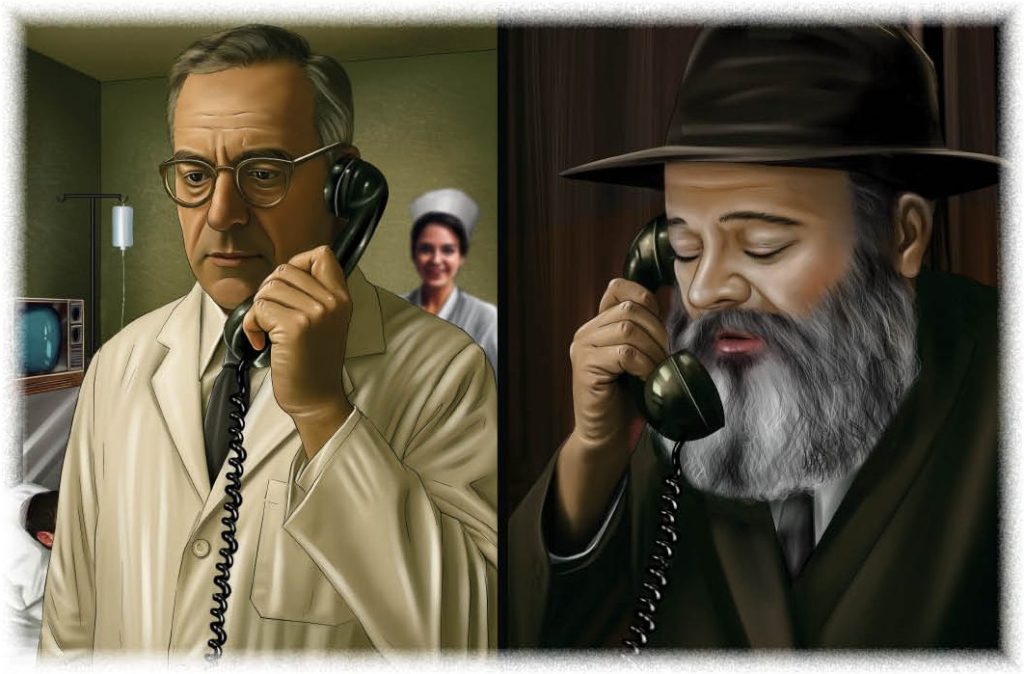
“Right now, your son is sick,” Mr. Gellman said. “You need help. That’s all that matters.”
“But what could the Rebbe do?” my father asked. “The doctors said my son will never get better.”
Mr. Gellman didn’t argue. He just handed my father a tissue.
Then he said softly, “Rabbi… if the doctors say there’s nothing left to do—what do you have to lose? Just try. What if it helps?”
My father wiped his eyes.
“You’re right,” he whispered. “Let’s call.”
* * *
Rabbi Gimpel continues the story: Mr. Gellman went to a phone and helped dial the number for 770—the Lubavitcher Rebbe’s office in Brooklyn, New York. It was four o’clock in the morning. Almost no one in the world was awake.
But someone answered.
It was Rabbi Chodakov, the Rebbe’s chief secretary.
I held the phone tightly.
“Rabbi Chodakov,” I said quietly, “my son… he was in a car accident… he fell into water… he couldn’t breathe… and now… now the doctors say there’s no hope. They’re telling me to prepare for the worst. Please, help me…”
“One moment,” Rabbi Chodakov said. “I will give your message to the Rebbe.”
I waited. And waited.
Minutes passed.
Somehow, the Rebbe was awake. His light was on. His desk was lit, and the phone was ready—just in case someone needed him. Even in the middle of the night, the Rebbe made himself available for people who were scared, in danger, or holding onto just a little hope.
Finally, the phone rang again.
“Hello?” I said, grabbing it quickly.
“Are you still there?” Rabbi Chodakov asked.
“Yes,” I said. My heart was pounding.
“The Rebbe said to call back in one hour.”
“One hour?” I asked, shocked. “We were told my son doesn’t have an hour. Maybe just minutes… Please—maybe the Rebbe didn’t understand—he’s going to die…”
Rabbi Chodakov paused.
“You called the Lubavitcher Rebbe’s office, right?”
“Yes.”
“You called because you believe the Rebbe can help, right?”
“Yes… of course.”
“Then if you believe the Rebbe can help—call back in one hour. If you don’t believe it… then why did you call?”
I felt my eyes fill with tears.
“You’re right,” I said. “I’ll wait. I’ll call back.”
* * *
That hour felt like the longest hour of my life.
My wife and I sat at our son’s bedside. We tried to believe. We tried to hope. We tried not to look at the machines or listen to the doctors or think about what we were afraid of.
He wasn’t moving. His eyes were closed. He didn’t look alive. But his heart was still beating.
We said Tehillim. We whispered prayers. We didn’t cry—we just held our breath and davened.
Finally… the hour passed.
It was five o’clock in the morning.
I picked up the phone and called back.
“Hello,” I said, “this is Rabbi Gimpel Orimland…”
“Yes,” said Rabbi Chodakov. “One moment. The Rebbe wants to speak to you.”
* * *
The phone was quiet for a second.
Then the Rebbe came on the line.
“The decree in Shamayim is over,” he said. “The gezeirah is over. Your son will live. I need you to do three things. Do you hear me?”
“Yes, Rebbe,” I said.
“Good. Here’s the first thing. Give eighteen hundred dollars to tzedaka. But not to my work. Not to Chabad. Give it to any Jewish organization, just not Lubavitch. It should be a gift to Hashem. And in that merit, He will send your son a complete recovery.”
I nodded, even though the Rebbe couldn’t see me.
“Two more things,” he said.
“Yes?” I answered.
“Add the name Bentzion to your son.”
“OK,” I said. I didn’t ask questions. I didn’t stop to think. I was going to do exactly what the Rebbe said.
“Last,” the Rebbe continued, “have the doctor call me. I will tell him what to do.”
“If you do these three things, your son will live,” the Rebbe said again. “It will take a long time for him to heal, but he will recover fully.”
I was shaking. My wife was shaking too. We had something now—something to hold onto. A clear bracha. Hope.
Back in 1963, eighteen hundred dollars was a huge amount of money. Today, that would be close to twenty thousand dollars. We didn’t have it. I was a rabbi and a chicken farmer in New Jersey. But we would borrow it if we had to. And we would give it.
We could go up to the Torah and add the name Bentzion.
But how would we get the doctor to call the Rebbe?
I walked slowly through the quiet halls of the hospital until I found the top doctor.
“Doctor,” I said, “thank you for everything you’ve done for my son.”
“I’m very sorry,” the doctor said. “I’m sorry for your loss. We did everything we could.”
But I wasn’t ready to give up.
“Doctor, please,” I said. “I just spoke to my rabbi in Brooklyn. He gave a message for you. He said he has advice for your next step.”
“I’m sorry,” the doctor replied. “I’m not allowed to ask medical advice from non-medical people. Especially not from rabbis. It’s not allowed by the hospital. And in any case… your son is already gone.”
He turned to leave.
But I stepped in front of him.
“Doctor,” I said quietly. “You just said there’s nothing more that can be done. That means calling can’t hurt. Please… it’s a family request.”
The Rebbe didn’t go home that night.
Five o’clock passed. Then six. Then seven.
The Rebbe’s door stayed open. His phone stayed next to him
* * *
Finally, the doctor made the call.
He picked up the hospital phone and dialed the number for 770.
Rabbi Chodakov answered.
A moment later, the Rebbe gave the message.
“To my knowledge,” the Rebbe said gently, “there is a new kind of shot. It goes into the area near the spine, and it can help stop the bleeding in the brain. It won’t fix everything, but it can keep things from getting worse.”
The doctor held the phone and listened, stunned.
How could a Rebbe—sitting in New York—know about this?
This was a brand-new treatment, something that even many doctors hadn’t heard of yet. It has just been invented. Only a few hospitals in the world were trying it.
And yet—the Rebbe knew.
The doctor stopped to think.
He explained that sometimes this injection could actually make things worse. It was risky. But the Rebbe’s voice was clear.
And in the end, the doctor said, “If someone knows this much without being a doctor… then I’m going to trust him.”
He gave the injection shot.
Nothing happened.
* * *
Rabbi Gimpel stayed in touch with the Rebbe. The Rebbe told him, “It’s going to take time. A long time. But your son will get better.”
What did “a long time” mean?
They didn’t know. But they believed. And so they waited.
One month passed. Then another. Then another.
Nothing changed.
To be continued
Beis Moshiach #1464 • pp. 55-59
© 2026 Beis Moshiach Magazine. All rights reserved.
This article originally appeared in Beis Moshiach #1464. You are welcome to share it with friends and family by email or in print, provided that you do not change, add to or omit any part of it, you credit the author and Beis Moshiach, and you include a link to archive.bmoshiach.org (written out in full in printed copies).
To republish this article in a newspaper, magazine, book or website, please request permission in advance at [email protected].