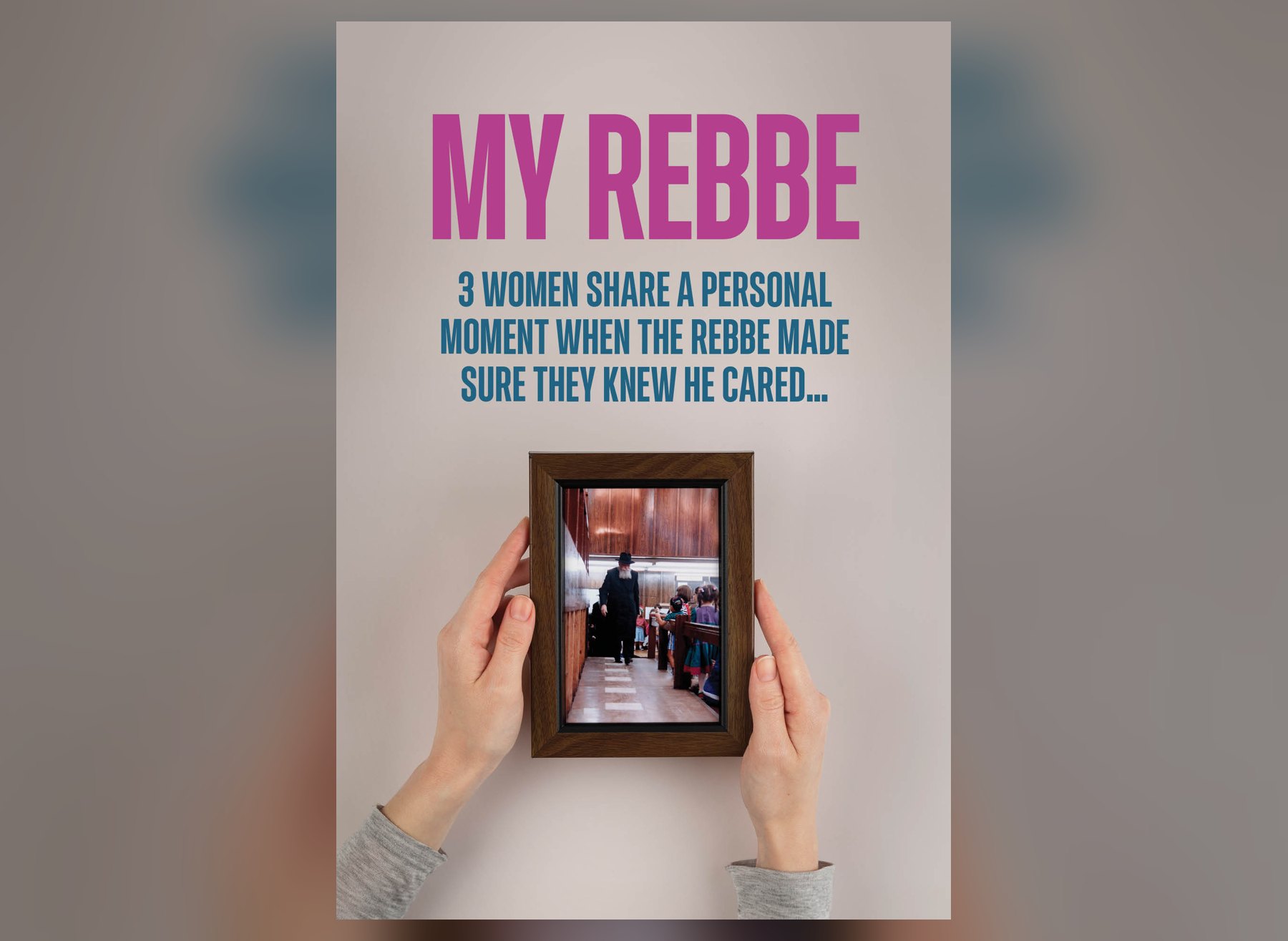
My Rebbe
Mrs. Rachel Bolton
Years ago, I gave lectures for Chabad Youth Organization in Israel. Over time, I turned to other pursuits. My husband was disappointed and encouraged me to return to it, but I couldn’t see how I could fit it into my already full schedule.
One year, it was Rosh Chodesh Kislev and a renewed burst of excitement filled me. I thought, “What can I give the Rebbe as a gift for this special day when he returned to us after such a long time of not seeing him face-to-face?” At the time, my husband was at the Kinus HaShluchim, and I decided that I would return to lecturing whenever I was asked, for the Rebbe’s health.
But I didn’t expect it to happen so soon – and so far away!

My husband was still in 770, and I was alone with our small children. Suddenly, the phone rang. On the line was a shlucha from Eilat asking me to give a lecture. I was shocked: “Rebbe, I get it. I want to lecture. But why in Eilat, and when my husband isn’t even home?!”
Still, a decision is a decision. I agreed, on condition they arrange round-trip flights the same day, so I wouldn’t need to stay overnight. “No problem, we’ll take care of the tickets,” I was promised.
But many are the thoughts of man… On the day of the lecture the airline Arkia canceled the return flight from Eilat due to a lack of passengers, and I didn’t know what to do. On the one hand, my kids were home. On the other, the shluchim had already publicized and promised the event.
The shlucha felt bad and said she would understand if I declined, but she also made it clear that my presence was very important. After some thought, I agreed to come. My dear friend Yehudis Feigin took my children.
“If you’re already coming, and if you don’t mind, we’ll make you the final lecture of the evening – this way the women will stay until the end to hear you,” the shlucha requested. And me? I’m a soldier of the Rebbe… I agreed to whatever she said.
I flew to Eilat, took a cab from the airport to the hall. “Pay, and we’ll reimburse you,” they said. When I arrived, the shlucha handed me 20 shekels to cover the taxi. I politely refused: “This is my small donation.” But she insisted, and so did I.
Finally, I noticed a raffle booth – tickets to win a trip to the Rebbe. I told her to use the money as a donation toward someone else’s trip, no need for a ticket. “I can’t take money without giving a receipt,” she said. And so, they forced me to enter the raffle.
I sat in the hotel lobby while the speaker before me was finishing. Suddenly, I heard: “The raffle winner, ticket number…” I looked at my ticket – unbelievable. It was my number! I had won!
I was confused. The raffle wasn’t meant for me. I went up to the stage and apologized: “I feel uncomfortable. This was for the local women…” But they warmly congratulated me and declared in unison: “You deserve it. You left your kids, your husband is with the Rebbe, and you still came.”
Thanks to my good hachlata – to step out of my comfort zone to give the Rebbe nachas – I merited to travel and see the Rebbe face-to-face. Those were incredibly special moments in my life. The unforgettable moment? When I received thirty dollars from the Rebbe during the dollar distribution – for the women of Eilat!
Mrs. Yaffa Spinner recounts:
In 5748, while I was in 9th grade, I traveled to the Rebbe. The Rebbe spoke extensively about Hakhel to bring joy to yourself and others. When I returned home, I repeated this to my father a’h, who greatly encouraged me to organize Mesibos Shabbos. I was shy and didn’t see how I could implement this instruction, but after much persuasion and my inner desire to fulfill the Rebbe’s wishes, I began Mesibos Shabbos in my home for a group of children that seemed least threatening to me – children who were not religiously observant. The group was very successful and I opened another group for Bais Yaakov girls who were my neighbors. We said ‘Pesukim,’ the Rebbe’s kapitel of Tehillim, sang songs, I said a short dvar Torah, and the children received candy. They were very happy to come.
Since the groups were so successful, I opened another group for Yiddish-speaking girls. I adapted the activity to suit each group – for example, for the Yiddish speakers, my father searched for a segment of a sicha of the Rebbe in Yiddish, we let them learn together among themselves, and even the Tehillim were recited in the pronunciation they were used to.
My father suggested that we run the Mesibas Shabbos for the non-observant children on Friday night, and so I did. I davened with them selected portions from Kabbolas Shabbos with tunes, we waited for my father to return from shul, they participated in singing “Shalom Aleichem” and “Eishes Chayil,” heard Kiddush, received a taste of mezonos and then went home. They loved coming very much.
Since the activity was so successful, in the summer I organized a Shelah (after-school) campaign – ten days of activities in which I taught concepts in Judaism. I reported about all this to the Rebbe and attached drawings that the children drew for the Rebbe.
A very special response was received: “Thank you graciously, I will mention it at the tziyun and the drawings were received with blessing.” I was very moved to receive such a response from the Rebbe!
A year later, in 5749, I wanted to fly to the Rebbe but couldn’t raise the money. I tried to do all sorts of things to make the dream come true. My brother made an interesting suggestion: “I’m sure that if you say the entire Tehillim three times consecutively, standing, and without speaking, any request you make will be fulfilled, and you want so much to fly to the Rebbe, surely Hashem will help you.” Due to my strong desire, I followed his advice and said the whole Tehillim consecutively, three times, standing.. At the end I nearly fainted… Of course I requested with all my heart, but still didn’t merit to fly, to my great disappointment.
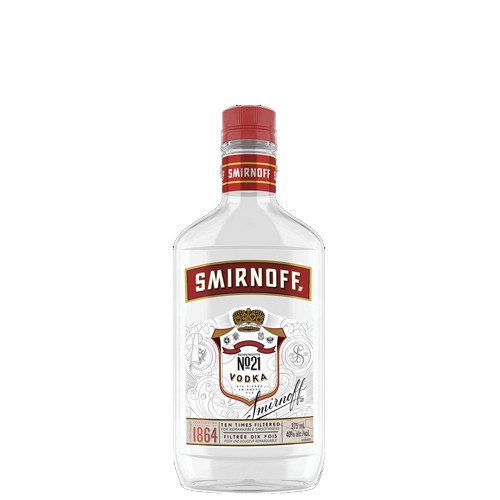
My younger brother flew to the Rebbe, and remembered his sister who so wanted to come but couldn’t manage it. On the night after Simchas Torah, at the ‘kos shel bracha,’ he passed by the Rebbe with two cups. One for himself and one for his sister. He said to the Rebbe: “My sister makes Mesibos Shabbos.” The Rebbe poured into his cup, while for his sister, for me, the Rebbe gave a small bottle of mashke. When my brother arrived with the vodka, I was very, very moved, and we of course held a special farbrengen.
I feel that this vodka accompanies me to this day in all my work and shlichus activities. For me, this vodka is still rolling along and generating very many good things…
Mrs. Risha Vishedsky
We were destitute in Soviet Russia, with everything that came with it. With Hashem’s kindness, we managed to leave that valley of tears and emigrate to the new Chassidic village in Israel – Kfar Chabad.
That year, the Rebbe invited all Chassidim who had managed to leave Russia to come to his holy court, ages twenty and up. The tickets were paid for by him. For perspective: a plane ticket back then was worth half a year’s salary or more – something the average person could not afford.
That year, my father and two brothers went. (My younger brother was 19, and during his yechidus the Rebbe asked how he got there and whether he had money. He said he had part of it and borrowed the rest. The Rebbe replied: “You’ll get reimbursed for the borrowed part by the secretariat.” And so it was.)
A year later, there was a raffle in Kfar Chabad for a trip for the month of Tishrei. Back then, raffles weren’t commonplace like today. It was a big and exciting event.
My two brothers wanted to participate and asked our father for 20 shekels each for a ticket – and one for him. As new immigrants, our parents worked very hard and earned very little. My father said: “I’d love to, but I earn 20 shekels a day. I can only afford one ticket. You decide who to register.”
One of my brothers went to register and suddenly worried that if he won, he might not be allowed to leave due to military service. He asked the organizer what would happen if he won but couldn’t go. The organizer said the prize could only be transferred to someone who also entered the raffle.
So he said, “We both might not be able to go. I have a feeling we’ll win. Let’s register Abba.”
The names were mixed well. One name was drawn ceremoniously. Unbelievably – Abba won!
It was a holiday in Kfar Chabad. My father had already gone to sleep – there were no phones then – and suddenly, singing and dancing erupted under the window: “Mazel Tov, you won the raffle!”
Father didn’t understand; he hadn’t registered! And my mother? I can say she was a true Chassidiste. From a young age, she was raised on Chassidic values and self-sacrifice. Her father, Rabbi Yehoshua Laine, was a renowned rav whom the Rebbeim described as a “Beinoni” from the Tanya. (She lost both parents in the Holocaust.)
Though she lived with great hiskashrus to the Rebbe in Russia, she never got to see him. Her desire to travel to the Rebbe was immense, and she wanted to join my father on the trip. But financially, it seemed impossible.
Our economic situation was tough. I remember oranges from the orchards were the only fruit we had. We never felt poor, but that was the reality. We never got new clothes except on rare occasions when packages arrived from America.
So – no money, but great ratzon. What did she do? Like a true Chassidiste, she wrote a letter to the Rebbe laying out her dilemma. The Rebbe responded: She should make the decision herself.
After much thought, she decided to fly.
On the first day she landed in Crown Heights, she went out with her nieces and walked down Kingston Avenue. Suddenly, a siren! She panicked – it was shortly after the Six-Day War.
“Don’t worry,” they explained, “this is an announcement for a surprise farbrengen.” No digital communication then. “Let us take you to 770 and show you where to go in and stand.”
They brought her to 770. She entered and stood directly opposite the Rebbe’s chair – the best spot to see him.
It was noon, not many women were present. Suddenly the Rebbe entered the room, striding quickly toward his chair. Melech b’yafyo. I remember how she described it to us in awe. The power and excitement she felt were indescribable.
“A king. Truly a king,” she’d say. “I trembled with emotion and joy. A thousand feelings overwhelmed me.”
The Rebbe spoke in Yiddish, her mother tongue, but she was so emotional she couldn’t understand anything. She always said the strongest feeling she felt was shame. Immense shame.
Shame for what? “How did I dare to hesitate? For this moment alone – seeing the Rebbe – whether I understand or not, it was worth everything. Even to be sold into slavery to pay for it. It was all worth it for that one moment of elevation and hiskashrus to the Rebbe.”
The Rebbe spoke briefly and then exited. Most women left, some stayed to chat, but she remained frozen in place, overwhelmed by the experience and her feelings.
A few minutes passed. Suddenly, a side door opened that connected the women’s section to the “lower Gan Eden.” Two men stood in the doorway. One held a large box. The other asked: “Is there anyone here from Kfar Chabad?”
My modest mother didn’t imagine they were talking about her – she had just arrived and hadn’t even notified the Rebbe she was there. Still, it was rude not to answer.
“I’m from Kfar Chabad,” she replied, “but I’m not the raffle winner. The winner is Gila Pruss, and she’s not here right now.”
He waved his hand dismissively and asked, “You’re from Kfar Chabad?”
“Yes,” she replied.
The second man approached her and placed the box in her hands: “The Rebbe sent this for you.”
When my mother realized what had just happened, it was almost too late – everyone around her had pounced on the treasure like those who discover great spoils, snatching pieces of the Rebbe’s cake. Only a few crumbs were left.
At the last second, she clutched the box tightly in her hands and ran to her sister-in-law’s house. Her sister-in-law calmed her: “It’s all right. It doesn’t matter how much is left.”
She quickly baked a large cake and placed within it all the remaining holy crumbs.
A woman stands in 770, feeling shame and guilt for having hesitated to come to the Rebbe – and the Rebbe gives her an immediate answer…
Beis Moshiach #1465 • pp. 42-45, 50
© 2026 Beis Moshiach Magazine. All rights reserved.
This article originally appeared in Beis Moshiach #1465. You are welcome to share it with friends and family by email or in print, provided that you do not change, add to or omit any part of it, you credit the author and Beis Moshiach, and you include a link to archive.bmoshiach.org (written out in full in printed copies).
To republish this article in a newspaper, magazine, book or website, please request permission in advance at [email protected].