An Emergency Shabbos in Iceland
From the TzaddikStory.org collection
Public buses in Israel are not always fun. They can be crowded and noisy, with people talking too loudly or bumping into each other as they try to find a seat. The trips are sometimes long and tiring, and the seats aren’t exactly made for comfort.
But still, there’s something special about them.
Buses bring people together—people who would otherwise never meet. People from different cities, different backgrounds, and completely different ways of thinking—all sitting shoulder to shoulder for a short ride.
My name is Rabbi Moshe Orenstein, and I was on a bus between Tel Aviv and Yerushalayim. I had a book in my hands and was looking forward to a quiet ride. I wasn’t planning to speak with anyone.
But Hashem had other plans.
A man in a black jacket and a soft, worn hat sat down beside me. He looked like a teacher—or maybe a Rav. He carried a sefer under his arm, and his eyes had a warmth to them, like he was already listening even before he spoke. He smiled and said hello.
His name was Rabbi Binyamin Rosenstein. He told me he was the Menahel Ruchani—the spiritual director—of the Netivot Chinuch Yeshiva in Bnei Brak.
He glanced out the window for a moment. The hills of Yerushalayim were beginning to appear in the distance.
Then he turned back to me.
When I sat next to Rabbi Rosenstein, we quickly found ourselves deep in conversation.
“I’m not Lubavitch,” he said. “But I am still a follower of the Rebbe.”
I smiled. I’ve heard those exact words more times than I can count. All across the Jewish world, I meet people who, though they don’t identify themselves as Lubavitcher Chassidim, still relate to the Rebbe deeply. They trust him. They follow his teachings.
Rabbi Rosenstein smiled. “Well,” he said, “I happen to have a miracle of my own.”
THE MISSION
“I spent much of the 1970s helping Jews behind the Iron Curtain,” Rabbi Rosenstein began. “In Russia, Yiddishkeit wasn’t just difficult—it was forbidden. Together with Rabbi Alexander Shwei and the Agudath Yisrael Rescue Committee, I worked to help our brothers and sisters trapped there.
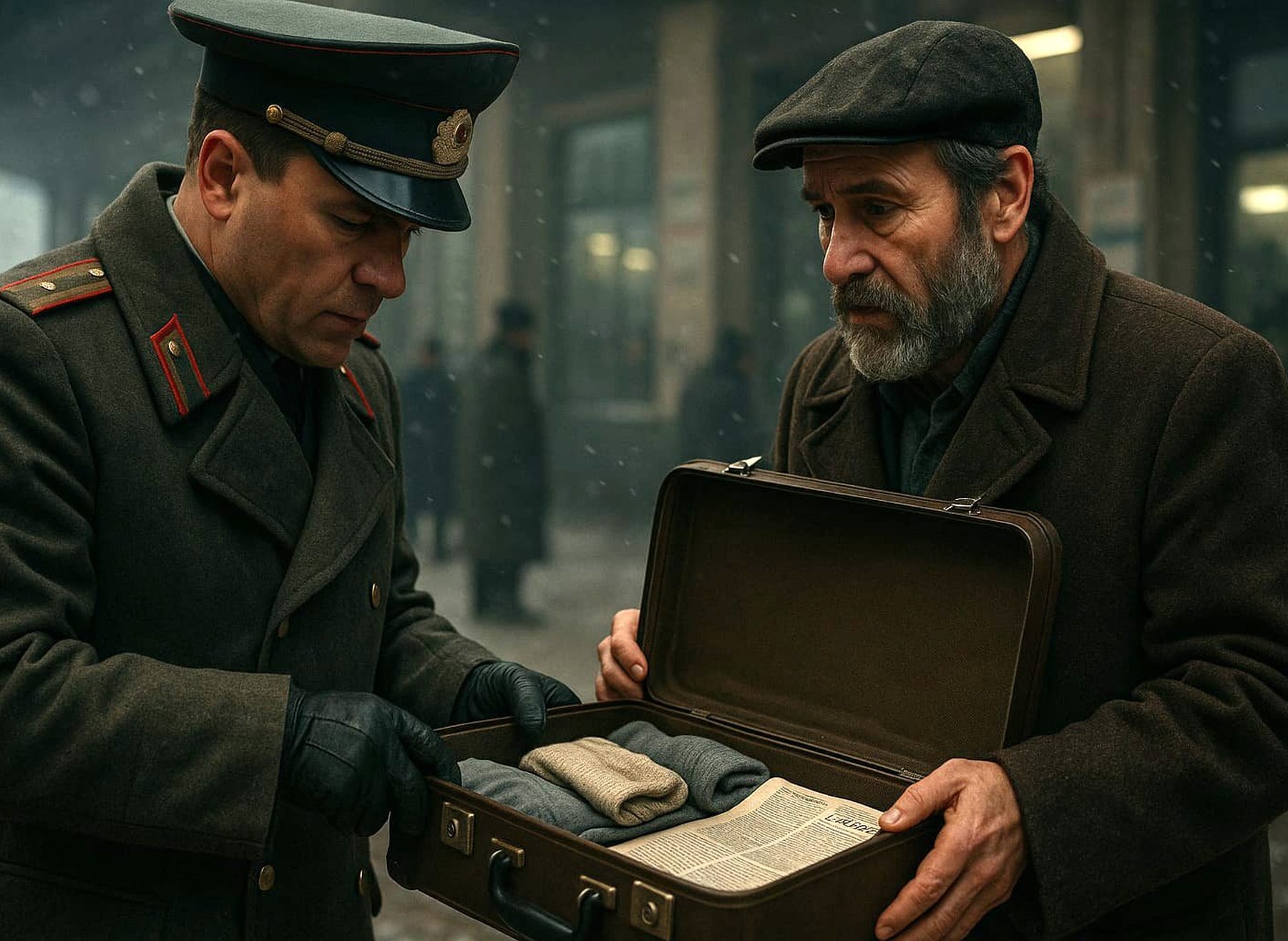
We smuggled tefillin wrapped in socks, folded pages of sifrei kodesh between Russian newspapers, tucked mezuzos into winter coat linings. Everything had to look normal. One raised eyebrow from a customs officer, and that was it. But we kept going—because no Jew should be left without the tools to do a mitzva.”
Everyone knew the Lubavitcher Rebbe had tremendous influence over Russian Jewry. So when I found myself in New York in 1977, it felt right to meet with the Rebbe. When I mentioned I was working with Russian Jewry, things changed quickly. Suddenly, I wasn’t being pushed off—I was being pushed forward. The Rebbe had time for everyone, but first priority was for Jews helping other Jews.
THE YECHIDUS
A few days later, I arrived at 770 for my scheduled yechidus. I came on time, but I still had to wait. That’s how it worked. You didn’t rush the Rebbe, and no one complained. People sat quietly in the hallway, like they were waiting to enter somewhere holy.
An hour passed.
Finally, they called my name.
I stepped into the Rebbe’s office.
The room was small and simple—just a desk, a few chairs, some sefarim on the shelf—but the moment I walked in, everything felt different. The Rebbe was sitting at his desk, calm and focused. He looked straight at me—not past me, not through me. At me. Like I was the only person in the world.
He gave a small nod, motioned for me to sit down, and I began.
I told him about the rescue committee. About Rabbi Shwei. About the packages we were sending to Russia—the tefillin, the mezuzos, the seforim, the knives for shechita. The Rebbe listened without interrupting, but I could tell he was taking in every word.
It was strange. I had expected the Rebbe to speak more. To give brachos, to guide, to teach.
But instead, he asked questions. Thoughtful, simple questions that made me explain more than I expected. The kind of questions that made me think harder—about the people we were helping, and about myself.
I kept talking. The Rebbe kept listening.
To this day, I wish I had stopped and asked him something. Something about his Torah, his leadership, his vision. But I didn’t. I was so focused on my mission that I forgot who I was sitting in front of.
Still, those ten minutes felt like I was in there for hours.
Finally, as the meeting was winding down, I told the Rebbe my travel plans.
“I’m heading to London and then Berlin,” I said. “I’m hoping to find shechita knives that I can take into the Soviet Union. I’ll be back in New York Thursday, just in time for Shabbos.”
The Rebbe nodded. “Have a safe trip,” he said.
Then he looked at me again.
“And where will you be for Shabbos?”
I blinked.
I had just told him.
“I’ll be flying back from Berlin Thursday,” I said slowly. “So be’ezras Hashem—I’ll be in New York for Shabbos.”
The Rebbe didn’t react. Just kept his eyes on me.
“But where will you be for Shabbos?” he asked again.
I tried to hide my confusion. Maybe he hadn’t heard me?
“In New York,” I said, this time slower and with a smile.
The Rebbe nodded gently. “Well,” he said, “wherever you are—you should have a good Shabbos.”
Now I really didn’t know what to make of it. Why was the Rebbe repeating himself? I had been clear. And still, he wasn’t letting it go.
“Im yirtzeh Hashem,” I said one last time, “in New York.”
The Rebbe looked at me, and his voice was calm, almost soft.
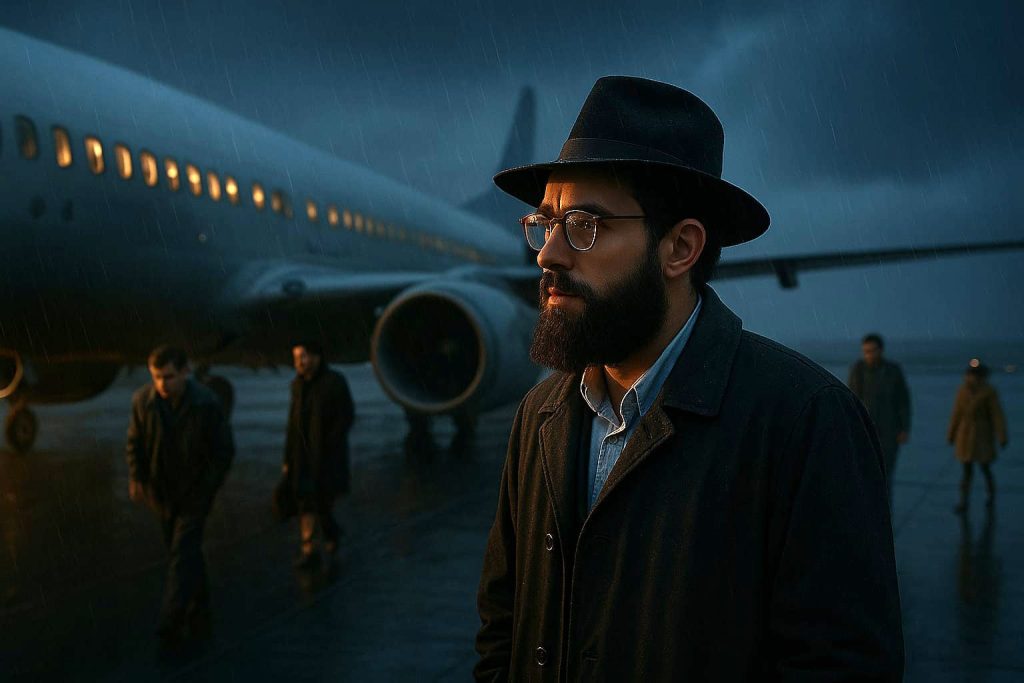
“Right. Well, wherever you are… you should have a freilichen Shabbos.”
I thanked him, stood up, and left the room.
As I walked back down the hallway, something about the conversation stuck with me. It wasn’t just the words—it was the way he said them. Like he knew something I didn’t.
But I shrugged it off. What was there to think about? Maybe that was just how the Rebbe spoke.
The next morning, I got on a plane to Berlin.
THE STORM
By Thursday, I had found the knives in Berlin. My flight plan was simple: Berlin to Canada, then New York. I’d be home in time for Shabbos.
Takeoff was smooth, but then the shaking started. The plane dipped suddenly, and the captain’s voice came on: “Due to bad weather over the Atlantic, we’re making an emergency landing at Keflavik Airport in Reykjavik, Iceland.”
As we landed safely, I suddenly remembered the Rebbe’s words: Wherever you are… you should have a freilichen Shabbos.
I felt a chill down my spine.
STRANDED
Friday afternoon, the announcement came: “The storm has cleared. We will begin boarding shortly.”
My heart sank. I couldn’t board—it was too close to Shabbos. If I boarded now, I’d be flying as Shabbos began. I wouldn’t break Shabbos—not even in Iceland.
So I stayed behind. One by one, the other passengers walked toward the gate. And just like that… I was alone in Iceland. No wine for Kiddush. No challah. No candles. Nothing ready for Shabbos.
I walked around the airport asking for help: “Do you know if there’s a Jewish community here?” Nothing. I flipped through phone books, searching for Jewish names. Nothing.
As I wandered through a terminal, I noticed a hallway with a chain across the entrance and a “Do Not Enter” sign. Like most Israelis, I treated that as a suggestion.
At the end of the hallway, lying on a bench, was a man with a black beard and a sefer resting on his chest.
A frum Jew. In Iceland. In 1977.
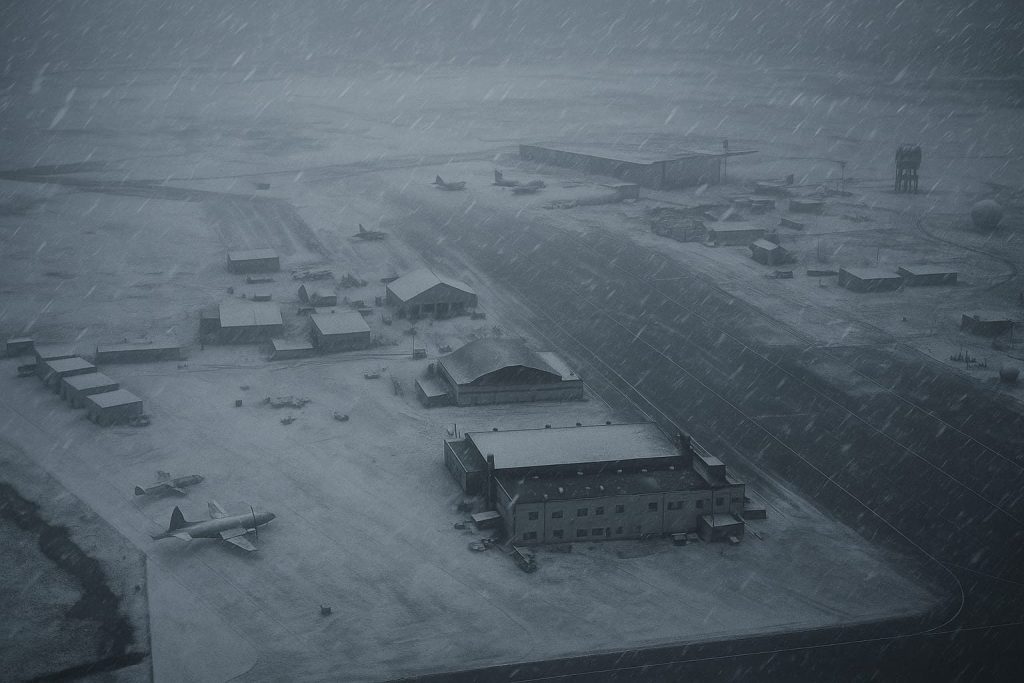
That just didn’t make sense. Iceland wasn’t a place you passed through. Jews didn’t vacation there. You didn’t “just happen” to run into someone frum in a tiny airport in the middle of a snowstorm. The chances were almost zero.
And yet… here he was.
THE SHLIACH
I gently tapped his shoulder. “Excuse me… I can’t believe it. Another Jew? Here? I’ve been stranded since my flight made an emergency landing.”
The man smiled. “It’s good to see another Yid. I’m a shliach of the Lubavitcher Rebbe. I travel all over the world on the Rebbe’s shlichus.”
“What are you doing here?” I asked.
“This is a special section for the U.S. military—there’s an Air Force base here called Keflavik. A few days ago, we got word that American Air Force pilots would be stopping on a classified mission, tracking Russian submarines. Six of the pilots are Jewish.”
My jaw dropped.
“The Rebbe sent me to be ready for them. I brought wine, challah, kosher food, and a Sefer Torah. These men deserve a proper Shabbos.”
He pointed to his duffel bag. “I brought everything needed for Shabbos. We don’t leave a single Jew without Shabbos—not on the front lines, not in the middle of a frozen island.”
“Is there any chance I could join?” I asked.
“I’ll have to pull some strings,” he said. “Technically, this base is off limits for civilians. But I think I can get you cleared. And anyway, we have Hashem on our side. And His loyal servant, the Rebbe.”
While I waited, the emotions hit me. The Rebbe’s face came back to me. His voice. His strange question.
Where will you be for Shabbos?
He hadn’t been confused. He had known. This very moment was exactly what he had meant.
When the shliach returned with clearance, I told him about the yechidus. About how the Rebbe asked me three times where I’d be for Shabbos, and how he kept saying, “Wherever you are… you should have a freilichen Shabbos.”
The shliach’s eyes lit up. “The Rebbe said freilichen—a joyful Shabbos. Maybe that means we’ll have a minyan!”
“But you said there were only six Jewish pilots.”
He grinned. “Sometimes Hashem has extra guests planned.”
THE MIRACLE
By Shabbos, there weren’t just six Jewish pilots—there were eight. With the shliach and me, that made ten. A perfect minyan.
We davened. We sang. We made Kiddush over wine. We had three full seudos, beautiful divrei Torah, and a Shabbos like no other.
During the afternoon meal, the shliach said, “Tell them your story.”
I stood up and looked around the table: “It’s not just the miracle of finding a minyan in Iceland. It’s not just the food, or the Torah, or the wine. It’s that someone—far away in Brooklyn—cared. The Rebbe cared enough to send someone. He worried about each of you. And somehow… he worried about me too.”
The room was quiet. One soldier wiped his eyes.
I looked around the Shabbos table—at the candles, the challah, the soldiers—and felt it in my heart: Hashem was with me all along.
Even in Iceland… the Rebbe was looking out for me.
Adapted from the Hebrew book “Abba” by Rabbi Ari Smith
Beis Moshiach #1469 • pp. 55-59
© 2026 Beis Moshiach Magazine. All rights reserved.
This article originally appeared in Beis Moshiach #1469. You are welcome to share it with friends and family by email or in print, provided that you do not change, add to or omit any part of it, you credit the author and Beis Moshiach, and you include a link to archive.bmoshiach.org (written out in full in printed copies).
To republish this article in a newspaper, magazine, book or website, please request permission in advance at [email protected].