Rediscovering My Father
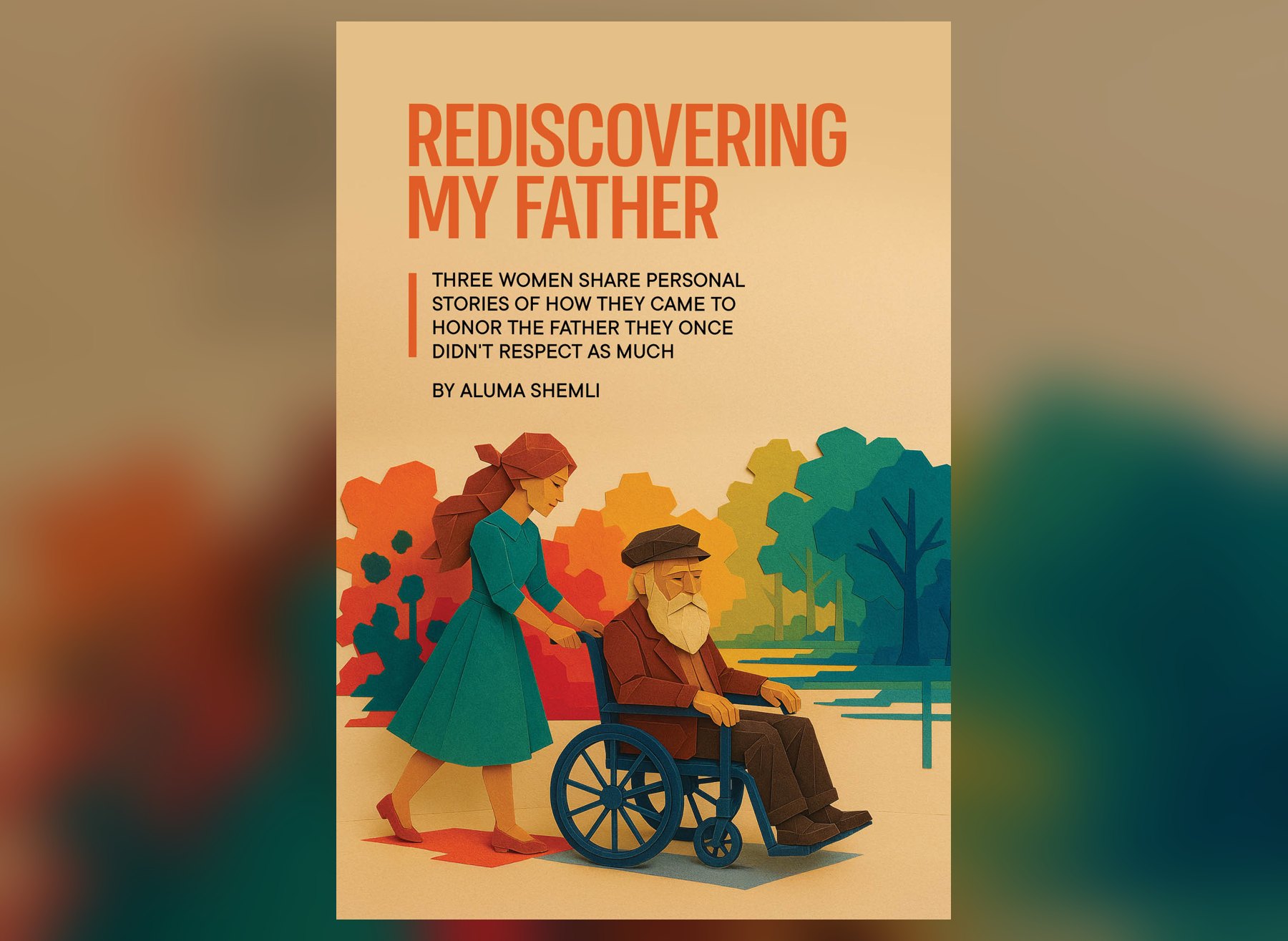
Three women share personal stories of how they came to honor the father they once didn’t respect as much.
My name is Sarit. I am the mother of several small children, a shlucha, and I work as a teacher. I have a lovely father who takes care of us, his children, with all his heart. He usually pays whatever is needed, educating us, even indulging us, in his own special style, of course. Over the years, I was very embarrassed by him, I’m really sorry to say, and even though I’m writing this entry under a pseudonym, I still feel rather awkward about it.
As a young girl, I naturally saw him as a perfect father, as any daughter should. Tall and strong, bringing lots of gifts. I even loved sitting near him on Shabbos afternoon when he fell asleep on the couch, and I would listen to him snoring… However, already in my first years of elementary school, I began to realize how a father is supposed to conduct himself before those around him, and I started feeling humiliated. We’ll start with his work.
The third question in any icebreaker game after “What’s your name?” and “How old are you?” is perhaps “What do your parents do for a living?” I had no idea how to answer this question, and the truth is that to this day, the answer really isn’t clear to me. My father was a sort of “macher”; he was busy every day, and every time it was something else. Sometimes, he served as a go-between, sometimes he organized collections for tzedaka. Every so often, a new issue came up. The issue was discussed at home incessantly, and my father remained involved in the matter up to his neck, until the next issue came along. He was always very preoccupied, and it was never possible to know where and when we could see him.
When I asked my mother what my father did, she replied: “Whatever necessary.” Maybe that was right, but I couldn’t give that answer when they asked me what my father’s job was. When I was around nine or ten years old, I decided that my father was a gabbai. There was some truth to this, since he was connected to virtually all matters of communal importance, especially in our shul.
At a certain stage, I also realized that my father was not a big Torah scholar. When I was around 12, he no longer knew how to help me with my homework in Chumash, and would fall asleep when I reviewed a sicha of the Rebbe. My older brother would review Gemara with the younger siblings once every two weeks, when he returned from yeshiva for Shabbos. I have no idea who reviewed with him when he was a boy.
My father loved to spoil us in a very “bombastic” and loving kind of way, giving no consideration at all to what the person receiving the gift might think… For example, when he traveled overseas, and this happened quite often in his many business dealings, he would return with expensive and fancy clothes and shoes from top-notch firms. What can I do that a puffy multi-layered dress got me extremely excited in kindergarten, but not so much when I was 13? I tried to explain to him that at my age, I already have a different taste in fashion. This really made him laugh. “What do you know about fashion anyway? I buy the most prestigious brand-name products for you!”
My mother taught me to say ‘Thank you’ with sparkling eyes, and then go with her later to buy clothes more to my liking. In any case, my father didn’t really notice what I eventually wore. My mother herself would recieve large surprise gifts every time as if it was the first time. Suddenly, there was a Shabbos weekend at a hotel for just the two of them, or some new kitchen appliance. Sometimes, she would sigh, but she would always appreciate her husband, who wanted so much to make her happy.
As for my father’s chinuch methods… Well, what can I say? That too also came along with a fair share of dramatic developments and bombastic declarations. One night, he heard a lecture on the dangers of the excessive use of screens, and by the very next day, he had already removed the computer from the house and even confiscated the children’s Tetris video game. Except for the microwave screen, nothing digital remained at home… After a week and a half, he got over it. On other occasions, he demanded that we listen only to Chabad niggunim, or he decided to tell the children a Chassidishe bedtime story. After he told these stories for three consecutive days, my mother took over…
After my wedding, I hardly spoke about my father and I virtually avoided coming over for Shabbos. I was mortified. My darling father longed to see me, and he even came to my husband’s kollel and took him to a prestigious restaurant for a talk. He explained to him that he loves me and wants to see me more. My tzaddik of a husband didn’t lay the blame on me, choosing instead to lead him to think that it was him who didn’t want to come. We started coming every other Shabbos, and my father loved spoiling us as only he knew how, including paying for our transportation expenses, until he got over this too.
When our first child was born, it was clear we would receive the most expensive baby carriage available, and it was equally clear that no one planned to consult with me about the model. My husband loves my father very much. Who wouldn’t want a shver who loves to give with all his heart, is proud of him wherever he is, and every sicha of the Rebbe he gives over at a Shabbos seuda, it’s as if he’s doing so for the very first time and with the greatest skill and talent possible?
Shortly after the birth of our third daughter, I started a new job and got acquainted with Mira, a sweet teacher much older than me, the daughter of a very prominent mashpia. I admired her because of who she is and I was jealous of her due to her father, whose name she was proud to mention…
We grew very close despite our difference in age, and we became good friends. I shared almost everything with her, save for my tense relationship with my father. I was greatly ashamed by my own feeling of embarrassment, and I reasoned that with all her family history, it would not be appropriate for me to seek her advice in this matter.
One day, during a deep heart-to-heart talk, she told me about the numerous grievences she has towards her own father. I sat in stony silence. She surely thought I was just containing myself or something… She claimed that he always had time for everyone except for his own children. He made some impossible demands of them, he didn’t quite understand them, they didn’t have the option of not wanting to say Chitas or going on mivtzaim when they’re the children of…
I returned home very agitated. I hardly said a word for two days, just thinking about what she said. It very well could be that her complaints were legitimate, just as mine were. However, one thing was certain: The yetzer hara has a variety of ways of keeping us from honoring our parents. It’s not that I didn’t honor my father according to all the rules, but in my heart, I was still ashamed of him. What kind of honor is that?
I did some internal work with myself, and decided I would really honor him, placing myself under him. He is my father, my champion, my indulger, my tzaddik. He is the one who does “whatever necessary” and this time I say it without embarrassment because it’s true. They need an air conditioner in shul? Who will run, make inquiries, collect money from everyone, and finally be there for a whole afternoon when they come to install it? My father. Perhaps this isn’t the most prestigious job, but my father never looked for respect.
When he buys me a gift, I put on my mother’s glasses and see a father prepared to give everything with all his heart without looking at his wallet. He only buys the best and the most expensive. I started admiring him, loving him. But above all, I was ashamed at the kind of daughter I was, a daughter who failed to see what an amazing father she had. I also had a good teacher – my husband, who had been admiring him for some time. Yet, in the past, either I didn’t listen to him or I rejected what he said with a forgiving smile.
While I could conclude my story here, I must add that since my decision to follow this path, Hashem has seemingly made certain to provide me with every opportunity to be proud of my father. “A person is led according to the path he wishes to follow” Chazal say. We come for Shabbos, and he’s the only one who has patience to sit with the children and play “Chutes and Ladders” after the seuda when everyone wants to take a nap. When there’s a family in the neighborhood enduring some severe financial hardships, my father no longer sleeps nights, constantly busy in helping them to get back on their feet, even running to the debt collectors to plead for some breathing room. He sits and learns three chapters of Rambam with his eyes closing – every day! – or perhaps it was always like this, and just I, in my blindness, failed to see it?
Ensuring Respect for One’s Father
My name is Efrat. I am the mother of a number of older children at various stages of rebellion. I think that just about says it all. This is a stage that requires a great deal of faith, patience, and tissues… One of the main challenges that the parents of rebellious adolescent children face is shalom bayis. Everyone has his own different approach in relation to his growing offspring, and each parent is certain that his spouse is causing lifelong damage to their child, whether by driving the child away or excusing his behavior.
Fortunate are those parents who manage to survive this stormy period of their lives in peace.
I have to admit that it wasn’t easy for me or for my husband. As with many mothers, I was convinced that my husband was being too harsh, too strict, etc. And then there came a special moment. I don’t know how to define it, nor can I find a better word for it. I was at the Kosel, davening for one of my children with all my heart, tears in my eyes. Suddenly, I came to the realization that there is one job in the education of this child that only I could do and no one else – teaching him to honor his father. Who will bring this matter to his attention? My husband himself? That would only make matters worse.
I made then and there a daring and firm decision. Come what may, he will not be chutzpadik to my husband, at least not when I’m around.
It wasn’t easy. A significant portion of the arguments and other instances that escalated into literal clashes between the two of them were, in my opinion, things that should have been left alone or resolved through compromise. However, I simply didn’t care. From that moment on, whenever I heard my son speaking to his father with chutzpa, I responded immediately at that instant: “You don’t speak that way to your father!”, or “I’m unwilling to hear you talk that way in our house!”, or in the most abbreviated form: “Stop it, that’s your father!”
The boy was stunned. He had never received any comments from me on wearing jeans or smoking cigarettes, but on speaking with disrespect to his father – where even many children considered “Chassidish” often fell short – there was suddenly a new voice.
There was a good connection between my son and myself, and he didn’t want to cause me anguish. He started showing greater respect and stopped the chutzpa. The atmosphere in the house changed completely. It turns out that a sizable percentage of the arguments between them was on the way things were said, not just the differing opinions. “It’s not what you say, it’s how you say it.” When our son spoke respectfully, my husband suddenly managed to listen. Even if he didn’t always agree, he still understood.
Slowly but surely, I noticed that not only had our son changed, his siblings had as well. Showing respect at home to their father was transformed into something real, concrete, and appropriate. The children started bringing him water when he came home, just as in the drawings from kindergarten… Listening quietly to the Rebbe’s sicha at the Shabbos table, speaking politely. Personally, I had found myself in a position different from my husband. Now suddenly, I understood his stance and his frustration more, as I also began defending him in my heart, not just in the presence of my child. The gap between us started closing, and the confrontations with my husband, and his with our son became fewer in number.
I discovered an amazing and ancient secret: When I show respect for my children’s father, they too give him honor. When I allow them to disrespect him, this is the start of a downward slide, regardless of the reason. The respect quickly returned to me, from my stunned husband and my children as well.
Today, our son lives alone, still forging his own path. However, he gives honor in a way that even Chassidishe children don’t know how. He shops for us, delivers, and calls on Erev Shabbos. “Just like Eisav…” my husband laughs. What do I care? The main thing is that the connection between them is excellent. From my standpoint, he can have the brachos too. Everything is fine…
Forever a Father’s Daughter
My name is Maya. My connection with my father was never all that close. He’s a very cold and distant type. After I got close to Chabad, we became even more distant. We hardly saw one another – literally.
Just a few years before his passing, we started getting closer. He needed assistance in getting to his doctors’ appointments and going shopping, and I naturally answered the call. Being together in this way caused us to renew our relationship, or more correctly, establish a new connection that had never existed before. He told me a lot about his childhood and the challenges accompanying him during his lifetime. Suddenly, I understood him. I saw him in a completely different light and revealed my love towards him.
We didn’t have much time together, as his health grew progressively worse until he passed away. I was totally broken, and I felt that I didn’t have enough opportunities to honor him as he deserved.
My husband, his son-in-law, came together with me to the cemetery, escorting him to his final resting place along with the members of the Chevra Kaddisha. Someone from the community, I don’t even know who, said out loud: “How privileged he was! Such a son-in-law he left behind! What a family!”
These words gripped me, representing a source of strength during the week of shiva. They reminded me that the connection between my father and myself was eternal with every fiber of our soul, beyond all physical measure.
My children, educated in the spirit of Lubavitch, my husband, a shliach and educator, all these are his merits, serving him well in Gan Eden.
I can still spoil him by sending him packages of love from me. What don’t I dedicate in his honor? Mivtzaim, the weekly Torah class I give, the nights I get up for the children. While I still long for him, at least I’m calm knowing that I have a way to honor him even now.
The Rebbe’s Kibud Av V’Eim
Talking about honoring our parents, it’s impossible not to envision with our own eyes the impressive and noble image of the righteous Rebbetzin Chana, the devoted mother, who was privileged in the final seventeen years of her life to receive much nachas from her eldest son. We recall stories of the Rebbe’s daily visits to his mother’s house, despite his all-encompassing activities. He never turned his back on her…
However, the honor and respect the Rebbe gave to his father is less well-known but was obviously present. The Rebbe was separated from his father after the 5688 (1927) Tishrei holiday season, after which the contact between them was conducted solely through written correspondence. Ever since the Rebbe was a child, Rabbi Levi Yitzchak was already providing guidance to his son and teaching him.
“G-d Alm-ghty helped me (not by my choice and desire), and I was born as the eldest child of my father, master, and teacher, who had been appointed as the chief rabbi of Yekatrinoslav (now known as Dnipropetrovsk),” the Rebbe said during one of his sichos, describing how he stood alongside his father in his uncompromising struggle against the cruel Soviet regime.
During his imprisonment, the Rebbe invested considerable efforts for his father’s release, and he even sent him packages of food and clothes to supply him with all his material needs. After his histalkus, when Rebbetzin Chana arrived in New York, and eventyally Reb Levik’s notes and writings, the Rebbe made certain to publish his father’s divrei Torah and taught his teachings publicly at farbrengens. Over the years, when the Rebbe received something that belonged to his father, he would rise to his full stature.
Beis Moshiach #1476 • pp. 44-47, 52
© 2026 Beis Moshiach Magazine. All rights reserved.
This article originally appeared in Beis Moshiach #1476. You are welcome to share it with friends and family by email or in print, provided that you do not change, add to or omit any part of it, you credit the author and Beis Moshiach, and you include a link to archive.bmoshiach.org (written out in full in printed copies).
To republish this article in a newspaper, magazine, book or website, please request permission in advance at [email protected].