The Sukkah in the Forest
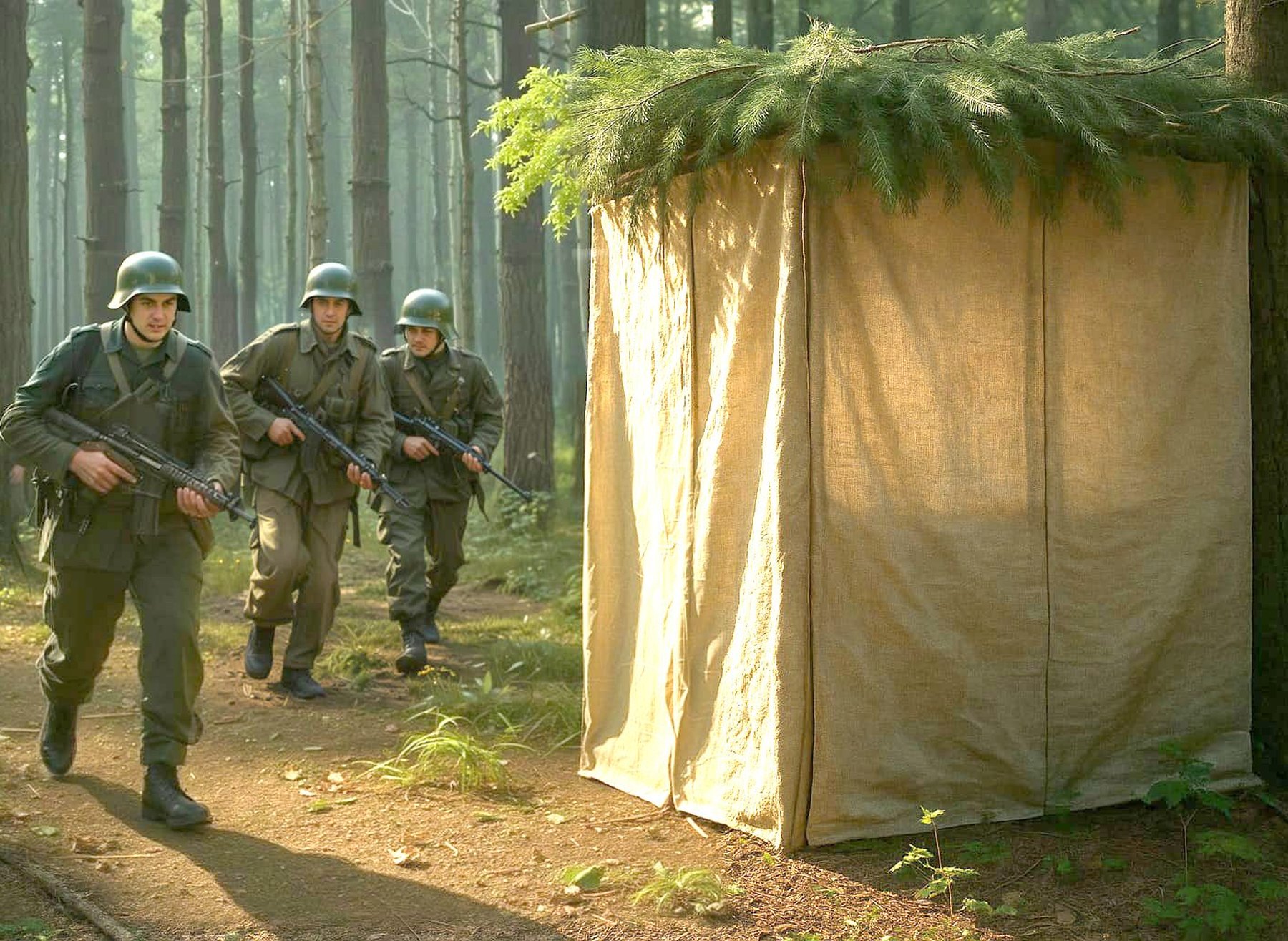
From the TzaddikStory.org collection
Rabbi Shlomo Zalman Horowitz of Potak (a city in southeastern Poland), a direct descendant of the Baal Shem Tov through his daughter Adel — making him about eight generations from the Baal Shem Tov, lived for many years on the Lower East Side of New York City. He was a beloved Rebbe to his many Chassidim, and he often spent time learning with Rav Moshe Feinstein. But before he came to America, during the terrible years of 1939 when the Germans invaded Poland, Shlomo Zalman lived as a partisan (a Jew who hid in the forest with secret groups that fought back against the Nazis) in the forests of Poland, hiding from the Nazis with other Jews. Life in the forest was harsh—cold, hungry, and always in danger.
This is a true story that Shlomo Zalman himself told. He even included it in the introduction to the sefer he later wrote on his Torah thoughts. That sefer carries a haskama (letter of approval) from Rav Moshe Feinstein, showing their close relationship. And Shlomo Zalman, as a direct descendant of the Baal Shem Tov, always felt this story carried special meaning for him and for all of Klal Yisrael:
One evening between Yom Kippur and Sukkos, Shlomo Zalman stepped out of the bunker, a small underground hiding place dug into the forest floor and covered with branches. The air in the forest was cold and sharp. He wrapped his thin coat tighter and whispered, “Ribbono shel Olam, how much longer will this war last?”
As he walked, he suddenly stopped. Before him was an empty clearing—an open patch in the thick forest, with not a single tree.
“What is this doing here?” he thought. “A forest full of trees, and here—nothing?” He felt his heart beat faster. “This is no accident. This must be from Shamayim. This is where we must build our sukka.”
When he returned to the group of partisans, some nodded, but others shouted angrily.
“Are you crazy?!” one of the non-religious men snapped. “A sukka? Out here? Do you want the Nazis to see us? You’ll get us all killed!”
Shlomo Zalman stood tall. “Farkert—the opposite! The sukka will protect us. The Torah says the sukka is like all the mitzvos together. In this dangerous time, Hashem will guard us in its shade. The Gemara (Sukka 11b) teaches that the sukka reminds us of the Ananei HaKavod (Clouds of Glory) that surrounded our people in the desert, and Chassidus explains that it offers real protection—even in the face of enemies.”
The arguments grew heated. Moshe from Krakow crossed his arms. “This is madness,” he muttered. “You’ll have the Germans on top of us in no time.” Beside him, Piotr, one of the less religious men, shouted, “You’re risking all our lives for some hut of sticks!”
But Chaim Yankel, a bearded Chassid with peyos curling down his cheeks, banged his fist on a tree. “No! Shlomo Zalman is right. The sukka is our shield. Hashem will guard us in its shade!”
Yankel from Lodz nodded. “If the Gemara says the sukka is protection, then that’s what it is. I say we build it.”
The voices clashed in the night—fear against emuna, doubt against bitachon. Finally, the Chassidim outnumbered the doubters. One voice after another rose up: “We will build it!” Slowly, the majority agreed.
With blankets stolen from the Germans, they built three walls. Branches from the trees became the schach. As Shlomo Zalman laid the last branch across the top, he whispered, “Yehi ratzon—may this sukka be our shelter,” he whispered. “Ribbono shel Olam, spread Your wings over us. Let these walls be stronger than iron. Guard us from fear, guard us from danger, and let every branch above us be like the Ananei HaKavod that once surrounded our people.”
When the third day of chol hamoed Sukkos came, the forest shook with noise. Trucks roared. German voices shouted. Boots pounded against the ground.
“They’re here!” someone cried, and the partisans scrambled into the bunker.
But Shlomo Zalman and his son, Shmuel, were still in the sukka. Shmuel’s face went pale. “Tatty, we have to run!”
“To the bunker?” Shlomo Zalman asked quietly. “The path is too far. Two trails filled with soldiers. If we try, we will be shot.”
“So what do we do?” his son whispered, his voice shaking.
Shlomo Zalman looked around the fragile sukkah—the blankets for walls, the thin branches for a roof. He closed his eyes. “We stay. Hashem brought us here. He will protect us.”
They lay down, trembling. Shlomo Zalman whispered a tefilla: “If Hashem wants us to be found, I am ready. But please, Ribbono shel Olam, do this for Your own Name. Let the world see that in the merit of the sukka we are saved. Let even the doubters understand that Your mitzvos protect us. Do not do it for me—do it so Your holy Name will be sanctified, and all will know that You alone are our shield.”
He quietly recited the names of his ancestors, a segula for protection, and thought of the Baal Shem Tov. Beside him, Shmuel grabbed his father’s hand. “Tatty, I’m scared,” he whispered.
“Hold on to your emuna,” Shlomo Zalman answered. “Hashem is with us.”
The pounding boots drew nearer. Closer. Louder. The walls of the sukka seemed to tremble. From outside came rough German voices: “Raus! Where are ze hidden Jews? Search every tree, every hole!” Another barked, “Schnell! Check ze clearing!”
“They’re right outside!” Shmuel gasped.
“Shhh,” whispered his father. “Remember the passuk: Einayim lahem v’lo yir’u, oznayim lahem v’lo yishma’u—They have eyes, but they do not see; they have ears, but they do not hear.”
The soldiers passed once… boots pounding right beside the sukka. One barked in German, “Nichts hier? Move on!” They turned back and passed again, flashlights slicing through the trees. Shmuel clutched his father’s coat, whispering, “Tatty, they’ll see us any second!” Shlomo Zalman pressed a finger to his lips, his heart racing, and breathed the passuk again under his breath. Then, unbelievably, the soldiers came a third time. The boots stopped right by the sukka. A voice growled, “Search ze clearing!” Yet somehow, they walked on without looking inside the sukka.
Shmuel buried his face in his father’s coat. “Why don’t they see us?”
“Because Hashem has blinded their eyes,” Shlomo Zalman whispered.
Finally, the boots grew faint. Silence returned to the forest.
The two of them finally let out a deep breath together, tears streaming down their faces. “Baruch Hashem,” Shlomo Zalman said softly. “He has saved us from death to life.”
When they returned to the bunker, everyone stared at them in shock. “You stayed… in the sukka? While the Nazis searched?!”
“That’s impossible!” Moshe from Krakow exclaimed, his eyes wide. “The soldiers were right there!”
Piotr shook his head, speechless. “You should have been caught. How… how did you survive?”
“Yes,” Shlomo Zalman said simply. “We stayed. And Hashem protected us.”
Even the doubters shook their heads in wonder. “It’s true,” one finally admitted. “This was a miracle I can’t explain. It’s impossible they didn’t see you. We all heard the soldiers.”
Shlomo Zalman smiled. “As the passuk says (Tehillim 27:5): Ki yitzpeneini b’sukko b’yom ra’ah—‘For He will hide me in His sukkah on the day of evil.’”
And from that day on, no one doubted that the mitzvah of sukkah could wrap a Jew in Hashem’s protection—like a hug straight from Heaven.
Salute #1478 • pp. 20-23
© 2026 Beis Moshiach Magazine. All rights reserved.
This article originally appeared in Beis Moshiach #1478. You are welcome to share it with friends and family by email or in print, provided that you do not change, add to or omit any part of it, you credit the author and Beis Moshiach, and you include a link to archive.bmoshiach.org (written out in full in printed copies).
To republish this article in a newspaper, magazine, book or website, please request permission in advance at [email protected].