“Do We Know Where the Teiva Is Today?”
It was a rainy Friday morning in Cheshvan, and Morah Rivky’s classroom smelled of wet coats and peanut‑butter sandwiches. The fifth‑grade girls were restless, waiting for the Parsha class to begin.
“Okay, girls,” Morah Rivky said, clapping her hands. “This week is Parshas Noach. Who remembers the size of the Teiva — Noach’s Ark?”
Leah raised her hand. “Three hundred amos long, fifty amos wide, thirty amos tall!”1
“Excellent,” said Morah Rivky. “And what’s an amah?”
Sara frowned. “Isn’t it like… an elbow? But we don’t really know how long.”
“Exactly,” said Morah Rivky, sketching a long rectangle on the board. “Some say eighteen inches, some say twenty‑two. Either way, the teiva was longer than a football field, taller than a five‑story building, wider than a city street — huge! And remember, it wasn’t shaped like a sailboat. The Medrash says teiva means a box. Rashi explains it had three levels — people on top, animals in the middle, waste on the bottom. A floating box, not a cruise ship.”2
A hand shot up in the back. “Morah Rivky… do we know where it is today?”
The room got quiet. Even the rain seemed to hush.
* * *
Morah Rivky smiled. “That’s the big question, isn’t it? Chazal tell us the Teiva came to rest on the mountains of Ararat3. Some Medrashim even say people saw it generations later, taking pieces for protection. And you know what? The Yalkut Shimoni says that when Haman built his gallows fifty amos high, he used wood from the Teiva itself!”4
The girls gasped. “Haman? From Noach’s Teiva?!”
“Yes,” Morah Rivky nodded. “The very wood that once saved the world became the wood on which Haman was destroyed. That’s venahafoch hu — Hashem turns things upside down.”
* * *
“And later, about two thousand years ago,” Morah Rivky continued, “a Jewish historian named Yosef ben Matisyahu, Josephus, wrote that people in Armenia could still see the Teiva. They even took little pieces as charms. So for thousands of years, it was known.”5
“Do we trust what Josephus wrote?” Chaya asked. “That’s a good question, Chaya! The answer is a bit complicated. Most Gedolei Yisrael generally relied on things he wrote unless there were reasons to question it.”
* * *
Sara leaned forward. “But what about now?”
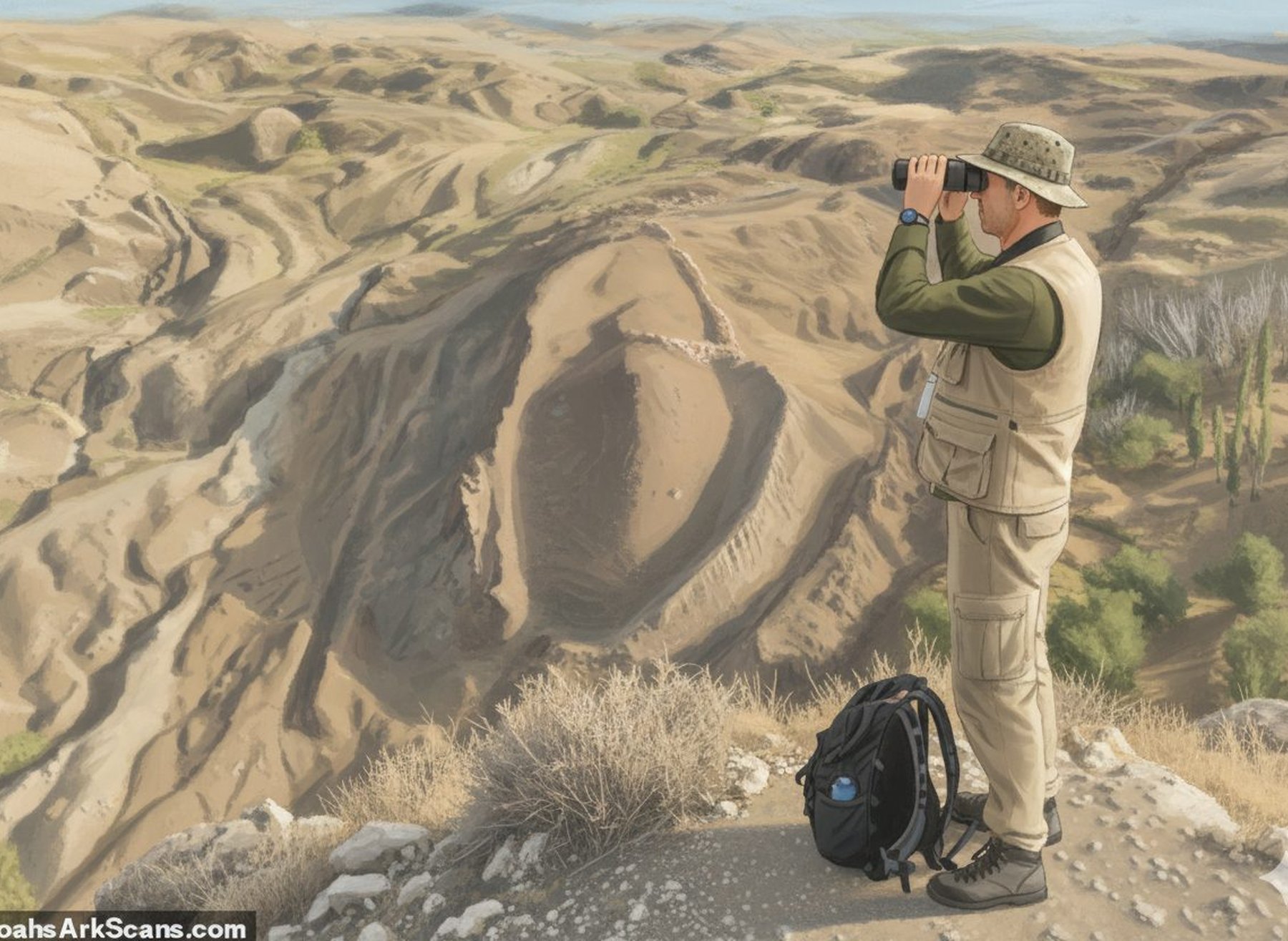
Morah Rivky lowered her voice, like she was about to tell a secret. “Around 5740, In the 1980s, a man named Ron Wyatt — not Jewish, but very curious about the Torah, what they call the Bible — began reading the verses in Sefer Bereishis and wondering if the Teiva might still be out there. He studied old reports and maps. He heard stories from pilots, climbers, and local villagers who spoke of a strange boat‑shaped form in the mountains of Turkey. After years of thinking about it, he finally set out on a trip near what he assumed was Mount Ararat. And there he found something strange: a giant boat‑shaped outline on the side of a mountain. Almost five hundred feet long — and remember, there is a machlokes about how big an amah is, but based on the Torah’s numbers the Teiva would measure somewhere between about 450 and 560 feet long. So this outline fit right in that range… exactly the right size for the Teiva!”6
The girls’ eyes widened.
“He and his team scanned it with machines. They said they found patterns like walls and floors inside. Even iron‑like rivets — like giant nails — that seemed to show it was man‑made. Some even said they found huge anchor‑stones in the valley nearby. It all seemed to match Noach’s Teiva. And very recently, a newspaper in Israel wrote about new radar scans at that same place — showing shapes like rooms inside, and measurements almost the same as the Torah’s!”7
* * *
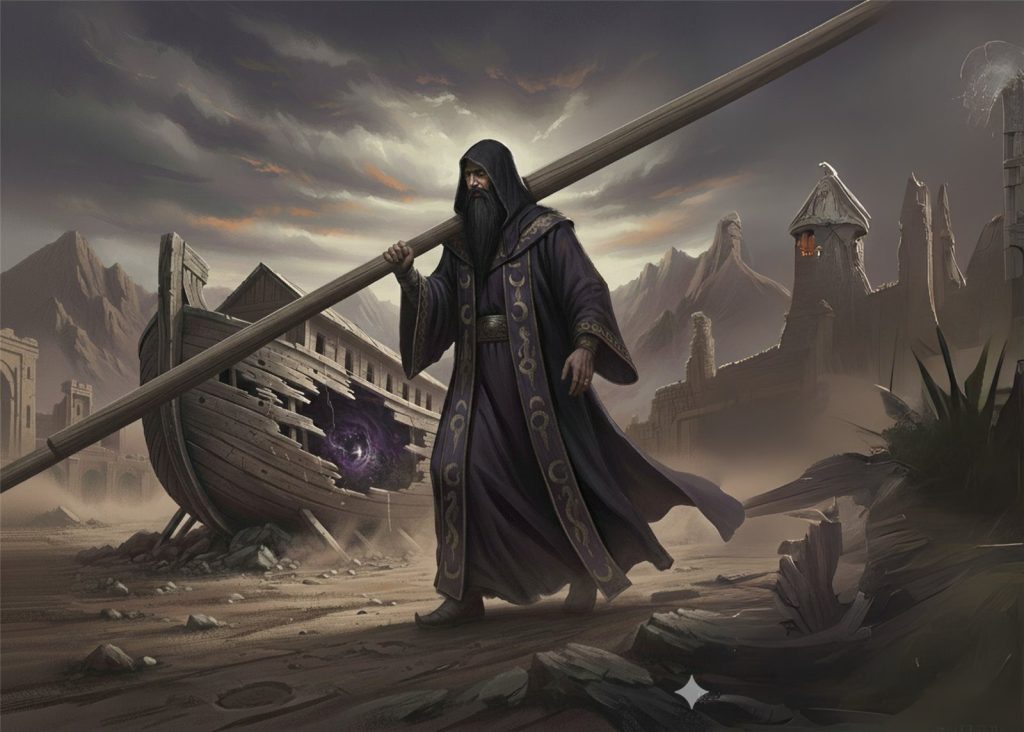
“But not everyone agreed,” Morah Rivky added quickly. “Some scientists said it’s just a natural rock formation. Others reminded us that the Torah calls it a teiva, a box. Rashi says it had a flat roof and three levels. The Ramban explains it wasn’t a boat for sailing but a miracle box built to float. The Abarbanel also says it wasn’t like a ship at all. So maybe the Teiva began as a giant box, and over thousands of years the wood softened, the ground shifted, and it ended up looking rounder, more like a ship. Or maybe… Hashem wants it to stay a mystery.”8
Leah bit her lip. “So is it the Teiva or not?”
* * *
Morah Rivky looked around. “Girls, we should know there were many other claims too. Some said Har Ararat is another mountain in the area called Mount Judy. Others said mountains in Iran, or even other slopes of Ararat. But when scientists checked, most turned out to be only rocks or stories that didn’t fit the Torah’s description. One team in Hong Kong even said they walked inside ‘rooms’ of the Teiva — but later it seemed those were just wooden movie sets built by locals near a glacier to trick people! Another boy, in 5678/1908 said he stood on top of the Teiva with his uncle — but when people searched the area, nothing was found. That’s why we can’t say for sure.
“Unlike other things the Torah tells us will exist forever, like the Aron and Mishkan, we don’t have such a promise about the Teiva, so nothing is sure.”
She folded her hands. “The Torah Sheb’ksav gives us the size and shape of the Teiva. Chazal, in the Torah Sheb’al Peh, gives us the lessons to learn for it.
Sara whispered, “So what’s the lesson then?”
Morah Rivky smiled gently. “That in the stormiest times, Hashem gives us a teiva — which in Hebrew means both ‘box’ and also ‘word’ — to protect us. For Noach, it was the Teiva. For Moshe, it was a little basket. And the Rebbe explained, quoting the Baal Shem Tov, that for us, the teiva are the words of Torah and tefilla. When we ‘go into’ those words, when we live with mitzvos and davening, that becomes our safe box. And notice something special — the Teiva was shaped like a box, not like a regular boat. A box doesn’t sail or steer. It’s closed in on every side, steady and safe. That was the point: Hashem wanted Noach and his family to be inside a closed box, shut off from the storm. And that’s the lesson for us. The box of Torah and tefilla protects us when the outside world is stormy.”9
The rain beat harder on the windows, and the girls pictured the Teiva drifting on endless waters, carrying the world’s hope — maybe still resting on a faraway mountain.
* * *
Morah Rivky clapped softly. “But there’s something else amazing. Did you know almost every nation in the world has some kind of Mabul story in their history? Imagine that — people who never met each other, living far away, still told stories that sound so familiar.”
She held up her fingers and counted. “In Greece, they tell of Deucalion and his wife, who built a giant chest and floated until the water went down. In India, a man named Manu heard from a talking fish that a flood was coming, so he built a boat and saved animals. In Bavel people told of Atrahasis, who built an ark and sent out birds, just like Noach. In nearby lands like Ashur, Assyria, and Chaldea — old kingdoms that are now all parts of Iraq — they told almost the same story. In Turkey and Asia, tribes told of a man named Nama who made an ark, sent out birds, and landed on mountains. In China, people told of Yu the Great, a hero who worked for many years to clear away the waters so people could live again.”10
She walked slowly.
“And across the ocean, in South America, old indigenous tribes told about families escaping in caves or canoes. In Mexico, the Aztecs believed a man and woman survived inside a giant wooden tree. In Peru, shepherds ran into caves high on a mountain when floods covered the earth.”11
The girls gasped. Morah Rivky nodded. “And in North America, many Indian tribes had flood stories too. The Caddo, who lived in the Southeast near Louisiana and Texas, told of a man warned in a dream who built a raft with his family and animals, even sending out a dove. The Cree, who lived in the forests of Canada, told of a canoe with a family and animals, sending out a bird that brought back mud. The Hopi, who built villages on tall cliffs in Arizona, told of a man who saved seeds and life in a boat. The Maidu, who lived in the mountains of northern California, said a bird brought back grass, just like in our Torah. The Tolowa, who lived near Oregon, said a boat landed on a mountain with people and animals inside. The Choctaw in Mississippi and the Algonquin in the northeast also told of canoes filled with families and animals floating on endless waters. Even tribes in Alaska told of families riding out a flood in a big wooden boat until they found land again.”12
Leah raised her hand. “But Morah, how did people all over the world even know about this?”
Morah Rivky’s eyes twinkled. “Excellent question, Leah. The Torah in this week’s parsha of Noach tells us. After the Mabul, people built the Tower of Bavel. But Hashem made them speak different languages and scattered them all over the earth. The Torah lists seventy root nations, each with their own land and language. Rashi explains in simple words: Hashem made people scatter everywhere on the whole earth. The Ramban adds: each group didn’t just wander randomly — they went exactly to the land Hashem wanted for them. The Medrash says: at that moment, Hashem handed out each group’s piece of land, like giving them a home. And the Abarbanel explains: some groups traveled very, very far away, starting whole new lives in distant places.”13
The girls leaned forward. “Some groups stayed nearby Bavel. Others crossed mountains and rivers. Some even sailed across oceans. Chazal didn’t use the word ‘America,’ but later mefarshim explained that people from Bavel could have reached faraway lands. The Chida wrote that people spread to lands very far away. Students of the Vilna Gaon said that when the neviim spoke about ‘distant islands,’ it could mean places across the sea. Indeed, when explorers reached America, they found tribes already there — maybe descendants of families from Bavel.”14
Morah Rivky spread her hands wide. “So, girls, that’s how it happened. After the Tower of Bavel, people carried the memory of the Mabul with them. And no matter where they ended up — Greece, India, China, South America, or even Native American villages — they remembered. The details changed, but the story remained: a great flood, one family, a boat, animals, and a new beginning.”
Leah whispered, “So they all copied from us?”
“Not exactly,” Morah Rivky said gently. “It’s a little like when one girl tells a story of what I did yesterday, and then she tells another girl, and by the time it reaches the fourth girl the whole story has changed and it’s about someone else entirely! Long ago, people all remembered the same huge Mabul, but as they passed it down the details changed. Each group kept a version, but only the Torah’s version gives us the full truth — the size, the Teiva, the animals, and most importantly, Hashem’s promise never to bring such a flood again.
“Our version, in the Torah, is true, of course, because the Torah is the words of Hashem exactly that were given to us through Moshe Rabbeinu, who we all saw talking to Hashem at Har Sinai!” Morah Rivky explained.
The girls nodded thoughtfully, realizing the story of Noach was not just theirs alone, but part of a memory carried by the entire world, each in their own way.
* * *
Morah Rivky closed her Chumash softly. “And girls, let me tell you one more special teaching from our meforshim. Did you know that Noach and Moshe are very closely connected?
The Zohar and the Arizal explain15 that Noach’s name has the same letters as Chen — grace or beauty. The Torah says about both Noach and Moshe, that they ‘found chen in Hashem’s eyes.’ But here’s the difference:
Noach was good and holy, but when Hashem said a flood was coming, Noach didn’t cry out for the rest of the world. He only built the Teiva for himself and his family. That was his shortcoming. Avrohom later davened for the people of Sodom, and Moshe prayed for Bnei Yisrael — but Noach stayed silent.”
She leaned in. “Moshe came to fix that. When the Jewish people sinned with the Egel Hazahav, the Golden Calf, and Hashem wanted to destroy them, Moshe begged: ‘Erase me from Your Torah if You don’t forgive them!’16 Imagine that! Moshe was ready to give up everything just to save his people. That was the repair — the tikkun — for Noach’s silence.”
The girls looked puzzled. Morah Rivky explained gently, “The Arizal teaches about something called gilgul17. That means a soul can come back to another person to fix what it didn’t finish before. Noach’s Neshama came back as Moshe’s Neshama — so Moshe could fix what Noach left undone. Noach didn’t daven for his generation, but Moshe gave his whole heart for his people.”
She smiled warmly. “Chassidus explains: Noach shows us the tzaddik who lives in quiet holiness. Moshe shows us the leader who enters the storm with his people and lifts them up. And the Rebbe taught that there’s a spark of Moshe in every Jew18 — giving us the strength to care for others too.”
Her voice grew softer. “And the chain goes even further. The Arizal says Noach’s soul returned as Moshe. The Zohar says Moshiach will have the neshama of Moshe19. So the line is: Noach – Moshe – Moshiach. Noach saved the world in a physical way. Moshe saved the Jewish people both physically and spiritually. And Moshiach will one day — which is very, very close — save and uplift the entire world forever. That’s why we say Moshiach continues the fixing, bringing the world to its final Geula.”
The girls sat in silence, eyes wide with wonder. The rain had stopped, and sun glowed through the clouds, as if Hashem Himself was smiling — a promise that His chen, His kindness and beauty, will guide the world all the way to Geula.
Sources: 1) Bereishis 6:15. 2) Rashi on Bereishis 6:16; Midrash Rabbah 31:10. 3) Bereishis 8:4. 4) Yalkut Shimoni Esther 1056; Bereishis Rabbah 33:7. 5) Josephus, Antiquities I:3:6. 6) Ron Wyatt, Durupınar site reports (1980s). 7) Jerusalem Post, Sept 2024; National Geographic Historia. 8) Ramban on Bereishis 6:19; Abarbanel, commentary on Bereishis. 9) Likkutei Sichos vol. 10, Bo el Hateva. 10) Greek, Indian, Mesopotamian, and Chinese flood myths (TalkOrigins flood myths collection). 11) South American flood myths (TalkOrigins). 12) Native American flood myths — Caddo, Cree, Hopi, Maidu, Tolowa, Choctaw, Algonquin, Inuit (TalkOrigins). 13) Bereishis 10–11; Rashi, Ramban, Bereishis Rabbah 37:4; Abarbanel. 14) Chida, Midbar Kedemos; Students of the Vilna Gaon on distant islands. 15) Zohar Bereishis 67b; Arizal, Shaar HaGilgulim Hakdama 36. 16) Shemos 32:32. 17) Arizal, Shaar HaGilgulim Hakdama 36. 18) Tanya, Iggeres HaKodesh. 19) Zohar III:273b; Arizal, Shaar HaGilgulim Hakdama 36
Beis Moshiach #1480 • pp. 55-59
© 2026 Beis Moshiach Magazine. All rights reserved.
This article originally appeared in Beis Moshiach #1480. You are welcome to share it with friends and family by email or in print, provided that you do not change, add to or omit any part of it, you credit the author and Beis Moshiach, and you include a link to archive.bmoshiach.org (written out in full in printed copies).
To republish this article in a newspaper, magazine, book or website, please request permission in advance at [email protected].