The Role of a Mashpiah in Shidduchim
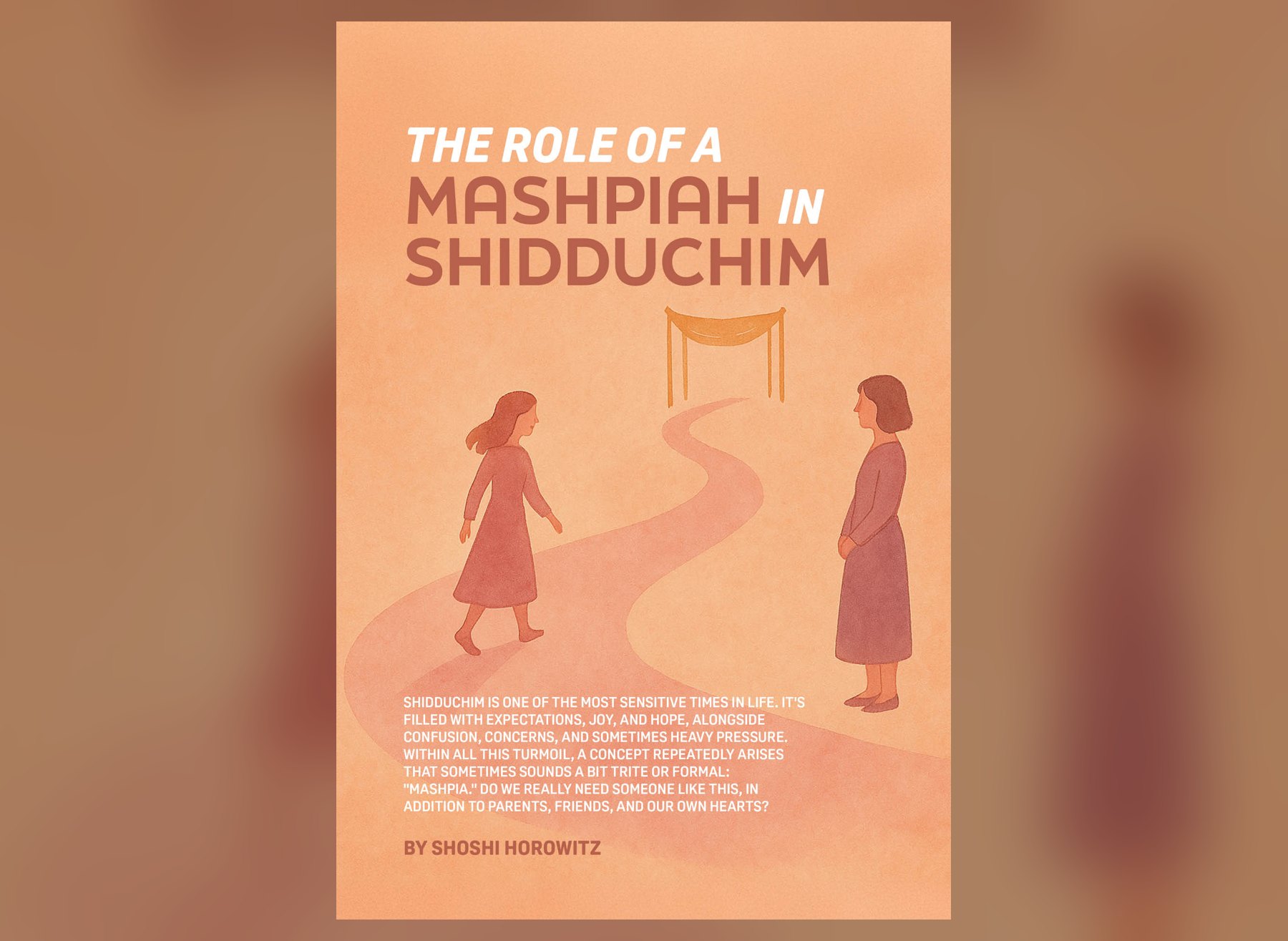
Shidduchim is one of the most sensitive times in life. It’s filled with expectations, joy, and hope, alongside confusion, concerns, and sometimes heavy pressure. Within all this turmoil, a concept repeatedly arises that sometimes sounds a bit trite or formal: “mashpia.” Do we really need someone like this, in addition to parents, friends, and our own hearts?
Shidduchim is one of the most sensitive times in life. It’s filled with expectations, joy, and hope, alongside confusion, concerns, and sometimes heavy pressure. Within all this turmoil, a concept repeatedly arises that sometimes sounds a bit trite or formal: “mashpia/h.” Do we really need someone like this, in addition to parents, friends, and our own hearts?
From the Rebbe’s letters, life stories, and the experience of many, it turns out that yes, we do. A mashpia/h is not just another piece of good advice, but a gift and tool that the Rebbe gave us. Especially in shidduchim, when one decision changes an entire life, the presence of a mashpia/h can make all the difference.
Help Not to Miss the Shidduch
I’ve often heard from older single women this painful sentence: “I wish I could receive today the suggestions I passed up in the past.” Of course, everything is b’hashgacha pratis, but the feeling of having missed out is painful.
A mashpia/h is the one who pauses before saying a hasty “no” and directs you to check again.
Once someone told me that during her dating period, she decided not to turn down a significant suggestion without her mashpiah’s approval. In one of her moments of despair, her mother encouraged her and said: “At least I know you didn’t miss your shidduch”…
Objectivity Versus Family Pressure
Parents want the best for their children, but sometimes, out of concern or a desire to get out of a stuck situation and experience joy in the family, they may put on pressure even when it’s not appropriate.
A teacher who worked with me, who was no longer young, became engaged. However, the shidduch that excited everyone fell apart with great heartache. After some time, she shared with me that her mother had pushed her to get engaged, claiming she was no longer young and had sisters waiting behind her. Under the pressure, she gave up on essential things, just so “it would finally happen.”
Her mashpiah was the one who stopped her and told her that despite all the desire and need to get married, there are things you cannot compromise on. A true mashpia sees the big picture and is not swept up by family or social pressure.
A shidduch is a fateful decision that affects entire lives for generations. This is where the spiritual power of “asei lecha rav” comes in. When a girl chooses a mashpiah for herself, she not only gains good advice but also opens a gateway to special siyata d’shmaya. Her decisions are no longer based solely on emotion and personal logic but receive strength from the Rebbe.
The Possibility for Real and Safe Dialogue
There are things that are difficult to share with parents. Sometimes it’s about deep feelings, sometimes about questions regarding readiness for marriage or boundaries. With a mashpiah, you can speak about this openly. She won’t always answer immediately, but the conversation itself, the ability to lay things out on the table, brings clarity and calm.
As the Rebbe emphasized in his letters, the very act of speaking organizes one’s thoughts. Therefore, it’s important that the mashpiah be both experienced and someone you can feel comfortable with. This reinforces the need to appoint a mashpiah as early as possible, to get to know her and build genuine openness.
A mashpiah is not just a “consultant.” She is a Chassidishe woman with the ability to listen and understand. A woman with life experience, whose very perspective on her life – marriage, education, daily routine – provides a living and inspiring example.
It’s important to emphasize: a mashpiah does not replace a rav or a professional! Sometimes there is a need for a psychologist or focused emotional therapy. And the mashpiah can guide you in this too, helping you understand the need for it.
Not Multiple Opinions – But One Anchor
There are girls who consult “with everyone”: mother, friend, aunt, sister-in-law. The Rebbe did speak about three friends for consultation, but in the end, multiple opinions create confusion.
You can discuss things with other close people, but the mashpiah is the one to turn to. The decision remains yours, but she is the anchor you return to again and again.
Over the years, several important points have become clear to me:
A. It’s worthwhile to choose a mashpiah as early as possible in life, even if you later change her. This way you learn to consult and build trust. When there’s a prior relationship with the mashpiah, and the girl has already consulted with her in the past about other life decisions, the parents also see that there is siyata d’shmaya and trust grows. They themselves suggest that the girl consult and hear what the mashpiah proposes, or see her as someone to consult with in cases of doubt regarding a shidduch.
B. The mashpiah also needs time to get to know the girl, her level of Chassidishkeit, and her patterns. A mashpiah who is with her over time understands her better and knows how to advise according to her familiarity with the mushpah and previous suggestions that came up.
C. A mashpiah is not a certified professional, but she often identifies unhealthy situations. Someone told me that the bachur she met called her endlessly even before an engagement, between dates. To the parents this seemed positive, but the mashpiah understood there was a deep problem here.
What a Mashpiah Doesn’t Do
It’s important to remember: a mashpiah doesn’t decide for you. She doesn’t rule on halachic matters and doesn’t force you. She reflects, is supportive, and illuminates. In the end, the decision is yours alone! But she prevents you from deciding alone out of confusion or pressure, and ensures that you have someone by your side who looks at things objectively.
Shidduchim is a journey that affects all of life for generations. A mashpiah is a gift for this journey. She brings clarity, balance, and blessing. The Rebbe gave us this tremendous gift, and it is his heartfelt request. In other words: don’t go on this journey alone!
The Relationship with the Mashpiah Proved Itself
There are cases where the mashpiah’s role carries heavier than usual responsibility, and she herself needs to consult. This was the case when a girl I knew very well met a young man who is not Chabad. Her parents were very angry and even threatened not to come to the wedding.
The girl herself was not considered particularly Chassidish, but over the years she consulted with me a lot and built a relationship of trust with me. Because I knew her health situation closely, I understood that in a “regular” shidduch she might face significant difficulties. After I turned to a rav for consultation, I received clear encouragement – to continue supporting her even in the face of parental opposition.
The process wasn’t easy. There were long conversations, many concerns, and much guidance from professionals. But thanks to the long relationship I had with the girl, and the parents knowing me and trusting me, they eventually agreed to this shidduch.
Today, boruch Hashem, several years later, you can see the results. They have strengthened greatly: spiritually, Chassidishly, and in their connection to Chabad.
Shoshi Horowitz is a kalla teacher and a dating coach.
Beis Moshiach #1483 • pp. 46-47, 48
© 2026 Beis Moshiach Magazine. All rights reserved.
This article originally appeared in Beis Moshiach #1483. You are welcome to share it with friends and family by email or in print, provided that you do not change, add to or omit any part of it, you credit the author and Beis Moshiach, and you include a link to archive.bmoshiach.org (written out in full in printed copies).
To republish this article in a newspaper, magazine, book or website, please request permission in advance at [email protected].