You Don’t Choose Your Family, You Deal With Them
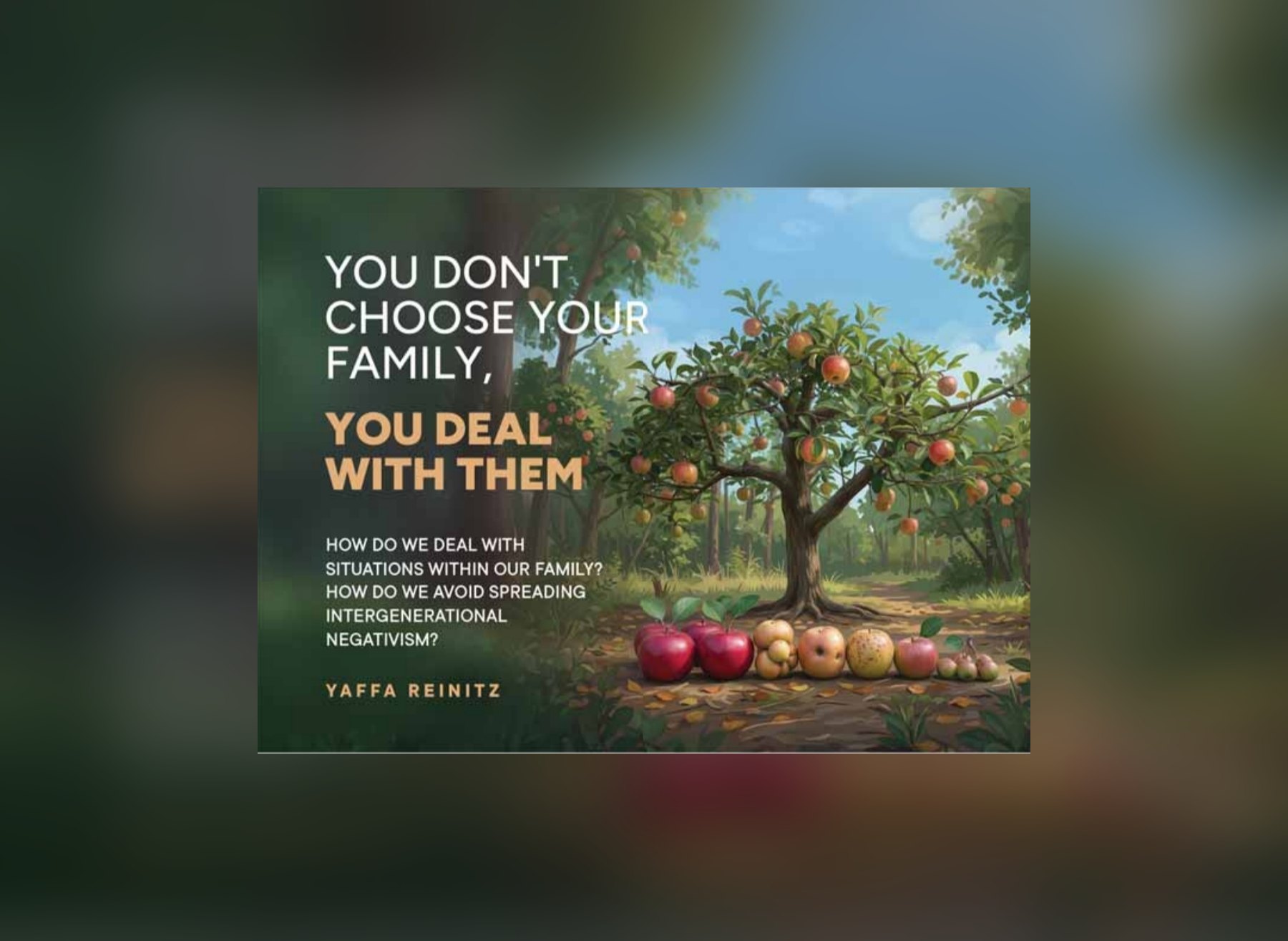
How do we deal with situations within our family? How do we avoid spreading intergenerational negativism?
This is the story of a family dealing with complex challenges. The family members live in a very difficult neighborhood next door to criminals and the underworld. They also have criminal relatives – the father’s uncle is a famous charlatan, you can’t believe a word that comes out of his mouth, the father’s brother has long since joined a bad culture, and there are rumors that he is a murderer. ‘You need to stay away from them… Oy, oy’, the people cackle. ‘Who would want to marry any of them? Miserable people…’
This family is the family of Yaakov Avinu. Yet, despite all the challenges, he raised a glorious family, and from it came the People of Israel.
Admittedly, Yaakov Avinu’s case is an extreme one, and most of us don’t have problematic family members like Lavan and Eisav. However, every family has people who are slick and very trying, and everyone deals with at least one challenging area.
So, as we all know, you don’t choose a family, you deal with them.
In my clinic, I sometimes meet parents who feel frightened and helpless because something in their family is ‘not going well’, e.g., when their children’s education is not working as it should. Panic develops for all sorts of reasons, and it’s important that we recognize and identify them, so that we can focus on solutions and not on hiding, shame, angry responses, or the blame game.
What Will People Say? & Other Reasons
Reason #1: “What will they say about us?” We live in communities, and belonging is a basic human need. We fear that once our environment knows that we have a problem, people will look at us in a negative fashion, and we may find ourselves ostracized in one form or another.
Reason #2: “What does this say about me?” We mistakenly assume that ‘if there’s a bad seed in my family, it’s because of me, something is wrong with me’, resulting in shame and the need to beat ourselves over the head.
Reason #3: “I don’t have the strength for this right now.” Sometimes the challenge comes upon us at a time when we are extremely overwhelmed and facing numerous challenges, and the current challenge is added to previous ones that already require much of our energy.
Reason #4: “I don’t have the tools to deal with this.” Sometimes we wonder to ourselves: ‘What does this have to do with me? We have never had a stubborn, rebellious, or uncontrollable child.’ And we feel that we have no idea how to deal with the challenge.
Building Emotional Resilience
The answer to all the reasons that cause panic within the family is that we need to invest in building our emotional resilience.
This time we will focus on two ways to build resilience:
The first way: We will adopt a cognitive perception that says: ‘This is normal, this is how it should be, this is how we can develop.’
The world is not a sterile environment. Dealing with difficulties is not the heritage of the poor and unfortunate in society, rather it’s the essence of our work here in this world. Resilience is built through dealing with difficulties. Yaakov Avinu shows us it’s possible to build and be built, and thereby establish a glorious family specifically through struggle.
Example: A child decides that he doesn’t want to go to shul. What do we do? Often the parents’ reaction is panic and mutual accusations: ‘What will they say about us?’, ‘What will they think of our children?’, ‘This is how he begins to deteriorate’, ‘This is all your fault’, ‘We cannot allow this; all my siblings always went to shul. We never had such a problem – not ever.’ The fears and doubts that arise are influenced by where the parents are holding. Each person has his/her own place. Following this panic attack, the parents begin to shout at the child, punish him, or alternatively despair: ‘Do whatever you want’… and the result may be quite painful.
If we adopt the perception that this is a normal stage, which is part of the child’s development, part of his personal journey in this world to find himself, not to mention part of our own development, which will lead to our connection to ourselves and to upgrading our parenting skills – we can seek help, receive the necessary tools, and learn how to cope correctly. As a result of this process, our attitude towards the child will be calmer, without intense emotional storms, and thus a better atmosphere will be created at home.
The second way: We identify the patterns that are transmitted within in the family in an unbalanced and improper manner so that we can stop spreading intergenerational negativism.
Let’s continue with the previous example: The child refuses to go to shul, and this is an opportunity for us to observe the patterns in our family, and to examine what requires correction. For example:
Perhaps our family does not show proper respect for one another, perhaps the disrespectful attitude also exists in the extended family, and is passed on from generation to generation. Perhaps we learned from our parents only two ways to deal with an educational challenge: either they force the child to do something or they discourage him. But in fact, perhaps it’s possible to proceed differently. If we understood this, we would have an opportunity to correct and change the family DNA. Now we can learn how to introduce respect, appreciation, and understanding into the relationship between parents and children, and with Hashem’s help, we can build something new and improved for future generations.
Summary
Strength – Coping with difficulties is not the heritage of weak and vulnerable families only, rather it is the essence of our work in this world.
Connection – Rebellion is part of a child’s journey to find himself within himself and in the world.
Choice – Intergenerational negativism in the family is not a decree; you can choose what to pass on and what to stop.
Beis Moshiach #1488 • pp. 44-45, 50
© 2026 Beis Moshiach Magazine. All rights reserved.
This article originally appeared in Beis Moshiach #1488. You are welcome to share it with friends and family by email or in print, provided that you do not change, add to or omit any part of it, you credit the author and Beis Moshiach, and you include a link to archive.bmoshiach.org (written out in full in printed copies).
To republish this article in a newspaper, magazine, book or website, please request permission in advance at [email protected].