One Night with Reuven Morrison
From the TzaddikStory.org collection
My name is Rabbi Shloimy Naparstek. I live in Crown Heights and I have a very important shlichus – my wife and I run an organization called “Tut Altz” which is Yiddish for “do everything you can.”
You are probably wondering what our organization does and why we chose such a funny name. So I’ll tell you. On 28 Nissan 5751 (1991), the Lubavitcher Rebbe said a very powerful talk in which he said to every Jew that its his and her mission to “tut altz vos ir kent un zet aropbreingen Moshiach tzidkeinu – do all you can and see to it that Moshiach comes right now!”
So at “Tut Altz”, we develop programs focused on inspiring and educating Jews of all ages and stages about the core purpose of our unique generation which is to bring Moshiach and give them resources to do that job in the best possible way. We even have special programs and books for children and we’d love for you to try them out!
But this story is not about myself, it’s about a very special Yid I got to know a few years ago and you may have gotten to know him too a few months ago, on the first night of Chanuka 5786.
* * *
It was just a few days before Chai Elul, and I was finishing my second year of shlichus in the Yeshiva Gedola of Melbourne, Australia. On the outside, everything looked busy and exciting. On the inside, I felt stuck and a little sad.
For more than a year, I’d been working on a special project with a few other of my fellow talmidim ha’shluchim, a group of yeshiva boys from New York who were sent to study in Australia and give chizuk to the local community.We were preparing a book of all the Rebbe’s talks, letters, and stories connected to Australia, translated into English. A few years earlier, we’d published an important book about shlichus in Australia, and this new book was meant to be the next chapter. Something to give to the community. Something to leave behind.
There was just one problem.
We didn’t have the money to print it.
A friend had arranged a great deal with the printer, but I still needed five thousand dollars – and I needed it fast! If I didn’t have an answer by morning, the whole project would be canceled.
I’d tried asking people. Nothing worked. At some point, I’d stopped fighting it. I remember thinking, If the Rebbe wants this book to exist, it will happen. And if not, it won’t. I made peace with that thought and tried to move on.
That night was Chai Elul. The yeshiva was full of energy. There was a big event, with learning, food, and speeches, and afterward, a long farbrengen. My good friend Rabbi Dudu Lider was farbrenging late into the night, speaking about something very powerful – how important it is to write to the Rebbe honestly, and how a person must take a real hachlata to make a keili for bracha.
I was exhausted and went to sleep early.
The next morning, a friend told me the farbrengen had gone until four in the morning. Afterward, many of the bachurim sat together and wrote letters to the Rebbe. My friend told me that he had too – when he opened an Igros Kodesh, he’d received a clear answer.
He showed me the letter.
The Rebbe was speaking about publishing a book of Torah, encouraging it strongly, and saying that money shouldn’t be a concern – Hashem has many ways to provide.
My heart started pounding.
This letter was talking about my project.
My friend felt the letter was for him – I felt it was for me. In the end, we agreed that, somehow, each of us had received just what we needed to hear.
That day felt different. I wasn’t nervous anymore. I wasn’t calm either. I was… curious. I knew the money would come. I just didn’t know how.
Hours passed. Morning seder. Afternoon seder. Evening seder. Nothing happened.
Late that night, I received a text inviting me to a farbrengen at someone’s house. I almost said no… it was already very late – but something told me to go, even if only for a few minutes.
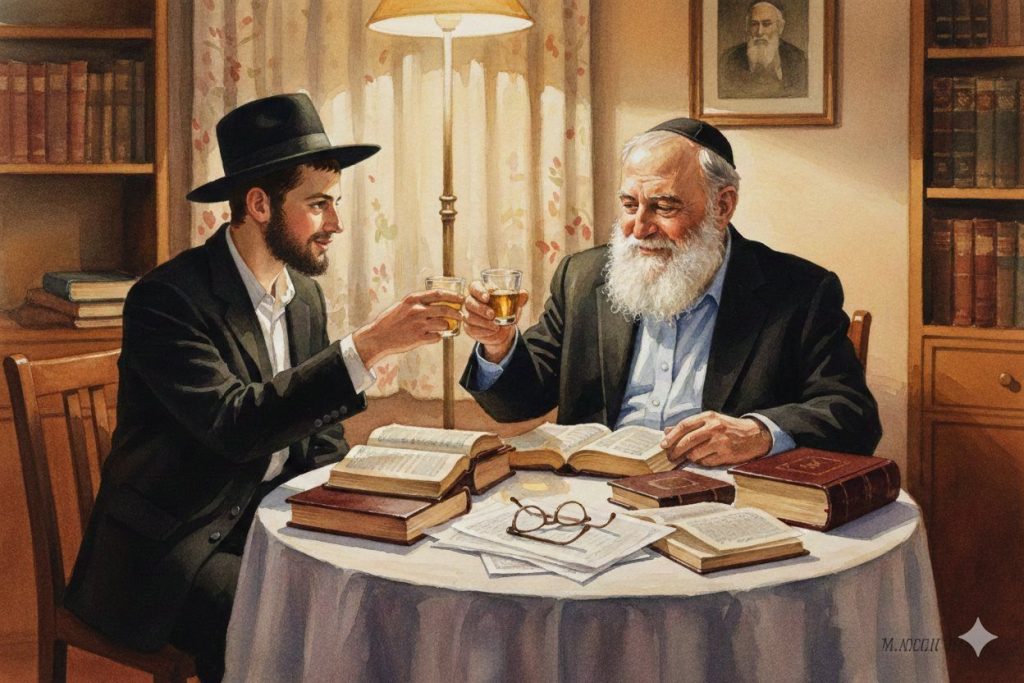
When we arrived, the farbrengen was basically over. Only two people were left at the table. One of them was a man I’d never met before. He had a thick beard, a warm smile, and a strong Russian accent. He poured us l’chaim and asked about the yeshiva farbrengen.
When I told him about it, his eyes lit up.
He began telling story after story about writing to the Rebbe, about taking hachlatos, and about seeing clear answers in his life. He spoke simply, without drama, like someone describing something completely normal.
As he spoke, three realizations formed in my mind. First, this was the host’s father-in-law. Second, he had very pure emunah. And third – this man had money.
When he finished, I said, “I actually have a story that happened today.”
I told him about the book. About the missing money. About the letter from the Rebbe, the night before.
He laughed and said, “So what happened next?”
I said, “Nothing yet. I’m sitting here.”
He laughed again and said, “Just because the Rebbe said the money will come doesn’t mean it has to come from me.”
Without thinking too much, I said, “Then why don’t you ask the Rebbe?”
He hesitated, then agreed I could write for him.
Before I finished writing, he stopped me. He explained that he was waiting on a large business deal – fifty thousand dollars – and if it went through, he would give the maaser to the book.
We realized something important. We weren’t asking if he was the donor. We were asking the Rebbe for a bracha that his deal should go through, so that the maaser could help print the book.
We went to his house across the street, poured another l’chaim, and wrote the letter together. Each of us took a hachlata. I committed to taking my learning more seriously for the rest of my time in yeshiva. He committed to restarting a monthly Torah class that his wife used to give.
He faxed the letter to the Ohel and handed me an Igros Kodesh.
The letter I opened spoke clearly about both hachlatos. It felt exact. Quiet. Certain.
We said l’chaim and went home.
The next morning, I woke up to a message.
The deal had gone through overnight.
The money was sent.
The book was printed.
Sometimes, the Rebbe answers loudly. Sometimes, very quietly. But when a person opens their heart and takes a real step forward, the answer always finds its way.
* * *
Wait! I forgot to tell you the name of the generous Yid with the bushy beard who helped print that special book. His name was Reb Reuven Morrison.
If that name sounds familiar to you, I know why.
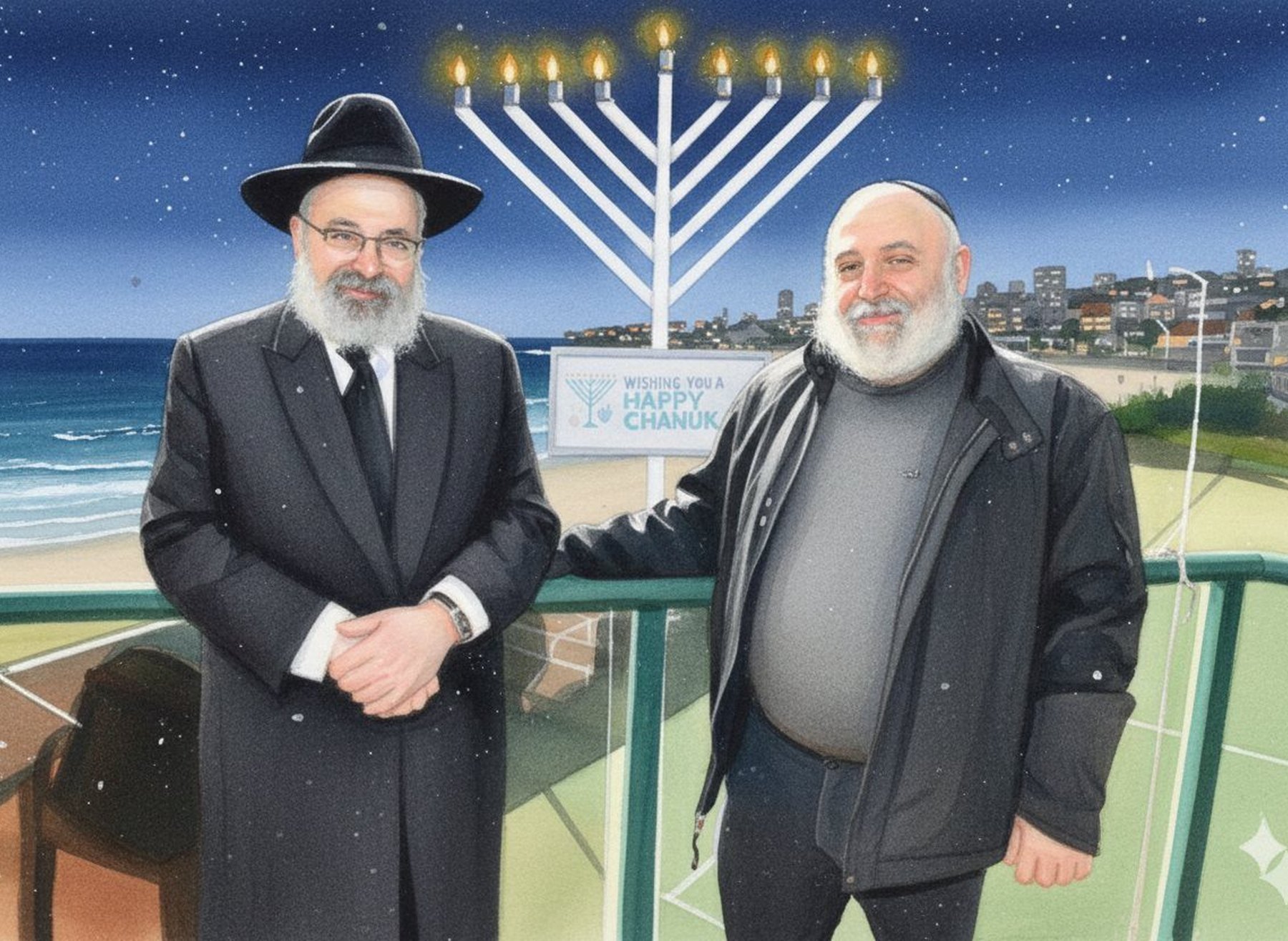
On the first night of Chanukah 5786, December 14, 2025, two Arab terrorists opened fire on the annual “Chanukah by the Sea” event on Bondi Beach in Sydney. Over a thousand people had gathered to celebrate the festival of lights. Fifteen precious neshamos were murdered that night, including two Chabad rabbis, two Holocaust survivors, and a ten-year-old girl. Among them was Reuven Morrison.
So let me tell you a bit more about Reuven.
Reuven was born in the Soviet Union, where being Jewish meant being a target for bullying and hatred. As a young man, he fled to Sydney, Australia, where he discovered his Jewish identity and reconnected with his heritage. There, he met his beloved wife Leah, and together they were blessed with one daughter, Sheina, born after many years of prayer and hope – shortly after receiving a bracha from the Rebbe.
Reuven became a successful businessman, but money was never his goal. His primary purpose was to give it away – to Chabad, to Jewish causes, to anyone who needed help. He divided his time between Melbourne, where his family lived, and Sydney, where he continued his business and remained deeply connected to the Chabad community of Bondi – the very community that organized that Chanuka event.
His home was always bursting with joy and laughter. He danced and sang with his granddaughters, whom he adored infinitely. He had a warm smile, a generous heart, and that same simple emuna I witnessed that night at the farbrengen – a belief that when you do what’s right, Hashem takes care of the rest.
And when the shooting began on Bondi Beach that Chanuka night, Reuven Morrison didn’t run.
In his daughter Sheina’s words, “He jumped up the second the shooting started… he put others before himself.” Security footage shows the 62-year-old grandfather hurling bricks and heavy objects at the gunmen, screaming at them, making himself a target. He stood directly in the line of fire, desperately trying to distract the terrorists and disarm them so that others could escape.
Sometimes a person’s entire life is a preparation for one moment. That night on Chai Elul in Melbourne, when Reuven opened the Igros Kodesh and committed to giving maaser to print a holy book – that wasn’t just about money. It was about living a life of generosity, of standing up for what’s right, of pure emunah in Hashem.
And when the moment came, Reuven Morrison stood tall.
He was murdered al kiddush Hashem, sanctifying G-d’s name, doing what he had always done – giving everything he had to protect and help his fellow Jews.
May his memory be a blessing. May we learn from his example. And may we see the coming of Moshiach speedily in our days – when darkness will be vanquished forever, and the light of Chanuka will shine eternally.
Yehi zichro baruch and may we see him once again with us with the coming of Moshiach NOW!
Beis Moshiach #1493 • pp. 55-58
© 2026 Beis Moshiach Magazine. All rights reserved.
This article originally appeared in Beis Moshiach #1493. You are welcome to share it with friends and family by email or in print, provided that you do not change, add to or omit any part of it, you credit the author and Beis Moshiach, and you include a link to archive.bmoshiach.org (written out in full in printed copies).
To republish this article in a newspaper, magazine, book or website, please request permission in advance at [email protected].