Beis Nissan: A Day Without Darkness
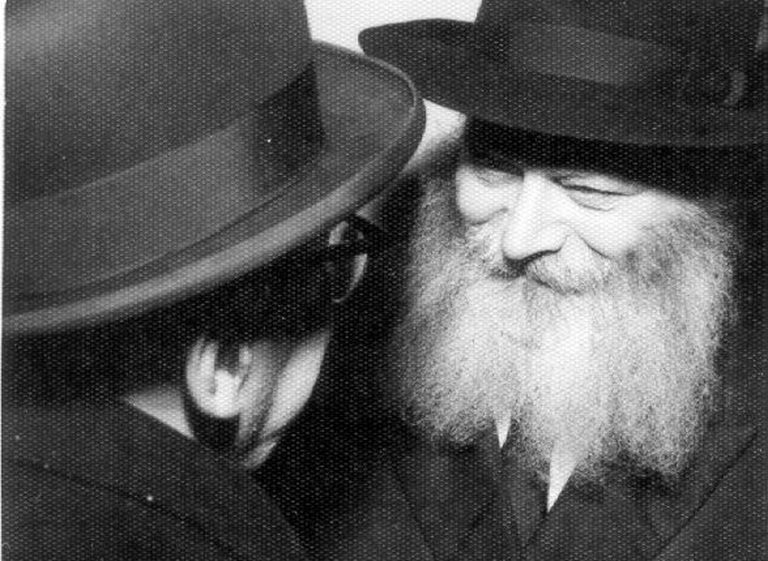
The following are two letters written by the Rebbe, both dated 25 Adar, 5710 (1950) and sent together on the occasion of Beis Nissan. The first is the Rebbe’s introduction to the kuntres published for that day — a pamphlet containing the final maamar in the Basi L’Gani series. The second is a michtav klali-prati — a general letter personally addressed to various individuals — sent together with the kuntres to a number of people, upon which the Rebbe added a few personal sentences. The following translation is a simplified adaptation of the letters which can be read in Igros Kodesh Vol. 3, Letters #573 and 575
Letter One: Beis Nissan, 30 Times Over
Beis Nissan carries two interconnected meanings: it marks the yom hilula of the Rebbe Rashab (may the memory of a tzaddik be a blessing), and, as a direct result, the day on which his only son – my revered father-in-law the Rebbe (הכ”מ) – became the Nasi and leader of our generation.
Spiritual energies are reawakened each year in their season. Over the thirty Beis Nissans that have passed since 5680 (1920), the Rebbe Rashab has continually ascended – thirty levels of elevation. As our Sages teach, tzaddikim “proceed from strength to strength” even after their passing. Indeed, when a tzaddik departs, he is present in all worlds even more than during his lifetime – including in this physical world. His influence on those connected to him therefore flows from ever-higher sources, and those who wish to receive it must continuously refine their spiritual receptivity.
The Shepherd Has Not Left His Flock
As Beis Nissan approaches, every Chassid connected to my revered father-in-law the Rebbe (הכ”מ) should deepen that bond – through his letters, talks, and teachings. Each person should fix firmly in his mind and heart: the shepherd has not forsaken his flock. He continues his holy work, watching over his sheep and bestowing upon them all the material and spiritual influence they need.
Letter Two: Beis Nissan: A Day Without Darkness
Enclosed is the kuntres just published in honor of the upcoming yom hilula of the Rebbe Rashab, Beis Nissan. Please share it with others.
Beyond its personal significance, Beis Nissan holds a deeper universal meaning. The Gemara (Rosh Hashana 10b) records a debate: was the world created in Tishrei or in Nissan? Tosafos explains that both opinions reflect a valid spiritual truth.
According to the view that creation began in Nissan, Beis Nissan was the very first Shabbos – and unlike every day since the Sin of the Tree of Knowledge, darkness did not function at all that day. The Medrash (Tehillim Sec. 92) tells us there was no nightfall – a state that will not return until the Ultimate Future, when “night will shine as day.”
Chassidus: Healing the Sin of the Tree of Knowledge
This theme of undivided light may point to pnimiyus haTorah – the inner dimension of Torah – and especially the teachings of Chassidus. Tanya describes pnimiyus haTorah as “the Tree of Life.” Chassidus works specifically to undo the damage of the Sin of the Tree of Knowledge – and is still called “The Tree of Life” (as explained in the the Baal Ha’hilula’s Kuntres Etz HaChayim), because it does so through an illumination from above, rather than through the inner struggle of choosing good over evil. This is one of the essential differences between Chassidus and the Mussar approach.
The dimension of [spreading] the wellsprings of these teachings outward with greater strength and greater power came about through my revered father-in-law, the Rebbe, הכ”מ, who was elevated to his position of leadership on Beis Nissan. This is not the place to elaborate on the matter.
May it be G-d’s will that on this day, each of us – men and women alike – serve as a conduit to draw down and receive the influence of our Nasi (הכ”מ), in both material and spiritual matters. And may we soon merit the fulfillment of our Sages’ words: “In Nissan they were redeemed, and in Nissan they will be redeemed” – through our righteous Moshiach.
Beis Moshiach #1498 • pp. 4-5
© 2026 Beis Moshiach Magazine. All rights reserved.
This article originally appeared in Beis Moshiach #1498. You are welcome to share it with friends and family by email or in print, provided that you do not change, add to or omit any part of it, you credit the author and Beis Moshiach, and you include a link to archive.bmoshiach.org (written out in full in printed copies).
To republish this article in a newspaper, magazine, book or website, please request permission in advance at [email protected].