The Message That Waited Thirty Years
From the TzaddikStory.org collection
Years ago, in a small Polish town called Chmielnik, there lived a boy named Chaim Meir Bukiet.
Chmielnik (north of Krakow) wasn’t big or famous, but to the people who lived there, it was their whole world. The streets were narrow and muddy after it rained. Shopkeepers leaned out of wooden doorways and called greetings in Yiddish. In the middle of the square stood a bright red water pump. Every morning, families came carrying noisy metal buckets and filled them with water. This was before sinks and faucets, when the only water clean enough to drink came from the city well…
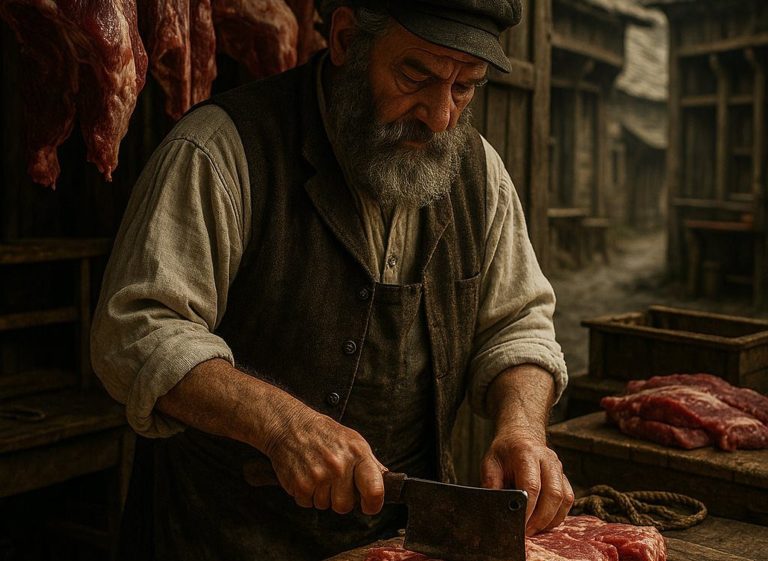
Everyone respected Chaim Meir’s family, because his grandfather was the town shochet. He was an only child, and he learned in the local cheder until he was ten.
Around that time, the Frierdiker Rebbe told Rabbi Yosef Goldstein to open a yeshiva in Chmielnik. When Chaim Meir’s mother heard there was now a real yeshiva, she made up her mind right away.
“Ah! He belongs there!” she said.
And so, he went.
He learned there for a few years. When he was fourteen, Rabbi Goldstein called him over.
“I see you’re a smart and serious bachur,” he told him. “You need to learn in a bigger yeshiva.”
He sent Chaim Meir to Warsaw to continue learning. Soon after that, the yeshiva moved to Otwock, and he learned there for five or six more years.
* * *
But in 1939, when World War Two began, everything changed. The Nazis headed into Poland. Their job? Hunt down Jews everywhere.
The Frierdiker Rebbe left Otwock Poland in Elul. The bachurim thought he’d return after Yom Tov. But Yom Tov passed, and the Rebbe stayed in Vilna, a city in Lithuania. He wasn’t too far from Poland, but the Nazis hadn’t made it into Lithuania yet, so he was safer there.
Slowly, the yeshiva began to empty out, and Chaim Meir went back home to Chmielnik. Everyone was unsure what to do – what was the right move? Where do we go? Some wanted to stay home, and others saw what was happening and started running for their lives.
Soon, letters began arriving from friends who had escaped to places like Riga in Latvia and Vilna in Lithuania. Both of these places were still safe from the Nazis. The big question was, should he go and join them, or stand his ground here?
“The Rebbe says to leave Poland,” they wrote. “The war is getting worse. Run while you still can!”
Chaim Meir showed the letters to his parents. But he was their only child, and they couldn’t imagine sending him away alone. They still thought this would all end before it got too bad. No one predicted just how evil the Nazis were.
They brought him to many Rabbanim, hoping someone would convince him to stay. “What do you think these Nazis are going to do?” They’d ask him, “You really think they’re going to kill everyone? You can’t just leave your parents behind over such crazy fears!”
Chaim Meir explained why he felt he needed to go, and why it was important to listen to the Rebbe. His parents explained why they were afraid. The house felt heavy with worry. Who should he listen to? Should he take his parents’ advice, or listen to his gut? And with the smell of war in the air, everything felt more tense – no one knew what to do next.
Finally, around Purim time, he made the hardest decision of his life.
He would listen to the Frierdiker Rebbe and leave Poland.
His mother took a ring off her finger and carefully sewed it into the lining of his winter coat.
“If you ever need money,” she whispered, “Sell this. It’s worth a lot.”
His father walked him through the freezing cold. Snow crunched under their boots, and their breath rose in white clouds. After a day or two, his father stopped. “I can’t go any further – I’ll have to leave you here.”
They stood there quietly, looking at each other.
Then his father turned back toward Chmielnik, and Chaim Meir continued alone.
Around Pesach, he crossed the border into Vilna. There, he joined about thirty other bachurim who were, like him, heading east to escape the Nazis. The journey was long and uncertain. They didn’t know where they’d sleep, or what would happen next.
Eventually, many of those students traveled all the way to Shanghai, China, where they were safe for the rest of the war, when they finally made it to America.
That journey saved his life.
He never spoke to his parents again… he had no way of knowing if they survived.
* * *
After the war, Chaim Meir, now called Rabbi Bukiet, built a new life in America. He married and began teaching and became the head of a yeshiva. His students respected him. He worked constantly and hardly ever rested. He never slept – he devoted himself completely to his work.
Every two weeks, he traveled to Manhattan, where organizations put new lists of Holocaust survivors up on the wall. People crowded around, searching for names of parents, siblings, and children.
Every two weeks, he stood there, reading through the lists.
Maybe this time. Maybe, just maybe, at least one name he recognized would be on the list.
But it never did.
In 1948, when his first daughter was born, he wrote to the Rebbe Rayatz and asked whether he should name her after his mother. When the Rebbe answered yes, he understood what that meant. His mother hadn’t survived.
That’s when he stopped checking the lists.
But he never forgave himself for leaving his parents. Even as he became a respected Rosh Yeshiva, one question would never leave his mind: Was I right to leave? Should I have stayed behind for my parents?
* * *
Now, fast-forward 20 years.
In the summer of 1968, Rabbi Bukiet’s daughter and her husband, Rabbi and Mrs. Stillman, moved to Los Angeles as shluchim at UCLA, helping Jewish college students.
Not long after they moved, Rabbi Bukiet began feeling weak and unwell. Years of hard work had worn him down, and eventually, he suffered a heart attack.
His daughter begged him to stay with her for a few weeks to rest.
But he didn’t want to come. Travel was very expensive. He still had younger boys at home, and the Rebbe had spoken strongly against unnecessary travel.
But she kept asking him to come.
Finally, he said the words he always said when a decision was too big to decide alone.
“Whatever the Rebbe says, I will do.”
He asked the Rebbe, and the Rebbe replied with two words: “Kdai hu – It is worthwhile.”
That was all.
“That’s not a typical answer,” Rabbi Bukiet said slowly. “The Rebbe usually explains more. There must be a special reason for me to go.”
So he bought six train tickets for himself, his wife, and his younger sons. They boarded an Amtrak train and traveled across the country for three days, watching cities, plains, and mountains pass by outside the windows.
They arrived on a Thursday afternoon.
On the first Friday night there, his daughter suggested he daven at the Chabad House and then come home for the meal.
Rabbi Bukiet shook his head firmly.
“No, no. The Rebbe wrote ‘Kdai hu.’ There’s a special reason I’m here. I’m staying at the Chabad House for the meal – there must be people I need to meet, a reason I’m here… I’m certainly not here just to sit around at home”
That Friday night, the UCLA Chabad House was filled with eighty or ninety students. Long tables stretched across the room. A special head table had been prepared for him.
He looked at it and shook his head.
“I’m not sitting at the head,” he said, firmly. “I’m going to sit with the boys – I’m here for a reason, and I’m going to figure it out.”
He walked around the table and squeezed onto a simple bench between two college students.
He began speaking in his mix of Yiddish and English. To his surprise, one of the boys answered him in clear Yiddish.
He was completely surprised. “How do you know Yiddish…?”
The student explained that his grandparents came from Chmielnik. “The shul was near the town square,” the boy said. “And there was a red water pump in the middle.”
Rabi Bukiet froze. For a moment, it felt like he was traveling back in time. That pump. That town.
He farbrenged with the students for hours. Later that night, the young man told him about the Chmielnik Society in Los Angeles, a group of older survivors from that town. Many of them had drifted away from Yiddishkeit after everything they had suffered.
* * *
As soon as Rabbi Bukiet heard about that group from his hometown, the two words echoed again in his mind.
Kdai hu.
“Maybe this is what the Rebbe meant,” he thought.
He agreed to speak to them.
When the members of the society heard his name, they were excited. They remembered his grandfather, the town shochet. They remembered the Bukiet family!
“A boy from our town became a Rosh Yeshiva!” they said proudly. “We’d love to hear from him!”
That Thursday evening, they gathered to hear him speak.
He spoke from his heart. He understood their pain, because he’d lost everything too. He tried to help them remember who they were, and to bring back the spark of Yiddishkeit that had grown dim.
It was a powerful evening.
Afterward, someone hung up a sign for those who had missed it. It said that the grandson of the town shochet was still in California and could be contacted through a student.
Soon after, a woman called.
She said she had something very important to tell him, and they planned to meet at the Chabad house.
“Put on Shabbos clothes,” Rabbi Bukiet told the Stillmans. “I feel like something special is going to happen.”
They went to the Chabad House and waited.
The woman came and began to speak.
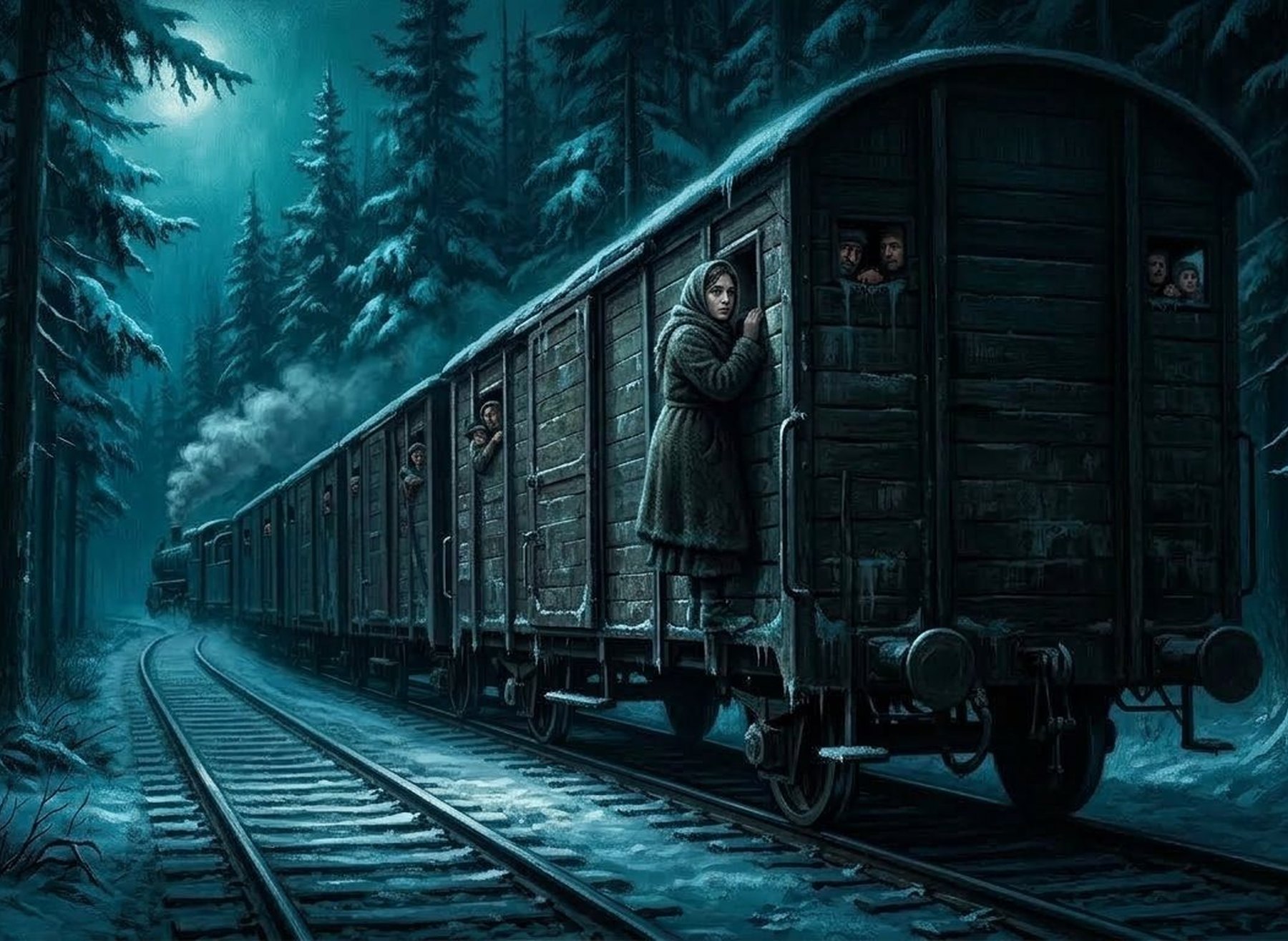
“In 1943, around Sukkos time, I was in the same train car as your mother. The train was crowded and heading toward terrible danger. After traveling for days, I noticed that at certain turns in the track, the train slowed down.
“I suggested climbing up and jumping out of the train car. Your mother was older, and she knew she wouldn’t survive the fall. So she helped me climb up to the window. Before I jumped, your mother said one thing:
“If you ever meet my son, tell him he did the right thing. Tell him not to feel bad. It was good he listened to the Rebbe. I now have someone to remember me and our family.
“I jumped out of the train and somehow managed to survive the war,” the woman ended off. “And now, decades later, I can finally deliver the message. Somehow, here in America, I’m meeting her son, as she had asked me.”
Everyone had chills. Because Rabbi Bukiet listened to the Frierdiker Rebbe years earlier and left Poland, two lives had been saved, and his family line didn’t end in the war.
Then, because he listened when the Rebbe wrote “Kdai hu,” he traveled to California.
And through a chain of hashgacha pratis – choosing to sit with the students instead of at the head table, speaking to one boy, agreeing to visit one gathering – a circle that had been open for almost thirty years finally closed. A message sent from a train in 1943 finally reached him in California.
For so many years, the question had followed him wherever he went. Did I do the right thing? Should I have stayed? Now, he didn’t have to wonder anymore. He had his answer.
* * *
Kdai hu.
It was worthwhile to listen to the Rebbe in Poland.
It was worthwhile to listen to the Rebbe in America.
And it is still always worthwhile to listen to the Rebbe, wherever you are. Even when we don’t understand at first, the Rebbe sees farther than we can. He guides us step by step, leading us exactly where we’re meant to be.
Beis Moshiach #1498 • pp. 56-59
© 2026 Beis Moshiach Magazine. All rights reserved.
This article originally appeared in Beis Moshiach #1498. You are welcome to share it with friends and family by email or in print, provided that you do not change, add to or omit any part of it, you credit the author and Beis Moshiach, and you include a link to archive.bmoshiach.org (written out in full in printed copies).
To republish this article in a newspaper, magazine, book or website, please request permission in advance at [email protected].