Ecuador: The Piece That Completed the Continent

When Rivka and her husband Rabbi Tomer Rotem set out for Quito with four suitcases, mishloach manos, and a Sefer Torah, they weren’t just starting a new Chabad House – they were completing a picture. Ecuador was the last country in South America without a shliach. An entire continent was waiting. “The Chassidishe Vibe” sat down with Rivka Rotem to hear the story of a shlichus built from nothing, a family shaped by hashgacha pratis at every turn, and a little special boy named Shneur who despite his many challenges, has become the heart of the Chabad House
“I was born and raised on shlichus in Kiryat Tivon,” Rivka begins, “and when the idea of going on shlichus arose, I readily agreed. After receiving a bracha from the Rebbe, I set out with my husband, Rabbi Tomer, to conquer Quito, the capital of Ecuador in South America, and prepare it for the coming of Moshiach. Our seven children, young shluchim, were born there. Over the years we have merited bringing many Jews closer to the Rebbe MH’M.”
Setting Out On Shlichus
Rivka recounts: After our wedding we wrote to the Rebbe expressing our desire to go on shlichus and asked where. We opened to a letter in the Igros Kodesh dealing with shlichus. It was addressed to a shliach in Brazil, Rabbi Yerachmiel Blumenfeld, and from this we understood that through his son Rabbi Uri we would receive the Rebbe’s answer. My husband had been a shliach in Peru for nearly three years (with Rabbi Blumenfeld’s son, the addressee of the letter), and he suggested that after we married my husband come back to Peru, this time as a permanent shliach.
When we asked, he told us that Ecuador still had no shliach. In fact, Ecuador was the only country in South America that had not yet established a Chabad House. Meanwhile, during the preparations for shlichus, my husband – who is a professional shochet – was invited to Peru for a short period to perform shechita. On the return trip he passed through New York unexpectedly, where he met the secretary, Rabbi Shalom Mendel Simpson, director of Merkos L’Inyonei Chinuch, and received from him an official ‘ksav shlichus.’ The date on the letter was the 11th of Shevat…
On the 11th of Adar 5764, we arrived in Quito, the capital of Ecuador, with mishloach manos, four suitcases, and a Sefer Torah.”
Settling In — and a Surprise
“At first, we rented a room in a hotel and began searching the newspaper for rental apartments, but we ran into a problem – we didn’t know which neighborhood to choose. Quito is a large city with about two million residents, including several hundred Jews. Unlike many communities around the world where Jews live close to the shul, in Quito the Jews are scattered throughout the city’s neighborhoods, and the shul is actually outside the city altogether.
We took heart from the thought that the Rebbe would surely show us where to establish the Chabad House, just as he had guided us to come to our city of shlichus – and so it was. Every day we went out to view apartments in different neighborhoods until we arrived at an apartment in a very central location and felt that this was the place.
After settling in briefly, we went to the grocery store on the ground floor of the building, browsed the shelves, and checked for kosher products. The shopkeeper saw us, recognized that we were Jewish, and excitedly told us that she too had Jewish roots. She wore a necklace with two pendants – a Magen Dovid alongside a cross (Hashem yerachem) – and showed them to us proudly. Her grandmother was a Jewish woman who had fled Germany during World War II; her mother was born in Ecuador, married a local non-Jewish Christian, and had seven children, of whom the shopkeeper was one. The next day she brought us documents and certificates showing that her grandmother was indeed Jewish – and therefore, so was she.
And so, the very moment we arrived, we discovered a large Jewish family, one that could easily have been assimilated among non-Jews, as it had no connection whatsoever with the Jewish community. From then on we would come light Shabbos candles with them in the shop, invite them to Shabbos and holiday meals, bring them mishloach manos on Purim, matza on Pesach, and so on. Her son would come to the shop every day after school and come up to us. He learned the alef-beis and Modeh Ani with my husband, put on tefillin, and even began wearing tzitzis. When he finished his local high school studies, my husband suggested he travel to a yeshiva in Argentina. The young man went and became a full-fledged tamim. He then studied for several years at the yeshiva in Morristown and from there continued to 770. Boruch Hashem, today he is married and living in New York.
Here we saw how the Rebbe directed us to that specific apartment in order to discover these Jewish people and ensure the continuation of the lineage.
“The Rebbe orchestrated everything,” Rivka concludes. “We were simply the ones to carry it out.”
Every time the Rotem family needed to move within Quito for any reason, they saw how the Rebbe guided their steps to the precise location where they needed to be.
Welcome to Chabad House Quito
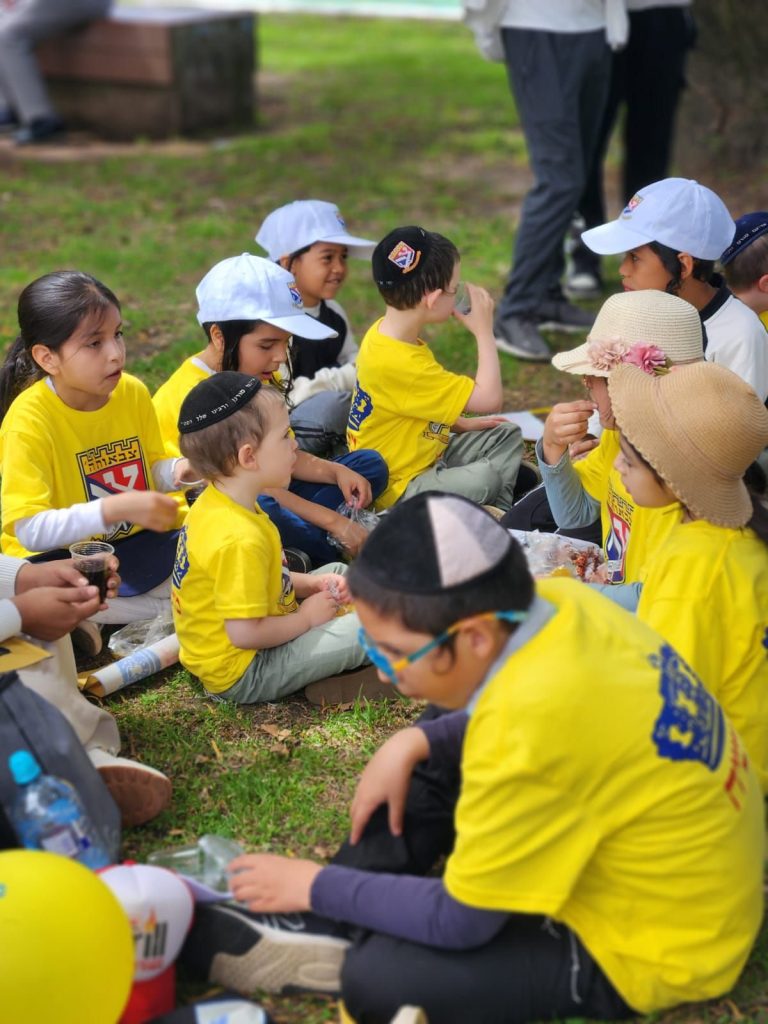
Our Chabad House is open all year round since there are local Jews here alongside travelers who arrive constantly. Ecuador is a tourist country with lush nature and interesting places – it has volcanoes, snow-capped mountains, jungle, beaches, rain forests, hot springs, extreme sports, and other wonderful spots. This is in addition to the pleasant climate, since Quito is located on the equator.
Our Chabad House includes a shul, a kosher restaurant, a school for our children, a space for classes and children’s activities, luggage storage – and yes, it’s also our home, (Rivka smiles). There was once a discussion in the family WhatsApp group about whether it’s appropriate to bring small children to the shul. For me, there is no other option…
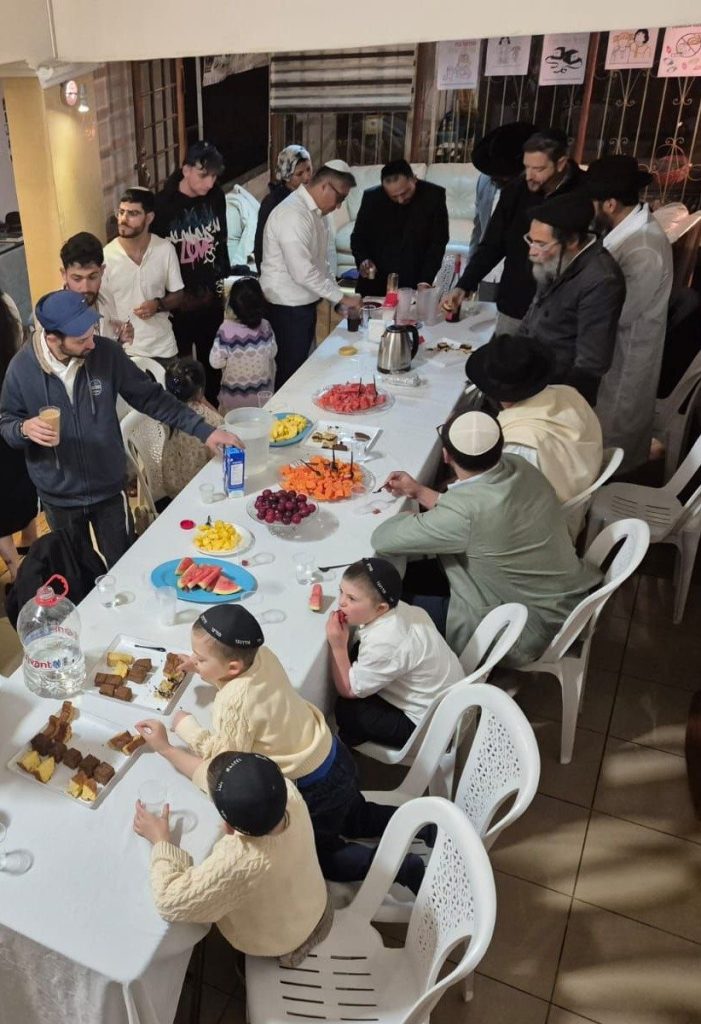
Because of this, the atmosphere here is warm and homey, the house is open and every Jew is welcome. On Shabbos and holidays everyone sits around the table and talks as if they have known each other for years. Even though the guests speak different languages, they feel united. We meet Jews of all ages and types, and it is moving to see how much goodness there is in them; every Jew is truly gold. It is hard to understand how the true and complete Geula has not yet arrived; the Jewish people are truly tzaddikim.
The Seven Noahide Laws
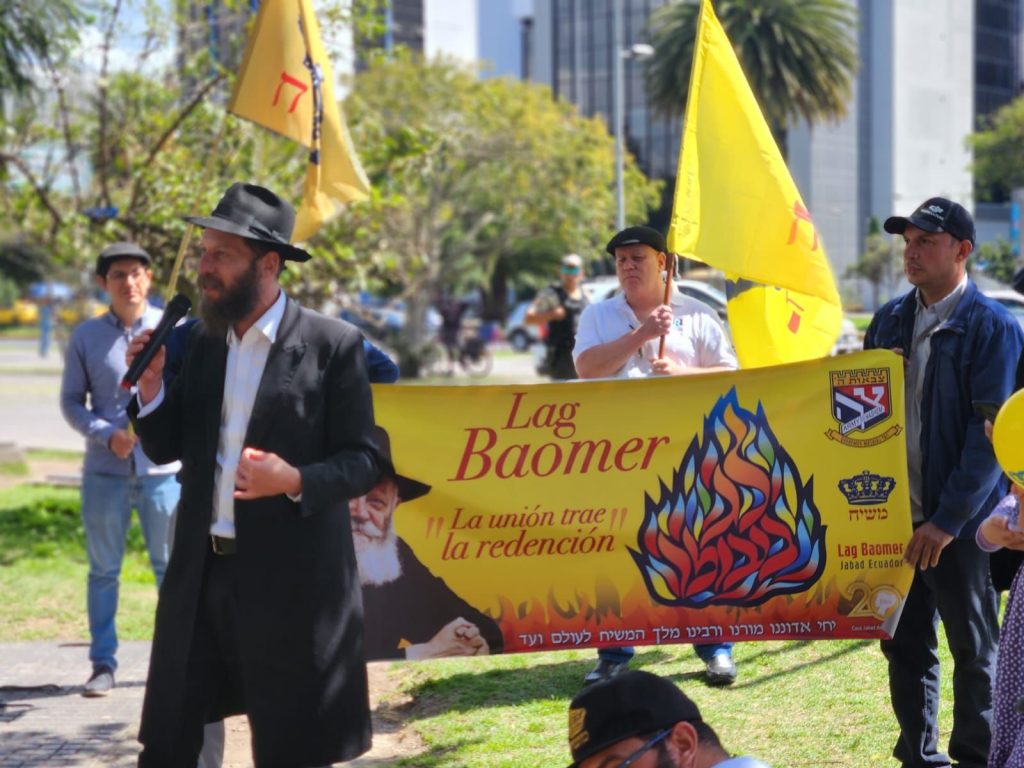
Some time after we arrived, non-Jewish people began approaching us seeking a connection. Some said they were descendants of anusim (forced converts), and others wanted to convert. At first we explained to each person who came why it didn’t apply to them, but as their numbers grew we understood that they were searching for meaning in life and wanted to be part of a community. The Rebbe said to publicize the Seven Noahide Laws and so we established a Noahide community including gatherings, weekly classes, and encouragement of mutual assistance. The Nasi HaDor ensures that all the people of his generation remain connected to Hashem, each one in his own way.
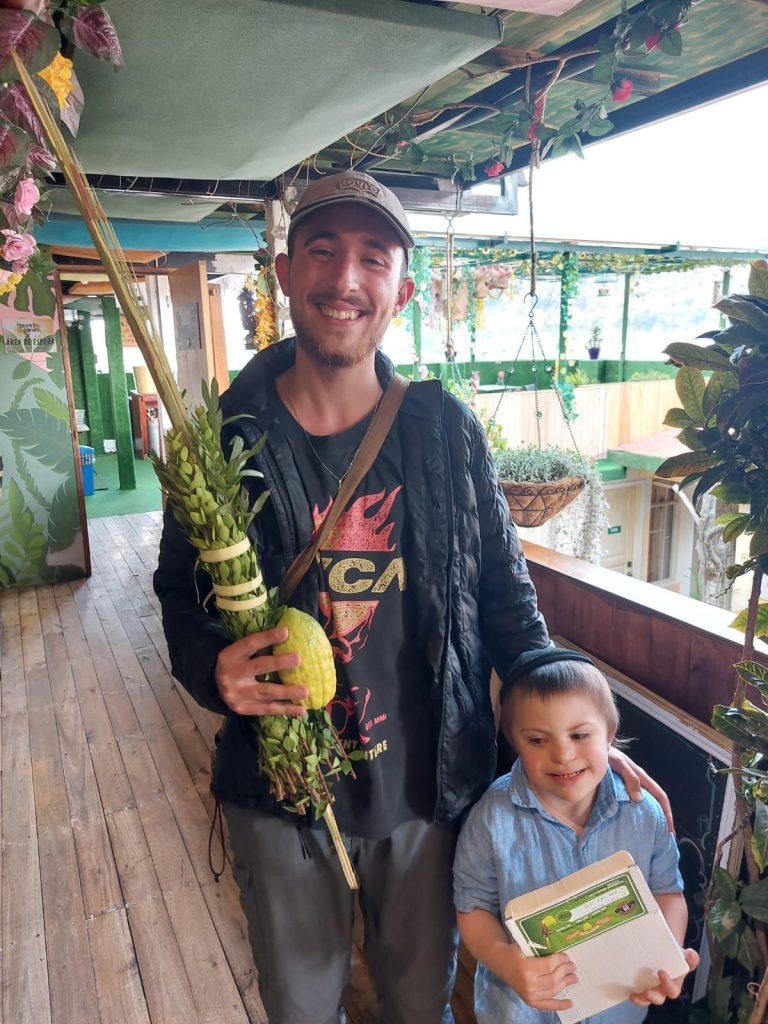
The people of Ecuador love Israel, boruch Hashem. They believe we are the Chosen People and feel it a great privilege to assist Jews. Many times they volunteer and offer help – cutting branches for the sukka schach, painting the large Chanuka menorah in the city center, or carrying out repairs in the house and the car. Here, we get a taste of the prophetic vision of Geula: “And kings shall be your nursemaids.”
Can you tell us about the challenges you face in shlichus life?
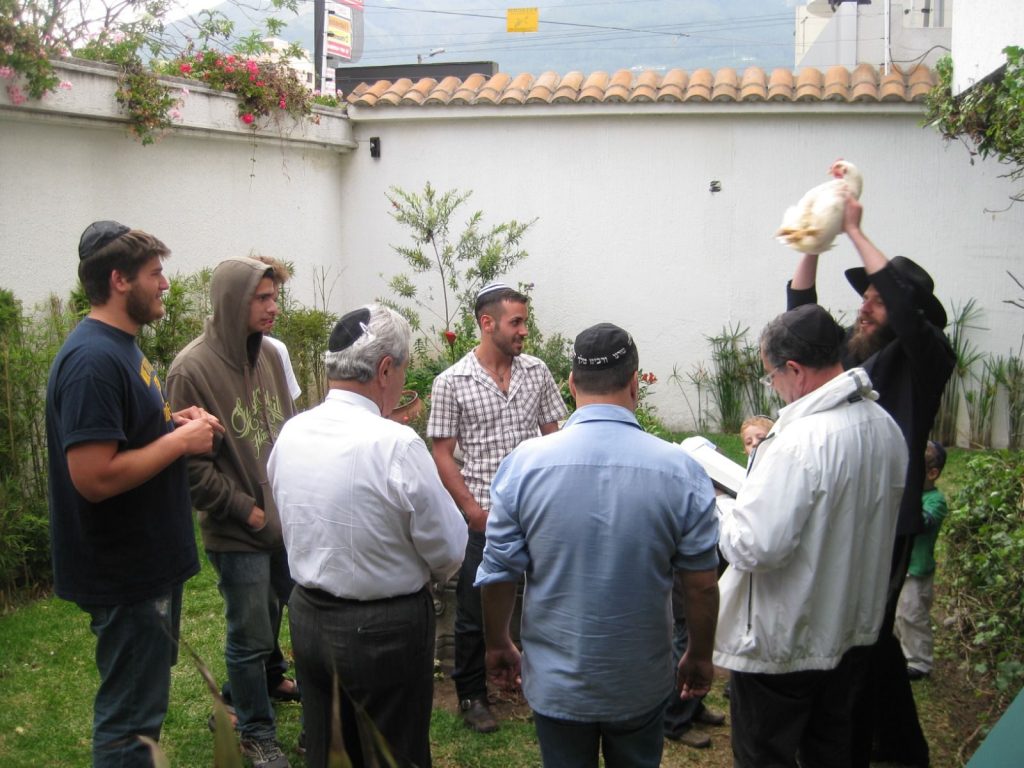
“There are challenges we still deal with today, and challenges that are behind us, boruch Hashem. For example, once there was no selection of kosher food – we would get milk directly from the cows, slaughter chickens in the yard, and salt and prepare them with the children. Today, by contrast, you can find a wide selection of strictly kosher products in the supermarket, basics and even “luxuries.”
Rivka goes on to describe a challenge ever since she sent her oldest son to learn in Eretz Yisrael: My older children study far from home from age 13, and we see each other about once a year on average. The younger ones miss their siblings and ask when they’re coming. It is simply a different way of life.
She also mentions challenges they encountered in their work with the local Jewish community: When we arrived, we discovered the Jewish knowledge of local Jews was nearly nonexistent. For example, when we invited a Jew to a Torah class, he didn’t understand why he was being invited. He asked in bewilderment, “Do I need to convert?” And in general, they didn’t believe it was possible to keep Shabbos and kashrus in Ecuador. Anyone who didn’t eat pig products was considered strictly religious. This situation required us to begin teaching everything from the ground up – explaining the value of Torah study and doing a mitzva, the significance of fulfilling even a ‘small’ mitzva and how it affects the entire world and brings Geula, clarifying Jewish concepts and the importance of observing mitzvos in the correct and precise manner according to Jewish law, and not only as is convenient.
How do you find the strength to be joyful amid the challenges?
The knowledge that we merited being chosen by the Rebbe to be his shluchim reinforces the feeling of ‘Ashreinu.’ We remind ourselves that the Rebbe believes in us and grants us the strength to act precisely where we are, without being daunted by challenges. The hashgacha pratis that unfolds here gives us the sense that the Rebbe is saying to us, as it were, ‘I am here with you’ – and this gives us immense strength to continue with full energy and joy.”
A Challenge That Is a Great Gift
When I gave birth to my fifth child, the doctor told me that the baby was born with Down syndrome. I could not believe this was happening to us. Before then I had never had occasion to know children with special needs. In my mind, a special-needs child belongs only to people who are tzaddikim with endless Ahavas Yisrael – not to me. I thought it was a mistake in the address, as if there weren’t already enough challenges…
But I did not let those thoughts take over and I immediately decided to change my thinking: I did not choose this challenge – Hashem decided to send this neshama specifically to our family, and that is the very best thing for us. After all, it is the nature of the Good to do good, and it takes no wisdom to believe and trust in Hashem only when things are easy.
Comprehensive tests revealed that our Shneur sees and hears, thank G-d. There was only a minor heart issue expected to resolve on its own. Since we live at an altitude of 2,800 meters where oxygen is thin, Shneur was connected to supplemental oxygen. When three months passed from his birth and he was still unable to breathe independently, we traveled to Eretz Yisrael to have surgery done. Precisely during that period, a law was enacted allowing shluchim living abroad to receive medical care in Israel – a law that made the cost of the surgery feasible. The surgery was successful.
We prepared to return to our shlichus, and then another challenge arose. Family and friends told us that given the circumstances, we must understand that our shlichus in Ecuador was over. The shlichus now required of us was to care for our child with the resources available only in Israel. It was clear to us that we were going back, but the pressure from those around us was intense… We wrote to the Rebbe and received wonderful brachos, and indeed, despite all the entreaties, we returned to Ecuador.
We were not willing to compromise on the quality of care Shneur would receive. So we filmed every physiotherapist who came to us and sent the video to a specialist in Israel for her assessment. This continued until the most expert therapist was found. She advanced him tremendously – teaching him to sit, crawl, walk, climb and descend stairs, and speak clearly – simple actions that for special-needs children require no small amount of work. Throughout, we saw the Rebbe’s bracha accompanying us.
Today Shneur is ten years old, and he is the living spirit of our shlichus. He greets every guest with extraordinary warmth, asks their name, inquires after them, and offers to help them put on tefillin. At Shabbos meals he says a dvar Torah before everyone, sings, dances, and gives personal attention to each and every participant. He remembers everyone’s names – something that makes people connect even more deeply.
People have told us: “The best part of being at the Chabad House was talking with Shneur.” Some people return because they missed him, and others call by video chat to speak with him. One traveler said: “Shneur is the main shliach here – everyone else just helps him…” We are truly blessed by him – a joyful child who brings joy to others. It is no coincidence that he was born in the month of Adar.
Rather than being a ‘mistaken address,’ Shneur proved the opposite to me in his gentle way. One day I was studying the daily Chumash with him, and in the middle he stopped: “Ima, please wait a moment.” He raised his hands and eyes upward and said: “Thank You, Hashem, thank You for giving me my mother” – and then continued learning.”
Neshamos Rolling About — Just Bend Down and Pick Them Up
Rivka shares three stories from her inexhaustible treasury of shlichus stories:
A woman who lives here fell ill, and I went to visit her. Together we wrote to the Rebbe, and I suggested she make a good hachlata – to light Shabbos candles every Friday. She accepted this upon herself, and after a long period during which she was unable to walk, her condition improved and she began to move with the help of crutches. She later recovered completely, and today she regularly attends a dance class…
While she was bedridden, I brought her a book about making challa. She began baking challa and was very successful at it, so she decided to teach baking courses, and later opened a restaurant called ‘Boker Tov.’ She has a large following on Ecuador’s social media, people follow her, and she is very well known. So when she does a mitzva – such as affixing a mezuza in her business – many people see it. When she celebrated her son’s bar mitzva, everyone was exposed to the event she organized. When a woman like that observes mitzvos, it has a great influence on others.
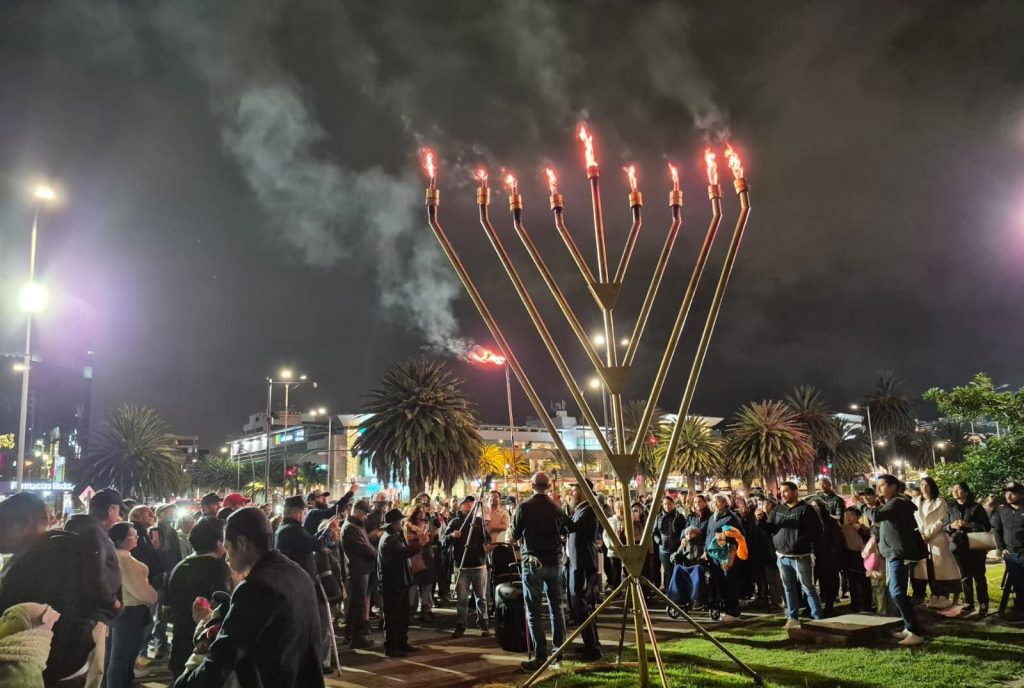
Another story: Chanuka is a chag when people are inspired. We have a large menorah, and every year during Chanuka a central lighting is held in the most beautiful and central park in the city. The lighting is accompanied by the distribution of donuts, singing, and dancing.
Once, a Jew passed by with mixed feelings. On one hand, he was very moved by the menorah; on the other, he felt uncomfortable because he is married to a non-Jewish woman. We were happy to meet him, but we didn’t manage to get his contact details because the lighting ceremony was beginning, and right afterward he was already gone.
On Shabbos there was a knock at the door. A Ben Noach came with that same Jew. That friend from the Noahide community knew how precious every Jew is to us, and at that lighting he had managed to get the man’s details and brought him to our home on Shabbos – a gift for Melech HaMoshiach…
This Jew told us that his grandparents were strictly observant and during the Holocaust they left Europe and came to Ecuador. His parents later moved to California, and he returned to Ecuador and had been living there for some years, disconnected from the Jewish community.
Since that meeting, he has advanced in Torah and mitzvos. Every Friday he bakes challa, makes Kiddush, and attends our Shabbos tefillos regularly. He even bought a tallis and began putting on tefillin every weekday, started studying Torah, and is progressing greatly – boruch Hashem.”
Another story: “There’s an elderly Tel Aviv couple living in our neighborhood. We maintain a good relationship with them, and the husband visits us from time to time. Once we even got him to put on tefillin. One day he told us that his wife has dementia and had lost the ability to speak, lo aleinu. My husband suggested that I go and light Shabbos candles with her. I didn’t think the idea would work out since Friday is a very busy day for me – but he actually liked the idea and asked that when I come, I bring challa as well…
On Friday, before I went to them, it occurred to me to visit the neighbor who lives in the adjacent building – an elderly woman who had undergone surgery – and light Shabbos candles with her too. The joy with which she welcomed me is impossible to describe. She introduced me proudly to all her women guests and showed them the challa. Another Jewish woman happened to be there (nearly ninety years old). She apparently had not lit Shabbos candles in years, but remembered the bracha by heart, and together they lit the candles and sang.
Afterward I hurried to the couple. The candles were already arranged on the table in candlesticks taken out of storage. The man pulled out a yarmulke from his pocket, the woman lit the candles, and I felt Geula in the air. I said to the woman: “Look what power you have – by agreeing to light Shabbos candles, thanks to you two other Jewish women lit Shabbos candles! Because of you, Moshiach will come. It is written: ‘If you guard the lights of Shabbos, I will show you the lights of Tziyon.’”
Encouragement From the King
We try to come to go to Eretz Yisrael every year and a half to replenish ourselves spiritually and physically and return with renewed strength.
Some time ago we planned a trip to Israel after two and a half years of continuous shlichus without a break. With all the joy that shlichus holds, we felt a great need to visit our parents, our family, and our older children – especially since there were several family simchas during that period, and we saw it as a special opportunity for the children to witness a Chassidishe wedding, a Chassidishe bar mitzva, to learn in a cheder with a non-virtual teacher, and to play with children their own age.
I had no doubt that a trip to Israel to recharge was the right thing and an opportunity to meet other shluchim, learn from them, and draw inspiration for continued activity. People could manage without us for a month and a half, I thought. Since one does not leave one’s place of shlichus without a bracha from the Rebbe, I wrote to the meshaleiach and requested a bracha for the trip. I was certain the Rebbe would give a bracha.
I wrote on Rosh Chodesh Iyar, opened the Igros Kodesh, and this was the answer: “…After they have invested so much of their soul and body, etc. etc., and moreover and primarily – they succeeded, in a manner beyond nature, in saving several souls of young Jewish people in the said country from spiritual death to life, and to eternal life, such that some of them have themselves become candles to illuminate and mashpiim – and their hand is still extended, they ask what to do?! Let them do what depends on them in the natural way, and Hashem will grant success beyond the natural way, as until now. To encourage their spirits and to merit participation in the above, I have requested to send – one time – one thousand dollars.’
This was not the answer I expected… Not only was there no bracha for the trip – there was a directive to continue and keep going? How?
But if the Rebbe says so… The Rebbe knows what is good for us. So we take a deep breath, fill ourselves with strength, and continue with joy. A few days later I received a message from a woman who wanted to send a contribution to our work and I wrote her the details. When I entered the PayPal account, I found that she had sent one thousand dollars! I immediately told her about the Rebbe’s letter and said: “Know that of all the people in the world, you merited being chosen by the Rebbe to convey the sum he promised…” The Rebbe wrote that he would send encouragement – and he sent encouragement. This was a reminder that the Rebbe is with us all the time, and our role is to continue doing what depends on us in the natural way.
It is not easy to admit, but after some time the desire to travel to Israel arose in me again. We thought of a solution – that I would go with the children and my husband would remain and continue the activities. I wrote to the Rebbe regarding the trip to Israel, and the Rebbe wrote: “Is Mr. Tziyon, may he live, leaving his place of work? If he has doubts, it is not worthwhile to change. Certainly participate in the mivtzaim and Hashem will grant them success. Regarding her question about going abroad for a visit with the children (all of them, or some) – as per the advice of a rav in the Holy Land.’
I was surprised – I thought the time had finally come… I reminded myself that the Rebbe knows me and my strengths better than I know myself. He is, after all, the Nasi HaDor, the Yoetz HaDor, the Navi HaDor, and if he gives me such advice, it certainly stems from his love for us and from seeing the entire picture. So we continued our activities with joy and gladness of heart.
Only after three consecutive years in Ecuador did we receive a bracha for travel, and on Didon Notzach this year we merited that the Rebbe hosted us – a five-star hospitality experience, spiritually and materially. From 770 we traveled to Eretz Yisrael. It was a most wonderful visit; every moment was utilized, the children enjoyed it immensely, and when the time came to return to shlichus, they did so with joy.
Ecuador Welcomes Moshiach
In every opportunity that presents itself, we naturally introduce the topic of Geula. We broach the subject, connecting the Geula to whatever we’re talking about. For example, a conversation about the situation in Israel naturally raises the point that this is one of the signs of the Geula.
Once I was waiting in line at the doctor’s office, and someone was complaining about the wait. I told her that the Geula is coming any moment, and we won’t need to go to doctors anymore. She found it difficult to accept, but it brought a smile to her face.
Recently we see that the world is becoming more ready for the Geula. In the early years people found it hard to accept our talk about Moshiach and dismissed it as strange ideas. Today they themselves sense that the Geula is very close. Even non-Jews feel Geula in the air.
One day I was speaking with a non-Jewish woman from the neighborhood, and she said that lately Jews from all over the world are making aliya to Israel. I told her that we are living in the days of Moshiach and this is one of the signs of the Geula. She responded: “Are you going too? Please stay – it is a blessing for us that you are here…”
When we speak with Jews, we tell them about the Rebbe – that he is the Moshe of the generation, the prophet of the generation, and the Moshiach – who is waiting for everyone at 770. We connect every Jew to the Rebbe, and automatically they connect to the Geula, since there is no Geula without a goel. We encourage writing to the Rebbe to receive a bracha, advice, and guidance, and to report on good resolutions and progress in Torah and mitzvos.
When we help a Jew put on tefillin we say to him: “In your merit Moshiach will come.” Once a traveler said he had already put on tefillin and always has tefillin in his bag. We said to him: “Excellent – help us bring the Geula. From now on, every time you meet a fellow traveler, offer him the chance to put on tefillin. After all, every Jew is a shliach.” He laughed, thought for a moment, and said that, bli neder, that is what he would do.
Boruch Hashem, today there are three Chabad Houses in Ecuador, each located in a different part of the country, and together we reach a large number of Jews and connect them to the Rebbe. We have the wonderful Freed family and the Huss family – and through joint efforts the place is becoming filled with Torah and mitzvos, ready to welcome Moshiach teikef u’miyad mamosh.
Yechi Adoneinu Moreinu v’Rabeinu Melech Ha’Moshiach l’Olam Va’ed!
Beis Moshiach #1502 • pp. 40-47
© 2026 Beis Moshiach Magazine. All rights reserved.
This article originally appeared in Beis Moshiach #1502. You are welcome to share it with friends and family by email or in print, provided that you do not change, add to or omit any part of it, you credit the author and Beis Moshiach, and you include a link to archive.bmoshiach.org (written out in full in printed copies).
To republish this article in a newspaper, magazine, book or website, please request permission in advance at [email protected].