Elokus Under the Eiffel
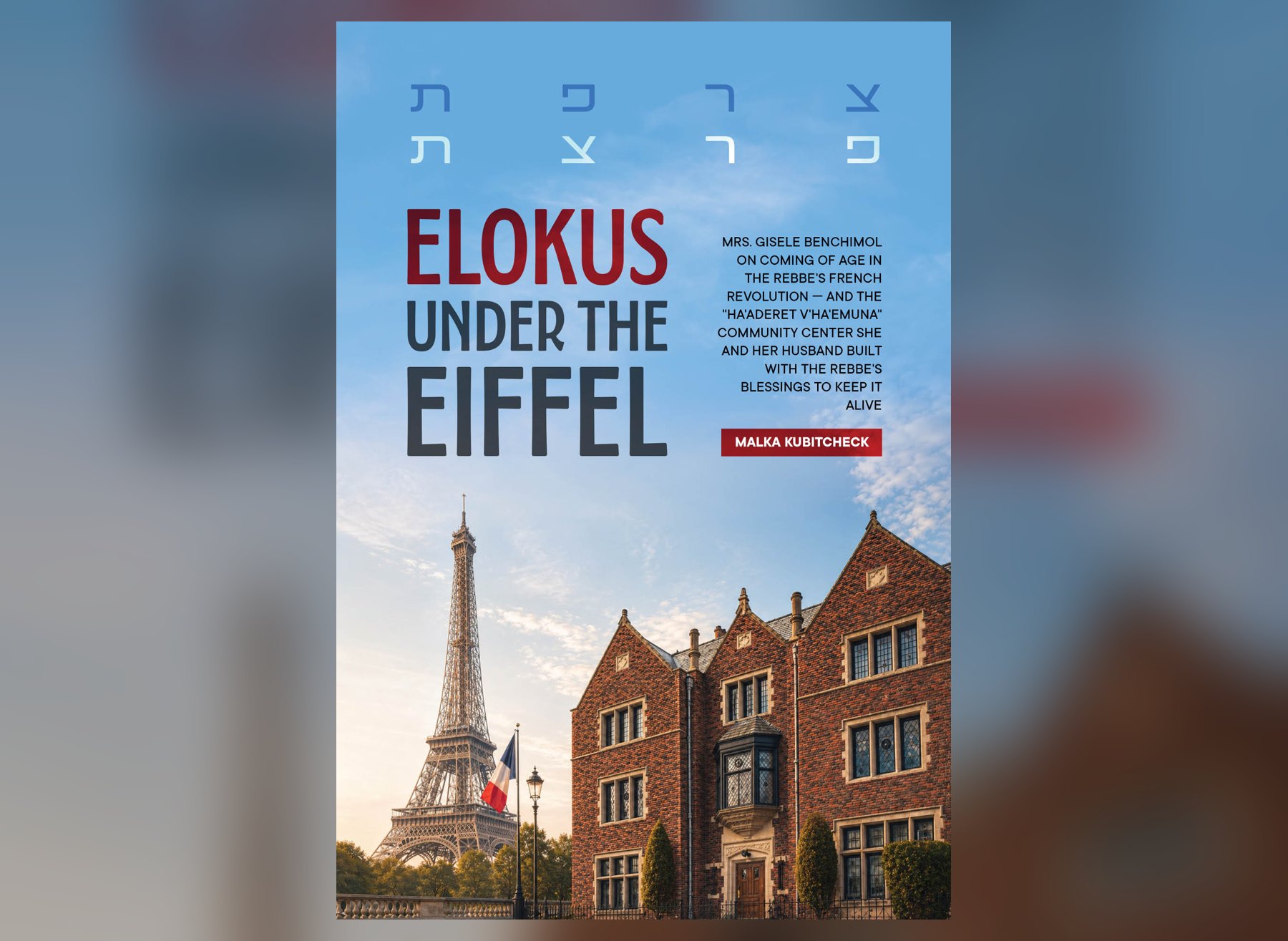
Mrs. Gisele Benchimol on coming of age in the Rebbe’s French revolution – and the “Ha’aderet V’Ha’emuna” community center she and her husband built with the Rebbe’s blessings to keep it alive
My dear parents, Nissim and Sultana Sasportis, were cousins. They married, built a beautiful family, and emigrated from Algeria to France after World War II, in the year 5708 (1948). The entire extended family followed them to France.
My beloved grandmother, Kamir Sasportis, arrived in France with Jewish tradition, but, sadly, her children and grandchildren attended government schools in Paris and did not receive a Jewish education. They preserved a few customs and observed the Jewish holidays, and that was more or less the extent of it.
I studied at a municipal school in Paris. I was the only student wearing a Magen Dovid necklace, surrounded by non-Jewish French girls. Because of the atmosphere in the government school, I sometimes felt uncomfortable when my mother – who had a distinctly Jewish appearance – came to pick me up. But as I grew older, I wanted to understand what it meant to be Jewish and Hashem sent His messengers to me, and I was ultimately privileged to find my way to the light.
Every year the extended family gathered in grandmother’s warm home to celebrate the Pesach Seder together. Uncle Moshe Sasportis would read from the Haggada, we all sang Pesach songs and pizmonim joyfully, and we felt united. After the Seder, late at night, I would sit beside my uncle and want to hear more and more Torah stories. I connected especially to the stories of the Haggada, because I was born during Chol HaMoed Pesach.
When I was seven years old, I asked my father for a birthday gift – a Haggada with a French translation. My father took me to visit the Jewish neighborhood in Paris – the Pletzl. There we entered a bookstore, and I received a Haggada with a red cover and illustrations. But my soul was not satisfied. At my grandmother’s home there were books on Judaism in French written by Rabbi Nissan Mindel. I read and learned about the meaning of Pesach, Shavuos, Shabbos, tefilla, and more. It made me happy. When my brother Daniel Yosef was approaching thirteen, I taught him tefillos and prepared him to accept the ‘yoke of mitzvos.’
The Power of a Kosher Restaurant
I finished high school and began studying economics at the renowned Sorbonne University. There I met Jewish students, and from them I heard that there was a kosher restaurant in the Luxembourg Gardens, near the university. I went to see it, to meet Jews, and I met Rabbi Shabtai Cohen. He distributed Sichat HaShavua pamphlets in French and invited me to meet his wife and to attend a Torah class on Saturday afternoons given by the shlucha, Rebbetzin Batya Azimov.
I yearned for words of Torah. I began attending the class. I enjoyed the fascinating content and the pleasant, warm atmosphere. Under the influence of Rebbetzin Azimov, I began to be careful to eat only kosher food.
Later I went with a group of young Jews to a Torah class given by Rabbi Pinchas Pashter, at his shul, “Hadar HaTorah.” There I met my husband, Rabbi Shaul Yosef Benchimol. He was a young and enthusiastic baal teshuva. Our wedding took place in Paris on 4 Tammuz, 5734. We received letters of haskama and bracha from the Rebbe for our marriage. We were privileged that the Rebbe’s brachos became the cornerstone of our home.
Our Aspiration: To Spread the Wellsprings
We were a young couple – Chassidic, growing, and energetic. We had one aspiration: to be part of the Rebbe’s army, to engage in “u’faratzta,” to bring Jews closer to Hashem as the Rebbe desired, and we wanted to do more.
One evening my husband and I sat down seriously with two other baalei teshuva friends, and we wrote a detailed letter to the Rebbe with several points:
1. It seemed to us that a different approach was needed in bringing Jews closer to Judaism in the Paris area, so that each person could express his talents, aspirations, and goals, and integrate them with observing Torah life and influencing those around him.
We were privileged to immediately receive the Rebbe’s response: “As is obvious, according to the Shulchan Aruch.”
2. If indeed a different approach to outreach in Paris was needed, and if that was truly the reality, would we – through hashgacha pratis – be the instruments for this?
To this question as well we received an answer: The Rebbe crossed out the word “would” with a line, and underlined the words: “The reality is so, Providence wills it, and we will be the instruments for this.”
3. We asked for a bracha that all the inner strengths we would receive from the Rebbe for this work would serve solely for the purpose of “u’foratzta,” with the ultimate goal of hastening the Geula.
We received a response to this request: “I will mention it at the tziyun.”
We sent the letter by mail, and were privileged to receive the responses through the secretariat.
The Rebbe’s instructions and responses to us are eternal, and they pulse in my heart even now, here in Yerushalayim.
HaAderet VeHaEmunah
In preparation for Yud-Beis Tammuz, 5736, my husband organized a trip to the Rebbe with a small group — our immediate family, my mother-in-law, and a group of close friends from Paris. We arrived at “Beis Chayeinu” with great excitement
Everyone went to settle into our lodgings after the flight while my husband went straight to 770. There he entered the secretariat and wrote a letter to the Rebbe. In his letter he announced that he and a group of friends had decided, following the response they had received from the Rebbe, to open a “Center for Jewish Studies” aimed at baalei teshuva in our style. The institution would be called “Keren Yeshua” and they were requesting a blessing for its success.
After leaving the letter in the secretariat, my husband went to daven Mincha.
After the davening, he was approached by Rabbi Binyamin Gorodetzky. He was the Rebbe’s representative in Paris and was responsible for visiting the Rebbe’s institutions in France and across Europe after the war, as well as in North Africa. Rabbi Gorodetzky would regularly write reports to the Rebbe about each institution.
Rabbi Gorodetzky excitedly told my husband: “I just came out of a private audience… In the middle of the conversation the Rebbe suddenly asked about you! The Rebbe asked: ‘What is happening with Benchimol?’ The Rebbe wants you to open the new institution, but give it a different name. You should choose a name that better reflects the character of the Jews of France.”
We were overjoyed to hear the Rebbe’s agreement to open our new center. We thought for a moment, and then, with inspiration from above, the right name flashed to my husband – “HaAderet VeHaEmuna.”
Many years have passed since then, and my children today ask what the Rebbe intended with his instruction to choose a name that characterizes the Jews of France. Looking back, I believe the Rebbe was referring to the character of the Jewish community in France after the Holocaust. Sadly, the Jewish communities in France were destroyed in the Holocaust, and most of French Jewry perished in the death camps. But the Jews who emigrated to France after the Holocaust from North Africa – like our family – grew up with emunas tzaddikim, temimus, and belief in Hashem. Like the Jews of the Baal Shem Tov. You only need to awaken them a little, and the G-dly soul ignites and shines. And then they immediately go out to act and illuminate ever more Jews with the light of Torah.
Afterward we met again with Rabbi Binyamin Gorodetzky, and he conveyed the Rebbe’s instruction to meet with Rabbi Pinchas Pashter, founder of the “Hadar HaTorah” yeshiva in Paris, and with Rabbi Shmuel (Mulle) Azimov, founder of “Beit Lubavitch,” so that together we could arrange in an organized way the stages of opening the new institution – “HaAderet VeHaEmuna.”
We returned to Paris and held a meeting devoted to our goal of fulfilling the Rebbe’s instructions. On the advice of Rabbi Gorodetzky, we divided the areas of activity of each shliach among the districts of Paris, so that we would not – G-d forbid – encroach on one another’s territory.
We began with the mitzva campaigns for every holiday and special occasion. My husband was a talented graphic designer, and he was the first to print pamphlets with explanations of the Rebbe’s ten campaigns and the content of each holiday. We sent every publication to the Rebbe, and received letters from the Rebbe for every pamphlet we sent.
I sent a special pamphlet on the topic of “The Essence of a Jewish Woman” to the Rebbe together with a young woman who worked with me. She was a modest and shy girl who did not dare look at the Rebbe when she passed before him at a dollar-distribution gathering. But in the face of the warm smile the Rebbe gave her as she presented the French-language booklet, she lifted her face and breathed in the light. When she returned to France, she shared with me the deep and illuminating experience.
We were excited and overjoyed to hear from the secretary Rabbi Leibel Groner that the Rebbe was taking our publications home to President Street and that Rebbetzin Chaya Mushka a’h was reading our pamphlets in the French language!
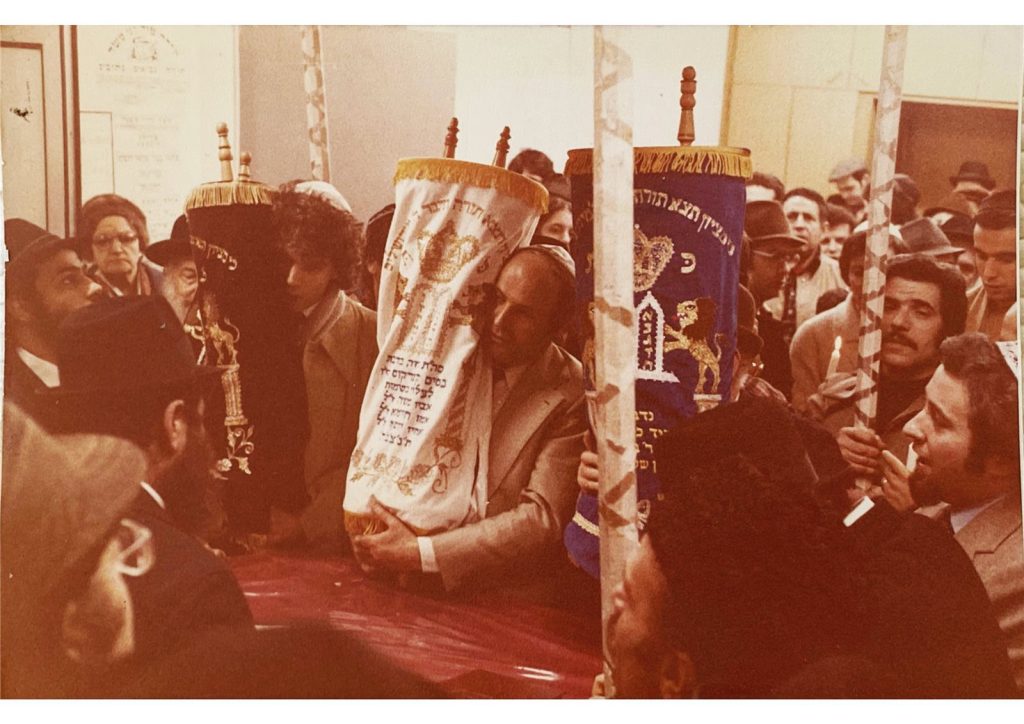
Young and older Jews came to our center for Torah classes, farbrengens, minyanim, and the sound of Torah was heard within the walls of “HaAderet VeHaEmuna.” We brought in three Sifrei Torah, and their mantles were in three colors – red, blue, and white, like the colors of the French flag…
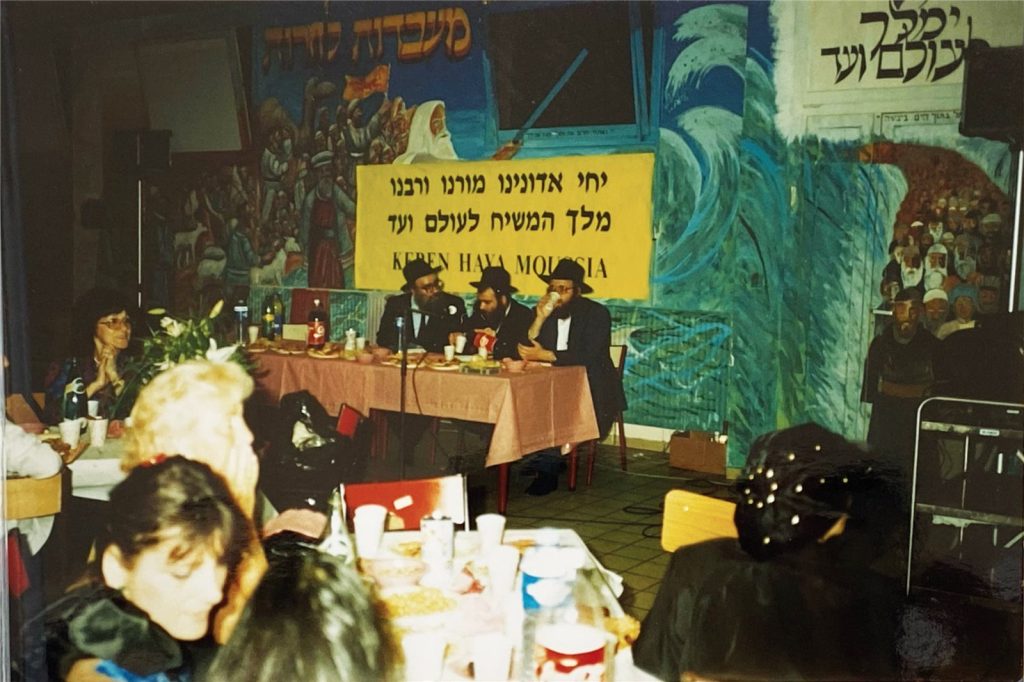
During the summer months we opened a Gan Yisrael camp and when the school year began we maintained our connection with the children and their parents and opened a school – a Talmud Torah on Sundays and Wednesdays. In France in those years, government schools did not operate on Sundays and Wednesdays.
We received a bracha from the Rebbe for the new year for the students of our Talmud Torah and to the campers of Gan Yisrael.
The Influence of the Children
The shluchim active in Paris’s districts opened schools for the children of mekuravim. The young children of the shluchim and children from Anash families also attended these schools.
Over time, concern arose among the devoted shluchim that their innocent children might be influenced by their classmates whose homes had televisions, movies, and unsuitable books, and who were not careful with mitzvos in general.
This question regarding the children’s chinuch kept us up at night. I wrote to the Rebbe.
I asked: Are our children not too young to engage in “u’foratzta”?
I received no response to my question. When we went to the Rebbe, I sat in 770 and wrote the same question again. We were considering the possibility of opening a Chabad cheder in Paris for the boys of Anash families and a Chabad kindergarten for the girls of Anash families – all within the framework of our institution “HaAderet VeHaEmuna.”
This time I was privileged, and the Rebbe answered my question:
“If they find a suitable Chabad kindergarten teacher and teacher – do as mentioned above. If not – they should study in Chabad institutions. I will mention it at the tziyun. She must of course know French, etc.”
And indeed we opened a cheder and a kindergarten for boys and girls, but after a year we could not find suitable permanent staff, and so we closed the kindergarten, and our children returned to study Torah in the existing Chabad schools together with the children of mekuravim. The Rebbe’s blessings accompanied us and accompany us always.
To strengthen our children, we explained to them again and again that their classmates were precious Jews, children of Avrohom, Yitzchok, and Yaakov, but had not merited to learn much Torah. Whereas we had merited, and we are the Rebbe’s shluchim, and we have the power to influence others rather than be influenced.
Over the years I have come to see that those same dilemmas in educating the children exist today as well – exactly as we experienced them many years ago. Boruch Hashem, our children grew up Chassidish, yereim u’shleimim, a source of pride and glory. But looking back, I think it would have been right to give our children from a young age a greater sense of Chassidish pride and uniqueness – awareness of the privilege of our being shluchim.
A Gift for the Rebbe
In 5740, Rabbi Gorodetzky encouraged us to organize and travel to the Rebbe with our mekuravim. We had a special siyata d’shmaya. Sixty families came to the Rebbe, and in addition there was also a group of young men and a group of young women. We brought a special gift for the Rebbe – a gilded key to the magnificent “Mitzvah Tank” we had purchased. We placed the key inside a jewelry box and wrapped it in a blue cloth bag. When we entered for a “yechidus klalis,” our friend Yael Albo (who had worked to secure the office for the Chabad House on the Champs-Élysées in Paris) presented the beautiful package to the Rebbe. The Rebbe opened the box, took a pencil and asked: “In which district are you?” I answered: “In the eighteenth district.” The Rebbe wrote the number 18 on the cloth bag with the pencil.
We enjoyed the wonderful hospitality of Crown Heights. The renowned ish ha’chessed, Rabbi Moshe Yaroslavsky z’l, made sure we lacked for nothing. One day, he came in with challa from a farbrengen, which he had received from the Rebbe’s own hands. He distributed a small piece to each guest. When my turn came, I called out: “HaAderet VeHaEmuna.” I received from Rabbi Moshe a large piece of challa, and he said: “In your merit, Moshiach is coming…”
Every day the secretary Rabbi Leibel Groner met my husband and asked whether the accommodations were suitable, whether the meals were satisfying, what Torah classes the young men were learning and what the young women were studying, and so on. My husband answered respectfully that everything was fine and that everyone, boruch Hashem, was happy and strengthening themselves in Torah, yiras shomayim, and the ways of the Chassidim. In one of their conversations Rabbi Groner noted with satisfaction that it was apparent that the older girls of “HaAderet VeHaEmuna” were polite and refined. Our girls had the merit of standing in the first row of the women’s section at 770.
When about two weeks had passed since we arrived at “Beis Chayeinu,” my husband asked Rabbi Groner what lay behind his daily inquiries about the French group. The secretary then revealed that his daily inquiries after our well-being were on the Rebbe’s behalf! Our hearts swelled when we heard how much the Rebbe thought about us and cared for us.
On Simchas Torah, when the traditional French hakafa came around, our joy soared to the heavens. We were privileged to receive an esrog for the dalet minim from the Rebbe. Rabbi Azimov received a lulav. When we returned to France, I made preserves from the esrog, distributed it to the women, and we witnessed miracles.
After Simchas Torah, the entire French group entered for a private audience with the Rebbe before our return to France. In the evening, following that moving audience, Rabbi Groner announced that the Rebbe was sending us a memento. All the women received a Tehillas Hashem siddur, and all the men received a copy of the Tanya.
Rebbetzin Chaya Mushka
A few days remained until our flight to France, and suddenly a thought entered my mind and a desire awoke in me to meet with Rebbetzin Chaya Mushka. My husband asked Rabbi Groner to arrange a visit to the home of the Rebbe and Rebbetzin. With great joy and excitement we heard from the secretary that the Rebbetzin had agreed to meet with us.
She set a day and a time, but then it became clear to me that the date of the visit coincided with our flight to France. I was sad and disappointed – what to do?
Our young children had no passports of their own; they were listed on my passport (as was the custom in those days). But beyond the technical matter, there was a real moral dilemma. The Rebbe had invited us to him. We – my husband, myself, and our family – had brought the group to the Rebbe, and it was our responsibility to bring each and every one of them back to France, to their own shlichus in the world. In the end, the sense of shlichus and responsibility prevailed, and we traveled with the group.
On the day of the flight, as we left 770 and boarded our bus, the Rebbe stood on the steps of 770 and waved farewell until the bus disappeared from his sight around the bend in the road. All the passengers on the bus gathered and stood at the back window until the Rebbe’s figure disappeared from our view.
Though I am certain we did the right thing by traveling and returning with the group and that our visit brought the Rebbe tremendous joy, the feeling of having missed out on meeting Rebbetzin Chaya Mushka still lingers within me. In my mind’s eye I can see her sitting graciously on the sofa like a queen, waiting for the shluchim-children who would come to her. A few years ago I visited “Beis Chayeinu,” and heard that a group of women was going to see where the Rebbe and Rebbetzin’s home was on President Street. I hesitated, but in a moment’s decision I joined them. I felt a kind of tikkun for the feeling that I had missed out.
To Write and Be Blessed
Following the passing of the Rebbetzin on Chof-Beis Shevat 5748, the women of Chabad in Paris gathered for a rally of hisorerus and hachlatos tovos. Rebbetzin Liberow suggested opening a Hachnosas Kallah fund, and we also decided to establish the organization “Shifra and Puah.” We provided kosher meals to new mothers and their family members, and this activity was inspirational in strengthening kashrus observance among many families of mekuravos. Later, strictly kosher restaurants opened in Paris, and the need to supply kosher Shabbos meals to families became unnecessary.
We printed a beautiful booklet on guidance for new mothers, including information on bris mila, the mikva, Shir LaMaalos, avoiding pictures of non-kosher animals, and more. We photographed and compiled two full photo albums, and I brought them with me when we came to the Rebbe for the Kinus HaShluchos on the first yahrtzeit of the Rebbetzin in 5749.
I delivered the albums along with a report to the secretariat. Rabbi Groner took them from me. Before we flew back to France, Rabbi Groner conveyed the Rebbe’s response to the albums: “May it be with great and extraordinary success. I will mention it at the tziyun.”
We were privileged: on Monday the 22nd of Shevat, when the Rebbe traveled to the Ohel, he took the albums with him. Upon the Rebbe’s return from the Ohel after Maariv, the secretaries turned the shtender and told everyone to approach quickly, for the Rebbe would be distributing dollars for shlichus mitzva.
I stood in line with my thoughts racing, reviewing the joyful report I had written to the Rebbe, when suddenly I realized: I had not asked for a bracha for the continued success of our work. The line was moving quickly, and in my heart was a wish that the Rebbe would bestow his bracha upon us. Another moment and I was standing before the Rebbe. He placed a dollar in my hand for shlichus mitzva and said: “Amen.” The Rebbe had truly read my thoughts… I was privileged to receive a bracha.
It is worthwhile to always train ourselves to think positively – “tracht gut” – with a prayer that the Rebbe will bless our thoughts.
Boruch Hashem, our children grew up and established their own homes, beautiful Chabad Houses. Some moved to Eretz Yisrael and so we followed in their footsteps.
Here we have already opened an online Zoom midrasha in French, and organize Torah classes given daily with the finest Chassidic lecturers. Our shlichus has not ended. We anticipate welcoming Moshiach b’tov ha’nireh v’ha’nigla.
Beis Moshiach #1506 • pp. 44-51
© 2026 Beis Moshiach Magazine. All rights reserved.
This article originally appeared in Beis Moshiach #1506. You are welcome to share it with friends and family by email or in print, provided that you do not change, add to or omit any part of it, you credit the author and Beis Moshiach, and you include a link to archive.bmoshiach.org (written out in full in printed copies).
To republish this article in a newspaper, magazine, book or website, please request permission in advance at [email protected].