
The Rebbe Officiates at the Wedding of His Secretary, Rabbi Yehuda Leib Groner
15 Elul 5714 (September 1954)
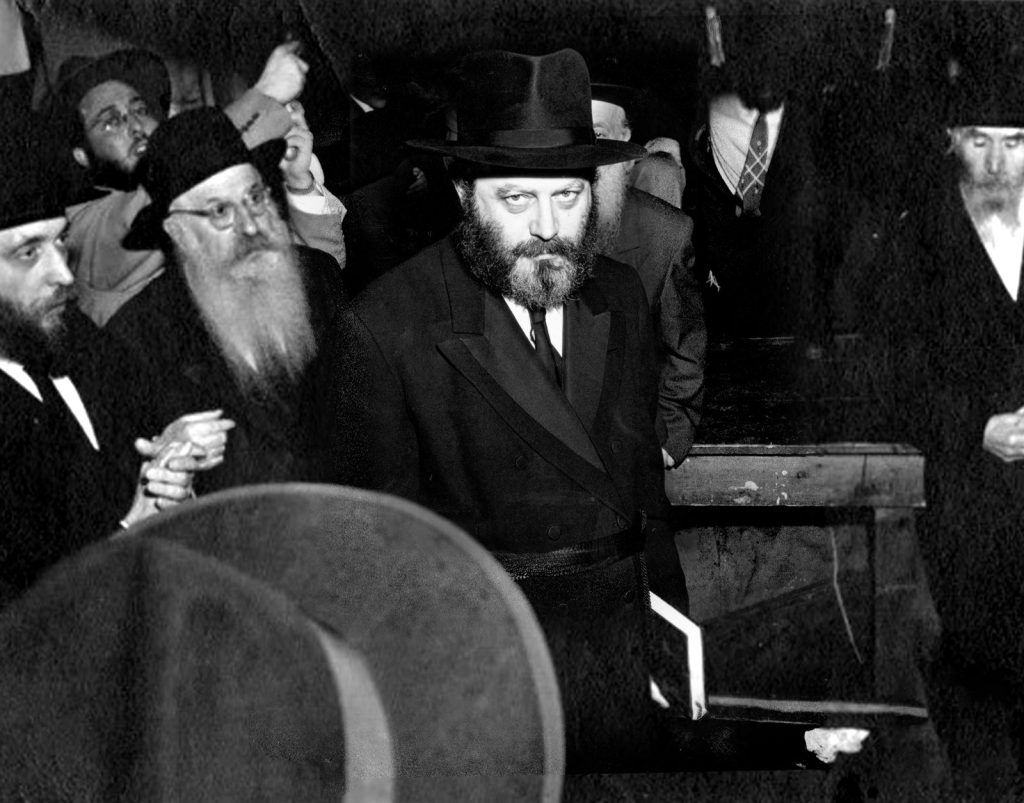
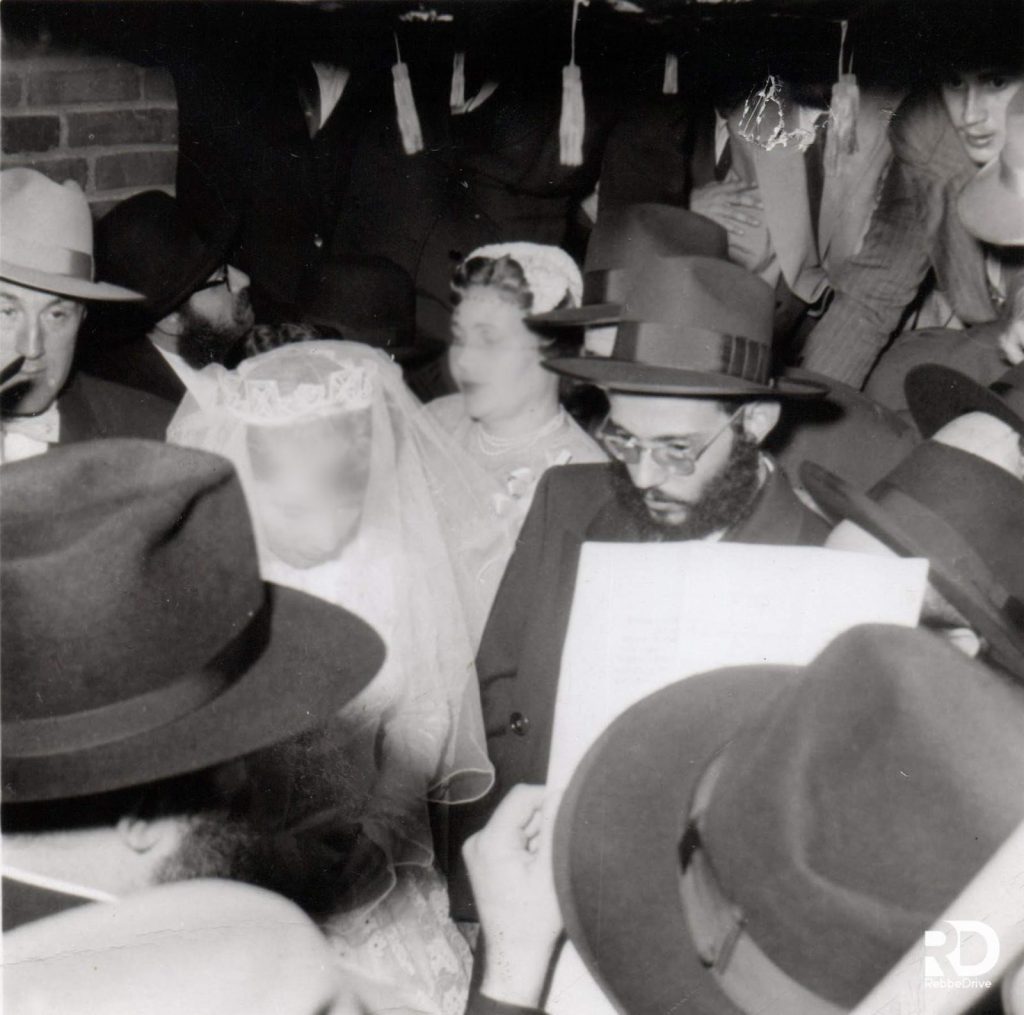
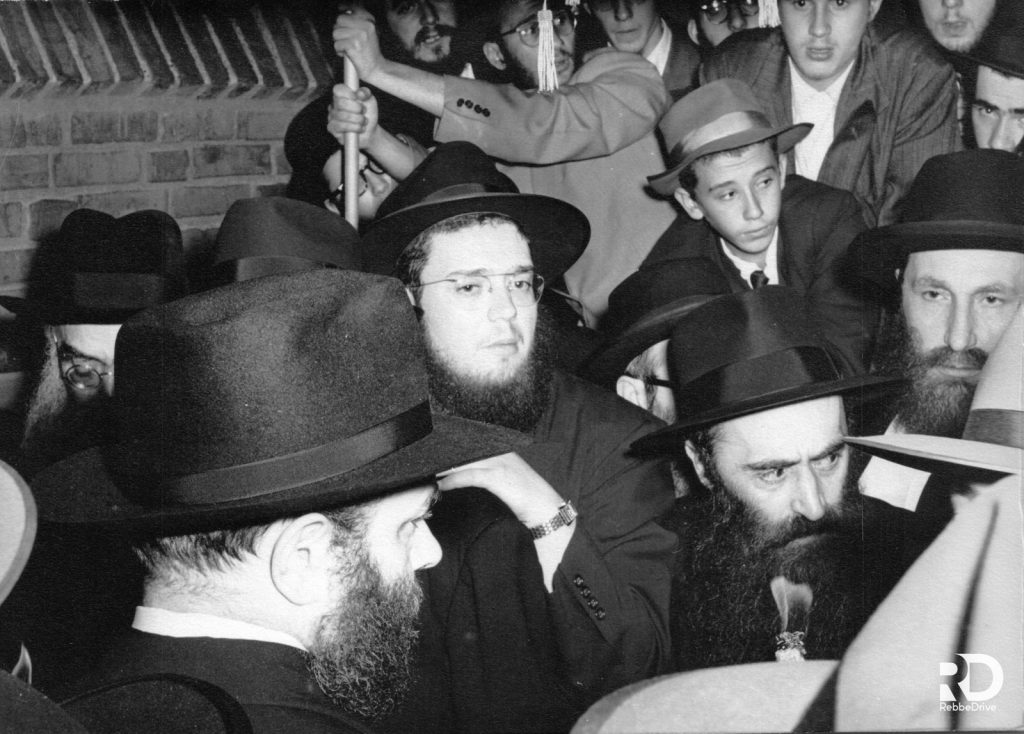
On 15 Elul 5714 (September 1954), Rabbi Yehuda Leib (Leibel) ע”ה Groner, the Rebbe’s secretary, married his wife, Mrs. Yehudis, may she live and be well.
Years later, he shared some memories from that time:
The day after the shidduch was finalized—16 Shevat 5714 (January 1954)—I asked the Rebbe how I should handle meeting with my kallah. The Rebbe told me: “Less is better. Don’t meet more than once a week, and don’t speak on the phone more than once a week either.”
Then the Rebbe, clearly pained, spoke about something that had become common: “It’s become a common pritzus [=act of immodesty] for a chassan and kalla to take pictures together before the wedding. This is a serious breach of tznius. Until after the chuppah, they may not be photographed together—and please pass this along to the other chassanim too.”
At the beginning of Elul, a week before my wedding, I wrote to the Rebbe that the Rebbe Rayatz had once said that at the Kabbolas Panim (reception), we invite our Rebbeim to the chuppah by saying over their Torah. So I asked the Rebbe—even though he himself would be my mesader kiddushin—to tell me which of his own teachings I should say at my Kabbolas Panim, as a kind of invitation.
I never got a written answer. But that Shabbos—the Shabbos of my aufruf—the Rebbe said the maamer “Lecha Dodi,” the very same one said at his own Kabbolas Panim back in 5689 (1928), and even added a few new points to it.
So at my Kabbolas Panim, I said the Rebbe Rayatz’s 5689 (1928) maamar “Lecha Dodi,” and in three places I worked in the additions the Rebbe had made that Shabbos.
The day after the wedding, when I came in to see the Rebbe, he asked me, “Nu, what did you end up doing with the maamar?” I told him I’d said the Rebbe Rayatz’s maamar along with the Rebbe’s own additions. He wanted to know exactly which additions, and where—so I went through it. I could see the Rebbe was pleased. “zeier a gleiche zach, that’s a proper thing,” he said. “Surely others will follow your example. It’s worth publicizing so the other chassanim do the same.”
On my wedding day itself, 15 Elul, I showed up at the Rebbe’s office like any other day, ready to work. The Rebbe looked surprised: “What are you doing here? Isn’t today your wedding day?” I told him—that yes, that was exactly the point. “I wanted the extra zechus of serving the Rebbe on this day before my chuppah.” The Rebbe told me to wrap up whatever I was working on, “and then go say Tehillim. My father-in-law, the Rebbe (the Rebbe Rayatz), told me on my own wedding day that a chassan and kalla should use every spare minute of their wedding day to say Tehillim—and not just finish the whole sefer once. If you finish and there’s still time, start again from the beginning. Make sure someone tells this to the kalla too.”
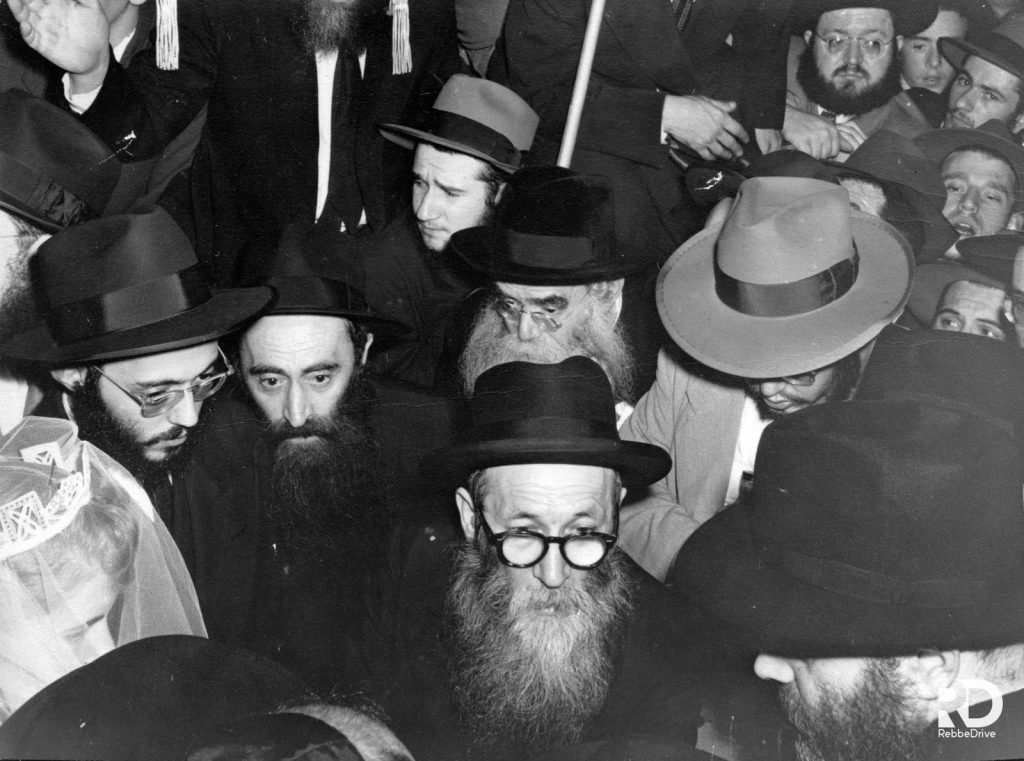
I also asked the Rebbe about the custom of the chassan and kalla being accompanied during Sheva Brachos week—does that only apply when each of them goes out alone, or even when they go out together? The Rebbe said, “Even when they go together,” and explained: “They’re like a king and queen. Have you ever seen a king and queen walk anywhere—even together—without an escort?”
Every year, the Rebbe had a custom of blessing the tmimim—his “sons” — on Erev Yom Kippur, shortly before the holy day began. The Rebbe was insistent that only the bachurim be in the room for this.
Before I got married, in 5714 (1954), I was still part of birkas ha’tmimim along with the other bachurim, even though I was already working for the Rebbe by then.
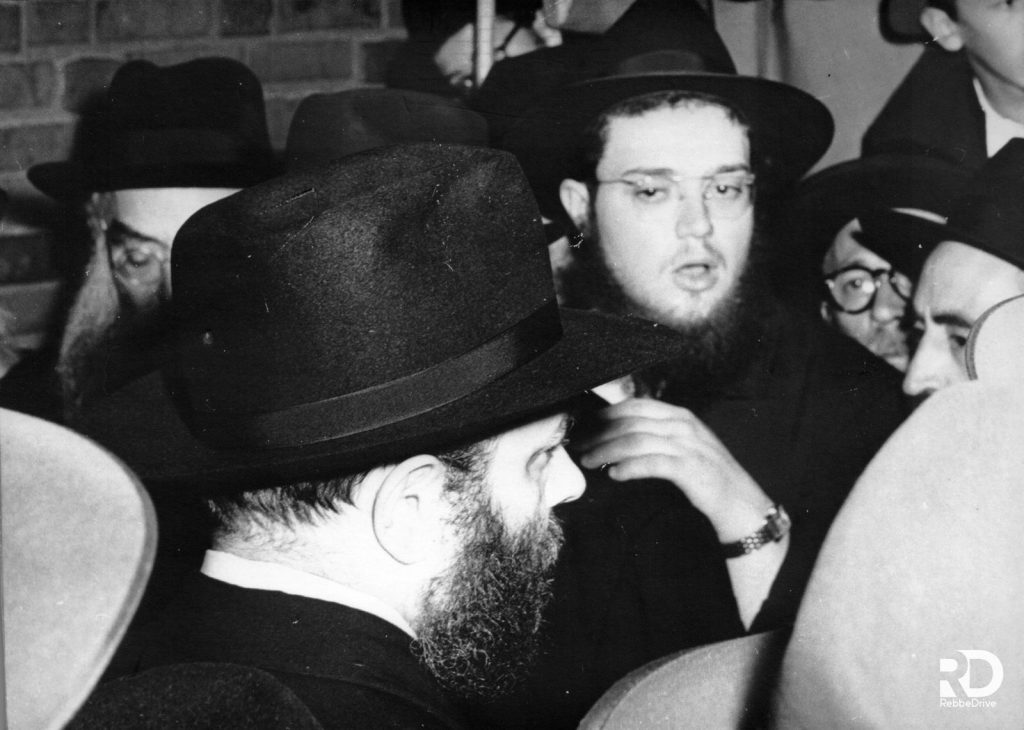
On Erev Yom Kippur 5715 (October 1954)—about a month after my wedding—I went in to tell the Rebbe the bachurim were ready. The Rebbe said to me: “But you won’t be standing among them anymore—you’re married now, so it doesn’t apply to you.”
That’s when I understood just how much the Rebbe treasured his tmimim, and how much significance he placed on birkas ha’tmimim. It was a privilege reserved only for them.
Beis Moshiach #1519 • ח׳ אלול תשפ״ו • pp. 30-33
© 2026 Beis Moshiach Magazine. All rights reserved.
This article originally appeared in Beis Moshiach #1519. You are welcome to share it with friends and family by email or in print, provided that you do not change, add to or omit any part of it, you credit the author and Beis Moshiach, and you include a link to archive.bmoshiach.org (written out in full in printed copies).
To republish this article in a newspaper, magazine, book or website, please request permission in advance at [email protected].



