Have Room for One More Guest?

Mushka and Menuchi invite us into their Crown Heights sukkos, where there’s always room for one more guest – even though the budget protests…
Kingston Avenue is packed with people wrapped in talleisim, walking with the Dalet Minim in hand. There are sukkos everywhere and the fragrance of esrogim mixes with the scent of schach. The rain, which almost always comes on Sukkos, dampens the street with sparkling drops. The tefillos at 770 are packed and moving, with Hoshanos and Hallel sung loudly. It’s a special chag that charges the neshama with strength for the whole year; no wonder so many flock to the Rebbe’s neighborhood.
We spoke with two women from Crown Heights, Mushka and Menuchi, and they opened the door of their sukka to us, giving us a glimpse into their special hospitality.
Me and My Sukka
Mushka: I’m Israeli, but this is my 17th consecutive year in Crown Heights during Tishrei. In the past I was a guest and now, I’m a hostess. We’ve lived here for a decade already, and have six children, kein yirbu. We moved here because my husband is American. We live about a twenty-minute walk from 770 and when we moved to the more distant house I asked my husband: “Who would even want to come all the way here?…” But, boruch Hashem, we have guests not only during Tishrei but also every Shabbos.
Our guests are varied. We ask family members to bring friends or acquaintances who need hosting. Boruch Hashem, we have a large sukka and it holds about 25 people at each meal. I usually make lists in advance to make sure there’s room for everyone. When many guests arrived and there wasn’t room for everyone in the sukka, the girls moved to eat in the house.
Menuchi: In the past I had the privilege of being a guest for Sukkos at 770. I’ve been fortunate to live in Crown Heights for four years now, and to celebrate the chag at my home with my husband and my four children.
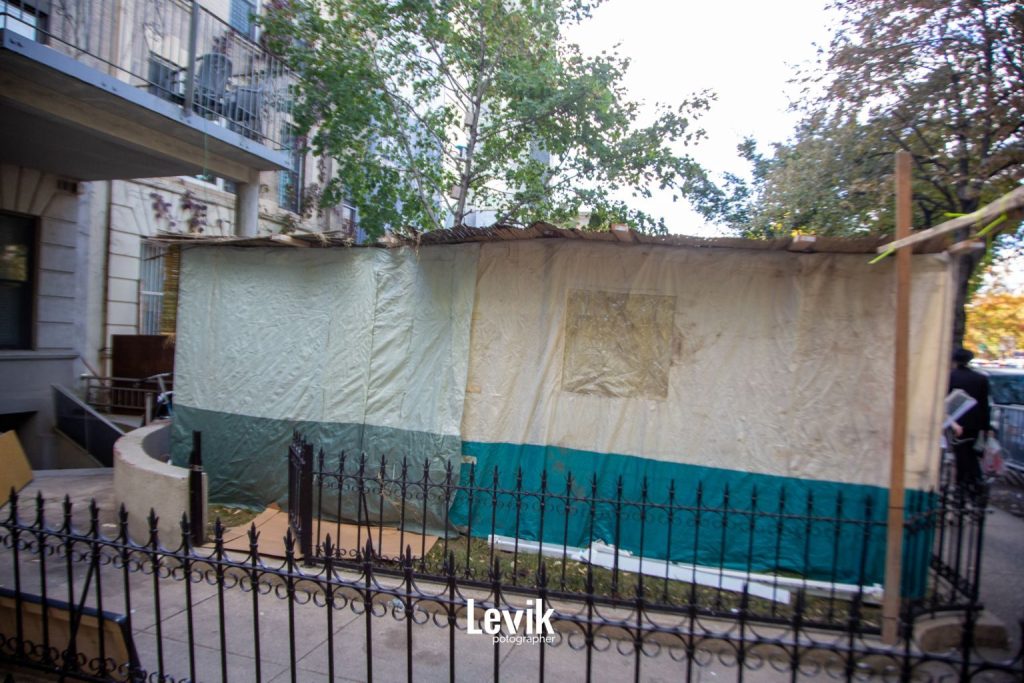
Even though our sukka is small, many people enjoy it. Our sukka is in a central location in Crown Heights, which earns us constant hospitality—a real “sukkas kol dichfin” (sukka for anyone in need)… People pass by with a purchased meal and look for an available sukka to sit in. Almost every time we walk into the sukka we find a random guest there, and of course we offer them a drink or food. On the chag itself, since the sukka is limited in space and holds about 8–10 people, we host the men in the sukka and the women and children in the house. Sometimes we’re about to start a meal and discover there’s still room and plenty of food, so my husband dashes out for another round and brings back a few more guests.
How We Prepare For Such Hosting
Mushka: First, it’s important to remember the issue of quantities. Although I have organized shopping lists, I almost always find myself sending my husband out for more supplies. I make sure to prepare the main dishes, fish and meat, in large quantities well in advance, and freeze them. If more guests arrive than planned, I take out what was meant for the next day, and thaw frozen items at night. That way most of the organizing is concentrated on the main cooking, while the amount of side dishes and salads is adjusted according to the time remaining. I put my whole heart into the cooking and hope the guests feel it in the taste and enjoy the hospitality. Still, the organizing requires many hours in the kitchen and sometimes giving up other experiences, like Simchas Beis HaShoeiva or davening at 770.
The cost of hosting during the month of Tishrei is especially high—we’re talking about thousands of dollars—and it definitely comes at the expense of other things, and yet, we do it joyfully. Maybe from the outside it looks like it’s financially easier for Americans because they earn in dollars, but the reality is more complex. Someone once told me she paid about $1,000 for a plane ticket, and was upset that they made her leave her seat in the middle of davening because a woman arrived who had bought that spot. I told her I paid more than her ticket price just for the first day of the chag alone, without even mentioning the rest of Yom Tov…
The cost of living here is very expensive. Every guest sees for herself how easily she can spend $100 on a few grocery bags of simple items. We in the neighborhood enjoy hosting, but it’s definitely not something to take for granted; hosting requires a large financial outlay and extensive organizing.
Menuchi: It’s definitely not a simple project. The preparations for Yom Tov require a lot of work and organization, and the days before Yom Tov are especially intense. I almost never buy prepared food—maybe just challahs, if I didn’t manage to bake enough—but I do allot a significant amount and hire help for Erev Yom Tov.
Someone once told me: “It’s not really hard to host here, the women here are spoiled, they have help”… Actually, that’s not true. When a young family celebrates the chagim on their own, each Yom Tov consisting of two full days, and also hosts, that’s no simple thing at all. I don’t envy my friends in Eretz Yisrael who celebrate one day of Yom Tov at their parents’ house; I fargin from the bottom of my heart for the convenience but here the reality is different; it’s impossible to prepare for Yom Tov alone. The help isn’t a privilege, it’s the bare minimum necessary. Just as a Chabad House planning an event brings in people to help out, so too I have my own small team helping me prepare for the holiday. Some choose to get help differently, for example by buying a lot of prepared food. I, on the other hand, prefer to prepare most of the dishes at home with the help of an assistant who allows me to get the job done.
My Sukkos Schedule
Mushka: The schedule is very packed not just on Sukkos, but throughout the month of Tishrei. We’re constantly organizing for meals and cooking in large quantities. I always ask for help because on my own it’s simply impossible to get everything done.
I don’t manage to go out for the evening tefillos. In the mornings, despite the workload and exhaustion, I make sure to daven at 770. It’s not easy; the children have gotten used to waking up early and walking to 770. I myself get up even earlier to set the table before we leave, because by the time we get back from davening the guests are already arriving. After the daytime meals, my husband goes out with the older boys on foot to Manhattan for Mivtza Lulav. It’s definitely challenging, but we draw strength from the special atmosphere of these days.
Menuchi: It’s very important to us to take the children to daven at 770, to hear Hallel and Hoshanos; it’s a once-a-year opportunity. I try to organize all the preparations and cooking in advance as much as possible. Here’s a tip I got from a longtime Crown Heights resident: come to daven with the children when you’re relaxed and know your house is ready for the meal that follows the davening. It’s a completely different experience. You and they deserve a calm Yom Tov davening with the Rebbe at 770. On Chol HaMoed we also try to make it to shul at least on some of the days.
The advantage of living in the heart of Crown Heights is that you can easily pop over to Simchas Beis HaShoeiva, which the children look forward to all year. We go out to Simchas Beis HaShoeiva on Yom Tov night after the meal. The whole family walks together, and it’s an experience I really love. On Chol HaMoed we arrive in the early evening hours so the children are still awake. Sukkos is a packed holiday: davening, hosting, mivtzaim, keeping the children occupied—and we barely manage to realize it’s begun before we’re already organizing for Simchas Torah…
An Experience in the Sukka
Mushka: Two years ago, on the first night of Sukkos, we invited 18 guests, and four spots remained empty. We didn’t fill the sukka completely, and hoped there would be more guests the second night. On the second night my husband hadn’t yet returned from Mivtza Lulav and Maariv and meanwhile the sukka filled up with brothers, cousins, and bachurim my husband met on the way to mivtzaim and invited to the meal. And I see he still hasn’t arrived… I realized he was out looking for more guests, and I had no way to let him know the sukka was already full. And then he arrives, and just as I thought, ten more bachurim come in after him… I remember laughing endlessly just watching the people keep coming in. Boruch Hashem, there was enough food. We opened more tables and squeezed together. I felt that Hashem was sending us a sign of shefa (abundance) for that whole year.
Menuchi: One night of Yom Tov after we finished the meal, the guests had already left, the food was back in the kitchen, and everything was still on the counter when suddenly there was knocking at the door. A group of girls walking down the street had seen the sukka. They asked if there was any food left… Of course I brought some out to them. Fortunately there was still plenty in the kitchen, and boruch Hashem, there was enough left for all of them.
One of them said they had been walking around for a long time and hadn’t found a place to eat, and another asked me with surprise, “Did you make all this yourself at home?”… It was a moving and especially sweet moment to get such unexpected feedback. I was truly happy to have had the privilege of sharing the food with them and giving them a taste of the chag.
I remember a situation that happened after the chag, when it’s time to take down the sukka. Since we store our sukka in the basement, it has to dry out completely. If it got wet from rain, you have to wait several days for all its parts, mainly the schach, to fully dry. One year it rained on the day my husband planned to dismantle it. On the following days too it kept raining on and off, delaying the dismantling again and again, until the sukka stood there for many long days with the schach still up…
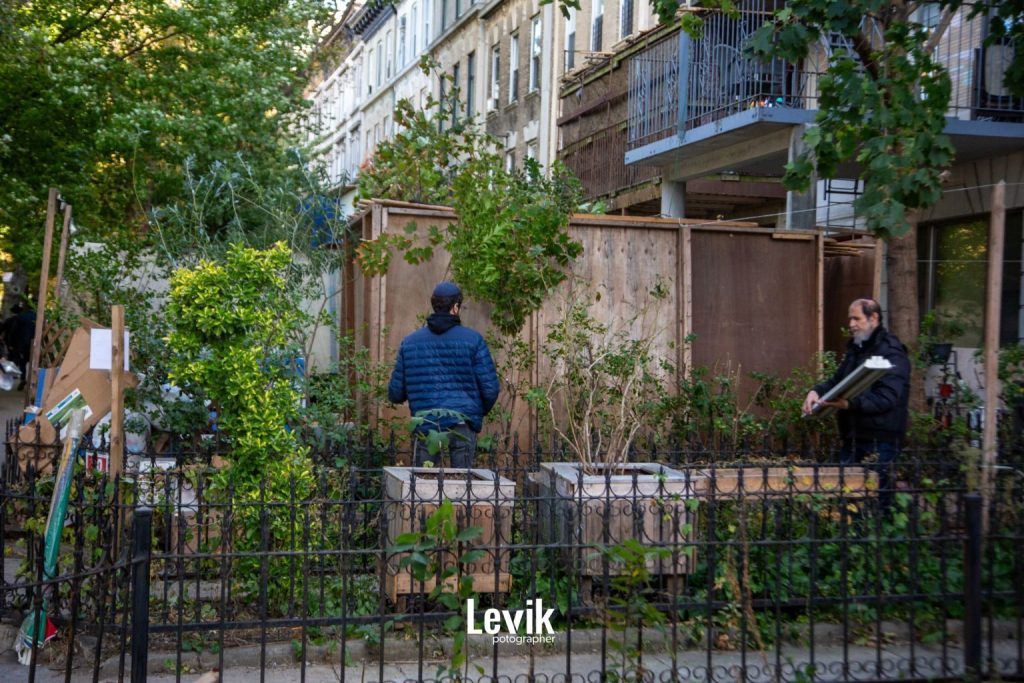
It was actually funny to see it standing there, until finally, for everything there is a season, and the right time came to pack it away for next year.
On the Bracha and the Atmosphere
Mushka: Even though it involves great effort, we host the Rebbe’s guests joyfully and with a sense of privilege. I feel that the more effort I put in, or the more guests I host at a meal, the more a special blessing is added to it. Not long ago there was a Shabbos like that, where I made a great effort, and one of the Shabbos candles burned until the afternoon hours… For me that was tangible proof of the bracha that rests on the home because of the effort put in.
Menuchi: I consider this a genuine shlichus. It’s a zechus to host the Rebbe’s guests. Knowing that something small we give can mean so much to the guest makes me happy. I remember myself, as a young girl, being hosted by families for Yom Tov meals. That experience brought a completely different atmosphere to the chag. When you’re far from family, you want so much to taste a bit of home. That memory gives me the strength to make the effort and to invite more guests, so that they too can feel a sense of home at the Yom Tov meal.
The guests also bring bracha home with them. There were times I really felt it b’gashmiyus too. After especially significant hosting that required a lot of effort from me, including overnight guests, we experienced special hashgacha pratis in areas where we needed a bracha.
I believe that when parents host joyfully and in a way that suits their home, it resonates. The children become active partners, excited and happy along with the parents and that’s not something to take for granted at all. Recently, for example, we had guests, and one of the children said during the preparations: “What a zechus that we have such guests!” That moment moved me deeply. I always pray that we merit to host out of simcha and shefa, b’ezras Hashem.
Wishes For Our Readers
Mushka: May you know how to make the most of the month of Tishrei. Every day is special in its own right, with a different atmosphere and meaning. May you succeed in gathering strength and moments with the Rebbe MH’M, and return fully charged with emuna, hiskashrus, and chayus. And above all, may we merit this very year the revelation of the Rebbe and may we all celebrate together in Yerushalayim.
Menuchi: May you succeed in deriving holiness and joy from the chag, instilling the special atmosphere in the children, and merit to take kochos with you for the whole year.
And above all, may we soon merit that Hashem raise the fallen sukka of Dovid for us and that we celebrate a Tishrei of Geula with the Rebbe.
The Chassidishe Vibe #1524 • pp. 6-11
© 2026 Beis Moshiach Magazine. All rights reserved.
This article originally appeared in Beis Moshiach #1524. You are welcome to share it with friends and family by email or in print, provided that you do not change, add to or omit any part of it, you credit the author and Beis Moshiach, and you include a link to archive.bmoshiach.org (written out in full in printed copies).
To republish this article in a newspaper, magazine, book or website, please request permission in advance at [email protected].