Spices and Secrets — Chapter 13
Recap: Zecharya and his mother visit his father in the hospital. They meet with the doctor, Dr. Vladimir who shocks them when he says that Tzadok is suffering from poisoning.
The doctor continued reporting to Tzadok’s wife as Zecharya sat on the side and listened in.
“As soon as your husband arrived, we had him quickly examined and found that he needed to have his stomach pumped. He reacted well to the treatment and is recovering now. The medic who spoke with him yesterday was mistaken; the symptoms of this particular poisoning are almost identical to broken-heart syndrome which is why he was confused.
Zecharya was left wondering: who poisoned his father and why, and how was it done?
“I have a great idea,” he said suddenly. His mother, who hadn’t read his thoughts, looked perplexed. Zecharya motioned with his hand to indicate they’d speak later on.
The doctor finished his rundown of the situation and made it clear that the meeting was over. Zecharya opened the bag he brought along with him and took out a pair of tefillin. “Excuse me, Doctor Mendlowitz, did you already put on tefillin today?”
Dr. Vladimir smiled hesitantly and said, “I’m sorry but I’m not Jewish.”
Zecharya put the tefillin away and took out a Sheva Mitzvos Bnei Noach card with the Rebbe’s picture on the other side.
“Here, this is for you.”
The doctor put the card in his pocket, shook hands with Zecharya, and turned to leave with Zecharya and his mother following.
Zecharya and his mother went back to Tzadok’s room. They found Tzadok lying in bed and saying Tehillim. One could see that he was very weak. They reported to him what the doctor said about his being poisoned, like his customers.
Tzadok turned white, “Oy vavoy,” he said quietly. “They want to take revenge on me, no matter what …”
Zecharya and his mother didn’t understand this.
“What are you saying?” they asked in unison, but he did not reply and looked awful. They realized that something had happened but didn’t know what. Their uncertainty bothered them tremendously, as much as the poisoning.
They left the room, having decided not to burden him with questions. Two hours later they had said goodbye and went home.
Zecharya sat on the couch and turned on the air conditioner. He felt warmer than usual. ‘This is the best time to carry out my plan!’ he thought.
He got up from the couch, went over to the table and took his father’s phone which had remained at home. He told his mother his plan and she gave her approval after thinking it over.
He looked through the contacts for a certain person and called him.
“Hello, Meir speaking,” said a familiar voice. It was the Meir the Lubavitcher policeman who had been of great help to the family during Tzadok’s arrest, and was very involved in the poisoning investigation.
“Yes, what’s going on?” a surprised Meir asked after Zecharya introduced himself.
Zecharya told him what had been going on, about his father’s poisoning, what the medic said, and the meeting with Dr. Vladamir who told them that Tzadok was also a victim of poisoning.
Zecharya didn’t see Meir but imagined Meir’s broad forehead creased into furrows.
“According to what you’re telling me,” said Meir cautiously, “I assume you called me to try and solve the big mystery and discover, once and for all, who keeps trying to hurt your father whether through poisoning the food he prepared or poisoning him directly.”
Zecharya was impressed by Meir’s speedy grasp of the situation.
“You could be a detective,” said Zecharya jokingly.
Meir smiled. What happened now had proved his position which he had consistently presented to his boss, that the poisoners did not perpetrate the poisoning just to hurt people and did so by way of Tzadok who sold food; rather, there were individuals who seemed to want to settle a score with Tzadok. That they wanted to do so quickly was seen in their directly hurting him. Why? That was part of the mystery that needed to be solved.
“I’ll deal with it,” Meir said reassuringly. “Don’t worry.”
Meir hung up and sat thinking. His detective mind examined the details every which way and after additional thought he decided to do something.
He left his office and and left the building for the parking lot, not before taking the keys to the patrol car with him.
“Where are you going?” asked the commander who suddenly appeared at the end of the hall.
Meir waved as he said with a small smile, “I’m going to work on your investigation,” and he continued walking. His commander opted to let him go and not pester him with questions. Meir was one of his most brilliant investigators and he treated him with respect and admiration.
Meir walked to the parking lot, took out his keys, opened the car and sat down.
“Get ready, I’m on my way to you,” he said to himself as he stepped on the gas. The police car quickly left the parking lot and smoothly joined traffic on the main road.
His navigator app showed the trip would take an hour. Meir leaned back a bit and continued pressing on the gas pedal. He was familiar with the route which helped him get off the road several times and use side streets while speeding without concern for other cars. That was the privilege of a police car.
He glanced at the navigator app and saw he had significantly shortened the trip from an hour to forty-five minutes.
He entered the high security regional prison grounds and parked his car near the entrance. He then walked between the high walls covered with barbed wire and security towers.
At the first security check, Meir showed his police ID. The door opened for him with a hum and he walked in. There were several more check points before he could enter the high security prison. Then he arrived at the reception area where he gave them the details of the police station he worked at and after a few moments the commander’s voice could be heard.
“He has permission,” said the man in charge of prison intelligence to the tough officer sitting at the counter. The intelligence officer had a very high rank and was able to approve many things such as permitting entry to restricted areas where “entry is forbidden.”
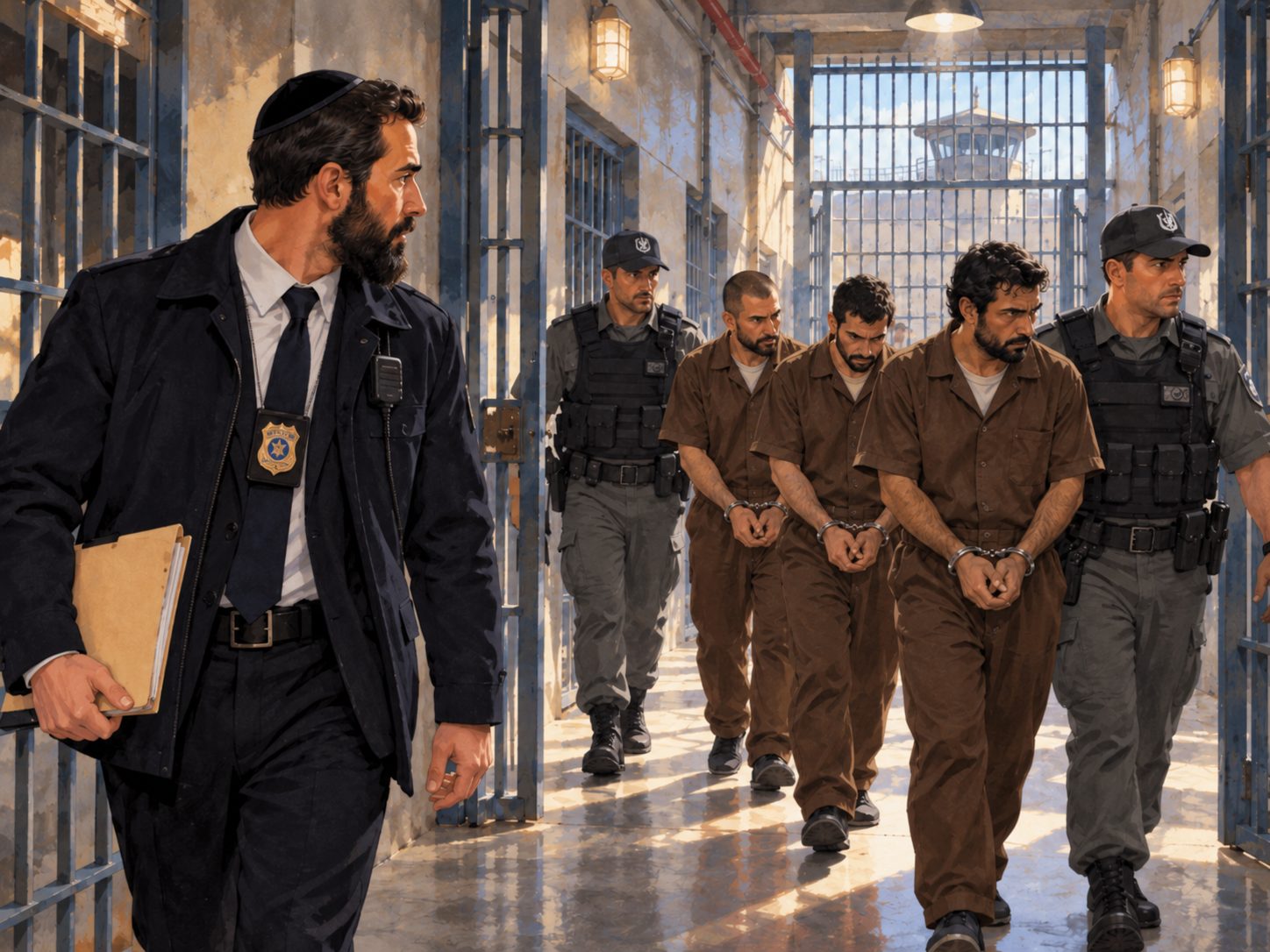
“Follow me,” said one of the wardens to Meir. Meir followed him until the lower cell block. He passed through long corridors and looked right and left at the faces of inmates.
After a few minutes the two stopped.
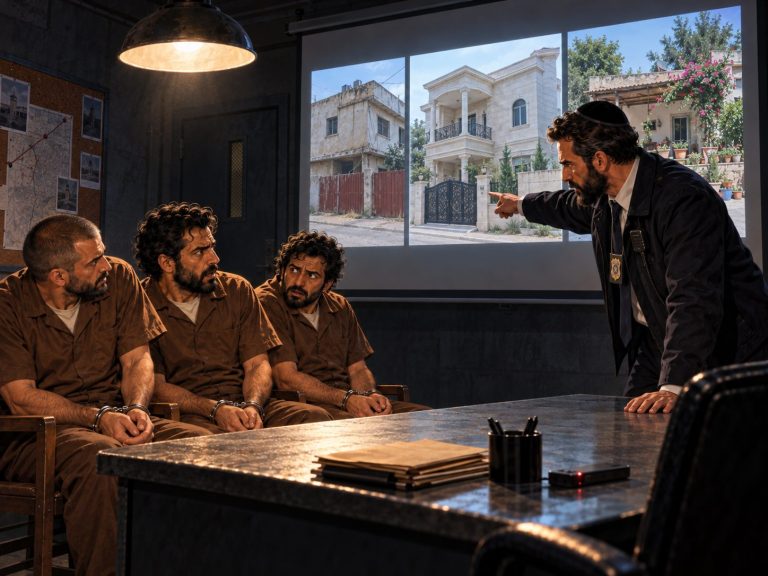
“Here they are,” said the warden who took a large key ring out of his pocket and opened the cell door. Three Arab prisoners were seen coming out, wearing handcuffs, carefully supervised by two additional wardens who joined them.
“You won’t believe what’s awaiting you,” said Meir to the surprised Arabs.
To be continued
Beis Moshiach #1528 • י״ט חשון תשפ״ז • pp. 60-62
© 2026 Beis Moshiach Magazine. All rights reserved.
This article originally appeared in Beis Moshiach #1528. You are welcome to share it with friends and family by email or in print, provided that you do not change, add to or omit any part of it, you credit the author and Beis Moshiach, and you include a link to archive.bmoshiach.org (written out in full in printed copies).
To republish this article in a newspaper, magazine, book or website, please request permission in advance at [email protected].