When Crisis Hits
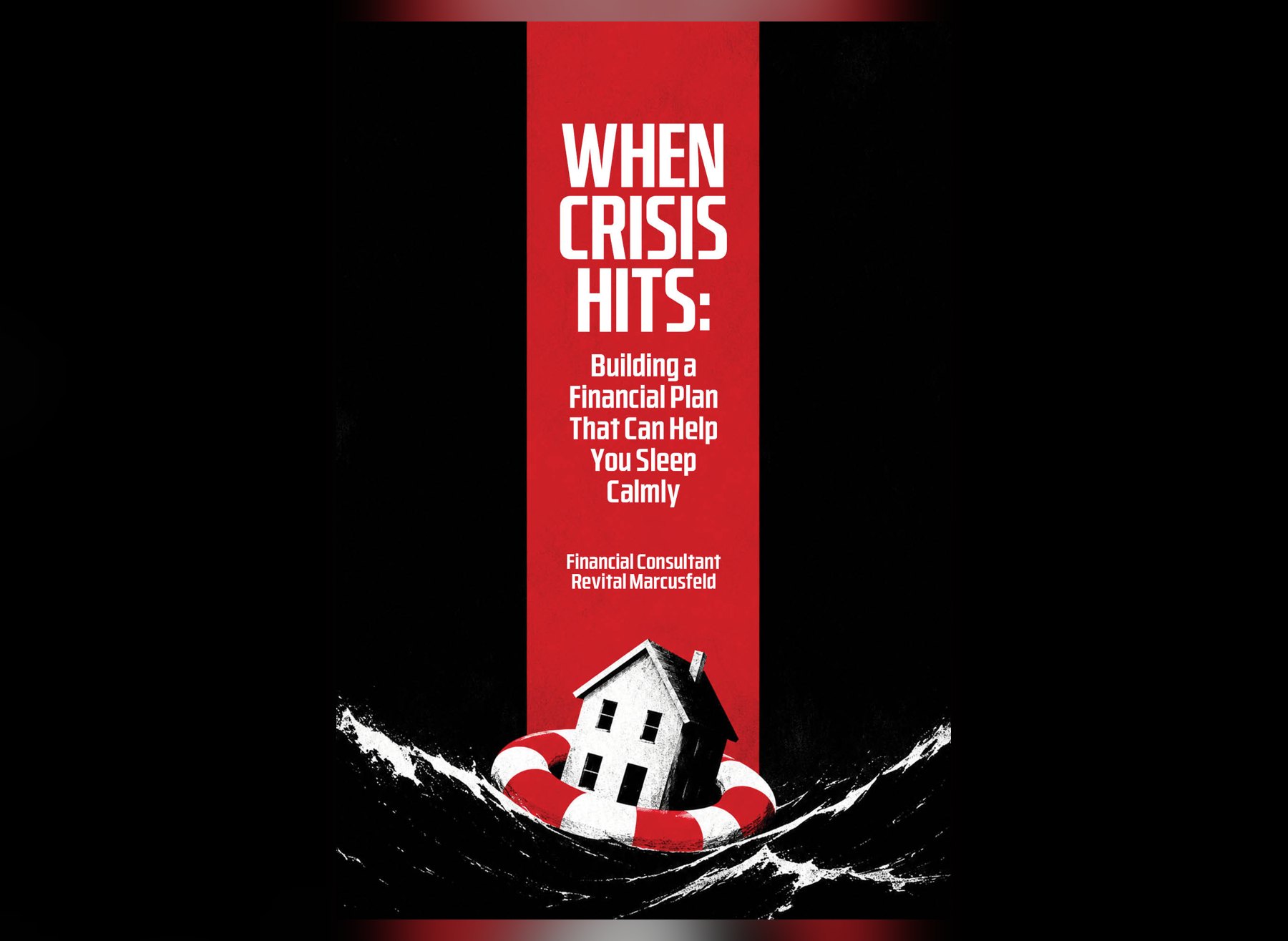
Building a Financial Plan That Can Help You Sleep Calmly
About a month ago, without any warning earlier in the evening, our phones woke us in the middle of the night with emergency alerts, and the Home Front Command instructed us to quickly enter protected spaces. The headlines on the news websites declared: a campaign against Iran had begun—“Operation Roaring Lion.”
It could have been anything, anywhere. A hurricane warning on the Gulf Coast. A wildfire evacuation order in California. A phone call from a doctor’s office with news you weren’t expecting. A layoff notice on a Monday morning. Different countries face different flavors of the unexpected, but the lesson is the same everywhere: emergencies don’t wait for a convenient time, and the families who weather them best are usually the ones who prepared before the alert ever came.
In recent years, it seems we’ve been living through a nonstop string of shocking surprises: the COVID-19 pandemic, regional conflicts, natural disasters, and economic upheaval. Each one, in its own way, has forced households to pause, and sometimes entire local economies to shut down. Both self-employed people and salaried employees have suffered real losses in income during these stretches. There’s often talk of government relief or unemployment benefits, but as we all know, bureaucracy tends to slow the process down.
While emergencies on this scale aren’t everyday events, other crises can arise just as suddenly on a personal level: layoffs, declining business income, business failure, illness, and death, lo aleinu.
Although it’s impossible to foresee everything, and much is beyond our control, there are ways to prepare for difficult times. We can be far better equipped to face life’s challenges if we manage our finances wisely.
Here are several steps you can take to prepare for emergencies and unexpected events.
Saving Is Essential
It’s important to have two types of savings: an Unexpected Expenses Fund and an Emergency Fund. Each serves a different purpose.
1. Unexpected Expenses Fund: This fund is for unplanned expenses. According to the Federal Reserve’s most recent survey, more than a third of American adults would struggle to cover a surprise $400 expense out of pocket.
This is the money you use when: the car battery dies, your glasses break, the water heater stops working, the washing machine breaks down (in my case, both failed at the same time!), or any of the many unpleasant surprises life throws our way.
A good rule of thumb is to set aside 3–5% of your household income for this fund.
For example, take a typical American household earning around $80,000 a year—roughly $6,500 a month. That household should aim to save somewhere between $200 and $325 a month for this fund.
Suppose you save for several months, and just before Pesach your refrigerator needs a new electronic control board costing about $400. A day later, your car needs repairs costing $600. Suddenly you’re facing $1,000 in unexpected expenses. Because you prepared in advance, you can pay for them without taking out loans or putting it on a credit card you can’t pay off that month.
What if you didn’t save enough and the expense exceeds what you’ve managed to set aside? Think about it: which is easier to deal with—covering part of the cost from savings, or paying the entire amount (or in installments, with interest) straight from your checking account or credit card?
2. Emergency Fund: An emergency fund allows us to sleep peacefully when a true financial crisis occurs, lo aleinu.
Its purpose is to temporarily replace lost income due to layoffs, business difficulties, illness, or larger-scale disruptions like regional emergencies or natural disasters.
An emergency fund becomes even more important once your finances improve and you begin investing in assets such as stocks or real estate.
Most financial experts recommend saving enough to cover at least three months of living expenses, while more conservative advisors recommend six months. How much should you save? As much as possible. At a minimum, your emergency fund should cover essential living expenses: housing, food, utilities, insurance, and other basic necessities.
How do you build this fund? A useful guideline is to save 10–20% of your income toward long-term savings and asset building, with part of that going toward your emergency fund.
Try to grow this fund as much as you can—and pray that, with Hashem’s help, you’ll never need to use it.
In Summary: Unexpected Expenses Fund – covers routine, unforeseen expenses.
Emergency Fund – provides financial security when income is unexpectedly reduced.
Where should you keep these savings? A high-yield savings account or a money market fund are both good options, with the latter potentially earning a bit more return. Setting up an automatic monthly transfer is recommended, though manual deposits work too.
Insurance
The following insurance policies matter:
Life insurance
Health insurance
Home and property insurance
(Auto insurance, while mandatory, isn’t discussed here.)
1. Life Insurance: Life insurance is meant for situations where one or both spouses pass away, lo aleinu. In such cases, the surviving family receives a lump-sum payment.
How much coverage do you need? It depends on your family’s standard of living.
This insurance is especially important if you have minor children. If you’re single or have no children, life insurance is generally less essential, since its primary purpose is to replace the income of a deceased parent.
How long should you maintain it? At least until your children reach adulthood—18, or even 21. After your children are financially independent, it may make sense to reduce the amount of coverage, since a family with young children has significantly greater financial obligations than one whose children have grown and moved out.
2. Supplemental Health Coverage: Even with employer-sponsored insurance or a marketplace plan, out-of-pocket costs can add up fast—deductibles, copays, and procedures that aren’t fully covered. This is where a High-Deductible Health Plan paired with a Health Savings Account (HSA) can help. Money you contribute to an HSA is tax-advantaged and rolls over year to year, and it can be used for a wide range of HSA-eligible expenses: deductibles and copays, dental and vision care, prescriptions, therapy, and even some medical travel costs.
At a minimum, think through coverage or savings for: procedures and surgeries not fully covered by your plan; specialist or out-of-network care; prescriptions and ongoing treatment costs.
Children should be covered too. When a child becomes seriously ill, parents often lose work time and income while caring for them—something worth factoring into both your insurance choices and your HSA contribution level.
It’s worth sitting down with a trustworthy, experienced insurance or benefits advisor when choosing coverage or deciding how much to contribute to an HSA each year.
3. Home and Property Insurance: This insurance protects against damage from fire, storms, flooding, and other natural disasters.
Homeowner’s insurance is generally required as part of getting a mortgage—but standard policies don’t always cover everything. Depending on where you live, it’s worth looking into additional riders or separate policies for flood, earthquake, or wildfire risk, since these are often excluded from a standard policy. FEMA and state assistance programs can help after a major disaster, but they’re not a substitute for adequate insurance, and payouts are often slower and less complete than people expect.
Shop around and compare both prices and coverage before purchasing a policy.
How Should We Respond to A Crisis?
During a financial emergency, the household should switch to an emergency budget. What is that? The purpose of an emergency budget is to keep your head above water and prevent financial deterioration.
If you’re already carrying credit card debt, don’t let it grow.
If your budget is balanced, keep it that way.
If you, boruch Hashem, have a positive balance, do everything possible to avoid slipping into debt.
What should you do? Carefully evaluate your situation: What income do you currently have? What savings are available? What assets do you own? What expenses are coming up?
Reduce—or eliminate—nonessential expenses wherever possible. Examples include extracurricular activities, gym memberships, and other discretionary spending. It may even be wise to temporarily reduce or pause contributions to savings plans if necessary. The goal, just like with a regular household budget, is for income to exceed expenses—even if only by a single dollar. Even essential expenses like groceries and utilities should be managed carefully wherever savings are possible. Smart consumer habits become especially important during difficult times.
Start by budgeting for unavoidable expenses—insurance, rent or mortgage, tuition—and then work your way through variable expenses and finally those that can be postponed entirely.
At the same time, I recommend leaving a little room to breathe. If it’s important for your well-being to occasionally get out of the house, enjoy a meal out, or take a short getaway, don’t eliminate these entirely. Instead, look for ways to cut costs elsewhere.
Even during difficult periods, keep contributing to your Unexpected Expenses Fund if you can, even if you have to temporarily reduce the amount.
Final Thoughts
Life is unpredictable, and much is beyond our control. Fortune rises and falls, and Hashem guides the course of the world, humbling some and uplifting others according to His will. Yet that doesn’t mean we’re powerless in the face of life’s challenges.
By giving just a little more thought to our household finances, we can prepare for the unexpected and turn uncertainty into something far more manageable.
I can only pray that Hashem protects the property and livelihood of Am Yisrael, and that none of us will ever need to rely on these insurance policies or emergency savings.
Family Financial Coach and Personal Development Coach
Email: [email protected]
Beis Moshiach #1514 • pp. 44-47
© 2026 Beis Moshiach Magazine. All rights reserved.
This article originally appeared in Beis Moshiach #1514. You are welcome to share it with friends and family by email or in print, provided that you do not change, add to or omit any part of it, you credit the author and Beis Moshiach, and you include a link to archive.bmoshiach.org (written out in full in printed copies).
To republish this article in a newspaper, magazine, book or website, please request permission in advance at [email protected].