The Unusual Request
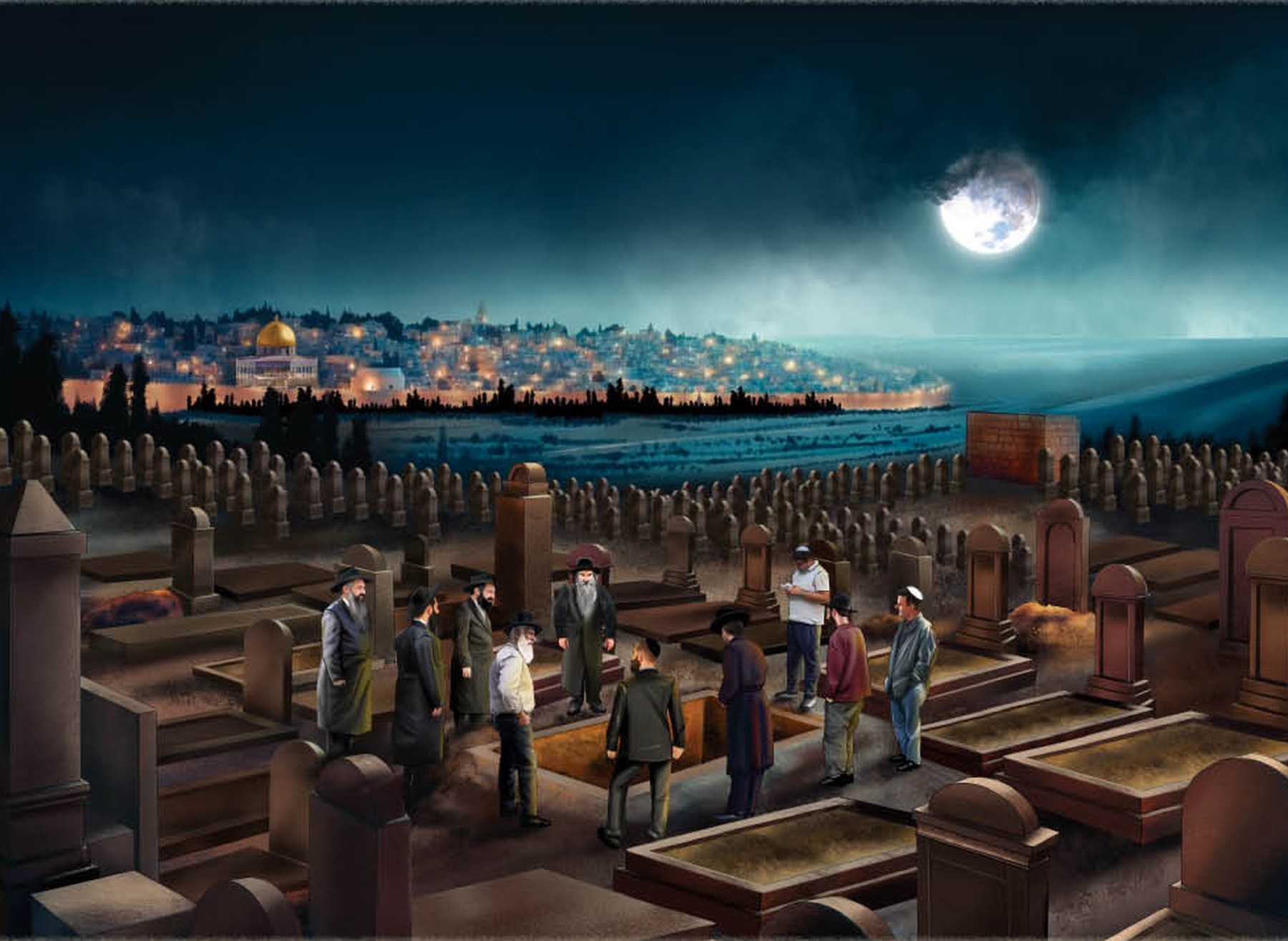
You probably know that Zayin Adar is both Moshe Rabbeinu’s birthday and his Histalkus (day of passing, yahrtzeit), but did you know Zayin Adar can also be a fast day? Well, it’s not like other fast days, like Yom Kippur or Tisha B’av. It is a fast day only kept by the Chevra Kadisha, and after the fast, they gather for a special meal.
The Chevra Kadisha is a group of people who do the very holy work of taking care of Jewish people’s bodies after they pass away. They clean the bodies, purify them in a mikva, wrap them in “tachrichim” – white clothes – and then bury them. It’s a very important job that is a huge favor for the niftar, the person who has passed away. It’s called Chesed Shel Emes, True Kindness, because usually if you do a favor for someone there’s a chance they might do a favor for you one day, but the dead person will never be able to repay the favor. Even though they’ve passed away, the Chevra Kadisha must be sure they never do anything that isn’t respectful to the bodies.
Moshe Rabbeinu passed away on Zayin Adar, and he was buried by Hashem personally. This shows how special Moshe was, but it also shows how important it is to do the big mitzva of burying someone who passed away. That’s why in many communities Zayin Adar is the day chosen to honor the holy work of the Chevra Kadisha, and to honor the special volunteers for this big mitzva.
At the dinner after the fast, the volunteers get together to encourage each other and celebrate the special kindness that they do for the people they bury.
It was at one of those dinners that one of the volunteers shared the following story:
* * *
Yaakov answered the phone with a line so familiar, he could say it in his sleep. “Hello, this is the Jewish Burial Society, how may I help you?” He’d been the secretary at the Chevra Kadisha for a few years now, and on this particular Motzoei Shabbos, he was a little tired.
“Hi! Um, I have an unusual request,” came a woman’s voice on the other end. We’ll call her Naomi, to respect her privacy.
“Go right ahead. We’ve probably heard it before. We get unusual requests all the time around here.” It wasn’t the most “usual” job to begin with, taking care of people who have passed away – so hearing unusual things on a regular day wasn’t so out-of-the-ordinary.
“Okay… thank you…” Naomi’s voice trailed off.
“…Are you still there?” Yaakov asked. The line was so quiet, he was worried they’d lost connection.
“Yes – yes,” The woman quickly replied in a shaky voice, “It’s just that, well… this all just happened, so I’m still… getting my thoughts together… my husband passed away.”
“I’m so sorry to hear that. Baruch Dayan HaEmes… blessed is the True Judge… how can I help?” Yaakov was used to talking to people who had just lost a relative, and he knew how important it was to show them how much he cared.
“Thank you… that means a lot to me. Right before my husband passed away, he asked if, after he was buried, everyone around could sing the song Bar Yochai at his kever.”
It certainly was an unusual request, but Yaakov assured her that they’d do their best.
The Chevra Kadisha wasn’t able to begin the very special process of preparing the body until late that night. During that Shabbos, one of the generation’s big Talmidei Chachamim had also passed away. Thousands of people attended his levaya, and the Chevra Kadisha were very busy.
When they were finally finished and ready for the man’s levaya, it was one in the morning!
In Eretz Yisrael, the burial happens as soon as possible. So even though it was so late at night, everyone agreed the best choice was to bury the body right away.
But by then, there were only nine men still around to attend the second funeral. This couple never had any children, and they didn’t have many relatives either. The man had no brothers or sisters. Now that it was late, it seemed there wouldn’t even be a minyan at his levaya.
One member of the Chevra Kadisha went to a local Beis Medrash, where there were people learning Torah all day and all night. He looked for someone willing to stop learning for a few minutes and join them for the levaya.
No one could join, except for a Maggid Shiur, a teacher at a Yeshiva, who wasn’t even positive he’d have the time either!
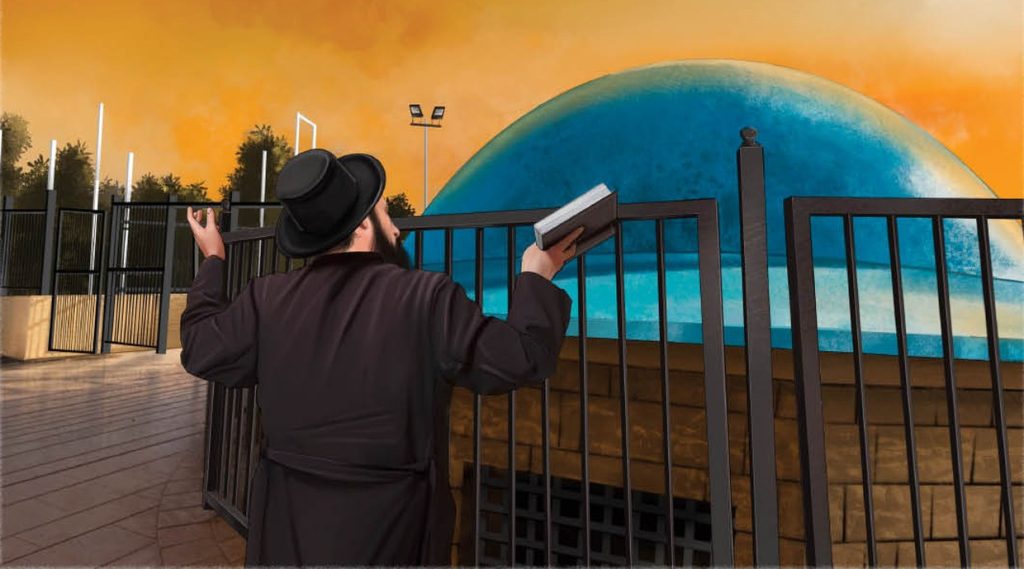
“I’m here to prepare a class for tomorrow morning…” He explained, “You should try to find someone else.”
“Okay, I understand,” Yaakov answered, “But if we can’t find anyone else, will you do this holy mitzva for us?
“Yes, I’ll make it work,” the Maggid Shiur told him.
Yaakov checked the rest of the Shul for anyone else that could help, but in the end, he had to go back to the teacher. Just as he’d promised, even though he was busy, he agreed to go with them. “After all,” he pointed out, “The purpose of learning Torah is to fulfill the mitzvos. What kind of Maggid Shiur would I be if I didn’t practice the mitzvos I learned?”
The levaya was finally over, and it was 2:00 AM. Yaakov then remembered the unusual request, and he asked the 10 people there, “Does anyone have a Siddur with Bar Yochai in it?”
Confused, everyone just stared at Yaakov. It wasn’t Lag B’Omer – it was 2:00 am at a levaya!
“I know it sounds weird,” He explained, “but before he passed away this man asked that we sing it after his burial.”
Everyone shrugged and shook their heads. No one had a Siddur like that on them.
“Does anyone at least know the song by heart?” Asked Yaakov, trying one last time.
No one knew the song.
“I mean, I might know it by heart,” answered one of the volunteers as he yawned, “If I wasn’t standing in the cold at the cemetery at 2:00 in the morning, I might be able to remember it! But my brain feels like it’s frozen!”
It seemed the man wouldn’t be getting his final wish after all.
“Wait a minute! I think I have it!” the Maggid Shiur suddenly called out, rushing to dig through his bag and his pockets. He’d just remembered he was carrying around a paper with the song on it.
“Aha! I found it!” He yelled as he pulled it out of his pocket.
“You have the Bar Yochai song in your pocket!” Yaakov jumped up and down, excited to honor the niftar by completing his final request.
Everyone sang Bar Yochai around the fresh kever together, even though it was freezing cold and it was 2:00 am.
On the way back home, Yaakov couldn’t help but wonder why the teacher had the song in his pocket. “What happened?” he asked the Maggid Shiur, “Do you just travel around with that song in your pocket?”
“It’s such Hashgacha Pratis!” The Maggid Shiur said excitedly, “Usually, on Shabbos, I daven Mincha early in a shul near my home. This week, I missed the early minyan, so I went to daven at a different shul, further away. As I was walking to that Shul with my son, he noticed a page from a siddur on the floor, and he pointed it out to me. Since there’s an eruv and we could carry things, I quickly picked it up so I could put it in Sheimos when I got to shul.”
The other nine men quietly listened to the story, and the Maggid Shiur continued, “But I forgot! So I’ve been carrying that page in my pocket ever since – and it just happened to be the page with Bar Yochai on it!”
Everyone was amazed at the clear Hashgacha Pratis in every detail of this strange and wonderful story.
“But that’s not all!” Continued the Maggid Shiur, “On Motzoei Shabbos, I usually learn in my house. Tonight, I needed to prepare a lesson for my class tomorrow, but there was a lot of noise at my house and I couldn’t concentrate. That’s why I went to the Beis Medrash to learn. If I’d been home, as I usually am, you wouldn’t have found me!”
The story was getting more amazing by the minute! One of the people in the Chevra Kadisha couldn’t help but share, “This sounds like something that would happen to a Chassidisher Rebbe, something people would speak about for generations!”
“If Hashem arranged such amazing Hashgacha Pratis, maybe the man we buried was a hidden Tzaddik?!” wondered another.
“Maybe! I’ll learn more about him tomorrow,” Yaakov said.
The next day, Yaakov made a few phone calls, and from what people knew, the man they’d buried was a regular yid, aside from the fact that, every Erev Rosh Chodesh, he would go to Meron to visit the Kever of Rabbi Shimon Bar Yochai, and every Friday Night, he sang the Bar Yochai song before he said kiddush.
To this man, Rabbi Shimon Bar Yochai was his Rebbe! Bar Yochai was his connection to Reb Shimon. And Hashem made so many miraculous things happen, just so that he could hear Bar Yochai as he journeyed from this world to the next, even though it was two in the morning and the only people there with him had never gotten to meet him..
* * *
The speaker finished the story with the following thought: “We should treat every niftar with the most respect we can, because we never know how special they truly are to Hashem. This simple yid received some great miracles from Hashem.
“It is so important to honor every one of these special requests, especially ones they share right before they pass away.”
Everyone was moved by the story. Some even had tears in their eyes.
“This wonderful story definitely teaches us to be careful with the important mitzva of Kavod Ha’mes, honoring people who have passed away. But I’d like to point out that we shouldn’t wait for someone to pass away to respect them!
“We should honor everyone even more when they’re alive, because everyone has special things that make them who they are.”
Everyone in the Chevra Kadisha nodded their heads.
Source: “Torah Wellsprings” – R. Elimelech Biderman (Ki Tisa 5776) – adapted by Yerachmiel Tilles from the translation of R. Baruch Twersky.
Beis Moshiach #1411 • pp. 54-57
© 2026 Beis Moshiach Magazine. All rights reserved.
This article originally appeared in Beis Moshiach #1411. You are welcome to share it with friends and family by email or in print, provided that you do not change, add to or omit any part of it, you credit the author and Beis Moshiach, and you include a link to archive.bmoshiach.org (written out in full in printed copies).
To republish this article in a newspaper, magazine, book or website, please request permission in advance at [email protected].