The Power of Presence: The New Moon and Geulah Awareness
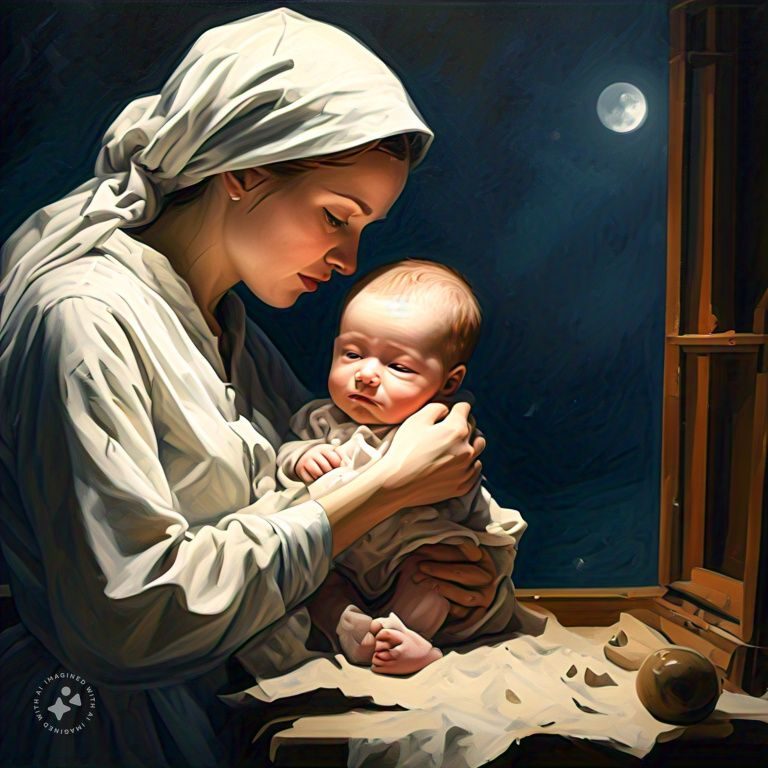
Birth. The baby’s head emerges into a new world. The mother cradles her newborn close to her. For a few precious moments, she closes her eyes and savors the stillness. Soon enough, there will be diapers to change, meals to prepare, tiny outfits to launder. Later still, there will be pesukim to review, homework to sign, and camp suitcases to pack. But for now, nothing else exists but the mother and her baby, leaning into each other, their soft breaths intermingling.
In the moment of birth, all that matters is the very existence of this baby. He hasn’t spoken his first word or taken his first step. He’s barely drawn his first breath. Yet, within this tiny, miraculous being lies everything he will ever become—already present, fully contained.
The same is true of Rosh Chodesh, the molad of the levana. As the month winds down the moon disappears completely, until it suddenly re-emerges as a new existence. A new chodesh.
The Presence Felt in Absence
Machar Chodesh is the haftorah we read on Shabbos when Rosh Chodesh is on Sunday. It tells the story of the deep friendship between Dovid and Yonasan, even as Yonasan’s father, King Shaul, grows increasingly hostile toward Dovid, fearing he will seize the throne. Sensing imminent danger, Yonasan advises Dovid to hide in a field instead of attending Shaul’s Rosh Chodesh feast. He says to Dovid, “ מָחָר חֹדֶשׁ וְנִפְקַדְתָּ כִּי יִפָּקֵד מוֹשָׁבֶֽךָ”. Tomorrow is the new moon, and you will be noticed, because your seat will be empty.”
Yipoked moshavecha captures the idea of a presence that is most profoundly felt in its absence.
The concept of presence can be hard to define. It doesn’t draw attention to itself or make a grand entrance. It’s an aura that quietly settles in.
This is the paradox of the molad, the rebirth of the moon. It begins not in fullness but in complete absence. The moment when the moon disappears entirely, when its light is no longer visible in the sky, is precisely when it is reborn.
As mothers, the most precious gift we offer our children is our presence. This becomes especially clear when we try to leave the house. We may leave food on the stove and even set out a new game to entertain them while we’re gone. But the child doesn’t want the food or the toy—he wants you.
Sometimes we underestimate how much our presence matters. We may feel inadequate, unsure of what to say or do. But when a child wakes in the middle of the night crying, they’re calling for you. When they’re hurt, upset, or embarrassed, only your presence can bring comfort. In those moments, all that matters is just being there.
In our lives, we often experience this dynamic. The absence of something—or someone—forces us to confront how much it means to us. We enjoy the simple routines more after they’ve been disrupted. Time spent with a dear friend is more precious if we’ve been apart for a while.
This cycle of absence and presence mirrors our spiritual journey. There are times when we feel distant, when our connection to Hashem seems obscured, like the moon disappearing from the night sky. But those moments of concealment hold within them the potential for renewal.
Hiddenness Emerges
This dynamic—the emergence of new life from hiddenness—is powerfully expressed on Rosh Chodesh Kislev. The name Kislev combines kes, meaning hidden, and the letters lamed and vav, which together equal 36. This represents the complete expression of the six middos, with each one containing six components. From concealment arises the fullness of our emotional and spiritual attributes.
This theme is reflected in the Yomim Tovim of Kislev, particularly Chanuka, which commemorates the rededication of the Beis HaMikdash after its desecration by the Greeks. The miracle of Chanuka is symbolized by the oil—the pure essence that emerges through crushing and pressure. When everything that we valued is taken away from us—our accomplishments, our identities, the things we thought defined and elevated us—what remains is the shemen, the pure oil. Our essence is the strength that allows us to rise above crushing loss and continue to shine brightly.
The holiday of Yud Tes Kislev—the Rosh Hashana of Chassidus—is also connected to oil. Chassidus is the oil of Torah that illuminates our lives, just as oil permeates everything it touches.
Tuning Into Essence
Essence is simplicity. A very young child experiences Hashem’s presence simply and naturally. They have no deep or complicated explanation of who Hashem is. All they know is “Hashem is here.” He is the Eibershter, the One above. As adults we grow in our understanding and sophistication. We can give long drashos on our conception of Elokus. But the bottom line is to connect to Hashem with the simple awareness of a child.
We start the day with modeh ani, to ground ourselves in a simple consciousness of His presence. Before we get out of bed, before we get dressed, —before we’ve done anything at all with our day—all we have is essence, our oneness with Hashem. This is what carries us through the rest of the day, as we’re rushing about getting things done. We’ve centered ourselves on the recognition that Hashem is right here with us.
As mothers, there are days when everything seems chaotic and nothing is going as planned. Yet in those moments, we can tap into our core essence to find stability and calm. We don’t need to be perfect or always “on.” Our children feel our presence even when we aren’t doing anything out of the ordinary. We can find the “pure oil” inside of us to permeate the home and create a sense of security.
Bringing In Moshiach
What centers us is the spark of Moshiach within each of us. It’s not a grand, dramatic expression but a simple, steady knowledge. This is the air, the ruach of Moshiach, the essence that transcends action.
As mothers, we know what it means to create an atmosphere. When celebrating Chanuka, for example, we can buy food and decorations, but what’s more important is the ruach, the intangible energy that we bring into the home. This is the spirit that transcends light and revelation.
This is the meaning of kol yemei chayecha l’havi l’yemos haMoshiach: Our entire chayus, every day, is in the coming of Moshiach. It’s not just when we’re learning about Moshiach or doing something specifically to bring him closer. The awareness of the ever-present spark of Moshiach is what brings Moshiach into our reality. Even the simplest acts—lighting the menorah, giving Chanuka gelt, doing someone a favor—help us usher in the Geula.
The haftorah of Chayei Sarah concludes with the proclamation, Yechi adoni ha’melech Dovid l’olam—”May my lord, King David, live forever.” This declaration is an acknowledgment of the eternal presence of Moshiach. It then unfolds into its expression: the birth of generations, and the realization of divine purpose within everyday life. This is how we bring in Toldos Yitzchok—the joy of the future.
Our task now is to bring Moshiach into the present. Every moment holds the opportunity for rebirth, to experience the essence of Moshiach right here, right now.
(Based on the sicha of Rosh Chodesh Kislev and Toldos, 5752)
Beis Moshiach #1436 • pp. 48-49, 50
© 2026 Beis Moshiach Magazine. All rights reserved.
This article originally appeared in Beis Moshiach #1436. You are welcome to share it with friends and family by email or in print, provided that you do not change, add to or omit any part of it, you credit the author and Beis Moshiach, and you include a link to archive.bmoshiach.org (written out in full in printed copies).
To republish this article in a newspaper, magazine, book or website, please request permission in advance at [email protected].