Operation Damascus Diplomacy

How the Rebbe’s office provided the Syrian Jewish community with tashmishei kedusha under the watchful eyes of the Mukhabarat, the notorious Syrian secret police
Elul 5733. New York. The TWA passenger plane’s engine roared loudly. In another moment, the plane accelerated on the runway, lifted its nose, and soared upward. Its form gradually disappeared into the summer blue skies of the great metropolis.
The ascending plane left behind worried eyes and pounding hearts. Only a few people knew about the precious cargo the plane carried on its way to Damascus, Syria’s capital. This cargo was destined to revive a large Jewish community in distress.
Long days of tension and anxiety passed for those involved in transferring the secret shipment as they waited anxiously to verify whether the packages would reach their destination. Hope filled their hearts that the right hands would receive them and they wouldn’t fall into the hands of Damascus’s secret security forces.
What did this precious cargo contain? What was the secret and future of these packages?
To understand, we must go back many years.
Decrees of the Dictator from Damascus
1948 wasn’t an easy year for Syrian Jews. In neighboring Israel, a sovereign Jewish state was established. Arab hatred for the Jewish people, which had existed beneath the surface for many years, found its way up and out and intensified. The Arab masses in Arab countries directed their frustration toward the Jewish communities in their lands. While the authorities rushed to protect the Jews, it wasn’t out of Ahavas Yisrael, but rather to keep them as hostages, as future bargaining chips.
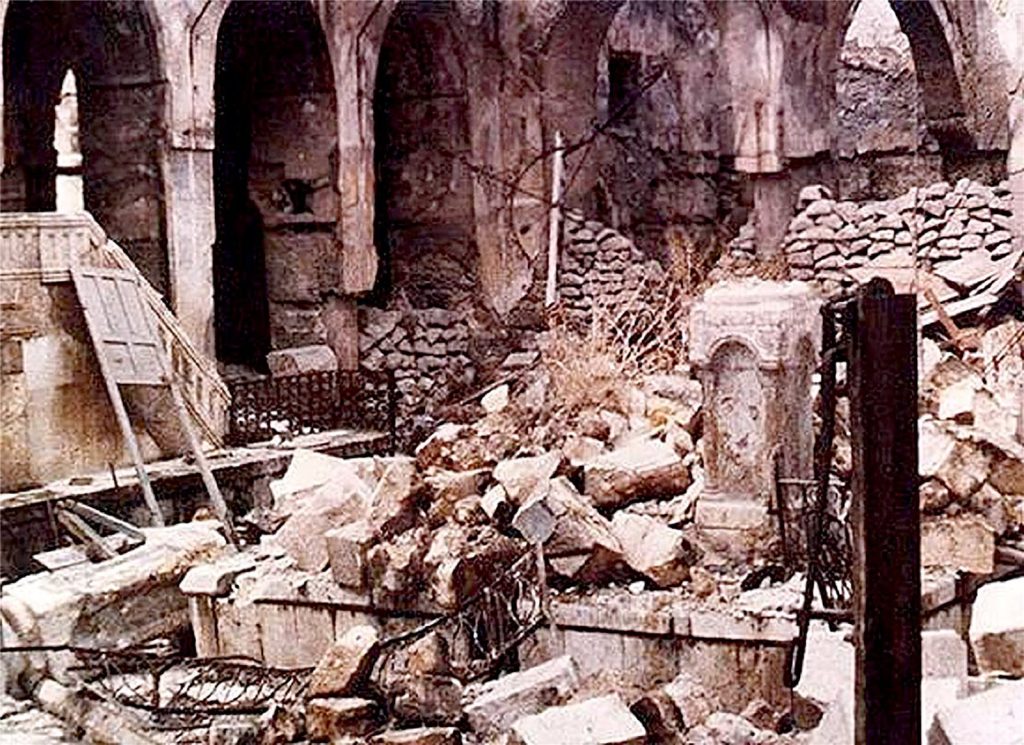
Despite the Arab authorities’ efforts to protect the Jewish minority in Syria, a group of Muslim zealots broke through the police and military guards’ defensive wall. They invaded the Jewish ghetto in Damascus and set fire to the central shul. The Syrian government responded by tightening security around the Jewish community.
Similar events occurred in Aleppo, where the Arab nationalist movement had significant influence: Aleppo’s shuls, including the ancient shul, were burned. Evidence collected during that period shows that during these events the “Keter Aram Tzova” [Aleppo Codex] was damaged, Jewish shops were looted, Jewish property was confiscated, and community members stayed locked in their homes for three days, fearing the rioters.
Chacham Moshe Tawil, Aleppo’s Chief Rabbi, lived across from the shul and witnessed the events from his home. He testified on the 17th of Cheshvan 5719: “…The partition announcement was on Friday. On Sunday they didn’t harass us but declared the entire city should shut down and strike. The Jews committed to not leaving their homes. At noon, many non-Jews gathered near the shul and shouted ‘Palestine is our land and Jews are our dogs,’ while the army remained silent. In the afternoon, the mob attacked the shul and destroyed it, with the army helping them… After half an hour everything was burned. They took out 40 Sifrei Torah and burned them outside with oil and kerosene…”
About five thousand Jews lived in Damascus, Syria’s capital, at that time. They were all members of the official community. About five hundred Jews lived in Aleppo, also in Syria.
The authorities imposed many restrictions, preventing their freedom of movement and right to reunite with family members living outside Syria. The government tapped phone lines and consistently censored letters arriving from abroad.
After the dictator Hafez al-Assad rose to power in 1970, the situation worsened. The Jewish community faced 14 harsh regulations meant to restrict Jewish movement. These included stamping a large red mark on every Jewish ID card or passport, banning real estate transactions, requiring special government permission for marriage, and restricting travel within and outside Syria.
Several years later, some restrictions were lifted; Jews who were granted permission to leave Syria could do so under limiting conditions. The main condition was leaving part of the family, or even one family member, within the country’s borders as a “hostage” to ensure the family member would return to Syria. The real estate restriction was eased, allowing property purchase but not sale. Even when exit permits were granted, Israel was off-limits. Strict supervision was imposed on those trying to cross the border and escape to Israel. Nevertheless, many tried, whether by donkey, on foot, or by tractor. If authorities caught a Jew trying to escape Syria toward Israel, they would hang the escapee as a warning to others.
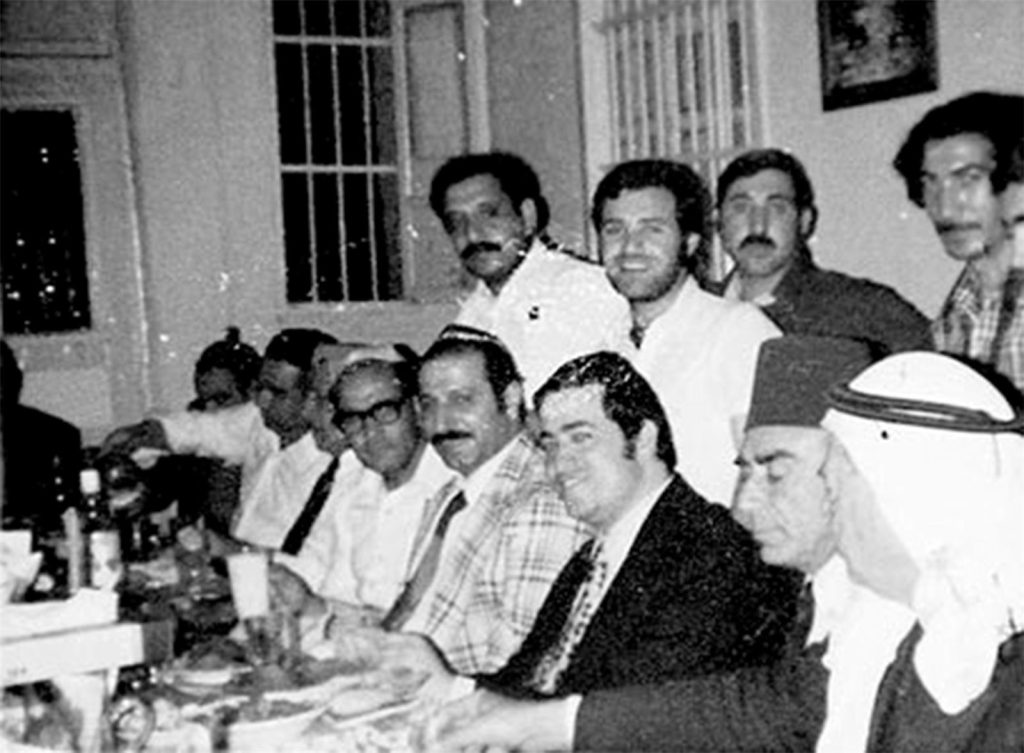
As time passed, conditions worsened. Wealthy and influential Jews were imprisoned for extended periods. The “Mukhabarat” (Syrian secret police) constantly monitored community members, and many Jews had to flee on dark nights with only the clothes on their backs to save their lives.
Meeting in Manhattan
Summer 1974. These were days of expanding mivtzaim directed by the Rebbe across the Jewish world. One such campaign was “Mivtza Mezuza,” a wide-ranging operation where the Rebbe’s shluchim visited Jewish homes worldwide to check their mezuzos.
In New York, R’ Lipa Brennan and R’ Shraga Zalmanov were responsible for the campaign. They were quite busy, and every spare moment was directed toward this holy work. They established a small office in the city where many requests and referrals came from Jews across New York. Most inquiries concerned mezuza checking, but there were also inquiries related to other matters of Jewish practice. Some days they sat in the office receiving calls and referrals, recording names and addresses, while other days they visited families and handled their requests.
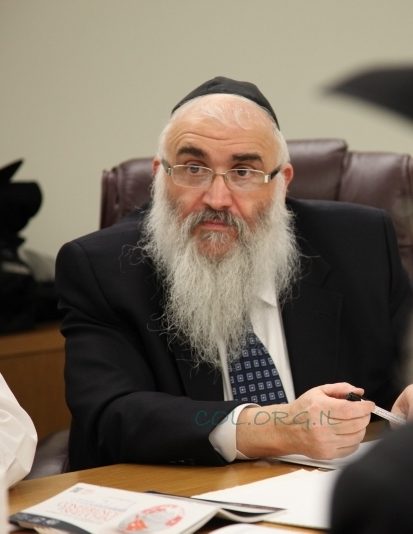
One day, R’ Brennan went to Manhattan’s business district with his friend R’ Eliyahu Sufrin. The two set out to the business district equipped with a list of addresses they had prepared to visit. For many hours, they went from place to place between homes, shops, and various businesses. At each location, they checked mezuzos, helped Jews put on tefillin, and discussed matters of Judaism, trying to ignite the flame of faith that smoldered deep within them.
Among their stops was a prearranged address – a huge electronics and electrical appliance store. Upon entering, they immediately noticed the doorposts were missing mezuzos. Inside, they met the store owner, Mr. Raphael Batash, a Jewish man with a religious appearance. Through their conversation, they learned he was a Syrian Jew living on Ocean Parkway in Brooklyn, and belonged to the large Syrian community residing there.
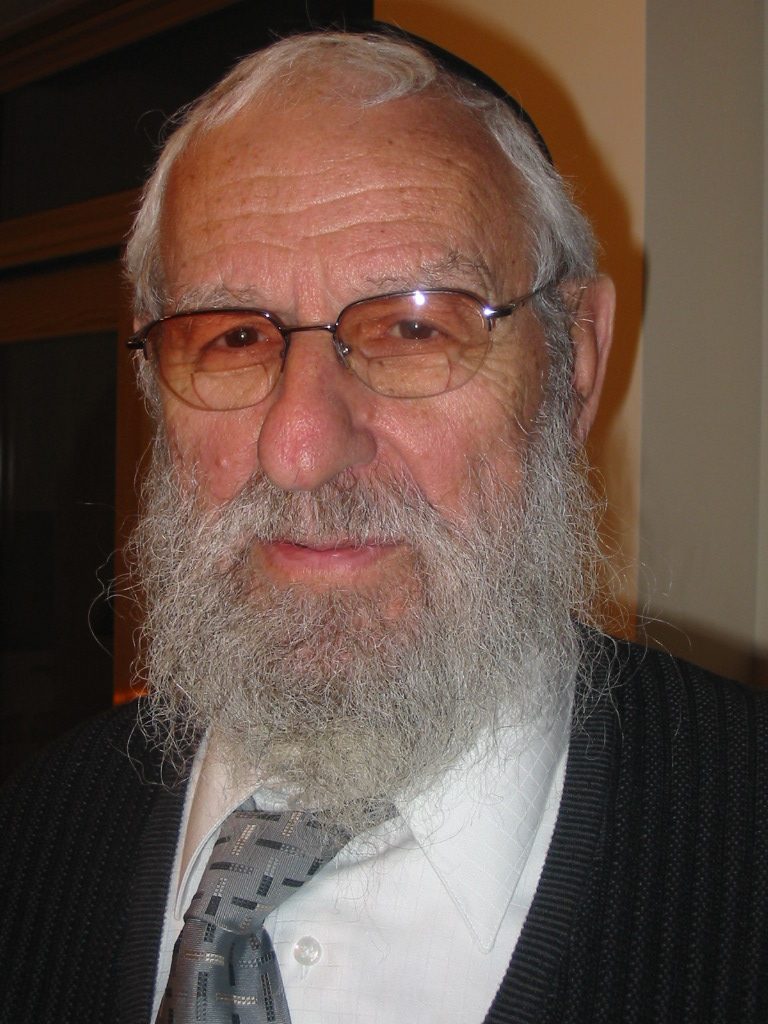
The two verified whether he had indeed requested them to come check his store’s mezuzos, but received a surprising response. No, he hadn’t contacted anyone about mezuzos. However, he suddenly remembered that he had recently bought new mezuzos but hadn’t yet put them up. Divine providence had led the two men there, and they could help him properly affix the mezuzos.
A quick routine check by R’ Brennan revealed that some of the newly purchased mezuzos were pasul. Mr. Batash couldn’t contain his amazement at G-d’s open hand in bringing two Chabad shluchim without an invitation exactly when he was about to put up his new mezuzos, only to discover some were pasul. That day, new and beautiful mezuzos were put up at all the store’s doorways.
The meeting with Mr. Batash led to a warm and close relationship between him and the shluchim who visited his store. Shortly after, they came to check the mezuzos in his home, and also in his parents’ and brother’s homes.
Thanks to the Batash family, the Syrian community became aware of the mezuza-checking campaign conducted by the Chabadniks in homes, and other community members invited R’ Brennan and R’ Zalmanov to their homes to check mezuzos, deepening the connection with the community members.
A Secret Mission Begins
A heavy burden weighed on Mr. Batash’s heart, and he found in R’ Brennan someone to whom he could express his concern.
For a long time, he had been trying to send religious articles to the Jewish community that remained in Syria under the terror of the regime, but every time packages of tefillin and sifrei kodesh were sent to community members in Syria, they were returned sealed exactly as they had been sent. Mr. Batash decided to use this new connection and raised the possibility that perhaps… maybe… the Lubavitcher Rebbe and his shluchim could find a way to send these important packages and ensure they reached their destination. After all, Chabad Chassidim were known throughout history for their success in operations that others wouldn’t even dream of attempting…
R’ Brennan promised to explore the possibilities. He and R’ Zalmanov took on the project. They contacted the Rebbe’s personal secretary, Rabbi Chodakov, and from there the operation began to gain momentum.
From then on, shipments of religious articles began finding a secret route until they reached the homes of Syrian Jews living under siege and fear.
How was the secret operation of smuggling religious articles to the isolated community members in Syria conducted under the nose of the country’s tyrannical rulers? The matter remains shrouded in mystery to this day. Even now, decades later, R’ Zalmanov refused to disclose details and maintains the veil of secrecy.
However, intensive research work attempting to extract information has revealed some of the details over the years. The complex puzzle of a fascinating secret mission in the heart of a hostile regime gradually comes together to form a picture of dedication and sacrifice for a Jewish community in distress and captivity, with secrecy surrounding even the activists themselves, the Rebbe’s shluchim. None of those involved knows details beyond what is necessary for their special role in the campaign, nothing more.
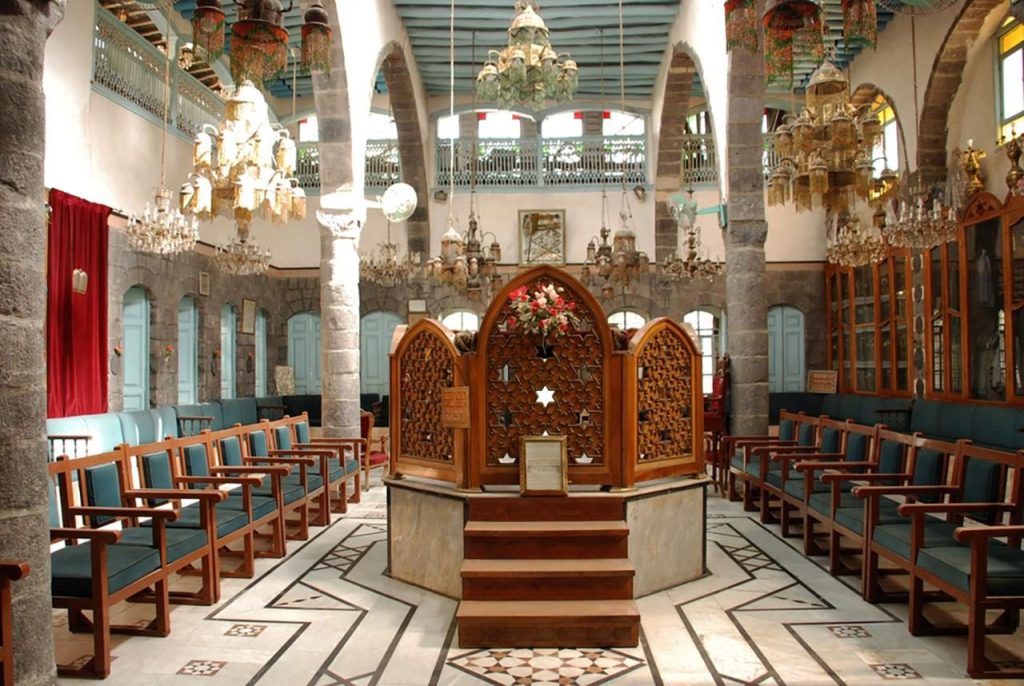
One of the central activists was Rabbi Avrohom Hecht, a Chabad Chassid who, despite being Ashkenazi, was appointed as Rav of the main Syrian synagogue in Brooklyn, “Shaare Zion,” and as Rav of the Syrian community in New York. R’ Hecht, by virtue of his position, felt great responsibility for the members of the Jewish community suffering under the authorities in Syria.
The daring operation was conducted under the command of the Rebbe, Nasi Doreinu.
Surprising Concessions
President Assad, the Syrian tyrant ruler, knew no mercy. He feared any real or imagined threat to his rule. The slightest suspicion was enough to mercilessly slaughter his citizens. The horrors discovered in Syria in the last few weeks testify to this more than anything.
It’s no wonder, then, that the Jewish community in Syria was a population in acute distress. Assad saw the clever and successful Jews as a threatening factor, and he restricted their lives almost completely. This is why community members found themselves completely isolated from their brothers in the USA or Israel. Only rarely were community members allowed to maintain telephone contact with their brothers overseas, and even this possibility was conducted under strict police surveillance. Every letter from community members sent abroad underwent strict censorship, as did letters that arrived for community members from abroad.
In this situation, when Syrian Jews were groaning under the yoke of their ruling enemies, R’ Hecht worked from his position in New York to try to improve their conditions. About getting the Jews out of their captivity in Syria, he didn’t even dare to dream. In daring secret operations, most of which still cannot be revealed, he met with consuls from countries that had influence over the Syrian government. Among others, R’ Hecht and his people even met with heads of Christian institutions, including the Pope himself. They also met with Syria’s ambassador in Washington to prove to him that they weren’t working against his government. After his suspicion was removed, he even agreed to help them.
Thanks to this tireless activity, Syrian Jews received various concessions. For example, they received permits to travel to any destination more easily and at times more convenient for them, as well as the ability to make calls abroad. Some community members who had been imprisoned because of their Judaism were released from jail. The authorities even promised to refrain from harsh decrees. Additionally, the government approved shipments of financial support to the Jews of Damascus and Aleppo to ease their livelihood.
Throughout this journey, R’ Hecht maintained constant contact with the Rebbe, was supported by him, and acted according to his advice and instructions. The Rebbe’s blessings smoothed the path for R’ Hecht and strengthened him in his dangerous activities.
In R’ Hecht’s various meetings with the Rebbe, he discovered time and again that the Rebbe knew about everything happening within the Jewish community in Syria down to the smallest details. A leader of Israel who sees and observes everything. Nothing was hidden from his eyes. When R’ Hecht mentioned names of various individuals in the Syrian community, the Rebbe showed amazing familiarity with each person’s situation. Needless to say, the Rebbe’s instructions repeatedly proved to predict what would happen, and their precise execution always brought about blessed results.
Sometimes, the Rebbe’s words seemed puzzling and contradicted common sense advice. For example, when members of the Syrian community in the United States wanted to organize massive demonstrations for Syrian Jews, the Rebbe unexpectedly opposed this.
R’ Hecht, who didn’t deviate even slightly from the Rebbe’s instructions, prevented the demonstrations from taking place. He didn’t flinch even from criticism directed at him by his community members and leaders. Instead of the planned demonstrations, massive prayer gatherings were held, and Rabbi Hecht made sure not a word was spoken against the Syrian government. Only after some time did it become clear that the planned demonstrations and the uproar that would have followed would have angered the Syrian authorities and caused enormous danger to the Jews of Damascus and Aleppo.
The Rebbe’s golden advice saved Syrian Jews from real danger.
At one meeting with Syria’s ambassador in Washington, community leaders were invited to visit the Jewish community in Syria itself, to examine the situation up close and strengthen their brothers living in Syria. This was a rare golden opportunity. The Syrians went out of their way and even promised close protection throughout the community leaders’ stay in Syria. R’ Hecht asked the Rebbe and received immediate approval for the trip.
Like all such activities, preparations for the trip were made with great secrecy, but due to unexpected events, the trip was unfortunately canceled and never materialized. The rare opportunity was missed.
Diplomatic Channels Activated by the Shluchim
One day, the telephone rang in R’ Hecht’s home. R’ Chodakov was on the line. R’ Chodakov wanted to discuss an important matter with R’ Hecht: “We now have an opportunity to send religious articles to Syria and you, Rabbi Hecht, can help.”
How? In what way? Such news doesn’t come every day.
R’ Hecht listened closely to every word as R’ Chodakov explained the details of the secret operation. It turned out that R’ Zalmanov’s approach to R’ Chodakov had led to the Rebbe’s active involvement in all stages of the operation, and thus it was possible to complete the complex mission successfully. After investigations and checks of the best way to send the shipment, it was decided that the shipment should be made specifically in coordination with the American government due to its being sympathetic to Jews. It was revealed that senior diplomatic officials had managed to obtain the help of American authorities through brilliant intervention in high places who agreed to provide their service.
The Rebbe, through his personal secretary, requested that R’ Hecht enlist for the task.
R’ Hecht took on the assignment with a passion. He reached out to a Jew named Stephen Shalom, a member of the Syrian community in New York. Stephen is the son of Mr. Isaac Shalom, who was the president of the Syrian community in New York and the main supporter of the “Otzar HaTorah” institutions operating in Arab countries like Iran and Morocco. Due to his position as the president of the community, Mr. Isaac Shalom maintained connections with high-ranking political circles in Washington.
Stephen took advantage of his friendship with Congressman Stephen Solarz. The latter was responsible, on behalf of Congress, for investigating the conditions of distressed populations in various countries and reporting them to the U.S. State Department. As part of his role, Mr. Solarz met with senior figures, including rulers such as the President of Egypt and the Shah of Iran.
Mr. Shalom and his friend Mr. Solarz worked tirelessly over the years to ease the lives of Syrian Jews, including with the help of Mr. Solarz’s personal friend, the U.S. Ambassador in Damascus. Thus, their complex global connections were utilized.
The Rebbe’s shliach, R’ Hecht, Mr. Shalom, and Mr. Solarz made use of extensive diplomatic connections and reached out to the U.S. Ambassador in Damascus. The well-oiled system worked once again, and the long-awaited approval arrived after a period of intense tension. The U.S. Ambassador gave his consent to transfer the packages through the U.S. Embassy to the Senior Rabbi of the Jewish community in Syria and his assistant, Rabbi Avraham Chamra. America itself had mobilized for the Jews of Syria.
Then they faced another hurdle. For technical reasons, they needed to provide the name of an individual as the sender of the packages. It was difficult to find a volunteer to offer his name as the sender due to the fear of the Syrian secret police. However, eventually, the brave Chassid, Rabbi Shmuel Butman a’h agreed to let his name be used as the sender of the packages and also as the address for letters from Damascus confirming receipt.
A large quantity of tashmishei kedusha and sifrei kodesh were gathered with great reverence and care by members of the Syrian community in New York. With great excitement, the following words were written on an attached note: “The holy books and sacred items are a gift from the Syrian community in New York to our brothers, the Jewish community in Syria, in Damascus.” The members of the community sent the package to the ‘Merkos L’Inyanei Chinuch,’ and from there, the items, along with financial assistance, were sent to their destination – the U.S. Embassy in Damascus. They were secretly passed along through a contact from the embassy to the community Rav and his assistant. They received the shipment and distributed it among the Jewish communities in Damascus and Aleppo.
Many such packages were sent over the years. Each package contained between fifty to one hundred pairs of tefillin and many mezuzos. Each shipment only went out after receiving a report from Damascus about the fate of the previous shipment. The enormous shipping costs were covered by ‘Merkos,’ while Tzeirei Chabad signed the forms.
All this secret shipment activity was fraught with real danger. Throughout the process, the secret police, the “Mukhabarat,” closely monitored every movement and activity in the community. President Assad’s orders were clear: prevent any connection between the Jews of Syria and the Western world. Despite all the restrictions and surveillance, at great personal risk to everyone involved, the shipments were organized one after another and reached the hands of suffering brothers whose souls thirsted for every drop of Jewish life. Each such package quenched their thirst with a sense of revival, filling them with vitality and hope. They were not alone! There were those who thought of them and cared for them.
Towards Rosh Hashana 5735/1974, R’ Brennan and R’ Zalmanov learned that the Syrian community was lacking machzorim for the Yomim Noraim. Securing a large number of machzorim in the unique Syrian nusach in such a short time was no simple task. However, the two invested their utmost efforts and, in the end, the mission was successfully completed. Now, R’ Zalmanov faced the real challenge – the shipment.
First, the machzorim were brought to the warehouse of a moving company that would handle the shipment. The company is owned by an Israeli living in New York, a disabled IDF veteran who had been captured by the Syrians in the Yom Kippur War. With very little time left before Rosh Hashana, it was not possible to send the shipment in the usual manner through the U.S. embassy, due both to the short time and the large number of packages.
There was no choice. Time was pressing. The decision was made to risk sending the packages via the regular route to the Damascus airport terminal, directly to Rabbi Chamra to receive them at the airport. While the risk of the packages being seized by the authorities was high, there was no better alternative. The packages were sent on their way with anxious hearts and murmured prayers.
Long days of anxiety and tension passed until it became clear that the shipment had reached its destination with siyata d’shmaya. On Rosh Hashana, the members of the community in Syria were able to pray from the depths of their aching hearts, using the machzorim.
A Wealth of Blessings
The close connection with the Syrian community continued throughout the following winter. R’ Brennan and R’ Zalmanov worked extensively with the Syrian-American community.
In Tishrei 1975, R’ Brennan took Mr. Batash to the Rebbe to receive lekach on erev Yom Kippur. When their turn came, the Rebbe gave Mr. Batash the lekach. Rabbi Groner whispered to the Rebbe that Mr. Batash was the one involved in sending the tashmishei kedusha to Syria. The Rebbe’s serious expression suddenly brightened, and he smiled broadly. The Rebbe handed Mr. Batash more pieces of honey cake, one after the other, until his hand was full of pieces. On each piece, the Rebbe commented: “This is for Syria,” “This is for the Jews in Syria,” “Send this,” “Distribute this here and there,” and the Rebbe blessed the excited Mr. Batash with many blessings.
The relationship with Mr. Batash continued for a long time. Whenever R’ Brennan or R’ Zalmanov needed assistance from the Syrian community—whether for contacts, meetings, or donations – they turned to Mr. Batash, and he eagerly helped the Rebbe’s shluchim.
Over time, the attitude of the authorities towards the Jews of Syria lightened considerably (see box).
* * *
Many years later, R’ Brennan, R’ Zalmanov, and Mr. Batash sat together reminiscing about those turbulent days, the operations of ‘Mivtza Mezuza,’ and the shipments of sefarim to Syria. They marveled at the hashgacha that led to the beginning of their connection, a connection that brought such blessed results.
To this day, R’ Zalmanov and R’ Brennan wonder and speculate about the identity of the person who invited the two rabbis to visit Mr. Batash’s store to check the mezuzos.
Mr. Batash would fall silent, his face becoming serious, and then he would say: “It was Eliyahu HaNavi!”
The Ancient History of Syrian Jewry
At the foot of the Golan Heights, the fence separating Israel from the ancient and glorious Jewish community of Syria – a community with a history spanning thousands of years – has recently been breached, after more than fifty years of a state of war.
The Jewish history in Syria runs deep, dating back to the biblical cities of Aram Tzova and Aram Naharayim. Over the centuries, the Jewish community was prominent, with a shul that stood since the time of Bayis Rishon and other notable sites, including the place where, according to tradition, Eliyahu HaNavi anointed his talmid Elisha. Other important locations include the kever of Rabbi Chaim Vital, the tomb of the patriarch of the Abuchatzeira family, and the grand home of Minister R’ Chaim Farchi, who worked on behalf of his brethren with the authorities. Over the years, lively community life flourished, with shuls filled with people and bustling markets run by wealthy Jewish merchants.
According to a 1943 census, there were 11,000 Jews in Damascus, 17,000 in Aleppo, and about 2,000 in Qamishli. By the time the tyrant Hafez al-Assad rose to power in 1970, only about 5,000 Jews remained in Syria.
In the mid-1970s, Hafez al-Assad allowed Syrian Jews to leave the country on the condition that they would not emigrate to Israel. Around 4,000 Jews who left Syria had to give up all their property to the government.
In 1992, when the large exodus of Syrian Jews began, the Chief Rabbi of Syria, Rabbi Avraham Chamra, began working to help the Jews of the community leave the country. He accelerated the process, contacting organizations in Europe and the United States to ensure the Jews would be accepted. That year, all the Jews of the country left, except for 18 who chose to remain for various reasons.
During this time, Rabbi Chamra traveled frequently between Syria and the U.S. to help facilitate the absorption of Syrian Jews into the United States.
At the same time, two Jewish brothers, the Sawad brothers, were imprisoned by the Syrian authorities after visiting Israel. “At the time, I returned from the United States before the elections for Assad’s fourth term,” Rabbi Chamra recounted in an interview. “It was clear that he was going to be elected, and we decided to hold a parade in his honor. It was a Friday; all the members of the community—men, women, and children—dropped everything and went out for the parade. I danced there as if it were Simchas Torah. A picture of me reached Assad, and he was moved. He decided to reward me for the honor I showed him and invited me to a personal meeting. When I arrived, he treated me with great respect, seated me beside him, shook my hand, and congratulated me on my return from the United States.
“The purpose of the meeting was to request a pardon for the Sawad brothers and to advance the possibility of the Jews of Syria leaving the country,” Rabbi Chamra continued. “Just before I entered, one of Assad’s close people told me, ‘Don’t mention the Sawad brothers.’ I felt my mouth go dry; after all, I had come to the meeting for that very reason…
“Luckily, Assad himself raised the topic and said to me, ‘What’s all this fuss about one Jew who broke the law and went to prison?’ I said, ‘Sorry, Mr. President, if I may, it’s not just one, but two brothers. Their mother is dying, and I request that you perhaps grant them a pardon so they can celebrate Passover with their family.’ He told me it was too late, as he had already submitted the list of pardon recipients. But I didn’t give up. I said, ‘For Hafez al-Assad, granting another pardon is not difficult.’ At the end of the meeting, I added, ‘Mr. President, may I have your word that the two will be with us for Passover?’ He gave me his word, and indeed, on the seventh day of Passover, the two brothers returned to the community and celebrated with us. The whole community rejoiced, and even Syrian television couldn’t stop talking about the release.”
Today, only four Jews remain in Syria: three men and one woman. All are elderly and live in Damascus. Until five years ago, there were 13 Jews living in Syria, but some passed away and others left the country.
Beis Moshiach #1443 • pp. 10-21
© 2026 Beis Moshiach Magazine. All rights reserved.
This article originally appeared in Beis Moshiach #1443. You are welcome to share it with friends and family by email or in print, provided that you do not change, add to or omit any part of it, you credit the author and Beis Moshiach, and you include a link to archive.bmoshiach.org (written out in full in printed copies).
To republish this article in a newspaper, magazine, book or website, please request permission in advance at [email protected].