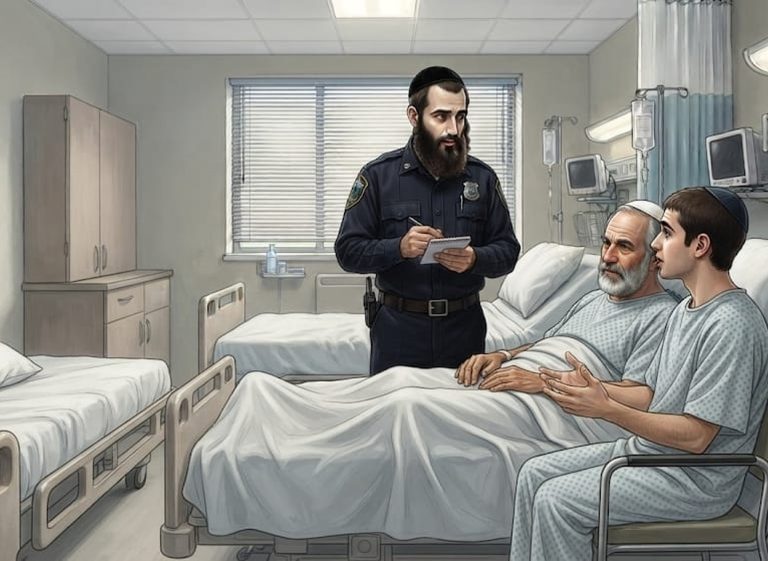
Escape From the Orphanage
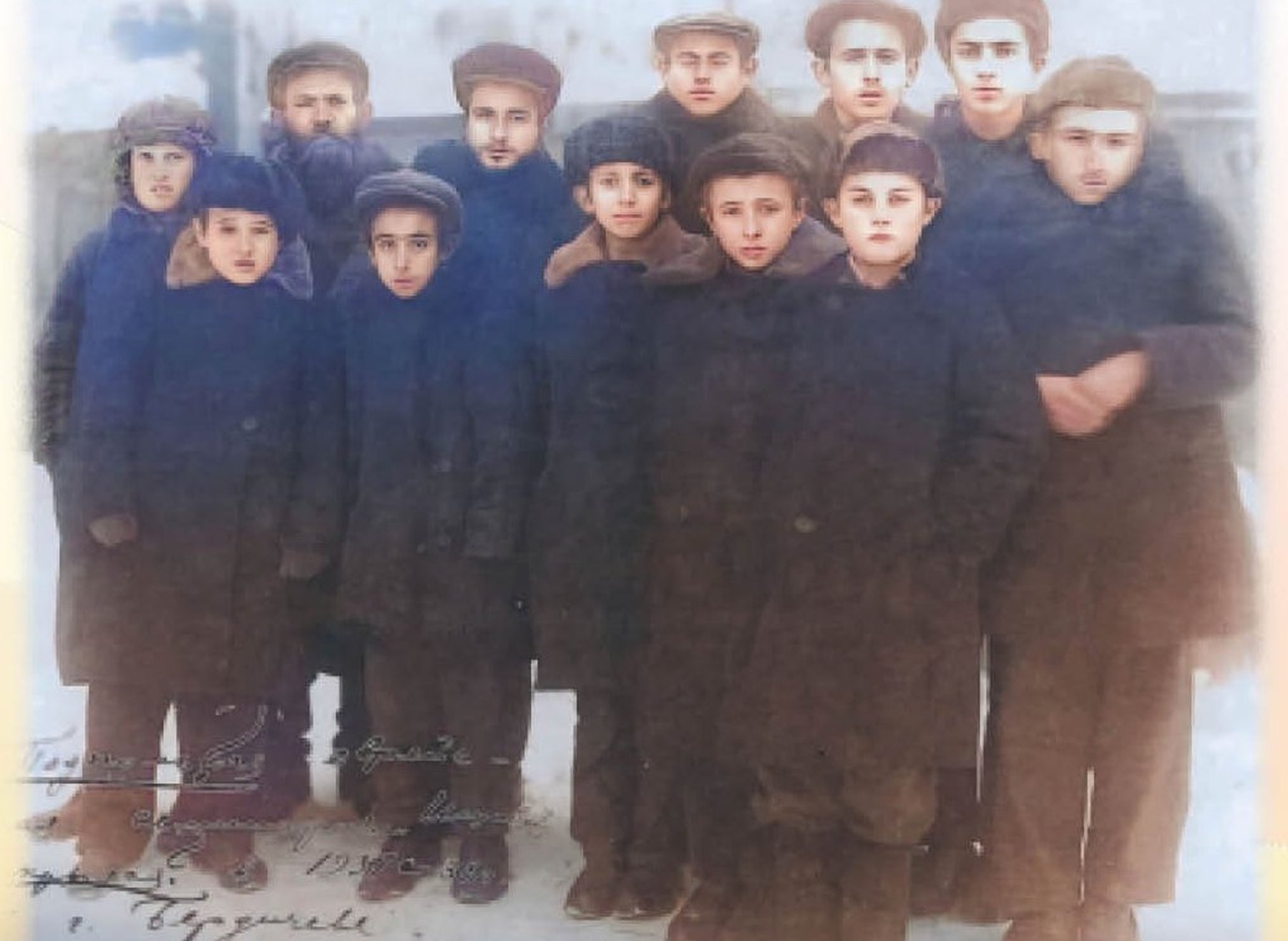
Previously: Six boys in a secret underground yeshiva in Berditchev are arrested during a 24 Teves farbrengen in 5698 (1938). The six younger boys are sent to a Soviet orphanage where they try to make them leave Torah and mitzvos. The boys try to plan an escape.
From the TzaddikStory.org collection
The Jewish boys sat in a corner of the dining hall, quietly nibbling on their small pieces of bread. A group of Russian boys sat nearby, watching them and whispering to each other.
“Hey, Jews!” one of the bigger Russian boys called out, smirking. “What’s wrong with the food? Too good for you huh? Or do you think you’re too good for it?”
The Jewish boys kept their eyes down and didn’t respond.
“Hey! I’m talking to you!” the boy shouted, standing up and walking toward them.
One of the older Jewish boys finally looked up. “We’re not doing anything wrong. Leave us alone.”
The Russian boy laughed mockingly. “Not doing anything? You think we don’t see you throwing your food away? What’s wrong with it? Is it not fancy enough for you?”
“It just makes us sick sometimes,” a younger Jewish boy said.
“Liar,” the Russian boy yelled. “Where are you really from? Orphans, huh? Where are your parents? Hiding somewhere?”
The Jewish boys froze. They couldn’t tell the truth. If they said where they were from, their communities might be in danger.
“We don’t have parents,” one of the boys finally said. “We came here because we had nowhere else to go.”
The Russian boy glared at them, his face full of suspicion. “You don’t belong here,” he spat. “Stay out of our way, or you’ll be sorry.”
“Quiet over there!” a guard barked from across the room.
The Russian boys backed off, but laughed as they returned to their seats.
One of the Jewish boys leaned over and whispered, “They hate us.”
“They don’t understand us,” another replied. “But it doesn’t matter. We just need to stay strong and stick together.”
Later that night, the boys sat on their beds, still feeling the tension from the dining hall. The bread they’d eaten sat like a rock in their stomachs. After weeks of hunger in prison, eating had made their stomachs ache.
“It’s hard to eat when we’re not used to it,” one boy admitted, holding his stomach.
“We’ll get through this—with Hashem’s help.”
* * *
Not long after the boys arrived at the orphanage, they came up with a brave plan.
“We need Tefillin,” one boy said quietly. “And Siddurim, too.”
“But how?” another boy asked. “We can’t just bring them in. The guards will find them!”
“What if we ask to get some of our things from Berditchev?” one of the older boys suggested. “They might let us, and we can bring the Tefillin back with us.”
“They’ll never let all of us go,” another boy said. “Only two at a time.”
The next day, two of the boys approached the guards.
“We left some of our belongings in Berditchev,” one of them explained. “Can we go back to get them?”
The guard narrowed his eyes. “Fine,” he said after a moment. “But only two of you. And don’t try anything funny. If you do, you’ll regret it!”
The boys nodded, trying to hide their excitement.
On their trip to Berditchev, they didn’t just gather clothing—they brought back a pair of Tefillin, a few Siddurim, and small Tehillims. They couldn’t risk bringing the Tefillin into the orphanage, so they hid it in the snowy forest nearby.
“We did it,” one of the boys whispered to the others that night. “But we’ll need a reason to leave the orphanage, so we can use the Tefillin.”
The next morning, another plan took shape.
“If we tell the guards we want to go ice skating, they might let us,” one boy suggested.
“Ice skating?!” another asked.
“Yes! It’ll sound like something they’d expect kids to want to do. They’ll think we just want to have fun. If we’re careful, we can use the time to Daven in the forest instead,” the first boy explained.
The boys approached the guards with their request.
“There’s a frozen pond nearby,” one boy said politely. “Can we go ice skating?”
The guard looked at them suspiciously but finally shrugged. “Fine. But only two of you at a time. And don’t try anything! Remember, we’re watching you!”
When their turn came, the boys grabbed the hidden Tefillin from the forest. It was the middle of Shevat, the coldest part of winter in Russia. The snow was deep, and the wind was freezing cold.
“Are you ready?” one boy asked, shivering.
“We have to do this.”
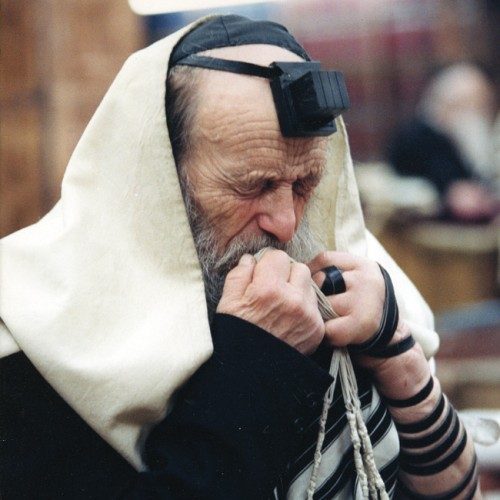
They took off their coats, ignoring the icy wind, and wrapped the Tefillin carefully. Their fingers felt frozen as they said the Brachos and began to daven.
“It feels so good to do this Mitzva again,” one boy whispered, tears pouring down his face.
Another boy nodded, his voice trembling. “I can feel Hashem here with us,” he said softly.
During one of their walks, they stopped at the Kever of the holy Tzaddik, Rabbi Levi Yitzchok of Berditchev. Snow fell lightly around them as they stood there, heads bowed in Tefilla.
They left a short note at the Kever: We want to live like Yidden! Please Daven to Hashem to help us escape!
The boys also managed to smuggle the Siddurim and Tehillims into the orphanage. But the risk was great.
One day, a guard caught one of the boys davening from a Tehillim hidden inside a Russian book.
“What’s this?” the guard barked, snatching the book and throwing it on the ground.
The boy’s heart raced. “It’s just an old book I found!” he said, quickly.
The guard picked it up and flipped through it, glaring. After a tense moment, he threw it back. “Watch yourself, Jew,” he growled before walking away.
Even through the danger, the boys never gave up. On clear nights, they recited Kiddush Levana under the open sky, staring at the moon and whispering Tefillos for strength in this terrible situation they were in.
* * *
Meanwhile, back at home, the boys’ parents were very worried. “Where are our sons? Are they even alive?” they wondered. Word had spread that the police raided the Shul, but no one knew what had happened to the boys.
When the parents found out that their sons were in a Communist orphanage, they were terrified.
“The Communists will try to make our boys live like Goyim!” they cried. “We have to save them!”
The parents went to R’ Michoel Teitelbaum, a well-known Chassid. He’d taught two of the boys and helped them join the secret underground cheder in Berditchev.
“Please help us!” they begged. “Our boys are missing. We need to bring them home!”
R’ Michoel didn’t hesitate. “I’ll do everything I can,” he promised. He was ready to risk his life to save them.
He traveled to Berditchev and wandered the streets, trying to find the orphanage. One day, he saw two of the boys during their daily walk.
He couldn’t talk to them openly—it was too dangerous. Instead, he motioned for them to meet him secretly at the Shul.
When the boys arrived, R’ Michoel hugged them tightly. “Baruch Hashem, I found you! How are you? Where are the other boys?”
“They’re still at the orphanage,” the boys said, tears in their eyes. “Please help us! It’s horrible there. The kids, the grown-ups—it’s like a prison!”
“I’ll help you,” R’ Michoel said. “For now, go back to the orphanage. I’ll come up with a plan to get you all out. Leave me messages by the Kever of Rabbi Levi Yitzchok of Berditchev so we can stay in touch.”
The boys felt hope for the first time in months. Someone had come to rescue them!
But soon, they overheard the guards talking. “These boys are still acting like Jews!” one guard growled. “We’ve had enough. Let’s send them to a stricter orphanage, far away—and separate them, so they can’t help each other.”
The boys were scared. Time was running out! They quickly left a message for R’ Michoel, begging him to hurry. His reply came soon: “We’ll get you out this Shabbos afternoon, when some of the guards go home. It will be easier then.”
The boys wrote back, worried. “We don’t want to break Shabbos!”
R’ Michoel sent another message: “A Rav says this is Pikuach Nefesh. You must escape to save your lives. If you don’t, they’ll send you away, and we may never find you again!”
The boys agreed, their hearts pounding. They davened that the Zechus of Shabbos would protect them.
* * *
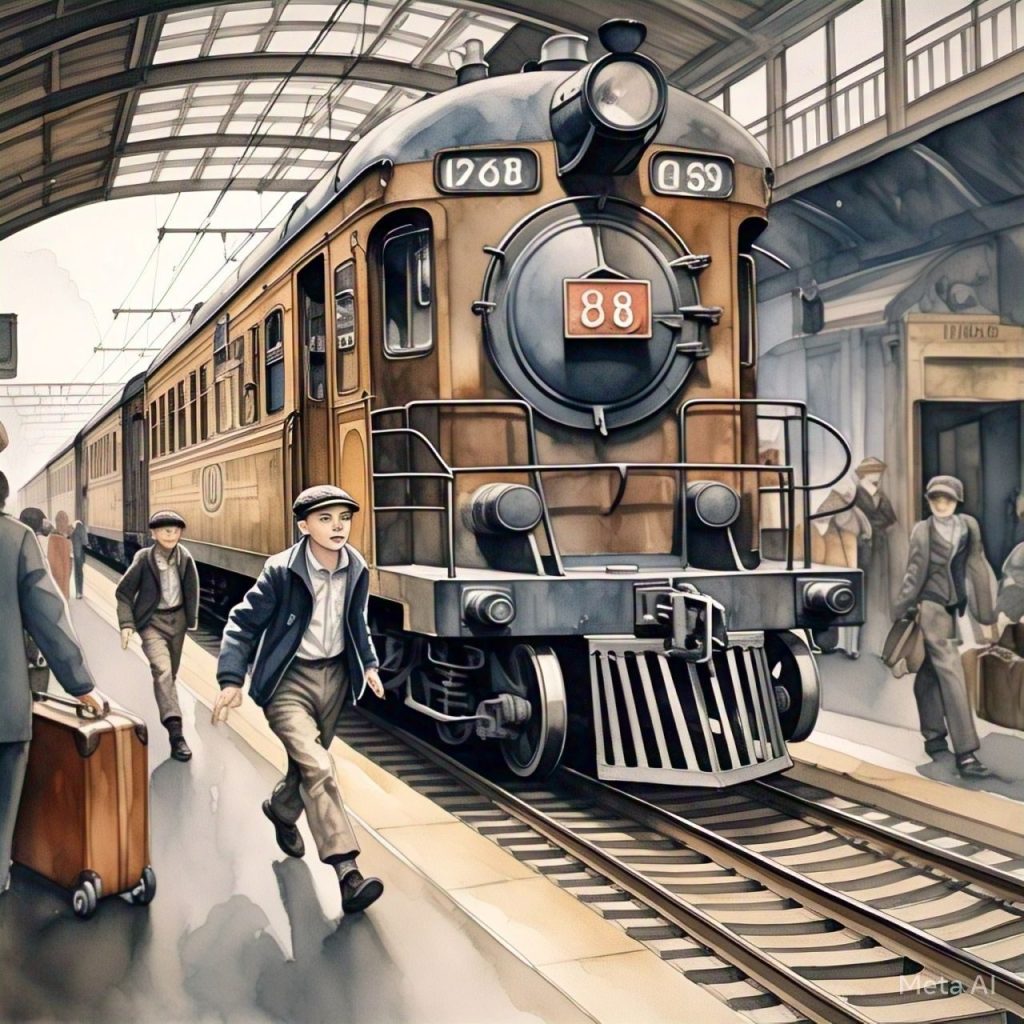
R’ Michoel planned the escape very carefully. He found a secret path to the train station that went through gardens and fields, where the police wouldn’t see them.
Next, he needed train tickets for the boys. R’ Michoel wore a scarf to disguise his beard, but buying six tickets at the same time would look suspicious. R’ Michoel knew the police were watching, so he had to be careful.
“I can’t buy all the tickets myself,” R’ Michoel thought. “I’ll need someone to help.”
At the train station, he found a porter—a man who carried luggage for travelers. R’ Michoel slipped him some money.
“I need six train tickets,” he told the porter. “Buy them at different ticket counters so no one gets suspicious. Each ticket has to be for a different city: two to Kiev, two to Zhlobin, and two to Moscow.”
The porter nodded and quickly got to work. Soon, he handed R’ Michoel the tickets.
“This way,” R’ Michoel explained to the boys later, “if some of you are caught, the others might still escape.”
The boys nodded. They knew how dangerous this was, but they also knew it was their only chance.
— To be continued —
Beis Moshiach #1447 • pp. 54-58
© 2026 Beis Moshiach Magazine. All rights reserved.
This article originally appeared in Beis Moshiach #1447. You are welcome to share it with friends and family by email or in print, provided that you do not change, add to or omit any part of it, you credit the author and Beis Moshiach, and you include a link to archive.bmoshiach.org (written out in full in printed copies).
To republish this article in a newspaper, magazine, book or website, please request permission in advance at [email protected].