The Tzaddik Who Wanted to be Stoned for “Chilul Shabbos”
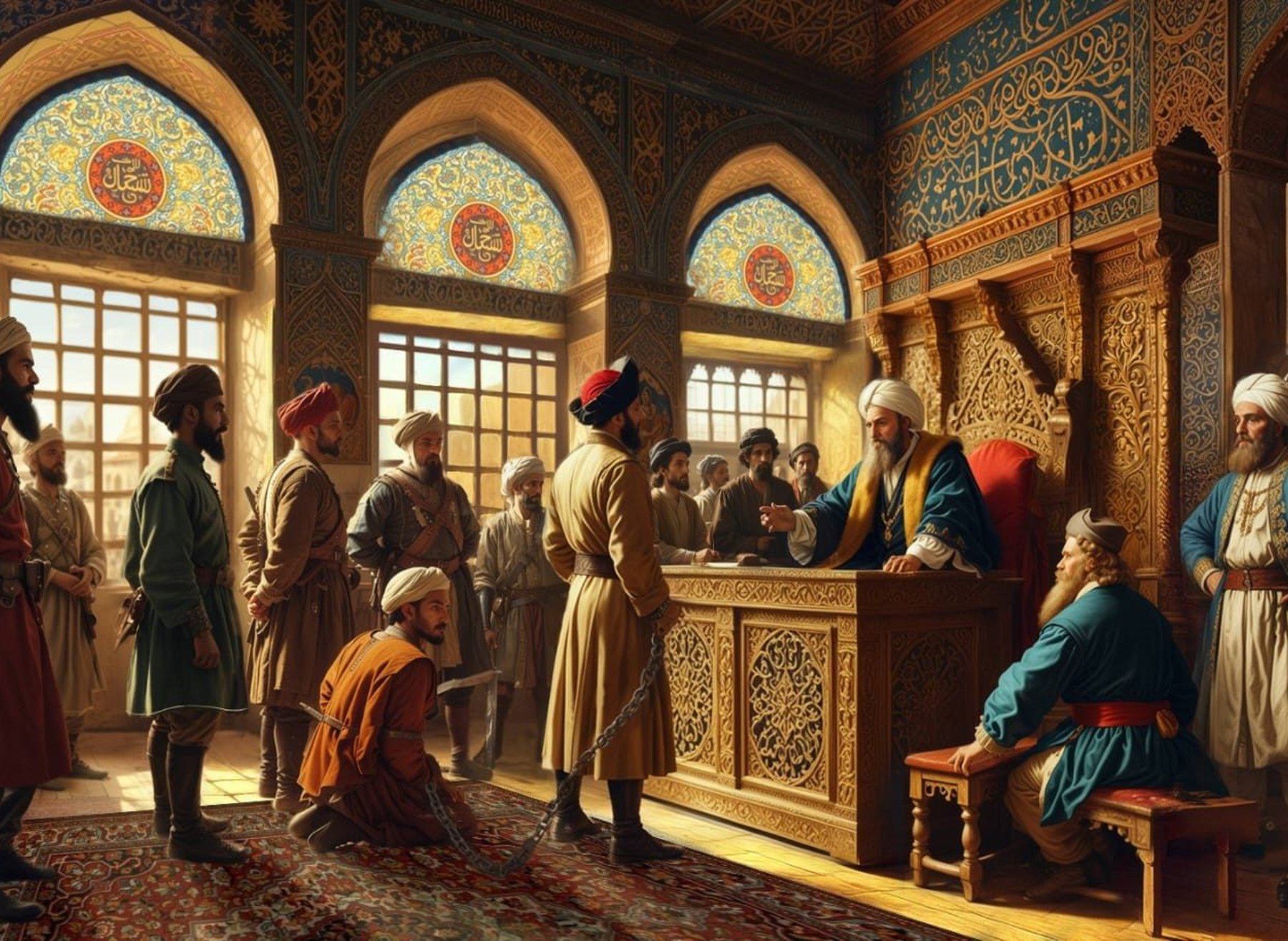
Previously: The Arab governor of Yerushalayim is nice to the Jews. Some troublemakers decided to make him angry at the Yidden, so they murdered his son and put his dead body in the shul
From the TzaddikStory.org collection
Panic spread like wildfire through the Jewish quarter. Families scrambled to hide, mothers grabbed their children, and men ran to warn others. The governor’s orders were clear: he wanted all of Yerushalayim’s rabbis rounded up. One by one, he planned to kill them, and when he was finished, he would hunt down as many Jews as he could find.
In the midst of all the chaos, the governor’s guards went to the small home of Rav Klonimus, a great Tzaddik and the Rav of the shul where the boy was found. The elderly rav was well-known and deeply respected by all. The guards knocked loudly on his door, fully expecting a frightened response like the others.
The door slowly opened, and Rav Klonimus stood there, his face calm.
“The governor wants to see you,” one of the guards barked. “You’re to come with us immediately!”
But to their surprise, Rav Klonimus didn’t fight back. Instead, he nodded and gave a small bow.
“I would be happy to come with you,” Rav Klonimus said in a clear, level voice. “I’ve been wanting to speak to the governor. I can show him who really hurt his son.”
“Don’t try anything sneaky, old man,” one guard said, gripping his sword tightly. “We already know what you and your people did. You’ll all pay for this.”
“Sneaky?” Rav Klonimus replied with a small smile. “The truth doesn’t need to be sneaky. Let’s go.”
* * *
Rav Klonimus walked calmly, his head held high. The streets were strangely quiet, the usual Shabbos peace replaced by fear. Behind closed windows and doors opened a crack, worried eyes peeked out, whispering prayers for the tzaddik’s safety.
When they reached the governor’s palace, the air felt heavy with sadness and anger. Soldiers stood guard at the gates, their faces serious. Inside, the governor was pacing back and forth, his eyes red and his fists tight.
“Bring him in!” the governor shouted when he saw Rav Klonimus walk in.
Rav Klonimus stepped forward calmly. “Your Excellency,” he said with a small bow, “I have come to speak with you about your son’s death.”
The room went quiet. The governor glared at him. “What could you possibly say that I’d want to hear, Rabbi? My son is dead, and he was found in your synagogue. I plan to have you punished in front of everyone, and you act as if you’re innocent!”
Rav Klonimus raised his hand gently. “Your Excellency, I understand your pain. I can’t imagine how sad you must feel. But I ask for just one thing – a chance to show you the truth.”
“What truth? That your people didn’t kill my son? That’s impossible! His body was found on your synagogue floor, soaked in blood. Your people have gone too far this time – you’ve made a fool of me!”
Rav Klonimus stayed calm. “I ask only that you let me show you proof. If I can’t, you can punish me however you wish.”
The governor paused. His anger was burning inside him, but something about the Rav’s calm attitude made him stop and think. Finally, he waved his hand. “You get one chance, Rabbi. But if you fail, you and your people will die.”
Rav Klonimus nodded. “Thank you, Your Excellency. The truth will prove itself.”
The room fell silent, and everyone waited to hear what the great Tzaddik would say next.
“Your Excellency, please follow me to where Ibrahim’s body is. The truth will be revealed there.”
The governor paused for a moment, his anger mixed with curiosity. Finally, he nodded and signaled for his guards and advisors to come along.
* * *
As they entered the Shul, some people let out small, shocked breaths, unable to hide their surprise. The governor’s sadness seemed to grow even heavier, his pain written all over his face.
“Stay calm, Your Excellency,” Rav Klonimus said. “The truth will soon be clear.”
Even though it was Shabbos, Rav Klonimus knew that saving lives and protecting the Jewish community came first. He walked to a small table, picked up a feather quill pen, and dipped it in ink. Carefully, with deep focus, he began writing a holy name of Hashem on a piece of parchment. Every movement was important.
The governor watched, looking more and more confused. “What are you doing, Rav Klonimus?” he asked, his voice loud and impatient.
Without looking up, Rav Klonimus said, “This isn’t something simple. With Hashem’s help, I will find the truth. Please stay quiet and give me a moment.”

Everyone waited in silence.
When the holy name was complete, Rav Klonimus gently placed the parchment on Ibrahim’s forehead. Closing his eyes, he whispered deep, sacred words of Torah and Kabbalah, calling on the power of Hashem’s name to bring the truth.
The room went completely quiet, as if even the walls were listening. Then, with a strong and commanding voice, Rav Klonimus said, “I command you, get up! Speak, and tell everyone who did this!
At first, nothing happened. The room was quiet, and everyone watched nervously. One of the guards whispered, “Why is he talking to someone who’s dead…? This is impossible!”
Another guard shook his head. “I don’t know, but look at him. He’s so calm – maybe he knows something we don’t.”
Just then, Ibrahim’s body started to move. His chest lifted a little, and his fingers began to wiggle. “Look!” someone yelled. “He’s moving!”
People yelled louder as, slowly, Ibrahim sat up.
The governor’s mouth fell open. “It can’t be…” he whispered. The soldiers stepped back, their faces filled with fear. No one could believe what they were seeing – except for Rav Klonimus, who remained calm and steady.
“They kidnapped me, Father,” Ibrahim said loudly and clearly. The room was so quiet that everyone could hear each word. “A group of Arabs took me to a dark, empty road. They hurt me, and then they killed me, father.”
The governor’s face went white, and he leaned forward. “What? Why would they do that…? Who would do something so evil?”
“I heard them talking, Father. They said they wanted to blame the Jews. They said this was their way of getting revenge.”
“Getting revenge?” the governor asked, confused, his voice shaking with anger and worry. “Why? What did I do to these people?”
“They said they were angry you wouldn’t believe their lies about the Jews,” Ibrahim explained. “And because you made them clean the streets.”
One of the guards spoke up, breaking the silence. “Your Excellency, could this be true? Could they have done this to turn you against the Jews? Aren’t those the same men who told your guards where your son had been found?”
The governor tightened his fists, his face full of anger. “If my son is telling the truth,” he said slowly, “then they tricked me.”
“If you don’t believe me, Father,” Ibrahim said, his voice calm, “send your men to the old road to the valley. There’s a big, flat stone by the path, covered in my blood. That’s where they hurt me. That’s where they killed me.”
The governor’s eyes opened wide with surprise and fear. “A flat stone? By the valley road?” he asked, his voice angry.
Ibrahim nodded slowly. “Yes, Father. Go there, and you’ll see the truth for yourself.”
The governor’s face grew serious. “We’ll go right now. Get the men ready!” he shouted.
The guards rushed to follow the governor’s orders, and the room held its breath.
As the guards prepared, the governor knelt beside Ibrahim, tears streaming down his face. “I’m so sorry, my son,” he said, his voice breaking. “I’ve let you down. But I promise – those who did this will not escape. I’ll make them pay for what they’ve done to you. I swear!”
Ibrahim’s weak eyes met his father’s. He nodded slowly, a small tear rolling down his cheek. “I believe you, Father,” he whispered softly. Then, with a final, peaceful sigh, Ibrahim lay back down, lifeless.
Rav Klonimus stood still, his face calm but his eyes shining with purpose. Slowly and carefully, he lifted the parchment from Ibrahim’s forehead, the room holding its breath as he did. Rav Klonimus looked around the room, his eyes meeting everyone’s. No one dared to make a sound. “Hashem’s name is holy,” he said loudly. “You have witnessed the power of Heaven. The truth has been spoken with Hashem’s help; may His name be great forever!”
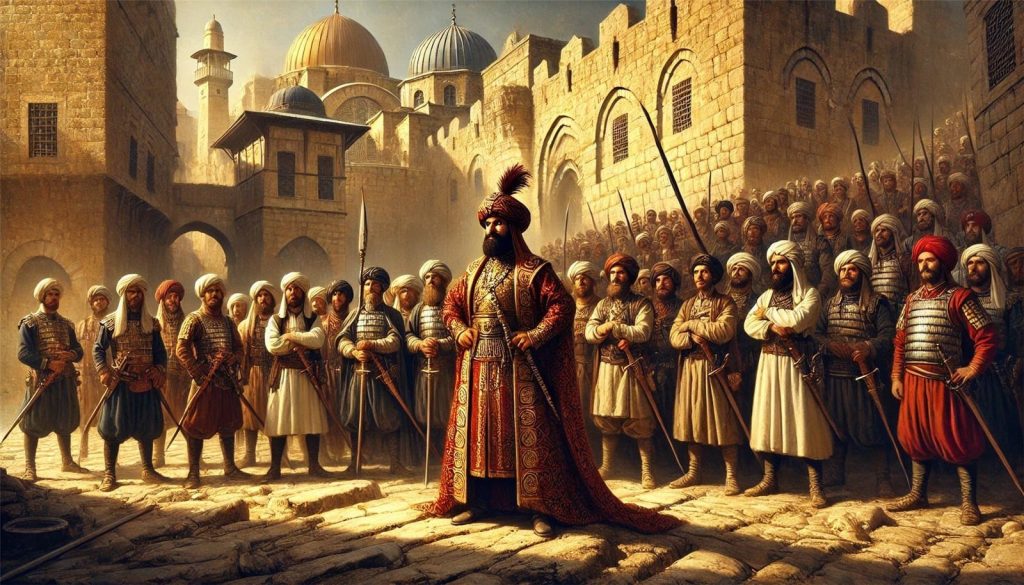
His words rang through the quiet room. Outside, the guards were leaving to find that stone, but inside, everyone knew the truth had already been spoken. It was only a matter of time before things would be set right.
* * *
The guards hurried to the spot Ibrahim had described. They found the flat stone, stained with blood, just as he had told. The proof was clear for everyone to see. They immediately set out to hunt the men responsible for the crime.
“Catch the traitors!” the governor commanded, his voice trembling with rage as Malik and his friends tried to escape. “There is no punishment bad enough for them. I want them to suffer as my son did. They will be executed in the public square, so everyone will know what they’ve done, and no one will ever follow in their footsteps.”
As the men were taken away, the governor turned to Rav Klonimus, his eyes full of gratitude and amazement. “You told the truth, just like you said you would,” he said. “You are a holy and amazing man. You saved the city from the real villains. You saved your people… and mine. You also let me say goodbye to my son. I will always be grateful to you.”
“I’ve heard of miracles, but this… this is beyond anything I could have imagined. He can bring the dead back to life!” people whispered.
An old man in the crowd said, “This isn’t just a miracle. This is the work of a very great Tzaddik. Only someone with the purest neshama and the deepest connection to Hashem could do such a thing. His holiness is so powerful, it can change the normal world.”
Rav Klonimus stood quietly, looking down, feeling humble. He wanted everyone to understand that it wasn’t his power that brought Ibrahim back to life. Instead, he said gently, “It was Hashem’s will.”
* * *
The city of Yerushalayim was happy, like it was Purim. They were saved from an evil plot of a new group of Haman’s. But Rav Klonimus, thankful for the miracle, still felt troubled for breaking Shabbos, even though he’d done it to save lives. For a Tzaddik of his level, it was like he’d accidentally stained his shirt. He knew he had to fix it.
In the time of the Beis HaMikdash, breaking Shabbos was a serious mistake, sometimes punished by stoning, where a group of people threw stones to punish them. Rav Klonimus asked his followers to throw a stone at his grave for 100 years after he died.
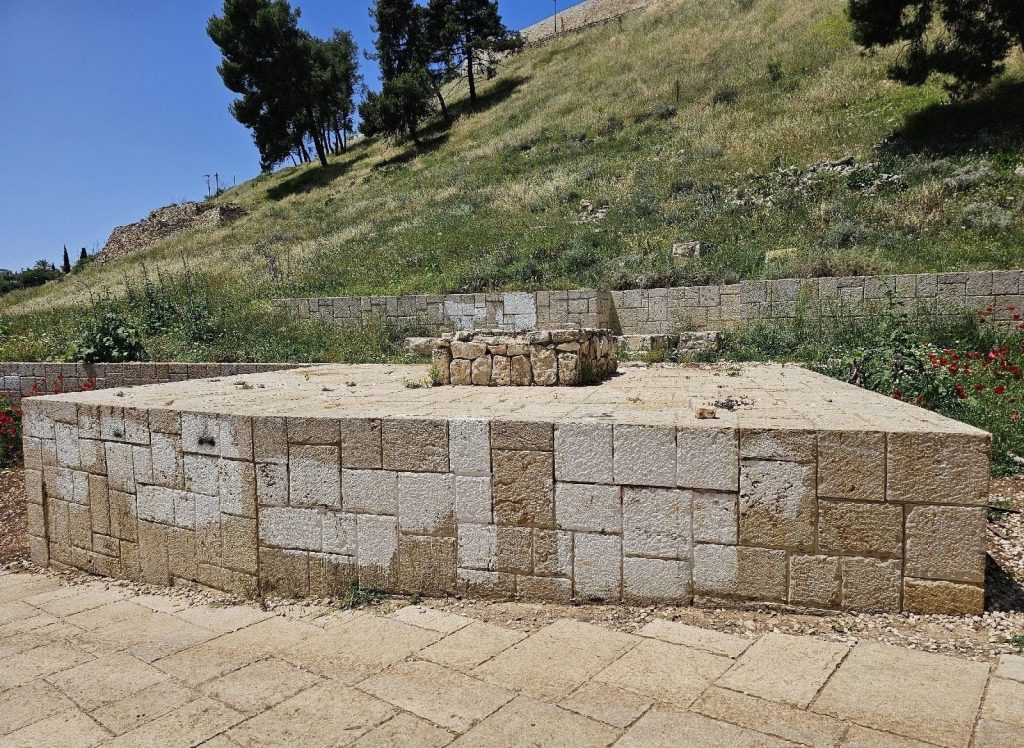
And so, stones began to gather on Rav Klonimus’s grave, located at the bottom of Har HaZeisim, near where the Kosel stands today.
As the years passed, the people of Yerushalayim continued this tradition. Travelers, passing through the area, would take a stone from the grave to keep, believing that the merit of the great Tzaddik would protect them and bring them safely home to Yerushalayim.
* * *
Over time, after many wars in Eretz Yisrael, the exact location of Rav Klonimus’ grave was lost. When the Jordanians took control of Yerushalayim before it was returned to the Jewish people, they destroyed many graves. Even though we don’t know the exact spot anymore, we still remember the area where stones were piled to honor Rav Klonimus and the miracle he did.
Today, if you visit Eretz Yisrael, you can still see the walls around Yerushalayim, built by Emperor Suleiman 500 years ago. HaRav Klonimus Street is now a quiet reminder of the great Tzaddik who once lived in Yerushalayim. Though the street is small, its name holds a special story – a story of miracles, and the incredible life of Rav Klonimus.
The story of Rav Klonimus has been passed down for hundreds of years in famous sefarim, including one by the Chida, who mentioned it in short, and another by Rabbi Shlomo Zalman Tzukrel, who shared more details in his book, Toldos Chachmei Yerushalayim. Some parts of the story may have changed over time, and this version adds many colorful details, but the main outline of the story has stayed the same for over 500 years.
Beis Moshiach #1451 • pp. 54-59
© 2026 Beis Moshiach Magazine. All rights reserved.
This article originally appeared in Beis Moshiach #1451. You are welcome to share it with friends and family by email or in print, provided that you do not change, add to or omit any part of it, you credit the author and Beis Moshiach, and you include a link to archive.bmoshiach.org (written out in full in printed copies).
To republish this article in a newspaper, magazine, book or website, please request permission in advance at [email protected].