
Why Counseling Is Good for Shalom Bayis
The Rebbe’s detailed advice to a woman struggling with Shalom Bayis matters:
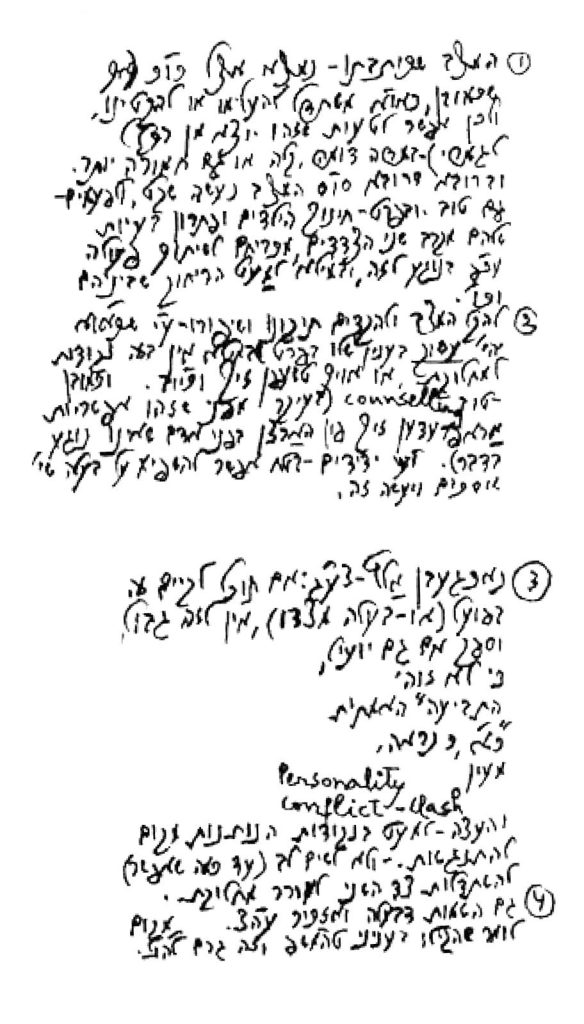
1) המצב שכותבתו – נמצא אצל כו”כ [=כמה וכמה] (אף שכמובן, כאו”א [=כל אחד ואחד] משתדל להעלימו או להקטינו, ולכן אפשר לטעות שזהו יוצא מן הכלל לגמרי) – במדה דומה, קלה או גם חמורה יותר. וברובא דרובא סו”ס [=סוף סוף] המצב נעשה שקט, ולפעמים גם טוב. ובפרט – חינוך הילדים ופתרון בעיות שלהם מקרב שני הצדדים, מכריחם לשיתוף פעולה עכ”פ [=על- כל-פנים] בנוגע לזה, ובמילא למעט הריחוק שביניהם וכו’.
2) להקל המצב ולהקדים תיקונו ושיפורו – ע”י שכאו”א יהי’ עסוק בענין שלו בפרט ובמילא אין בזה נקודות למחלוקת, או אויף טשעפן זיך [=להקניט, להתגרות] וכיו”ב. וכמובן – טוב counselling [=יעוץ] (בעיקר מפני שזהו אפשריות אפרעדן זיך פון הארצן בפני אדם שאינו נוגע בדבר). וע”י ידידים – בטח אפשר להשפיע על בעלה שי’ שיסכים ויעשה זה.
3) נאכגעבן אלץ [=לוותר בכל] – צע”ג [=צריך-עיון-גדול]: אם תוכל לקיים זה בפועל (או – בעלה מצדו), אין לזה גבול, וספק אם גם יועיל, כי לא זהוי “התביעה” האמיתית כ”א כנראה מעין personality conflict-clash [=ניגודי אישיות-התנגשויות] והעצה – למעט בנקודות הנותנות מקום להתנגשות. – ולא לשים לב (עד כמה שאפשר) להשתדלות צד השני לעורר מחלוקת.
4) גם השמות דבעלה ואזכיר עה”צ [=על הציון].
מקום לומר שהקילו בעניני טהמש”פ [=טהרת המשפחה] וזה גרם להנ”ל.
1) The situation you describe is common among many people (although naturally, everyone tries to hide or minimize it, and therefore one might mistakenly think that what he’s experiencing is a total exception) – to a similar degree, lighter or even more severe. In the vast majority of cases, the situation eventually becomes calm, and sometimes even good. Especially when educating the children and solving their problems brings both sides closer, forcing them to cooperate at least regarding this, and consequently reducing the distance between them, etc.
2) To ease the situation and hasten its correction and improvement – each party should be occupied particularly with their own matters, thereby avoiding points of conflict, or provoking each other and the like.
Of course, counseling is good (mainly because it provides an opportunity to speak openly from the heart before a person who is not involved in the matter). And through friends – it’s surely possible to influence your husband to agree and do this [get counseling].
3) As to the idea of giving in to everything the other party’s demands: it is hard to assume that you will be able to implement this in practice (or your husband if he were to make this resolution on his part). There is no limit to this, and it’s questionable whether it will help, because this is not the true “demand.”
The problem, rather, appears to be a kind of personality conflict-clash, and the proper advice would be to minimize the points that give rise to confrontation, and not to pay attention (as much as possible) to the other side’s efforts to provoke discord.
4) Submit also your husband’s name and mother’s name and I’ll mention them at the tziyun.
There is reason to assume that leniencies in matters of family purity may have caused the above.
Beis Moshiach #1453 • pp. 6-8
© 2026 Beis Moshiach Magazine. All rights reserved.
This article originally appeared in Beis Moshiach #1453. You are welcome to share it with friends and family by email or in print, provided that you do not change, add to or omit any part of it, you credit the author and Beis Moshiach, and you include a link to archive.bmoshiach.org (written out in full in printed copies).
To republish this article in a newspaper, magazine, book or website, please request permission in advance at [email protected].

