Why Did the Rebbe Come Home an Hour Late?
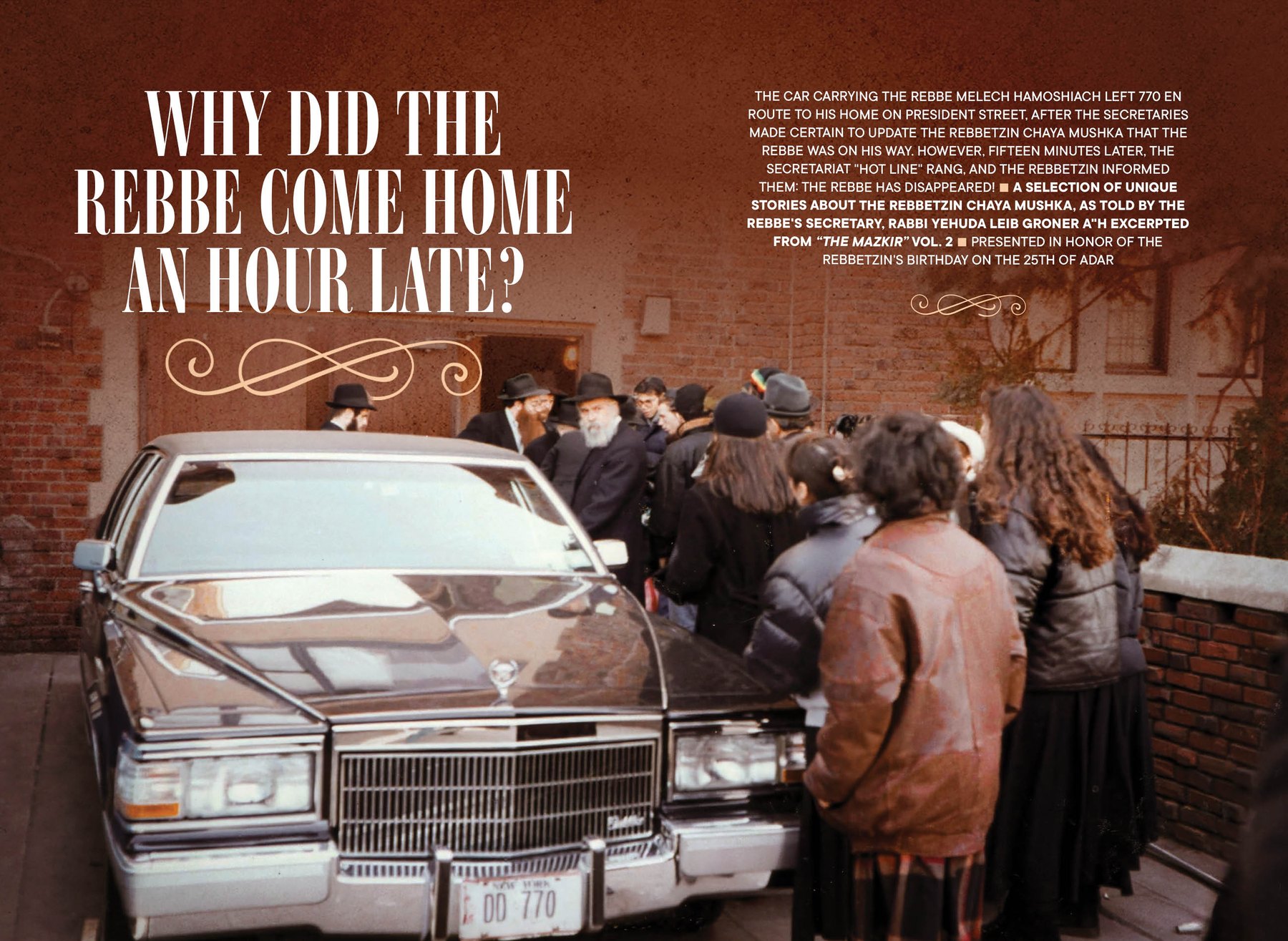
The car carrying the Rebbe Melech HaMoshiach left 770 en route to his home on President Street, after the secretaries made certain to update the Rebbetzin Chaya Mushka that the Rebbe was on his way. However, fifteen minutes later, the secretariat “hot line” rang, and the Rebbetzin informed them: the Rebbe has disappeared! * A selection of unique stories about the Rebbetzin Chaya Mushka, as told by the Rebbe’s secretary, Rabbi Yehuda Leib Groner a”h excerpted from “The Mazkir” vol. 2 * Presented in honor of the Rebbetzin’s birthday on the 25th of Adar
Shortly after the Rebbe accepted the leadership of Chabad-Lubavitch, the Rebbetzin told a group of yungeleit – including the young Leibel Groner – that what they have now is thanks to her!
She said that two months before accepting the nesius, she told the Rebbe that if he did not accept the position, all the work of the Rebbeim – from the Alter Rebbe until her father (the Rebbe Rayatz) – would ch”v go down the drain. She also asked him to name someone who could fill this position instead of him, and the Rebbe remained silent.
The Rebbetzin then told the Rebbe that she knew the answer: he was the only one who could take on the position.
When relating this, Rabbi Groner said that this may be the reason that the Rebbe linked the 22nd of Shevat to all the Chassidim (although it was ostensibly a personal matter), since the Rebbetzin was behind the Rebbe accepting the nesius.
Not to Worry
“The Rebbe usually dined with the Rebbetzin every evening,” said Rabbi Groner. “In the winter, it was at half past four in the afternoon, and at seven in the evening during the summer. If the Rebbe had to delay his departure, even by ten or fifteen minutes, the Rebbe would ask us, the secretaries, to inform the Rebbetzin that everything was fine, and that there would only be a slight delay. ‘Why should she be worried for ten minutes about what was happening?’ the Rebbe reasoned.
“After the Rebbe recovered from his heart attack in 5738, the first farbrengen he held in 770’s Beis Medrash was on Yud-Tes Kislev. Before he left his room for the shul, the Rebbe asked that we call the Rebbetzin and inform her that he was only now leaving for the farbrengen. Upon returning to his room after the farbrengen, he again asked us to inform the Rebbetzin that the farbrengen was now over, the doctor had examined him, and he said that everything was fine. This constant concern of the Rebbe to keep her from worrying was remarkable.”
‘hopkedike’ Chassidim

This concern was not one-sided. The Rebbetzin, for her part, also tried her best not to cause the Rebbe any distress.
Once the Rebbetzin called R’ Groner, and said with anguish that “the Chassidim are ‘Hopkadike’ Chassidim,” meaning that they are Chassidim when the Rebbe inspires joy – “hop!”… However, they don’t know that they are tasked with preventing situations that cause the Rebbe distress in the first place, such as negative publicity in the press about Lubavitch.
She added: “While I don’t want to elaborate on this matter, Chassidim must see to it that my husband does not have any distress.”
On another occasion, at the end of one of the farbrengens, the Rebbe asked that everyone take on an increase in their Torah studies, whether in Nigleh or in Chassidus, requesting that everyone write on a piece of paper what they chose to undertake.
A few days later, the Rebbetzin said that during dinner, the Rebbe told her: “It’s interesting that when I give out ‘kos shel bracha’, ‘lekach’, and the like to the public – people stand in line for several hours to get what I give. Whereas, when I ask them to make a commitment to me in a certain matter, you don’t see the long line stretching out in the mazkirus to give in the notes (with the commitments everyone took upon themselves).”
Cold Tea and a Warm Sefer

“Once when I was in the Rebbe’s room, the Rebbetzin came in and made a cup of tea for the Rebbe — in a corner that was designated for that purpose — and placed it next to him.
“At that time, the Rebbe was sitting and studying and did not drink the tea. After a few minutes, she told the Rebbe that the tea would get cold, and she wanted the Rebbe to drink it while it was still hot.
“The Rebbe looked up from his sefer, and said: ‘And then the sefer will get cold…’”
The Secretaries Are Looking for the Rebbe…
R’ Leibel’s son, Rabbi Menachem Mendel Groner, recalls:
“There was a telephone in the secretariat with a secret number, the ‘yellow telephone’, which the Rebbetzin would call, as well as the secretaries’ families. No one except them knew the number. This was because the secretariat’s lines were constantly busy, and therefore, this special number was required to enable her to reach the secretaries when needed.
“The Rebbe arrived every day in the morning or afternoon (the hours themselves changed over the years, depending also on the day of the week), and remained at 770 until the evening. Throughout the day, the Rebbe had nothing besides a cup of tea and a slice of bread. Towards the evening, the Rebbe would drive home for an hour, when he would eat his only meal of the day with the Rebbetzin. However, since the Rebbe did not leave at the same time each day, the Rebbetzin arranged with the secretaries that whenever the Rebbe left 770 – they would inform her to give her time to be prepared for his arrival.
“One day, the Rebbe went out in the car with the secretary Rabbi Krinsky driving, and the secretaries informed the Rebbetzin.
“Unexpectedly, fifteen minutes later, the yellow telephone rang. The Rebbetzin was on the line, worried: ‘You said fifteen minutes ago that my husband had left, but he still hasn’t arrived!’
“My father and Rabbi Klein immediately rushed to the Rebbe’s home and tried to call the phone in the car or the driver’s house, but there was no answer. All the while, the Rebbetzin was sitting in her armchair, completely ‘ois mentch’ (extremely agitated). An hour passed, and suddenly they saw the Rebbe’s car stop by the house, and the Rebbe got out. The secretaries quickly left the house, however, the Rebbe had time to see them and became quite serious, then he entered the house.
“The next day, the Rebbetzin told my father that the Rebbe wanted to be examined by a doctor, but he didn’t want the Rebbetzin to know, thereby keeping her from worrying about his health, so he agreed with R’ Yudel that he wouldn’t say anything.”
The Rebbe Has Disappeared
As mentioned previously, the Rebbe would return home every day for a brief period of time: During the winter after four o’clock, just before sunset, and in the summer at seven o’clock.
More than once, the evening yechidus lasted until the morning hours, and even then, the Rebbetzin would wait for the Rebbe to return home. This is how R’ Groner described it on one occasion when he personally was not present in 770, since he was in the ‘country’ at the time, as described in his diary:
“On the eighteenth of Menachem Av 5723, the yechidus night lasted until five o’clock in the morning. At seven o’clock, the Rebbetzin called and asked where her husband was, and the secretaries said they did not know. They searched but did not find him…
“Later, they learned that the Rebbe shlita was in his room davening, and only at half past eight in the morning did he return home.”
Seeking to Lessen the Effort in Making a ‘yechidus’
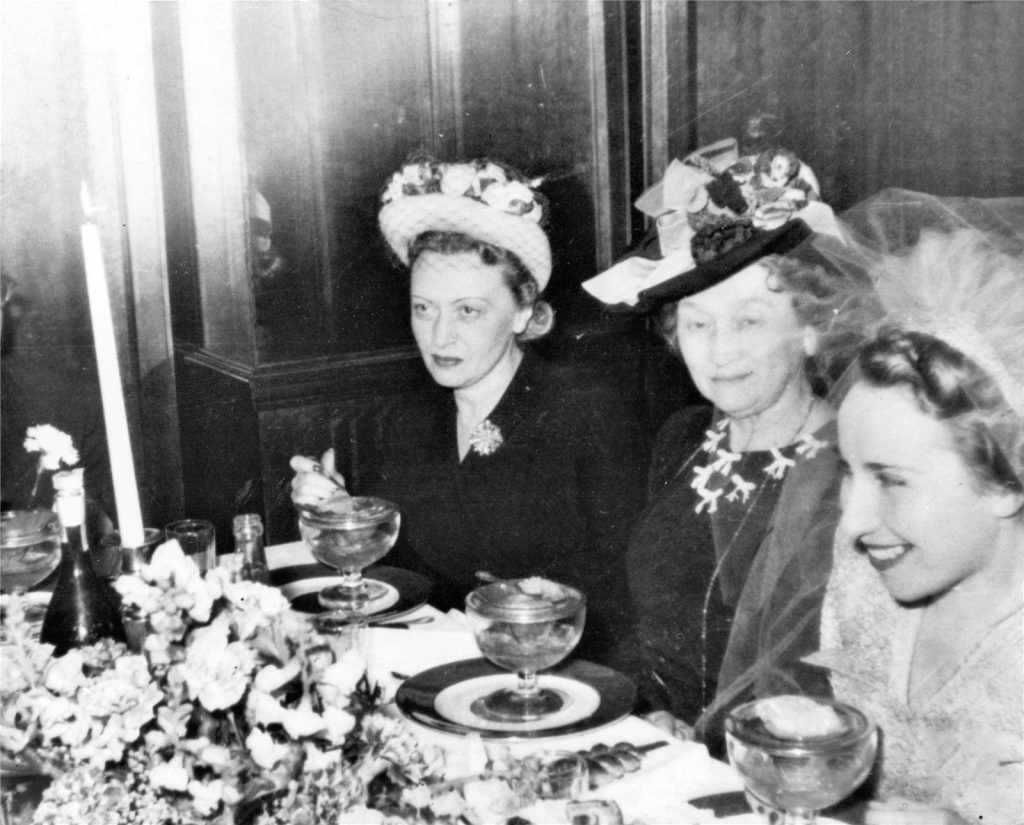
In Adar 5723, based on R’ Groner’s diary, the Rebbe was apparently not feeling well, and the Rebbetzin was very concerned that despite his health condition – the Rebbe wasn’t relieving himself of a considerable portion of his duties, and she asked the secretaries to do so themselves:
This is how R’ Groner described the conversation that took place on the second of Adar 5723:
“At half past eleven in the morning, the Rebbetzin called Rabbi Chodakov to speak with him about the nighttime yechidus. She asked that they be stopped (or minimized) as much as possible, because (the Rebbe) had not yet fully recovered. At noon, she called again and asked that someone with a car should come in another twenty minutes to bring the Rebbe (to 770).”
The Rebbe’s Lack of Sleep
Rabbi Bentzion Grossman recalls:
“R’ Groner once told us that before one of the holidays, he received a phone call from the Rebbetzin, stating that she was very worried and apprehensive that the Rebbe had hardly slept lately (since, as famously known, he used to increase his activities in preparation for the Yomim Tovim season). She described that the Rebbe would arrive late at night, enter his room, and start working without going to sleep. This continued until morning, and then he would go to 770…
“While R’ Groner did not tell us what he answered her, he told us this so we would understand what the Rebbe was busy with: ‘Last night, the Rebbe left 770, took hundreds of letters with him, some of them to proofread before sending them, and some of them to sign. Afterwards, the Rebbe wrote a michtav klali (general letter) in preparation of the upcoming Yom Tov, and then he was busy with being magiha (editing) a sicha’ (he added that the Rebbe spent most of his time proofreading the sichos).
“Well, with such tasks, how did the Rebbe have time to rest?
“On another occasion, the Rebbetzin called the mazkirus to inform them that the Rebbe was sleeping (only) four hours a night, and said that when she tried to convince the Rebbe to take a break, he pointed to all the letters on the table and said: ‘Do you want me to rest while all these people are waiting for a response?!’
“And indeed,” the secretary confirmed, “the Rebbe would leave for home every day with a large number of letters, and he would arrive at 770 the next day with a ready response to each letter!”
Behold, He Is Standing Behind Our Wall
R’ Menachem Mendel Groner recalls:
“In the month of Adar 5746, the Rebbe suffered from severe pains in his leg, and he had a great deal of difficulty walking which was visibly painful.
“At that time, it was decided that instead of the Rebbe going home on Friday night, he would spend the night in the library, where he would also eat the Shabbos meal. To make this possible, they built a small addition to the library that included a kitchen and a living room, and every Friday afternoon, the Rebbetzin would come to the library.
“On Shabbos nights in the winter, when Maariv took place at 5:30-6:00 p.m., the Rebbe would stay in his room to learn after davening, and he would only come out to make Kiddush a few hours later.
“During this time, the Rebbetzin would be in the library, and the mashbakim [personal aides], members of the Junik family, would stay with the Rebbetzin so that she wouldn’t be alone, and would even talk to her. When they saw the Rebbe coming, they would go out the back door, trying not to let the Rebbe see them.
“One Shabbos evening, the Rebbetzin was sitting in the front room, facing the interior of the house, and one of the mashbakim was sitting opposite her, facing the door. Suddenly, the Rebbe arrived, but did not enter, because he saw through the transparent door that the Rebbetzin was telling something to the mashbak, and he did not want to interrupt her conversation. The Rebbe remained standing, signaling to the mashbak with his finger not to tell the Rebbetzin that he had arrived.
“However, the young boy was visibly nervous when the Rebbe looked at him, and turned as pale as chalk. The Rebbetzin suddenly saw the intense pallor that had seized him and was very frightened. She began to ask, ‘What happened to you?’ While she was talking, the Rebbe entered, and she understood what had happened. She said to the Rebbe with a smile: ‘Du shrekst menschen’ (Your appearance scares people).”
“the Rebbe Give His All to the Chassidim”
The members of the secretariat once heard the Rebbetzin make an extraordinary statement that said it all:
“The Rebbe keeps nothing for himself” (the Rebbetzin indicated with her fingers a small amount), “he gives everything to the Chassidim.”
She too acted the same, as they heard from her on a rare occasion – that she gave up everything she had for the Rebbe!
Which Rebbetzin?
The mashbak, Rabbi Menachem Junik, always addressed Rebbetzin in the third person.
Once he was sent by R’ Groner on a certain errand, and as a result, he used R’ Groner’s own words when mentioning the title ‘Rebbetzin’.
“The Rebbetzin was upset that I repeated the message thus, and exclaimed: ‘Vohs rebbetzin? Ven rebbetzin?’ (= What rebbetzin? When rebbetzin?) She greatly disliked this title and usually would identify herself as ‘Mrs. Schneerson.’”
Being with the Rebbetzin at Candlelighting
The Rebbe made sure to be present when the Rebbetzin lit the candles. The following diary entry written by R’ Groner shows his efforts to do so even in very stressful times:
“On Friday, Yud-Gimmel Tammuz (5726), the Rebbe shlita began receiving people for yechidus at 2:30 p.m. until 7:50 p.m. When I entered, he told me that I had to call his house, because it was already late. He then told me that candle lighting would be at six minutes after eight, so there were fifteen minutes left. I said that there was a car, and he said: ‘Good. I will go home and return immediately. There’s an inyan (importance) in this.’”
Don’t Go to Any Trouble
As is well known, the Rebbe’s daily schedule was extremely full. There was not a fraction of time that went unused. However, his concern not to bother the Rebbetzin was apparently even more important, as R’ Groner recorded in his diary in an entry dated the 4th of Shevat 5719:
“One night, the Rebbe asked about me. I called, and he said: ‘I asked if you were there – in order that you might pick up a few more letters from here to deliver by mail, so that the table would be a bit less cluttered from the things that were piled on it.’
“As I entered, the Rebbetzin called, and I heard the Rebbe answer her: ‘Itzt geit arein HaRav Chodakov, un nachdem bald – gei ich’ (Rabbi Chodakov is now about to come in, and I will go soon after that). The Rebbetzin apparently said that she wanted to come with the car to pick him up, and [the Rebbe] said: ‘Vohs mitamohl — Why suddenly now?!’ In other words, no need.’”
A Birthday Telegram
In 5717, on the 25th of Adar Sheni (the Rebbetzin’s birthday), the Rebbe asked the secretary to send her a congratulatory telegram.
And this is what he entered in his diary:
“Today is the Rebbetzin’s birthday, and the Rebbe wrote a congratulatory telegram in Russian, adding a sentence that translates as: ‘Guess who is sending you this telegram and for what purpose…’
“When he gave me the wording to send, he told me: ‘Deliver it to the telegram company over the phone, and transliterate the words’ (i.e., read the letters and not the words, because the Russian text would be delivered in English letters and they wouldn’t understand Russian in the telegram).”
Keep the Rebbetzin from Worrying
In an interview R’ Groner once gave, he was asked whether it was true that the Rebbe took care to conceal certain things from the Rebbetzin so as not to upset her.
R’ Groner confirmed this and added:
“We saw several times how much the Rebbe made certain that the Rebbetzin would not be anguished even for a moment. This was the case when the Rebbe suffered a heart attack on Shemini Atzeres 5738. When I came in later to see the Rebbe (after the Rebbe agreed to have the doctor visit him), the Rebbe warned me not to say anything about it to the Rebbetzin, who was at home at the time, in order not to worry her.
“But lo and behold, even though I did not go to the Rebbetzin myself nor did I send anyone to her house, the Rebbetzin immediately arrived at 770 on her own, a moment after the Rebbe warned not to inform her… When the Rebbe saw her, he scolded me and said: ‘I warned you not to inform her about my condition.’ I said that I had not conveyed any message to the Rebbetzin.
“In any case, it was obvious that the Rebbe was upset by the Rebbetzin’s anguish over the state of his health.”
The Strange Phone Call
Two days before the 22nd of Shevat, the Rebbetzin called R’ Groner while he was in the mazkirus office and thanked him for being so dedicated and caring towards the Rebbe.
She expressed herself as follows:
“I want to thank you so much for what you do with such devotion for my husband.” She added in request that he should do the same in the future as much as he could.
Rabbi Groner did not understand why the Rebbetzin was calling to thank him now. He wasn’t used to thank-you calls of this type.
A few days later, everything became clear after the fact…
Mrs. Sternberg, who was with the Rebbetzin at the hospital at the time of her histalkus, said she ultimately assumed that on Monday, when she was already not feeling well, the Rebbetzin a”h had presumed what was going to happen, and therefore, it was important for her to call the secretary and thank him.
When the Rebbe Stopped Answering Letters
Immediately after the shiva, R’ Groner could see that the Rebbe had stopped answering letters, even regarding shidduch matters. R’ Groner gathered his strength and asked the Rebbe: “What will be?! What do we say to Anash?”
In response, the Rebbe told him to bring a Gemara, Tractate Sanhedrin, and opened to page 22a, and said to him: “How do you want me to write messages? Look at what is written in the Gemara!” He showed him with his finger everything that is written there about “a wife of one’s youth”:
And Rabi Yochanan says: For any man whose first wife dies, it is as if the Beis HaMikdash had been destroyed in his days, as it is stated: “Son of man, behold I am taking from you the desire of your eyes with a plague, but you shall not lament nor weep, neither shall your tears come [down].” And it is written: “I spoke to the people in the morning, and my wife died in the evening.” And it is written in the continuation of the same passage: “Behold I am profaning My sanctuary, the pride of your strength, the desire of your eyes” [illustrating that a man’s wife is as precious to him as the Beis HaMikdash is for the entire Jewish People].
Rabi Alexandri says: For any man whose wife dies in his days, the world is dark for him, as it is stated (Iyov 18:6): “The light shall become dark in his tent, and his candle that is over him shall go out.”
Rabi Yosei bar Chanina says: His steps get shorter, as it is stated: “The steps of his strength shall be constrained” (Iyov 18:7). Rabbi Abbahu says: His counsel falls, as it is stated: “And his counsel shall cast him down.”
Rabi Shmuel bar Nachman says: For everything that is lost there is a substitute, except for a wife from one’s youth who dies, as it is stated: “And a wife from youth, can she be rejected?”
R’ Groner answered in reply: “But the Chassidim need answers from the Rebbe.” The Rebbe responded briefly: “Bring the letters,” and since then he went back to giving answers…
A year later, during the Shabbos farbrengen on the Rebbetzin’s first yahrtzeit, the 22nd of Shevat 5749, the Rebbe mentioned this issue again with a painful expression: “As is known, there is the davar mavhil regarding a wife of one’s youth…”
The Strength of the Rebbetzin
One of the mashbakim recalled:
“About two weeks after the 22nd of Shevat, R’ Groner and R’ Klein were standing in the Rebbe’s kitchen, when suddenly the cleaning woman sat down across from them and began to cry. To R’ Leibel, this seemed reasonable, after all, she had lost the person who had employed her for the past ten years. However, the cleaning woman explained that as much as she was crying over the loss of the Rebbetzin, she was crying more for the Rebbe. She said that the time the Rebbe would sit with the Rebbetzin was the only time of the day when he seemed completely calm without any worries (in her estimation).
“The Rebbetzin was the only one who had such an influence on the Rebbe, and now she was crying because she thought: Who will now give the Rebbe this much needed moment of calm?”
“a Table Shall Be Set in His Place”
On the first Shabbos when the Rebbe stayed in 770, he asked the mashbak, R’ Shalom Ber Gansburg, that when he set the Shabbos table for him, he should prepare dishes and a special place for the Rebbetzin as well. R’ Gansburg testified that this custom was repeated during the first three weeks after the Rebbetzin’s histalkus, including during the Rebbe’s meals in his home.
Beis Moshiach #1453 • pp. 12-19, 31
© 2026 Beis Moshiach Magazine. All rights reserved.
This article originally appeared in Beis Moshiach #1453. You are welcome to share it with friends and family by email or in print, provided that you do not change, add to or omit any part of it, you credit the author and Beis Moshiach, and you include a link to archive.bmoshiach.org (written out in full in printed copies).
To republish this article in a newspaper, magazine, book or website, please request permission in advance at [email protected].