Echoes of Courage – Chapter 6
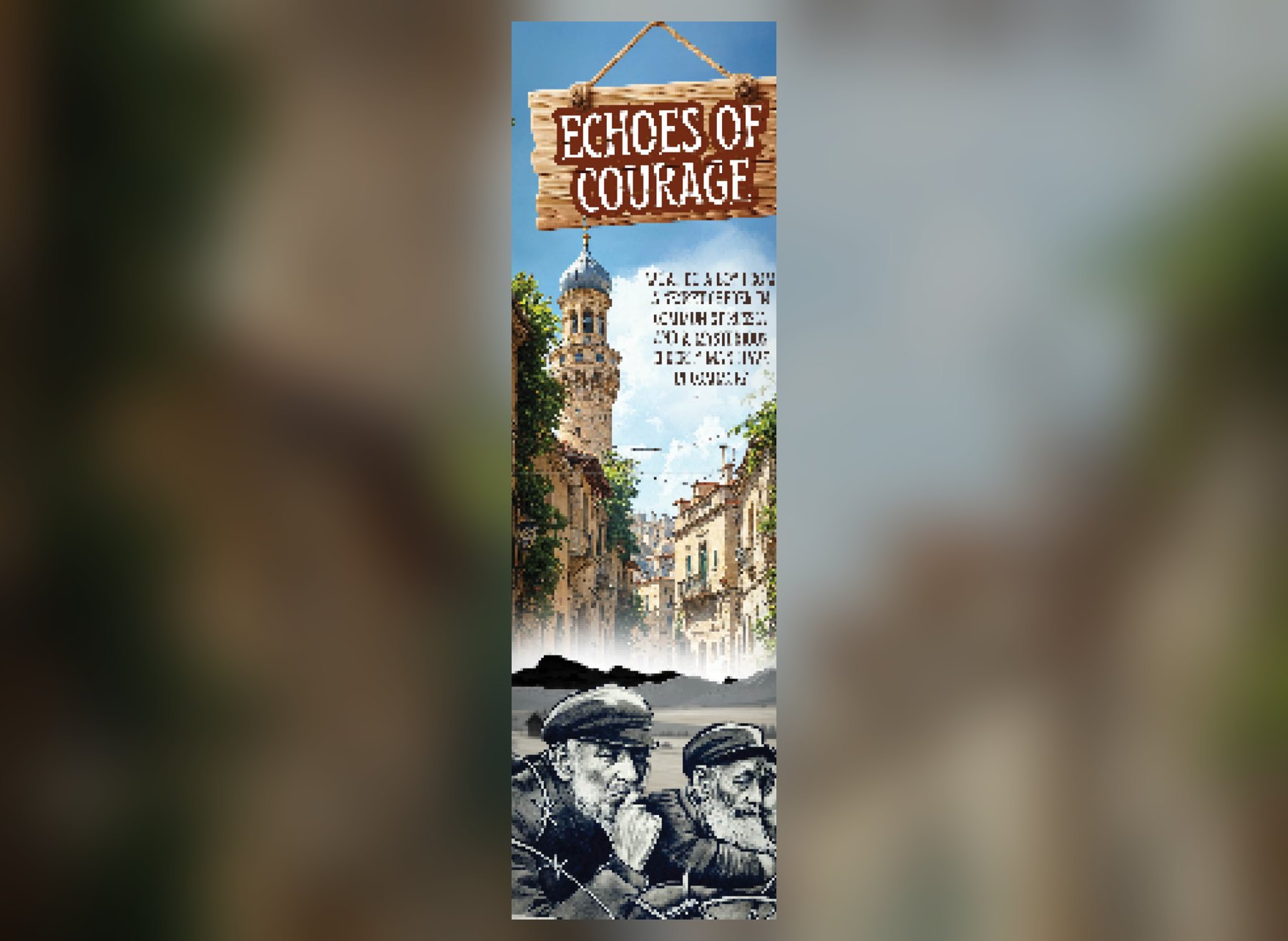
Russia, 5684
Avremel stood still in shock. How could this be? He had traveled to Rostov, crossed vast Russia, and what did he discover? That the Rebbe left that morning for Leningrad, the city Avremel had departed from.
He recalled a story about R’ Hillel of Paritch. R’ Hillel was a Chernobyl Chassid. One day, he heard a maamar Chassidus of the Alter Rebbe. He loved it so much that he eventually became a Chabad Chassid. One time, he felt a great longing to meet the Alter Rebbe and he decided to travel to Liozna.
He spent a long time on the roads and upon arriving, found out that the Alter Rebbe had left for somewhere else. He went to that place and when he arrived, he found out that the Alter Rebbe had traveled to yet another place. This happened many times until R’ Hillel decided to try to get to the next place the Alter Rebbe would be going to.
R’ Hillel hid under a table in the Rebbe’s room and planned on coming out of his hiding place when the Rebbe walked in and asking him a question on meseches Arachin.
The Alter Rebbe walked in and before R’ Hillel emerged he heard the Alter Rebbe’s singsong, “A yungerman has a question in meseches Arachin – he should first be ‘maarich’ (assess, measure) himself and then come and ask.” R’ Hillel fainted at this open display of ruach ha’kodesh. When he regained consciousness, he found that the Rebbe had left the city.
“I won’t be like R’ Hillel,” thought Avremel. “I want to meet the Rebbe and it makes no difference how far he is and how much I need to travel; I will end up seeing him.”
“Hey, bachur, relax,” said the redheaded Chassid who was still standing there and heard what he said. “The Rebbe is not going to be moving about; he just moved to settle in Leningrad.”
“If he stays there,” thought Avremel, “perhaps I will be able to see him!”
His blood began to flow again and he felt energized. He warmly hugged the Chassid and went back to the train station. He boarded a train in an uplifted mood and prepared to meet the Rebbe. “This time, I’ll be careful with the panim,” he thought.
He sat down and began thinking of a good hiding place for his incriminating bag. He looked opposite him and saw his fellow traveler, a coarse, scary-looking Russian who was looking at him.
“I have an idea…” thought Avremel.
At night, when everyone went to sleep, Avremel checked whether his companion was asleep and when he saw him snoring, he gently opened the Russian’s large satchel and put his bag inside. “If they find it, they’ll blame him.”
He smiled and went to sleep. He hadn’t noticed that the Russian had carefully opened his eyes in order to see whether Avremel was asleep.
Yerushalayim 5785
The neighbor sat on the bench, just like the day before, and was talking to his watch. Mendy and Moishy still stood there, frozen in place. Only Zalmy recovered and said, “Do you want him to see us? Come already, let’s go in like yesterday, through the back door.”
They ran and entered the shul.
“Fine, too bad we lost time. Let’s start learning,” said Moishy and he opened the Dvar Malchus.
“Wait a minute,” said Mendy and he closed the sefer that Moishy opened. “This is a situation of pikuach nefesh. We don’t know what this neighbor is doing and we don’t even know who he is. Maybe he’s doing good things with his watch and maybe he’s a dangerous person. We don’t know. I think we need to find out who he really is before we sit here calmly and learn.”
“You’re right, on the one hand, because pikuach nefesh sets aside learning,” said Zalmy, “but one thing doesn’t contradict the other. We can sit and learn a sicha now and then try to figure out who this neighbor is. I think that what you’re saying is the ‘Chassidishe’ yetzer hara.”
“‘Chassidishe’ yetzer hara?! As far as I know,” said Mendy, “the yetzer hara only wants us to do aveiros and is not at all Chassidish!”
Zalmy laughed and explained. “The ‘Chassidishe’ yetzer hara refers to when the yetzer hara comes disguised as a Chassid in order to confuse you. For example, if you are helping an old woman cross the street and you suddenly remember you have a maamar to learn, that’s called a ‘Chassidishe’ yetzer hara. He is dressed up in another mitzva which will cause you to drop the mitzva you’re doing.”
“Or, in our case, we came here to learn and then remember we have a mystery to solve,” chimed in Moishy.
“Good point,” said Zalmy, “so we’ll learn and only afterward will we deal with other things.”
The boys learned an entire sicha on the parsha for half an hour and when they finished, Zalmy opened the front door and was about to leave when Moishy called out, “No! Did you forget that the neighbor is there?”
“That’s okay. He’s not there.”
The three left for school.
“Nu, Moishy, what’s your idea for helping Zaida Yitzchok? asked Mendy. “You’ve kept us in suspense this morning.
“Have you heard of the ‘records archive’ of the senior center?” Moishy responded with a question.
“The records archive of the senior center? Give specifics, a source and an explanation,” demanded Zalmy.
“It’s like this,” began Moishy. “Every senior center has an archive of their records. It’s like a large library with files and each file has information about every person in the center. So…”
“So there must be a file on Zaida Yitzchok and we can find out what happened to him that he behaves this way,” said Zalmy, finishing the thought.
“Bingo!” said Moishy.
They walked into class and began davening.
If they thought that day would be better than the day before, they were mistaken.
After davening, the time for voicing suspicions arrived once again. The children continued suspecting Tzvi who didn’t dare to even hurt a fly. Tzvi, who had no idea what they wanted from him, was becoming more and more ashamed and had nobody to talk to. The three friends did their utmost to defend him but it became more and more difficult.
At the end of the day, Moishy picked up his knapsack and was about to leave the room when something stuck to his bag made him stop. He saw a folded red paper and he opened it and was scared. The note had one word, “Beware!”
To be continued
Beis Moshiach #1454 • pp. 60-62
© 2026 Beis Moshiach Magazine. All rights reserved.
This article originally appeared in Beis Moshiach #1454. You are welcome to share it with friends and family by email or in print, provided that you do not change, add to or omit any part of it, you credit the author and Beis Moshiach, and you include a link to archive.bmoshiach.org (written out in full in printed copies).
To republish this article in a newspaper, magazine, book or website, please request permission in advance at [email protected].