The Mission to Bring Moshiach: The Journey of the Lelover Rebbe
From the TzaddikStory.org collection
Rabbi Moshe Biderman, the Lelover Rebbe zt”l, came from a family of very holy Tzaddikim. His father, Reb Dovid Biderman, was a close Talmid of the Maggid of Mezeritch. Reb Dovid learned together with some of the greatest Tzaddikim – the Baal HaTanya, Reb Levi Yitzchok of Berditchev, Reb Elimelech of Lizhensk, and his brother, Reb Zusha of Anipoli.
People came from all over to see Reb Dovid, because of his kindness and his deep connection to Hashem. He passed these special values down to his son, Reb Moshe of Lelov.
Even as a little boy, it was clear Moshe was different. His father wanted to protect his holiness, so whenever Moshe left the house, he had to wear a blindfold!
“Tatte, why do I have to cover my eyes?” Moshe once asked.
“My son,” Reb Dovid said softly, “the world outside is full of things that are not pure. I want to keep your eyes and Neshama as holy as possible.”
This wasn’t normal – most children ran and played outside freely. But Moshe wasn’t like other children. He was going to become a very great Tzaddik.
But there was one thing Moshe wanted to see more than anything.
“Tatte,” he said one day, “when I grow up, I want to live in Eretz Yisrael! I dream about it all the time.”
Reb Dovid sighed. “My dear son,” he said, “I wasn’t given permission from Shamayim to move to Eretz Yisrael, but you will.”
“Really? I get to go?”
“Yes,” his father nodded. “One day, you’ll live in Eretz Yisrael.”
* * *
Many years later, when Reb Dovid was nearing the end of his life, he gathered his children, who were now adults. He divided his inheritance – money, homes, and belongings – among them.
All except Moshe, who would be the next Lelover Rebbe.
“Tatte?” Moshe asked quietly.
His father smiled, holding his hand. “You don’t need it, my son,” he said gently. “A home is already waiting for you in Eretz Yisrael.”
Moshe never forgot his father’s words. No matter what happened, he knew one thing for certain – one day, he would get there.
* * *
In 5610 (1850), Reb Moshe of Lelov, now a well-known Rebbe across Poland, made a life-changing decision.
“The time has come,” he told his Chassidim. “I am moving to Eretz Yisrael.”
Silence filled the room. Moving to Eretz Yisrael was no simple journey. There were no airplanes or cars – only boats and wagons. The trip would take months, and was full of danger.
His Chassidim looked at him with sad eyes.
“Rebbe, how will we stay close to you if you’re so far away?” someone asked.
Reb Moshe smiled warmly. “If you ever want to feel close to me, just think about my face,” he said gently. “Picture me in your mind, and I’ll be with you.”
His love and reassurance comforted them, but saying goodbye was still hard.
* * *
Reb Moshe of Lelov wasn’t traveling alone. Some of his Chassidim, his Shamash, his trusted helper, and family were going with him. But his wife didn’t want to go.
“I can’t leave,” she told him. “You go first, and maybe later, I’ll join you.”
This was hard for Reb Moshe, but he accepted it. He knew Hashem had a plan.
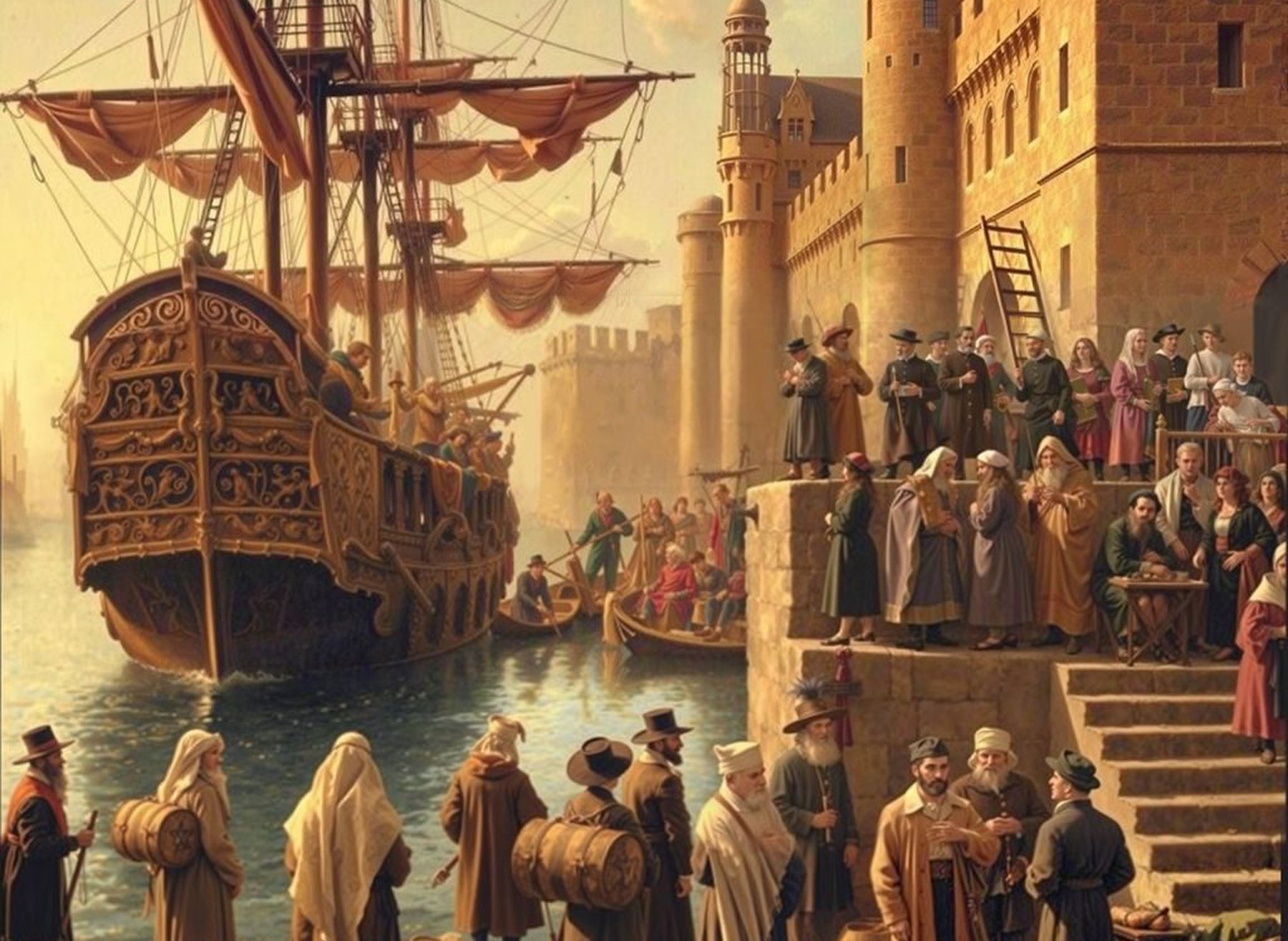
And so, with his family and students, Reb Moshe set off on his long journey to the Holy Land, never looking back.
Reb Moshe stood on the deck, his eyes shining. His heart felt like it was dancing – he was finally on his way to Eretz Yisrael!
He spent Rosh Hashana and Yom Kippur on this ship, praying with all his heart. The Shofar’s sound had echoed over the waves. Now, Sukkos was coming – and he had a big problem.
“How can I sit in a sukkah on a boat?” he thought. There were no trees, no wooden beams – nothing to build with! But Reb Moshe never gave up.
With some prodding and paying off, he got the captain to build him a sukkah and even had the ship stop mid-voyage near an island where he found aravos to complete his Dalet Minim!
* * *
The ship stopped at a port in Romania to get food and supplies.
Reb Moshe’s Shamash hurried off the boat. “I’ll be back soon, Rebbe,” he said before disappearing into the busy streets.
Hours passed. The sailors finished loading the supplies. The sun was setting.
“All aboard!” the captain called. “It’s time to set sail!”
Reb Moshe’s heart pounded. “Wait! My Shamash isn’t back yet!”
The captain frowned. “Rebbe, we can’t wait for one person. The wind is good, and we have to leave.”
“But he’s probably lost!” Reb Moshe pleaded. “Please, just a little more time!”
The captain shook his head. “I won’t risk the whole ship for one man.”
Reb Moshe stood silently on the deck as the ship began to move. His lips moved in whispered Tefillos. His face was calm, but his eyes were full of worry.
* * *
Six days passed. The ship had been sailing far from Romania.
It was Friday night, and everyone gathered for Shabbos. Reb Moshe stood at the table, ready to make Kiddush.
The sailors and passengers had seen him deep in Dveikus before, lost in prayer. But tonight – tonight was different.
He stood completely still. His face burned with fire. His hands did not move. His lips did not open.
Minutes passed. Ten. Then fifteen.
An hour. Then two.
The passengers whispered nervously, glancing at one another. No one dared to speak. Three hours.
Finally, Reb Moshe took a deep breath.
“I will not make Kiddush until my Shamash returns.”
Gasps filled the room. His Shamash had been missing for six days!
How could he possibly return? Then – BANG! BANG! BANG!
A loud, heavy knocking echoed through the ship.
People jumped up in shock. A woman – his daughter-in-law – shivered as she stepped toward the door. Her hands shook as she turned the handle.
The door swung open. And there, standing in the doorway, was the Shamash.
His clothes were torn. His face was pale. His eyes were wide with shock.
He let out a sigh… and collapsed to the floor.
The passengers rushed to help him, fanning his face and giving him water. Slowly, his breathing steadied. His eyes fluttered open.
Reb Moshe leaned close and whispered, “Don’t say a word. Not now.” And so, no one spoke of it again.
* * *
Years later, on his deathbed, the Shamash finally told the story.
“When I stepped off the boat, something strange happened,” he said, his voice trembling. “It was like an invisible force grabbed me. My legs moved on their own. I couldn’t stop walking.”
“Day turned to night, then, morning. Then night again. But still, I walked. I didn’t eat. I didn’t sleep. I couldn’t stop.”
“I walked for six days straight.”
Then, on Friday night, I suddenly heard whispering. Strange, eerie voices.
What should we do? The old man is shaking the heavens! He won’t make Kiddush while we have him! We have to let him go!
The Shamash shuddered. “That’s when I realized – I had been taken by dark forces, unholy spirits. They had trapped me in their world.
“And then, suddenly, I felt my body lift into the air. The world around me turned blue – a bright, endless blue. I could feel myself flying, rushing through a space that wasn’t real… And before I could understand what was happening – THUD!
“I landed on the ship. I saw the glow of the Shabbos candles. I heard knocking on the door. And then… I collapsed.”
The Shamash took a deep breath.
“That’s how I was saved.”
* * *
The night air was cool and salty as Reb Moshe of Lelov stood on the deck of the ship. The sun had set, and stars twinkled over the dark ocean. He gazed at the water, whispering softly:
“A day for a year, a day for a year.” A family member stepped closer. “Rebbe, what do you mean?” Reb Moshe smiled. “You’ll see,” he said.
The next morning, the coast of Eretz Yisrael appeared in the distance. After a long journey, they had finally reached the Holy Land.
When the ship docked, Reb Moshe bent down and kissed the ground. Tears filled his eyes.
“Baruch Hashem,” he whispered.
* * *
The group traveled to Tzfas and Teveria, where the people welcomed them warmly. “Rebbe, please stay with us,” they begged. “We need a Tzaddik like you.”
But Reb Moshe shook his head. “I have to go to Yerushalayim. That’s where Hashem has chosen.”
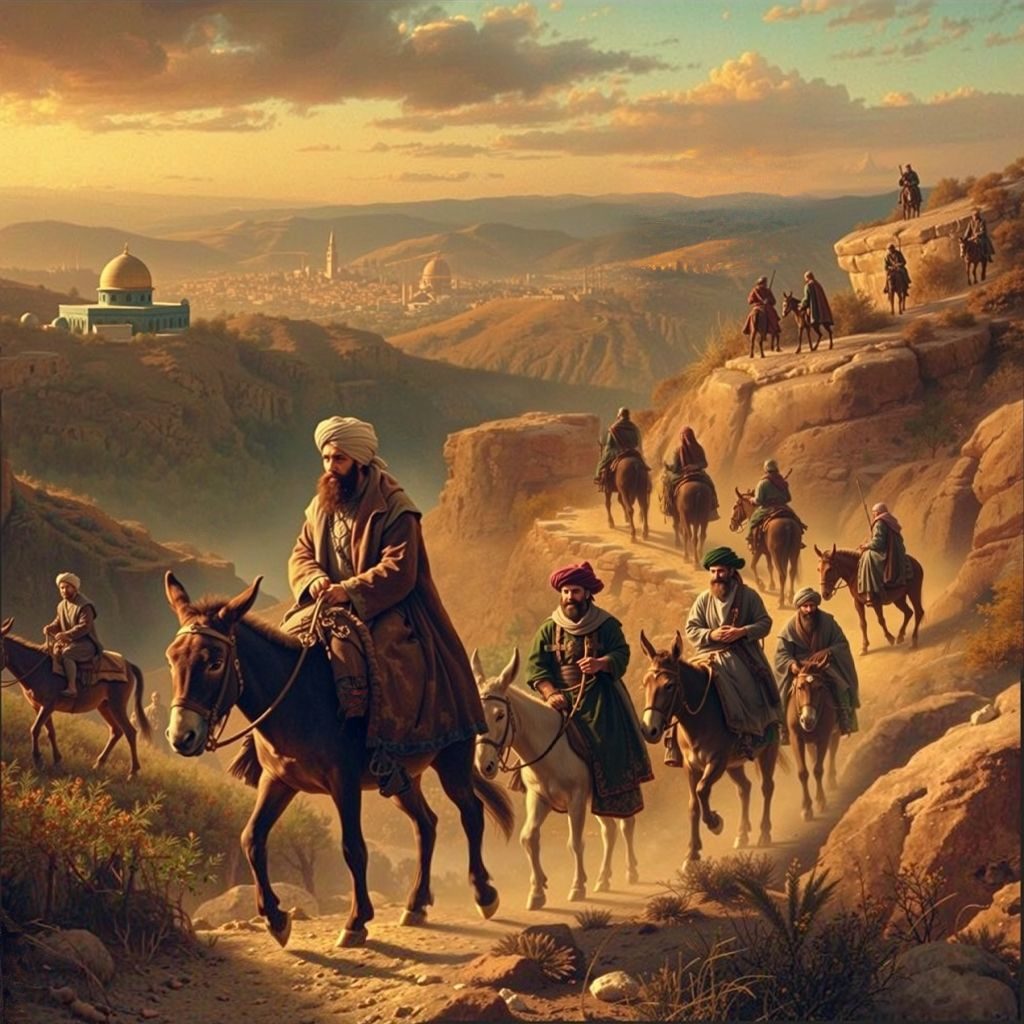
After many long days, they finally reached Yerushalayim.
Reb Moshe sat up on his mule, his body weak, but his eyes filled with joy.
“We are here,” he whispered. He had finally made it. The holy city stood before him – the place he’d dreamed of, prayed for, and fought to reach.
In his hands, he held a special Kiddush cup, once owned by the holy Chozeh of Lublin. Though Reb Moshe had never met him, his father, Reb Dovid of Lelov, had been one of the Chozeh’s closest students. Reb Moshe had learned his teachings, his dreams, and his deep hope for Moshiach.
Now, standing at the entrance of Yerushalayim, Reb Moshe’s voice shook with excitement.
“I will take this Kiddush cup and a Shofar to the Kosel and blow it,” he declared. “And as soon as we get there – Moshiach will come! It’s happening!”
His followers held their breath. Could it really be?
Then – The cup slipped from his hands. For a moment, time froze.
Then – CRASH! The cup smashed against the stones, its pieces flying in all directions.
A deep silence fell over the group.
No one moved. No one spoke. Something felt wrong.
Finally, one of the followers whispered, “Rebbe… what does this mean?”
Reb Moshe’s face turned pale. His hands shook. He closed his eyes for a long moment.
Then, softly – almost like a sigh – he said:
“The Satan has won.” A shiver ran through the crowd.
“The Geula is delayed,” Reb Moshe whispered. “My plan… it won’t work.” Tears filled the eyes of his followers. Moshiach had been so close – And now… it was gone.
* * *
By the time Reb Moshe reached Yerushalayim, he was very sick. But he had one last wish.
“Take me to the Kosel,” he begged his sons. “I must go.”
His sons carried him on his bed through the narrow streets of the Old City of Yerushalayim.
But as they got close, a group of Arabs began throwing stones at them. They had no choice but to turn back. Reb Moshe never reached the Kosel.
That same day, on the 13th of Teves, he passed away.
Before he died, he whispered, “I will always watch over you. And if there’s ever a drought, wait for my Yahrtzeit – and the rains will come.”
* * *
After Reb Moshe passed away, his followers gathered, preparing for the burial. That same night, across Yerushalayim, a Sephardi Chacham had a powerful dream.
In the dream, Reb Moshe appeared to him and said:
“I need your burial spot.” The Chacham woke up in shock. His heart pounded. Was this a message from Heaven?
Without waiting, he rushed to find out. When he arrived, the crowd was gathered – but Reb Moshe had not yet been buried. The grave had not even been dug.
The Chacham stepped forward and declared: “I give my grave to the Tzaddik.”
A hush fell over the crowd. At that moment, it became clear.
* * *
From the moment Reb Moshe stepped off the boat, he kept saying the same strange words:
“A day for a year, a day for a year.” No one knew what he meant. Until later.
Reb Moshe lived in Eretz Yisrael for exactly 74 days.
And he passed away at the age of 74.
It was as if each day in Eretz Yisrael counted as a full year of his life.
For many years, people came to his grave on Har HaZeisim to pray. Miracles happened there.
But in 1948, when the Arabs took over Yerushalayim, they dug up these graves, and his resting place was lost.
Today, a stone marker stands in its place. It says:
“In this area was once the tomb of Reb Moshe of Lelov.”
* * *
The tzaddikim were ready to give up everything to bring Moshiach. But Hashem doesn’t ask us to do hard things—He just wants one more mitzva. A little more kibud av v’eim, learning just one more pasuk, or davening with a little more kavana. Even small things make a big difference.
If we do our part, Moshiach will come—this time, for real.
From the Sefer Pri Kodesh Hilulim by Rav Moshe Yair Weinstock among other sources
Beis Moshiach #1456 • pp. 55-59
© 2026 Beis Moshiach Magazine. All rights reserved.
This article originally appeared in Beis Moshiach #1456. You are welcome to share it with friends and family by email or in print, provided that you do not change, add to or omit any part of it, you credit the author and Beis Moshiach, and you include a link to archive.bmoshiach.org (written out in full in printed copies).
To republish this article in a newspaper, magazine, book or website, please request permission in advance at [email protected].