Black Magic in The Jungles of Africa
From the TzaddikStory.org collection
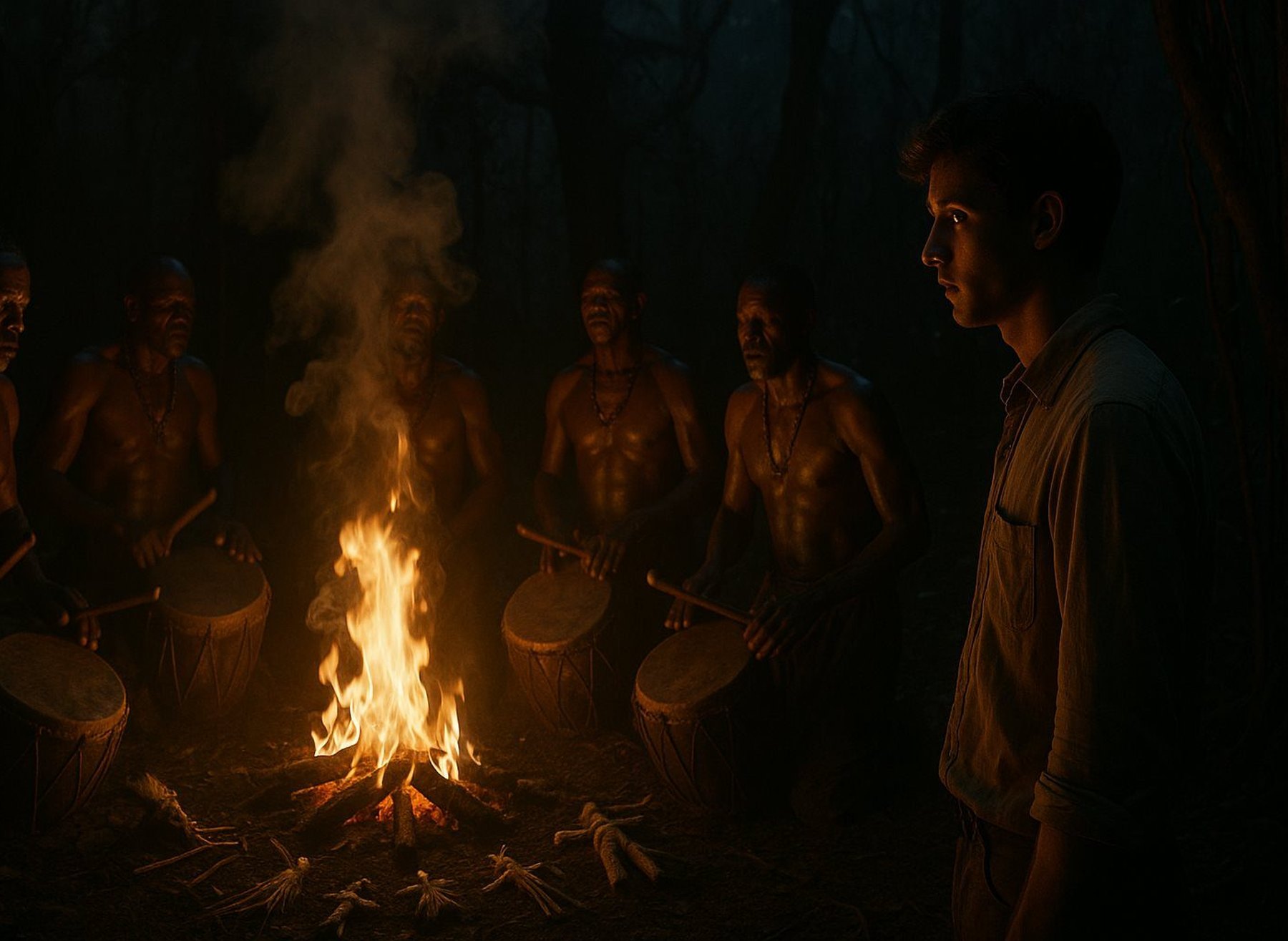
Around the fire, the men chanted and beat their drums.
They stood in a circle, deep in the jungle, their faces sweaty, their eyes closed. Smoke rose from the fire, twisting into the dark trees above—forming strange shapes, as if magic itself was moving the smoke.
Weird objects were scattered on the ground—bones, feathers, and small dolls made of straw.
This was voodoo magic. Real voodoo. With real African tribesmen. Men who knew real magic. And I mean real, live magic.
And standing quietly at the edge of the circle was a Jewish boy.
He had grown up in Paris. Now he was here—in their circle. And he wanted to leave.
He didn’t speak. He didn’t move. He just watched.
Far from home. And closer than ever to something dark.
He knew this was the wrong place. But how would he ever escape?
* * *
Michoel was confused. He wasn’t a kid anymore—he was about twenty—but he still hadn’t figured out who he was or where he belonged.
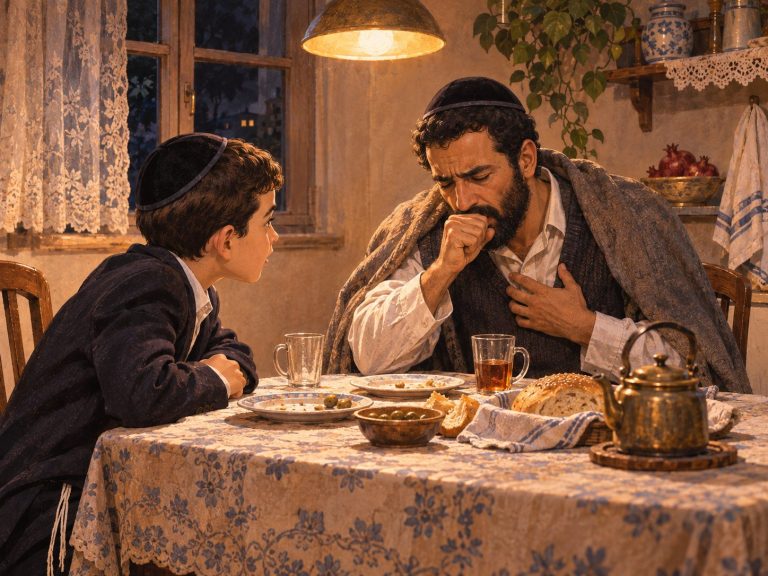
One day, while wandering through the neighborhood, he heard singing coming from a small shul. Curious, he walked inside.
It wasn’t like anything he had ever seen. A group of men sat around a table, singing, clapping, and sharing stories. Someone passed around grape juice and cake. They called it a “farbrengen.”
The words they spoke touched something deep inside him. They spoke about the soul, about purpose, about being a Jew.
He came back the next week. Then again. And again.
Soon, Michoel started keeping Shabbos. He began wearing a yarmulke. He even woke up early to learn Torah before work.
But back at home… things weren’t going well.
His parents were shocked—and angry.
“What’s wrong with the way we raised you?” his mother asked.
“I feel this is the right place for me,” Michoel answered gently. “It’s nothing against you, Mère… Père…” (Mother and father in French)
But they didn’t understand.
“You have to stop being like those people you meet at the Chabad House,” his father said.
“No, mon père,” Michoel replied. “It’s good for me.”
“You don’t need that. You need a job. You need to make money.”
“I can’t just forget about being a Jew,” Michoel said. “That’s who I am.”
The arguments grew louder. The house felt heavier. Michoel loved his parents—but they didn’t accept the changes he was making.
So he stopped going to the Chabad House. He stopped learning in the mornings. He stopped keeping Shabbos.
And just like that… everything slipped away.
Now, he didn’t feel close to his parents. Now, he didn’t feel close to Hashem. Now, he didn’t feel close to anything at all.
* * *
Instead of going back to the Chabad House, Michoel started spending time with a very different crowd.
At night, he hung around with a group of young people on the streets. They stayed out late, talked big, and did things they didn’t want adults to know about. Michoel didn’t join in with everything—but he stayed close enough to feel like he belonged.
He’d come home long after midnight, his head foggy, his heart heavy. The next morning, he’d sleep in, skip breakfast, and drag himself to work.
Money was always a problem at his family home. His parents worked hard, but it wasn’t enough. Some weeks, the fridge was full. Other weeks, they made do with whatever they had. Michoel felt embarrassed that he couldn’t afford new clothes or cool gadgets.
He didn’t want to keep living this way.He didn’t want to fight with his parents. And he didn’t want to keep dreaming about things he couldn’t have.
One night, while sittin’ on a park bench, Michoel’s friend Tommy leaned close.
“My brodda,” Tommy said, shaking his head. “Dis life no good, eh? You work, work, work… still you get nottin’.”
Michoel gave a little nod.
Tommy’s eyes lit up. “Back in Africa, we have de tribe. Real tribe. Deep bush. Dey do tings… big tings. Not joke.”
“What kind of things?” Michoel asked.
Tommy leaned in, voice low. “Magic, my brodda. Real magic. You tink dis be trick? No, no. Dey speak to de spirits. Dey make people sick, or strong. You learn dat—nobody mess wit you.”
Michoel blinked. “They’d teach me?”
“If dey trust you, yah. You go dere, dey show you. You come back here—people say, ‘Eh, who dis man?’ You get respect. You get money.”
Tommy tapped Michoel on the knee. “You no be poor boy no more.”
Michoel stared straight ahead, heart pounding.
Magic. Power. Freedom.
He didn’t tell his parents. But slowly, he started saving every coin he could.
And when he had enough, he bought a one-way ticket to Africa.
* * *
Michoel didn’t know exactly where he was going. He just had a name—a village deep in the jungle—and a piece of paper with directions that didn’t look like any map he’d ever seen.
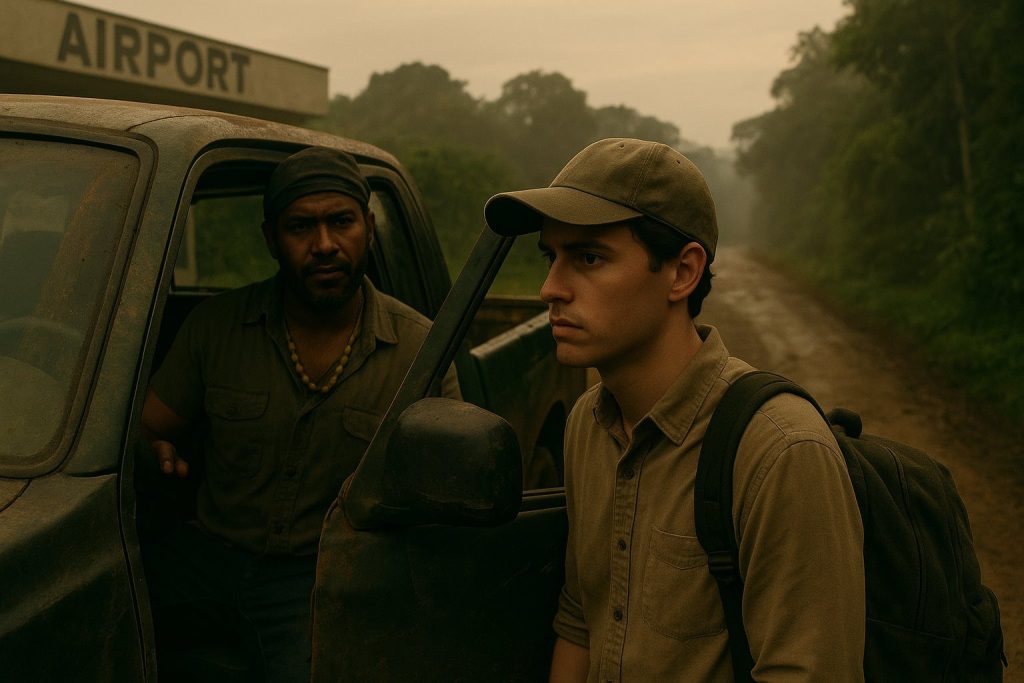
He landed in a small airport. No signs in French. No cell phone service. The air was thick and hot, and everything smelled like smoke and wet dirt. A man was waiting for him outside. He was barefoot and wore a long necklace made of teeth and bones.
“You Michoel?” the man asked, his accent strong.
“Yes,” Michoel said carefully.
The man nodded. “Come. We go.”
They didn’t take a taxi or a bus. The man led him to a small truck with a cracked windshield and no seatbelts. The engine made loud popping sounds as they drove down a bumpy road full of holes and mud.
For hours, they drove past broken houses, banana trees, and children running barefoot in the fields. Then the road ended, the rest of the journey was on foot.
* * *
They walked deep into the jungle, past rivers and thick vines. Mosquitoes buzzed around Michoel’s head. Strange animal sounds echoed in the trees.
At one point, Michoel asked, “How much farther?”
The man just laughed. “If you want de power, you keep walkin’.”
Finally, just before nightfall, they reached a clearing.
There were no buildings—just round huts made of sticks and grass, and one large fire in the center.
That was the first time Michoel saw the tribe.
They were already gathered around the fire, their faces painted, their bodies moving to the beat of drums. They didn’t smile. They didn’t stop. They just kept chanting.
The leader looked up and pointed at Michoel.
“You wan’ learn?” he asked.
Michoel nodded.
The man grinned. “Den you do what we do.”
And just like that, Michoel’s life changed.
* * *
That’s how Michoel ended up standing in that circle of men, deep in the jungle. His face was painted with ash and clay. Smoke from the fire rose around him. His hands followed the motions they taught him. His lips repeated their strange chants.
The tribe had welcomed him in—but not with smiles. They didn’t trust easily.
“Dis one here,” the leader said the first night, pointing at Michoel, “he wan’ learn. We gon’ see if he got spirit for it.”
They didn’t teach him all at once. They watched. They tested. They gave him small things at first—words to say, patterns to draw in the dirt, powders to burn.
But the longer he stayed, the more they let him in.
This was not child’s play. This was real witchcraft. They used bones and blood and words not meant to be spoken. They said they could call spirits, make people sick, or disappear in plain sight.
Michoel ate what they gave him. Slept on the floor like the rest of them. He watched and listened. He copied everything.
And slowly… he got better.
“You learn fast,” one of the elders told him. “You got fire in you.”
One night, after a strange ritual near the river, the chief took Michoel aside.
“Now you strong,” he said. “Metal don’ touch you no more. Knife come? Don’ cut. Bullet come? You still stand.”
Michoel blinked. “You’re serious?”
The man smiled—barely. “Try and see.”
They tested him with fire. With a blade. He felt it, but it didn’t hurt. It was like the danger slid right off him.
Michoel’s heart beat faster. Something inside him whispered, “This is not right.” But he didn’t listen.
He felt strong. Powerful. In control.
After a while, he flew back to France to rest. To see his parents. They didn’t ask much. And he didn’t explain.
When he returned to the jungle, the chief greeted him again.
“You come back,” he said. “Good. Now we teach you what come next.”
They told him stories of the ones who reached “de third walk”—a level so deep in their power that a man could vanish. Not magic show vanish. Real vanish.
“You walk, people don’ see,” they said. “You go in store, take what you want, nobody know. You go in house, nobody feel you come.”
The other men laughed and clapped him on the back.
“You wan’ dat life?” the chief asked. “You ready?”
Michoel nodded.
* * *
Days passed. Maybe weeks. Michoel wasn’t even sure anymore.
Every morning began the same: strange chants rising with the smoke, faces painted, bowls of plain food passed around the fire. No one spoke much. No one smiled.
At night, the drums returned—loud, wild, endless. Fires glowed. Shadows danced. Rituals were performed, chants repeated, powders burned.
At first, it had all felt exciting. Mysterious. Powerful. Like maybe he had found something different—something that made him feel important.
But now? Now it felt heavy.
He walked through the village with painted symbols on his arms, but they didn’t mean anything to him anymore.
Everything felt wrong. Deep in his heart, he knew he wasn’t supposed to be here. Why? He wasn’t even sure. But this path—this place—it was pulling him somewhere dark. Very dark.
He looked around at the others—still dancing, still chanting, still laughing with that deep, cracked-up laugh—and he wondered, Do they even think anymore? Do they feel anything? Or are they already lost?
Michoel began to notice things he hadn’t seen before.
No one ever left. Those who spoke too much disappeared. And even the younger boys had eyes that were too old. Like they had seen too much. Like they weren’t boys anymore.
One night, after a long ceremony, the tribe leader came over to Michoel. His voice was low, serious.
“You ready now,” he said, “Tomorrow, we show you new way. Big way. You go Level Tree.”
Michoel said nothing. He just nodded once.
Level Three? Invisibility? The power to walk anywhere, take anything, and no one even sees you?
No. It’s too much. It’s all too much.
That night, lying on his mat, Michoel stared up at the broken roof above him. His heart was pounding.
He thought of his parents in France. They didn’t understand him. They’d argued. But still—at least they were real. At least they were safe.
He thought of the farbrengens. The songs. The words of Torah. That warm feeling of truth.
He thought of Hashem.
And then, into the darkness, he whispered, “I don’t want this anymore. I don’t care about the magic. I don’t care about the power. I just want to feel like a person again.”
But even as the words left his mouth, he felt something else creeping in—fear.
The tribe had warned him on his first day.
“Dis place not like others,” they had said. “You come—you stay. You go, you pay.”
He hadn’t listened then. He thought they were just trying to scare him.
But now?
Now he wasn’t so sure.
Was there a way out? Or was it already too late?
* * *
Michoel made up his mind.
He didn’t say it out loud. He didn’t tell anyone. But deep inside, he knew—he was leaving. For good.
He would go back to France. Pretend he needed a break. Act like everything was fine. And then… just never return.
But something felt different.
The moment he decided to leave, the others began acting strange. They didn’t smile at him anymore. They didn’t clap him on the back or call him “brother.”
Instead, they stared. Not angry. Not sad.
Just… watching.
Their eyes were cold. Too cold. Like they could see inside him. Later that day, another man walked past him and whispered, “We see you. You tink you hide from us? We see.”
“You go France,” he said quietly. “But remember… Africa don’ forget. Magic don’ forget.”
Michoel nodded slowly. He didn’t reply. But inside, he was praying. Hashem, get me out. Please, Hashem just get me out.
– To be continued —
Beis Moshiach #1466 • pp. 55-59
© 2026 Beis Moshiach Magazine. All rights reserved.
This article originally appeared in Beis Moshiach #1466. You are welcome to share it with friends and family by email or in print, provided that you do not change, add to or omit any part of it, you credit the author and Beis Moshiach, and you include a link to archive.bmoshiach.org (written out in full in printed copies).
To republish this article in a newspaper, magazine, book or website, please request permission in advance at [email protected].