Turning “Lost” Youth into Leaders
When You Must Speak Out
Wherever a Yid finds himself, there’s always a shlichus awaiting him… Yesterday, at about 9 PM, I was waiting at a bus stop in Rechovot, where I live. It was empty, and two young girls came and sat next to me on the bench, smoking cigarettes and looking for “action.” They were wearing jeans and a “top” that barely had any fabric. It was dark, and I had no intention of striking up a conversation with them.
Suddenly I heard one of them, whom I’ll call Maya, speaking on the phone, insulting the person she was talking to with a language that was so offensive that it made my stomach turn. I’ve never done this before, but when she finished her phone call I looked her straight in the eye and said, albeit gently, “I want you to know that I’m feeling sick inside from the words that you used, I can’t handle hearing such profanities. You look like an intelligent girl, couldn’t you have expressed what you wanted to say in a way that was less repulsive?”
Maya and her friend, whom I’ll call Liya, looked quite startled by my reaction, as if it never dawned on them that the words they used freely were offensive for bystanders to hear. “I had to say what I said and the person I spoke to knows that it’s true!” Maya replied defensively.
“You could have found other words,” I said calmly, and then explained that words have tremendous power to either bring light and holiness to the world, or ch’v the opposite, to strengthen the forces of evil. The girls were still young and impressionable enough to actually listen to what I was telling them.
Since I’d already spoken up, I dared to get into the topic of tzniyus. Maya, who was only eleven-and-a-half, was strikingly beautiful, and her heavy makeup drew even more attention to her looks. “Sweet girls,” I said with care and compassion, “you are endangering yourselves by roaming the streets the way you are dressed, or, rather, not dressed. Do you understand that your appearance is provocative and that you are easy prey for predators?”
Again, Maya was the one with all the answers. She replied, “How do you expect me to meet anyone if I dress and look like you?”
“A real relationship doesn’t come from looking like a knockout beauty queen, but from getting to know what’s inside the person,” I said.
Suddenly Liya, who was twelve, asked me for my address, and then Maya did too. That’s when I realized that they probably didn’t want to go home. I told them that I lived near Chabad, but didn’t give them my exact address, for fear that they might show up on my doorstep in the middle of the night.
“I went to school in Chabad!” Liya said excitedly. That explained why she was more restrained than Maya.
The girls were getting restless sitting in one place, and just before they got up to leave I asked them if they lit Shabbos candles. Surprisingly, they both said that they did!
“When you light the candles please, please ask Hashem to watch over you! Observing mitzvos protects you too!
“My mother wants to become religious, but she says that she can’t,” Maya said.
“She can, and you can too. But, at this moment, out late at night dressed the way you are, you’re both in grave danger. Please go home,” I said, and watched them walk away, apparently nowhere… I was only sorry that I didn’t embrace them before we parted, that’s probably what they needed most.
Now that I think about it, what was startling was that there I was, a total stranger “telling them off” in no uncertain terms for their speech, dress and behavior, and they wanted to know my address?! Were they so desperate for love and attention that they’d be tempted to trust and go home with the next “nice guy” who comes their way?
I must do justice to this article by mentioning that the dangers to our youth are not only outside, but can be inside the homes and schools too. There’s no greater trauma than being bullied, tormented or abused by someone you trust, which makes them even more vulnerable and at-risk.
Together We are Stronger!
My close encounter with Maya and Liya gave me a much deeper understanding of the urgency of saving, body and soul, the next generation. They’re just beginning their lives, and no one has any idea of the kinds of challenges that await them. Teaching them Torah and Chassidus provides them with a “road map” that will enable them to stand strong and retain their integrity throughout their lifetime.
“To meet this call of the hour, the branch in Eretz Yisrael of CTeen, Chabad L’Noar, and the branch in Eretz Yisrael of Chabad on Campus, Chabad B’Campus, was founded, and is directed, by Rav Moshe Shilat, together with his wife Bracha. With the help of Hashem, and with the koach of the Rebbe MH”M, rather than being lost, our youth will become our leaders.
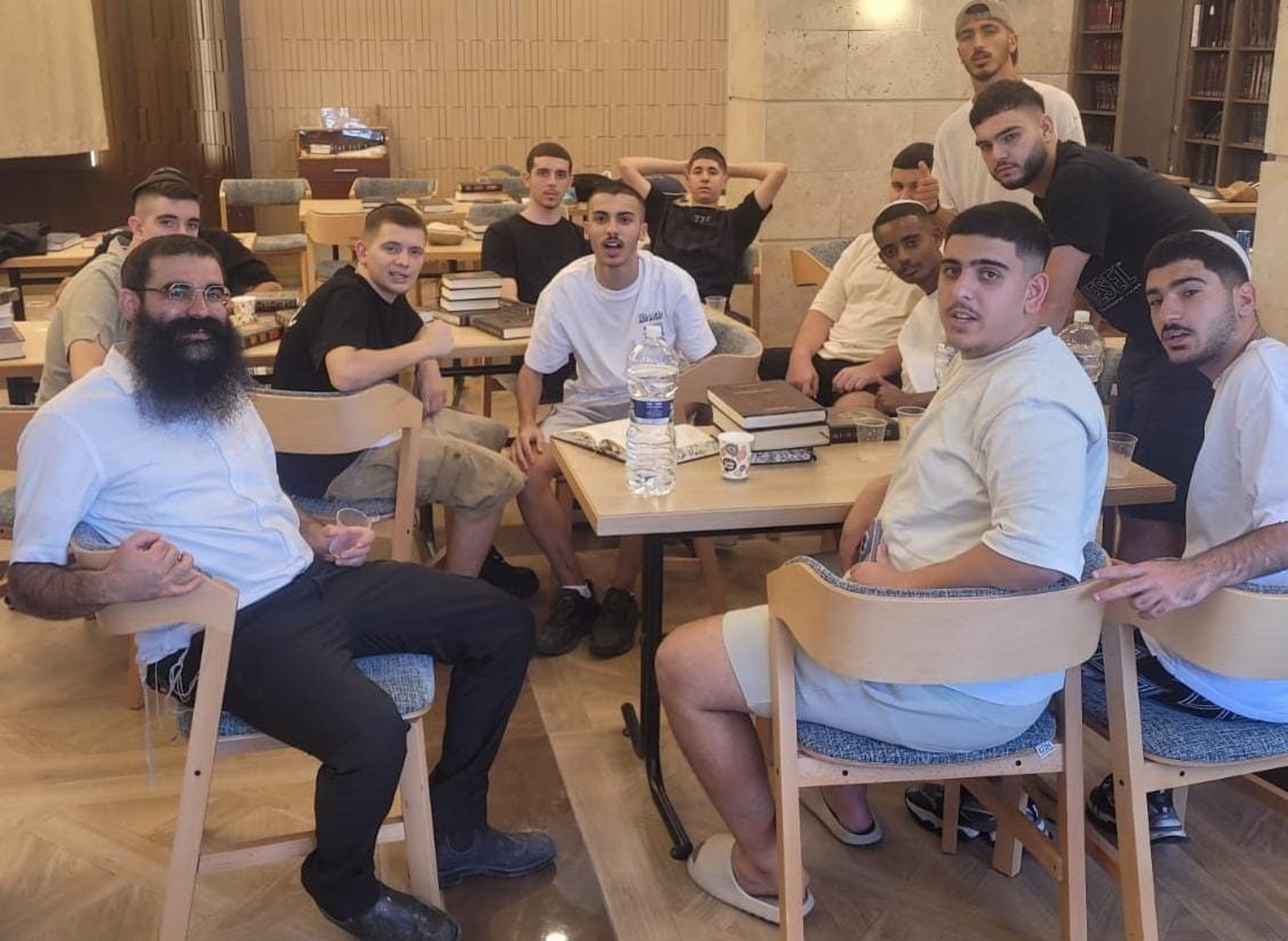
My son-in-law and daughter, Rav Avi and Rivka Cohen, are Shluchim of Chabad L’Noar in their neighborhood in Lod. Rivka organizes a plethora of activities for youth from seventh grade until twelfth grade, in neighboring cities too, that strengthen Jewish identity, Torah values and religious observance.
Rav Avi says, “It’s heartbreaking to hear about youth being harmed, or getting into trouble. It all stems from emptiness. They’re searching, but have no idea of what they’re looking for. All of the fun and pleasures of a ‘free’ lifestyle do not bring happiness, they only whet the appetite for more.
“Every Yid has an inherent drive to discover the truth,” he continues. “I operate one by one, knowing that saving one person is like saving an entire world. In the evenings I give over shiurim in Chassidus to boys of different age groups in our local clubhouse, and we often ‘farbreng’ well into the night. When a boy walks into a shiur and gets excited about what he learned, the next time he’ll bring his friend too. Chassidus has the power to redirect the fiery tendencies of youth to passion for learning Torah and doing mitzvohs.
“Recently Chabad L’Noar arranged a three-day weekend in Yerushalayim for 120 teenage boys, from Lod and other cities nearby. I brought a group of fourteen boys whom I’ve gotten close to from our shiurim and activities. There were kumsitzes, a barbeque, music, dancing, everything a heart desires. The only condition that we made beforehand was that before Shabbos the boys hand over their smartphones and packs of cigarettes, to be returned after Shabbos.
“I thought it would be more difficult, but they gave up their phones willingly. Only one boy approached me just before going to sleep, begging me for his phone. I said to him, ‘Now is your nisayon, you must be strong! We’re all in this together, and together we are stronger!’ In the morning we were all very busy and, boruch Hashem, he seemed to have forgotten about his phone.
“We walked to the Kosel HaMaaravi for Mincha, where we sang the Seder Niggunim, danced, and made havdala. Then there was a singer and more dancing. With their souls on fire from all of the ruchniyus, who could think about phones? Their victories over the yetzer hara reveals their true, inner desire, which is for closeness with Hashem.”
Rav Avi, who was a paratrooper in the IDF, concludes with a battle cry, “We can’t stop, we have to proceed with full force in our shlichus to bring Moshiach!”
Beis Moshiach #1481 • pp. 48-49, 50
© 2026 Beis Moshiach Magazine. All rights reserved.
This article originally appeared in Beis Moshiach #1481. You are welcome to share it with friends and family by email or in print, provided that you do not change, add to or omit any part of it, you credit the author and Beis Moshiach, and you include a link to archive.bmoshiach.org (written out in full in printed copies).
To republish this article in a newspaper, magazine, book or website, please request permission in advance at [email protected].