All Against One
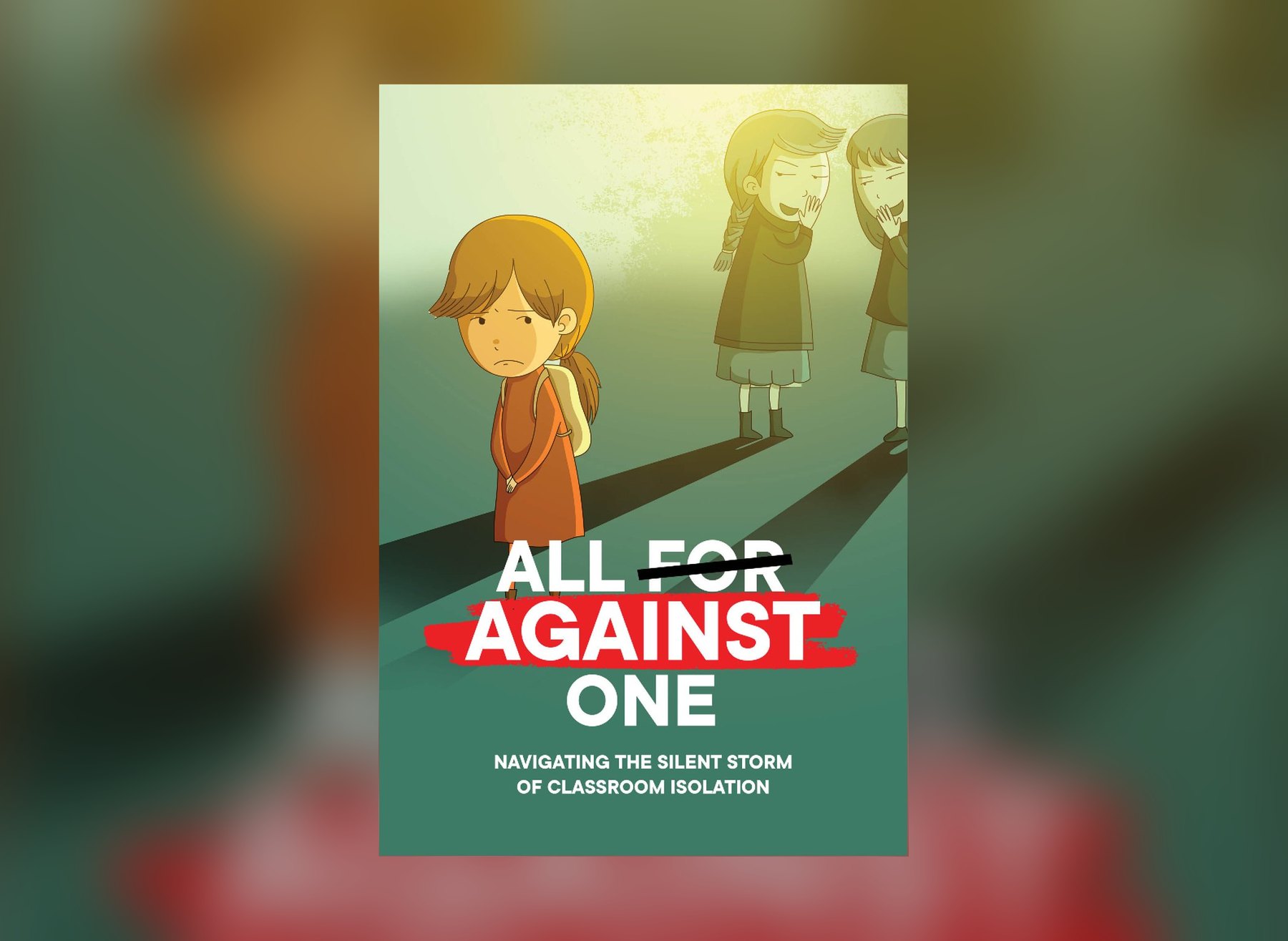
One bright day she found herself alone. She doesn’t know how it came upon on her. Everyone around her whispers, chatters, and talks – but not with her. Her heart shrinks, her whole world fell upon her in one fell swoop without any advance preparation. An evaluation of the cherem phenomenon in schools: Where did it come from and how far can it go? How do you deal with it? The experience, the terrible suffering, the impending consequences and the part that parents and educators play in this story.
“Achdus”, unity, the great Jewish ideal of “one man with one heart” is something we’re all certainly cognizant of. And yet, there are boys and girls who still aren’t there. Not feeling the unity.
Quite the opposite: the unity is against them. They come to class and no one says hello to them. They can turn to those around them without eliciting a single response. Around them, the others play games, engage in arguments, participate in social events, and everything else that makes up a healthy circle of friends, while they remain on the outside. Why? Because they’re in what has come to be known as a cherem – a social boycott in which he or she are being ostracized by their fellow classmates.
Today the word cherem no longer expresses a punishment imposed by community rabbanim in very serious cases. In our times, it means the whim of one or more child that draws an entire class after them. No special reason is needed for this ostracism, and the girl subjected to this boycott suffers indescribably.
We will present here some information about this phenomenon, and the pain and trauma that can continue to accompany those who suffered from it for many years afterwards:
We’ll hear from a brave mother who shares her feelings and the help she gave her daughter after consulting with professional advisors; A respected teacher who decided after one such “cherem” to take action that would prevent the next; and a lot of pain endured by young girls and older women and the courage they displayed.
Alone Behind a Glass Wall
Rivky, a girl who is quite accepted among her peers, discovered one dark day that she was being given the silent treatment. At first, she didn’t even know why. She shares with us the unpleasant feelings, the thoughts that went through her mind, and the hard time she had forgiving.
“It was a normal routine day. I ran the ‘Tzivos Hashem’ club activities and everything went fine. I headed home quite satisfied. There were some disruptions, but that’s perfectly normal. Even serious teachers are sometimes interrupted in class, right? I did my homework and went to bed, not having the slightest idea what I was going to experience the next day. On my way to school, I saw one of my classmates. I called to her, but she ignored me and continued walking. While it seemed rather strange to me, I still chose to give her the benefit of the doubt. I was a very sociable girl, liked by everyone. I had no reason to think that someone wouldn’t want to talk to me.
“When I got to class, I suddenly realized that something bad was happening. Girls didn’t answer when I greeted them, and they were turning their backs on me. Ruti, the girl who sat next to me, moved her chair as far to the side as she possibly could. I didn’t ask anyone what happened or why they were treating me this way. I was unwilling to endure this situation of no one talking to me. It was simply horrible!
“Several days passed. Only later did I find out through my sister, who was several years older than me, that a girl named Chaya, was inciting everyone against me. Why? Because I had yelled at her little sister at the Tzivos Hashem club. Of course, I yelled at her! She was annoying the other girls, deliberately spilled the paint sets, and made a mess in the shul. What was I supposed to do? Give her a prize?
“Those were terrible days. I felt in the classroom as if I was behind a glass wall. I am there, hearing and seeing everything, yet I don’t exist. I have no right to speak. I would come to the classroom, take a deep breath, and appear to stop breathing until I went home.
“Sometimes it seems to us as if we can manage without friends. We might think that… However, it’s like electricity… Only when there’s a power outage do we discover how much almost every action we take depends on it. Boiling water for tea, turning on the boiler, heating food in the microwave, cooling off with the air conditioner during the hot summer.
“Everything was fine at home. I didn’t tell my mother. I didn’t want to upset her and I didn’t think she could help me in any case. The only one who knew was my older sister and she spoiled me with small gifts, talking with me well into the night over a hot drink. Lovely.
“Only with her did I share the thoughts that were consuming me. I dreamt that something bad would happen to Chaya. My father passed away when I was five years old, and to this day, it has made me feel like an unfortunate victim. Everyone knew me and accepted me as I am. Now suddenly, I really felt what it is to be an orphan and I didn’t understand why.
“I learned the pesukim from Parshas Mishpatim that we had been tested on only a few months before, about the punishment to those who cause suffering and distress to widows and orphans. I cried with deep anguish. There were days when I prayed that something bad would happen to me, e.g., contract a serious illness or die in a terrorist attack. That way, Chaya would have pangs of conscience that would not leave her for the rest of her life. I know that such thoughts are harsh, but the situation was quite difficult for me.
“After about two weeks, the boycott ended, without any official announcement. Girls started speaking with me again, even Chaya, as if nothing had happened. Maybe I should have demanded an apology, shared my feelings, but I just couldn’t. The fear of my losing everything again was overpowering. I quickly got back to my normal routine as if nothing had happened, but deep inside, I was still wounded.
“Baruch Hashem, you can say that today I am fine. The boycott did not occur again, and a year later, I started high school with new friends. However, those feelings still come to the surface whenever I think about it. The loneliness, the pain, and the horrific desire for someone else to suffer that is so inappropriate for me!”
The End of the World
That moment, when you find out that your daughter has been put “in cherem” by her classmates, is a paralyzing one. It’s like the end of the world. At first, you simply can’t breathe, you can’t think, you can’t even get angry yet. You just stop living. I pray that you never understand what I’m talking about.
Rivka Kahana is the mother of a whole regiment, kein ayin hara, of children of various ages. Virtually all of them swim with skill and pleasure in a sea of humanity, and their house sometimes looks like a train station. Nothing prepared her for the coming blow. A cherem on her daughter. A real cherem, like in the counselors’ stories from our childhood. A whole class against one girl.
“It came suddenly, without any prior preparation.” She breathes heavily as she tells the story, reliving it all. “There are children who have social difficulties for all kinds of reasons. Some they cause themselves, others not so much. The parents are already used to the problems, the tears, the rejection and pain. I believe that such parents do what they can to help their child, easing social difficulties and cultivating social skills. On the other hand, in the case of a cherem, it’s not the problem of the maltreated child. It’s something sudden that usually depends upon the class leader or king, who simply decides to order a group act of betrayal.
“The boy had friends until just before the cherem, and he will have friends again when the cherem is over. Now, however, he feels lonely and betrayed because of the arbitrary decision of one child or a group of children.
“This situation basically puts the child in a state of complete helplessness, literally without any possibility to defend himself and without his ever getting the tools he needs to deal with such a thing.
“When my Shainy was put in cherem, at the end of sixth grade, I didn’t know a thing about it. She went to school as usual and came back as usual. She read books and fought with her siblings. After the fact, when I tried to figure out how all this happened, I realized that none of her friends came to our house, nor did she go to anyone else’s. But things like that do happen in the winter, don’t they? Finally, my daughter Dassy let me know. One evening, late at night, I was certain that everyone was already sound asleep. Suddenly, she came over to me in the kitchen and dropped a four-ton bomb on me. ‘Mommy, do you know that there’s a cherem on Shainy in class?’ My initial reaction was one of denial, as any normal mother who simply couldn’t believe such a terrible thing. ‘Cherem…’ I replied with disregard. ‘What happened? Someone didn’t let her play jump rope?’
“Dassy shook her head. ‘A cherem, Mommy. A real one. No girl in her class has spoken to her for three days. Didn’t you notice that the phone is suddenly available?’ I hadn’t noticed. I couldn’t breathe! I questioned her, and every word she said made me feel even worse. No one means no one. Not even Nechami, who had been her friend since the age of three, not even Devory, who is my cousin’s daughter, not even Sarah, our upstairs neighbor. Why? Because they all say she told the teacher about the scribbling in her planner. No one talks to tattletales. Why didn’t she tell me? Because that’s not what she really needs now, to become a real ‘snitch.’
“It’s a miracle that Dassy told me this in the middle of the night. I think if I would have heard it during the afternoon hours, I would have been prepared to go to some of the girls’ houses and shake them up a little. How could they be so heartless?
“I called my mashpiah right away, crying. She calmed me down, told me that it would pass, and that I would talk about it in the past with a sigh of relief. She gave me some good advice that helped me and Shainy to get through these awful days in peace.
“First of all, she said, my daughter should be given a lot of confidence and love. A lot. Not to blame her under any circumstances. No saying ‘Why didn’t you tell me?’ or “Why did you really go and tattle?’ Nothing. Just tell her that she is the best girl in the world, the most loved. Tell her that we have the strength to get through this, because this whole cherem will be very temporary and our love is eternal.
“The second thing she said was not to be angry at the other girls. They’re not to blame. Each of them is honoring the cherem only out of fear, not wanting to be in the same position as Shainy. I also explained this to Shainy herself. Except for the girl who organized all this, all the others are just scared. I saw Nechami and Sarah on the street. I smiled as if I knew nothing, invited them to come in, and told them there was ice cream. They arrived quietly, played and laughed. The next morning, they continued to ignore Shainy like everyone else. I gave her emotional strength, reminding her that the real behavior was from the afternoon, and you can’t judge someone who is afraid. A week later, the cherem ended. A few stronger girls socially, who were tired of being scared, started talking to Shainy as if nothing had happened. They were also put in cherem, but other girls stopped playing the blame game. It just faded away. To this day, I continue to strengthen her and each of my other children. They are wonderful just as they are, regardless of whether people are blind to it or not.”
Courage Is a Winning Brand
This phenmenon takes place in the classroom. At home, my daughter is protected in the security of her loving family, and there will always be someone to listen to her, answer her, and play with her. However, a whole classroom is liable to be dragged into a brutal ‘cherem’ of one girl, whether she’s guilty or not. And the one who is responsible for her in the classroom and is meant to take care of her mental and physical well-being for the first six hours of the day is the teacher.
What is the teacher’s role in eradicating or even preventing a ‘cherem,’ and changing the classroom atmosphere?
“There was a social boycott in my class,” says Devorah, a seventh-grade teacher. “It was terrible. Towards the end of the year, one girl was suddenly shunned. She’s actually a very nice girl, who usually gets along socially. Something happened, she apparently had a run-in with the ‘class queen’, and from that moment on, no one said a word to her.
“I felt totally helpless. Of course, I could have entered the classroom and given it to the ringleader over the head, getting angry and explaining how what she’s doing is appalling. However, this will only strengthen the position of the instigator. If the teacher is also against her, then her overall status is automatically bolstered. Seventh grade, right? And what about the girl in cherem? How humiliating it must be for her. I wouldn’t be able to endure such a thing.
“I acted for a few days as if I hadn’t heard a thing. In the classroom, I avoided any activity that might cause any anguish to the shunned girl. We didn’t divide the students into pairs or groups. I tried to compensate her in any way I could. I invited her to read her homework, I gave her a sought-after project. I invited her to stand near me during the lunch break and chat. No special reason. Someone needs to talk to her, right?
“The girls in the classroom were waiting for something that didn’t happen. There was tension during the classes. Four girls approached me secretly to tell me that there was a cherem on Brachi and I should do something about it. I asked them: ‘What are you doing to help her?’ They shrugged their shoulders. They can’t do anything or the cherem will fall upon them as well. I smiled. I had nothing to say. When the fifth girl came, I had a meeting with them. ‘Is a cherem of six girls a cherem?’ I asked. They understood. A day later, the cherem stopped. The moment that so many girls ignore its existence, it no longer has any validity.
“Why did I act like that? I was just waiting for good advice. I had no idea what to do to stop the cherem without bringing up the issue and humiliating Brachi. In the end, all was good. She got through the cherem relatively easily, got attention from me, and above all – was not humiliated by bringing up the topic in class.
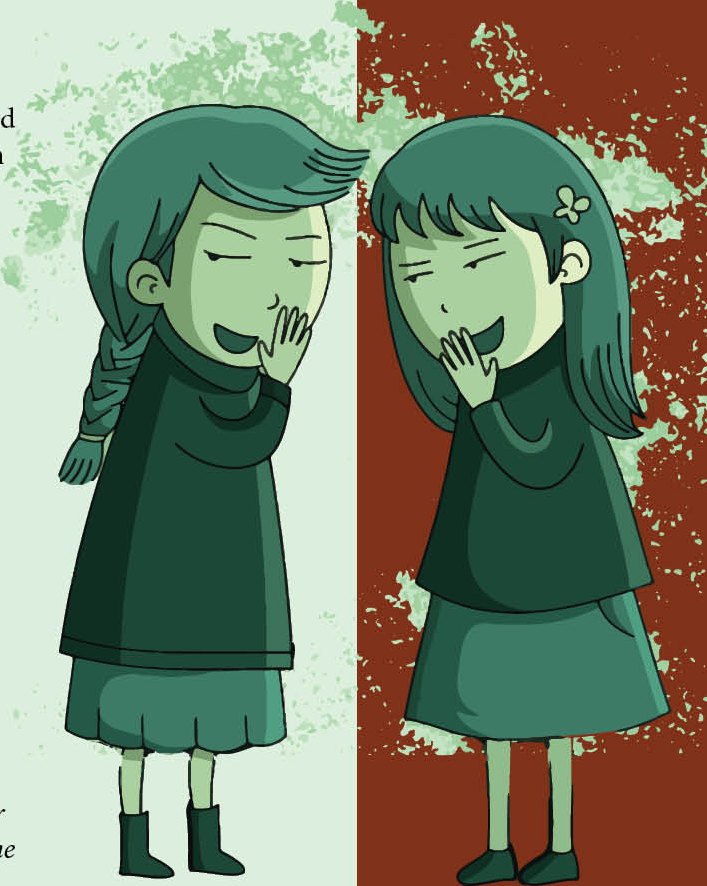
I expected some apology at the end of the year from the girl who started the cherem, but none was forthcoming. After the fact, I wondered if I should have taken her for a talk and explain to her how terrible it was what she did.
“A year later, I decided not to wait for the next cherem. I got a new class and already brought up the subject of cherem in one of the first lessons held that year. We watched a film about a boy who went through a cherem, and then discussed his feelings. The class was with me all the way because nothing had happened yet. No one I felt as if I was taking action against her. We came up with ideas on how to solve such a problem. At the end of the lesson, we wrote a class agreement drafted entirely by the girls themselves, stating that no one wanted to be the target of a cherem, and there would be no class cherem. Furthermore, in the event that someone started a cherem, every other girl in the class had the responsibility to refuse to participate and behave normally towards the girl being targeted. I was really excited.
“During the year, under the guidance of the school counselor, I constantly tried to reach a situation where each girl makes close contact with every other student in her class. I jumbled them all the time – in activities, seating arrangements, and classroom duties. What was the purpose? A cherem can only be imposed on someone who is emotionally distant. If each girl managed to get close to every other girl, even for a few minutes or for one task, it would be much more difficult to create a situation of a classroom cherem.
“And the highlight was how I raised throughout the year the whole issue of standing up to others and not giving in to unfair demands. I brought stories about children and even adults who stood firm and did not relent. I saw for myself how girls weren’t intimidated by what others said and thought, even stupid things like preferring one color when everyone else wanted a different one, or a girl who insisted on a different answer than everyone else in a quiz. Even if she was wrong in the end, she stood her ground and did not give up.
One day, if there is a cherem, I hope it will give them the strength to stand up to others and resist. Thus, since we’ve already spoken about it, so whoever it is, with Hashem’s help, you will not be alone. In the meantime, baruch Hashem, there has been no cherem. I’ve been doing this for several years now, and I keep praying.”
To This Day…
It certainly sounds like the right thing to do, and everyone would be happy for their daughter to study in such a secure environment. However, what can we do that not all teachers are like Devory, and many children who have been shunned talk about alienation and neglect by the adults who surround them? Today, while Chaya is already a mother to a teenager, she says that the cherem she went through as a child still affects her life and the choices she makes to this day.
“I was born in a small community. We lived together and grew up together in the same educational institutions. We met at family events, on vacations, at every important moment in life. Yet, I was really a very rejected girl. For some reason, my peers didn’t like me. There were times when they literally put me in cherem, each time for a different reason. The rest of the time, they simply ignored me. I remember numerous humiliating experiences. Once we went out on a two-day trip, and the whole class argued over who would be my roommate. No one wanted, and they even discussed the matter in my presence. ‘Teacher, why do I have to be the one to sleep in the same room with her? What have I done?’ Every division into groups and every pairing off were a humiliation for me.
“After so many instances, I realized that something was wrong and repulsive about me. Apparently, I’m a very bad girl, although I didn’t understand why. My clothes were new and clean. I was always well-kept, my hair was properly groomed, and I had good grades as well.
“I grew up and moved away. I built my life in a completely different place and in a different society. While there, I discovered two things: First of all, I was totally normal. Other people liked me, didn’t stay away from me, nor did they think that I was strange. Secondly, I discovered that the cherem and social rejection stayed with me even though I haven’t seen any of my former classmates for years, and I longer even remember the names of most of them.
“I just didn’t believe in myself. I always had this inner voice reminding me that nothing will help and there’s something bad and repulsive in me. There’s no way that I can succeed. That’s how I went out for shidduchim, as it was clear to me that I didn’t deserve a good shidduch and that no one would want me in any case. After numerous failed shidduchim, I eventually settled for someone, ending up in a weak and insecure marriage. Today, we no longer live together and only my son, whom I am raising, heals me with his love and the adoring look he gives me. There were professions I dreamed of working in, but since I didn’t believe I was capable of doing the job, I avoided going for interviews. Besides, I knew I couldn’t face the rejection of a negative reply. I have a kind of sensitivity to that, and those who haven’t been through it will not understand.
“I arrive at a meeting or a simcha, and there’s no empty seat at the table. Everyone else thinks: ‘Oh, too bad I arrived late’, then takes a chair, moves someone, and squeezes in. I immediately cringe. ‘No one thought to save a place for me. I’m not important to them. Maybe they’re even happy that I’m not there to badger them.’ When someone smiles, that’s nice, but I think she must feel sorry for me. If someone doesn’t answer me, I probably annoyed her or she’s sick of me. I actually have to re-interpret for myself all the time. ‘No one hates you. She just didn’t hear or didn’t think you were talking to her. It just so happens that there’s no room left.’
“It’s simply awful. Something that never leaves me, as if I was always meant to be a failure. I’m literally begging you: Teach your children to see sad children, have pity on the weak, and stand up for them. Above all, listen to them. My parents never knew what was going on with me, it was a different generation. Pay attention to your children. Take note of what’s happening with them, and show them that you care. No more putting others in cherem, no more being in cherem. It can be a real lifesaver!”
Dedicated in memory of Menachem Mendel ben Yisroel Binyamin
Classroom Ostracization From a Professional Perspective
Q&As with educational counselor Mrs. Chana Farbstein
Q: Is there a specific behavior or trait that causes certain children to be ostracized, or can it happen to anyone?
A: Ostracism can happen to anyone; no child is immune. Comprehensive research identifies several high-risk populations, such as children from marginalized groups, or low socioeconomic status. The research also mentions children with low academic achievement, and generally, girls are at higher risk than boys. What might be more relevant to us as parents is that children who lack emotional support and parental availability are also at increased risk. A child who knows there’s no one to help or listen to them, who doesn’t know when they’ll see their parents or if they’ll have the time or patience to listen, will be less protected from such harm.
Q: Does ostracism always have long-term effects?
A: It doesn’t have to, and we can certainly help and treat it with Hashem’s help. However, professional literature and numerous studies provide evidence and cases where ostracism indeed had a negative impact on the child’s adult life. People who experienced ostracism describe very low self-esteem, a suspicious nature, and difficulty trusting others. In adult life, this can affect career choices and relationships. The person doesn’t believe in themselves or their abilities and seems to lack the strength to face what the world offers them.
Q: Why does ostracism have such a strong impact?
A: Ostracism can occur at any age, but it’s most common in grades 4-6 of elementary school. At this early age, the child’s emotional world is not yet fully developed, and their self-identity is still forming. These are years when they’re still building self-esteem, mainly through successful experiences and positive interactions in the social world. The child’s social skills are also not yet fully developed.
Q: How is ostracism similar to trauma?
A: When a child experiences trauma of any kind, their way of coping with it greatly influences whether it will have post-traumatic effects or whether they’ll overcome it peacefully and even grow stronger. Emotional support from family and good friends, along with lots of trust and love, can cushion the pain and heal it. When a child experiences ostracism, their resources for coping with the trauma are very limited. Society has betrayed them in the most shameful way, their sense of self-worth plummets, almost erased. They’re left exposed to pain and hurt. It’s important to remember that this happens at a very sensitive age. Ostracism threatens the most basic psychological needs of belonging, control over what happens to them, and feeling significant and needed.
Q: What causes a child to ostracize another child?
A: “Children are cruel” is a harsh statement. But let’s remember that a child is very human and, like all of us, self-centered. Because their emotional development is not yet complete, this human weakness is even more emphasized. When they’re preoccupied with themselves, it’s very difficult for them to see others. The need for control and power is a factor. When a child manages to move an entire class to hurt another child, it gives them the sense of power they’re seeking. For some socially isolated children, it’s a way to gain friends. Sometimes, feelings of jealousy towards a particular child can cause another to ostracize them. Inability to cope with feelings of jealousy can lead a child to try to ostracize another.
Children are not inherently cruel. It’s true that they prefer not to think or know, but when you touch their little hearts, they always wake up to help the weak and unfortunate.
Q: As a mother, how can I help my daughter deal with classroom ostracism?
A: One of the common problems in cases of ostracism is that children who experience it usually don’t share it with their parents in real-time. Sometimes it’s because they don’t want to upset their parents. But often, the child is afraid of an extreme reaction from the parent. They’re also scared of their peers, and if their mother yells at their friends or makes a fuss, they’ll be labeled a tattletale or a ‘snitch’ on top of everything else.
This fear, unfortunately, leaves them to deal with the problem alone. For this very reason, it’s often the teacher who identifies the ostracism first, as they see the child in their social environment more than the mother does.
If you notice your child is quiet, sad, or avoiding meeting friends, you need to pay attention, show interest, and ask the teacher. An ostracism situation can end faster and with less damage when a responsible adult intervenes.
The connection between parents and the school is always important. In the case of ostracism, it’s seven times more important. Full trust and joint work with the school staff can help stop the ostracism and save your child.
Q: As a teacher, can I prevent ostracism in my class?
A: Some are afraid to talk about ostracism, thinking it might give children new ideas they hadn’t thought of before. The perception today is that the phenomenon exists, and positive propaganda is strong enough not to return empty-handed. When children are exposed to a story of ostracism without guided conversation with an adult, it might give them ideas. But raising the topic in class, teaching about it, and calling it by its name can only contribute to prevention.
Q: What should a classroom prevention program include?
A: Empowering every child in the class to stop ostracism if it occurs. How? Through talking, participating with the ostracized child, and breaking the ostracism. When a child plays and talks with the ostracized child, they’re essentially breaking everything.
Talking with children about the importance of society in our lives, how significant it is, how terrible the feeling of a child without friends is. Understanding how bad ostracism can be.
The teacher should talk to the parents of the ostracized child, encouraging them to have open conversations with their children, and to avoid impulsiveness. When a child knows that the parent is always attentive and maintains calm and composure, first of all, their risk of becoming a victim of ostracism decreases, and even if it happens, the child will know they have someone to tell and won’t be left to deal with it alone.
The Chassidishe Vibe #1430 • pp. 16-25
© 2026 Beis Moshiach Magazine. All rights reserved.
This article originally appeared in Beis Moshiach #1430. You are welcome to share it with friends and family by email or in print, provided that you do not change, add to or omit any part of it, you credit the author and Beis Moshiach, and you include a link to archive.bmoshiach.org (written out in full in printed copies).
To republish this article in a newspaper, magazine, book or website, please request permission in advance at [email protected].