Teshuva, Passed Down and Forward
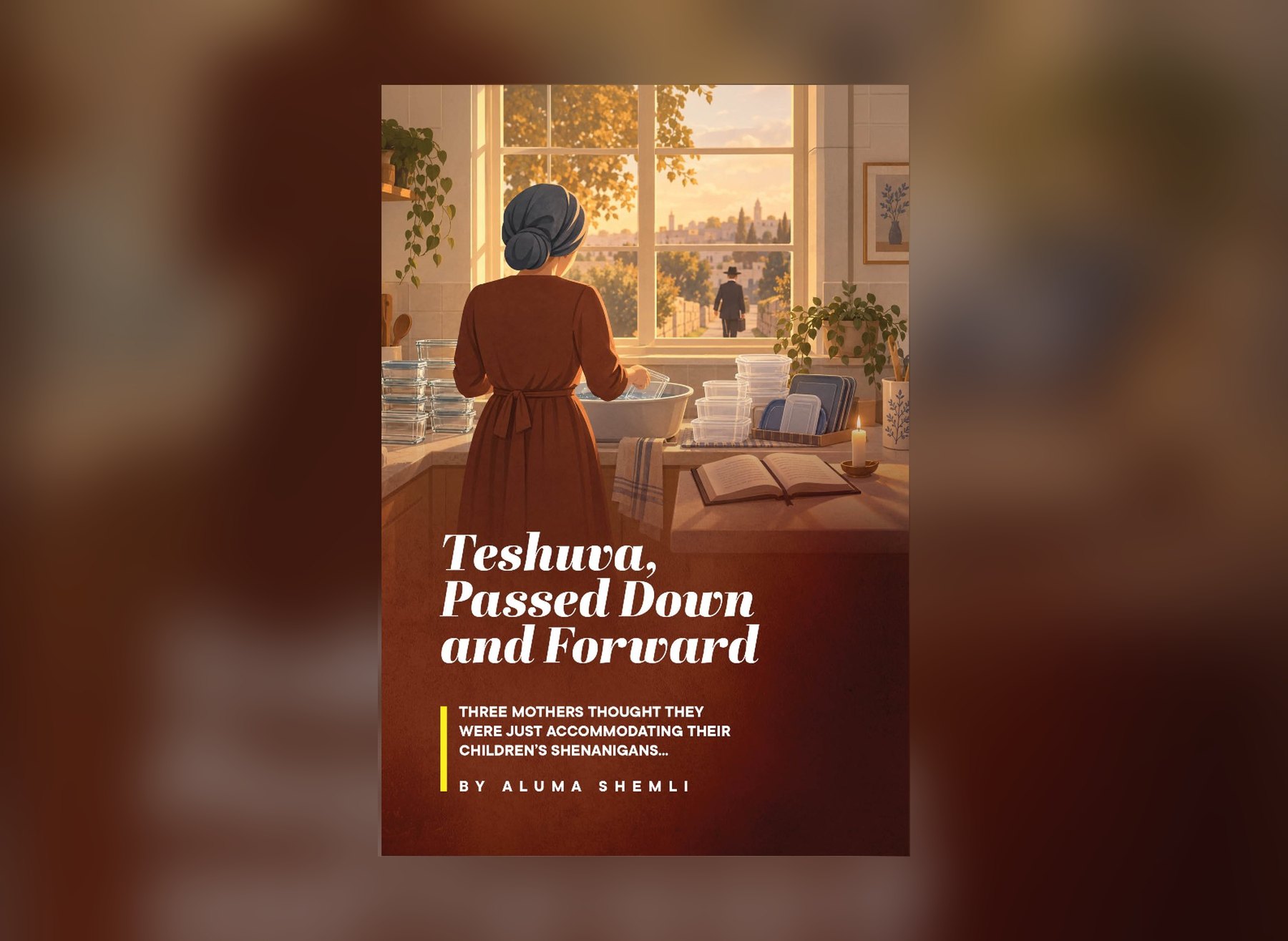
Three mothers thought they were just accommodating their children’s shenanigans…
We all strive to be better, but the daily routine, and especially the work of chinuch, doesn’t always allow us to look a little ahead and examine our derech and our personal avodas Hashem. But Hashem did us a kindness, and ironically, specifically within our role as mechanchos, we learn and end up being educated by those we educate.
Operation: Kosher Home
My name is Shulamis—never mind my last name. We’re a distinguished family in Chabad, deeply involved in spreading the wellsprings. As part of our role, we work with our baalei teshuva, helping them build Chassidishe homes, b’ezras Hashem. Along the way, we also work with their families who are sometimes stunned, don’t understand what happened to their children, and worry a lot about how far the children will go and whether they’ll decide, chas v’shalom, to cut off contact with them.
When I would talk with such mothers, there was also a note of hurt in their speech. “I raised this child with so many values and good things. Because of me he grew up to be a positive person, someone who contributes to his surroundings and is idealistic, and suddenly he feels smarter than me? Explaining to me what’s good and what’s not?”
The worst stage is the stage of kashering the kitchen for him or her. It’s truly humiliating. This kitchen you ate from your whole life, where your mother mashed your first portion of ground vegetables before you even had teeth—is suddenly not enough? I need to go through some “disinfection” and “purification” so you can eat the food you loved so much all these years? There are mothers who, only because of this, don’t kasher. “Excuse me? It doesn’t meet his standards? So let him not eat. He doesn’t have to…”
I always tried to identify with them, to explain that it’s not something against them. He loves them and appreciates them, he just suddenly discovered Yiddishkeit and is actually elevating the whole family along with him. I reminded them that this is a one-time project, please G-d, and very soon they will forget the not-very-pleasant process and again be able to make the beloved meatballs and stuffed vegetables that he loves so much. I tried to compare it to some allergy that suddenly appeared. A sensitivity to non-kosher food. Nobody is blaming them, nobody is saying their devotion is in question, but if they are devoted mothers then they should pull themselves together and do what’s needed so he can eat at home in peace.
I know these conversations well; every mother takes her own time to digest the situation. It’s a stage one has to go through, and I could say I’d really become an expert on the subject… until it fell on me.
It was a real shock. I have nine children, boruch Hashem, almost all married. They visit a lot and enjoy Shabbos meals and also take frozen containers for weekday lunches. I love cooking, love spoiling with food. Maybe that’s why it’s so easy for me to identify with the lovely mothers I work with. Our youngest, a bachur in yeshiva gedola, is something special. Mamosh an extreme Chassidishe bachur. Completely devoted and given over to the Rebbe’s horaos. Both horaos between a person and himself, like Chitas, Rambam, and avodas ha’tefilla, and also in spreading the wellsprings: tefillin, spreading the Besuras HaGeula, etc. Sometimes it seems to me as if he was born without a yetzer hara.
At some point I started noticing something strange when he was home. He’d take food for himself from the pots, not wait for me to serve him. At Shabbos meals there were things he really loved and suddenly he wasn’t touching them. Salads mostly. Sometimes I’d serve him something and he’d hesitate, wait. He’d sneak into the kitchen and check something and then decide whether to eat or not. For yeshiva he was no longer willing to let me pack him anything. Not cakes, not homemade cookies. He’d just pull a few awful snacks out of the cabinet and stuff them in his bag. One Friday night I said to him after the meal: “Shmuli, we need to talk. Explain to me, what’s this diet all of a sudden?”
He stammered and paled, hadn’t meant for us to notice, hadn’t meant to cause pain… what was the upshot? Among the stringencies he had taken upon himself, he insists on immersing plastic utensils. Did you hear that? I thought I would faint.
My husband sat with him, explaining and arguing. It was like talking to the wall. There are those who pasken that they require tevila and that’s how he holds. It’s all fine, we should feel comfortable, he doesn’t mean to bother us. Suddenly I understood why he takes straight from the pot, why he doesn’t eat salads at the meal—they’d been stored in plastic containers that hadn’t been immersed, G-d help us. Why we couldn’t pack him things for yeshiva. Who sends things to yeshiva in glass containers?
It didn’t occur to me to argue.
The next day I drove to the nearest store, bought a ton of new storage containers, both for meat and dairy. I drove to the mikva and immersed them. And how hard it was to get the stickers off some of them! While I stood there, immersing container after container, tears streamed from my eyes. The truth? It was a bit hurtful. So many years we’ve been involved in hafatzas ha’maayonos, my husband and I considered the rabbi and rebbetzin to so many people, and here I am, a daughter of a Chabad family for generations, standing and immersing utensils like the mother of a baal teshuva?
By the time I got home it had passed. Suddenly I realized how happy I am—in a generation where so many parents deal with children who don’t continue on the derech, my son isn’t continuing on the derech but toward greater heights!
For your information, it didn’t end there. After the plastic-utensil immersion came certain spices there’s no way to check. Another hechsher he stopped relying on. Every time, I raise my kitchen a level in avodas Hashem and do real iskafya. When I meet with a mother again, I come from a completely different place. I cry together with her and try to explain to her the real happiness hidden behind this pain. I hope his future shvigger will also be flexible enough when the time comes. Maybe it’s just better to find him a baalas teshuva…
Strengthening Oneself For Their Sake
My name is Chani, a good girl from a good home. I never caused problems, not in conduct and not in tznius, boruch Hashem. On the other hand, I was never shpitz and never sought to make life difficult for myself. Within Chassidic boundaries I tried to enjoy as much as possible, and there’s plenty to enjoy.
When I reached shidduchim age I found a bachur similar to me; we didn’t think about shlichus, and certainly not about teaching. We looked for good, kosher professions that would let us live respectably and indulge ourselves in everything we love. Today there’s almost the entire olam hazeh available with an excellent hechsher: restaurants of high kashrus standards, malls for the chareidi community, vacations at gorgeous hotels, and of course brand name, modest clothing, luxury wigs that meet all the standards of Rabbanei Chabad. A perfect match.
We quickly achieved our aspirations. We studied and worked in lucrative professions we loved, had two cars and a nice apartment we’d recently bought, and three amazing kids to dress up and doll up, photograph and share. When our Mendy reached age three, we had a “hachnasa l’cheder which was quite a production, and the whole extended family melted with nachas. Every morning my husband dropped him off at the Talmud Torah entrance on his way to work.
Without our noticing, the cheder took over our lives. Newsletters, hiskashrus campaigns, pictures of the Rebbeim decorated with crooked stickers that had to be hung up even though they didn’t quite match the overall design concept of our home. Then it became intrusive and demanding: “Mommy, why don’t you cry at candle-lighting?” “Tatty, why don’t you follow along with me in the Chumash during Kerias HaTorah?” “I want to go out with Tatty on mivtzaim like Shneur!” (accompanied by screams and foot-stomping, of course).
We took a deep breath. What could we do? Talk to the melamed? He was, after all, doing exactly what he was supposed to be doing. Explain to the child that with us it’s different? Why? We’re the most Chabad people there are, aren’t we?
Left with no choice, in the best tradition of our permissive generation, we gave in to the child. My husband went out on mivtza tefillin looking for at least one person who’d agree, for the child’s sake… I started pondering all the fears every mother has, from that first maternal moment; I prayed for them, I teared up at candle-lighting. We held farbrengens at home, sang the niggunim he’d learned in cheder, my husband stayed for the Shabbos Mevorchim farbrengen at the shul…
It got worse over the years, especially when Mushky joined in. But then we slowly discovered the light. You know, it’s actually amazing! Not for naught are so many people drawn to Chabad. We, who were born into it—shouldn’t we enjoy it too?
When Mendy turned seven, we participated in a Talmud Torah event. Our Chassidishe principal spoke about “our children being guarantors.” He said: sometimes a couple lets themselves go with the flow and don’t think beyond the here and now; suddenly the little child comes and stops them, makes them think for a moment about where they actually want to go, and to bring along these children they love so much.
We felt like he was talking about us. We’re a different couple today. Not that we became the most Chassidish people around. We still enjoy good food and brand name clothes. But we also have principles we won’t give up on, like mivtzaim, Neshek and tefillin once a week, daily shiurim. We started helping and taking part in organizing community farbrengens, and my husband is in charge of “Avos u’Banim” at the shul. One day maybe we’ll even go out on shlichus—who knows…
Music for the Soul
My name is Ayala. I went through the whole standard Chabad system up to a teaching certificate at Beis Rivkah. I studied in the music track. That was an obvious choice; I’ve been playing piano since about age six. When I finished the program I discovered it’s not so easy to find work. How many music teachers does Chabad need? Even the schools that already have a niggunim class in the schedule happily hand it to the student teacher. A niggun on a flash drive and a coloring page get the job done…
With no choice, I became a math teacher. There’s a very close connection between math and music, but that’s a topic for another article…
Not that I gave up on music! I teach music in private lessons, organize any choir people ask me to, and play for myself—a lot. As part of my studies I was of course exposed to many kinds of music, from classical to modern. I really love it…
Our home was always full of the sounds of music, of every kind. My kids fell asleep to classical pieces and mopped the house with me on Fridays to all kinds of lively music by various ‘chassidic’ singers. I love dancing by myself and with the kids, and what can I do? The most fitting, energizing music is not necessarily Chabad niggunim.
When Ari, my oldest, who himself plays an instrument of course, reached age twelve, he moved up to seventh grade where a new, young melamed awaited him: Rabbi Beri. He was new, and the other parents in the class made faces. My husband came back from the first parent meeting calm. “It seems he knows what he’s doing. Let’s wait. Let’s see how it affects Ari before we object…”
He won my son over—a grumpy, spoiled type—instantly. Ari was simply swept up after him as if he were a charismatic camp general; he rushed to jump up in the morning, memorized the material devotedly, participated in every contest, and above all, talked at home. Every word from this Beri was sacred. Absolute truth. I have no idea how he did it! Big kids, pre-adolescence, admiring him as if they were three years old.
He started changing his clothes, no longer agreeing to colored or fitted pants. Demanded a “Yechi” yarmulke, specifically made of fabric, not leather. We went along with it. Better than arguing with him about going to yeshiva… But the real blow came on Hei Teves. At the rousing farbrengen held in seventh grade, the topic was Chabad niggunim. Rabbi Beri had a very firm opinion against any niggun that wasn’t a pure Chabad niggun. The niggunim of “Tzama,” in his view, were over-arranged, pasul. Those of Avraham Fried barely got a passing grade, for someone unable to overcome [his taste]. A Chabad niggun is Nichoach, period.
And the worst part? Automatically this became our Ari’s firm opinion too. When I’d put on other music he’d shut himself in his room, or put on headphones and enjoy the perfect arrangements of Nichoach. Suddenly I asked myself why I hadn’t joined the group of parents who’d objected to him back then… That group, by the way, fell apart. After the parents saw what he was doing for the kids, they became his fans almost as much as the children.
It was not an easy period. I really objected. I told myself: “Let him sit in his room, fine. Why do I have to change my whole house? We’ve already given in to him enough”… I also went to the parent meeting held in Iyar. After he gave us the report on Ari’s academic standing (the best it had ever been), I shared my difficulty with him.
He had a small, condescending smile. “Precisely because you’re involved in music, don’t you agree it affects the soul in the strongest possible way? Who do you want educating your children? Beethoven? L’havdil, would you let one of those ‘chassidic’ singers who get people up and dancing be the rebbi in your children’s classrooms?”
Suddenly I understood what Ari found in him. I took a deep breath. I promised to think about it. He, for his part, promised to talk to Ari and to the class in general about honoring parents. We rather regretted it… Ari started standing up when we entered the room, speaking to us in third person… We felt like we were in a play.
What actually happens now? At our house we only listen to Chabad niggunim. Unequivocally. Music is important—up to the point of my children’s chinuch. When it comes to my children’s souls, no one will touch a thing! When I’m craving different music, I simply do what Ari used to do. I go into my room with headphones. If I smoked, would I hand out cigarettes to the kids too? I’d smoke, presumably, on the porch. The fact that I’m addicted to all kinds of music shouldn’t have to affect my children.
For anyone wondering, Beri no longer teaches. He went out on shlichus to some remote outpost. One needs to explain to these young people that chinuch is no less a shlichus. In the Sefer HaShluchim there are also shluchim “b’sdei ha’chinuch,” right?
The Chassidishe Vibe #1524 • pp. 30-33, 34
© 2026 Beis Moshiach Magazine. All rights reserved.
This article originally appeared in Beis Moshiach #1524. You are welcome to share it with friends and family by email or in print, provided that you do not change, add to or omit any part of it, you credit the author and Beis Moshiach, and you include a link to archive.bmoshiach.org (written out in full in printed copies).
To republish this article in a newspaper, magazine, book or website, please request permission in advance at [email protected].