How I Started Keeping Shabbos
Last week we read how Rabbi Ami Paikovsky, now the “Official Rabbi of the Soccer Players”, began getting closer to Yiddishkeit. Here the amazing story continues:
There’s a story there I just have to share with you! For someone working in a clothing shop, closing your store on a Saturday is probably the craziest thing a person could do. I was making four or five hundred dollars during the week. But each Saturday, I would bring in 5 to $10,000 on that day alone! That meant I was making most of my money on Shabbos. I felt like it didn’t make any sense for me to keep my store, so when I decided it was time to stop working on Shabbos, I tried to find someone who would buy my store from me. But the whole situation ended up being way more complicated than that.
I’d signed a lease on my store for 20 years. A lease is a contract – a very official agreement – that says how long a person plans to rent a property. It was a great price, and the best location, right in the middle of Los Angeles. That was why I was willing to pay all that money in the beginning. The problem was, I had friends all over, selling clothing, but no one wanted to take over my lease. It was a very long lease, and it needed someone responsible enough to own a store for a very long time. Not too many people wanted that.
I remember my landlord, the person I was renting the store from, telling me the day I signed the lease, three years before, “I know this is a long lease, but this is a good deal. I’m giving you the best price. Don’t you dare try to get out of it… If you do, I’ll chase you for the rest of your life. I’ll make you pay for all twenty years if you leave early.”
I knew I had to find someone to take over my rent, so I didn’t have to pay all that money. Every time I thought about how he’d said it, I got scared. I didn’t even want to talk to my landlord. I figured the only thing I could do was close the shop on Shabbos, continue renting, and pray everything would be alright with my parnassa.
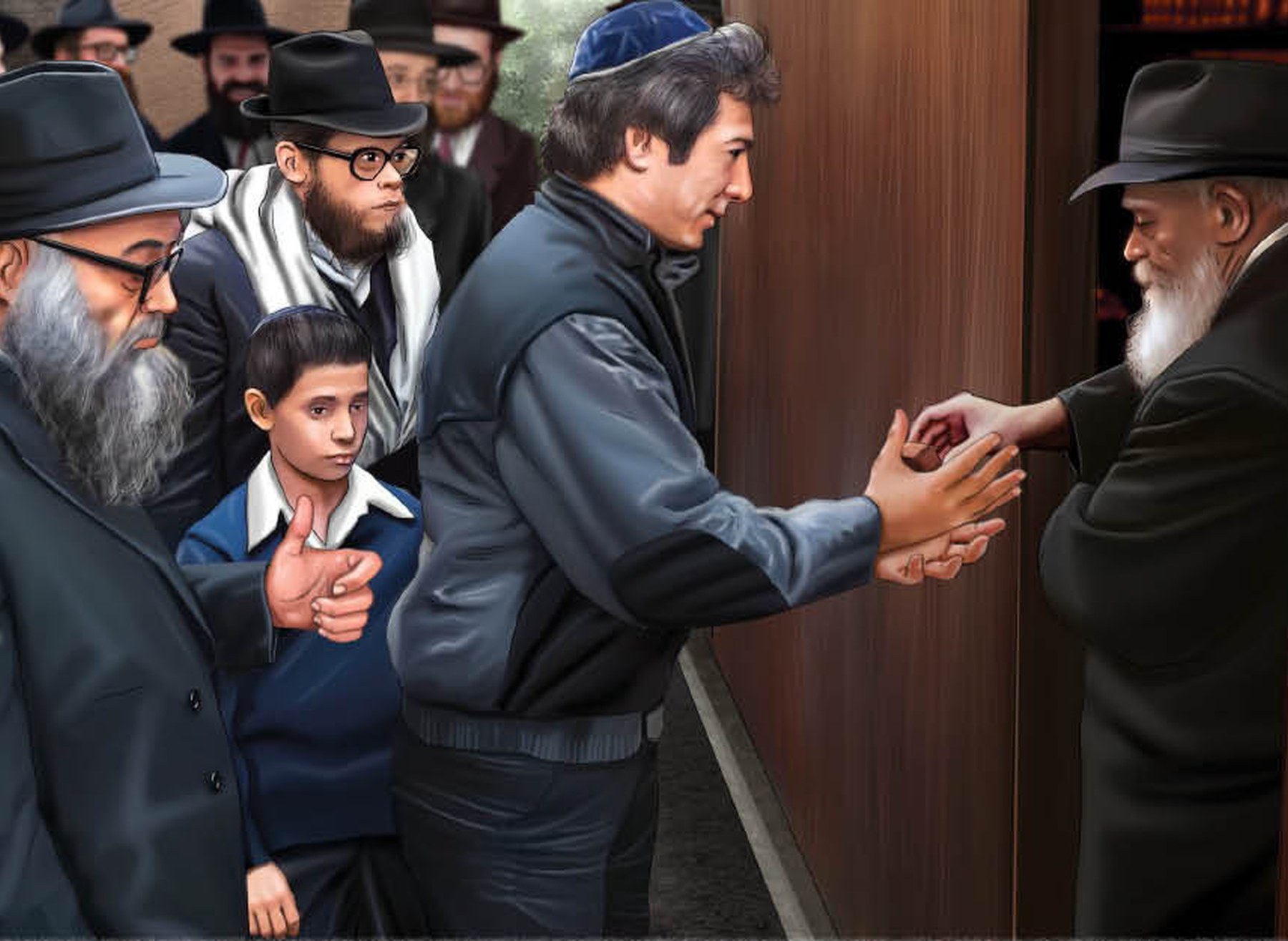
I decided to write a letter to the Rebbe to ask for a bracha, and I actually got a letter back pretty quickly. In it, I was surprised to see a number of dollar bills.
There was a five, a two, a ten, and a one dollar bill – $18 in total. The Rebbe also wrote to me, saying it was a “great zechus” for me to close my shop for Shabbos, and to be careful to close before sunset. He also wrote that I should “spread Torah to others b’simcha (with joy),” underlining the word, “b’simcha,” and to give tzedaka. The $18 was for tzedaka.
At this very moment, Rabbi Yemini walked into my shop.
“Why did I come here?” he said as he walked in. I laughed. I’d done the same thing before, where you walk into a room and immediately forget why, so I figured that’s what he meant. But he continued, insisting, “No, I honestly can’t remember why I came here!”
“I know why you came here,” I told him. “So I could tell you about the envelope of money the Lubavitcher Rebbe gave me.”
Rabbi Yemini stopped where he was standing. “You got $18 from the Rebbe?” I nodded. “Who gets money from the Rebbe? WHO?!” he shouted. “Who gets money from the Rebbe?!” All of a sudden, Rabbi Yemini started running from one end of the store to the next, screaming with excitement! I couldn’t believe my eyes. This was when I understood how special my dollars are.
I was so grateful and so happy. I finally felt I had the koach and strength to speak to my landlord. I imagined myself walking into his office, explaining that I’m a Jew, and I can’t keep the store anymore because I’d rather keep Shabbos. But to my surprise, when I arrived at his office, he wasn’t there. So, I went back to my store.
Boy was I in for a surprise when I noticed a man waiting for me at the entrance.
“Are you the owner? I want to buy your store,” he told me, without telling me who he was.
I was shocked. After all that time looking for someone to rent from me! But there was nothing I could do. “It’s not my place. I don’t own it,” I told him. “You have to speak to the landlord.”
“But I already did,” he explained. “He said you own the lease, you’re renting it for 20 years, so I have to talk to you, to buy you out.”
It was a done deal. The man paid me for all those years of rent, plus more! And he bought the property off my landlord afterwards. With the extra money I had, I was able to buy myself a nice house, and start a new clothes-making business – something I hadn’t expected at all! It was all one big miracle!
And it all started when I asked the Rebbe about keeping Shabbos.
Shortly after this, I went back to Crown Heights on a Sunday, when the Rebbe would stand for hours and hours, giving tzedaka dollars to everyone who passed by, to tell the Rebbe about the miracle he did for me RIGHT after I got his letter.
I saw the Rebbe, and said, “Rebbe, there was a miracle in my store!” The Rebbe smiled, and motioned to my mouth with his hand, to tell me not to keep talking, and started to laugh. I could tell that the Rebbe didn’t feel comfortable with me discussing the miracles he’d done for me. But from that point on, the Rebbe was always very, very friendly with me and my family.
* * *
When I first started my new clothing business, I wanted to call it “Ami Sportswear.” But then, I decided it would not be right to name my company after myself. So instead, I thought it would be funny to call my company “Shmatteh,” which means “rag” in Yiddish.
But when I wrote to the Rebbe about my idea, he told me that clothes shouldn’t be spoken about in such a way. In the Gemara, we learn that Hashem calls clothing “mechadbdusa,” or “my honor.” Rabbi Groner told me, “The Rebbe wants you to make rags into clothes, not clothes into rags.” That was when I thought about the $18 the Rebbe gave me when I chose to close my store on Shabbos. With that in mind, I came up with the name “18th Street,” and my company was born.
* * *
I experienced many miracles and much success in my clothing business, too. Once, I sent some pants to be dyed a different color. To my surprise, one leg of the pants were dyed yellow, and the other leg was dyed brown. I was nervous. It seemed ridiculous. Who would wear pants like that? But the order had already gone through to Macy’s. I wanted to run and hide. But two weeks later, Macy’s called to order more of those yellow and brown legged pants! They made the biggest re-order ever! Those pants made me a very rich man!
* * *
I had a very talented friend, Maurice Sassoon, from Israel, who came to America around the same time I did. He turned out to be an excellent clothing designer, but he wasn’t the best businessman. He never got paid enough for his designs, and many people owed him money. He was a nice guy, and people took advantage of that.
I once ran into him in 770. He came up to me and said, “Ami, I need you to introduce me to the Rebbe.”
“But you came with your rabbi,” I told him. “He should introduce you.”
But Maurice wouldn’t have it. “No, no, no… You really know me, so I want you to introduce me to the Rebbe!”
I felt uncomfortable about this. If I introduced him to the Rebbe, who would introduce me to the Rebbe?
I saw Rabbi Groner, the Rebbe’s secretary, and explained my problem.
“Nu,” Rabbi Groner began, “It’s okay. You’ll do your friend a favor.” So off we went.
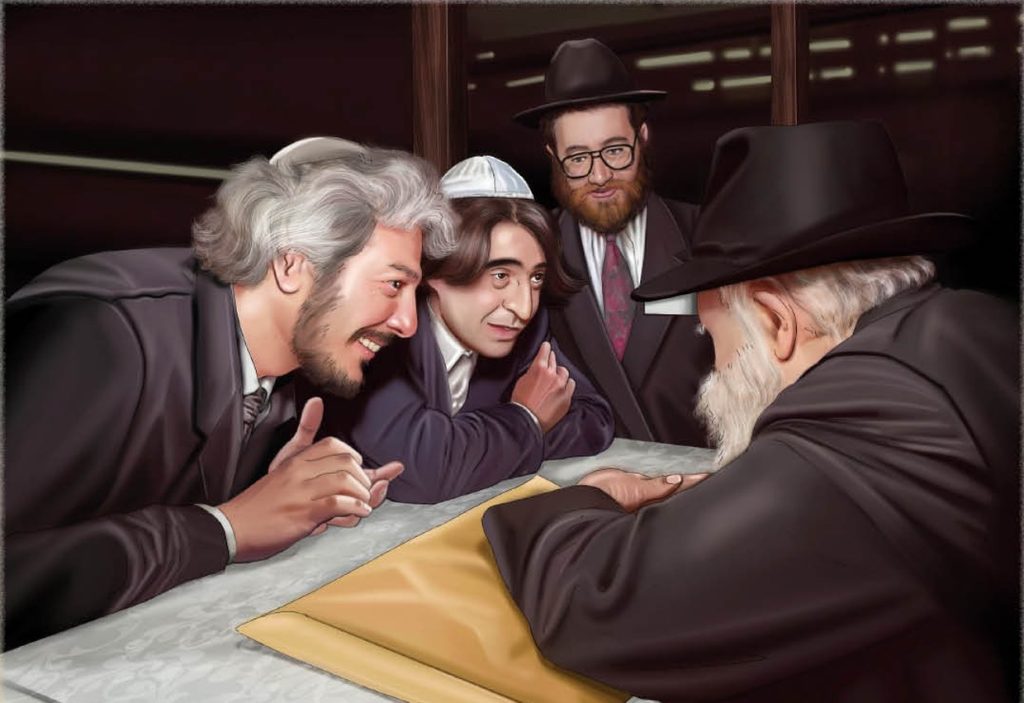
I introduced Maurice as one of the top designers, and explained his parnassa problems as well. The first thing the Rebbe asked was if Maurice gave maaser, 10% of the money he earns to tzedakah.
Maurice looked at the Rebbe and said, “Rebbe! I’ve never had the money to give! People have always taken money from me! They owe me!”
The Rebbe asked Maurice, “But what about the money in your pocket? Did you give 10% from that?”
Maurice explained that he never could give much tzedaka, but gave what he could. He told the Rebbe about the millions of dollars of designs he’d worked on, and asked for a bracha to get paid for that work, to bring home parnassa for his wife and children. “What can I do to be sure I’ll get paid?” Maurice asked the Rebbe.
The Rebbe told him to give maaser, or even a little bit more than that, “and I hope that before Pesach, there will be a change for the better,” the Rebbe blessed him.
Maurice left the meeting feeling amazing. He was so inspired, and he was ready to be very careful with the mitzva of maaser.
Two weeks before Pesach, I got a call from Maurice.
“I’m signing a contract to go into business with someone. I’ve got a partner!” Maurice was happier than I’d ever heard him before!
“Mazal tov, my friend!” I congratulated him.
Maurice’s clothing line became one of the most famous brands of his time. The Rebbe’s bracha had been fulfilled in a way no one would have imagined. And it came through making sure to give 10% of his money to tzedaka, just as the Rebbe had told him.
* * *
In general, the way the Rebbe looked out for me simply wasn’t normal. I visited 770 often, and while there, at farbengens, the Rebbe would look at me, and motion for me to clap along. The Rebbe would clap, and I would clap too!
Then, at dollars, the Rebbe would tell me, “Thank you for helping me with the dancing at the farbrengen. Here’s another dollar.”
I remember Rabbi Yemini once sent me to Crown Heights for Simchas Torah. I wasn’t frum yet, and I really didn’t dress very much like a Yid either. One night, my hostess, Etty, who I was staying with, turned to me, saying, “Go to 770! The Rebbe is dancing!”
I figured I had nothing to lose. So I left, wearing a white pair of pants and a stylish shirt, and made my way down Eastern Parkway towards 770. In the middle of my walk, an old Chassidic man wearing a black hat and long jacket stopped me.
“Where are you going?” he asked.
“I’m going to see the Rebbe dance,” I explained, a little confused about what he wanted from me.
“No, you’re not. You’re not going to the Rebbe like this!” he demanded. “Come with me!”
So I followed him to a little apartment, full of old Chassidim, just like him. They were doing something I’d never seen in my entire life! They were all making kiddush on a full cup of vodka.
The old Chossid gave me a cup and said, “Drink!”
I hesitated. I wasn’t sure about drinking a big cup of vodka.
“Nu? Make a bracha, and drink!” He wouldn’t stop. So I made a bracha shehakol, and took a sip.
“NO!” he yelled. “DRINK IT! DRINK IT!” I did as I was told, and the old man hit me on the back with a big smile. “Now you’re ready to go to 770!” he cheered.
But when I arrived at 770, I realized I wouldn’t be very comfortable. The place was squashed with thousands of Chassidim, packed more tightly than a can of sardines. There was simply nowhere to move! Now, if you know me, you know I HATE squishing, but I’d already come all that way, and drunk down that disgusting cup of vodka, so I decided I had to do it.
I squeezed in between people, and through the thick-aired, sweaty room, until I reached a pole. I looked up and noticed people were sitting on milk crates, piled 10-15 ft high, and swaying back and forth from all that weight. “Are you drunk?” I called out to the people above. But then I realized those guys could see better up there than anyone else, and I wanted to get up there too! I wanted to see the Rebbe dance!
I noticed a very big man on his way up. “Hey – take me with you,” I called to him. But he grabbed the guy next to me. Luckily, my neighbor grabbed my shirt collar, schlepping me up with him.
Finally, I had a proper view of 770. The Chassidim were singing a leibidik Simchas Torah niggun, and I had the best spot in all of 770, right in front of the Rebbe dancing. It was as if the Rebbe’s face was red with fire. His eyes were huge! I’ll never forget that scene in my life. I ended up coming back to 770 every year on Simchas Torah. There’s simply nothing else like it.
* * *
Speaking of the Rebbe, I still can’t believe how the letter he sent me with $18 is now more true than ever! Remember how I told you how, in that special letter, the Rebbe told me to “spread Torah to others b’simcha?” Well now, that’s exactly what I do, every single day of my life, thanks to the Rebbe’s brachos!
Today, like I mentioned, I’m the Rabbi of all the soccer players in Eretz Yisrael. I officially work with the team Beitar Yerushalaim, but I also work with other soccer players all over the country, and even Israeli soccer players who live in other parts of the world!
Before each game, I bless each player, we speak divrei Torah, I lift their spirits, and I put them in a good mood! We sing and dance together and get ourselves ready for a nitzachon – a victory! And you know what? When we do this, the players actually win!
But that’s not all! I put tefillin on with the players each Friday afternoon, and in the stadium during half-time breaks, where we’ll also make minyanim for Maariv. I arrange shiurim for them to learn Torah, I’ve kashered their kitchens at home, and guess what – I even marry them under the chuppa when they meet their bashert! That’s right, I’m a real rabbi, and even though I wasn’t raised religious, I got my semicha and training to do Siddur Kiddushin so I can properly handle every detail involved in a Jewish wedding, marrying them off k’das Moshe v’Yisroel – according to Torah.
I’m very close with many of these players. They’re used to me being around, and there are even those who tell me I’m worth 30 points a year – meaning the Yiddishkeit I share with these players helps them succeed on the soccer field way more than if they didn’t have it, B”H!
But you’ve got to hear this final story! I’ve saved the very best for last. Our team once had a coach named Slobodan Bravitch. He was a very talented player from the country of Serbia, in Europe. His name didn’t sound Jewish at all, so I didn’t even bother to ask him to put on tefillin. But one day, he unexpectedly called me into his office.
When I arrived, he was sitting in a big, leather chair behind a desk. He looked at me and said, “You know, my mother is Jewish.”
I was very surprised. “What’s her name?”
“Vera,” he answered.
“Would you like to have a bar mitzva?” I asked.
Then he stopped, and he didn’t answer me. That was the end of our conversation for the time being.
But then one day, the entire team, along with their wives, were invited for a celebration. Slobodan’s wife was an Israeli, Jewish woman, and she was there, too. I was invited as well, and my wife was seated next to Slobodan’s wife. At one point, in the middle of the party, Slobodan leaned over and said to me, “I want you to make me a bar mitzva, but on one condition.”
My face lit up! This was wonderful news. But what does he want from me? I wondered.
He continued, “I’m from Serbia. My mother is a Jew, and my father isn’t. But one day, my mother gave me a bag, and she told me to keep it for the rest of my life. When I saw you putting on tefillin with the players every Friday, I realized that that is what’s in my bag! My mother gave me a pair of tefillin. I just didn’t know what they were. I want to do the bar mitzva with those tefillin.”
I must admit, I was very emotional about this. I took the tefillin his mother gave him, and brought them to Kfar Chabad to be checked. They were very old, and unfortunately completely passul – not kosher at all, but B”H, I bought him a brand new pair!
Today, I have a shiur with Slobodan once a week, and he never leaves the house without putting on tefillin! And guess what? Today, he’s the top soccer coach in Eretz Yisrael.
These are only some of the nissei nissim I was able to see first hand, thanks to the inspiration of the Lubavitcher Rebbe. B”H, I am still going strong, and I plan to keep my title of “Official Rabbi of the Soccer Players” until Moshaich comes! …or even after Moshiach comes! The soccer players may not need their cleats and shin guards then, but they’ll definitely still need a rabbi!
Beis Moshiach #1415 • pp. 52-57
© 2026 Beis Moshiach Magazine. All rights reserved.
This article originally appeared in Beis Moshiach #1415. You are welcome to share it with friends and family by email or in print, provided that you do not change, add to or omit any part of it, you credit the author and Beis Moshiach, and you include a link to archive.bmoshiach.org (written out in full in printed copies).
To republish this article in a newspaper, magazine, book or website, please request permission in advance at [email protected].