Don’t You Know Me? – Part 2
Previously: A stranger stood silently staring at the Kuzmir Rebbe’s tisch. Years earlier, a tall tzaddik in the Beis Din Shel Maalah had granted him 22 more years—his outstanding height was his only clue.
“As soon as I heard this, I left everything and traveled to Poland, to Kuzmir. I arrived before Shabbos and went to the Rebbe’s tisch.
“Friday night, I looked at the Rebbe’s face. I wanted so badly to recognize him. But I wasn’t sure. He didn’t look exactly like the man I remembered from the Beis Din Shel Maalah. I stared and stared, but I still couldn’t tell.
“Then I heard his voice.
“The sweetness of his voice was familiar.
“I came again on Shabbos morning. Again, I looked at his face. Again, I listened carefully. My heart was pounding inside me. Could this be him? Could this be the tzaddik who had answered my cry Above?
“Then, at Shalosh Seudos, when the Rebbe began to say Torah with that special holy feeling, I heard it clearly. It was the same voice. The same soft and gentle voice that had spoken to me in the Beis Din Shel Maalah. The same voice that had said, ‘Say what you have to say. I will listen.’
“At that moment, I knew.
“This was the tzaddik, the one who had spoken for me. This man had granted me another twenty two years to raise and guide my children.
“And that’s when the Rebbe looked at me and called out, ‘Why are you staring at me? Don’t you know me?’”
* * *
The stranger finished speaking.
Reb Elazar sat there, frozen. The tea had gone cold, but he hardly noticed. He’d followed a stranger through the dark streets of Kuzmir, and now he’d heard a story he’d never forget.
He understood now why the man had stared at the Rebbe all Shabbos. He hadn’t come to be rude. He hadn’t come to disturb the tisch. He’d come searching for the holy face he’d once seen Above. He’d come to thank the tzaddik who had listened to a young father’s cry and had helped him receive twenty-two more years in this world.
This whole story was told by the man himself to Reb Elazar, who was there that Shabbos. Reb Elazar saw the man with his own eyes.
And shortly afterward, exactly twenty-two years after he had been given new life, the melamed was niftar. The gift had been completed.
Twenty-two more years to raise his children. Twenty-two more years to teach his talmidim. Twenty-two more years to live for the thing he cared about most—another generation’s priceless chance to grow up in the way of Hashem.
This story is brought in the sefer Beis Kuzmir. It was told over by Reb Shalom Gewirtz, who personally knew the man in the story. The Rebbe instructed R’ Yitzchok Leiba Fishbein to tell this story during the tisch of the yahrtzeit-hilula of the Rebbe of Kuzmir.
The Mezuza in the Ashes
ZAKA is a special group of people who help out after scary things happen, like accidents or terror attacks. They do their work with great respect and care, because the Torah teaches us to honor every Jewish person, even after they pass away. They also help find survivors and support emergency teams.
Simcha Greinemen is a volunteer with ZAKA International. After October 7th, his job was to go from house to house, checking if anyone was hurt, or if there was anyone who needed a proper Jewish burial.
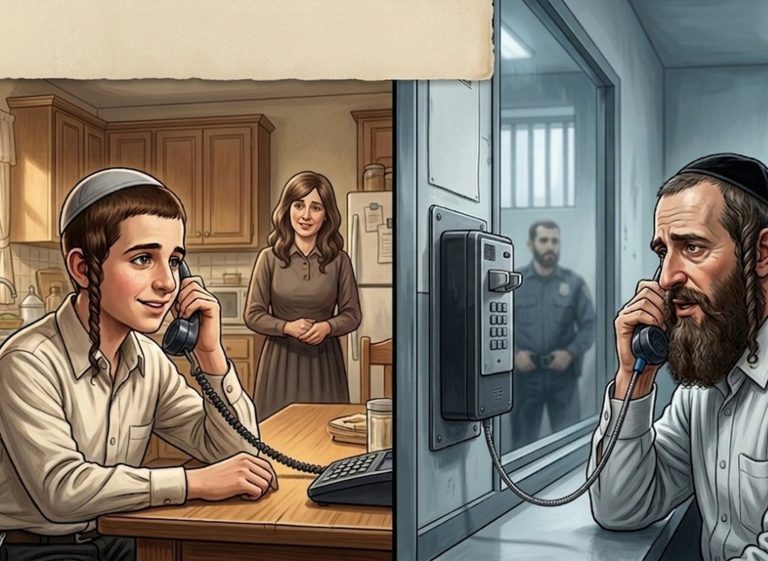
One day, Simcha got a phone call from a number he didn’t know.
“Simcha,” the man said, “can you do me a favor…? Can you go to my house and bring me back something very precious?”
“Of course,” Simcha said. “What’s the address?”
The man gave the address, and Simcha was confused.
“Wait… I know that house,” Simcha said. “It burned down—everyone survived, but nothing was left. What do you need from there?”
“I was thinking,” the man said, his voice shaking. “If we all survived, maybe our Mezuzos survived too. Please see if you can find them.”
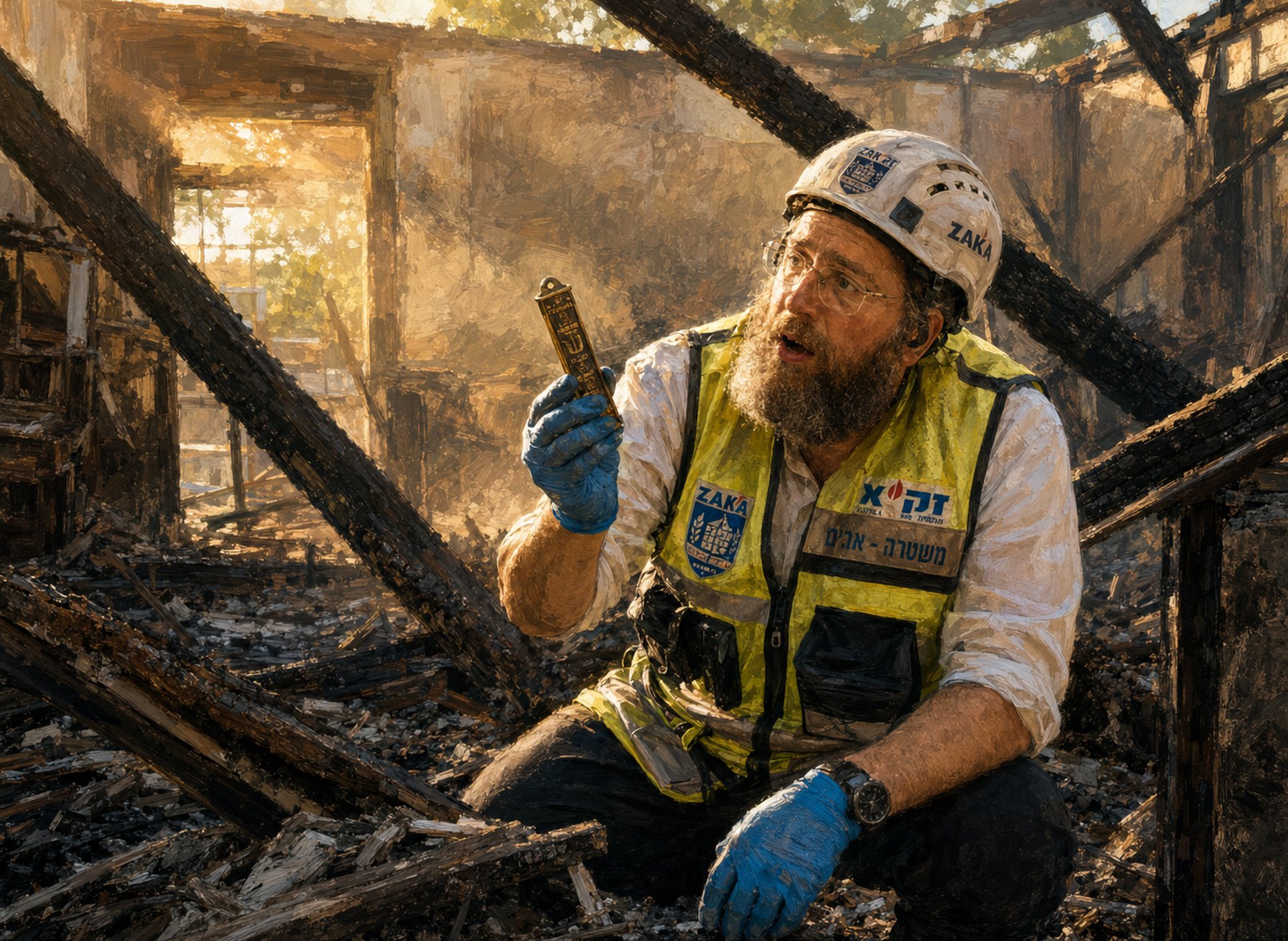
Simcha went to the house. It was nothing more than ash. He could barely tell where the front door had once been. He walked around the stones that once formed the base of the walls, and found a single standing doorpost… and a Mezuza was still there. The case was burned and dented, but the Mezuza scroll inside was whole.
Simcha carefully removed it, kissed it, and kept looking. He found two more Mezuzos inside the wreckage. He called the man back.
“I found them,” Simcha said.
The man was so grateful. Then he asked one more thing.
“If you ever visit a Yeshiva in Tifrach,” he said, “can you bring the Mezuzos to my son?”
In the months that followed, Simcha traveled to discuss ZAKA’s work and what he saw after October 7th. Wherever he went, he sometimes showed those Mezuzos to people, as a reminder that the Jewish people can survive even the scariest disasters.
But Simcha never forgot the father’s request. He kept hoping he’d somehow get to Tifrach one day.
Then one day, while traveling, Simcha was in an airport, heading back to Israel.
A Rabbi walked over and asked, “Can you join our Minyan?”
Simcha happily agreed. After Davening, they started talking. The Rabbi asked Simcha about his work, and Simcha told him he volunteers for ZAKA. Then Simcha asked, “Where are you a Rabbi?”
The Rabbi smiled. “Yeshivat Tifrach.”
Simcha’s eyes widened. “Wait—Tifrach? I have something for a boy in Tifrach,” he said, and he told the Rabbi the Mezuza story.
The Rabbi stared at him. “Wait… I think I know the other half of that story!”
Simcha blinked. “The other half…?”
The Rabbi nodded. “A few years ago, a bachur came to our Yeshiva. He told me he didn’t have a strong connection with his father, who lived on a kibbutz and didn’t understand his religious life. The bachur wanted to rebuild their relationship. I suggested he give his father a gift. Give him something Jewish—give him Mezuzos, something he might not already have.”
Simcha’s heart raced faster.
The Rabbi said, “Come with me. That bachur is actually picking me up from the airport, right now.”
When they walked outside and met the bachur, the bachur’s face crumpled and he began to cry. These Mezuzos were meant for him.
“I didn’t know these meant so much to my father,” he said. “We barely speak.”
Simcha looked at him gently. “Maybe this will bring you together again.”
The bachur nodded. He called his father. His father mentioned that he wondered if the Mezuzos had protected them in the first place.
Their relationship has kept growing stronger, because they now share a remarkable story of survival and faith, a miracle that insisted they reconnect.
The Missile That Missed the Airfield
My name is Sruli Friedman.* One day in Sivan 5785 (summer 2025), I was walking with my family through Ben Gurion Airport about to board a plane to head back home. Everything felt normal. People were standing in line with passports and rolling suitcases. Children were pulling at their parents’ sleeves. Travelers were hurrying to catch flights. It felt like any ordinary day at the airport.
Then the siren began.
In one second, the whole feeling changed. Security guards shouted for everyone to run to the protected areas. My mother grabbed my hand. People left bags behind. Parents picked up babies. The crowd rushed together, fast and frightened, because everyone understood the same thing: A missile was coming.
Inside the shelter, people stood packed together, shoulder to shoulder. No one knew exactly what would happen. A little child cried. Someone whispered Tehillim. My father stood in front of us like he was trying to protect us with his whole body. Then came the sound.
Not a huge explosion from right beside us, but the kind of sound that makes your heart stop anyway. A few moments later, phones started buzzing. Faces turned pale as people read the messages and passed the words along.
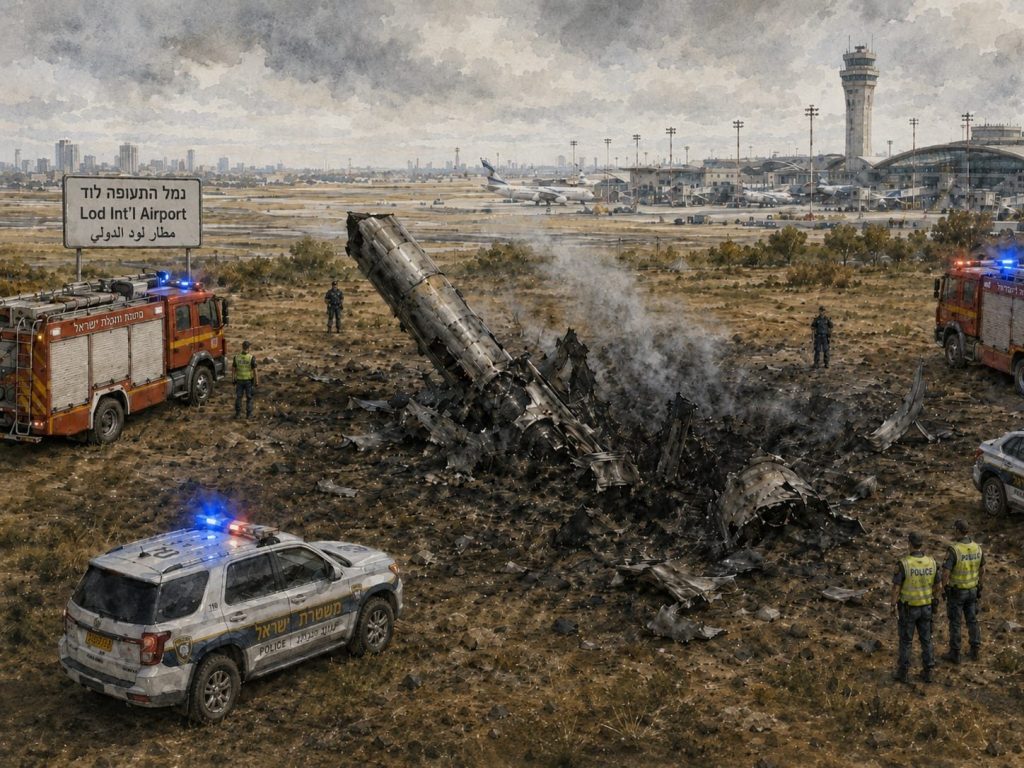
The missile had landed near the airport. Very near.
It had come all the way from Yemen hundreds of miles away, and the people who fired it were aiming at Ben Gurion Airport. But instead of crashing into the crowded terminal, it landed nearby in a field. There were injuries. There was damage. There was panic. Flights were disrupted, and people were terrified. But a much greater tragedy was avoided.
When we finally walked back out, the airport looked the same, but it did not feel the same. The same lights were on. The same signs were hanging overhead. But now every face looked different. Everyone knew how close it had come. And everyone knew the same word for it: Nes.
Because when danger comes that close, and so many lives are still spared, a Jew says, Thank You, Hashem.
And maybe that is part of what made this story so powerful: it was not only one miracle by itself. During that whole period, missiles were fired again and again toward Ben Gurion Airport or nearby areas. Some were intercepted. Some fell short. The May 2025 strike was the one that landed near the airport itself, but it came in the middle of a larger pattern of repeated attacks. Again and again, disaster came so close—and again and again, Hashem made sure the worst was avoided.
* Not his real name
Beis Moshiach #1517 • כ״ד מנחם אב תשפ״ו • pp. 56-59
© 2026 Beis Moshiach Magazine. All rights reserved.
This article originally appeared in Beis Moshiach #1517. You are welcome to share it with friends and family by email or in print, provided that you do not change, add to or omit any part of it, you credit the author and Beis Moshiach, and you include a link to archive.bmoshiach.org (written out in full in printed copies).
To republish this article in a newspaper, magazine, book or website, please request permission in advance at [email protected].