The Rebbe Emerges Out Of Anonymity
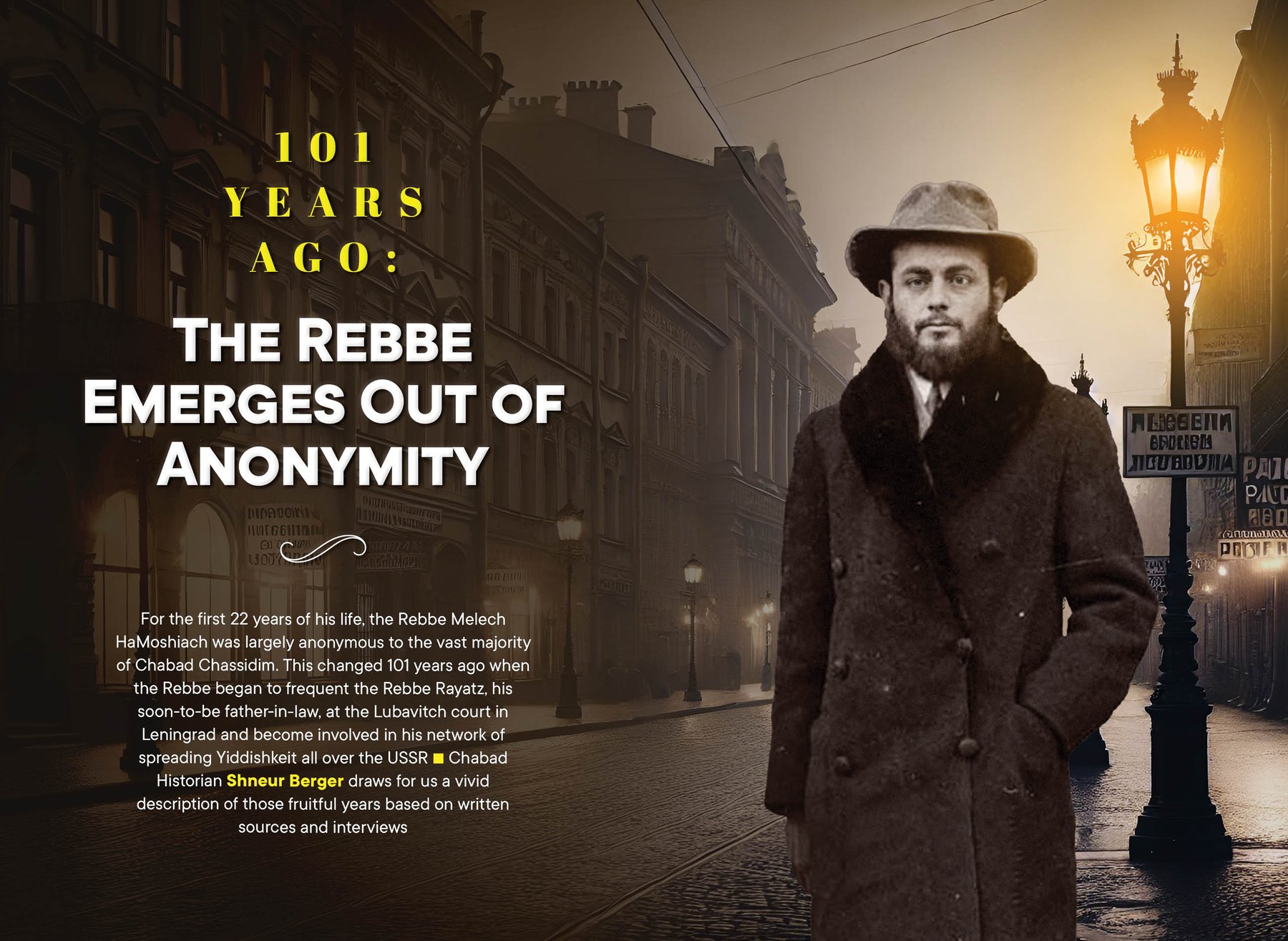
For the first 22 years of his life, the Rebbe Melech HaMoshiach was largely anonymous to the vast majority of Chabad Chassidim. This changed 101 years ago when the Rebbe began to frequent the Rebbe Rayatz, his soon-to-be father-in-law, at the Lubavitch court in Leningrad and become involved in his network of spreading Yiddishkeit all over the USSR. Chabad Historian Shneur Berger draws for us a vivid description of those fruitful years based on written sources and interviews
All his life, the Rebbe grew up near his venerable father, Rabbi Levi Yitzchok a’h, first in the city where he was born, Nikolayev, and then in Yekaterinoslav (today, Dniepro), where his father was the rav. Naturally, the entire family lived in the shadow of the father who ran his rabbanus with both love and firmness.
From the birth of the Rebbe in 5662, until his engagement, hardly anything is known about any intercity travels the Rebbe made. He remained closed off in his room, the Talmud Torah or Beis Medrash, where he assiduously studied Torah.
From when the Rebbe arrived at the Rebbe Rayatz for Sukkos 5683 in Rostov and then meeting his kalla, Rebbetzin Chaya Mushka who lived in Rostov and then in Leningrad, in 5684, the situation changed. The Rebbe began going to big, bustling Leningrad more and more, which is where the Lubavitch headquarters was located. One could say that at that time, a new era began in the Rebbe’s life, as an anonymous person, the son of the rav of Yekaterinoslav, became a familiar person in the Rebbe Rayatz’s court, the destined son-in-law of the Nasi. The Rebbe Rayatz tried to bring him in, more and more, into goings-on in the Chassidic court.
This period lasted a little longer than three years, from the summer of 5684, until the beginning of Tishrei 5688, when the Rebbe Rayatz, his family and the one designated as his son-in-law, left Russia by government order.
We have gone back in time in order to document the life of the Rebbe during his stays in greater Leningrad, while also observing the development of the growing connection between the chassan and his father-in-law-to-be, the Rebbe Rayatz.
Lubavitch Headquarters
The Rebbe Rayatz’s move from Rostov to metropolitan Leningrad, in Iyar 5684, changed the mode of conduct of the court. The home and Beis Medrash of the Rebbe was located in a prominent neighborhood in the center of the city, and it stood out as a powerful force of Orthodox Judaism in the city.
The Rebbe later noted the Rebbe Rayatz’s move to the big city, “The earlier Rebbeim lived and worked in small towns like Liozna, Liadi, Lubavitch, isolated from the world, unlike my father-in-law, the Rebbe who, from the start of his nesius, was in large cities such as Moscow and then Petersburg (as Leningrad was called at the time)… and in all these places his work was like the work of Yosef HaTzaddik when he served as the ruler of all Egypt.”
Mr. Michael Bazer, who researched the history of the Jewish community in Leningrad during communism, writes in his book about the Rebbe Rayatz’s influence and about his home that became a center for Judaism:
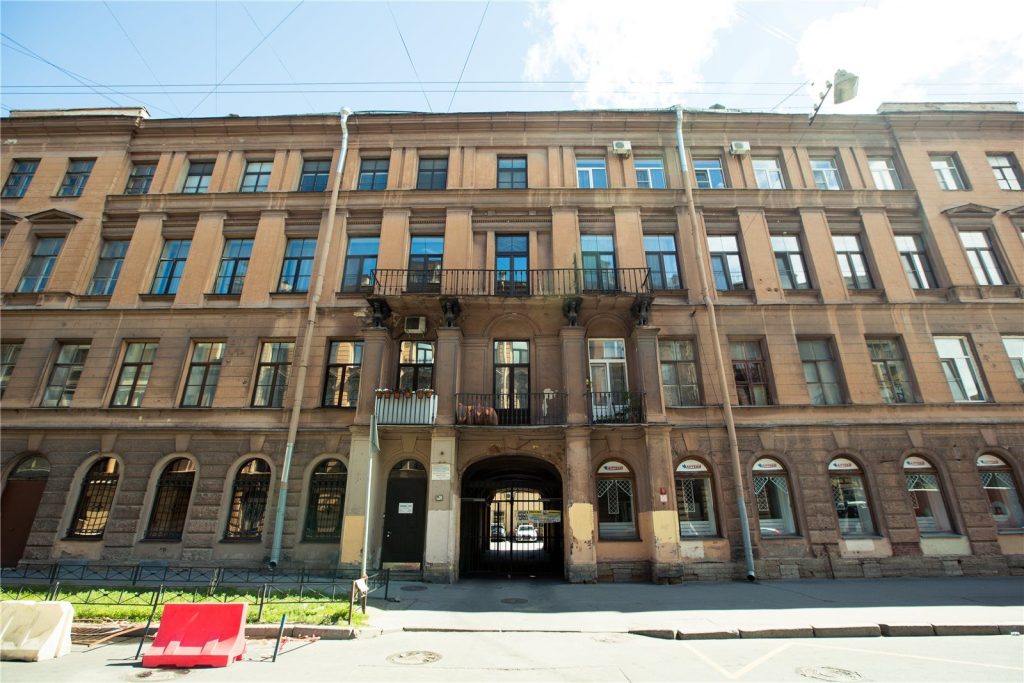
“The main center of attraction for Chabad Chassidim was the Lubavitcher Rebbe, Yosef Yitzchok Schneerson, who moved from Rostov to Leningrad. Schneerson’s influence as a Jewish leader was felt also among those who did not belong to the Chabad movement. Lubavitcher Chassidim from all over Russia went to Rabbi Schneerson’s apartment which was located in the heart of the city on the second floor of a building on the corner of Pastal and Machovaya. In the huge living room, which was turned into a shul, many gathered for prayer. Rabbi Schneerson’s dynamic and uncompromising activities concerned the authorities who considered him a serious obstacle to spreading atheism among Soviet Jews.”
The Chassan In His Future Father-In-Law’s Home
Once the Rebbe Rayatz arrived in Leningrad, the Rebbe began going there regularly. The Rebbe Rayatz drew him in more and more into communal work and assigned him important communal tasks.
Before the shidduch between the Rebbe and Rebbetzin Chaya Mushka was finalized, the Rebbe’s mother, Rebbetzin Chana, went to Leningrad to meet the prospective kalla and to finalize details of the shidduch. This was in Adar 5686. On that trip, she visited the future mechutanim nearly every day, ate in their home and even had the Purim seuda with them. Her oldest son was at his parents’ home in Yekaterinoslav at this time. Thus, everyone found out that the Rebbe Rayatz had chosen as a son-in-law, the son of the gaon and Chassid, Rabbi Levi Yitzchok Schneerson, Rav of Yekaterinoslav.
From the start, the Rebbe Rayatz drew the Rebbe into the inner circle of Beis HaRav and the Rebbe was taken out of his anonymity and began taking an active role in whatever was happening at the Rebbe Rayatz’s court, both in the realm of the inward-ideological and that of the outward-activism.
His future father-in-law displayed rare and unique closeness to his future son-in-law as he explained to him the hidden aspects of the teachings and Chassidic guidance of our Rebbeim, as well as from his own writings, opening these treasures before him, both written and oral. He even opened for him the most secret treasure stores which contained published works and manuscripts dating back many generation, and especially those of the Chabad Rebbes.
He also brought him into the highly classified world of activism and public leadership and assigned him various missions, some of them dangerous.
In those days, the Rebbe often attended farbrengens of the Rebbe Rayatz. At these farbrengens, in another display of deeply felt closeness, the Rebbe Rayatz expressed himself towards the Rebbe in rare fashion. Thus it was on Simchas Torah 5687, the Rebbe Rayatz told the Rebbe to take mashke and the Rebbe complained about his lowly state. To that, the Rebbe Rayatz said, quoting his father, “Just as we need to know our flaws, so too, we need to know our good qualities. Just as it is forbidden to raise oneself up, so too is it forbidden to lower oneself for naught. One needs to know one’s level as it truly is… actual growth comes from planting.”
Another interesting episode occurred at the Yud-Tes Kislev farbrengen of 5687, which was attended by the Rebbe and his brother, R’ Yisroel Aryeh Leib. In the middle of the farbrengen, the Rebbe Rayatz turned to the Rebbe and his brother and said from the depths of his heart, “It’s a great pity on you in general,” and turning to the Rebbe he added, “And on you in particular, that you did not know my father [the Rebbe Rashab].”
As usual, at those farbrengens there were chozrim whose job it was to review the maamarim and sichos of the Rebbe afterward. One time, the Rebbe Rayatz said a maamar Chassidus for a long time. Afterward, the chozrim reviewed what was said, but at a certain point they were stuck with an explanation that they couldn’t recall.
One of the chozrim suddenly noticed the Rebbe sitting on the side, immersed in his learning and suggested going over and clarifying the matter with him, as maybe he had grasped what was said.
The Rebbe, in his characteristic quiet way, immediately quoted the missing explanation and proceeded to explain the entire subject with great clarity.
An interesting episode is recorded in the history of the time, when on motzoei Tisha B’Av, the Rebbe ate with the Rebbe Rayatz to break the fast. Rabbi Shlomo Yosef Zevin joined them.
Sharing A Room With The Rebbe
During the time that the Rebbe was in Leningrad, he studied academic subjects, although the details are murky. It seems that for a certain time he studied maritime construction at the Polytechnic Institute.
As mentioned, the Rebbe’s primary residence was at his parents’ home in Yekaterinoslav, but when he stayed in Leningrad he stayed on for extended periods, sometimes for short periods and sometimes for months. When he stayed in Leningrad, as a bachur of 22-24, he slept at the home of the Chassid, R’ Shmuel Nimotin, Hy’d, at 17 Nevsky Prospect, a home that was open to many Chassidim who found themselves in the city. His son, R’ Refael, shared a room with the Rebbe and later related:
“During 5686-5687, the Rebbe himself stayed in our home for a while… It was very hard to speak to the Rebbe when we stayed together in the same room. He was always very introverted and hardly spoke. We didn’t know much about him except that he was already the chassan of the Rebbe Rayatz’s middle daughter. His nobility and great seriousness is something impossible to describe.
“He was always busy; he never had an idle second. Most of the time he learned or wrote. He nearly always came to the room last and left it first. He was very closed inside himself, busy with his matters and hardly spoke to anyone.
“I remember one night when I saw him learning and writing stenography in English. I wondered why he needed these English shortcuts and expressed my wonder. He said – believe me, if I had no need for it or won’t have a need for it, I wouldn’t look at it.”
The Rebbe himself related a story from the time he spent in Leningrad:
“In Leningrad, my father-in-law once called me to his room and told me about a certain person who was expected to come to the city. He asked me to occupy him so that he wouldn’t ‘get himself into trouble.’ My father-in-law said that in front of the train station in Petersburg is a large statue of Czar Alexander III who was a tall, powerful man… riding on a horse. It was a massive statue and next to it always stood a soldier to guard it.
“Someone once left the train station and seeing this sight he asked a passerby, ‘Why do you need a soldier to guard this statue? Is someone going to steal it?!’ He was answered, ‘As long as the soldier stands here, he himself is not stealing…’”
Talking In Learning With The Rogatchover
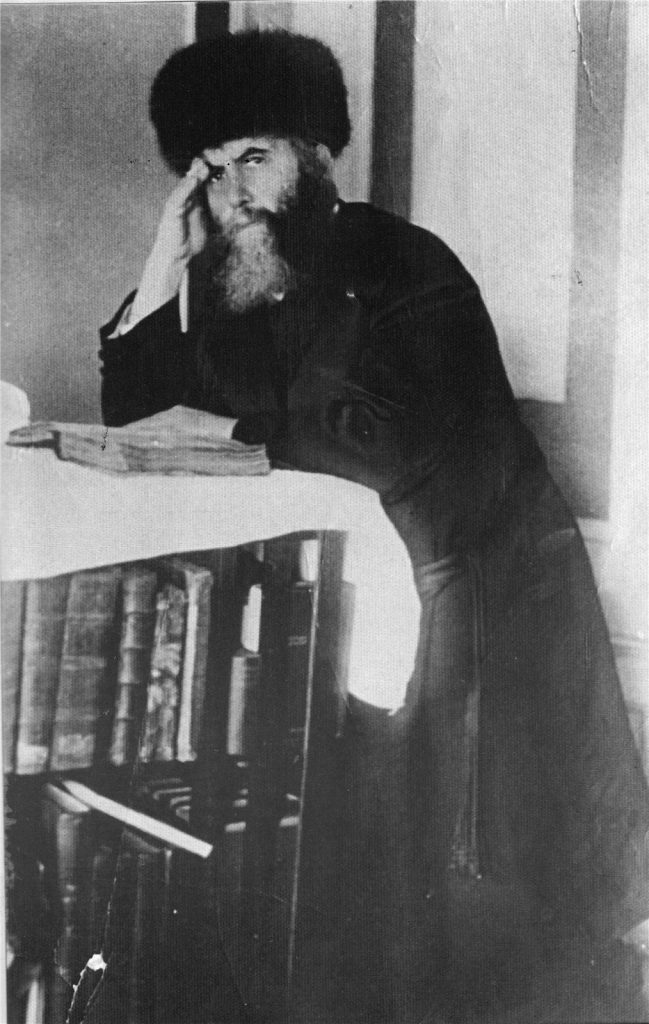
While in Leningrad, the Rebbe met with the Rogatchover Gaon, Rabbi Yosef Rosen, who lived in Leningrad at the time. The gaon even served as the unofficial rav of the Chabad community there. “The Rogatchover Gaon was in Leningrad for a long time, at the same time as my father-in-law, the Rebbe,” noted the Rebbe.
On these visits, the Rebbe spoke with the gaon on Torah topics for hours. Later on, the Rebbe said that he often went to the gaon’s house and they corresponded a lot at this time. Their connection continued over the next dozen years, until the passing of the gaon in 5696.
Many years later, when one of the Chassidim brought a picture of the Rogotchover Gaon to the Rebbe, the Rebbe stood up and said, “I knew him… I was in and out by him.”
‘I Will Call For My ‘Minister Of Culture’’
During his visits to Leningrad, the Rebbe visited the Pulkovo Observatory which is located outside the city. At this observatory, which is part of the Russian Academy of Sciences, there are advanced telescopes and other instruments for following and mapping the stars and other heavenly bodies.
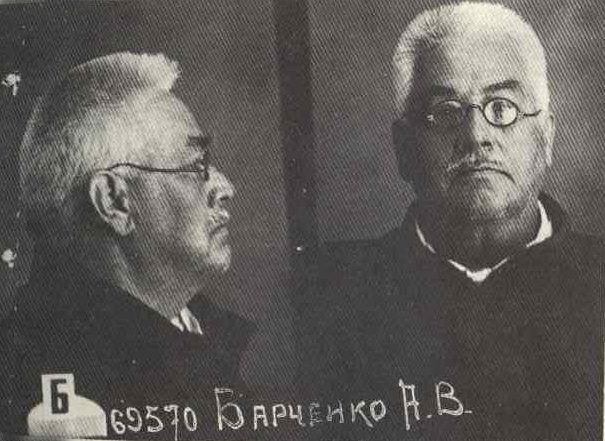
One day, a non-Jewish professor by the name of Alexander Borochenko went to the Rebbe Rayatz. As part of his work, he was engaged in researching the inner and hidden powers of man. He asked the Rebbe to explain the “Magen Dovid” according to Kabbala. The Rebbe Rayatz told him, for that I will call my “Minister of Culture,” and he asked his future son-in-law to come from Yekatrinoslav to Leningrad to provide a comprehensive answer.
For three months, the young son-in-law sat in Leningrad, composing an entire treatise on the “Magen Dovid” according to Nigleh, Kabbala and with additional allusions and clarifications according to astronomy. At the end of the three months he returned to Yekaterinoslav but later on he went several more times to Leningrad to complete the work.
It’s interesting that the government attributed great importance to this topic and during the imprisonment of the Rebbe Rayatz, the matter came up in the interrogation of witnesses and even in the Rebbe Rayatz’s own interrogation.
Behind The Scenes Of The Rabbinic Conference
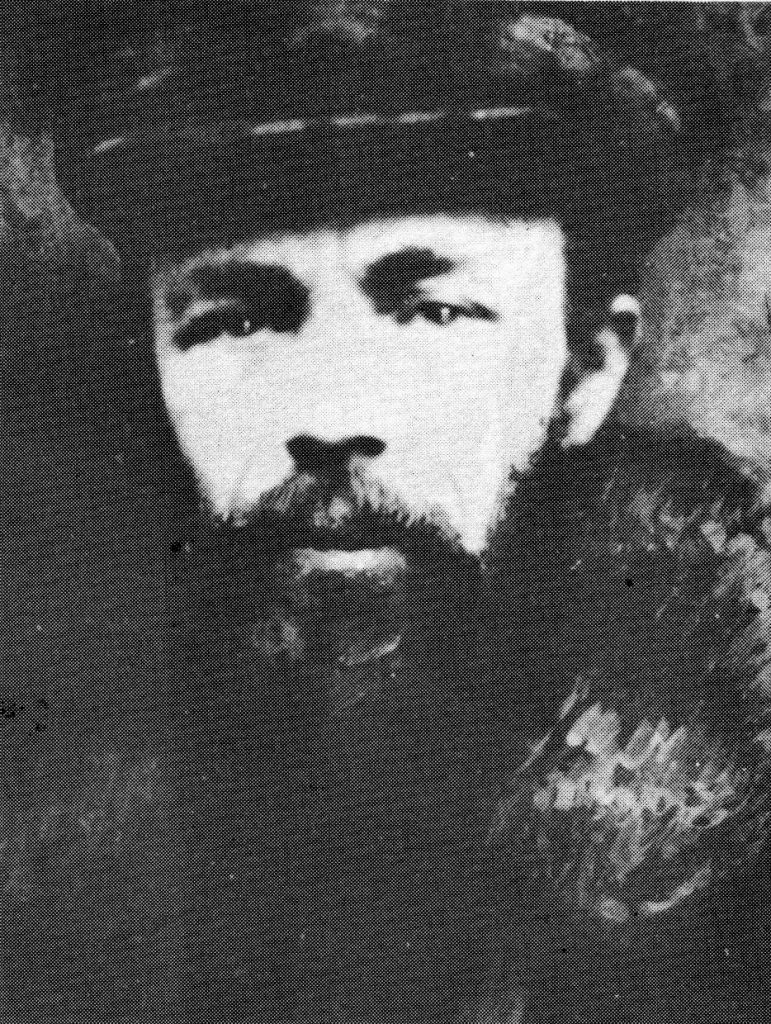
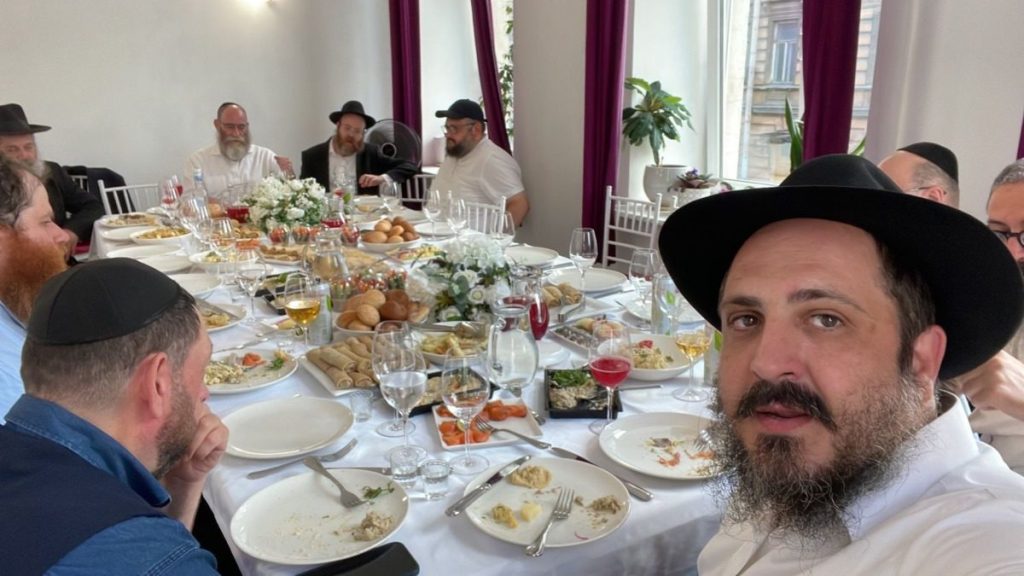
In 5687, a few months before his arrest, there was a rabbinic conference held in the city of Korostin. This was a historic conference which was also attended by Lubavitcher rabbanim. There were also government appointed rabbis as well as government representatives.
The Rebbe Rayatz preferred that the conference not take place at all, but once it was decided that it would take place, he worked secretly with the Rebbe to help the conference organizers as a countermeasure to the attempt to arrange a rabbinic conference in Leningrad that was planned by the communist Yevsektzia. The conference in Leningrad was planned to undermine traditional Judaism and it was done under the strict supervision of the government which wanted to dictate the resolutions that would be adopted.
Obviously, the Rebbe Rayatz opposed the conference in Leningrad and even quietly fought against it. The conference in Korostin of G-d-fearing Jews was intended to counter the proposed conference in Leningrad, so he and his future son-in-law worked behind the scenes to get the most out of the conference in Korostin. As Rabbi Shmuel Kipnis, one of the organizers of the conference, recounted in his memoirs:
“We members of the committee to organize the conference decided to ask the Admor’s advice about the format of the conference and I traveled to Leningrad for this purpose. The Admor zt’l received me with love and affection and took a great interest. I went to him one day toward evening and after Maariv he received me and I sat with him for an hour and a half, with the continuation of the meeting scheduled for the next day at twelve. At this second meeting, the Admor also invited Rabbi Lazarov [Rabbi Shimon Lazarov, rav of the Chabad community in Leningrad] and his future son-in-law… the meeting was three a half hours long and we worked out the schedule of the conference in Korostin and he blessed us with success.”
In 5724, the Rebbe wrote a letter to the organizer of the convention, Rabbi Shmuel Kipnis, in which he reminded him about that meeting in the Soviet Union:
“I am confident based on what is impressed in my memory of the time of our encounter in our prior country…”
Starting from Rosh Hashana 5685, the Rebbe spent at least part of Tishrei with the Rebbe Rayatz, living in a small room not far from the Rebbe Rayatz’s apartment.
The Rebbe Mobilizes To Rescue His Father-In-Law
Late Tuesday night, 15 Sivan 5687.
The Rebbe Rayatz’s home on 22 Machovaya Street in Leningrad.
The Rebbe sat in his room, writing a sharp letter against the convention, afterward writing copies of it with the intention of releasing it to the public. The letter was meant to be sent openly, publicly “to many who ask and inquire about the ‘general religious conference’ called by the Leningrad Jewish community.”
Needless to say, publicizing a letter like this entailed mesirus nefesh for it criticized the communist government’s plans.
The Rebbe Rayatz went to eat supper after midnight and the GPU burst into the house and began conducting a search. As they searched, the Rebbe was approaching the house. His kalla stood near the window and called out, “Schneerson, guests came to visit us.” It was extraordinary hashgacha pratis that the Rebbe was in the area at this time. The Rebbe got the hint and he hurried to the homes of several key people who were close to Beis Rebbi in order to warn them about what was happening at the home of the Rebbe Rayatz.
[On 12 Tammuz 5705, the Rebbe was in the Machne Israel office, later the secretaries’ office, and he related various details about the arrest of the Rebbe Rayatz. Typically of him, the Rebbe did not talk about his involvement that dark night. He said as the search was being conducted, a Chassid went to the Rebbe’s house and seeing it all lit up, he realized that something was going on and he went around the house and was afraid to knock…]
The Rebbe went quickly with R’ Pinchas Altheus to the home of the secretary, R’ Chaim Lieberman, and informed him of the situation. The secretary who had a lot of material belonging to the Rebbe Rayatz and his extensive activities in the Soviet Union, quickly burned all the mail that he received lately along with other incriminating documents.
Before the fire had gone out, GPU agents burst into his house. They saw the flames and realized they had come a moment too late. The secretary was also arrested.
At the same time, the future son-in-law hurried to arrange watch parties in all possible places to know where the Rebbe Rayatz would be taken. These watchers brought information that the Rebbe Rayatz was taken to Spalerka. This information was vital for starting rescue efforts.
The middle daughter, Chaya Mushka, was able to tell her father that her chassan knew what was going on. It wasn’t necessary to add that he had immediately gotten to work in his characteristic wise way.
The Rebbe Rayatz realized that the Rebbe would know to go to the secretary’s house and warn him of the danger even though this could mean his arrest. Still, the Rebbe Rayatz’s concern for his household and the manuscripts of Chassidus perturbed him as he wrote in his published diary of his arrest:
“ …What is happening with the one designated to be my son-in-law, Mr. Menachem, who went to the abode of my secretary, Mr. Lieberman. Was he, G-d forbid also caught… A flood of tears burst from my eyes, hot tears flowed down my face. I was deeply agitated and my entire body trembled: G-d forbid, was it possible that the sacred Chassidic manuscripts and writings were also taken?… Who knew if they had not touched the core and apple of my eye, the sacred Chassidic manuscripts and writings. And if, G-d forbid, this had actually occurred, how awesome was this situation. How incredible the catastrophe that these sacred manuscripts would also be swept into custody and imprisoned!”
The arrest of the Rebbe Rayatz generated a huge storm in Leningrad. A large crowd streamed towards the Rebbe’s home and everyone recited Tehillim with tears.
The Rebbe allowed himself no rest. He realized that every minute was critical and it was no time for tears. Toward morning, he returned to his father-in-law’s home and took many bundles of holy manuscripts and transferred them to hiding places that had been prepared in advance.
Right after the arrest, a steering committee was formed of those closest to the Rebbe Rayatz, including the Rebbe, to discuss possible means of rescuing the Rebbe Rayatz. This special team tried to achieve a nearly impossible task: to rescue the Rebbe Rayatz from the clutches of the interrogators of the secret police. Something like this had never happened in the Soviet Union! Also, it was necessary to beware of hasty steps that could hasten the execution of a sentence. This was complicated work that demanded great wisdom.
Rabbi Eliyahu Chaim Altheus told of one of the secret meetings which took place in the town of Diteska [later called Pushkina] that the Rebbe attended:
“After this, a suggestion was made that members of the community in Leningrad with the Chief Rabbi, Rabbi Dovid Tevel [Katzenelenbogen] should go as a delegation to the head of the GPU to ask him, face to face, about freeing the Rebbe with guarantees that they would take upon themselves… from our people were the Rebbe’s son-in-law, Rashag, and the yungerman, R’ MM Schneerson, and myself…”
In Yemei Melech it says that although the Rebbe was the youngest of the group who endangered their lives, all listened to his counsel and took pleasure in his energetic work that ultimately was crowned with success.
In later years, the Rebbe pointed out the amazing fact that not a single one who worked to rescue his father-in-law was harmed, not in matters affecting life and not even financially, even though this was in a country where your every move was watched.
At the Yud-Beis Tammuz farbrengen of 5716, R’ Shneur Zalman Duchman got up and revealed that “if not for the Rebbe shlita, we wouldn’t be celebrating the Chag HaGeula Yud-Beis Tammuz.” He wanted to go on but the Rebbe silenced him with a look and a smile indicating that he should stop speaking about it.
As is known, after his release, the Rebbe Rayatz had to leave Russia. The head of the GPU in Leningrad adamantly opposed his release and did all he could to have the Rebbe rearrested. All realized there was no choice but to leave the country.
In the coming days, negotiations were held with the government about relatives who would leave Russia along with the Rebbe. When the authorities saw the name of the chassan, they said he could not leave Russia. They explained that it’s possible to find another chassan, but the Rebbe Rayatz said that a chassan like him was impossible to find anywhere, and the Rebbe was permitted to leave.
During the Rebbe Rayatz’s last month in Russia, numerous people went to be with him for Tishrei. The chassan was with his future father-in-law during Rosh Hashana and Yom Kippur and then went to his parents for Sukkos and Simchas Torah.
Thus ended the Leningrad period of the Rebbe’s life. In the years that followed, the Rebbe continued to be at the Rebbe Rayatz’s right hand in all his activities on behalf of Russian Jewry, and in general.
Beis Moshiach #1425 • pp. 12-21
© 2026 Beis Moshiach Magazine. All rights reserved.
This article originally appeared in Beis Moshiach #1425. You are welcome to share it with friends and family by email or in print, provided that you do not change, add to or omit any part of it, you credit the author and Beis Moshiach, and you include a link to archive.bmoshiach.org (written out in full in printed copies).
To republish this article in a newspaper, magazine, book or website, please request permission in advance at [email protected].