The News of Moshiach Has Reached As Far As Zanzibar
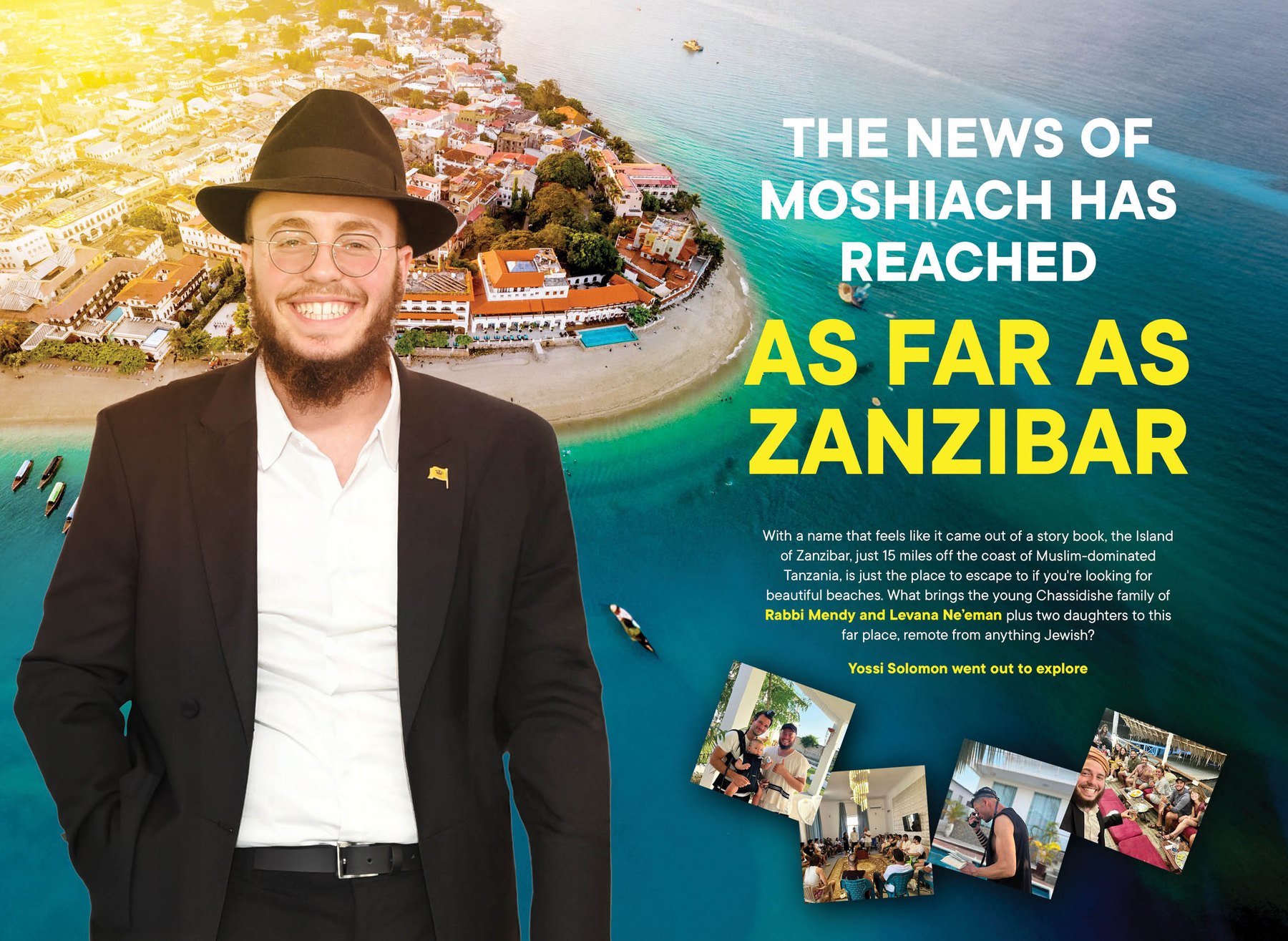
With a name that feels like it came out of a story book, the Island of Zanzibar, just 15 miles off the coast of Muslim-dominated Tanzania, is just the place to escape to if you’re looking for beautiful beaches. What brings the young Chassidishe family of Rabbi Mendy and Levana Ne’eman plus two daughters to this far place, remote from anything Jewish?
Welcome to Zanzibar. Zanzibar is part of the Republic of Tanzania in east Africa. It’s a Muslim country and mosques abound. Over a million people live there, mostly African Swahili.
Zanzibar is a popular tourist attraction for animal and nature lovers. There are volcanoes, lakes, rain forests and snow-topped peaks like Mount Kilimanjaro, the highest mountain in Africa. Every year, tens of thousands of Israelis (many of them after army service) visit the country, as well as Jews from all over the world. This is precisely what drew the Neeman couple to shlichus here.
The young couple found a suitable apartment for their outreach work and began spreading the Besuras HaGeula among the Jews who visited this exotic locale. The country lags behind when it comes to infrastructure, transportation and medical services but thanks to tourism, the government has started making an effort to fill in the gaps and the country has been developing rapidly.
What made you choose shlichus in Zanzibar?
In our experience, getting married is a time when you get another chance; you can start life over again. It’s a time to start anew together with a spouse. The main reason to go on shlichus, for us, is that in life on shlichus a Chassid is in the highest place he can be. When you go on shlichus, you are joining G-d’s plan and His intention in creating the world and bringing the Geula. When you think about this, it doesn’t leave you with many options. This way of thinking gave us the push to go on shlichus.
We went to Africa because of a very special letter that we opened to, from the Rebbe. The letter is addressed to someone who tried opening a Chabad House in Africa and the Rebbe encouraged him and wrote, “Perhaps there were and are difficulties; this only strengthens and adds to the magnitude of the matter.”
We had several shlichus options: in Greece, South America and Africa. From the Rebbe’s letter we understood that we are meant to open a Chabad House in Africa.
Without Basic Infrastructure
The first challenge for the couple was even before arriving in Africa.
“Theory is one thing and action is another,” says R’ Mendi Neeman. “Ultimately, from talk you need to move to action. Being able to be dedicated to something which is beyond reason, demands psychological fortitude and an action orientation; action being the operative word because here it’s impossible to say, ‘Everything will be all right.’ Being here means you are cornered into taking action and required to show to what extent you really believe.”
When R’ Neeman says this, he knows what he’s talking about. For example, when he and his wife had to go on shlichus before they had raised money for it, “that was our big challenge,” he says.
They went to Zanzibar for Tishrei and then left and returned for two months. Right after that, their second daughter was born. They went back to Zanzibar for Purim with not that much money. Since then, things developed. Today, they have a Chabad House, equipment, refrigerators, tables, chairs, a car, salaries to pay, four employees, and they are in the final stages of buying a piece of land with a price tag of half a million shekels ($135,000). “Nothing came on its own,” he says.
“In parts of Zanzibar there isn’t normal infrastructure for electricity and water. They draw water from a well here, and they get electricity by drawing cables to the houses. There is no street lighting.
“When we landed in Zanzibar for the first time, we arrived in the middle of the night with over 500 pounds of stuff. We first took a room in a guest house but in the morning we realized we couldn’t stay there. Fortunately, the management of the guest house agreed to return our money and there we were, the day after we arrived in a foreign country, looking for a place.
“On the other hand, we had arrived in a place with the energy of shlichus and were ready for action. We managed to advertise our presence and about the Shabbos we were going to make for the Jews here. We knew this had to happen even though we had no place… The challenge was to find a basic place and put all our huge packages there. Most of the people here do not understand English, which makes things even more challenging.
“At a certain point, you start to think, ‘What did I do? Where did I take my wife and children?!’”
There must have been many challenges in the beginning.
There were, and some of them we have till today. Here’s something that happened to us. We landed in Zanzibar about a week before Rosh Hashana. We spoke with an Israeli fellow who has a big restaurant and arranged to have the holiday meals in his restaurant. Outside his restaurant there is a small hotel so the kitchen is used for the restaurant and for the guests in the hotel. We arranged this with him while we were still in Eretz Yisrael.
When we went to see the kitchen, we realized that he could make the kitchen available only after providing breakfast for the guests of the hotel on erev Rosh Hashana. This was a real challenge, to kasher the kitchen within a few hours and make all the food for two days. We couldn’t have the Yom Tov meals there. By that time, we already had a hundred people signed up for the meals.
We were at a loss and this was a very tough spot to be in. I looked up and said, “Ribono shel olam, I just want to make a proper Rosh Hashana meal in Zanzibar…”
We decided to make a short circuit of the beach area. We suddenly saw a large wooden platform that literally extended into the water. We decided to find out what that was about. The next morning, we had a meeting with the manager of the hotel and it turned out that the wooden platform belonged to the restaurant of a large hotel. We ended up making the Rosh Hashana meal there. We got it along with a kitchen of about 200 feet that was not being used and it was easier to kasher and work in it. Our first Rosh Hashana in Zanzibar was very joyous with our guests.
How do you raise children in a place like that?
This is a question that comes up frequently. Not a week goes by without our being asked this question. Our girls are little and there is a local person that we are training to be with the children, how and what to play with them, etc. It’s definitely exhausting and labor intensive.
It’s challenging. We have to keep monitoring the situation to ensure that the shlichus is not at the children’s expense and that they are indeed getting the best we can offer.
100 Jews Testify
In Zanzibar, as you would guess, there is no kosher butcher and no kosher bakery. Being far from every Jewish center in the world, nothing kosher can be obtained there aside from fruits and vegetables.
“Kosher food is a mighty challenge,” says R’ Neeman. “And yet, we are operating a quality and accessible kosher restaurant for the entire island of Zanzibar. The distance from one end of the island to the other is about a two hour drive.
“No kosher products can be obtained here; everything comes from Eretz Yisrael, although we are now planning a local shechita of chickens which will make it much easier for us. We have been helped by people coming from Eretz Yisrael. We have staff in Eretz Yisrael who are in charge of the entire process of purchasing and preparing a shipment, bringing it to the airport and giving it to someone who is traveling. We have brought over a ton of kosher food to Zanzibar. It is very exhausting, but we do all we can so that a Jew here can eat kosher and not compromise. The food at our Chabad House is considered some of the highest quality food available on the island.
“Besides that, eggs and fish, fruits and vegetables are items that play a starring role for us; other than that, there is nothing. G-d willing, when we are more established, we plan on bringing in a large shipment of products and opening a store for kosher food.”
What areas do you concentrate on the most?
Most of our efforts are in establishing the Chabad House and ways of making it independent and a center of light to reach all of Zanzibar. We put a lot of thoughts into how to maximize every encounter and interaction with a Jew in order to be mekarev him to Torah and Yiddishkeit.
We have shiurim throughout the week, Shabbos meals, and work with the local community. We are in the process of really establishing ourselves here in a serious way by buying a plot of land that is close to 33,000 square feet for a Jewish center that will be built here, G-d willing.
Can you share a special moment on shlichus with us?
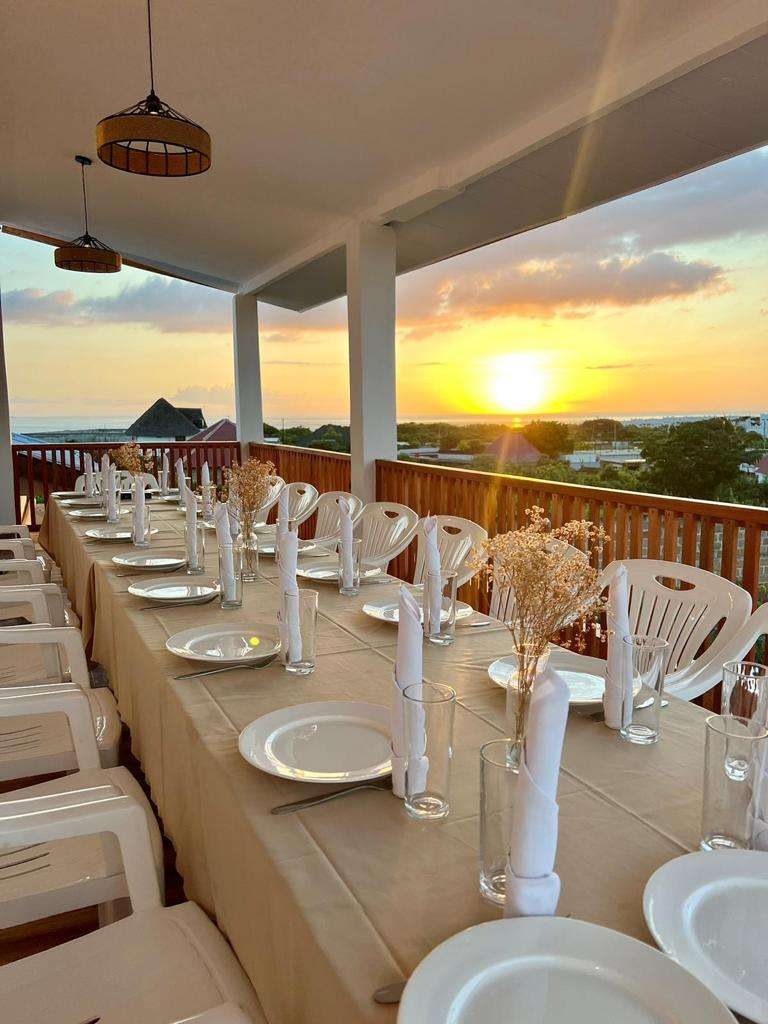
There are lots of those moments! I’ll tell you about something that happened when we hosted about a hundred people for a Shabbos meal. For most of them, this was the first time they were sitting at a proper Shabbos table. There was a moment at Kiddush when we all stood, the kiddush cup was raised, and I looked at all the people and realized this moment would go down in history. There was never a Shabbos meal here before with so many Jews standing to testify about G-d creating the world in the heart of Muslim Zanzibar. It’s a tremendous nachas ruach to Hashem. This feeling provides relief and gives strength for us to go on with our shlichus; you suddenly realize more deeply the enormous significance of our being here.
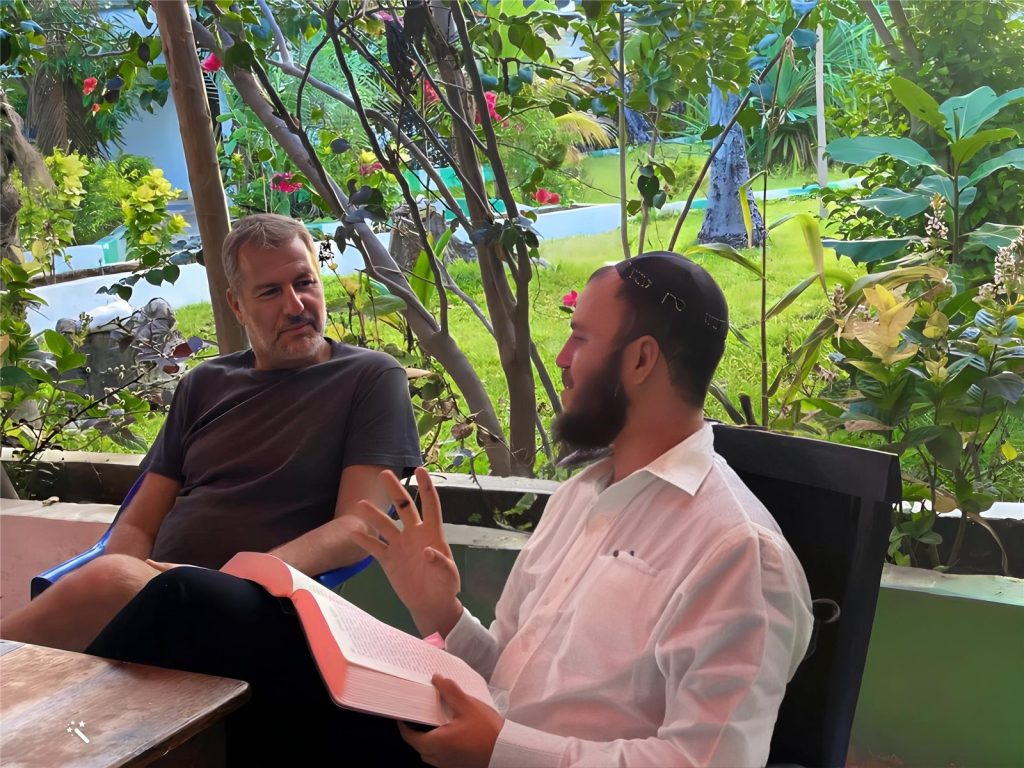
In Zanzibar there are also Israeli businessmen, some who come once a month, and you see how a relationship built on a few encounters deepens into a real connection. It’s moving to meet a Jew here who did not put on tefillin for eleven years, and when we suggested that he put on tefillin, he rolled up his sleeve. You see the Jewish heart burst forth in tears of longing. We feel the power of the Rebbe here with us.
Generally speaking, I don’t know how to fundraise and I’m very much a calculated person. Nevertheless, we signed to buy land with only enough money for a deposit. Where would I get the rest of the money? I said to Hashem, “Let’s partner!” What we gave in advance was our personal money and not money that we got from donations and Hashem will really partner…
That’s quite a challenge!
The real challenge is to be able to move yourself aside and realize that you are a shliach of Hashem and the Rebbe, and to let them work through you without your interfering and without your limitations. It’s definitely a daily challenge.
Where do you most feel that the Rebbe is with you on shlichus?
A Jew asks his fellow, “Where is G-d to be found?” He answers, “Wherever you let him in.”
I see this on our shlichus here. I personally feel the Rebbe going with us. Without knowing that the Rebbe is here in everything, you can’t go on a shlichus like this. Our ability to do things that are above nature, against human logic, is all from the Rebbe. As I said, the challenge is to put yourself aside, to concede your ego, and let the Rebbe work. Or, like Rabbi Reuven Dunin once said, “To set yourself as though the Rebbe is with you, and conduct yourself in that manner.”
So, in every situation on shlichus, you need to place the Rebbe in front of your eyes and think about how the Rebbe would react, act or do, and when you live like this, you’re successful.
Saving A Life
Hardly a day goes by without moving stories.
One day, we were sitting in the Chabad House at eight at night when the phone rang. It was an older woman who said that her older brother, 69, was a candidate for a lung transplant in Eretz Yisrael and his children decided to treat him with a ticket to Zanzibar.
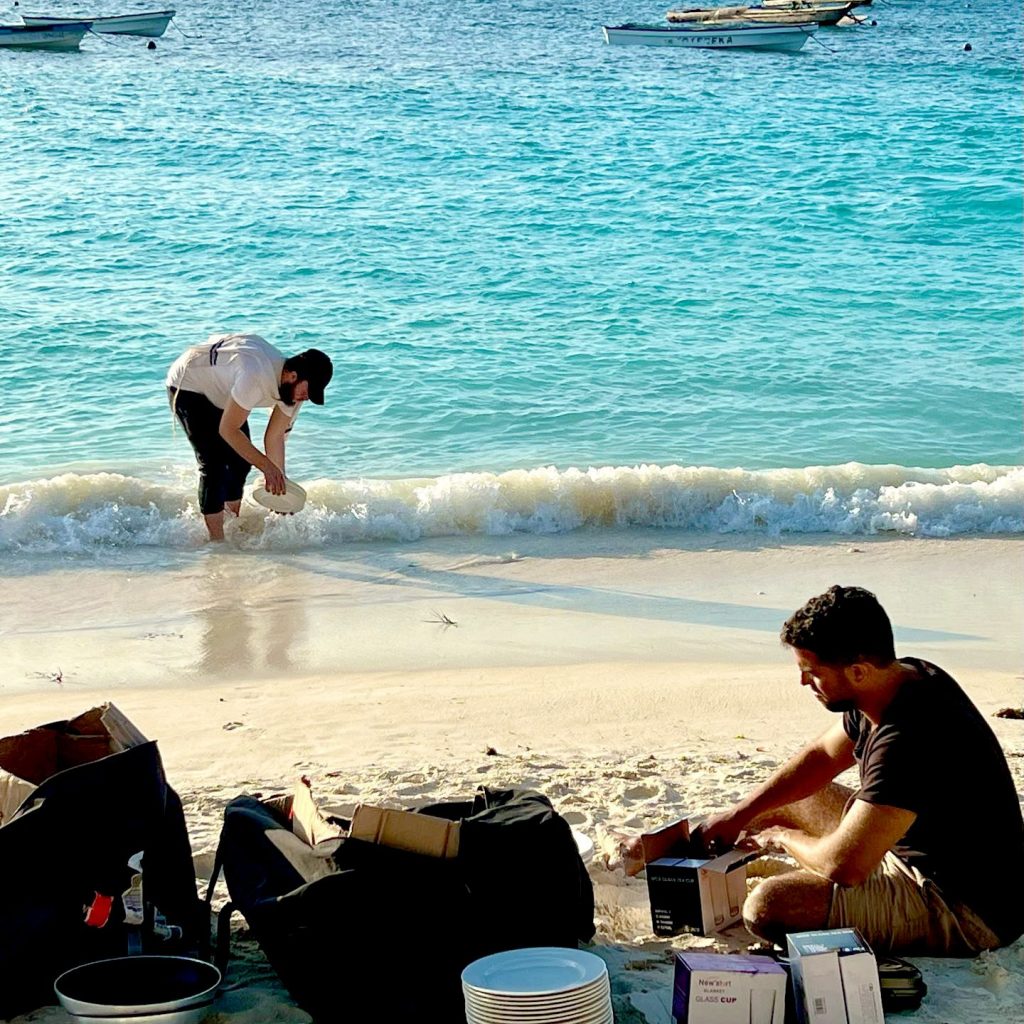
He came to Zanizbar with his wife. He was in poor health and attached 24 hours to a mobile oxygen machine. At night, he was connected to a special machine with a certain cable. Well, they forgot the cable at home which meant he couldn’t go to sleep… What would happen if he went to sleep anyway? One of two things, either he would wake up with brain damage or he wouldn’t get up altogether.
The first night, he didn’t sleep. The second night, after over 48 hours without sleep, he called me and asked, “You are the Chabadnik in Zanzibar?” I said I was and he said, “I’m still too young to die. I have a family and don’t want to die!” He explained his situation to me and asked me to do what I could to obtain what he needed.
Through a local Jew, I was able to get the phone number of the director of a hospital in Zanzibar and I explained the situation to him. Those were very tense minutes when I myself didn’t exactly understand the situation but I knew I had to get an oxygen machine for this man. However, the director couldn’t just send me a machine that cost thousands of dollars to someone he didn’t know, and he had no idea if the machine was insured or not.
The director connected me with another hospital which was much closer to where the older Jew was staying. I called and explained the situation and added that we would pay them for this, but the machine had to come as fast as possible.
At that hospital, there was only one doctor there at night (We’re in Zanzibar, remember…) who was treating someone and she said she couldn’t leave the patient. I had to exert pressure and said it’s connected with the government and that we were here on the island as part of a large organization who were urgently needed. After tremendous effort, they said they would call another doctor to the hospital and that “our” Jew should go there to get treatment.
I happily called the man and told him we had located an oxygen machine and that he had to go to get treated. The Jew got all nervous, saying it was a Muslim place and they didn’t care about his welfare. I had to convince him that it was a Jewish medical center and that everything would be fine and he shouldn’t worry.
Literally at the ‘critical moment,’ he managed to connect to his oxygen machine. The problem was that the battery supply for that day had been used up. Now, he had to be attached to a plug that would recharge the battery so he could travel to the hospital which was twenty minutes away, which meant he needed to be connected for another two hours at home and he wouldn’t survive. In the end, his life was saved.
At that time, we were still uncertain whether to remain in Zanzibar or not. This event made us feel more strongly that it was important to stay here.
Another story. There’s someone named Ariel who helps us a lot with the bureaucracy and the Chabad House. When we met, I asked him whether he wants to put on tefillin. He said he had already done so but the next day, his partner would come and it would be interesting to see whether I’d be able to put tefillin on with him.
The next day, I met his partner and told him that I had made a bet with Ariel whether I’d be able to help him put on tefillin. He was surprised by the idea and asked some questions about tefillin. I told him to put them on and he would feel for himself what tefillin are about.
That’s what happened. He disappeared for a few minutes and then returned and asked for help in putting on the tefillin, because he had never done so before. I explained a little bit, how the hand tefillin are opposite the heart, and the head tefillin are opposite the head, and about saying “Shema Yisrael.” His heart opened and he cried.
After he removed the tefillin, he tried going back to his business meeting but he realized he couldn’t continue as usual and he excused himself to his partners, saying that he was in emotional turmoil.
It was amazing to see how by putting on tefillin one time, his G-dly soul had broken through all blockages. Since then, we are in touch weekly and even learn together.
Jumping Into Deep Water
How do people respond to the Besuras HaGeula?
When someone comes into the Chabad House, his first question is, “What are you doing in this out-of-the-way place? What is a family with children doing here?” We answer that we are shluchim of the Rebbe Melech HaMoshiach and the conversation goes on to the seventh generation, the purpose of the creation of the world, and that everything leads to the Geula.
I always direct the conversation to the point that the Rebbe speaks about a lot – to reveal the Moshiach within each person and how each person is a shliach and has a purpose in the world.
What are your plans for the future?
As I said, we are in the process of buying a nice size piece of land in the most attractive place in Zanzibar, on the boulevard where the hotels are. I sense that this place waited for us since the six days of creation… We jumped at the opportunity.
Practically speaking, we went into it without money; we took my and my wife’s savings and put it into a down payment toward the purchase of the property and from there, Hashem will take us further. I hope that in the not too distant future, there will be an active Jewish center here which will light up Zanzibar and all of Tanzania and will include mikvaos, a preschool, a shul, a kosher restaurant and everything that a Jewish center needs.
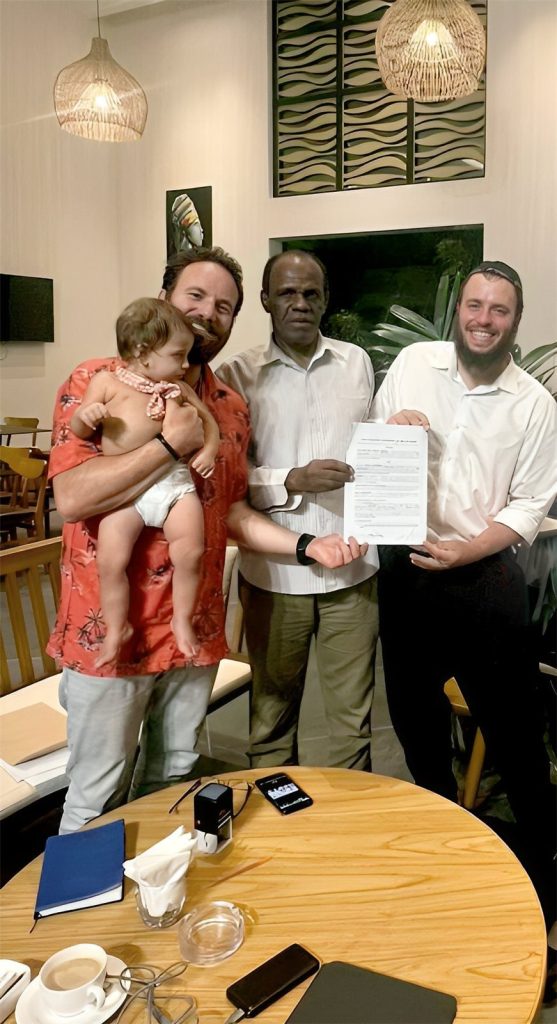
You, your wife, and two daughters jumped into the deep water. There are many young men who are at a crossroads and wondering whether to go on shlichus. What can you tell them?
I remember an interesting incident that occurred when I was a bachur. One day, I visited a hospital and there was a man there who had never put on tefillin. He was hospitalized after a stroke. When he saw me, he said, “Chabadnik, do you have tefillin?” And I didn’t have tefillin. He was disappointed and said, “A Chabadnik bachur should always have tefillin with him.”
I was upset to have missed this opportunity. I made a hachlata that I would always have tefillin with me. This happened many years before I heard of a place called Zanzibar. Since then, Hashem has sent me endless opportunities and encounters with people and you see how when you make yourself a vessel for shlichus, Hashem sends you the people with whom to put on tefillin.
Shlichus is an extraordinary experience. You can definitely live with a shlichus consciousness even if you don’t go to a particular geographical location, but go out on shlichus mentally, i.e. be active and walk the streets as a shliach of Hashem and the Rebbe in the world; constantly feel like a communal person who has a role to play, and not as a private person. This makes you open your eyes toward the world around you.
Someone who can, should write to the Rebbe and see how he will receive the kochos. Even someone who is not suited to travel far away, should know that the idea of shlichus is something beyond time and place.
Beis Moshiach #1427 • pp. 16-24
© 2026 Beis Moshiach Magazine. All rights reserved.
This article originally appeared in Beis Moshiach #1427. You are welcome to share it with friends and family by email or in print, provided that you do not change, add to or omit any part of it, you credit the author and Beis Moshiach, and you include a link to archive.bmoshiach.org (written out in full in printed copies).
To republish this article in a newspaper, magazine, book or website, please request permission in advance at [email protected].