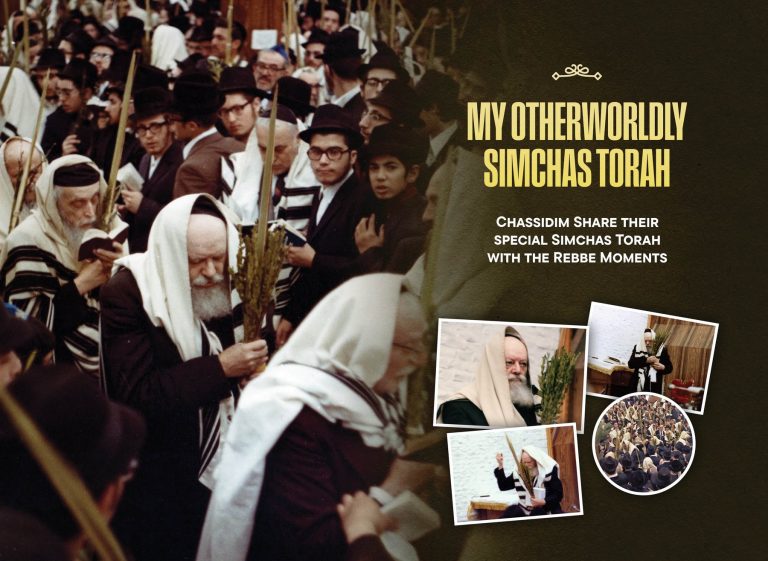
The Rebbe and My Illustrious Zeide
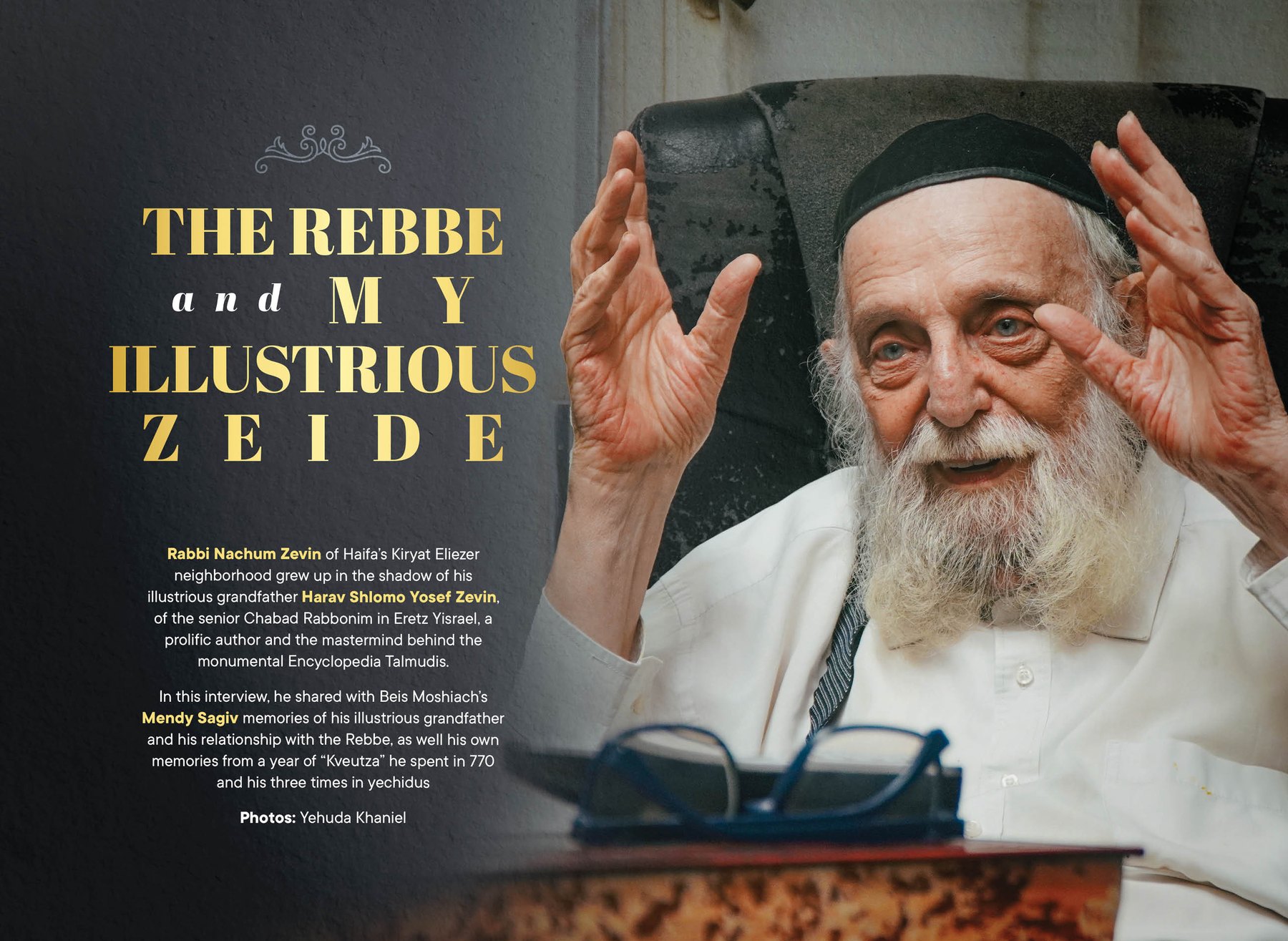
Rabbi Nachum Zevin of Haifa’s Kiryat Eliezer neighborhood grew up in the shadow of his illustrious grandfather Harav Shlomo Yosef Zevin, of the senior Chabad Rabbonim in Eretz Yisrael, a prolific author and the mastermind behind the monumental Encyclopedia Talmudis. In this interview, he shared with Beis Moshiach’s Mendy Sagiv memories of his illustrious grandfather and his relationship with the Rebbe, as well his own memories from a year of “Kveutza” he spent in 770 and his three times in yechidus
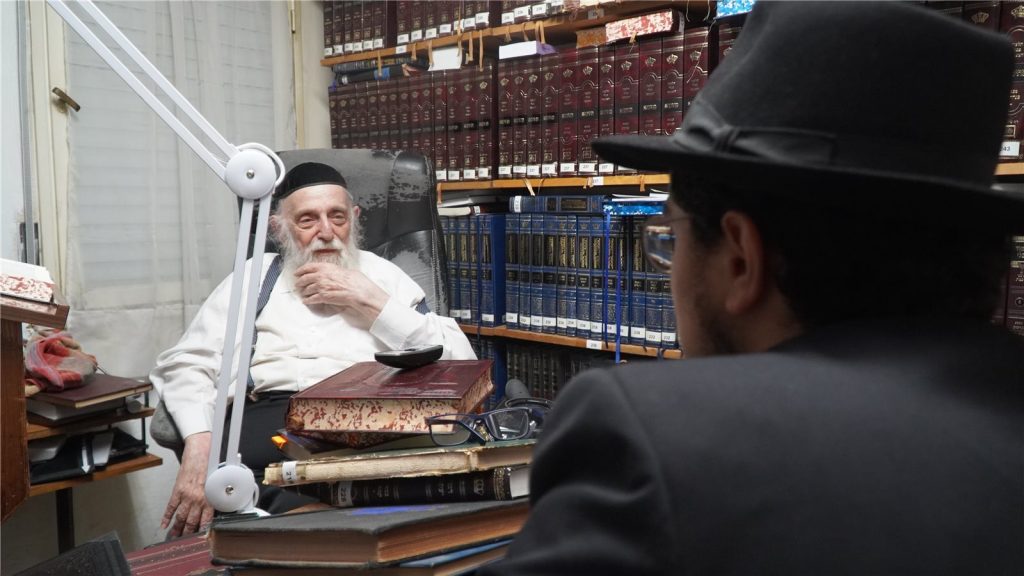
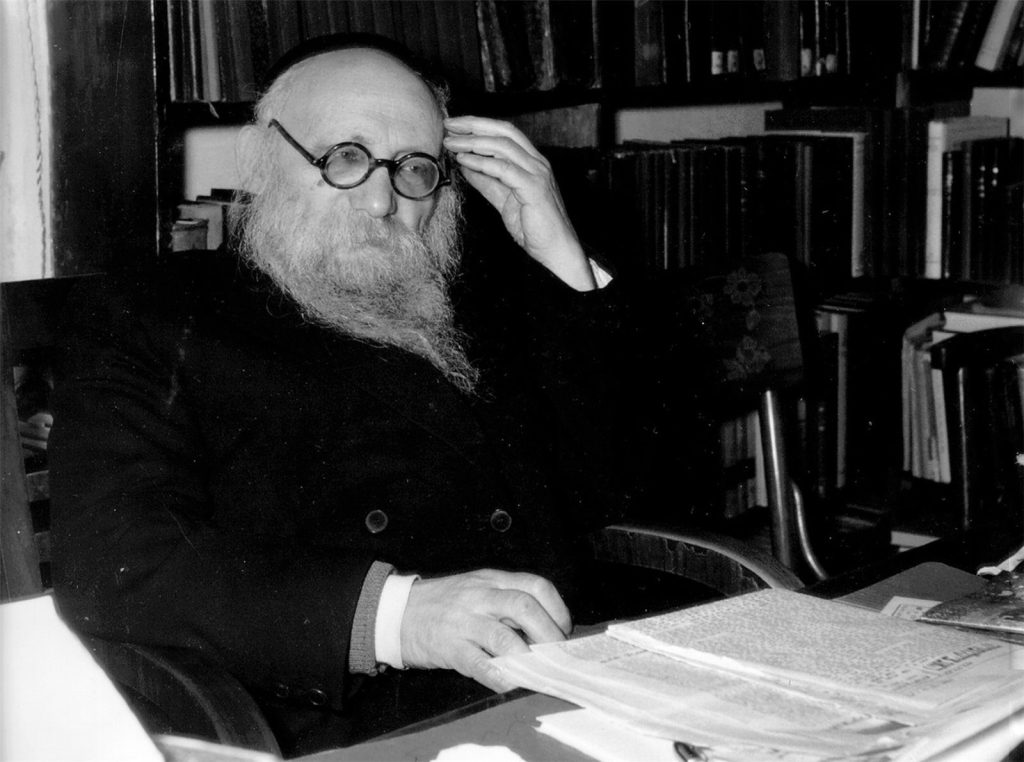
When I went to see Rabbi Nachum Zevin in the Kiryat Eliezer neighborhood in Haifa, I saw a true Torah home. The apartment is packed from wall to wall with sifrei kodesh. There was even a large pile of sefarim on the kitchen counter. Past the living room is his study with all four walls covered with sefarim, a desk (with sefarim on it), a shtender and a lamp. This is where R’ Zevin sits and learns and where he warmly welcomed me.
We quickly got to talking about his memories from his yeshiva days. We spoke about the mashpiim who left their imprint on him and about his year on Kevutza which was 5726.
R’ Zevin was born on 11 Elul 5707 to his father, Rabbi Aharon Mordechai, the son of the famous gaon, Rabbi Shlomo Yosef Zevin z’l, one of the great Chabad rabbanim of the last generation.
As a boy growing up in Tel Aviv, what do you remember about going to yeshivas Tomchei Tmimim in Lud?
I was familiar with the atmosphere of Lubavitch before that, as well as the mashpiim of that time, since I grew up in the famous shul on Rechov Nachalas Binyamin in Tel Aviv, alongside the great mashpiim of Anash in Eretz Yisrael. That being said, when I got to the yeshiva in Lud, the atmosphere was altogether different; there was a feeling of erenstkeit (seriousness).
What do you remember about those who taught you in yeshiva?
The maggidei shiur were excellent. I mostly remember the mashgiach, R’ Leizer Horowitz, son of R’ Itche der masmid. He was a special person who learned all day long. He was also a powerful mashgiach; we were afraid of him. He delivered some shiurim on Avnei Miluim and taught us the material well. You saw yiras shomayim in him, in the full sense of the term. R’ Leizer taught us not only Nigleh but Chassidus too, and gave shiurim in yeshiva.
I was later in yeshiva with Rabbi Zelig Feldman in yeshivas Toras Emes in Yerushalayim. I remember that when he was a chassan, I went along with him to shiurim given by Rabbi Chaim Shmuelevitz. It was hard to talk in learning with R’ Chaim since he was already hard of hearing but R’ Zelig argued in learning with his son-in-law, Rabbi Nachum Partzovitz. It was obvious that he was sharp.
I remember a maamar of the Rebbe that came out at that time in which the Rebbe explained the topic of “ohr makif” becoming “ohr memalei” and R’ Zelig had a hard time understanding this, since there ‘needs to be an ohr makif.’ I saw how he really cared to understand what the Rebbe said.
Memories from Ponovezh
At a certain point, after learning in Lud, R’ Zevin went to learn in yeshivas Ponovezh, a litvishe yeshiva. He still kept in touch with mashpiim in Tomchei Tmimim. This was prior to the hatred and split between the litvish and Chabad. Learning in Ponovezh didn’t impact R’ Zevin’s way of life:
There was no hatred for Chabad and generally, not for Chassidim either, as there was years later.
When I wanted to, I got permission to leave yeshiva for the Yud-Tes Kislev farbrengen that took place every year in Kfar Chabad, even though the hanhala did not view this favorably. I remember once getting a ‘dig’ from the rosh yeshiva for going to a farbrengen where Zionist leaders would get a place of honor and would even be honored to speak. The rosh yeshiva said to me, “If you have a question about kerias Shema, ask Bar Yehuda…” referring to the Interior Minister, Yisrael Bar Yehuda who was invited to the farbrengen and asked to speak.
On the other hand, the president and founder of yeshivas Ponovezh, Rabbi Yosef Shlomo Kahaneman, was very friendly with Lubavitch. Rabbi Shmuel Levitin told me that once, R’ Kahaneman was at a meeting that took place in the Rebbe Rayatz’s home where he said, “If a batlan like me can found a yeshiva, then the Rebbe can turn over all of Eretz Yisrael.” The Rebbe Rayatz smiled and said, “Batlan?!”
When the Ponovezher Rav saw the Rebbe smile, he excitedly said, “Boruch Hashem I had the zechus to bring joy to the tzaddik.”,
Sometimes, when R’ Kahaneman returned from fundraising in the United States, and in those days this was rare, he would see one of the Chabad bachurim in his yeshiva and say to him, “Ah gruss fun dem Rebbe’n (regards from the Rebbe).”
Over the years, a number of Chabad bachurim learned in Ponovezh, each one for his reasons.
When I learned there, there were three outstanding bachurim who would go and farbreng with R’ Chaim Shaul Brook every motzoei Shabbos. For a while, they would take me with them.
I remember the first time I joined them. R’ Shaul said, “There are three bachurim here who have been coming for a while from Ponovezh and I see no change in them, so either they should change or they should get lost.” That was R’ Shaul; he sometimes spoke sharply.
One of the three bachurim asked him, “What do you mean by a change? Here, we brought another bachur with us.” And he introduced me as the grandson of Rabbi Zevin.
R’ Shaul said, “I don’t understand.” They explained again that I’m the grandson of Rabbi Zevin but he said again, “I don’t understand.” This repeated itself a few times. After several failed attempts, he said, “If I say I don’t understand, then if you explain it a thousand times, I still won’t understand, because I don’t understand what a grandson of Rabbi Zevin is doing in Ponovezh!”
I remember that in his last year, some of us bachurim escorted him from the farbrengen in yeshiva to his house. He showed us the coat he was wearing and said, “This is from my wedding.” He was someone not at all immersed in gashmiyus and was an exceptional mashpia.
Rabbi Chodakov Inquires About Ponovezh
Tamim Nachum Zevin continued being in touch with R’ Chaim Shaul Brook who convinced him to go and learn in Tomchei Tmimim – 770 as part of a Kevutza year, where he would learn for the entire year 5726.
How did they react in Ponovezh to your going to the Rebbe?
The truth is they were a bit surprised. I got permission from the rosh yeshiva, Rabbi Dovid Povarsky, himself. He promised me that when I’d return to Eretz Yisrael, he would take me back to yeshiva, but I didn’t return.
It created a somewhat uncomfortable situation. I remember that when I returned to Eretz Yisrael after Kevutza, I attended the wedding of a bachur from Ponovezh and the rosh yeshiva, Rabbi Shmuel Rozovsky, was standing not far from me. I was afraid to go over to him to say hello since I knew he wasn’t happy with me for leaving.
After the chuppa, he came over to me and said, “Do you think I didn’t recognize you? And maybe you think I don’t want to greet you, but you should know I recognized you.” In his way, he was telling me he wasn’t angry with me.
You went straight from yeshivas Ponovezh to a year on Kevutza. Can you tell us what it was like when you first arrived?
The main authority figures I connected with were the rosh yeshiva, Rabbi Mordechai Mentlick, and the Rebbe’s secretary, Rabbi Chodakov. I remember, when I first arrived, I went to R’ Chodakov’s office and he asked me a lot about Ponovezh. Among the questions he asked me was whether bachurim went to the mikva every day. I said that most did not. He asked, what about tevilas Ezra? I said, “They abolished tevilas Ezra.”
R’ Chodakov began bringing sources from Rishonim that hold that today there is also an obligation of tevilas Ezra. I found this all surprising. He was just the secretary – how did he have all this Torah knowledge? Afterward, I saw that in Likutei Torah of that week, the Alter Rebbe brings all these Rishonim. In addition to that, I discovered that he was a big talmid chacham.
The Rebbe Said to Be Mekarev Me
At a certain point, R’ Yoel Kahn began to be mekarev me. I later realized this was because of an instruction from the Rebbe. As a result, a deep connection developed between me and R’ Yoel. He learned Chassidus with me every day.
R’ Yoel was a special person; I never saw anyone like him. He was an ascetic and had no interest in pleasures of this world. He had strong faith in the Rebbe which came out in our personal conversations.
I was introduced to the Rebbe at ‘kos shel bracha’ on motzoei Rosh Hashana, and the Rebbe said, “Tiferes avos bnei banim.”
On Simchas Torah, when I stood at the Rebbe’s farbrengen, I saw the Rebbe speaking with R’ Chodakov. Then, R’ Chodakov came over to where I was standing and signaled with his hand. I don’t know whether he pointed at me. However, when I returned to Eretz Yisrael and went to my grandfather, I looked through the letters that the Rebbe sent him and saw a letter dated 25 Tishrei in which he wrote, “May it be the will that it be fulfilled in his grandson that the ‘oppression (this is the pressure’ – literally) that was upon him here on Simchas Torah – will accomplish like the statement of the Sages: Rabi Yochanan said, ‘Just as this olive etc.’ (the more you crush it the more oil it gives).”
As per the instructions of the Rebbe, during his stay in the US, R’ Nachum Zevin and R’ Yisroel Labkovsky visited gedolei Yisrael in New York including the posek, Rabbi Moshe Feinstein z’l.
“The first time I went to hear a shiur from Rabbi Moshe Feinstein, R’ Yisroel Labkovsky went with me. After the shiur they introduced me to Rabbi Feinstein as ‘the grandson of Rabbi Zevin.’ Rabbi Feinstein asked me in front of everyone, ‘What are you doing here in the US?’ I answered, ‘I came to the Rebbe.’
“Rabbi Feinstein asked, ‘Tell me the truth. You made your own decision to come or did you grandfather send you to the Rebbe? If your grandfather sent you, to me this is a great proof.’
“When I returned afterward to 770, not five minutes passed and I was called to R’ Chodakov’s office and he said to me, ‘Nu, because of your grandfather you probably went to visit roshei yeshivos. Apparently you were at Rabbi Moshe Feinstein,’ and he asked me to tell him in detail what he said to me.
“When I was in the US, I also was treated to closeness by Rabbi Yitzchok Hutner. When he was in Berlin, he was a chavrusa of the Rebbe. He once said to me, ‘You’ve seen that the Rebbe doesn’t have teeth. Why do you think he doesn’t have teeth?’ He immediately answered, ‘He lost his teeth in Paris because of his asceticism.’
“He also told me that when the Rebbe Rayatz arrived in America, he – Rabbi Hutner – did not go to yechidus because the Rebbe Rayatz would customarily speak and in later years he had a difficult time speaking and he did not want to see the Rebbe suffering and chose not to go.”
The First Yechidus
During the year that he spent with the Rebbe, Nachum Zevin had yechidus three times which was uncommon for the tmimim. During these yechiduyos, the Rebbe spoke to him in learning and gave him guidance in avodas Hashem.
When did the first yechidus take place?
The first yechidus was around the end of Cheshvan or the beginning of Kislev. When I went in, the Rebbe asked me to tell him a dvar Torah. I was afraid… what does it mean to tell the Rebbe a dvar Torah? But since I had been asked, I began reviewing a sugya in meseches Sanhedrin. The Rebbe immediately commented, “That’s not from meseches Shabbos,” referring to the mesechta learned in yeshiva at that time. I told the Rebbe that I hadn’t prepared sufficiently on Shabbos since we had just started learning this mesechta in yeshiva.
I continued with the sugya in Sanhedrin that discussed the ox that killed unintentionally in which case it is exempt from stoning for the reason, “the death of the ox is like the death of the owner” – just as the death of the owner is only in a case of intentional killing so too, the death of the ox occurs only if it kills intentionally.
The Rebbe immediately asked: How does the Gemara compare the owner to an ox when an ox has no daas and a person does? Therefore, an ox that kills unintentionally would seem to have the same din as a person who kills intentionally… And how can one learn from one incident to another?
Then the Rebbe said this is one of the instances that can only be understood with an explanation from Chassidus and the Rebbe explained it based on what it says in Tanya about “Hashem joins a good thought to a deed.”
During those years, the Rebbe introduced the directive to learn the Chassidishe parsha (Torah Ohr, Likutei Torah) every week. At that point, I had not taken upon myself to implement this directive.
During yechidus, the Rebbe asked me what I was learning in Chassidus and I said, “Tanya.” The Rebbe asked me in surprise, “And Likutei Torah not?” Then the Rebbe “remembered” that I had come after the instruction had been given and said, “This doesn’t demand itself by you?”
At the end of that yechidus, the Rebbe wished me along the lines of the topic that we spoke of earlier, “Yehi ratzon that it be fulfilled in you, ‘the death of the ox is like the death of the owner’ – in other words, according to the inner meaning as it is explained in Tanya that the evil of the animal soul will be transformed to complete good.” This yechidus took twenty minutes, a record for a bachur.
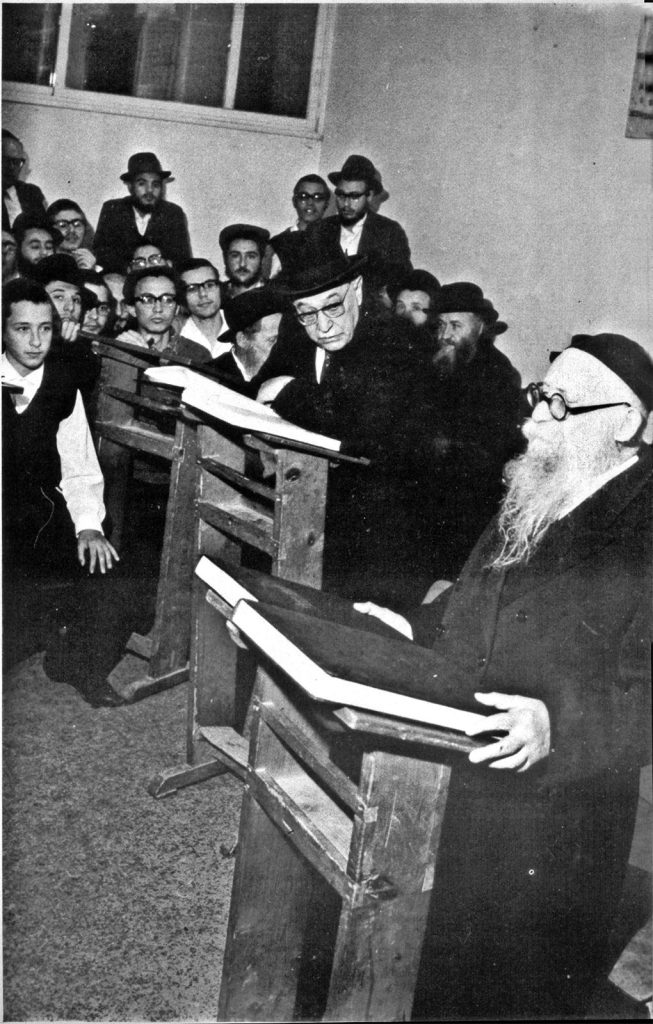
After the yechidus, I wrote to the Rebbe about a question that I still had on the sugya in Nigleh we had spoken about, and the Rebbe answered in a long, detailed letter (part of the letter was printed in Likutei Sichos vol. 6, p. 329. The entire letter is printed in Igros Kodesh, vol. 24, p. 50).
An Entire Year with the Rebbe
In those days,, the Kevutza did not yet extend for an entire year, mainly because the IDF did not approve bachurim leaving for a year. Rabbi Shlomo Yosef Zevin worked on this and got his friend, President Shazar involved who exerted his influence on the army who finally conceded.
Your grandfather was involved in the zechus of fulfilling the Rebbe’s desire to extend the stay of the talmidim on Kevutza. What exactly happened?
At first, we were approved to stay for half a year, like previously, but the Rebbe wanted the Kevutza to continue for an entire year. Some askanim spoke to my grandfather and asked him to use his connections. Shazar intervened and we were given permission by the Defense Ministry to stay for a year. The Kevutza of 5726 was the first time this happened.
After permission was obtained, there was a problem with extending the El-Al tickets and the Rebbe took care of this too. We saw how important it was to him that the tmimim be with him for a year.
Rabbi Mentlick and the hanhala of the yeshiva would go to the Rebbe every month to discuss the bachurim. That month, when they left yechidus, Rabbi Mentlick said to me that the Rebbe advised them to speak to Rabbi Efrati and he would arrange extending the tickets. I immediately called my grandfather and told him the Rebbe’s request.
The day I was supposed to have yechidus, I got a letter from my grandfather in which he wrote that he received a phone call from Rabbi Efrati about extending the bachurim’s tickets, and it was arranged. I told the Rebbe this news. The Rebbe asked, “Why Efrati?” and I said, “Because the Rebbe said.” The Rebbe responded with, “Nu.”
When I left yechidus, Rabbi Mentlick asked me what happened. He wanted to make sure that that I didn’t say the message came from him.
As a bachur who came from Eretz Yisrael to the United States, and from a non-Chabad yeshiva, was the atmosphere different than what you were familiar with?
Of course! In my second yechidus, the Rebbe asked me, “What are you doing here when it’s forbidden to leave Eretz Yisrael?”
I said, “In order to learn Torah, it’s permitted.”
The Rebbe responded that we needed to consider whether this means only that upon leaving the land, the angel asks the person why he’s going, and since he says he’s going to learn Torah, his leaving is permissible, and even if afterward he does not learn this is not a problem because his original leaving was permitted; or, is he asked every single day anew, ‘You are from Eretz Yisrael and what are you doing outside of the land?,’ and the person then answers he left to learn Torah. In other words, that day he learned outside of Eretz Yisrael more than he would have learned in Eretz Yisrael, which is why he is allowed to be outside of Eretz Yisrael. However, they ask him again, ‘You are from Eretz Yisrael, what are you doing here outside the land?’ It won’t be enough to say that you learned like yesterday; every day there has to be an addition compared to previous days.
“The right explanation,” concluded the Rebbe, “is the second one and since this is so, of course you must add in your Torah study every day.”
In general, the Rebbe constantly demanded that the tmimim be immersed in learning. I think that a bachur who was not immersed in learning couldn’t really understand the Rebbe’s sichos.
My grandfather once said to me, ‘There is no sefer Chassidus that extols Torah study like Likutei Torah and Tanya. There is no sefer Nigleh that extols Torah study like Shulchan Aruch HaRav, and no Rebbe speaks so many words of Torah like the Rebbe. Therefore, there ought to be Torah geniuses in Chabad.”
When I later repeated this to Rabbi Mordechai Ashkenazi, he said it was a “terrific vort.”
You can’t just read the Rebbe’s sichos; either you learn them in depth or not at all. If you learn a likut of the Rebbe with all the footnotes, you become proficient in the topic since the Rebbe displays mastery of every point in Torah.
You mentioned an interesting point that you heard from your grandfather about the Rebbe. Were there other interesting things you heard from him?
My grandfather once told me in amazement that Rashag was utterly subservient to the Rebbe. In 5726, Rashag was in Eretz Yisrael (I was on Kevutza at the time and heard this afterward from my grandfather). Rashag went to South Africa but stopped for a few days in Eretz Yisrael to visit his mother. He wanted to visit a few other people in Eretz Yisrael but the Rebbe told him before he left to only visit Rabbi Zevin, other than his mother, of course.
While he was visiting my grandfather, some askanim, including Rabbi Zelig Slonim, came to the house and asked him to come and visit Shikun Chabad. In those days, the shikun was in the peak of its development. Rashag declined, saying, “The brother-in-law [i.e. the Rebbe] said just Rabbi Zevin.” All those present sensed his complete bittul to the Rebbe.
My grandfather said that R’ Slonim pressured him but it didn’t help. In the end, a ‘compromise’ was agreed upon; Rashag would travel by taxi around the shikun and look out the car windows at the shikun.
“That’s called real bittul,” concluded my grandfather.
Every time I would go to the Rebbe for ‘kos shel bracha,’ the Rebbe would give me a bottle for my grandfather. Before my brother’s bar mitzva (which took place during my year on Kevutza), I went over to the Rebbe with l’chaim and the Rebbe gave me a bottle to send to the bar mitzva. The Rebbe asked me three times, “Will it reach the bar mitzva?” These questions should have warned me but I said, “yes.” In the end, it did not get there on time.
Some time later, Rabbi Chodakov came over to me with the Panim el Panim newspaper. He showed me the article about my brother’s bar mitzva, an event that was widely covered there. He said the Rebbe asked him to show me this article.
The Rebbe Poured Three Cups of L’chaim for Me
Please tell us about things that happened on special days.
On Purim 5726, during the famous farbrengen, the Rebbe said, “Whoever puts his hand out, is given.” Everyone understood this to be an auspicious time and the Rebbe gave l’chaim out for hours, to whoever wanted it.
During that farbrengen the Rebbe called me and said that if I take l’chaim, I should first take for my grandfather. The Rebbe poured a full cup for me and continued holding the bottle. I realized the Rebbe was waiting for me to drink and then he’d pour again. I drank a little and held out my hand for a pour for me too but the Rebbe said with a smile, “We can’t mix your with your grandfather’s.” In other words, the Rebbe was waiting for me to finish the cup and then he’d pour more. That was the first time I drank a full cup of l’chaim.
Then the Rebbe said I should take another cup for my grandfather and I had to drink that entire cup too. Then the Rebbe poured a third time and said, “So it shouldn’t be zugos (pairs).”
Then the Rebbe gave me cake and said, “Your grandfather would make kiddush on 96% and didn’t need mezonos.”
After I drank all three cups, the Rebbe told me to continue standing next to him. I still remember the entire farbrengen until the Rebbe left, but the moment the Rebbe left, I no longer had any recollection of what was happening with me. There is no rational explanation for this except what Chazal say, “Harsh wine is dimmed by fear.” Standing next to the Rebbe kept me sober; the moment he left, I collapsed.
By the way, speaking of ‘fear,’ I want to tell you that I was also in Ger, by the Beis Yisroel [Rabbi Yisroel Alter, d. 1977]. He was very sharp and I was also very afraid of him but there’s no comparing there and here.
I was with the Rebbe for Pesach too, and it was a special atmosphere. Throughout the Seder I stood facing the Rebbe. I saw tremendous gravity on the Rebbe throughout the Seder.
It was uplifting to see the Rebbe sitting upright, without leaning on the armrest at all. The Rebbe covered all food with salt. To the best of my recollection, the Seder was conducted as usual. What was not routine was when the Rebbe poured wine back into the bottle from the cup of Eliyahu. The Rebbe made countless pours back and forth. I tried following and counting the number of pourings but was unsuccessful.
Nasi and Chassid
Your grandfather was close with President Shazar. While you were on Kevutza, Shazar visited the Rebbe. Do you remember this?
Sure! Before Shazar’s visit, they removed many boxes from the Rebbe’s office, which contained many sefarim. Whoever wanted to, could go over and open the boxes and see the sefarim. I remember that there were “interesting” sefarim.
When Shazar arrived, the Rebbe went out to greet him and Shazar kissed the Rebbe. In diaries it says that the Rebbe kissed him, but this is incorrect. I saw what happened. A huge crowd stood outside 770.
One could see that Shazar was very emotional.
When I returned to Eretz Yisrael, I visited Shazar and he asked me, “Did you see me at the Rebbe? Did you see how emotional I was? But the Rebbe was also emotional.”
When Shazar went to the Rebbe, the Rebbe sent some elders of Anash to escort him, including R’ Shmuel Levitin. When he left, the Rebbe said the same people should escort him. The Rebbe said to R’ Shmuel, “Perhaps it is hard for you but others need it…”
Can you tell us stories about the relationship between Shazar and the Rebbe from your perspective?
After I returned after Kevutza, my grandfather went with me to Shazar to express his thanks for his work on behalf of the bachurim. When we arrived, I gave him a sicha of the Rebbe. He asked me right away whether it was from me or from the Rebbe. I said it was from me.
Shazar told me that the Rebbe explained to him the need and importance of the bachurim staying for a full year, day in and day out, with the Rebbe. There was something about the tmimim seeing the course of a year in Lubavitch which is why he wanted them for a year and not half a year, the way it had been until then.
The newspapers attacked Shazar, saying he shouldn’t go to the Rebbe but the Rebbe should go to him out of respect for the Medina. Shazar told me that shortly before he went to the Rebbe, he asked the Rebbe, “Perhaps, still, the Rebbe can come and visit me, because all the papers are attacking.” The Rebbe told him (when he told this to me he said, ‘I don’t understand; maybe you understand.’) he would go and ask his father-in-law [the Rebbe Rayatz].
The Rebbe did go to the Ohel on that date and when he returned, he sent a message to Shazar, “The shver doesn’t let.” In the end, Shazar decided to overcome all the obstacles and go to the Rebbe.
Shazar told me on that same visit that he had the practice of writing a letter to the Rebbe on Yud-Beis-Yud-Gimmel Tammuz every year. In his first year as president, there were celebrations at the president’s residence and he did not end up writing; he forgot. At night, he was unable to sleep and he tossed and turned all night. Toward morning, he got up and suddenly remembered that he hadn’t written to the Rebbe. He sat down to write a letter and sent it to the Rebbe.
A week later, he received a letter from the Rebbe, written before the Rebbe received his letter, in which the Rebbe wrote that a Yud-Beis-Yud-Gimmel Tammuz farbrengen had just ended, and the Rebbe wrote the time (it turned out to be the same time). “I felt it necessary to write to you and surely we are thinking of one another.”
The Rebbe and Shazar had written to one another at the same time without realizing it, but “we are thinking of one another.” I heard this from Shazar himself.
Some tried dissuade Shazar from his admiration for Chabad but he did a lot for Chabad out of love for the Rebbe and from the feeling of closeness as a Chassid.
I remember that when they placed the cornerstone in Kfar Chabad for Beit Shazar, they first read the ‘founding document.’ Shazar pointed out that it doesn’t say that it’s named in honor of the President of the Medina. R’ Zushe Wilyamowsky said, “The Kfar doesn’t want,” but R’ Shlomke Maidanchek, who was clever, immediately said, “It’s a mistake, they forgot to add it,” and then took the document and fussed with it as though he was correcting it.
Let’s go back to your year on Kevutza. Can you tell us about your third yechidus?
During yechidus, the Rebbe blessed me “that HKBH fill all your heart’s requests for good, that which you wrote and that which you needed to write but didn’t write.” I wondered about this and didn’t understand it. Afterward, I asked R’ Yoel and he said I had to write to the Rebbe that I wasn’t planning on going back to learn in Ponovezh.
When I set out for the airport, the Rebbe gave each bachur $100 towards the expenses of the trip and said, “Use it in good health.” I kept the bill and did not use it.
Impact for Life
What impact did this year have on your life?
Anyone on Kevutza would say that this year impacted his entire life. To live an entire year with the Rebbe is something special; just seeing the Rebbe every day.
All of the Rebbe’s sichos are special. Then, as youngsters, we didn’t grasp how without a sefer open in front of him, and without notes, the Rebbe spoke for so many hours on so many topics and details; it was amazing to see how the Rebbe clearly cited sources from all parts of Torah and explained them so sweetly.
All of the Rebbe’s sichos are full of divrei Torah and divrei chizuk. The Rebbe lives; we see this from how Chabad expands and grows.
The Chassid, R’ Fole Kahn wrote in his memoir something amazing about the Rebbe Rashab. “As often as we saw him, every time he left, the feeling was as though we had never seen him before.”
The Chassid, R’ Benzion Shemtov once visited my grandfather. My grandfather told him, “At least we got to know old Chassidim of yesteryear, but the young generation…” R’ Benzion firmly said, “The young generation is even better; it is more Chassidish than the previous generation.”
THE BEN-ZVI CONTROVERSY
Rabbi Nachum Zevin relates:
There is a letter from the Rebbe to my grandfather for which I will tell you the background since it is not understood. If you read the letter, you could think that my grandfather was asking the Rebbe to apologize to the president and that was absolutely not the case. My grandfather would never dare to think of such a possibility.
What happened was, the Rebbe heard that Shazar had a weekly shiur in Gemara (I think it was in Bava Metzia). At the time, Bava Metzia was printed with the Tzemach Tzedek. The Rebbe wrote a letter to Ben-Zvi [president of Israel] and said he was sending him Gemaras with the commentary of the Tzemach Tzedek.
Protocol would have been for the president to send a thank you letter or to at least affirm receiving the letter and the sefarim, but the Rebbe received no reply and this was surprising. The Rebbe asked my grandfather to diplomatically find out why Ben-Zvi did not respond.
My grandfather spoke with Shazar, who then served as the editor of Davar and found out and told my grandfather that Ben-Zvi was greatly offended since the Rebbe had used many titles but did not use the title, “President of Medinat Yisrael.” He said, “If the Rebbe doesn’t recognize the state, he shouldn’t write me letters.”
My grandfather wrote to the Rebbe explaining Ben-Zvi’s lack of response and added that perhaps, if the Rebbe hadn’t intended on doing so, and it was only in error that the title had been omitted, it could be corrected. To this, the Rebbe responded that he could not lie and write, “nasi.”
My grandfather didn’t tell the Rebbe what to do; he just told him the reason and wrote what he thought could be done.
THE MAIN RAV
Rabbi Nachum Zevin relates:
I will tell you a story that I heard from my grandfather. There was a meeting of rabbanim in Russia. Rabbanim came from all the cities. From Yekaterinaslav came only the non-Chassidic rav; R’ Levi Yitzchok Schneerson did not attend.
The gaon, Rabbi Chaim Ozer Grodzenski, who was at the meeting, was very disturbed by the absence of R’ Levi Yitzchok. He even asked why he didn’t come when “he is the main rav of the city.”
Beis Moshiach #1434 • pp. 10-21
© 2026 Beis Moshiach Magazine. All rights reserved.
This article originally appeared in Beis Moshiach #1434. You are welcome to share it with friends and family by email or in print, provided that you do not change, add to or omit any part of it, you credit the author and Beis Moshiach, and you include a link to archive.bmoshiach.org (written out in full in printed copies).
To republish this article in a newspaper, magazine, book or website, please request permission in advance at [email protected].