The Very Best Horse
Feivel was a hard worker who lived in a small village in Ukraine, back in the 1700’s. He woke up very early each morning to go to work, and he didn’t take much time to rest throughout the day.
“We weren’t sent down to this world to sleep!” He’d tell his family and friends, “A man was put in this world to work!” He would usually follow up that statement with a joke so old it wasn’t even very funny anymore. “The only person I know that works as hard as I do is Koach, my horse!”
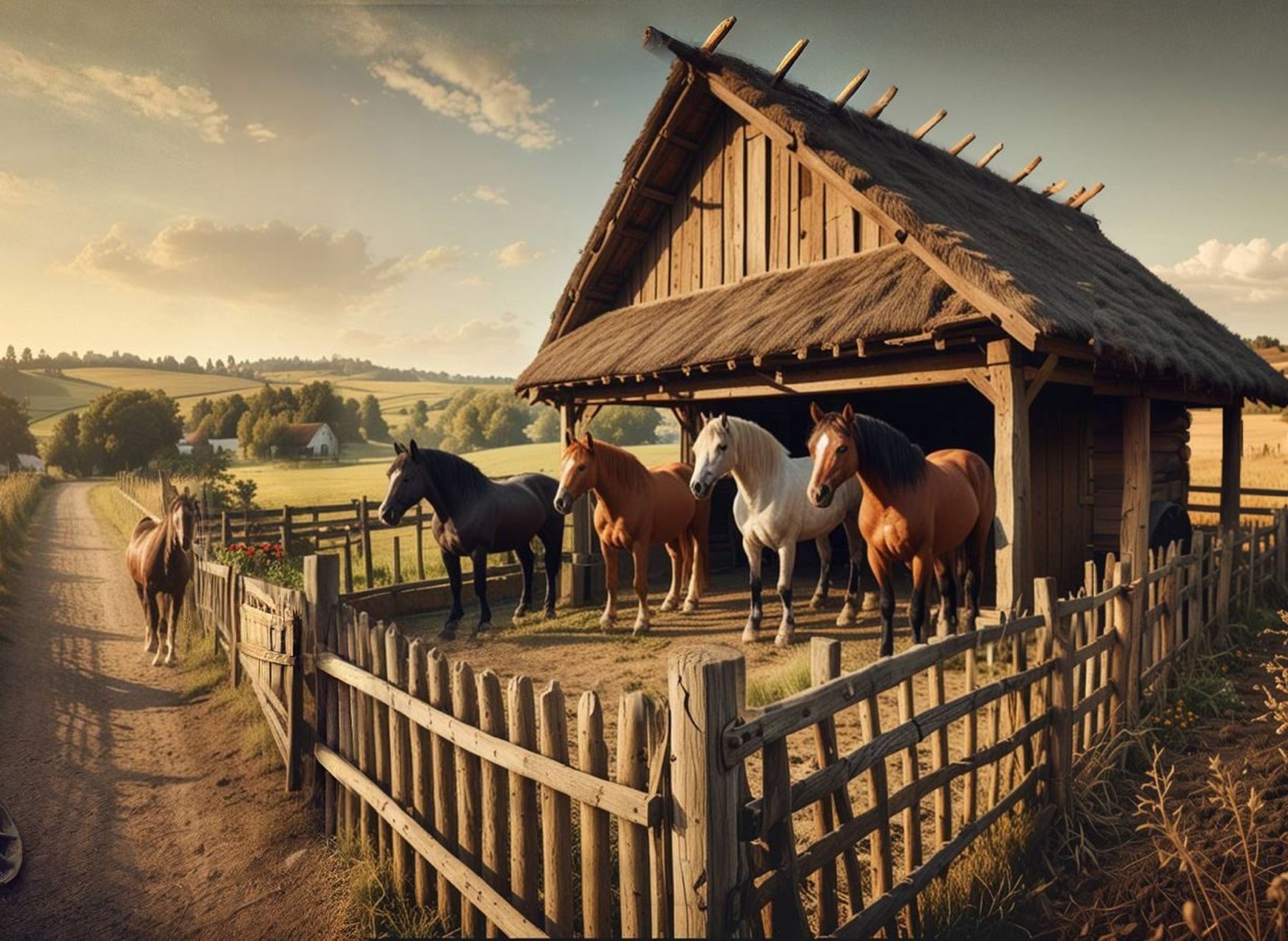
Koach was Feivel’s favorite horse. Feivel owned four horses, and they helped him do a lot of his work. Koach was smaller than the rest, but he worked three times as hard. In fact, that’s how he got his name – because he was strong and hardworking, like the Hebrew word – this horse had Koach! Feivel had never owned another horse who worked as hard as Koach did. In those days, there were no cars or buses. People traveled by horse and carriage, so a truly hard-working horse was a very precious thing to have! A good horse was like a fancy, powerful car.
Feivel’s hard work paid off. Over the years, he made quite a bit of money, to the point that he was able to lend money to those in need. People from near and far would come to borrow money from Feivel, and Feivel would write down the money they owed on a special note. He kept his box of notes on a special shelf in his closet, until the Yid came back and returned the money.
Usually, people returned the money when they promised to, and Feivel was happy he’d been able to help them out in their time of need.
It was Tuesday morning, and Feivel awoke at 6:00 in the morning, startled and shaken. He was usually awake at 5:30, bright and early. The clouds must have blocked the sun from shining through his windows. That’s how Feivel usually knew it was time to wake up for the day.
Feivel hurried to Daven and ate a quick breakfast. Toast with butter was all he had time for – there was work to do in the field, and he was already running late. Feivel wished his wife and children a good day as he prepared to leave the house. But before he could leave, there was a knock at the door.
It wasn’t very unusual for random people to stop by their home on their way to the next city. Feivel was known as a nice Yid, always happy to lend a hand.
Sometimes people came for a bite of food, other times to ask for directions, but usually, it was to borrow money or for tzedaka.
“Who’s there?” Feivel asked.
Feivel opened the door, and saw that he had a very special guest! The Baal Shem Tov, of all people, at his front door – he felt so honored.
“Please, please – come on in, Rebbe!” Feivel said as he looked around his home, wondering if it was presentable enough for such an important guest. There was no use trying to clear the table or sweep the floor now.
The Baal Shem Tov came into Feivel’s home and was seated at the dining room table with hot tea and homemade cookies. Feivel was no longer worried about all the work he had to attend to. A visit from the Baal Shem Tov wasn’t something that happened every day, and he knew it must be for a good reason.
“Tell me, Reb Feivel, how is business these days?” The Baal Shem Tov asked, casually. It appeared he’d just come for a schmooze.
“How’s business…?” Feivel repeated, as he collected his thoughts. He wondered why the Baal Shem Tov had such an interest in his work. “Ah dank dem Aibishter,” Faivel said as he lifted his arms to shamayim, “All I can do is thank Hashem. I have enough money to feed my family and help the poor, and over the last few years, I’ve been so blessed, I even have enough money to lend to others in need. Baruch Hashem, we don’t want for anything.”
“Baruch Hashem!” The Baal Shem Tov repeated. “Tell me, can I take a look at your horses?”
“With pleasure, Rebbe. Come with me to the stable.”
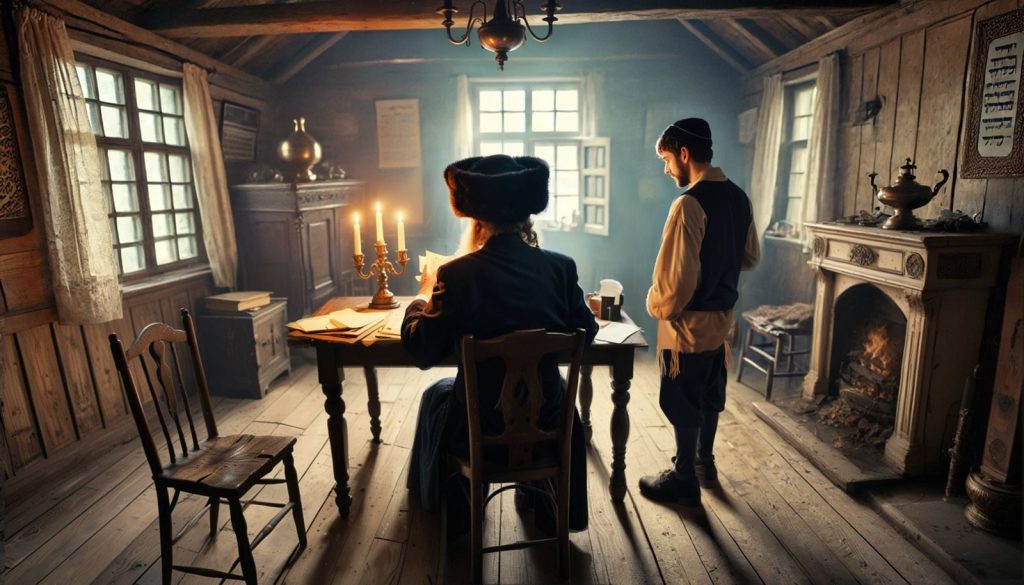
The Baal Shem Tov and Feivel walked to the back of the field, where the stable stood.
“Here they are!” Feivel said as he stretched out his arm, presenting the horses that made his business so successful. “And I must introduce you to my best horse! The smallest one, over there.”
“Your best horse…?” The Baal Shem Tov asked, thoughtfully.
“Yes, yes, my favorite!” Feivel repeated with excitement. He took pride in all of his horses, but especially Koach.
“What would you say about giving me your favorite horse… as a gift?” The Baal Shem Tov asked Feivel.
Feivel was taken aback by the strange request. It wasn’t like the Baal Shem Tov to ask for a gift, much less a horse!
“Rebbe, I’m sorry, but this horse… you must understand, I can’t give him away.” and he looked down to the floor. He couldn’t believe he was refusing The Baal Shem Tov’s request, but this wasn’t just any horse. It was his favorite – and the strongest!
“You see…” Feivel tried to find the words to explain himself, “This horse does all of my hardest work. When the wagon is too heavy for my three other horses, this horse pulls the weight all by himself! I really can’t just give him away.”
“I see,” The Baal Shem Tov said, as he continued to look around. He didn’t ask about any of the other horses. “Can I see the notes you keep? The ones that record all the money people owe you?”
It seemed so strange that the Holy Rebbe would randomly visit his house, ask to see his horse, and then his business records. But he didn’t want to ask his Rebbe for his reasons.
“Sure!” Answered Feivel, excitedly. He was happy he could at least fulfill this request.
The Baal Shem Tov followed Feivel back through his home and into the front room he used as his office. Feivel took out a tall box, packed with paper notes stating the money people owed. On some of them, he’d noted that the money had already been paid back, and some were still waiting.
The Baal Shem Tov seemed to take great interest in the notes, and he flipped through them very carefully, reading them all, until, finally, he found what he was looking for.
“Ah, this one!” the Baal Shem Tov said with excitement as he pulled a note from the pile. He picked it up to take a good look at it. It looked like he’d struck gold as he smiled! “Feivel – would you give me this note as a gift?”
Feivel read what it said on the note. 15,000 rubles, for Moshe, to be paid back in two years.
“This note isn’t worth anything, holy Rebbe. If it’s money you’re looking for, I can make a donation. But this little slip of paper is worthless. I’d be happy to gift you one of my other notes, but Moshe has already passed away. I’ve given up on getting any of the money from his family. If you need money, please let me gift you another note, one that will be worth something when it’s paid back.”
“I want this note.” The Baal Shem Tov insisted. “Even if it’s not worth anything. If you agree to forgive the debt, I’d like to keep the record.”
“Okay, Rebbe – the note is yours. If you really want it, of course you can have it.”
Feivel was happy to help, but he still couldn’t figure out why he wanted it.
The Baal Shem Tov took the note and ripped it into pieces. “Please say, out loud, that you forgive Moshe’s debt.”
“I forgive Moshe’s debt, with all of my heart,” Feivel said, with a confused look on his face. He couldn’t understand what was happening. If he’d wanted the note so badly, why did he tear it into pieces? It was a very weird moment, and Feivel was surprised.
“Good! Now let’s take another look at your horses. Maybe this time, I’ll be interested in a different one,” the Baal Shem Tov asked, and Feivel was quick to agree.
They walked towards the stable, but something looked different. Feivel could only see three out of his four horses. He thought for a moment that, maybe, one of the horses had escaped, but then he saw where the fourth horse was. It was lying flat on the floor.
“Oy vey! Koach!” He raced over to him.
“No, no, no, no, no… i-it can’t be… Rebbe… my best horse! W-we were just here, he was fine… what happened?! He’s… Koach, he’s… he’s dead!” Feivel shouted loud enough for his family to hear. They came running.
“Oy… I can’t believe it – I’ve lost my favorite horse! How could this happen… I was just here, and he looked so healthy… why did he suddenly… j-just… die like that?”
Feivel fell to the floor in shock. What would happen to his business now? How would he get the same amount of work done? He looked over to the Baal Shem Tov.
“Feivel, I want to tell you something about your favorite horse.” The Baal Shem Tov said.
Feivel, along with his family, gathered around him and looked up to listen. Maybe the Baal Shem Tov could offer some advice.
“This horse was a gilgul of Moshe. That means Moshe’s neshama came back down into this world to pay back the money he owed you. He was told that he had a debt to pay back. Moshe was a good Jew, so they allowed him to come back to you in the form of a horse. Every day, he worked so hard to repay you for the money you so kindly lent him. So you see, when you gave up the note with Moshe’s name and let go of the debt with all your heart, Moshe’s neshama was finally able to rest in Shamayim. The horse died at that moment, because Moshe’s Neshama had just left him.”
Everyone stood there, shocked. They were so surprised at what they were hearing. Their favorite horse had been a gilgul, holding Moshe’s neshama. It was… confusing. Surprising.
“I don’t know what to say, Rebbe… but I think you’re right. I got Koach just two weeks after Moshe passed away,” Faivel said, still in shock, “Baruch Hashem – Moshe’s neshama is now free!”
“Baruch Hashem!” The Baal Shem Tov repeated, “It would have taken Moshe years to repay you the money he owed. Because you agreed to free him of the debt, his Neshama can be free today.
“Now, I can give you a bracha of continued success in your business and continue on my way.”
* * *
The Holy Chafetz Chaim has a sefer all about the importance of being honest and keeping your word. The sefer is called Sfas Tamim.
In that sefer, he brings the story of the Baal Shem Tov that we just read and explains based on it how important it is to return something that isn’t ours, whether we borrowed it or if, chas v’shalom, it was taken without permission. The Chafetz Chaim teaches that if someone owes something to someone else, he will have to return it to him one way or another. If he doesn’t do it in his lifetime, he may have to return to the world, either as a horse (like in our story) or in a gilgul inside another person, but he will have to return what he took.
Another lesson we can learn from this is the importance of forgiveness. In the case that someone owes us something and it is difficult for him to return it, or if someone hurt us in whatever way – the Jewish way is to forgive just like Reb Feivel forgave the debt that Reb Moshe owed him, thereby allowing his Neshama to reach its rest in Gan Eden. A Jew must be kind and forgiving, and when we forgive others, we merit that Hashem forgives us too!
May we all have a kesiva v’chasima tova!
* * *
This story is recorded in Shivchei HaBaal Shem Tov, and also in a sefer called Oros Eilim, as a “maaseh nifla,” a wondrous miracle that happened in the times of the Baal Shem Tov. The author writes that he saw this in a Sefer called Beshifra Baal Shem Tov.
Beis Moshiach #1427 • pp. 55-59
© 2026 Beis Moshiach Magazine. All rights reserved.
This article originally appeared in Beis Moshiach #1427. You are welcome to share it with friends and family by email or in print, provided that you do not change, add to or omit any part of it, you credit the author and Beis Moshiach, and you include a link to archive.bmoshiach.org (written out in full in printed copies).
To republish this article in a newspaper, magazine, book or website, please request permission in advance at [email protected].