The Little Mitzva that Made a Lot of Noise
Miracles don’t have to be earth-changing events, amazing, unbelievable things that leave you shocked, speechless, and blown away.
Sure, we all know things like the waters of the Yam Suf splitting, or the sun standing still in the sky are incredible nissim, but smaller miracles happen all around us every day! All we need to do is open up our eyes and see them, a lesson Rabbi Osher Kravitsky learned in the fall of 5780 (2019).
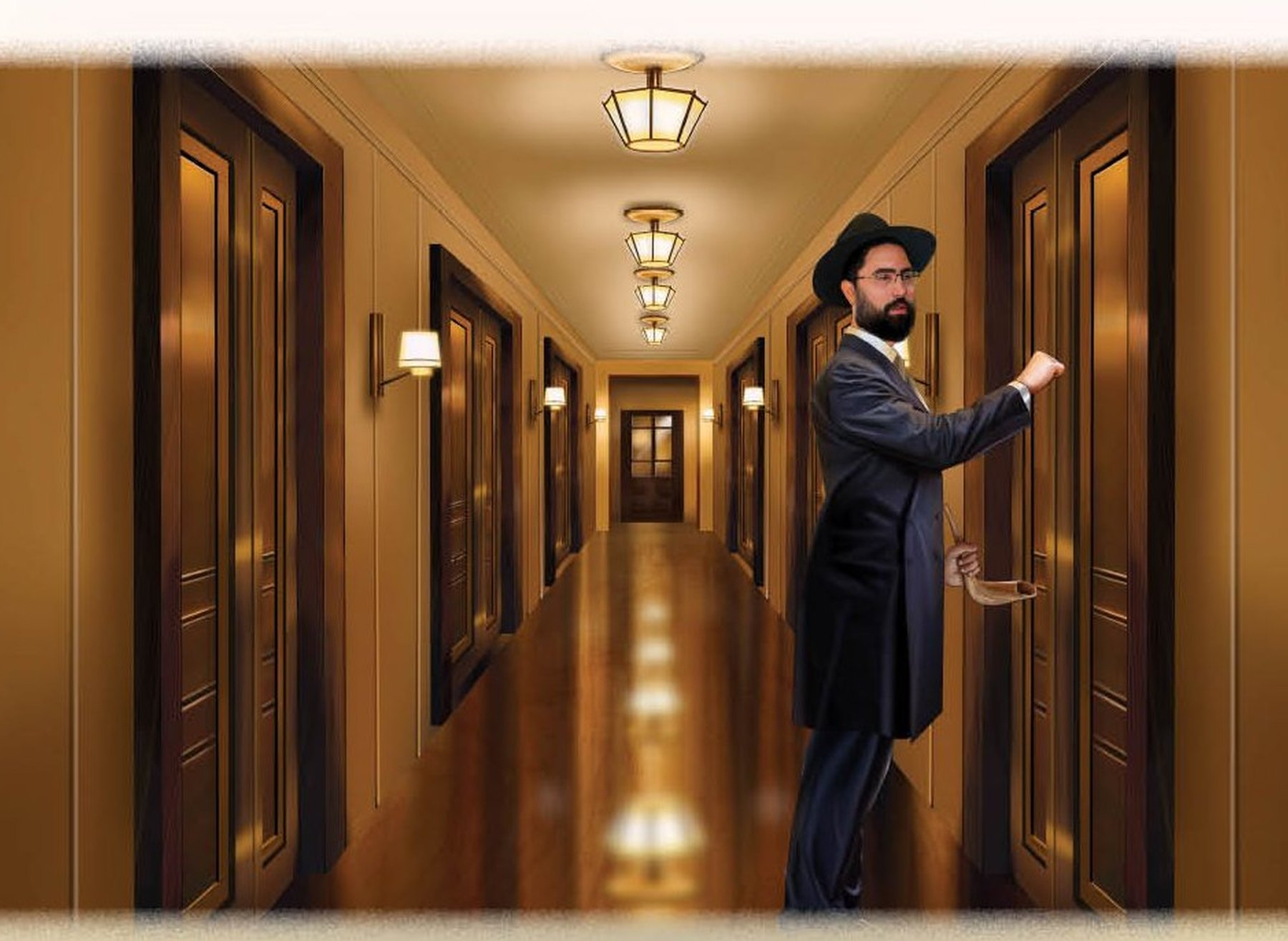
It was Rosh Hashana, and Rabbi Kravitsky and his wife Sarah had just finished davening and were leaving shul. They knew they’d be out for a while, so they quickly made kiddush and had a little bite to eat. They’d have the seuda later in the afternoon. While most people would be eager to get home and enjoy their Yom Tov meal, the Kravitskys, Chabad shluchim who live in Great Neck, New York, had other plans. You see, every year, they spend several hours after Rosh Hashana davening going around and blowing shofar for people who might not otherwise get to hear it. As always, the Kravitskys were planning on visiting the local senior center and a nearby park, on top of just walking around Great Neck and blowing shofar for as many Jews as they could find.
Each person that got to hear the shofar got to do this very special mitzva, even if they missed shul that day for whatever reason.
That Rosh Hashana, Rabbi Kravitsky had an extra stop on his shofar-blowing list, because of a phone call he’d gotten five minutes before Yom Tov started. There was a woman named Leah who was sick and couldn’t get out of bed. She desperately wanted to hear the shofar anyway. Of course, Rabbi Kravitsky agreed to go visit her, so after spending hours blowing shofar, he and his wife went to find Leah.
Most people in Great Neck live in private homes, so the Kravitskys figured they’d knock on Leah’s door, blow shofar for her, and be able to head home to eat their Yom Tov meal just a few minutes later.
It was already almost 6 PM by the time they started making their way over to Leah’s place, so the Kravitskys really needed to get home for a proper seuda with a nice round challah and honey, tasty fish, and hot meat, but things didn’t go exactly as planned. The address where Leah lived turned out to be a three story apartment building, and not only was the front door locked, but there was also no doorman at the entrance to let them in.
Rabbi Kravitsky knocked loudly on the door, hoping someone would hear and let them in, but nothing happened. He knocked a few more times, with no success.
Checking his watch, Rabbi Kravitsky saw that it was already 6:30. They only had 45 minutes left until shkiya!
“Sarah, it’s getting really late,” Rabbi Kravitsky said to his wife. “I think you should go home. I’ll be there in a few minutes – I’m sure someone will use this door soon. When that happens, I’ll follow them inside and blow shofar for Leah.”
His wife seemed uncertain, but she agreed and headed home. Rabbi Kravitsky went back to knocking, but another 15 minutes went by, and Rabbi Kravitsky started considering leaving. He still had to go home and eat his yom tov meal , before shkiya, with sunset fast approaching.
“Surely Hashem knows I tried my best,” thought Rabbi Kravitsky. “And besides, how am I supposed to blow shofar for her if I can’t even get inside her building?”
Naturally, Rabbi Kravitsky felt bad about leaving early, but as the minutes ticked by, it seemed he had no choice – it was Rosh Hashana, and he had to have his Yom Tov meal.
As he turned to leave, another thought popped into Rabbi Kravitsky’s head…
* * *
Just two days earlier, he’d read a story about how the Lubavitcher Rebbe had told a man named Rabbi Gansburg to print a Tanya as a merit for the neshama of his father, who had just passed away. The Rebbe gave Rabbi Gansburg very specific instructions, telling him to make sure that every member of his family got a copy of the Tanya.
A few days later, Rabbi Gansburg went to visit his family, armed with a stack of freshly printed Tanyas. As the Rebbe had asked, he gave one to every member of his family – but when he got to his mother’s house, he saw she was busy and didn’t want to interrupt her, so he left a Tanya for her in the kitchen. A few days later, he saw the Rebbe again, who asked him if everyone had gotten a Tanya.
“Yes,” said Rabbi Gansburg. “I gave one to everyone personally, and left one in the house for my mother.”
That answer didn’t sit well with the Rebbe, who said to Rabbi Gansburg: “I told you to give one to everyone – not to make excuses why you couldn’t”.
* * *
As Rabbi Kravitsky stood outside that building in Great Neck, remembering that story, the Rebbe’s words echoed in his head.
“Are you going to walk away and make excuses for yourself?” Rabbi Kravitsky wondered aloud. “Is that going to be your Rosh Hashana?!”
Right then and there, Rabbi Kravitsky decided to stay for another five minutes – and even another five, if necessary. As he stood there, a couple walked by, and Rabbi Kravitsky seized the moment, asking them if they were Jewish and if they’d heard shofar.
“Yes,” replied the husband. “We are Jewish. But we haven’t heard the shofar yet. Rabbi Steve wasn’t feeling well.”

Rabbi Kravitsky blew shofar for the couple on the spot, and as he did, a man in a wheelchair who lived on the building’s third floor opened up his window and called out, “Bravo! Bravo! That’s some beautiful shofar-blowing!”
Thinking quickly, Rabbi Kravitsky asked the man if he knew someone in the building named Leah. He unfortunately didn’t, but he was more than happy to send his assistant downstairs to open the door for Rabbi Kravitsky.
Finally! I’M IN! thought Rabbi Kravitsky, racing up to the third floor where he’d been told Leah lived. Not knowing which apartment was Leah’s, Rabbi Kravitsky knocked on every door, but not a single person answered. Disappointed, and knowing he had to be home in 10 minutes, Rabbi Kravitsky was ready to call it quits, when the Rebbe’s words popped into his head again.
“No excuses,” Rabbi Kravitsky reminded himself as he went down to the second floor, hoping he’d misunderstood. Maybe Leah lived there and not on the third floor. Once again, Rabbi Kravitsky was disappointed – every door he knocked on remained firmly shut. No one wanted to answer.
Was it even worth going down to the first floor? He had complete certainty that he’d been told Leah lived on the third floor – and shkiya was inching closer and closer with every passing minute! Logically, going home and making sure he fulfilled the mitzva of having a Yom Tov seuda seemed to make the most sense, but Rabbi Kravitsky had been inspired by Rabbi Gansberg’s story and felt the Rebbe would want him to keep trying. Somebody desperately wanted to hear the shofar being blown, and they’d trusted him to come.
Making his way quickly through the first floor, Rabbi Kravitsky rapped quickly on every door, with the very last one finally being answered by a home attendant.
“It’s you! Where were you?!” the woman asked Rabbi Kravitsky. “Leah’s been waiting for you all day!”
Rabbi Kravitsky entered the apartment, where he saw Leah, who, besides being very sick, was heartbroken that, for the first time in her life, she hadn’t been in shul on Rosh Hashana. Rabbi Kravitsky blew shofar for Leah. Then, he quickly asked if she had kosher wine or grape juice to make kiddush. It would be sunset in minutes. He made kiddush for her and her husband, who was sitting nearby. They offered Rabbi Kravitsky some honey cake they’d gotten from the local Kosher store. The three of them ate a mini seuda as the last rays of sun disappeared behind the trees. Suddenly, Rabbi Kravitsky noticed the woman was crying.
She was crying so hard. You could tell she was feeling something very, very deep.
“You don’t understand what you’ve done for me,” said Leah, tearfully. “I was so sad to be home on Rosh Hashana. But the doctors told me that, this year, I wasn’t allowed to go to shul, and as the day went by and nobody came, I was sure that Hasem had forgotten about me. I was sure no one was coming. The later it got, the more I believed that even Hashem didn’t care about me, and that my life was over. But now that you’re… finally here, I’m reminded that Hashem loves me, and He didn’t forget about me. He didn’t forget about me.”
It was just minutes before sunset. And how many times had he thought about turning back and going home? He couldn’t understand why or what had kept him waiting so long.
While Rabbi Kravitsky couldn’t stay longer with Leah that day, he’s kept in touch with her ever since. The two speak weekly, and Rabbi Kravitsky brings his kids to visit Leah as well. Now she knows she’s not forgotten. It was one little mitzva that made a lot of noise.
Since that Rosh Hashana, Rabbi Kravitsky sees miracles differently. Sure, the ten makkos that hit Egypt were incredible displays of the Aibishter’s might, but sometimes, the truest miracle is just being in someone’s home at the right moment. Don’t ever underestimate the power of the small things you can do to make someone else feel cared about.
Sometimes we wonder why these mitzvos are so important. Does it really make a difference if this one person hears the shofar being blown? Why don’t we just let someone else do it? Well, it’s because sometimes, the littlest things have the biggest impact on the world. Your little mitzva, no matter how small, could be the miracle someone is waiting for.
Beis Moshiach #1428 • pp. 56-59
© 2026 Beis Moshiach Magazine. All rights reserved.
This article originally appeared in Beis Moshiach #1428. You are welcome to share it with friends and family by email or in print, provided that you do not change, add to or omit any part of it, you credit the author and Beis Moshiach, and you include a link to archive.bmoshiach.org (written out in full in printed copies).
To republish this article in a newspaper, magazine, book or website, please request permission in advance at [email protected].