The Brave Shofar Blast
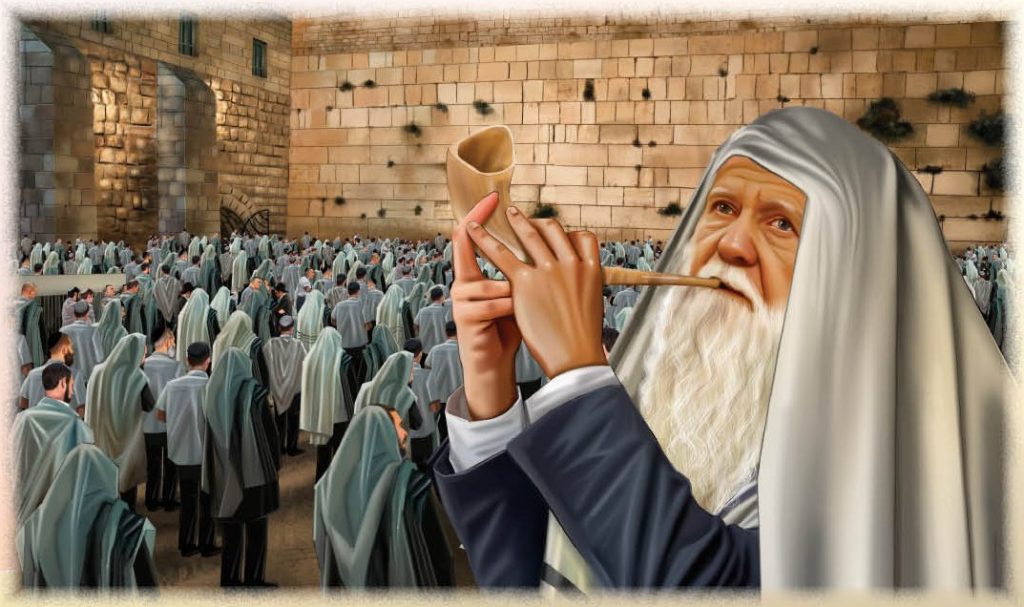
When you hear the sound of the shofar, what does it remind you of? Maybe that Tishrei is coming, or that Rosh Hashana is here. But there’s one more shofar blast, at the very end of Yom Kippur, and that one is the most powerful of all. It reminds us, after a whole day of judgment and forgiveness, that Hashem is fully in control.
Let me show you. I have the perfect story!
During the times of the British rule over Eretz Yisrael in the early 1900’s, the sound of the shofar blowing at the Kosel was actually something very different for the Yidden. They wanted to serve Hashem, even with the challenges the British government made for the Jews. Let me explain a little better.
You see, Eretz Yisrael wasn’t always like it is today. Before 5708 (1948), it was ruled by the British government, not by Yidden. Both Arabs and Jewish people lived there – sometimes peacefully, and sometimes not. But the Jewish people couldn’t make their own rules or decisions. That was up to the British government. They’d often use this power to make rules that would help keep things peaceful and avoid fights between the Arabs and the Jews.
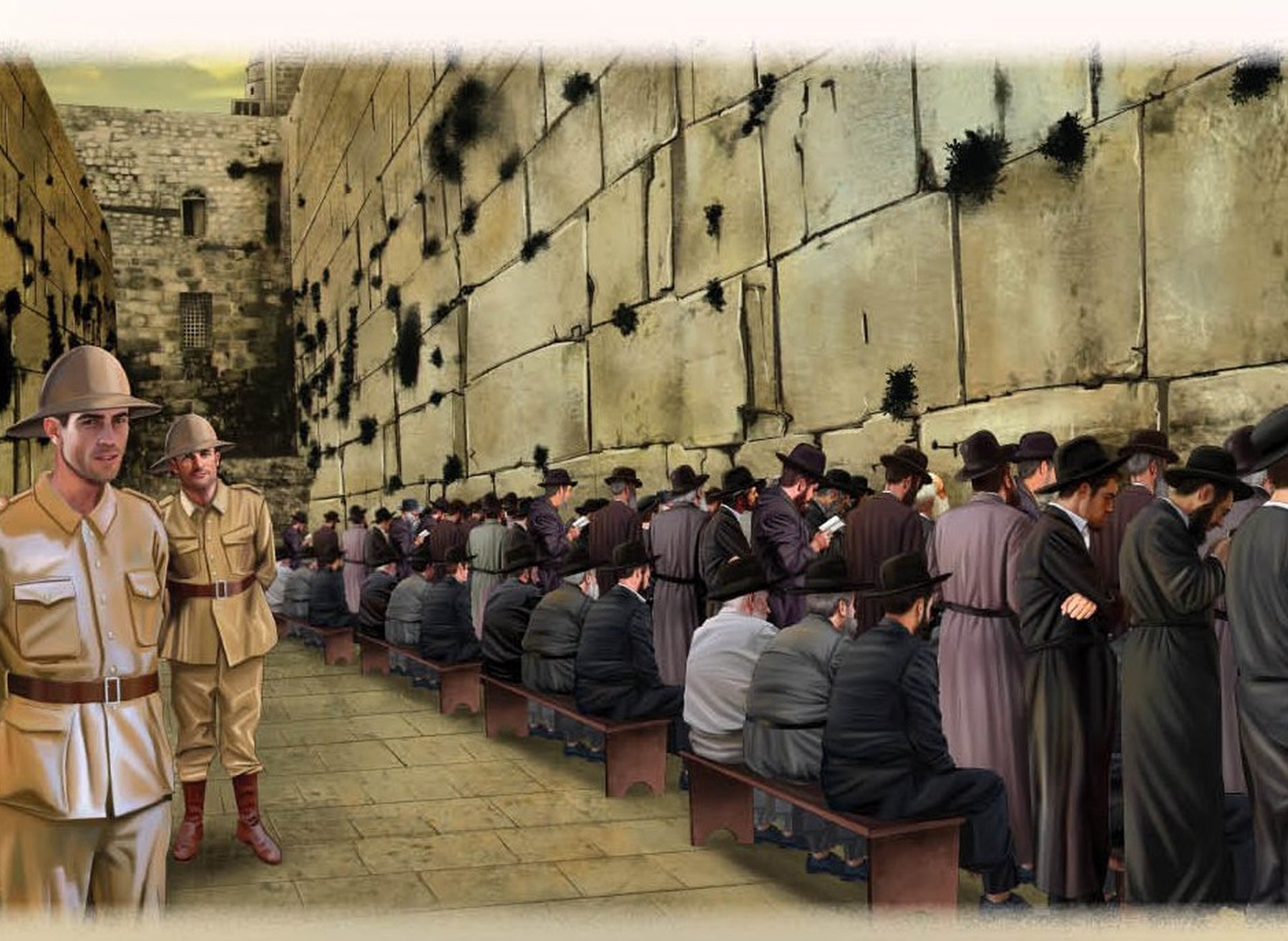
But let me tell you, back in the 1930s, the area around the Kosel looked very different from what you see today. Instead of a big, open space where lots of people can daven and pray, there was just a tiny, narrow path. Arab houses were built right up to the Kosel, leaving only a small space for Jews to walk. The Arabs didn’t want Jews going to the Kosel, so they made it hard by building their homes as close to the wall as possible and even bringing big animals like donkeys down the narrow path. This was their way of trying to show they were really in charge. The British didn’t do much to stop it, because they didn’t want to cause trouble and maybe because they didn’t like the Jews too much either…
A few days after Tisha B’Av in 5690 (1930), the Arabs started a huge fight, and sadly, many Jews were hurt. To try and calm things down, the British made special rules about when Jews could daven at the Kosel, so they wouldn’t upset the Arabs nearby.
The rules were very strict. No Aron Kodesh or tables for a bima were allowed, and not even a single chair could be brought to make it feel like a shul. Sometimes, they had some benches. That was it! Jews were not allowed to daven out loud, read from the Torah, or blow the shofar on Rosh Hashana and Yom Kippur. There were even policemen at the Kosel to make sure everyone followed these rules!
But the Yidden weren’t going to let this stop them from davening at the holiest site for the Yidden, the Kosel HaMaaravi of the Beis HaMikdash.
* * *
Moshe Tzvi Segal was 26 years old and was born in Ukraine. His love for Eretz Yisrael started when he was a young boy, learning about the Avos, Avrohom, Yitzchok, and Yaakov, in cheder. In 5674 (1914), during World War I, he joined the Mir Yeshiva, which had moved to his city, Poltava. He studied there from age 10 to 15 years old. In 5679 (1919), the yeshiva returned to Poland after the war was over, but Moshe Tzvi chose to stay behind to help his parents, who didn’t have much money.
While he was in yeshiva, Moshe Tzvi also loved reading at the local library, where he learned a lot about Jewish history. By the time he was 17, he’d joined a Jewish group called Hechalutz, which worked in secret to help Jews leave Russia since the Russian government was doing so many terrible things to the Jewish people. In 5684 (1924), when Moshe Tzvi Segal was 20, he and his family moved to Eretz Yisrael.
Now, 6 years later, it was Yom Kippur 5690 (1930).
While davening at the Kosel on Yom Kippur that year, Moshe Tzvi overheard people whispering amongst themselves. They seemed to be talking about something very important. He walked over to one Yid to see what all the excitement was about.
“Moshe Tzvi, where will we go to listen to the Shofar blast at the end of the Yom Kippur fast? It’s impossible to blow the Shofar here – we’ll get arrested if we try. It’s against the rules, and there are as many policemen around as there are Yidden davening! There’s no way we can blow it and not be heard.”
Moshe Tzvi looked around him. It was true – there were policemen everywhere. Even the Chief of Police himself had showed up to make sure that no one would dare blow the shofar! They didn’t want the Arabs to hear the noise and start more fights. But why were they always trying to help out the Arabs and not let the Yidden do proper Yiddishkeit?
But how could they skip such an important mitzva? One that reminded everyone that Hashem was our king, the ruler of the world? Could they really skip the beautiful sound of the shofar while standing so close to the spot of the Beis HaMikdash?
“We have to find a way to blow the shofar at the end of davening.” Moshe Tzvi said, wracking his brain for an idea.
“But is it smart to risk our safety for a minhag?” Yaakov asked, his hands shaking. He knew Moshe was right, but he was still scared. He didn’t feel like being arrested today.
“True, the sounding of the shofar at the end of Yom Kippur is only a minhag, not exactly a mitzva, like on Rosh Hashana… but a minhag is still Torah!” Moshe was confident in his decision that the shofar must be blown.
Moshe Tzvi wanted to figure out a way to blow the shofar. He walked over to the Rabbi of the “pretend” shul at the kosel, Rav Yitzchok Orenstein, and asked him for a shofar. Rabbi Orenstein heard Moshe’s request, and immediately turned away from him, as if he couldn’t even try to help.
Moshe was disappointed. Maybe there wasn’t even a shofar at the Kosel that day… But then, he noticed Rabbi Orenstein secretly pointing with his eyes to the shtender at the end of the little alley. Moshe realized that the shofar must have been in the shtender, and as if nothing had happened, he walked away. It was important that none of the police officers figure out what he was going to do. This was a top secret mission.
When davening was almost over and shofar-blowing time was approaching, Moshe walked over to the shtender and leaned against it. He opened the door and quickly slipped the shofar under his shirt before anyone could see him.
Now, he had the shofar – but what if the police saw him before he could blow it? He thought of hiding it under a tallis, but he didn’t have his own yet, since he wasn’t married. Ashkenazim usually only wear a tallis during davening after they get married. He quietly asked a man praying next to him for his tallis, and the man lent it to him. Moshe spread the tallis over himself, hiding underneath it, and prepared to blow the shofar.
He didn’t care if he got arrested or caused trouble. Standing up for Yiddishkeit was too important to him, ever since he’d been a little boy in Ukraine. Some British policemen weren’t going to stop him from doing what was right, and certainly not their bitter Arab neighbors.
When the closing part of the Neila tefilla was said, Moshe brought the shofar to his lips, covered by the tallis. He felt like he was under another ruler – Hashem, king of the world. Under the tallis, only Hashem was in charge, and no one could stop a Yid from serving Hashem on the holiest day of the year, in the holiest place in the world!
Moshe took a deep breath in, and blew the shofar with a bold, powerful, and loud blast from deep in his lungs.
“Tuuuuuuuuuuuuuuuuuuuuuuuuuuuuu!”
The sound of the shofar shook the ground beneath them. It was a moment full of joy and holiness, so strong you could almost touch it. As everyone took off their talleisim, they wished each other “Ah Gut Yahr!” and prepared to go home to break their fast.
Moshe Tzvi stood under the tallis for an extra moment, amazed that he had successfully blown the shofar at the Kosel. He quietly thanked Hashem for helping him fulfill this special mitzva and prayed for a good year.
Suddenly, the tallis was yanked off of him. Standing in front of him was the angry-looking chief of police. “Sir, you’re under arrest for breaking the laws of the British government, section 405–”
Everyone was shocked, and the crowd went completely silent.
Moshe Tzvi Segal didn’t even have time to break his fast or wish anyone a gut yahr before he was taken away by the police. They brought him to the Kishle, the prison in the Tower of David, right outside the area of the Kosel in the Old City of Yerushalayim. There, a very pleased Arab guard named Hassan Jamal was in charge. He was thrilled to see a Jew arrested on Yom Kippur – especially for doing a mitzva!
“Hey, Jew! You’re not getting away with this one so easily. You think you can break the rules?! Ha! But don’t worry, since you’re here now, I’ll take real good care of you,” he teased. “I’ll make sure you don’t feel comfortable here at all!”
* * *
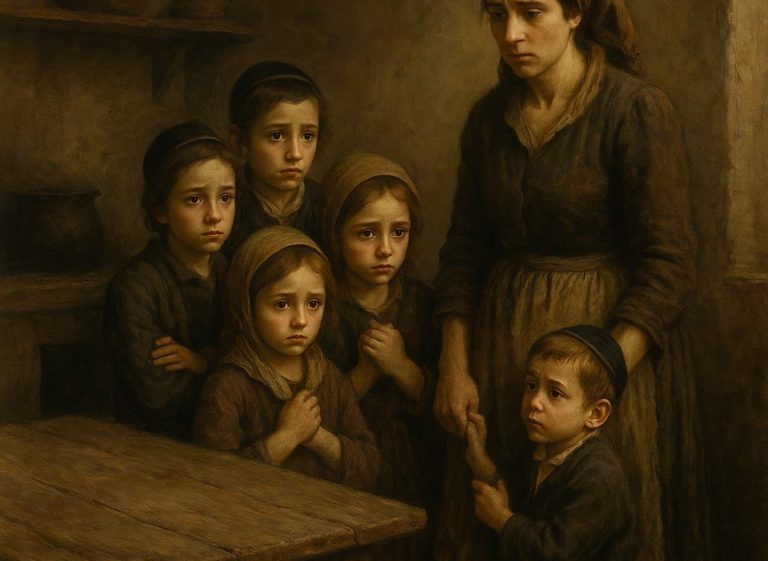
“Oh boy, what are we gonna do now? Our friend was just taken away by the police! I’m soooo hungry, I just want to go home and eat… but how can we think about eating now, when Moshe Tzvi is stuck in a cell?”
The Yidden huddled together, their heads spinning with a million questions. On one hand, they all felt so proud and encouraged after hearing the beautiful blast of the shofar. The British always tried to stop the Jews from doing this, but today, they finally got to blow the shofar at exactly the right time. On the other hand, their friend Moshe had been arrested.
They were inspired after such a special day, but how could they go home and break their fast when Moshe was still stuck in jail, hungry and alone? They knew they had to do something – they just didn’t know what.
The British had no plans of letting Moshe go anytime soon.
The Yidden who had davened at the Kosel decided to visit Rabbi Avraham Yitzchak Kook, the Chief Rabbi of Eretz Yisrael at the time, to ask for his help.
“Rabbi Avrohom Yitzchok, we’re so sorry to bother you after such a long day of fasting and davening,” they said.
“Don’t worry about it,” Rabbi Kook replied kindly. “What brings you here at this late hour?”
They told him the whole story – how Moshe Tzvi had blown the shofar at the Kosel, and how the British policemen had pulled the tallis off him and dragged him to jail.
“Our friend Moshe was arrested for blowing the shofar. He didn’t hurt anyone or break anything. He just did the mitzva of blowing the shofar, and now they’re keeping him in a jail cell, which isn’t fair! We know you have connections with the British government, and we need your help. Moshe Tzvi hasn’t even eaten since the fast ended!”
“Let me see what I can do,” Rabbi Kook replied.
Rabbi Kook went to visit the High Commissioner of Palestine, who worked for the British government. He demanded Moshe’s release. “This is outrageous! Arresting Jews for practicing their religion? He didn’t do anything wrong, and you’re making a big deal out of something small. It was just a few seconds of blowing the shofar!”
The High Commissioner, not caring at all, coldly responded, “Mr. Segal broke the law, and he must pay for it. We will not allow this.”
“I demand his release immediately,” Rabbi Kook insisted. “I am an important person to the Jewish people, you know that – and this is not a fight you want. I won’t break my fast until I know Moshe Tzvi has been freed from jail. Do you really want to make a big issue out of this? If people find out I’m still fasting because a Jewish man is being held without good reason, it’ll anger Jews all over the country.”
“You can go hungry, but your friend will not be freed,” the commissioner stubbornly shouted. “Rules are rules, and he broke them. Now, he will pay!”
“We’ll see about that,” said Rabbi Kook, and he returned home. But he didn’t break his fast. How could he, when his fellow Jew, Moshe Tzvi, was still fasting in jail?
* * *
This went on for many hours. Rabbi Kook was still fasting, and the Yidden who had davened at the Kosel went home, praying to Hashem for help.
“We can’t just sit and wait,” one man said to his friend. “This isn’t just about Moshe Tzvi, it’s about all of us! If they can arrest him for blowing the shofar, what will they stop us from doing next year?”
Meanwhile, in jail, Moshe Tzvi was growing weaker. He hadn’t been given any food or water, and was still fasting long after Yom Kippur had ended. He whispered a tefilla to Hashem, asking for strength to hold on.
A few hours later, the High Commissioner was feeling the pressure. He sat in his office, upset as more complaints came his way.
“Why is everyone making such a big deal about this?” he grumbled. “It was just a shofar being blown!”
“Sir,” his assistant said, “people are upset. Rabbi Kook still hasn’t broken his fast. The situation is getting out of hand.”
The With a deep breath, he finally made a decision. “Fine, release Segal. We can’t have this turn into a full-blown fight.”
Later, when the Yidden heard the news, they were filled with relief. “They released him!” one person shouted. “Baruch Hashem! They knew they couldn’t stop us!” another cheered.
Moshe, now free, was greeted with warm hugs and smiles from his friends.
“We did it, Moshe Tzvi!” they said. “You blew the shofar at the Kosel after all these years!”
* * *
Moshe Tzvi’s brave choice to blow the shofar, even with the British police watching, became the new normal for the next 18 years. The British knew how important that blast was to the Jewish people, and they feared it, just like the walls of Yericho fell to the shofar of Yehoshua so many years ago.
Moshe Tzvi, who later became the famous Rabbi Moshe Tzvi Segal, continued to help protect Yidden in Eretz Yisrael. But sadly, in 5708 (1948), it became impossible for Jews to daven at the Kosel for 19 years!
After the Six-Day War in 1967, Rabbi Moshe Tzvi Segal returned to the Kosel on Yom Kippur. Every year until 5745 (1985), Rabbi Segal continued blowing the shofar at the Kosel. He passed away on Yom Kippur, the holiest day of the year, with his soul returning to Hashem just as the shofar sounded, ending Yom Kippur. People remember him for his bravery, and it’s no surprise that his yahrtzeit on Yom Kippur reflects the deep connection of his life to that special day.
Based on Rabbi Moshe Tzvi Segal’s memoirs.
Beis Moshiach #1429 • pp. 56-60
© 2026 Beis Moshiach Magazine. All rights reserved.
This article originally appeared in Beis Moshiach #1429. You are welcome to share it with friends and family by email or in print, provided that you do not change, add to or omit any part of it, you credit the author and Beis Moshiach, and you include a link to archive.bmoshiach.org (written out in full in printed copies).
To republish this article in a newspaper, magazine, book or website, please request permission in advance at [email protected].