Bubby & Zeidy Moved on Shlichus
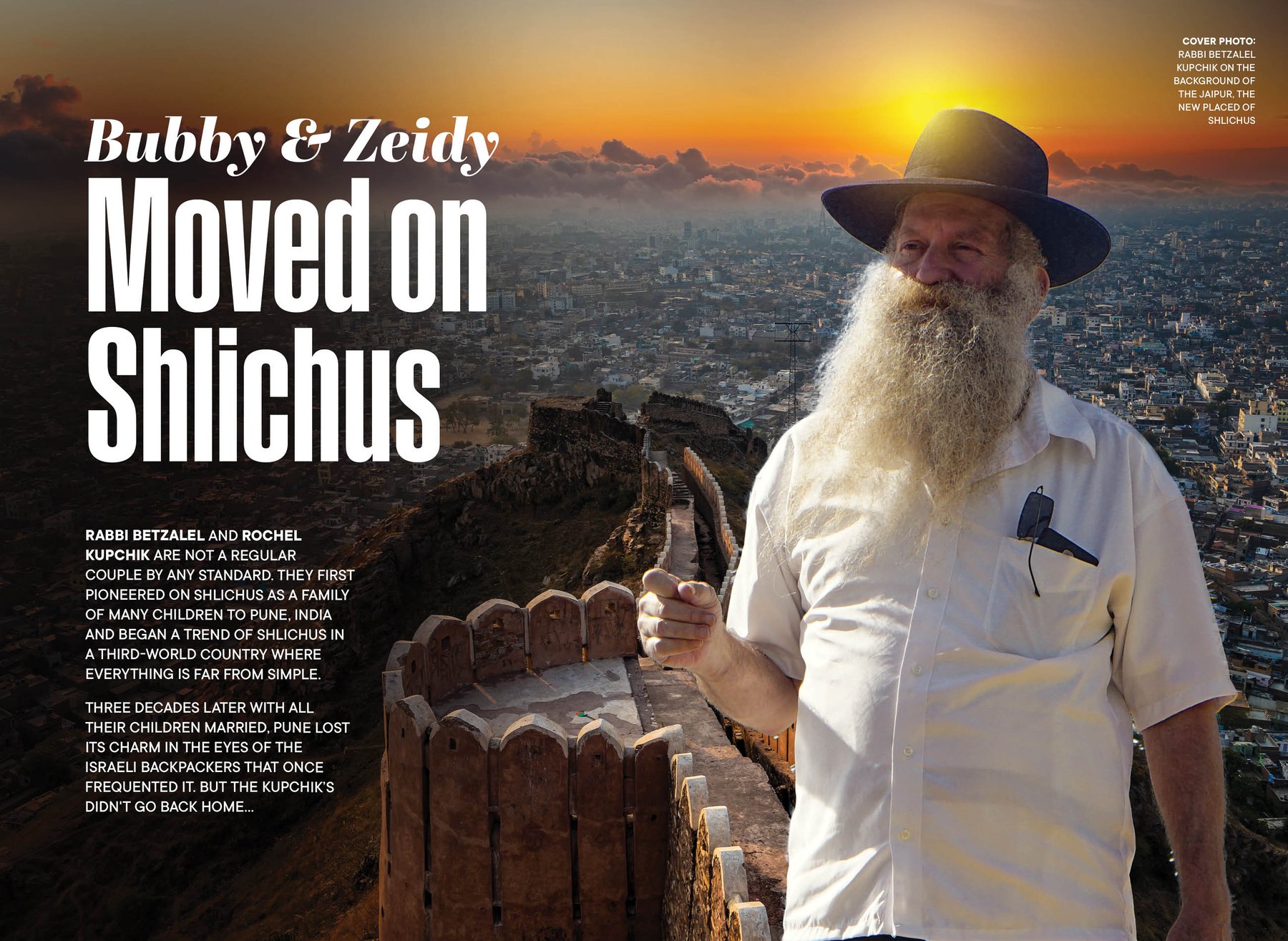
Rabbi Betzalel and Rochel Kupchik are not a regular couple by any standard. They first pioneered on shlichus as a family of many children to Pune, India and began a trend of shlichus in a third-world country where everything is far from simple. Three decades later with all their children married, Pune lost its charm in the eyes of the Israeli backpackers that once frequented it. But the Kupchik’s didn’t go back home…
Usually, when you hear or read about new shluchim going to the ends of the earth, it’s about a young and energetic couple, full of dreams and hopes, departing alone or with their small children to illuminate the world. Suitcases packed with sefarim, hearts pounding with faith, and eyes sparkling with excitement for the new adventure. Life lies ahead of them.
But sometimes, the stories that deviate from the familiar pattern are the ones that teach us a deeper lesson about the true essence of being a shliach.
This story, about Rabbi Betzalel and his wife Mrs. Rochel Kupchik, is exactly that kind of story; a story that begins precisely when the body is no longer as young as it used to be, when Parkinson’s disease poses daily challenges, and when most of their peers are already enjoying their grandchildren and planning their peaceful retirement years. It’s exactly then, after twenty-seven years of grueling shlichus work in Poona, India, that they chose to start everything from scratch, this time in Jaipur, India.
The following story is one you haven’t read before. It’s being told right now, in distant Jaipur, and every day this moving story writes a new chapter, through genuine mesirus nefesh.
There’s something special about this choice that tells a deeper story, almost new, about the essence of being a shliach. While young shlichus work is characterized by enthusiasm and endless energy, shlichus work at an older age, especially with challenging health issues, requires a different kind of strength: powers of deep faith, life wisdom, and understanding that sometimes it’s precisely through difficulty, age, and physical limitations that the greatest light is revealed.
This story is a fascinating journey of a couple in their seventh decade of life, proving that the shlichus of the Rebbe isn’t measured in years, but in the power of the soul and the strength of faith. From ancient Jaipur, the city of pink palaces and colorful markets, comes a story that teaches a new chapter in the meaning of shlichus. Here, between the alleys of the old city and the Hindu temples, R’ Betzalel Kupchik and his wife continue their shlichus.
Impossible Difficulties
The scorching Indian sun beats down on the pink streets of Jaipur, capital of Rajasthan, one of the states of the Indian peninsula. The Kupchiks stand at the airport entrance, two suitcases, two trolleys, a backpack, and a walking stick in hand. From now on, this is their new home.
Behind them are twenty-seven years of shlichus work in Poona, but ahead of them – a completely new page, a new chapter in a wonderful life journey, a journey that already at its beginning made India a pioneering path for Chabad Houses for travelers worldwide.
It turns out that India isn’t foreign to them. They know it well for decades already.
How did you end up in India in the first place?
“In 1989, Rabbi Yahel and Danya Dahan, a young couple who had just returned from India, came to our home in Tzfas,” they explain. “From them, we heard about thousands of young Israelis coming to India in search of spiritual meaning for their lives, and finding themselves wandering between ashrams and various temples. This was during a period when there wasn’t even a single Chabad House in India.
“Their stories sparked something within us,” they continue. “We understood that there, in India, was an immense thirst for authentic spirituality. Precisely in a place full of idolatry, there was room to shine Jewish light.
“The idea simmered slowly, and in 1997, we received a recording of a television report that served as the ‘final push.’ The report described the masses of Israelis flocking to the ashram in Poona. The camera suddenly caught a young man in a red ashram robe, with tzitzis peeking out from the side… Even the reporter was surprised and turned to talk with the young man. It turned out the young man had been somewhat influenced by Chabad in Krayot. The young man told the camera: ‘We have nothing to look for here, we have Judaism and the Rebbe.’ The reporter ended the piece with the words: ‘In Poona, they’re already waiting for the Rebbe.’
“For me, that was the sign that it was time to go out!” says R’ Betzalel. “When we inquired a bit about Poona, we understood that this city was the opposite of Judaism, of Chabad, and of the Rebbe. It was a place of real spiritual impurity.
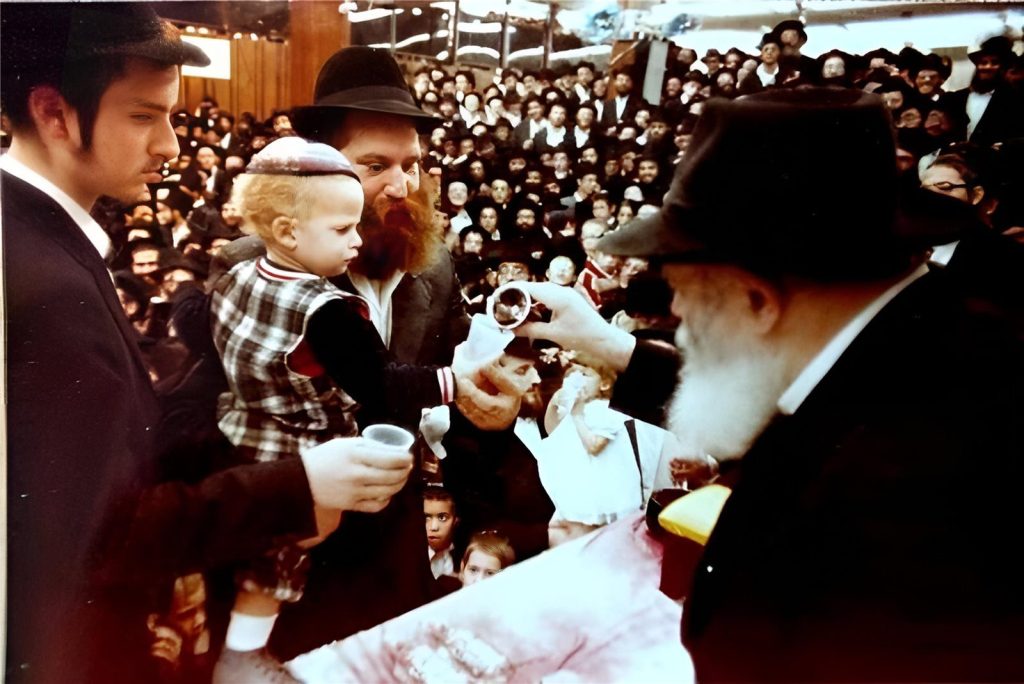
“I went there for ‘Mivtza Purim’ together with Rabbi Yahel Dahan, and returned greatly excited. I felt there was extensive ground for Jewish activity there. Over time, my wife and I went to Poona several more times to conduct holiday activities and to get to know the place. But it definitely wasn’t easy, neither for me nor my wife, to be alone during holidays. It didn’t even cross our minds then to think about opening a Chabad House in India when we were already parents to ten children…
“After several visits, we made contact with Rabbi Shimi Goldstein – eventually, our double mechutan – and he flew with his wife and infant son and another couple to open a Chabad House in Poona. After a period in Poona, Rabbi Shimi opened the famous Chabad House in Pushkar, where he remains on his shlichus to this day.”
When did you decide to take the plunge and go out with the whole family on shlichus?
“One day, after I returned from another trip to Poona, my wife said: ‘Maybe we should all just go together?’ I looked at her astonished. ‘Do you think you can handle it? Without daycare, without kindergarten, without a religious school? With seven small children and in poor conditions… when we’re leaving three more sons behind in Israel?!…’
“But the decision was made…”
How did the extended family react to this unconventional decision? In those years, it bordered on madness…
“We didn’t even dare tell our parents that we were going,” they laugh today. “We left with great enthusiasm. We were sure it was temporary, that Moshiach was coming soon and we’d immediately return to Israel. We never dreamed it would turn into twenty-seven years of shlichus work!”
The beginning wasn’t simple; it was difficult. The Kupchik family lived for half a year in a dusty and dirty guesthouse, actually in two guesthouses. One room with two mattresses for the seven children became the ‘children’s room.’ Another room was for the bachurim who joined them, another room was dedicated to the kitchen with the bathroom tap serving as a sink. The couple had another room in a different guesthouse, not far away…
“In the heavy heat of Poona, we had to prepare everything fresh because we didn’t have a normal refrigerator. We had a kind of freezer that thawed what needed to be frozen, but what needed to be refrigerated – it froze and spoiled. Every morning we had to start with preparing bread and pitas for 11 people… and then prepare dinner for twenty-thirty people and for Shabbos we prepared food for 60-100 people. For the Seder, we hosted over 200 guests in such conditions.
“It wasn’t easy, but we were happy!”
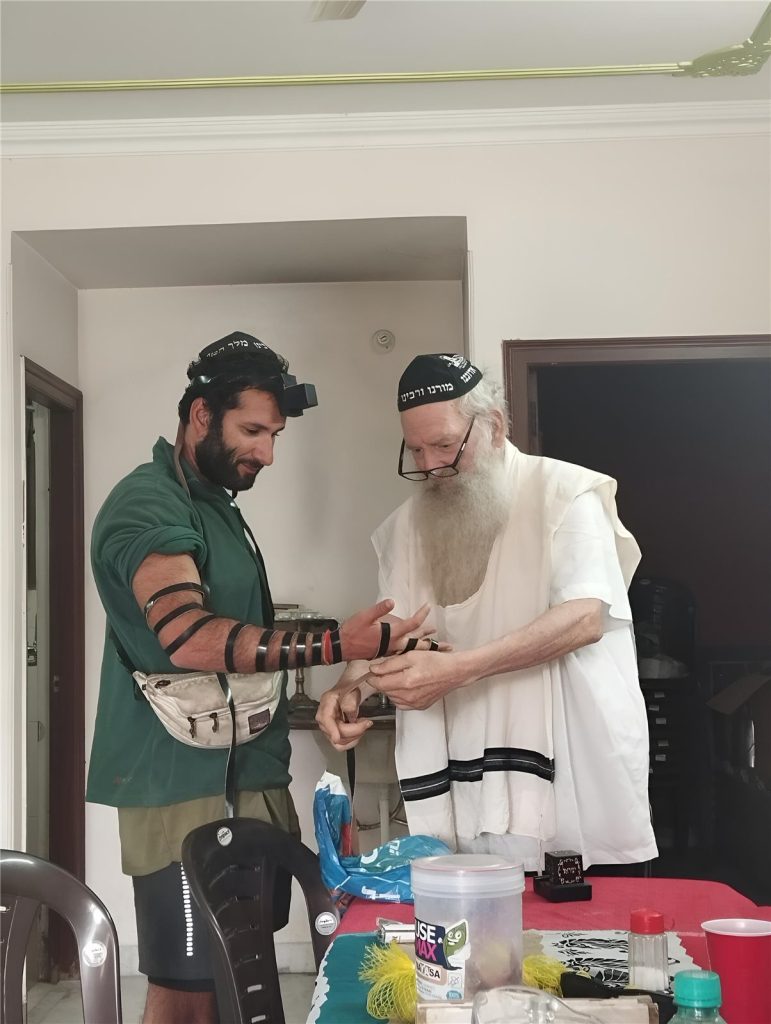
The difficulties were many, and they extended far beyond the food that needed to be prepared from scratch. “We had to be everything: parents, teachers, hosts. To occupy the children 24/7 in impossible conditions, while simultaneously receiving guests every day,” Mrs. Kupchik recalls. “Sometimes I would teach the children while stirring a pot on the stove and answering questions from a traveler who had just walked in.”
Even when they finally found a proper home, the challenges just changed. “The hot season began,” they remember. “A hundred and four degrees in the shade, without air conditioning, with an unbearable mosquito plague. The ceiling fans just moved the hot air from place to place… Sweat was dripping on the children’s textbooks.
“The first two years, we didn’t eat meat because there simply wasn’t any – not on Shabbos, not on Yomim Tovim, not even on Seder night. We had to prepare everything ourselves – bread, cooked dishes, and also wine and dairy products. The children went out in a rickshaw to the dairy farm, and then we pasteurized the milk, and from it we also made cheese and butter. Every simple thing that in Israel you buy in the supermarket was a real project here.”
Despite this, the shlichus was very fulfilling! Young Israelis who weren’t observant would sit every evening for dinner with a feeling of brotherhood.
A special anecdote is particularly memorable to them: During conversation at dinner one night there was an elderly American Jewish woman. The conversation turned to the Rebbe and she used the expression: “The Rebbe was.” R’ Betzalel immediately corrected her: “The Rebbe is.” She repeated and corrected to past tense, and again R’ Betzalel corrected her to present tense. “Wait, isn’t the Rebbe…,” she asked in wonder. “We believe the Rebbe is chai v’kayam!” R’ Betzalel answered her. “This is the most wonderful thing I’ve heard in my life!” she responded emotionally, “So, how haven’t I heard about this until now, why didn’t anyone tell me?”
The Children Of The Shluchim Who Became Shluchim Themselves
One of the defining moments in their shlichus was when the Kupchiks managed to bring a Sefer Torah from Calcutta. “We decided to make a hachnosas Sefer Torah on the 11th of Nissan. At that time, an Israeli couple came to us. They were ‘seeking their path.’ We invited them to the hachnosas Sefer Torah, and also to the Pesach Seder,” Mrs. Kupchik recalls.
“The wife didn’t feel comfortable with a public Seder, but R’ Betzalel didn’t give up and suggested they at least do their own ‘Seder.’ And so he dedicated hours on the busy erev Pesach to teaching the husband all the details of conducting the Seder. He sat with him, explained, and gave him all the Seder supplies. To tell the truth, we were disappointed that they didn’t come to either the event or the Seder.”
A few months later, the Kupchik family was in Israel and held a gathering/reunion of ‘Chabad House visitors.’ The meeting was held at the Ascent Institute. The couple came to participate as well. “We couldn’t believe our eyes,” R’ Betzalel recalls. “He was wearing tzitzis and had a beard, she was in a skirt and head covering. They were completely different people!…”
The couple confessed to them: “We’re so sorry we didn’t come to the hachnosas Sefer Torah. We didn’t understand at all what it was. We thought it was just a book being put on a shelf… Now, when we understand the holiness and meaning of a Sefer Torah, our hearts ache over the missed opportunity.”
In such difficult conditions, how did the children adapt to life as shluchim 24/7?
“I’ll tell you a story that illustrates the general situation: One day, maybe it was Rosh Chodesh, my wife promised the children a real meal: chicken!… But we barely had one chicken then. Therefore, she prepared an alternative meal in parallel, in case guests arrived, as the meal wouldn’t be enough for everyone…
“And indeed guests arrived, and the alternative meal was served while the children waited patiently, knowing that afterward they would all celebrate with the chicken… But the guests stayed until very late at night. When they left, our son Mashiach went out after them to lock the courtyard gate, came back and went straight to the kitchen. He emerged proudly carrying the pot of chicken, placed it ceremoniously on the table and announced: ‘No matter what, we are a Chabad House!’
“This phrase became our family motto, in every event or slightly difficult time, we say it with a smile, but with joy and pride of unity: ‘No matter what, we are a Chabad House…’
“The children were our most natural partners,” says R’ Betzalel, and fatherly pride fills his voice. “They understood very quickly the magnitude of the shlichus. At an age when other children are occupied with games and friends, they were full partners in spreading Yiddishkeit. The children set the tables, performed netilas yadayim with the guests, served food to dozens of guests and didn’t sit to eat themselves until everyone was taken care of. When I started singing at meals, it was clear to all the children, from age 3-4, that they would join me to strengthen the singing, both at meals and in davening.
“When only Dvir was left at home, the youngest who was actually born in India, there was once a time when he was left alone at home briefly. Just then a guest entered who was beside himself when he told us later: ‘Dvir asked me like an experienced and knowledgeable host, “What would you like to drink, coffee or tea? Here are cookies,” and hosted me perfectly.’
“Remember that Dvir was only about 5 years old then.”
And here’s another story about the children of shluchim who became shluchim themselves:
One Shabbos, R’ Kupchik traveled to Pushkar for a bris. He took little Dvir with him. His wife had just traveled to Israel for the upcoming birth of their daughter. Who remained at the Chabad House? Only Yinon, age 12, and Yigal, age 10…
Afterward, Yehuda, one of the guests who was there that Shabbos, couldn’t stop marveling: “Several of us came in and started Kabbolas Shabbos. We were a bit surprised that Rabbi Betzalel didn’t appear, but the children led the davening with sweet voices. After a few minutes we realized that this is the Chabad House, these are the shluchim… We were truly amazed. We were a minyan of guests, and the children conducted the davening, the kiddush and Shabbos meal, including divrei Torah and singing, and hosted us like experienced and knowledgeable shluchim…”
And here’s another story:
Mendy, then 12, and his brother Shlomi, 10, were among the older children and functioned immediately from the start as veteran shluchim. On their first Lag B’Omer in Poona, when they needed a band for the traditional parade, they took initiative. When they heard wedding band sounds rising from the street, without knowing a word of Hindi, they got on a rickshaw and managed to explain to the driver that they needed the band… After a few minutes, they found the ‘manager’s office’ – a shabby room in the local market.
Somehow, through a mixture of sign language and a shliach’s confidence, they managed to convince them to come to the Chabad House and arrange with their parents about performing in the Lag B’Omer parade. An hour later, they were already marching through the streets of Poona with an Indian street band… The band members, taken from a poverty-stricken neighborhood, were dressed in colorful magnificent uniforms, with shining gold buttons, splendid leggings, impressive hats, while beneath the magnificent uniforms peeked their shabby pants…
But when they played – oh, their melodies wonderfully resembled the Druze devotional songs that had been sanctified over the years in the Meron dances. It was as if the Jewish soul had found its way even into Indian musical instruments.
It’s no wonder that most of the family’s children grew up, married, and opened their own Chabad Houses around the world.
Poona Changes Its Face
One day everything changed. The city of Poona changed its face and became a modern high-tech center. Instead of young backpackers who came mainly for the ashram, high-tech workers began arriving for short periods for work, as well as families of high-tech workers who relocated to Poona for longer periods. This changed the entire nature of the shlichus.
The Kupchik family’s Chabad House became the Jewish-Israeli center for families. Holidays and Shabbos together, programs for women, weekly activities for children, and even a camp during local vacations. Many of the afternoon programs ended with a shared dinner when the fathers would also arrive from work and join in…
Unlike in Israel where there’s a feeling of the approaching Shabbos in the streets or stores, in India there’s no sense of Shabbos at all.

“As a result, we started a new project, mainly carried out by the children,” Mrs. Kupchik relates. “They prepared a Shabbos package, which included candles, challahs with a birkas hamotzie flag, a small bottle of wine (our own production) with the kiddush text. We brought the feeling of Shabbos to each home this way, besides for those who were hosted at our meals.”
One of the beautiful stories belongs to Germaine, a Jewish woman from Istanbul. She was born and raised in Turkey, married a German, and came to Poona following her husband’s work at Volkswagen. “When we first met her, she innocently told us that she salts the chicken (non-kosher!) for some time, because that’s what she was taught – that you need to remove the blood…
“Germaine began coming to activities at the Chabad House with her five-year-old daughter Beatrice. Each time she came, something else in her Jewish soul awakened. One day, during a conversation about a letter in the Sefer Torah, we realized that the child actually didn’t have a Jewish name. Then Germaine suddenly said: ‘Maybe we should call Beatrice, Batya?’ She couldn’t even explain where that name came from, it was like a ‘small prophecy’ – Bat-ya, daughter of G-d!
“When her mother from Turkey heard about this, she asked that the child also be called by her name, as was customary among local Jews to name after the grandmother…
“But then we discovered that she herself didn’t have a Jewish name either. When she was on homeland leave in her city, she searched the Jewish community records in Istanbul but found nothing. So she chose her grandmother’s name – Rachel. And so, in the Rebbe’s shul at 770, the moving ‘Mi Sheberach’ was heard: ‘May He bless Rachel and Esther Batya bas Rachel…’”
R’ Betzalel has a moving story from that period:
“Before Chanuka, we dared to place a large menorah right on the main street. We didn’t ask for a police permit,” R’ Betzalel admits. “We knew that if we got into Indian bureaucracy, it wouldn’t happen. So we just dared. Thousands of people passed by every hour, mostly Indians, who had never seen a menorah.
“At that time, there were very few Jews in Poona. At one point we thought to ourselves – why and for whom are we putting up a menorah and under such risk…
“One day an Indian woman stopped at the spot and began enthusiastically photographing the menorah. For a moment I was afraid she was documenting it to complain,” R’ Betzalel recalls. “But she smiled and said: ‘I love your holiday! I also came and photographed the menorah at your previous location.’ And then she added that she has a Jewish friend from America coming to visit.
“This woman had come to India already in the seventies and adhered to a Hindu guru who runs his ashram in a place several hours from Poona. She bought herself a house in his compound and was part of his community.
“For years she passed through Poona on her way to the ashram, but never entered the Chabad House. Now, because of the menorah that illuminated the main street, her non-Jewish friend brought her to the Chabad House.”
In The Way Of Avrohom Avinu – Go Forth To Jaipur
As mentioned, the Kupchiks stayed in Poona, quite alone, to care for the few Jews who still came there. The masses of young people who used to flood the city had ceased. Despite this, they didn’t leave the city. Even during the Covid pandemic, when Poona was considered one of the most dangerous places in the world, the Kupchiks stayed and worked with the few who were in the city. “Thank G-d, we didn’t get sick,” they say with satisfaction.
But then Hashem presented a new trial. The discovery that R’ Betzalel Kupchik had Parkinson’s was truly not an easy revelation. If that wasn’t enough, during that period he fell, broke his hip, and had to go through a long rehabilitation period after hospitalization and surgery. R’ Betzalel had to learn to walk again… These were very difficult days and months. None of the family and friends thought that R’ Kupchik, at his age and in his medical condition, could return to life as a shliach.
“I was sure the whole time that we would return to being shluchim,” he says in a candid conversation with Beis Moshiach. “When I was confined to bed in the hospital or in our home in Israel, I felt we were in a kind of exile. My heart was in India, in the shlichus. I had no doubt for a moment that we would return to being shluchim, I knew this was a temporary situation. My wife was more realistic; she saw the situation and the challenges and thought differently…”
Alongside the great difficulties, they also saw wonderful miracles in rehabilitation and recovery. At some point, the doctors gave the okay to return to normal life, including flying to India. From their perspective, they could manage in India with regular medical treatment and strength exercises with a local physiotherapist. “Just be careful not to fall,” warned the neurologist.
“During our stay in Israel,” relates R’ Betzalel, “there were a few more Jews who left Poona and returned to Israel. Then we reached the not-easy decision that we could maintain contact with the few who remained in Poona even without physically living there. We were determined that while the shlichus in Poona was over, the Rebbe’s shlichus would not end until the Rebbe’s revelation with the complete Geula!”
We recently read about the great nisayon, “Lech lecha – Go forth from your land.” Following Avrohom’s path, the shliach in the first Chabad House in the world, who completed his shlichus in Ur Kasdim and left at age 75 for a new shlichus to an unknown land – similarly, R’ Betzalel and his wife set out again, not far from that age themselves… No one believed they would return to their shlichus and open a new Chabad House, in a new city, in another state in India, in Jaipur in the state of Rajasthan. This meant starting everything from the beginning…
“Jaipur is a tourist city in India,” they explain. “There’s a large center for gem merchants here, and many travelers pass through. True, there aren’t masses of Jews here, but we’ve long internalized the value of ‘And you shall be gathered one by one.’ Sometimes a Chabad House’s entire existence is for one Jew…”
How was the move to Jaipur and establishing the new Chabad House?
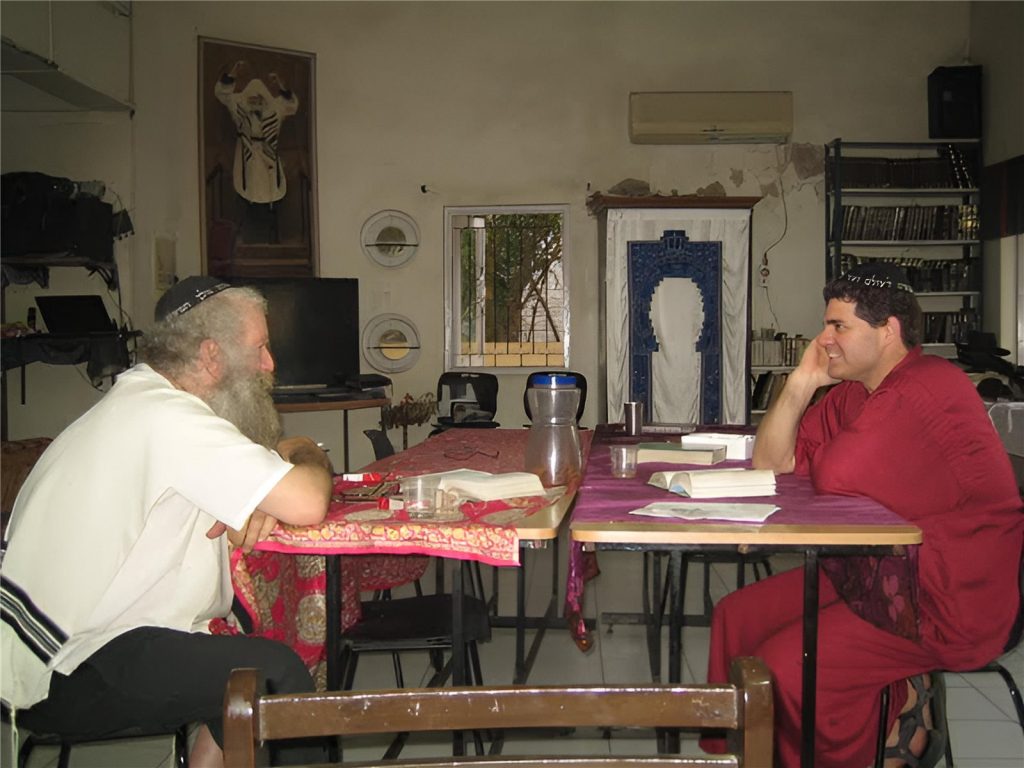
“It wasn’t easy,” they reply. “We’re not exactly a young couple just starting life… We flew with a long layover.
“We arrived at a shabby hotel. An Israeli with business connections in Jaipur who very much wanted to help us promised in advance that his Indian partner would help us with everything, especially with the first and difficult task, finding a normal house.
“But it turns out that even after 27 years of living in India, we still hadn’t learned the Indian reality… How did we think that the Indian prepared a list of several houses and the day we’d arrive we’d just need to choose a house from several options, sign a contract the next day, and a day or two later bring all our stuff. Dreams…
“My wife left the hotel with the Indian who promised to show her houses. He brought her to the noisy city area and offered to take rooms in a guest house. And so, we lived in the guest house for the first half-year of our shlichus.”
Mrs. Kupchik adds: “I entered the guest house with him and smelled strong smells of incense, as well as spices and cooking smells. How could we survive here? While I’m thinking where we’ll put mezuzos, I see how in every corner there are signs of idolatry scattered on the doorways and walls.
“The non-Jew shows me a room – ‘here you can sleep.’ Okay, ‘and where to host?’ ‘Here are two more rooms, here guests can enter, one room and another’… I already understood that this Indian simply doesn’t understand our needs, but still I asked him, ‘Where’s the kitchen?’ ‘There is a kitchen,’ he answers me, ‘two floors down!’
“I return to the hotel room completely desperate. The Indian also gives up on me and doesn’t offer to show me more houses. Another day passes and another day, we’re stuck pointlessly in the hotel, while Rosh Hashana is getting closer.
“I suddenly remembered that in the car leaving Tzfas, I wrote a letter to the Rebbe requesting success. I looked again at the letter I opened to: ‘In response to his letter from the day that was doubled with good [i.e. the third day of Creation, Tuesday], in which he writes that they rented a new apartment and asks when and what to do in it.’ And the Rebbe answers there that it’s preferable to move on a day that was doubled with good, and that the custom is to first put in the house a siddur, Chumash, and Tanya and immediately affix mezuzos.
“I noticed that the Rebbe mentions a ‘dira,’ an ‘apartment.’ According to this we made a switch in our heads, not to insist on a house, but to look for an apartment, which is easier to find.
“Now things started to move. The lawyer himself went around with me together with his wife, and showed us several apartments. We offered him a broker’s fee, as is customary here, but he refused to take it: ‘Just bless me!’
“During those days, I wrote to the Rebbe quite desperately, and the Rebbe answered: ‘And it’s surprising that after seeing tremendous success… in finding the building and acquiring it etc., here at every step and hour they are still full of doubts…’ And indeed we recalled how every house move during our years of shlichus was accompanied by many difficulties – but also with the blessings we received!
“In the end, on Tuesday – exactly as the Rebbe wrote – we brought into the house a Chitas and a pushka, and on Thursday we took the meager luggage we had, left the hotel and moved to the new Chabad House. The next day, on Friday night we already hosted our first guests.”
How did you manage with almost no resources?
“All that time, our children’s support network, shluchim themselves around the world, operated at full strength. Our son Shneur, shliach in Delhi, organized one shipment to the hotel and later another shipment that arrived an hour before Shabbos and the guests…
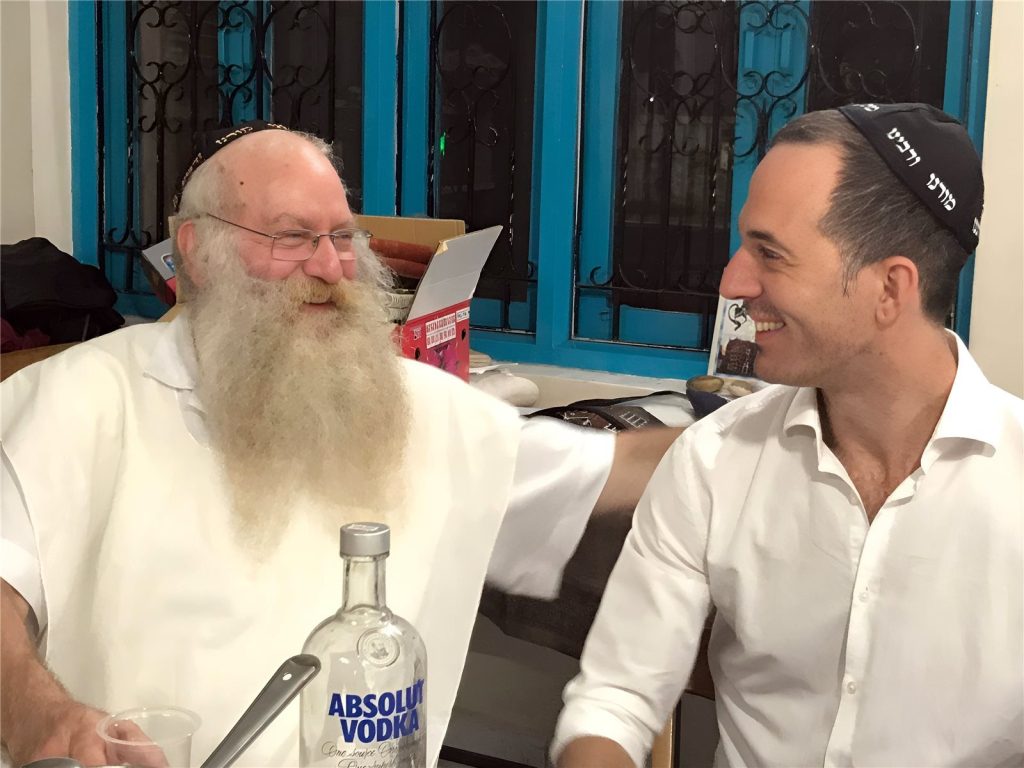
“Also the shluchim from Pushkar, the double mechutanim, Rabbi Shimi and Rebbetzin Zelda, who had just landed themselves from Israel, instead of resting after a long flight, worked hard to toivel all the basic items for the Chabad House. This is a family of shluchim – first of all thinking about others.”
Chabad House Jaipur isn’t yet bustling with dozens of guests, but receives guests almost daily. Every guest who enters is surprised to be welcomed with a personal, homey atmosphere.
“For us it’s simple; the world was created for him and we are here for him,” say the veteran-new shluchim with a broad smile. “This is the city of gems. Every Jew is also a precious gem, a diamond that needs polishing.”
The children are all married, each one is in a different place in the world. “The distance from family is a constant challenge,” they say. “You don’t get used to it. We don’t participate in our grandchildren’s brissin, birthday parties, pidyon haben or bar mitzva. We weren’t even at our daughter’s vort… But” – they emphasize – “we feel there’s nothing like the nachas ruach that Hashem provides us with generously in children, life and parnassa!
“In children – we merited a youngest son born in India, and with him we merited tremendous nachas from all the children and grandchildren. Today each of them is in their own shlichus – whether in chinuch or in their own Chabad House. The children who grew up in such challenging conditions became shluchim themselves.”
“In life, we saw open life-saving miracles,” continues Mrs. Kupchik. “Especially during the period of Betzalel’s illness. Every doctor we met was exactly the right doctor, every treatment came exactly on time.
“And also in parnassa, we went to India without a penny. We jumped into the deep water and Hashem always sent us the right shluchim to help us maintain the Chabad House. Every time we needed something, a donor would arrive wanting to donate.”
Today the expression is ‘shlichus with mesirus nefesh…’
“We’re not in mesirus nefesh more than anyone else,” emphasizes Mrs. Kupchik. “Everyone has their difficulties, everyone has their miracles.
“It’s important to remember,” concludes Mrs. Kupchik, “that every Jew is a shliach. You don’t have to travel to India or cross continents for this. Wherever Hashem puts you, that’s your shlichus. It could be at work, in the neighborhood, in the family.”
And R’ Bezalel concludes in his own words: “It’s worth being shluchim of the Rebbe! Already the second time I traveled to India, I received an answer from the Rebbe that accompanies us to this day: ‘The shlichus is for the personal benefit of the shliach, in children, life and abundant sustenance.’ We saw this come true anew each day…”
Beis Moshiach #1442 • pp. 22-33
© 2026 Beis Moshiach Magazine. All rights reserved.
This article originally appeared in Beis Moshiach #1442. You are welcome to share it with friends and family by email or in print, provided that you do not change, add to or omit any part of it, you credit the author and Beis Moshiach, and you include a link to archive.bmoshiach.org (written out in full in printed copies).
To republish this article in a newspaper, magazine, book or website, please request permission in advance at [email protected].