Rostov or Warsaw?

From the TzaddikStory.org collection
One clear morning in Russia, a devoted Yid suddenly went missing. One day, he was there and the next, he was nowhere to be found. It was as if he’d vanished into thin air, leaving behind a sea of questions that only grew with each passing day. His wife, Raizel, now alone with their small children, was left wondering what could have taken him away without a word.
Day after day, she waited by the door, clutching the mezuza, whispering, “Where have you gone? Why did you leave us?” But the days turned to weeks, and silence replaced hope.
Finally, Raizel packed a small bag and set out across the Russian countryside, wandering from town to town. She had to find her husband. How far could he have gone, anyway?
In each village, she’d stop someone in the street, holding up a small photo of his face. “Excuse me, have you seen this man?” she’d ask, her voice hopeful.
* * *
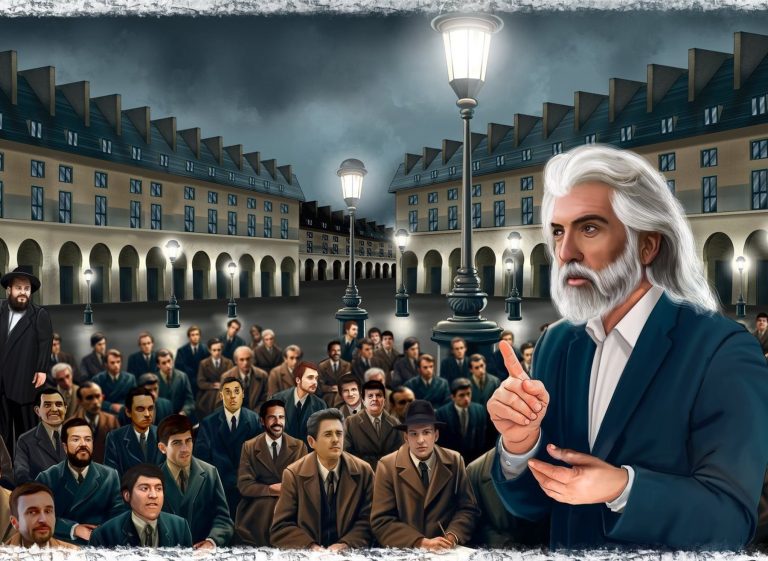
Raizel had nearly given up hope when a family friend, a Chabad Chassid, suggested, “You should go to Rostov, to the Rebbe Rashab, Rabbi Sholom Dovber of Lubavitch. If anyone can help, it’s him. He’s a Tzaddik – he can see things others don’t. He’ll know what to do. He’ll know how to find him.”
When she finally reached the Rebbe’s home in Rostov, Raizel’s heart was pounding. She approached the Gabbai. “Please,” she said, “I need to see the Rebbe. My husband… well, you see – he’s missing, and I don’t know where else to turn.”
But the Gabbai gently shook his head. “The Rebbe doesn’t see women alone,” he explained softly.
Raizel’s heart sank. “I… understand… but this is different – it’s an emergency. I’m not just any woman. My husband is missing!”
The Gabbai remained firm. “Write a letter,” he said softly, “and I’ll pass it along. He’ll answer, don’t worry. We’ll help you get the answers you need.”
Feeling her last bit of hope slipping away, Raizel put her hands together, her voice cracking. “Please… I need to see the Rebbe Rashab myself. I don’t want to write a letter. It’s really, really important.”
The Gabbai’s expression softened, but his answer didn’t change. “I’m sorry. A letter is the only way.”
That night, alone, Raizel poured her heart into a letter to the Rebbe. She wrote carefully, sharing every detail, her worries for their family, her fears of what could have happened to him. She took a deep breath, folded the letter, and handed it to the Gabbai the next morning. “Please,” she whispered, “tell the Rebbe it’s very important.”
“I sure will,” the Gabbai told her. “I’ll make sure he knows. Not to worry.”
* * *
Hours passed, each one stretching forever, as Raizel waited in the small room, walking from the couch to the chair and back again, whispering Tefillos under her breath.
Finally, the Gabbai returned, a smile on his face. “I told you I’d get you an answer. The Rebbe has spoken. He says you need to go to Warsaw.”
Raizel stared at him, her eyes about to come out of her head. “Warsaw?” she asked, stunned. “You mean, like, the Warsaw? In Poland?! That’s… that’s like 1,200 miles away!”
The Gabbai nodded. “Yes. Warsaw. That’s what the Rebbe said.”
“But… how am I supposed to get there?” she asked, her voice shaking. “I have children at home. And I don’t have the money for a trip like that.”
The Gabbai looked at the Chassidim who had gathered nearby. One of them stepped forward, his eyes warm with understanding. “If the Rebbe told you to go, then you have to go. It’s your only hope. We’ll help you with whatever you need.”
One by one, the men reached into their pockets, offering whatever coins they had, placing them into Raizel’s hands. She felt tears on her cheeks as she accepted their kindness.
“Thank you,” she whispered, “Thank you… thank you all.”
* * *
With the Rebbe’s blessings and the kindness of the Chassidim, Raizel began her long journey to Warsaw. She got on the train from Rostov to Moscow, then switched to another train to Warsaw. Holding the coins tightly in her hand, she whispered Tehillim as the train moved along. The view outside flashed by so quickly that she couldn’t look at much, but her mind stayed clear and focused on her mission.
Once she arrived, Raizel searched the crowds of people, hoping to see someone or something she recognized, or even to see her husband. But the blur of faces in the busy train station didn’t stop, and no one she knew was in the crowd. She realized then how lost she really was.
What was she doing here, in Warsaw? Was her husband really here?
“Excuse me,” a kind Jew – a Chassid, well-dressed with a nice beard and hat, – said, “You look a little confused; may I help you?”
Raizel looked up at the man with the black beard and hat – where did he come from? He seemed to appear out of nowhere. He was the first really kind face she’d seen in hours. Suddenly, she found herself sharing all her pain with him – her story, the Rebbe, the train ride. All the struggles and heartache of how her husband had disappeared.
“So you see … the Lubavitcher Rebbe sent me here,” Raizel explained. “He told me coming to Warsaw would help me find my husband.”
The man listened carefully, and then he asked Raizel her husband’s name.
“Mottel,” she told him, showing him the only photo she had of him. “Do you think you might know him?”
The man nodded softly. “Go to the flour mill,” he said. “It’s right down the block and to the right. Ask the people there about your husband – I think I’ve seen him there before.”
Raizel immediately started crying. She thanked the kind stranger and quickly ran off in the direction he’d pointed. Once more, Raizel was hopeful.
At the flour mill, Raizel immediately asked about her husband. The owner of the mill listened closely. “His name is Mottel,” Raizel explained. “Do you have a worker by that name?”
The man nodded. “Yes, ma’am – we sure do! Wait right here, I’ll go get him.”

Raizel sat in the owner’s office, staring at the door, waiting for it to open. She couldn’t believe that the Rebbe might have been right about this random city. And all so fast! She couldn’t believe she was finally about to find her missing husband.
A moment later, the door opened.
It really was him – Mottel, her missing husband! Raizel’s heart filled with shock and happiness all at the same time. She had searched everywhere, and now, here he was. She called out his name, not believing her eyes, thanking Hashem aloud. After all those weeks, Mottel stood right in front of her, safe and sound.
“Raizel… you found me. I… I’m so sorry, Raizel. I couldn’t come home,” Mottel explained. “And I still can’t – not yet. Something happened that forced me to leave.” He looked down, his voice low. “I wanted to tell you. I never wanted to leave like that, but…”
Raizel quieted, her mind racing. She needed to understand how her husband could have left their family. She moved closer, finally noticing the worry in his eyes. Mottel was healthy, but she could see he’d been through something difficult.
“How did you get here…?” Mottel asked, looking confused. “How did you even know where to find me? This is so far from home.”
Raizel leaned back. “I went to the Lubavitcher Rebbe, the Rebbe Rashab. He sent me here.”
Mottel’s eyes widened with shock. “If such a tzaddik could find me all the way here, then maybe he can help me with my troubles too,” he said, hopefully.
For the first time in months, Raizel felt some calm. Her husband was coming home.
* * *
A few days after they returned home, Raizel decided to go back to the Rebbe, to thank him. This time, she took Mottel along. But when they arrived, the Gabbai stopped her.
“I need to see the Rebbe,” Raizel insisted. “I want to thank him for helping me find my husband!”
The Gabbai shook his head. “The Rebbe is busy and can’t see anyone right now,” he said firmly.
Raizel was disappointed. But a Chassid standing nearby whispered to her, “Try waiting outside the Rebbe’s room later in the evening. Maybe you can catch him coming out and say thank you.”
So, that’s what Raizel did. She waited outside the Rebbe’s door, her heart pounding. She had imagined this moment so many times – finally meeting the Rebbe who had led her to her husband. She couldn’t wait to thank him in person.
Finally, the door creaked open. Raizel looked up, and as she saw the Rebbe’s face, her eyes went wide with shock. Her heart skipped a beat. It was him – but…
Her mind spun, her breath quickened, and before she could utter a word, everything went black. Raizel’s knees gave out, and she crumpled to the floor with a soft thud.
* * *
“Raizel… Raizel… wake up,” a voice called, distant but growing louder. “Are you okay?”
Raizel’s eyes blinked open to see a kind Chassid leaning over her, his face filled with worry.
“Are you all right…?” he asked gently.
Raizel blinked, her heart still racing. “I… I saw him,” she whispered, barely able to speak.
Raizel sat up slowly, still in shock. “That man… the Rebbe,” she stammered. “He’s the same man I saw in Warsaw! He’s the one who helped me find Mottel!”
The Chassid looked confused. “That can’t be,” he said gently. “The Rebbe hasn’t left the city in weeks. Maybe you saw someone who just looked like him?”
Raizel shook her head firmly. “No, I’m sure it was him,” she insisted. “He was there, in Warsaw, by the train station. He showed me where Mottel was. I’ll never forget his face. It was him.”
Another Chassid, who had been listening, stepped forward. “When did this happen?” he asked. “I believe you.”
“It was four days ago,” Raizel replied. “Around one o’clock in the afternoon. I remember, because the clock at the train station was just striking one.”
The Chassidim exchanged surprised looks and hurried away to talk. Raizel waited, feeling a mix of confusion and excitement. She knew what she had seen.
After a few minutes, one of the Chassidim returned, his eyes wide. “Raizel,” he said slowly, “you’re not going to believe this. Every day, the Rebbe eats lunch at one o’clock. But on the day, you were in Warsaw, something unusual happened.”
Another Chassid nodded. “When the Gabbai brought the Rebbe’s lunch at one, the door was locked, and the Rebbe didn’t answer. The Gabbai knocked again, but still, no answer.”
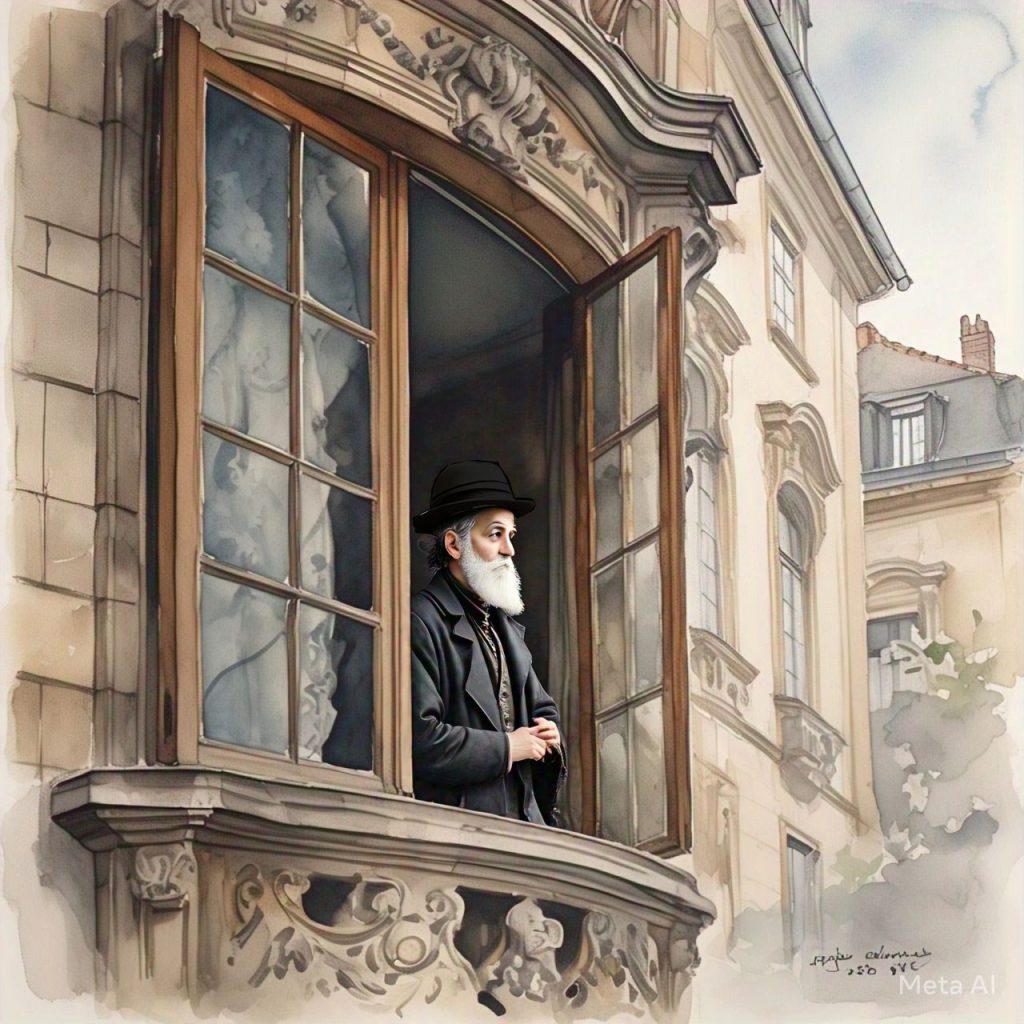
“We started to worry,” added another Chassid. “The Rebbe always answers. So, a few of us looked in the garden, and we saw the Rebbe standing by his window, staring out. It was like he was… somewhere else. But he was standing in the room.”
Raizel leaned in, listening carefully.
“After a few minutes, the Rebbe finally opened his door and asked for his lunch,” the Chassid explained. “But we feel… we’re sure you’re telling the truth… he was with you, in Warsaw, even though he was here in his study. The Rebbe somehow left his body and went to help you.”
Raizel’s eyes filled with tears. She now understood the Rebbe’s kindness and power. He hadn’t just sent her – he had truly been with her, guiding her to Mottel across miles of Russia, just when she needed him most.
Note: This story is based on a children’s adaptation from Raboseinu Nesieinu. This story was told by R’ Mordechai Aharon Friedman—a well-known Chassid of the Rebbe Rashab who was renowned for his precise storytelling. Certain details, such as the reasons why the husband left home or the underlying circumstances, do not appear in any known version, so we have preserved the story as it was originally told. The concept of a tzaddik appearing in two places at once—referred to in English as bilocation or astral projection—is a recurring theme in many stories of Tzaddikim.
Beis Moshiach #1449 • pp. 55-59
© 2026 Beis Moshiach Magazine. All rights reserved.
This article originally appeared in Beis Moshiach #1449. You are welcome to share it with friends and family by email or in print, provided that you do not change, add to or omit any part of it, you credit the author and Beis Moshiach, and you include a link to archive.bmoshiach.org (written out in full in printed copies).
To republish this article in a newspaper, magazine, book or website, please request permission in advance at [email protected].