“The Moment Jan Peerce Became a Lubavitcher”
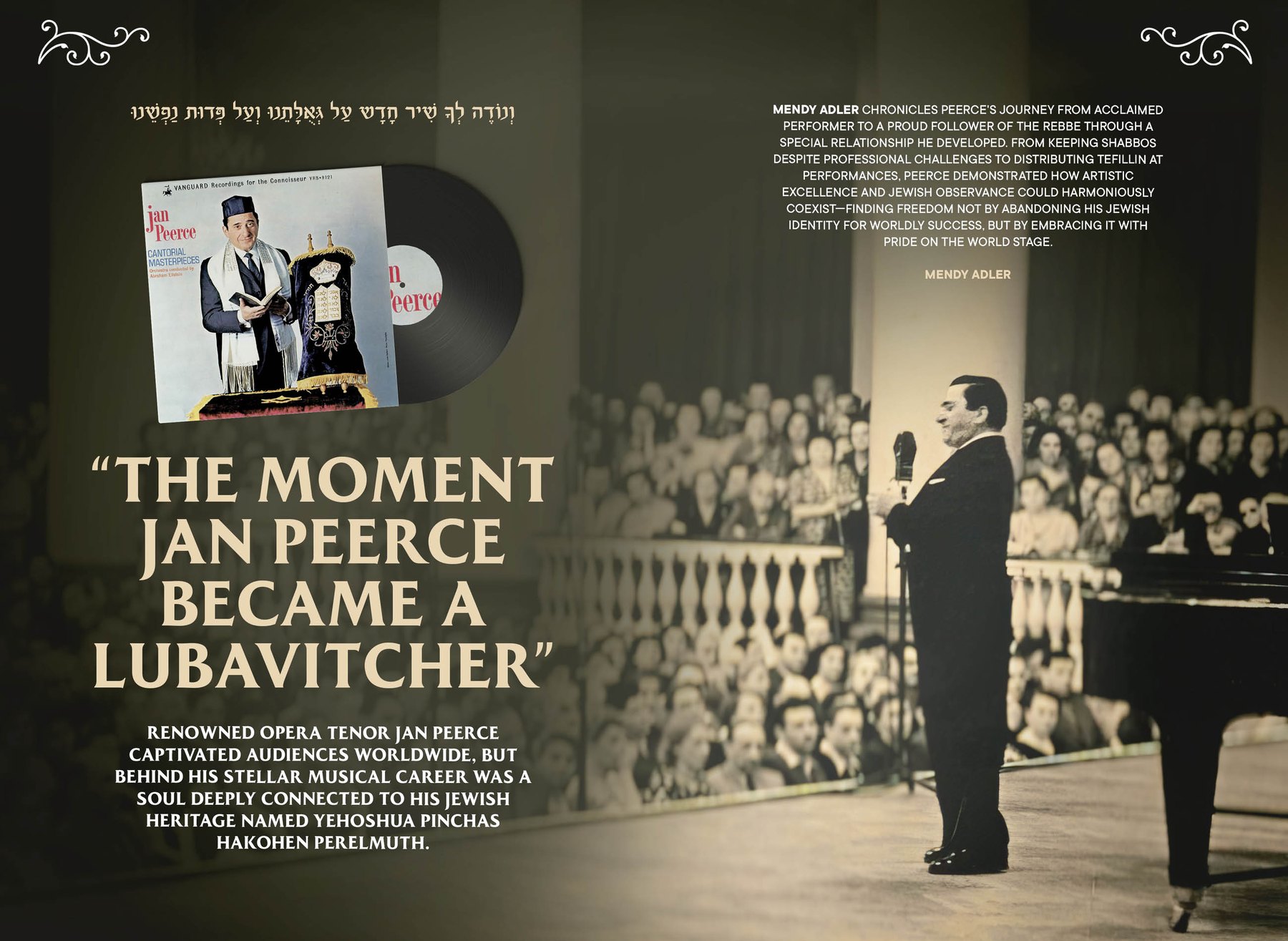
Renowned opera tenor Jan Peerce captivated audiences worldwide, but behind his stellar musical career was a soul deeply connected to his Jewish heritage named Yehoshua Pinchas HaKohen Perelmuth. Mendy Adler chronicles Peerce’s journey from acclaimed performer to a proud follower of the Rebbe through a special relationship he developed. From keeping Shabbos despite professional challenges to distributing tefillin at performances, Peerce demonstrated how artistic excellence and Jewish observance could harmoniously coexist – finding freedom not by abandoning his Jewish identity for worldly success, but by embracing it with pride on the world stage.
“Human reactions in thought, speech and action are limited, especially when responding to divine commandments. However, the neshama intuitively strives to rise above the limitations of thought and speech. In its natural thirst for G-dliness, it seeks expression in enthusiasm and joy, the components of song and niggun. Chassidic singing and negina influence and penetrate the entire being of the person, so that all the actions of the Jew (and not just the practical fulfillment of the mitzvos) in his life and daily behavior will be l’sheim shomayim in the spirit of ‘serving Hashem with joy.’”
With these words, the Rebbe began one of his letters to the famous singer Jan Peerce, one of the most admired and successful opera singers in the United States. These words of the Rebbe became the dominant tone that accompanied Peerce’s musical and spiritual life, as despite his tremendous success and worldwide achievements, Peerce managed to strictly and proudly maintain his Jewish identity.
Behind the legendary singer was a Jewish soul thirsting for G-dliness which began to find satisfaction through his special relationship with the Rebbe; special connections that were well reflected in his musical career.
His close ties with the Rebbe that developed over the years strengthened Peerce’s recognition that he needed to combine his unique musical talent with his deep Jewish connection. Indeed, beyond his impressive voice and moving renditions, the figure of the proud Jewish singer always stood out – a man of faith and principles, strongly connected to his roots and faithfully devoted to his people’s heritage.
In fact, Jan Peerce was a living example of an artist in whom wonderful musical talent merged with a Jewish soul connected in a strong bond to Torah and mitzvos.
A World-Renowned Singer
Jan Peerce, the Jewish-American tenor, was born in 1904 in Manhattan, New York, to traditional Jewish parents. His real name given at his circumcision was Yehoshua Pinchas Perelmuth, but when he began his role as a ‘tenor’ for the famous ‘Radio City Music Hall’ company in New York, the producer marketed him with the name ‘Jan Peerce’ which stuck and became his stage name.
From a young age, Peerce showed rare musical talent and performed as a child prodigy, but his great success began in 1938, when he joined as a soloist with the NBC Symphony Orchestra under the baton of the legendary conductor Arturo Toscanini.
Toscanini was amazed by Peerce’s exceptional voice and they created a fruitful collaboration that lasted 17 years. Peerce was the soloist in Toscanini’s famous recordings and was considered “the beloved tenor” to him.
In 1941, Peerce achieved additional success when he made his impressive debut at the Metropolitan Opera in New York as an actor in a musical production. In the period that followed, he became known as one of America’s greatest tenors, and played additional major leading roles in well-known operas.
In addition to his opera performances, Peerce was also an esteemed concert singer and chazan. He recorded a wide variety of operas, concerts and cantorial works that were sold on records bearing his name.
His magnificent voice and unforgettable performances on the world’s great stages made him world famous, and he became known as one of the most successful opera singers in the United States.
Rich Repertoire Of Jewish Music
Jan Peerce’s first encounter with Chabad was in 1970, when Chabad in Manchester invited him to perform at a festive dinner for the benefit of the institutions. He agreed to the invitation and during the dinner sang several melodies.
The event organizer was the Chassid Rabbi Zalmon Jaffe. He sent the program to the Rebbe along with a report he received about the special concert Peerce performed, and the Rebbe replied in a letter in which he wondered why a singer like Peerce who could sing Jewish songs, focused only on generic songs (from the original letter in English):
“It is not easy for me to write the following lines, but I have no choice, and I trust you will understand. I am referring to the concert program arranged by the Lubavitch Organization in Manchester last December, which has just now come to my attention.
“To begin with the positive, I wish to congratulate those who arranged this elaborate presentation, etc., and were instrumental in rendering great service to the cause. Actually it is nothing unusual for a Jew to do a good thing, especially for a person like yourself, and the reward of the Mitzvo is the the Mitzvo itself.
“However, precisely because one does expect the best of a Jew, it is all the more regrettable when some negative aspect mars the thing. One cannot overlook a negative aspect in such a case, because it is necessary to make sure that it is not repeated in the future. It is for this reason mainly that I am impelled to express my objections.
“…Now I come to my main objection to the Programme itself which appears in the center of the publication. I need hardly emphasize that a concert arranged for a Jewish cause should have a Jewish character, and not be just a theatrical show. Certainly a concert arranged by and connected with Lubavitch. It is quite understandable therefore that I began to look for Jewish topics in the Programme, and I only found something of that nature at the very end of the Programme, after the intermission, and even there the topics are of a mixed nature, and suffice it for the wise.
“I do not know who arranged this Programme, but it is well known that the artist has a rich repertoire of truly Jewish pieces.”
The First Connection
Peerce’s children did not do well in continuing the tradition of Judaism in their lives, but it was actually his grandson, Joey, who connected greatly to the Judaism he saw in his grandfather. In 1972, Jan Peerce visited his daughter’s home in Berkeley, California, and his seven-year-old grandson convinced him to go with him to the Chabad House to daven on Shabbos morning. Years later, Peerce wrote in his memoirs: “He was the one who introduced me to Lubavitch and caused me to become a Chassid.”
They arrived too early and the davening had not yet begun. The shliach, Rabbi Chaim Drizin welcomed them warmly, and explained to them that since lectures were held for Jewish students on Friday night, the davening would start a bit later.
Jan meanwhile began to tour the Chabad House building, and found in it a student dressed in jeans and an oversized shirt. He too was waiting enthusiastically for the davening to begin. Jan asked him why he was at the Chabad House, and he began to explain how ‘Chabad people’ had returned him to the Jewish people from the bad place he had been in.
After the Torah reading, when the Rabbi gave a drasha to the congregation, it was a drasha in which Jan was surprised to hear a deep Torah discussion and not a speech on current topics.
This Shabbos created Jan Peerce and his wife’s connection with Chabad. Jan left it very enthusiastic, when for the first time in years he felt complete in his Jewish identity and in the ability to be with his own people in such a fashion.
First Meeting With The Rebbe
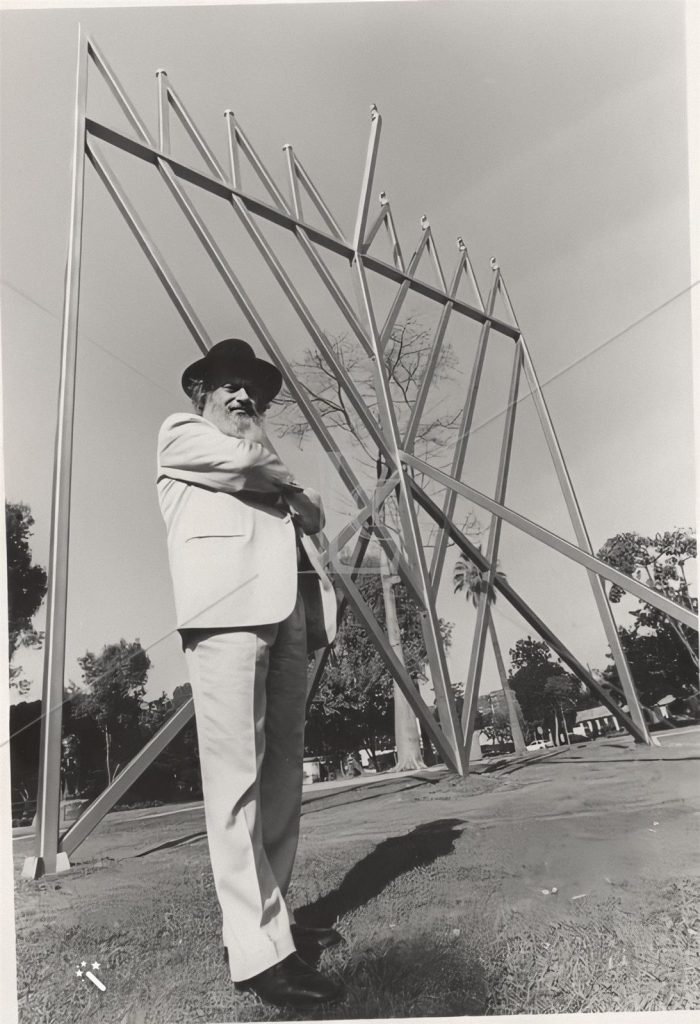
Not long after, R’ Drizin was in New York and suggested that the Peerce couple meet with the Rebbe. They agreed to this and a Yechidus was arranged for them.
Surprisingly, Jan left the Yechidus dissatisfied. The Rebbe spoke with him about his grandchildren, the children of his son who had married a Christian woman. Jan told the Rebbe that he invites them to his home for Passover and the High Holidays, and tries to teach them about Judaism and the Jewish holiday atmosphere.
The Rebbe’s face turned serious: “Why are you confusing them? Don’t confuse them. Their mother is not Jewish, she goes to church.”
Jan did not understand why the Rebbe was telling him what to do. “They are my grandchildren,” he argued. He also thought about the possibility that they would convert one day.
Not long after, his son divorced his non-Jewish wife, at which point Jan understood the Rebbe’s request. He told Rabbi Drizin: “I understood that the Rebbe was right. With all my Jewish inspiration, I was confusing them.”
The Rebbe Noted: “This Is The Moment Jan Peerce Became A Lubavitcher Chassid”
In the winter of 1973, when Peerce was already 65, he performed on the West Coast. In the midst of the performance, he fell and injured himself. When the news about this reached the Rebbe, the Rebbe wrote him a letter full of blessings for a speedy recovery:
“I was informed about your accident, along with a request for your speedy recovery. I am sure that by the time you receive this letter you will have already recovered, and may G-d grant you complete healing.
“After we have opened the new year, which brings renewed fortune and blessing to every Jew, may it indeed be a good and sweet year for you and for all our people, in which, and thus in many years to come, you will influence your Jewish brothers, through the divine talents that G-d has given you, with true Jewish inspiration in the spirit of our Torah, Torah of life, for a deeper meaning to life. And especially since you are a Kohen, with a great tradition to uphold and preserve.”
During Jan’s stay in the hospital, his wife, Alice, was very broken by it. R’ Chaim Drizin supported her greatly, and even went to the hospital at least once a day to report to the Rebbe about Jan’s health. In these visits, R’ Drizin had long conversations with the couple and told them about Chabad’s activities and its large scope. After that, in every place in the world where Peerce arrived for his performances, he would visit Chabad Houses and see how the Rebbe saves the spiritual, and sometimes even the physical, lives of countless Jews.
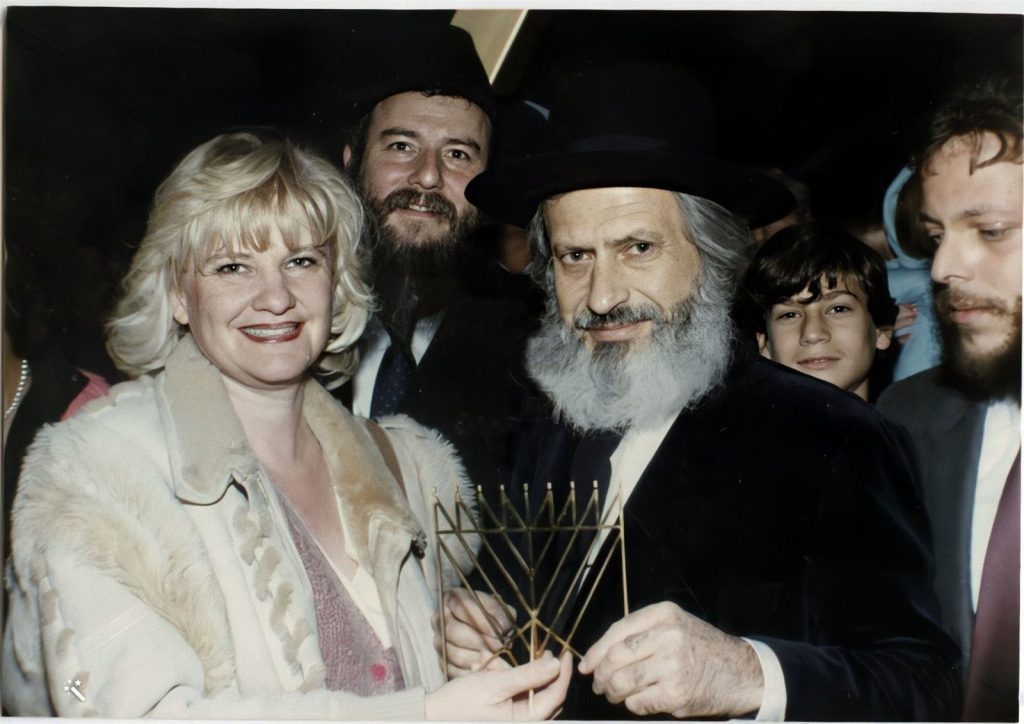
One day, R’ Drizin suggested to Alice to make a ‘deal’ with G-d. She came with the approach that ‘if Jan recovers from his injury and returns to functioning, then she will keep the Shabbos fully.’ However, R’ Drizin suggested that she start keeping Shabbos even before her husband recovers. And indeed, she began to keep Shabbos despite the enormous difficulty involved.
When Peerce returned to performing while still recovering from the fall, the Rebbe continued to send him letters of encouragement and support.
At the same time, the connection with R’ Chaim Drizin became deeper, and the couple’s exposure to Chabad became larger and larger. At some point, Jan began telling people: “Although I never officially joined the movement – I am simply a Lubavitcher!” At that time he also expressed: “Why shouldn’t I be a Lubavitcher even when I am a world artist? I am simply proving that it doesn’t hurt to be Jewish and to be religious…”
His wife Alice wrote to the Rebbe during this period and thanked him for his extensive support throughout Jan’s recovery period. She ended her letter with the words: “Jan and I have become staunch Chassidim of Lubovitch [sic], more so than ever before.”
In a return letter, the Rebbe warmly blessed them on joining the Chassidic family (from the original letter in English):
“I was pleased to receive your letter of January 10th, following the personal regards which I have received through mutual friends, as well as the reports about your involvement with Lubavitch and Chabad teachings, etc.
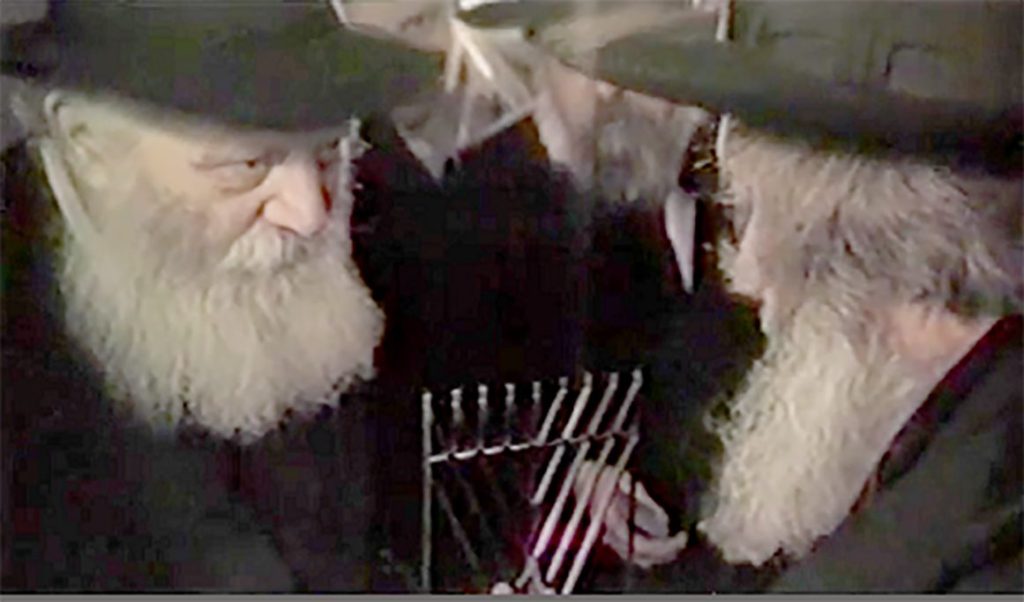
“All of this is especially pertinent at this time in our Jewish calendar, the period between Chanukah and Yud Shevat. Coming from Chanukah, the festival of Lights, which symbolizes the light of the Torah and Mitzvot, we are reminded of the Chassidic emphasis on inspired joy and brightness which should permeate the life and activity of every Jew. Moreover, as in the case of light which is of immediate benefit not only to the one who lights it, but also to many others at the same time, so a Jew has to illuminate his personal life as well as his surroundings with the light of Torah and Mitzvot. This is also emphasized by the special requirements that the Chanukah lights be seen outside, so as to illuminate those who might still be walking in darkness.
“Similarly, Yud Shevat, he Yahrzeit of my father-in-law of saintly memory, brings to mind his dedicated efforts in the course of the last decade of his life in this country, to spread the principles and teachings of Chassidut to many who were “outside.” Thus, many “outsiders” became “insiders,” whose lives were brightly illuminated with the light, vitality and warmth of Chassidus, and who in turn became “shining lights” illuminating others.
“Your joining this ever-growing Chassidic family which has found a new meaning in life and, with it, peace and happiness, has a special significance in that you are a Kohen, and also in that Divine Providence has given you a gift of song and melody. For this is a medium that directly communicates with the heart and the inner aspects of the soul, unlike prose which speaks to the intellect and only then can probe deeper. Through the medium of song and melody one can touch directly upon the heartstrings of the listener and inspire his inner soul which is the reason why song and melody have such a prominent part in Chassidus in general, and in Chabad in particular.
“In the light of the above, I extend to you both my prayerful wishes to utilize to the full the capacities and opportunities which G-d has given you in the above-mentioned direction, and to do this in the Chabad way – with complete trust in G‑d and with inspiration, and may G‑d bless you with success to go from strength to strength in all the above, in good health and with gladness of heart.”
When Rabbi Zalmon Jaffe visited the Rebbe after Peerce’s second performance at the dinner of Chabad institutions in Manchester, the Rebbe told him that the conductor Toscanini once asked Peerce if it was possible that he was originally from an Italian family and not Jewish. Peerce answered without hesitation that he was a proud Jew. The Rebbe noted to Rabbi Zalmon Jaffe that “this is the moment when Jan Peerce became a Lubavitcher Chassid..
I Couldn’t Resist the Temptation
Towards 11th of Nisan 5734, the Peerce couple gave the Rebbe seven of Jan’s best records. On one of the albums, they wrote a lovely dedication: “Dear Rabbi – May Hashem give you the strength to bear and continue your exalted work. Best wishes, Alice and Jan Peerce.” On the front of the album, it said: “To our dear Rabbi, Rabbi Schneerson – Wishing you a Happy Birthday.”
In response, the Rebbe wrote them a letter thanking them for the special gift, and at the end of it, he added:
“The best response I can give to your kind wishes is to repeat the divine blessing that was given to our patriarch Abraham, ‘And I will bless those who bless you.’ May it be Hashem’s will that you and your family merit abundant divine blessings, both materially and spiritually.
“The merit of your progress in observing the commandments (especially Shabbos and kashrus) and your efforts on behalf of Jewish matters will stand for you and all your loved ones as support, especially to bring you true Jewish contentment from your children and grandchildren, and that you will be able to report good tidings.”
At the same time, Jan wrote to the Rebbe that he was no longer interested in the albums he was producing, as he refused to use techniques that beautify or “engineer” the voice, as other modern singers do, and as a result, the sound quality was considered inferior.
The Rebbe responded with a special and encouraging letter:
“It was a very pleasant surprise to receive your records. Needless to say, I could not resist the temptation to hear it at least in part, despite the crowded schedule of activities. I am certain you do not require my recommendation, as your G-d-given gift has been so widely acclaimed …” And here the Rebbe recommended that Jan continue to produce records. [See photo with more of the letter]
Indeed, Jan followed the Rebbe’s advice, and although he had already released many albums, he continued to produce more and more.
“Throw Away the Cane”
As Jan grew older, his vision diminished, and by the age of 70, he could see only with one eye, at 20% vision. At that time, he gave a performance during which he walked among the audience when he suddenly stumbled and broke his leg. Once again, the Rebbe followed up on his condition and sent messages of encouragement through R’ Drizin. After consulting the Rebbe on the matter, Jan underwent surgery, and as a result, he was left with a cane that he had to use in order to walk.
Yud Shevat 5735 marked twenty-five years since the Rebbe took on the Chabad leadership, and among the guests who attended the Rebbe’s farbrengen in 770 was Jan Peerce. He sat and listened to the talks in Yiddish, his mother tongue, and during the niggunim he could be seen clapping and particularly enjoying it.
At one point, he made his way to the Rebbe and approached him with a glass of l’chaim, but before he could drink, the Rebbe said to him, “We have half of Manchester here.”
Jan, who had recently performed there again, replied that he indeed noticed them and told Rabbi Zalmon Jaffe, ‘l’chaim.’
“They wrote me enthusiastic letters about your concert,” the Rebbe told him.
“I hope it went well,” Jan replied.
“The concert was more than good, even better than the first concert,” the Rebbe responded.
When he finished, the Rebbe motioned with his hand towards the cane and told Jan that he didn’t need it. Upon hearing this, Jan began to explain to the Rebbe about his health problems and that it was not so simple, but the Rebbe seemed to ignore his words: “You must sing, you must make people happy… make happy those who are here too.”
When Jan left the farbrengen, it was still in full swing, and just as he exited, he managed to hear the Rebbe begin talking about music. The Rebbe said that singing indicates that a person is in a state of yearning, and he explained that musical instruments and words limit music to the physical world, whereas wordless tunes are related to spirituality, uplifting a person beyond measurement and limitation. Jan felt that the Rebbe was speaking directly to him, especially for him.
Shortly after, Jan and his wife went to a Yechidus with the Rebbe, during which the Rebbe told him to throw away the cane. Jan continued to explain to the Rebbe that his leg still needed rehabilitation and that he couldn’t simply get rid of the cane, but the Rebbe insisted: “Please listen to what I say. Throw away the cane!”
Although it seemed like a simple thing, Jan could not do it… His wife began to persuade him, telling him that if the Rebbe said so, they must listen. Finally, he agreed to comply, albeit reluctantly. Later, he admitted that he truly no longer needed the cane – something he only realized by throwing it away.
“Mitzva Campaigns” in the Middle of a Performance
Once Jan began to get closer to Chabad, alongside his work as an actor in various plays and in between his performance tours, he would sing at fundraising events for Chabad institutions in North America, where his wife would speak about the scope of Chabad’s activities and encourage attendees to donate. Alice wrote the Rebbe regular reports on their activities in the field of Chabad, and the Rebbe would reply with heartfelt responses.
After one of these performances, a reporter expressed his impressions: “Jan is undoubtedly a wonderful artist, but first and foremost, he is a Jew with respect for G-d and his Rebbe.”
At one point, Jan began performing at events for the F.R.E.E. organization, which helped Jewish immigrants from the Soviet Union. He felt the plight of the Jews in Russia and dedicated himself to helping them through his talents. As Jan was exposed more and more to the Chabad movement, he learned about the Rebbe’s “Tefillin Campaign” and joined it in his own way. He admired the young men and yeshiva students who ran through the streets to find Jews, and even when they offered him tefillin several times, he proudly replied that he had already put on tefillin. He used his performances and talents to contribute to the campaign.
He gave money to Rabbi Okunov of the F.R.E.E. organization and asked him to buy several pairs of tefillin for him. R’ Okunov didn’t understand why Jan needed the pairs until he was present at one of his performances when someone in the audience shouted a request for Jan to sing some chazzanus.
In response, Jan said into the microphone: “Someone in the audience is shouting ‘Chazzanus,’ but I have a question for that young man. Did you put on tefillin today? I haven’t missed a single day since my bar mitzva, and if you promise me you will do the same, I’ll buy you a pair of tefillin.” After the performance, R’ Okunov discovered that the young man agreed to the deal and later received a pair of tefillin from Jan, the very ones he had purchased…
A similar case occurred when one of the city of Houston’s notables asked Peerce to appear at his son’s bar mitzva. He was planning to host the ‘party of the century’ for his son and wanted Peerce to be the highlight of the event. However, since Jan never typically performed at bar mitzvas, he rejected the offer outright, but simultaneously proposed that he come with his own son to one of his performances.
That’s exactly what happened. The bar mitzva boy arrived at the performance with his father, and suddenly, at the end of the show, Peerce approached him and made an offer: “If you put on tefillin every day starting from your bar mitzva, I’ll be willing to sing at your event…”
Why did Peerce refuse to perform at bar mitzvas? On one occasion, he claimed that he didn’t want to participate in an event that was both a ‘start of Jewish life’ for the boy but simultaneously an ‘end of Jewish life’ as had happened many times before. But after the boy promised him, he did so with great enthusiasm.
Observing Shabbos Completely
As previously mentioned, for several years, Peerce’s wife was the only one keeping Shabbos in their home, while her husband, Jan, continued to schedule performances on Saturdays. However, after recovering from his injury, the Rebbe wrote Peerce a letter encouraging him to start observing Shabbos:
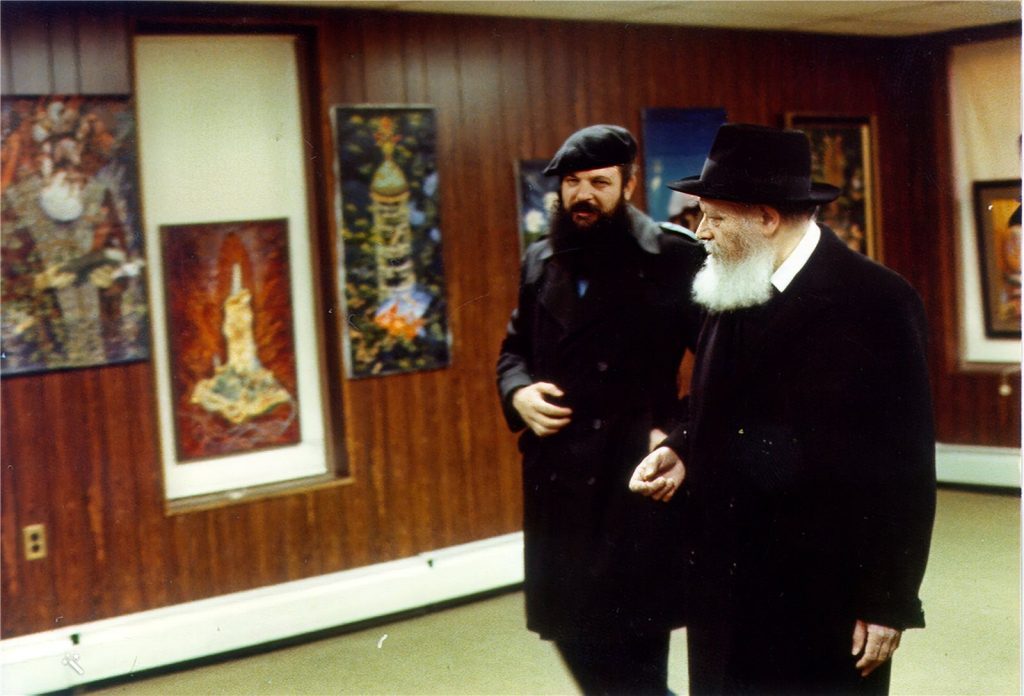
“I was sorry to hear about your accident. Nevertheless, I was happy to hear afterward that you are continuing a satisfactory recovery. May G-d grant you a full and quick recovery, so that you can continue, together with your wife, in good health, your good deeds for the benefit of many.
“I hope you won’t take the following remark too strongly: Since everything is through divine providence, the accident could well be a hint for some self-reflection for improvement, especially in the area of Sabbath observance. As important as this is for every Jew, it is even more important for someone who is prominent and popular, and whose personal behavior regarding proper Sabbath observance would be a compelling example for other Jews to follow.
“Now that the sad ‘Nine Days’ are behind us, enjoy, within the Jewish people, henceforth events of joy and complete happiness and good news.”
The letter arrived to Alice, who was influenced by the letter in the wrong direction, and she urgently wrote back to the Rebbe about her husband’s immense difficulty in observing Shabbos, and that it would be absurd to request this of him. Therefore, she asked the Rebbe’s permission not to show the letter to her husband.
The Rebbe responded with a special letter explaining his proposal and reassuring her:
“I received your letter from the 14th of August. There is no need to say that I am very sorry that my previous letter caused you some anxiety, which of course was not intended or expected. Therefore, I am hurrying to answer your letter in order to clarify my intention, and to calm your anxieties.
“By the way, do not think that I am personally hurt if the suggestions that I pass in writing or verbally are not accepted. Certainly, in your case, it was not in my mind that if my suggestions are not accepted there would be a reason for anxiety etc. It is only that when asked for advice and the like, I propose it as I see it, to the best of my knowledge, for the good of the questioner, and in the case of your husband and yourself – also for the good of those around you.
“Now to your letter and to my previous letter, to which it refers. I am certain that your husband can achieve a lot in his field, and that he can do this in a way that will be beneficial also to the matter of Judaism, that will be a source of blessing for you and for many others, as mentioned above. As much as the activities are in harmony with G-d’s instructions – and Sabbath observance is one of the most important, not only as a basic commandment of the Torah, but also as one of the Ten Commandments – so more channels are opened to receive G-d’s blessings.
“In the current case, there is additional benefit in that usually when there is a proposal to appear in a show or entertainment, and by the nature of things, such proposals may have positive and negative aspects – the question of Sabbath and holiday observance can serve as a test of desirability. Because if it must be rejected on this basis, this is an indication that it is not desirable for other reasons, including the material aspect.
“The above may seem like a mystical approach to material things. But with deeper reflection, one can see that the mystical approach is also a practical approach. And in recent years, we have seen that in places where certain stars stood firm in Sabbath observance, their religious beliefs were respected. To quote a few examples: American Chess Grand Master Samuel Reshevsky, who participated in a tournament in Moscow, refused to play on the Sabbath, and the game was postponed to after the Sabbath. And despite that religion is not ‘premium’ in that country, this only increased respect towards him. It was also practically beneficial to him, because it gave him an opportunity to rest an additional day between games, which were certainly quite demanding.
“World Chess Champion B. Fischer, who is Jewish, although he admits he belongs to Seventh-day Adventists, also refused to play on the Sabbath, despite forfeiting a game, but this did not harm his chances of winning the crown.
“Another example from the business world. A personal friend of mine participated in an international fair in Moscow about four or five years ago. He informed the authorities that he could not do business on the Sabbath, and they arranged a special session for him on Sunday. He came out very satisfied, also from a business perspective, without intentions or expectations.
“You write that you hesitated to show him my letter, not knowing if your husband would follow my suggestion etc. But I do not see why you should be afraid, because, as I explained above, this is not related to any condition on my part. It is only free advice that I believe is for his good, also from the material perspective, in addition to the spiritual aspects. But if he is still not ready to accept it, I am sure we will remain good friends as before.
“By the way, I must add that apparently I am giving your husband more credit than you, because I strongly believe that he is capable of forgoing material profit and personal satisfaction from appearing in a show if he is convinced there is a worthy reason justifying this. In any case, my proposal was based on the assumption that this will come, as you describe it regarding yourself and your husband, ‘from within, on a voluntary basis,’ when I am certain that your husband already has this ‘from within,’ and only needs to bring it into action.
“However it may be, I hope the current letter will not cause you a ‘difficult week,’ heaven forbid, and I look forward to good tidings. Especially now, as we have entered the month of Elul, which is a significant month for Jews in all their matters.
“At this time, in accordance with the ancient Jewish custom of hundreds of years to wish others a good year from the beginning of the month of Elul, I wish you and your husband and all your loved ones a blessing of a good and sweet year.”
“P.S. I leave it to your discretion if and when to show this letter to your husband, and you have my full consent to do so now or later.”
Alice finally decided not to show the letters to her husband, and the Rebbe did not mention them to him, but in the end Jan began to observe Shabbos. This happened several years later, in a period when Jan would request a blessing from the Rebbe for each of his performances, and one of the times the performance was on Shabbos. Jan sent, as was his custom, a request for a blessing, but no letter arrived. Therefore, Jan canceled the performance and called the secretariat to update about the new date.
The secretary responded that the Rebbe would be happy to hear that the date was changed. Jan approached R’ Okunov in wonder and asked him why the Rebbe did not respond to his letter, if his desire was that he would not perform on Shabbos. Jan added, “If the Rebbe had only asked, I would have changed the date.”
The Rebbe’s silence caused Jan to stop scheduling performances on Shabbos, and from then on shemiras Shabbos fully entered into their home…
When he wrote his memoirs, Peerce looked back on his past and regretted his debut performance that took place on a Shabbos afternoon fifty years earlier… He wrote in sorrow: “If I had insisted, I suppose I could have done it at another time… Maybe a bit fewer people would have heard me, but I would have felt better, and I assume I could have done it.” And he summarized: “If I could start my career again with all that I know, I think I could have been a complete Shabbos observer.”
Last Performance and Spiritual Journey
Peerce’s last performance was on the 29th of Teves, 5742. Several months later, a deterioration occurred in his medical condition, and he suffered a stroke and subsequently pneumonia that paralyzed half his body.
Jan was in a coma, and Chassidim went daily to his hospital bed to put tefillin on him. The Rebbe frequently inquired about his condition. On Erev Yom Kippur 5743, Alice called R’ Okunov in haste and asked how she should act if Jan would pass away during the day.
R’ Okunov passed by during the ‘lekach’ distribution and asked the Rebbe to bless Jan. The Rebbe, who knew that Jan had always been proud of being a Kohen, said he should give the Birkas Kohanim in the midst of the davening. R’ Okunov asked how Jan could ‘sing’ the brachos if he couldn’t even speak? But the Rebbe smiled and said he could do so even from a wheelchair…
This was quickly conveyed to Alice, who suddenly announced a ‘miracle’ that occurred at the very moment that R’ Okunov was speaking with the Rebbe: Jan awoke from the coma and opened his eyes. She arranged a small minyan in his room, and when the appropriate time came, they led him on a wheelchair to bless the people of Israel with love, the Birkas Kohanim.
The chazan sang the tune for the first word ‘Yevarechecha,’ and in the room a silence of anticipation prevailed. And then his mighty tenor voice was heard – “Yevarechecha…”
The women in the room could not contain their excitement and began to cry and shout with emotion, but due to their interruption his voice faded and he could not gather additional strength to continue the bracha…
On motzoei Shabbos, 21 Kislev, 5745, Jan Peerce passed away. In his will, he wrote that he wanted his funeral to be a ‘Chabad funeral.’ He did not want the ceremony to be conducted by anyone else.
At the funeral were present famous singers and actors alongside world-renowned conductors and cantors, but those who conducted the ceremony were Rabbi Drizin and Cantor Rabbi Moshe Teleshevsky who accompanied him with his classic chazzanus.
At the end of the shiva period, the Rebbe sent a condolence letter to Alice, Jan’s wife, expressing his sorrow at the passing of her husband:
“I was very saddened to hear about the passing of your husband, Yehoshua Pinchas HaKohen, may he rest in peace. I extend to you and all the bereaved family heartfelt sympathy and the traditional blessing of condolence – may HaMakom comfort you among the other mourners of Zion and Jerusalem.

“Expressing condolences in these days of Chanukah raises the rare merit of your late husband, who brought light and joy to many Jewish hearts through his songs and melodies in the spirit of Chanukah, throughout his life in this world. Indeed, he will continue to touch and move Jewish hearts even after his death, through his records, which I hope are still available and will continue to be in sufficient supply in the future.
“This merit, together with his other efforts for Torah and Jewish education, will certainly accompany his soul to a world of pure light, and simultaneously will also stand to your merit in this world, as you were such a significant part of his life and achievements in this world. May it be His will that you be blessed with additional health and productivity.
“The Torah promises us that every good deed done in this world hastens the time when ‘they will awaken and sing, those who dwell in the dust; – among them Yehoshua Pinchas HaKohen, of blessed memory.
“P.S. Although our representative was present at the funeral etc., our custom is to defer personal condolences to the last part of the week. Please convey my condolences to your son and daughters, even though I do not know them. May good and kindness always accompany you.”
[In preparing this article, I was assisted among other things by the book ‘DEAR REBBE’ and additional publications.]
Beis Moshiach #1455 • pp. 38-50
© 2026 Beis Moshiach Magazine. All rights reserved.
This article originally appeared in Beis Moshiach #1455. You are welcome to share it with friends and family by email or in print, provided that you do not change, add to or omit any part of it, you credit the author and Beis Moshiach, and you include a link to archive.bmoshiach.org (written out in full in printed copies).
To republish this article in a newspaper, magazine, book or website, please request permission in advance at [email protected].