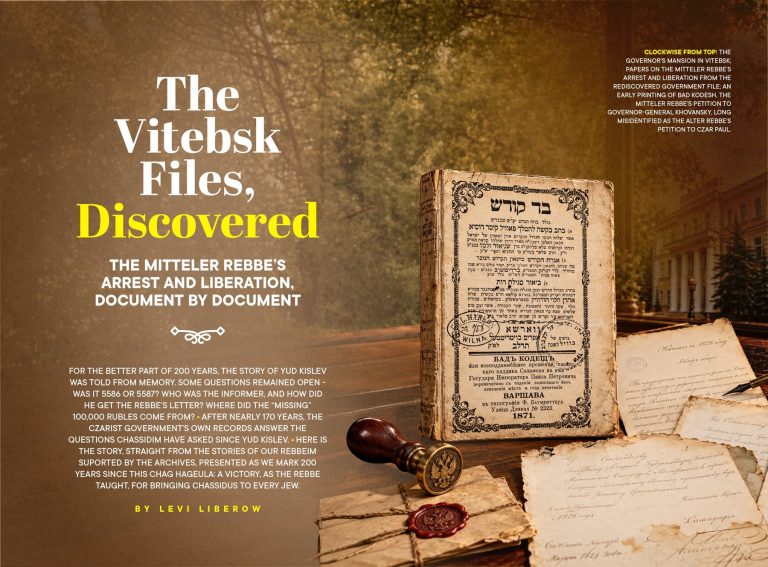
Bachurim on the Baguette Trail
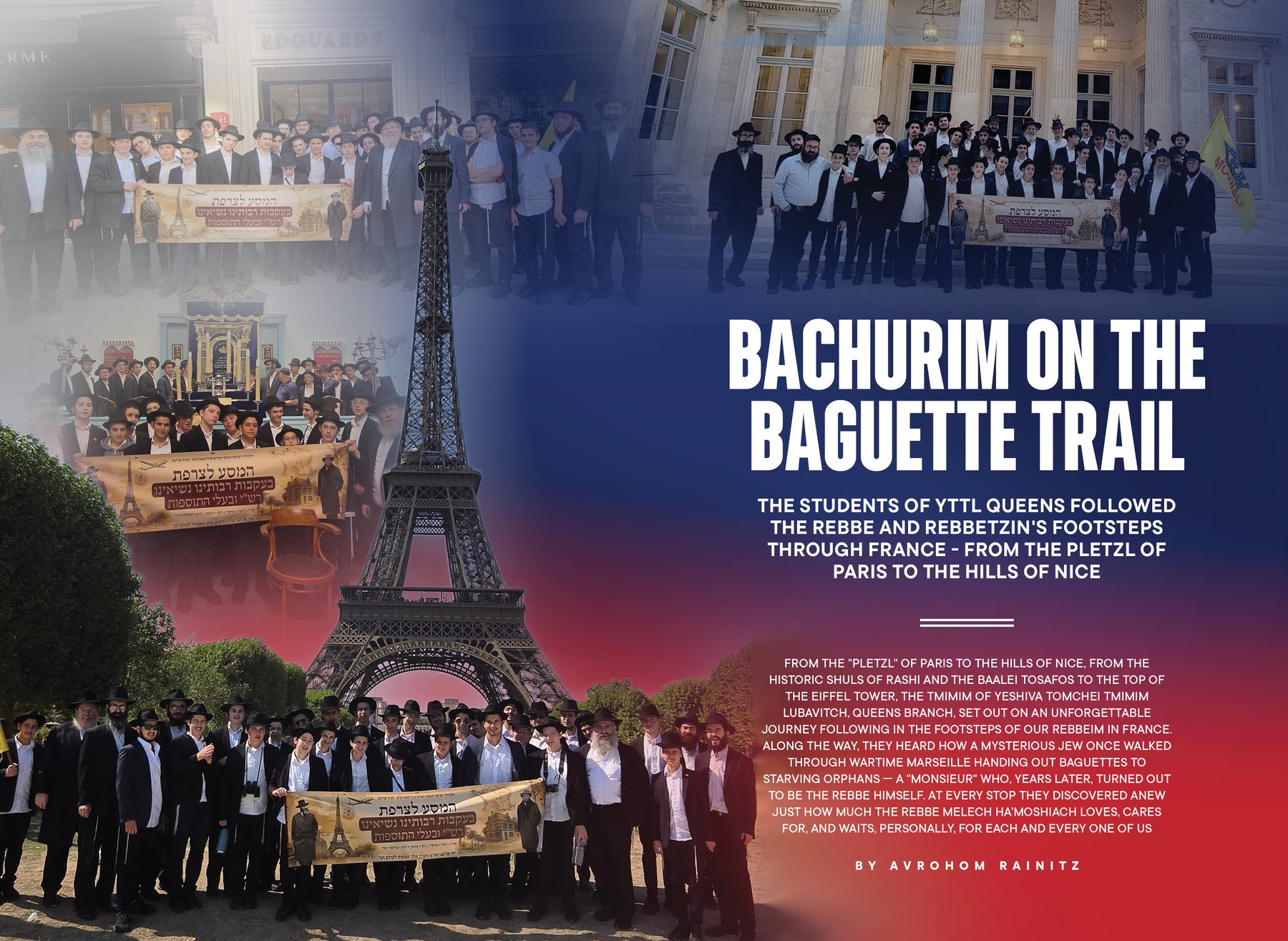
The Students of YTTL Queens Followed the Rebbe and Rebbetzin’s Footsteps Through France – From the Pletzl of Paris to the Hills of Nice
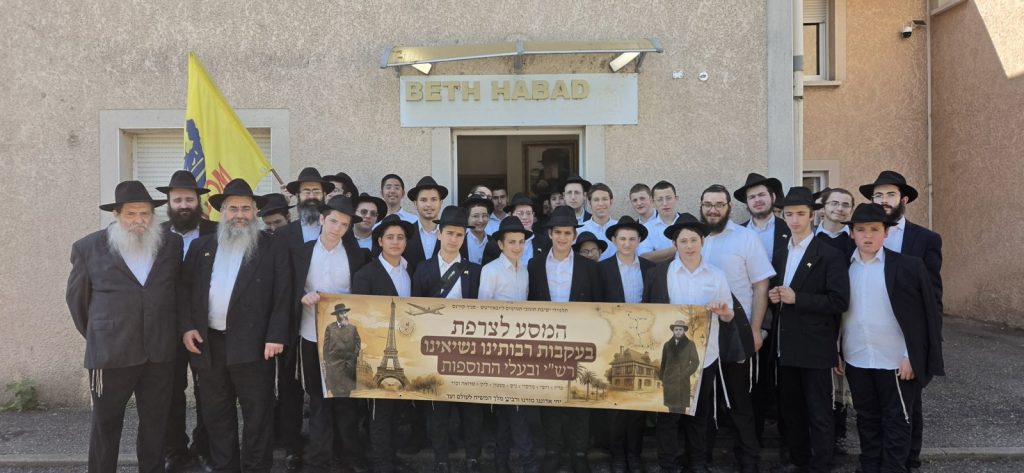
From the “Pletzl” of Paris to the hills of Nice, from the historic shuls of Rashi and the Baalei Tosafos to the top of the Eiffel Tower, the tmimim of Yeshiva Tomchei Tmimim Lubavitch, Queens branch, set out on an unforgettable journey following in the footsteps of our Rebbeim in France. Along the way, they heard how a mysterious Jew once walked through wartime Marseille handing out baguettes to starving orphans – a “Monsieur” who, years later, turned out to be the Rebbe himself. At every stop they discovered anew just how much the Rebbe Melech HaMoshiach loves, cares for, and waits, personally, for each and every one of us.
The Eiffel Tower was flooded with afternoon light and Paris spread out beneath it as always. Along with the group of tmimim who went up to view the scenery was a young man from Mexico. Rabbi Velvel Butman, who accompanied the group throughout the trip, exchanged a few words with him and asked: “Do you have any Jews in your family?”
The young man paused for a moment. “My grandmother, my mother’s mother, was Jewish,” he answered. He immediately added that he himself did not consider himself Jewish since his mother, he thought, was not Jewish. R’ Butman clarified to him that his mother was in fact Jewish, and therefore he himself was fully Jewish.
The young man fell silent for a moment. He knew almost nothing about this heritage except for one detail that had survived, passed down through the generations: words whispered secretly in their home, without his knowing why. “Shema Yisrael Hashem Elokeinu Hashem Echad.” That was all that remained with the family. And that, it turned out now, was enough for the bachurim to put tefillin on him for the first time in his life while dancing and singing around him.
The Jewish man had wandered the world for years, and only here in Paris did he first discover his Jewishness, and in an instant he was already wrapped in tefillin… This was one of the most moving expressions of the deep spiritual “excavation” that our Rebbeim, the Nesiim, carried out in France, and the group of tmimim who came from “Beis Moshiach,” 770, encountered again and again the special spiritual awakening that exists in France.
The Story Behind the Story
This story actually began much earlier, in the zal of Yeshiva Tomchei Tmimim Lubavitch, Queens branch, when the talmidim of the yeshiva were engaged in “Mivtza Torah” for the year 5786: studying all of Meseches Bava Kama, along with chapters of Tanya and Chassidic maamarim by heart. Upon completing the campaign, the boys earned a special week-long journey, from the 13th to the 20th of Menachem Av, following in the footsteps of our Rebbeim and of Rashi and the Baalei Tosafos: Paris, Vichy, Marseille, Nice, Menton, Lyon, Troyes, and Ramerupt.
Traveling with the students were the yeshiva’s executive director, Rabbi Menachem Mendel Hendel, and his son, the yeshiva’s Menahel Ruchni, Rabbi Yosef Hendel, along with Rabbi Ephraim Lewis of the yeshiva’s staff of Rebbeim, and Rabbi Menachem Mendel Baruch, the yeshiva’s Menahel Gashmi, who was himself born in France. R’ Velvel Butman, son of Rabbi Shmuel Menachem Mendel a’h, who authored Ha’Rebbi b’Paris, and their family had a special connection to the Rebbe and Rebbetzin at that time as will be related.
During the trip, Rabbi Mendy Hendel spoke with the bachurim and emphasized a point with them: that this is not merely a “reward” trip for their studies. Rather, it carries a motif of Geula when bachurim leaving 770 (whose numerical value equals “Tzorfas,” France) arrive in France, moving from place to place while learning and holding farbrengens. This is a kind of “birur” reminiscent of what the Rebbe said on parshas Vayeishev 5752, that it is one of the signs of Geula when the very kelipa of France itself is transformed into holiness.
“I Sat Beside the Rebbe and Rebbetzin in a Restaurant in Vichy”
Even before boarding the plane, the tmimim had a unique preparatory meeting ahead of the trip with Mrs. Hadassah Carlebach, who is, bli ayin hara, in her hundredth year. She is the daughter of Rabbi Shneur Zalman Schneerson of Paris, and one of the last living eyewitnesses to the Rebbe’s years in France.
Mrs. Carlebach spoke about her father whom the Rebbe Rayatz sent to save Jewish children, and who established, in the midst of the war, a network of children’s homes right under the noses of the Nazis. She described herself as a child, sitting in the only kosher restaurant in Vichy, at a table near the Rebbe and Rebbetzin’s, unable to take her eyes off them until her father whispered to her: “Look at your plate, don’t stare at them, they are private people.”
But above all the memories, Mrs. Carlebach ended the meeting with one message which she asked the bachurim to carry with them throughout the journey: “You will find the Rebbe in many different places. But most important—find the Rebbe within your heart. And in everything you do, ask yourselves: is the Rebbe happy with what I’m doing?”
“Zibetzn”: Where the Rebbe Already Began Conquering the World
Upon landing in Paris, the tmimim arrived at the Sinai schools where a warm and extraordinary welcome awaited them from the shliach Rabbi Yosef Yitzchok Pevzner. From the very first moment, R’ Pevzner devoted himself to all their physical and spiritual needs, to ensure the trip would go smoothly in every detail.
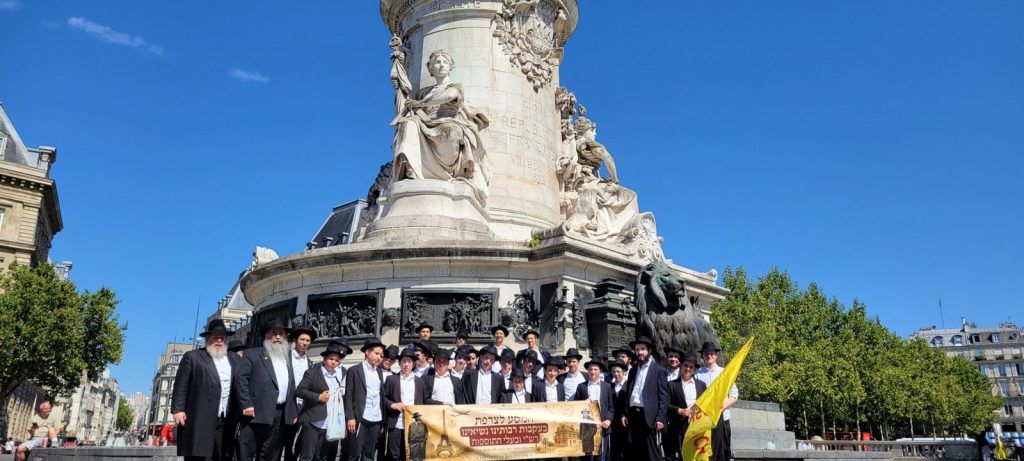
Less than a day after meeting Mrs. Carlebach, they were already standing in the streets of the “Pletzl,” the beating Jewish heart of Paris. They visited historic shuls on Rosiers Street, number 17 and number 25, where the Rebbe davened, gave shiurim, and danced for hours at hakafos on Simchas Torah.
Their first stop was the shul at 17 Rosiers Street. Here the shul is called “Zibetzn” (Yiddish for “seventeen”), a name that says so much.
“When you arrive at this shul,” began R’ Velvel Butman, “you know that the Rebbe davened here, as did the Rebbe Rayatz, the Rebbe Rashab, and some say also the Rebbe Maharash. It’s an experience that can’t be described in words—’A person should always pray in the place where his ancestors prayed.’ There’s a feeling here, a taste, a Chassidic warmth, that can’t be put into words.”
The Rebbe himself sent a letter to Rabbi Hillel Pevzner upon his appointment as rav of the shul, testifying about this shul that it is fit to raise up both tefilla and Torah, befitting its name, a mikdash me’at, the house of the King, Master of the world. There is no doubt that here the Rebbe already began his conquest of the entire world. The Rebbe sat here, in the western part of the shul, alone, quietly and began to transform the world. Taking the greatest physical “kelipa” there is, the world of French taavos, and not merely “breaking” it, but more than that: completely transforming it!
During the visit, the bachurim heard about an elderly man who used to come every Yom Kippur to the shul and who told how, in the midst of the war, the Nazis ym’s, climbed the stairs of the shul, which in those days was full of Jews hiding inside it (himself, the storyteller, among them). The Nazis reached the first floor and for a reason no one can explain, did not continue to the second floor, where the Jews were hiding. They turned right around and went back down.
Forty Years of Running Away and the Hisorerus That Happened Right Here
A gripping story took place right on the street next to the shul where Rabbi Hillel Piekarski devotes his life to Mivtza Tefillin. In the year 5774, R’ Piekarski approached a Jew passing by the “Zibetzn” shul and asked him in English if he was Jewish, and whether he wanted to put on tefillin. The man began shouting at the top of his voice: “Yes, I’m Jewish! And I want to put on tefillin!” R’ Piekarski, surprised by the intensity of the reaction, asked him why he was shouting and the man called over his wife, standing at the corner, and asked her to confirm that everything he was about to tell was true.
And so he told his story. Exactly forty years earlier, in 1974, he had been in Manhattan, and a group of bachurim invited him to the mivtzaim tank to put on tefillin. He agreed. The second time, when he saw them approaching him again, he wasn’t interested and instead of simply refusing, he chose to say he wasn’t Jewish. He thought that way the matter would end quietly and the bachurim would go on their way.
That night he couldn’t fall asleep. He thought to himself: millions of Jews were killed in the Holocaust just for being Jewish and I, of my own free will, am cutting myself off from my people, from G-d, from the Torah, from my entire identity, just to save myself a few minutes. He felt terrible, and told himself: this coming Yom Kippur, I’ll fix this.
But Yom Kippur came, and he opened his machzor and sat in shul and couldn’t do it. He told himself: who are you talking to? You cut yourself off from your Father in Heaven. So close your machzor! And so it went, year after year, forty years straight: a Yom Kippur when he, in his words, “went through hell,” without knowing how to reconnect with his Father in Heaven. Until he told himself and his wife: if anyone ever asks me again if I’m Jewish and want to put on tefillin not only would he know the answer, the whole world around him would hear it. And so he shouted. And cried. And put on tefillin.
For forty years a Jew wandered the world, lonely and forsaken, searching for a Father. He had a feeling that the Holy One was his Father, and he didn’t have Him; he had cut himself off, he had run away. And right here, by the door of “Zibetzn,” the Rebbe found him.
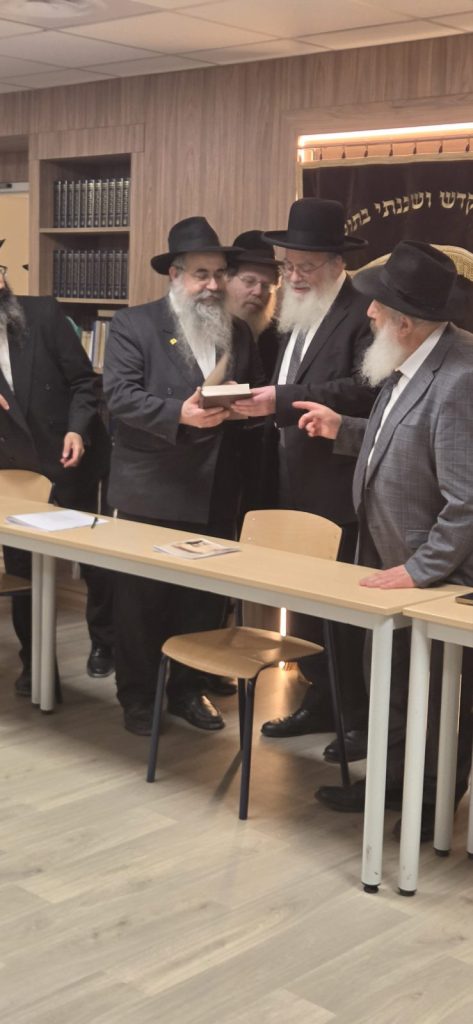
An uplifting stop was at the “Agudas HaKehilos” shul on Pavée Street, the Beis Medrash of Rabbi Mordechai Rottenberg, where Rabbi Rubinstein once served and which the Rebbe used to attend to hear drashos. There, the talmidim had a special shiur from Rabbi Rottenberg, who even tested the bachurim on the mesechta they had studied, and was impressed by their knowledge and the depth of their learning. At the end of the farher, he warmly blessed them for great success and continued growth in Torah learning and yiras shomayim.
The tmimim ended the first day with supper and a stirring Chassidic farbrengen at the Chabad House in Clichy with the shliach Rabbi Levi Ozan. R’ Ozan captivated the bachurim as he shared the great miracles that accompanied the purchase of the Chabad House and future expansion plans, and emphasized to them the main point: a yeshiva bachur must be completely immersed in learning Torah, tefilla, and avoda while within the walls of the yeshiva because that is the only way to succeed, and afterward to go out on shlichus and conquer the world.
“Sinai” and Rebbetzin Chana’s Apartment
The second day of the trip opened with a seder Chassidus with special chavrusas at the community’s shul. Immediately after Shacharis, the bachurim gathered for a deep shiur from the Rosh Yeshiva of Tomchei Tmimim Brunoy, Rabbi Yechiel Menachem Mendel Kalmanson, author of the sefarim Mei Tal. Rabbi Kalmanson opened with an explanation of the Rambam about Bar Kochba and the well-known dispute between the Rambam and the Raavad regarding Ben Koziva, and proved that there are two categories of Moshiach, the category of king and the category of navi, and that Moshiach can come in two different ways. Regarding us, Chabad Chassidim, he emphasized, the belief that the Rebbe is Moshiach does not come from the category of king but from the category of prophecy, and from what the Rebbe himself told us.
The next day, the bachurim heard a shiur from Rabbi Avrohom Boruch Pevsner, Rav of Anash in Paris, on sugyos in Meseches Bava Kama. Afterward, they visited the home of Rebbetzin Pevzner, mother of the shliach Rabbi Yosef Yitzchok Pevzner, at one of whose campuses the bachurim stayed throughout the trip. The elderly Rebbetzin told them how her husband, at a certain point, wanted to give up his work—he then had a cheder of five children. The Rebbe did not allow him to give up. From that cheder which had five children, there are today more than 3,500 children in seven campuses, Yiddishe kinderlach, learning Yiddishkeit, “and without the Rebbe they would have been lost, rachmana litzlan.”
Rebbetzin Pevzner told the bachurim how her father used to describe the Rebbe Rashab’s face when he would say a maamar Chassidus, “like flames of fire.” As a child she didn’t understand how a face could be “made of fire” until she attended a farbrengen with the Rebbe at 770. “Un ich hob gezen dem Rebbe’s ponim, ich hob gezen feier”—”And I saw the Rebbe’s face, I saw fire!”
The spiritual peak of the day was a visit to the apartment of Rebbetzin Chana z’l, at 10 Rue Diehl in the building of Reb Zalman Schneerson. On the third floor were a shul and two residential apartments in one of which Rebbetzin Chana lived. The Rebbe used to visit his mother in this home twice a day, morning and evening.
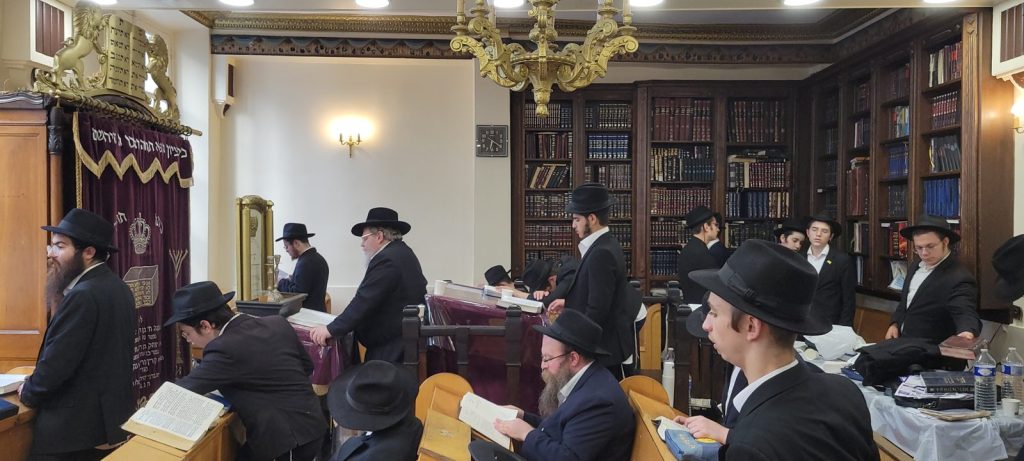
Here, in the hall on the middle floor, was where the moving reunion between the Rebbe and his mother after twenty-two years of separation took place. Rebbetzin Chana sat to his right and the Rebbe cried a great deal. The Rebbe farbrenged on that occasion, among other things, about how for years he had been unable to fulfill the mitzva of honoring his father and mother, following the example of Yosef. In this hall the Rebbe also ate Shabbos meals with his mother, as well as the Yom Tov meals that year, with the Rebbe sitting at the head of the table and his mother to his right. Here, after Rebbetzin Chana herself revealed to the Chassidim that the 11th of Nissan was the Rebbe’s birthday, the first farbrengen celebrating that day was held.
The tmimim stood there in awe, and then sat down themselves for a Chassidishe farbrengen in that very hall; a “l’chaim” in the very place where the Rebbe himself farbrenged with his mother.
For R’ Butman, this is a home with family memories. “I grew up on the stories of this house. My father was a small child during the Rebbe’s visit, and all his life he spoke about it, and he returned to this house. It was part of his life.”
In the book his father wrote about the Rebbe in Paris, there are testimonies about the historic moment when the Rebbe and his mother were reunited. “The crying that took place when mother and son met cannot be described in words. This isn’t history. You feel here the soul, the inner essence, everything,” says Rabbi Butman.
When the bachurim stood in this house, they asked the Jewish resident living there today why he loves the Rebbe so much. Without thinking twice, he answered: “Because the Rebbe loves us.” A Jew who isn’t a Lubavitcher, who never saw the Rebbe, entered this house and heard and learned about the Rebbe and answered with utter simplicity: “This is the Rebbe’s house, and I love the Rebbe because the Rebbe loves me even more.”
Afterward, they also got to visit the Chabad House of Suresnes, directed by the shliach Rabbi and Mrs. Menachem Mendel and Nechama Dina Ouaki, where they heard wonderful stories from the shliach’s son about the miracles of its founding and the special construction like the world Chabad headquarters, 770.
But the packed day was not yet over: when the bachurim returned to the “Sinai” mosdos, a special surprise awaited them—a stirring Chassidic farbrengen for 15 Av with the shliach Rabbi Reuven Matusof. Rabbi Matusof farbrenged with them warmly and with great emotion, spoke to them about hiskashrus to the Rebbe and instilled in the bachurim tremendous Chassidishe chayus, in a farbrengen that continued into the night and closed only at daybreak.
Vichy and Marseille: The Rebbe’s Baguettes That Brought Children Back to Life
“When we continued on to Vichy,” recounts R’ Butman, “we remembered the stories, how right under the noses of the Nazis the Rebbe ran an entire system of strengthening the Jewish people and saving Jews. When you walk these streets and see it with your own eyes, you don’t see stones and shul doors. You see the Rebbe’s mesirus nefesh. You feel it.”
From Vichy the tmimim set out on a long night journey to Marseille (where the shliach, Rabbi Emanuel Taubenblatt welcomed them and gave them a short tour of the city) and along the way, R’ Butman told them a story his father had heard directly from the person it happened to, a Jew named Dovid Neuman from Williamsburg:
He and his mother fled from Belgium, and when they reached Marseille it was truly a matter of life and death and there wasn’t enough food. The orphanage run by Reb Zalman Schneerson was the only place where food was guaranteed every day for children. His mother cried to him and said: “Duvid’l, I have to leave you at the orphanage because there’s no choice, and after the war I’ll come get you, because there simply isn’t food.” He agreed.
Then, one day, a Jew whom no one recognized came in with a basket full of baguettes and handed them out to all the children. When asked his name, he wouldn’t say, and the children called him “Monsieur.” For many days he kept coming and distributing bread, and he would even sit on the floor to personally feed the sick children, those who didn’t even have the strength to come and get their share of bread. He brought them back, slowly, to life. Dovid Neuman told R’ Butman’s father that he remembers children who, without that Jew, without that “Monsieur,” would not have survived. One day this Jew disappeared, and no one knew where.
Years later, in 1957, Dovid Neuman arrived together with his mother at his uncle’s home in Williamsburg. The uncle told him he would give him a bit of money, since he couldn’t support two families, and that he should open a business and support his family, but on one condition: that he first go see the Rebbe of Lubavitch, because the Rebbe’s brachos come true. He made an appointment for a yechidus.
When Dovid walked in, someone who had never known the Rebbe and had never met him, the Rebbe looked at him immediately and said: “Duvid’l, du derkenst mir?” (“Duvid’l, do you recognize me?”) He looked into the Rebbe’s eyes, confused, not knowing what the Rebbe wanted from him—”I don’t know the Rebbe, I’ve never met him”—until it clicked: it was him. It was the “Monsieur” who used to hand out the bread.
When Dovid Neuman told this to R’ Butman, he concluded: “You don’t know who your Rebbe is. Not only does he care for the Jews who come to him asking for a bracha, he cares about the Jew, about the child sitting on the floor with no food, practically at death’s door, and he feeds him, and gives him bread in the middle of a war, when it’s a mortal danger to even go out on the street. Even in that situation, this is what weighs on the Rebbe’s heart: how do I save one more child, one more Jewish child.”
Nice: The Miracle of Purchasing the Chabad House
For nine months, from the end of Menachem Av 5700 (1940) until the beginning of summer 5701 (1941), the Rebbe and Rebbetzin stayed in Nice. The Rebbe’s apartment in Nice was right across from the train station so that it was possible to board a train and leave immediately. The Rebbe would occasionally travel back and forth to Marseille in the midst of the war, to obtain the coveted visa.
During the visit to the Chabad House of Nice, the tmimim heard from the shliach, Rabbi Yosef Yitzchok Pinson, the miracle story of the building’s purchase:
R’ Pinson met someone who still remembered that the Rebbe had been in the city, and this man told him that the Rebbe used to walk down a certain street. He thought to himself: if so, let’s buy a Chabad House on that street. He searched until he found an abandoned three-story building, a ruin. He inquired who the owner was, and was told: it’s not for sale. He said: I’m interested in renting it. He was told: it’s not for rent either. R’ Pinson wrote to the Rebbe, and the Rebbe instructed: buy the building!
R’ Pinson went back to the owner and pleaded. Finally, with no explanation, the owner agreed: “I don’t know why, I changed my mind, I am willing to sell.” But the shliach had no money for the purchase. The only way to get a mortgage was for the mayor to sign as guarantor, taking personal responsibility that the Chabad House association would pay the mortgage. R’ Pinson spoke to the regional chief rabbi, who accompanied him to the mayor who miraculously agreed, but clarified that the matter still required a vote by the city council, 67 representatives. A miracle occurred: the vote took place on Yud-Alef Nissan and all 67 representatives voted in favor, without exception. “I’ve never seen anything like this in my life,” the mayor said at the time.
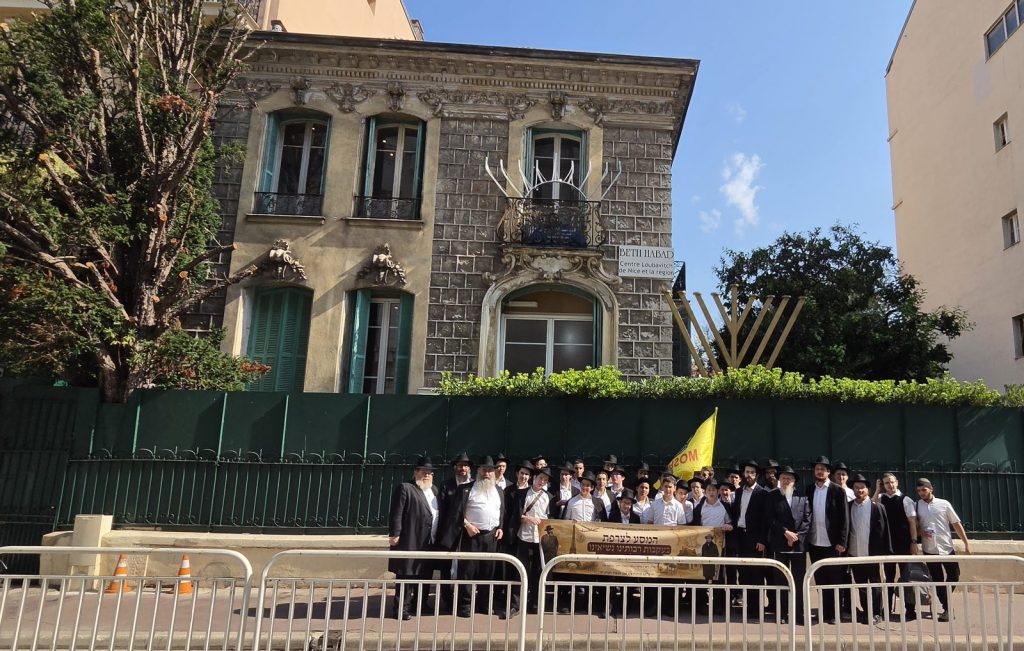
But the regional governor’s approval was still required and he refused outright. The shliach recalled the words of Chazal, “One can acquire his world in a single moment,” and tried to explain the meaning of this to the governor. Finally the governor asked for two weeks to think it over and it was exactly then that Erev Pesach fell, and the shliach traveled to the Rebbe. When he returned, he found a letter from the governor in his mailbox: come pick up the papers. On top of the signature that had earlier marked a refusal, a new red stamp had now been added: “Approved.” Thus the building was purchased, and after it the adjacent building as well and today more than 500 children learn there.
Menton and Lyon: Longing, and Joy That Breaks Through Walls
From Nice the tmimim continued to Menton, the resort town where the Rebbe Rashab and the Rebbe Rayatz once stayed. “You see Menton, and you remember the famous Hemshech Chassidus that the Rebbe Rashab wrote in Menton (‘Hemshech Ayin Beis’),” says R’ Butman. He also mentions the famous story of Reb Zalman Zlatopolsky, who sat here on a bench and sang a niggun of longing for the Rebbe Maharash for several hours. “It reminds us that we too are longing… a Chassid who longs to see his Rebbe.”
Rabbi Shalom Betito welcomed the group and added a little-known historical chapter connected to Menton. The town was also a favored summer destination for the Russian royal family—the Tsar’s family used to come there every summer—and recently another building connected to the Rebbe Rashab’s visit was discovered there. Even more interesting, according to his research, it turns out that the Rebbe Rashab himself sought to purchase land there even before World War I, and even paid a deposit but with the outbreak of the war, payments stopped and the agreement remained pending. In the very month that the Rebbe Rashab passed away and in which his house in Lubavitch burned down, the French government also decided that since the deal had not been completed, the contract was void and the land reverted to its previous owners…
The tmimim went to Lyon for Shabbos, to the Chabad House of Rabbi Shmuel Gourevitch. They spent Shabbos at the enormous Chabad campus, where about a thousand children study during the week.
Shabbos in Lyon was uplifting and special. On Shabbos afternoon, a fascinating farbrengen took place with the veteran shliach Rabbi Gourevitch, who made a special effort to come farbreng with the bachurim. He shared with them a formative yechidus he once had with the Rebbe. At the start of his shlichus he had a hard time, he didn’t like the city of Lyon, felt the people were cold, and wasn’t happy in his work. The Rebbe told him then that the French love joy and joyful people, and asked him: “Are you traveling with joy?” R’ Gourevitch answered yes, and told the boys how, from the moment he infused joy into his shlichus, he saw it break through walls and bring success to everything he did.
On Motzoei Shabbos, they were treated to a royal welcome at a local restaurant by Rabbi Nesanel Azulai, one of the community’s dignitaries. R’ Azulai took care of the tmimim throughout their stay in Lyon. During the evening, a group of local teenagers and young men who were not part of the Chabad community arrived at the venue. The bachurim began farbrenging with them, singing niggunim, dancing, and telling stories about the Rebbe. By the end of the evening, all these local young men made a moving good hachlata: to join the group organizing from Lyon and fly to the Rebbe next Shevat!
The tmimim were reminded once again of the message Mrs. Hadassah Carlebach gave them before setting out: “Look for the Rebbe everywhere and you will find him, but the main thing is look in your heart.”
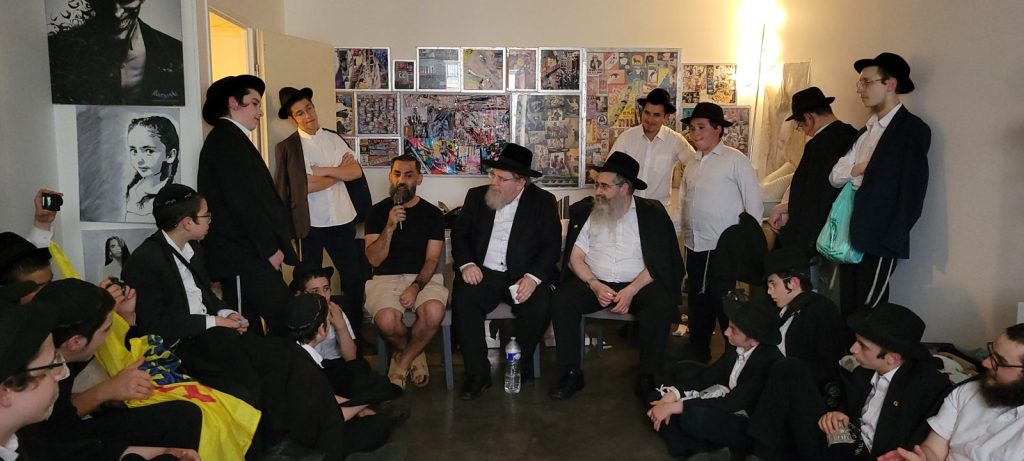
“That’s the secret of this whole trip, to bring the Rebbe into the hearts of the bachurim, of all of us. It’s not just that we believe there is a Rebbe, and not just that we understand and study the sichos. All that is true but what is it worth if you don’t have it in your heart? ‘And you shall love the Lord your G-d’—you have to love it, love the Rebbe. That’s the main thing, simply b’gashmiyus, and from there all peulos flow,” says R’ Butman.
He also tells of a reply his father received from the Rebbe after bringing to the Rebbe two orphaned children with their father, and writing the Rebbe a report about the emotion he saw in their eyes. The Rebbe replied to him in just a few words: “I saw in the children’s eyes the love for me.” The Rebbe waits to see in the eyes of each of us—not just belief in the Rebbe, but also love for the Rebbe. The Rebbe is a king, but also a father. And when you have a father who cares for you everything is different because you feel that wherever you are and whatever your situation, you’re okay.
Troyes, Rashi’s City
The tmimim devoted the last day of the trip to following in the footsteps of Rashi and the Baalei Tosafos. In Troyes, they stood by the Rashi monument on Rue Louis Mony, near the city’s shul. From there they continued to Ramerupt, to the resting place of Rabbeinu Tam, Rashi’s grandson and the central figure among the Baalei Tosafos.
On their way back to Paris, they stopped at two more orphanages that the Rebbe visited during his trip in 1947: in Boissy-Saint-Léger, where the original building no longer exists today, and only a brief stop was made; and in Areines, in a building purchased by Chabad that is currently under renovation.
In the evening, they returned to the Pletzl and to the “Zibetzn” shul, the place where the journey had begun. There they davened Maariv, and then sat down for the trip’s concluding farbrengen, with good hachlatos made, led by the shliach Rabbi Yosef Yitzchok Pevzner at the “Beis Moshiach” of Rabbi Cohen who arranged a generous meal for the bachurim.
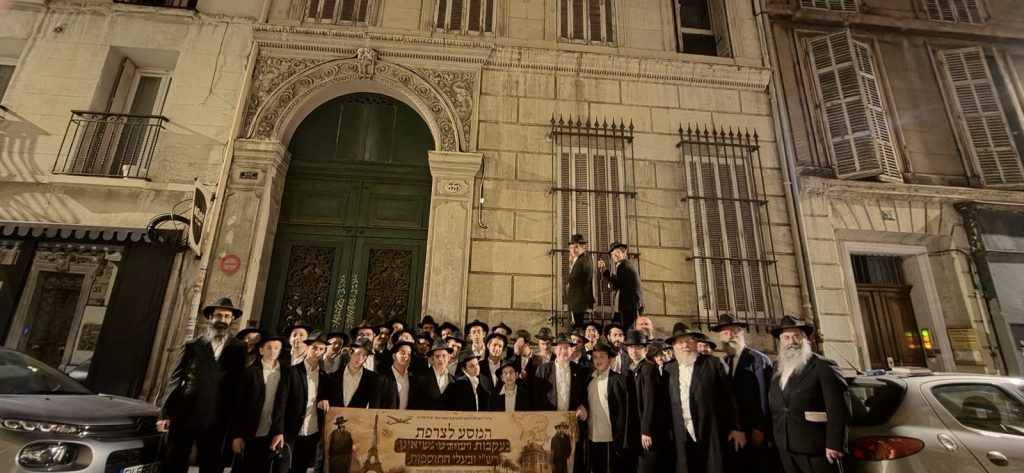
Rabbi Hendel emphasizes the extraordinary unity and excitement of the shluchim who hosted the group. “I don’t think there has ever been such a thing, a group of tmimim from 770 going on a trip like this. The shluchim really went above and beyond: every night we farbrenged in a different place, and it was moving for both the bachurim and the shluchim, to see the unity, the brotherhood, and the work they put in so that the tmimim would feel good,” he recounts. “The last morning, before the flight, Rabbi Yosef Yitzchok Pevzner got up early to personally prepare food for the road for the tmimim.”
You Will Find Him in Your Heart
For a full week the tmimim walked in the footsteps of our Rebbeim, the Nesiim — from “Zibetzn” to the top of the Eiffel Tower, from Rebbetzin Chana’s small apartment to the ruin that became a school for 500 children in Nice, from the orphanage in Marseille to the grave of Rabbeinu Tam in Ramerupt. At every stop they heard another story, and in every story it was revealed again and again: the Rebbe continues to personally care for every Jew, whether it’s a hungry child in an orphanage in Marseille, a lost Jew who fled his identity in Manhattan, or a young man from Mexico who didn’t even know he was Jewish until he climbed the Eiffel Tower.
In Rabbi Hendel’s view, this trip, a group leaving 770, passing through each of the places the Rebbe fled during the war, and singing “Ha’aderes V’ha’emunah” and “L’chatchila Ariber” in the niggunim of our Rebbeim—represents a closing of the circle. “It’s like a special forces unit arriving at the end to finish the job,” he reflects, emphasizing that it’s a kind of feeling that arose in his heart during the trip: to elevate the whole thing to its conclusion, i.e. finishing the galus and starting the Geula.
Having heard about the miracles and the glorious Chassidic history and experienced immense hiskashrus to the Rebbe, the tmimim returned to yeshiva with renewed chayus, ready to continue their work: to seek out another Jew, in another place, and bring the Rebbe into his heart, and together prepare the entire world to greet Moshiach Tzidkeinu.
Beis Moshiach #1521 • כ״ב אלול תשפ״ו • pp. 22-33
© 2026 Beis Moshiach Magazine. All rights reserved.
This article originally appeared in Beis Moshiach #1521. You are welcome to share it with friends and family by email or in print, provided that you do not change, add to or omit any part of it, you credit the author and Beis Moshiach, and you include a link to archive.bmoshiach.org (written out in full in printed copies).
To republish this article in a newspaper, magazine, book or website, please request permission in advance at [email protected].