Tomchei Tmimim’s First Artist
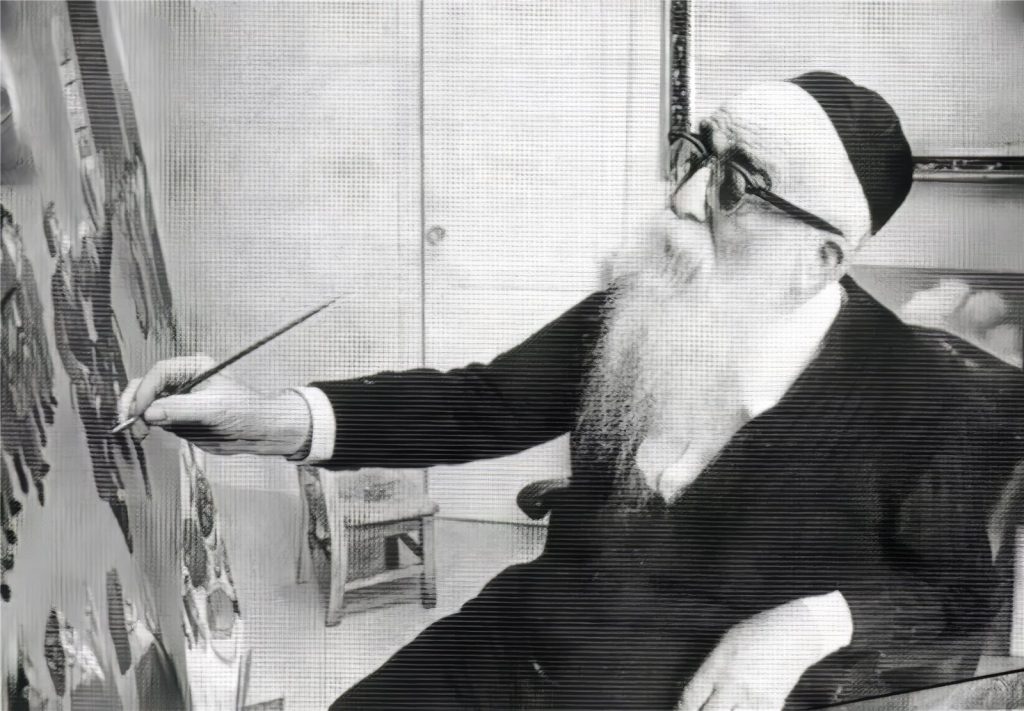
Rabbi Chenoch Hendel Lieberman was born on the 14th of Nissan, 1901, in the city of Polotsk, in what was then known as Belarus, Russia.
At the age of two, the Lieberman family was forced to move from city to city due to persecutions and pogroms. At the age of seven, he became orphaned, losing his father, from whom he inherited many artistic skills. His father was a painter and violinist, and these talents were passed on to his son, Chenoch Hendel.
From a young age, he exhibited a compulsive need to paint. Every surface seemed to him a canvas. Later, he testified, “I painted everything. I felt an inner need to paint.” The walls of his house were filled with murals, and even his siddur and the young boy’s sefarim were not spared from his pencil…
An art teacher who saw his paintings predicted a successful future for him, saying that he would become a pride of the Jewish people in the field of painting.
Hendel’s mother, knowing the obsessive nature of artists, feared that he might be swept away by a rebellious lifestyle. At the age of twelve, she sent him to study in Lubavitch, where he learned under the guidance of the renowned mashpia, Rabbi Shmuel Gronem Esterman, and at his mother’s request, he also stayed in Reb Gronem’s home.
However, at this age, his artistic yearnings began to take flight. The external world called to him, and he longed to paint everything his eyes saw. As a Chabad Chassid, he suppressed his desires and talents, dedicating himself to Torah study and avodas Hashem until the age of eighteen.
The conflict between his studies and his artistic talents became intense. His skills consumed him entirely, and Hendel could not suppress them. The dilemma was impossible to resolve: to remain a Chassidic Jew with all that it entailed, or to deny his heritage and join the external world. The idea that his Chassidic inclinations could curb or temper his artistic impulses seemed impossible to him. Several times, he tried to escape from Lubavitch, only to be returned there by his mother.
These were turbulent times in Russia – both the revolution against the Czar and World War I. Hendel, along with his family, was forced to take to the road and head toward Moscow.
In the year 1920, he found himself studying art in Moscow while simultaneously working in the textile business with his family. Even during his university studies, he remained closely connected to Lubavitch. He participated regularly in “Tiferes Bachurim” (a Torah learning program for students) in Moscow.
In 1925, he married Breina Friedman, and the couple had two daughters, Bluma and Leah.
R’ Hendel himself underwent several emotional upheavals. The Rebbe Rayatz, who was then in Leningrad, took a personal interest in his spiritual condition. When a Chassid arrived from Moscow to Leningrad, the Rebbe inquired about Hendel’s activities and situation.
When the Rebbe visited Moscow, R’ Hendel came to see him dressed in his university uniform. The Rebbe asked him, “How long will you straddle two worlds? It’s time for you to return to your source.”
R’ Hendel worked hard to support his family, working with his uncle in the oil business, but his heart was not in it. He ‘hungered’ for painting. Only when he sat before a canvas did he find emotional release and feel spiritual satisfaction. He would say apologetically, ‘What can I do? What am I to blame if Hashem gave me the talent to paint?”
In 1927, a pivotal moment in his life came. He was bedridden for several months due to a stomach ulcer, and during this time, the famous sculptor Innocent Zhukov visited him. Zhukov, impressed with Hendel’s paintings, wanted to take one to exhibit in a national painting competition. He chose a small painting depicting a group of ice skaters.
R’ Hendel’s painting won first prize in the competition (out of 500 works of art displayed), which earned him a scholarship for six years of study at the prestigious Moscow Academy of Fine Arts. This recognition confirmed his status as a serious, professional artist.
From then on, he threw himself into his studies with renewed enthusiasm, completing the required courses in half the time.
In the 1930s, R’ Hendel worked as a state artist. His duties included painting portraits of outstanding workers and designing posters celebrating the achievements of the Communist regime. He gained considerable recognition, and his works were displayed in museums, including the prestigious Tretyakov Gallery.
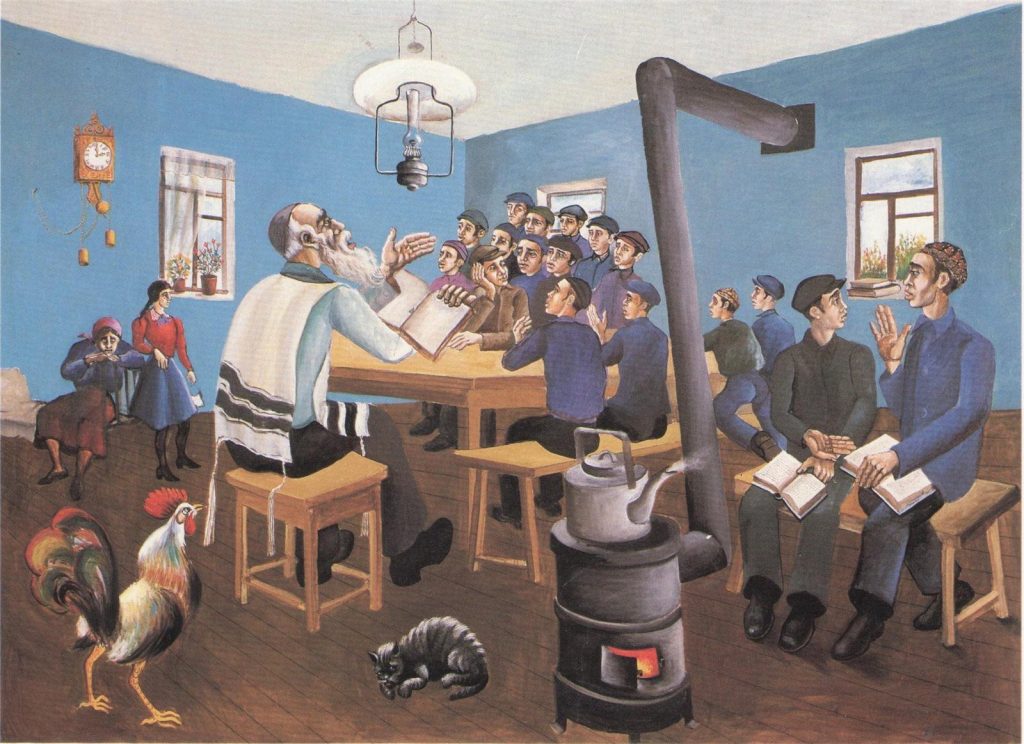
Alongside his work as a state artist, R’ Hendel spent his private time painting independently. Through these paintings, he expressed his longing for his hometown of Pleshnitz and for Lubavitch. On one occasion, he said to a friend, “You think I am here? No! I am in Lubavitch.”
A Life Shattered
During the difficult years of the Holocaust, R’ Hendel was drafted into the Red Army. His wife and two daughters were murdered by the vile murderers, may their names be erased. Only after the war did he learn the full extent of the tragedy. His dreams of a happy, thriving family life were shattered by wild beasts.
This horrific event left deep scars on R’ Hendel’s soul, and he was deeply shaken. For a long period, he could not regain his composure.
After the war, he lived with his fellow Chassidim. During this period, he gave up his family name “Futerfas” and adopted the name “Lieberman,” which sounded more Polish. This allowed him to leave the Soviet Union as a “Polish refugee returning to his homeland.”
After many twists and turns, he arrived in Paris, where he became an integral part of the Lubavitch community which was beginning to establish itself there.
In Paris, R’ Hendel painted Chassidim from other Chassidic courts that he met for the first time, and also visited art galleries.
When the Rebbe Rayatz, who had already settled in New York, received a letter from R’ Chenoch Hendel describing how his life had been shattered and asking for the Rebbe’s advice on how to reconcile his art with his Chassidus, the Rebbe responded with profound wisdom. The Rebbe explained that for a true Chassid, all aspects of life must unite in perfect harmony. This includes using art as a means of serving and apprehending G-d. The Rebbe’s response infused new life into a broken R’ Hendel, and he returned to his painting with renewed passion.
After the passing of the Rebbe Rayatz, R’ Hendel expressed his grief through one of his most powerful pencil sketches. The drawing depicted a desolate desert with several bare trees. In the foreground, Chassidim in black hats are sitting on the ground, hands on their heads in mourning. In the sky above, a blurred image of the Rebbe Rayatz appeared, with the faces of previous Chabad Rebbeim behind him, welcoming the new soul that had ascended to heaven.
The Primary Role of the Artist
The events and personal tragedies that R’ Hendel had experienced continued to weigh heavily on him. He repeatedly asked himself whether he would continue painting, if this was the solution for him, and again directed his questions to the Rebbe.
The Rebbe, with his original approach, not only did not discourage him from his artistic labors – but encouraged him not to abandon his talents and to utilize them maximally for divine service.
He sent a letter to the Rebbe in which he wrote that he felt very broken, and sometimes fell into despair and could not find his place.
In a long letter the Rebbe sent him (Igros Vol 4, Letter 996), he addresses the primary role of the artist, guiding him to look correctly at life’s events:
…I was very happy to read that you are using your artistic talent, that you are preparing for an exhibition and that you have already received good reviews in the press. I am certain that you will continue to use the talent with which G-d has blessed you to strengthen your Judaism and your fear of Heaven.
…I must suffice with a general observation. My observation is based on the saying of the Baal Shem Tov – which my father-in-law the Rebbe would often quote – that a person can derive an important lesson in divine service from everything their eyes see and everything their ears hear.
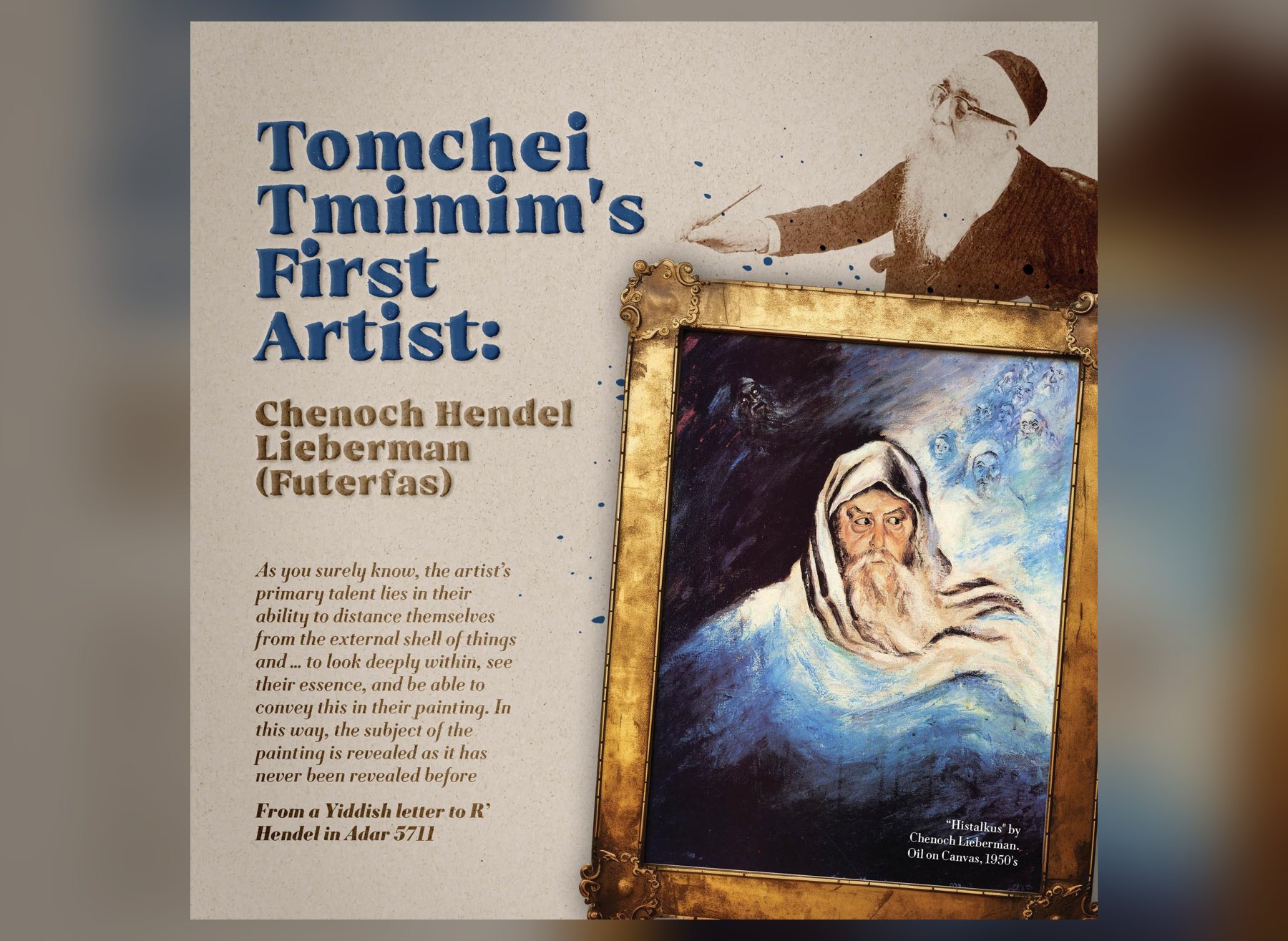
As you surely know, the artist’s primary talent lies in their ability to distance themselves from the external shell of things and, while ignoring their external form, to look deeply within, see their essence, and be able to convey this in their painting. In this way, the subject of the painting is revealed as it has never been revealed before, since its internal content was hidden by secondary matters. The artist exposes the essence of the thing they are painting and causes the person looking at the painting to see it in a different, more true light, and to realize that their initial perception was lacking.
This is one of the fundamentals in a person’s service to their Creator.
As we know from the Torah – and especially from Chassidic teaching – the entire creation originates from G-d’s word, and G-d’s word is what brings it into existence and continues to sustain it at every moment. However, the divine power of contraction hides the divine vitality, and we see only its external form (that is, the physical reality).
Our mission in life – based on the simple belief that “…the L-rd is G-d, there is none beside Him” – is to approach everything in life from this perspective. Each of us should strive to reveal, as much as possible, the heavenly essence in every thing, and minimize the concealment caused by the external components of creation… Therefore, we must be very careful that secondary and external matters do not obscure the essence of life and its absolute purpose.
A person may experience difficulties, tests, and challenges in distinguishing good from evil. But these are merely means through which one should reach life’s goal – that their soul will be elevated through good deeds in this world… Thus, a person must never allow their difficulties, or even the fact that they might sometimes stumble and fall, to overcome the joy they should feel as a child of G-d… (Translated and adapted from a letter dated 24 Adar II, 5711)
The Rebbe’s letter breathed new life into R’ Hendel. He felt a new spirit emanating from Lubavitch in New York… As a result, he decided to move from London and live near the Rebbe. And so he did, moving to Crown Heights.
Now, living in physical proximity to the Rebbe, he flourished more than ever. Here he was, a renowned and esteemed artist, with a place of honor behind the Rebbe during tefillos and farbrengens. Soon, R’ Hendel became a familiar, central, and important figure in the Chabad community in Crown Heights.
Rabbi Shmuel Lew heard from R’ Hendel that during one of his visits to Rebbetzin Chana, he said it was difficult for him to paint the Rebbe with a simple hat and without a shtreimel… The Rebbetzin responded wittily: “The elders are looking for a ‘shtreimel,’ while the young ones are looking for a ‘Rebbe’!”
“We Have an Artist of Our Own…”
In the following years, the Rebbe continued the unique approach he set forth throughout the years – Chassidus is not against art, and art does not contradict a life of Torah and mitzvos. One must find a way to harness talents to reveal Hashem’s presence in the world, including in the world of art. As was his custom, the Rebbe emphasized that times had changed, and while in the past there was no room for mixing in your self-centered feelings in avodas Hashem, and one needed to practice ‘iskafya’ – now, before the coming of the Moshiach, the situation was different…
In one of his yechidus audiences, the Rebbe said to him explicitly: “In the past, the matter of ‘paintings’ was rejected among Chassidim. We did not even have pictures of the elder Chassidim. However, now, in the days of Moshiach, when a Jew can bring another Jew closer through a painting – he must do so. Why search for foreign artists when we have an artist of our own who was within the ‘dalet amos’ of Tomchei Tmimim?…”
Another reference by the Rebbe to R’ Hendel’s talent came in a letter he sent on the 6th of Nissan, 5735, where he added in his own handwriting at the bottom of the letter: “With holiday blessings for health and utilizing your sublime talent in painting, ‘How great are Your works, O L-rd’ with joy.”
During his years in New York, R’ Hendel had an intense love for the Rebbe, and during his annual yechidus on his birthday, he would always plead with the Rebbe to take better care of his health and reduce fasting. His heart ached when he saw the Rebbe disregarding his physical well-being. On one occasion, the Rebbe responded: “Nu, I’ll try.”
In early Kislev 5725, R’ Hendel entered for yechidus, and wanting to cheer up the Rebbe, whom he felt was not feeling well, he told the Rebbe that he regularly invites a minyan of Tmimim to his home for Shabbos meals. The Rebbe responded that “presumably they are talmidim from Eretz HaKodesh.” R’ Hendel affirmed this and added that during the meal he tells them stories about Lubavitch.
The Rebbe advised him to paint Lubavitch with all its details, everything in its place; so that when they tell stories about Lubavitch, they will know where the house stands and where the courtyard is, etc. The Rebbe added that he should not ask other people for details about the town, as they would only confuse him… (According to the journal of Rabbi M.M. Wolf).
Paint “U’faratzta”
When R’ Hendel once went in for a yechidus, the Rebbe asked him to paint a picture depicting “U’faratzta” (breaking through)!
R’ Hendel asked the Rebbe to explain this concept, and the Rebbe explained it with a metaphor:
There is a large river with many waters, and in the middle of the river, there is a dam that directs the waters to flow in their way and also to prevent flooding. This – the Rebbe concluded – is the concept of “U’faratzta” from the language of “breaking through a fence” – so that the waters can reach the fields and irrigate them, and thus grow beautiful and good fruits.
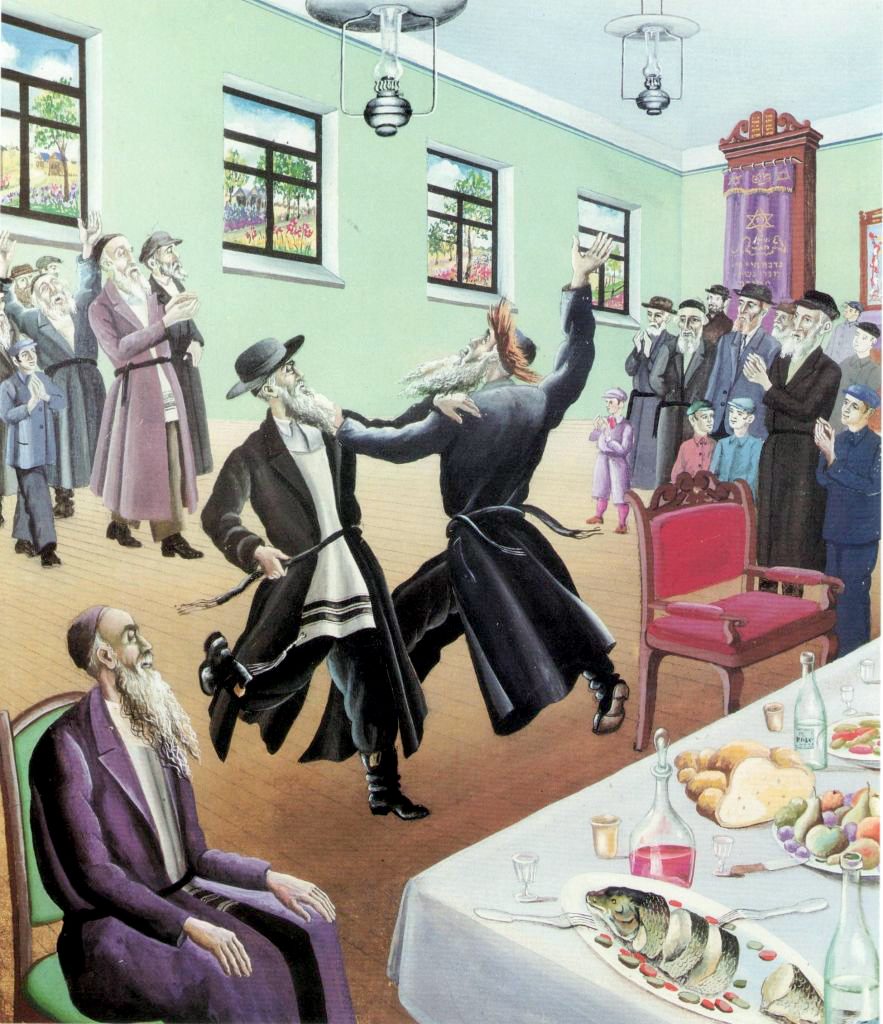
In 5732 (1972), the Rebbe suggested that he hold an exhibition in Eretz Yisrael featuring a selection of his paintings.
R’ Hendel, as a Chassid, immediately complied. He organized himself and went to Israel for several months, rented an apartment in Nachalat Har Chabad, which had been recently established, and on one of the days, the exhibition was displayed at the ‘American Zionist’ building in Tel Aviv, where a large Chabad evening was also held, with masses of Jews from all circles coming to see and be impressed by his paintings.
R’ Hendel, of course, utilized his stay to draw his Chassidic sketches from the sights he saw in Eretz Yisrael.
Thus, painting with renewed inspiration and impressive intensity, R’ Hendel exhibited his works in art galleries and Chassidic events, from New York to Australia.
The impact of his displays on the audience was great; people remembered their hometown, the spiritual life, and the pleasant atmosphere of the “shtetl.” After one of his exhibitions, the city rabbi met him and said that the ten days during which his works were exhibited had a more powerful effect on his community than his daily work among the community over a decade.
Fame and Renown as an Awe-Inspiring Jewish Artist
R’ Hendel’s life as a Chassid was beautifully interwoven with his life as an artist.
Once, he answered his nephew’s question: “You want to know what an artist is? I’ll tell you. As you know, I sit behind the Rebbe during farbrengens. When the Rebbe began to deliver the second sicha – I completely forgot what he spoke about in the first. But what I remember clearly is that I saw a play of light and shadow, an image reflected under the Rebbe’s armchair.”
Lieberman would sit and paint in his studio in Brooklyn. For about a quarter of a century, he lived in Crown Heights. The children called him ‘Uncle Hendel,’ and the art students who studied under him – whom he deeply influenced – called him ‘Maestro Hendel.’
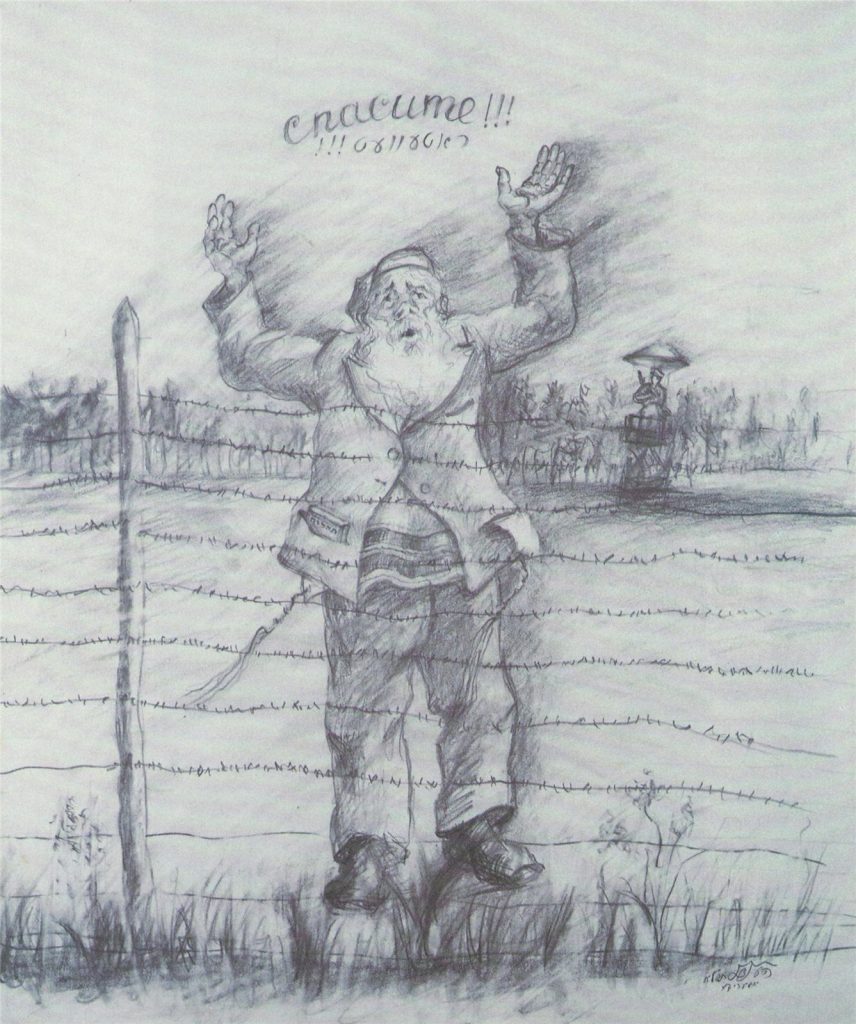
This period was the most productive in his artistic life. It yielded hundreds of paintings and sketches on Jewish themes. Indeed, during this period, he gained recognition as a Jewish painter who expressed himself in an inimitable colorful style, continuously inspiring the admirers of his works and leaving a deep impression on those who viewed them.
The famous painter Michoel Muchnik, who was an art student at the Rhode Island School of Design in the 1970s, speaks of Lieberman as the main attraction of Chassidic Crown Heights: “More than anything else, it was Lieberman’s paintings that made me feel the spirit and atmosphere of Lubavitch, the spirit of Chassidus. Looking at his paintings, I saw the spirit of Yiddishkeit. Hendel enriched the world of Jewish art.”
R’ Hendel fused his Chassidishkeit and art into an intensive, ongoing life project. Despite everything he went through, R’ Hendel’s spirit was not broken, and he continued to paint even on his deathbed. From there, he would occasionally send very personal, touching sketches as a gift to the Rebbe.
On the 13th of Adar II, 5736 (1976), he returned his soul to its Creator after a difficult illness. He left no descendants, but his mark is still clearly visible even nowadays. His authentic paintings decorate ‘Nichoach’ tapes and adorn the walls of many Chassidic homes, spreading a pure, original Chassidic atmosphere.
(Based on the book “Reb Mendel”)
Beis Moshiach #1455 • pp. 6-13
© 2026 Beis Moshiach Magazine. All rights reserved.
This article originally appeared in Beis Moshiach #1455. You are welcome to share it with friends and family by email or in print, provided that you do not change, add to or omit any part of it, you credit the author and Beis Moshiach, and you include a link to archive.bmoshiach.org (written out in full in printed copies).
To republish this article in a newspaper, magazine, book or website, please request permission in advance at [email protected].