When The Arizal Revealed Moshiach
From the TzaddikStory.org collection
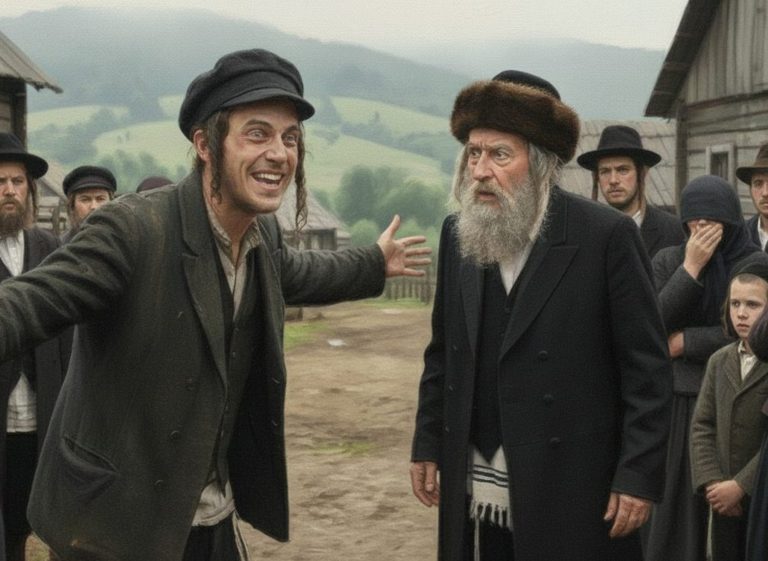
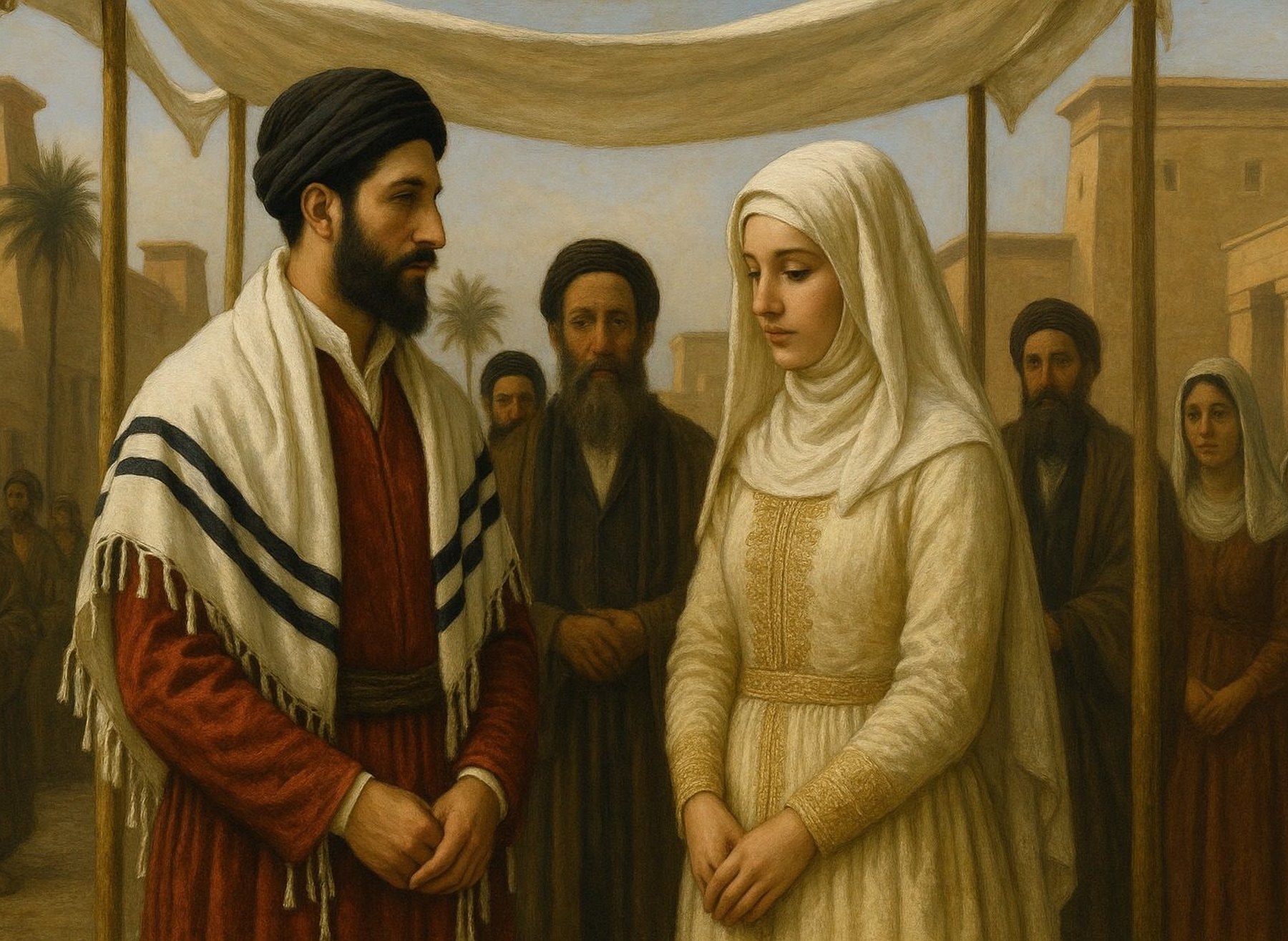
The guests had gathered in the open field, where the chuppa stood waiting for the new chosson and kalla.
Children ran to find a good view between the grown-ups. Some stood on stones or hay stacks, trying to peek over the heads of taller cousins.
Inside the house, the kalla sat quietly, her face already covered. She whispered Tehillim with her mother beside her, her hands shaking. She wore a simple white dress, sewn by the village tailor in Tisovich – her hometown.
Outside, the rain was falling.
In a quiet side room, Reb Noach – the chosson – stood with his father, Rabbi Shlomo Chaim, the Rebbe of Koidanov. It was just the two of them, moments before the grand chuppa.
The father helped his son into his long coat, adjusting the collar and brushing off dust.
“Noach,” the father said.
“Yes, Tatte?”
“This is a big day.”
“Yes, Tatte. So many people came. Rabbanim… cousins… friends from yeshiva.”
“I promise I’ll focus on my tefillos,” Noach added quickly.
The Rebbe smiled softly. “Good, Noach. Just one more thing.”
He paused.
“When you visit your kalla’s family in Tisovich… I want you to visit the beis ha’chayim – the cemetery in that town.”
“The cemetery…?” Noach looked puzzled. “Tatte? What’s there?”
The father placed a hand on his son’s shoulder.
“In Tisovich, you’ll find the kever of a man… Moshiach ben Dovid.”
Noach’s eyes widened.
“Moshiach? The real Moshiach? His grave?! I… I don’t understand—how could that be?”
He looked white. He had been fasting all day.
“Sit down,” his father said gently. “Before you walk to your chuppa, I want to tell you something… a story that’s been in our family for generations.”
The chosson lowered himself onto the bench, his hands folded tightly. His father sat beside him.
“This story was passed down from my grandfather’s great-grandfather… to me… and now, today, I’m passing it on to you.
“It’s something I’ve waited many years to tell you. But today, your wedding day… I think the time has come.”
Noach rubbed his forehead, then looked up.
“I’m listening, Tatte.”
And the Rebbe of Koidanov began.
* * *
Where Do the Yidden Come From?
From our homeland, of course – Eretz Yisrael.
Ever since the Shevatim entered the land with Yehoshua, that’s where we lived, from generation to generation, until the Beis HaMikdash was destroyed.
And then… Galus.
We were scattered, sent to all corners of the earth. The Yidden lived in many lands: in Germany and France, then in Spain and Italy, Iraq and Persia, Turkey and Egypt. Almost every country in the world has seen the footsteps of wandering Jews.
Sometimes, we were allowed to live in peace. Sometimes, we even had joy.
But most of the time, we wanted just one thing: to go home. Because no matter where we were – no matter how nice the country, or how beautiful the shul – we knew we didn’t belong. Eretz Yisrael was always our true home.
And almost everywhere we went… we were eventually kicked out.
Spain was one of those places. A land once filled with grand shuls and mighty princes of Torah. But the day came when the Jews of Spain had to leave too.
So where would they go?
Some went east. Others west.
One boy, Rabbi Yitzchok Luria – the Ari HaKadosh – was born in Eretz Yisrael, in the east. After his father passed away, he moved to Egypt with his uncle. Later, he returned home and climbed the hills of Tzfas to live in holiness and bring light to the world.
And far to the north and west, in the lands of Poland and Lithuania, another brilliant boy, Shlomo Luria, was already growing into one of the Gadol HaDor of his time. He would become the Maharshal, one of the most important Torah leader in all of Europe of his time.
Here’s the amazing thing: both men came from the same family.
The Ari’s father, Rav Shlomo Luria, was a descendant of Rashi and a long line of Ashkenazi Rabbanim.
And so was the Maharshal!
In fact, the Ari and the Maharshal both carried the name Luria. Some say they were distant cousins. Others say the Maharshal may have even been a great-uncle to the Ari HaKadosh.
But while they shared the same family tree, their paths were very different.
The Maharshal focused on Gemara and halacha. He wrote deep, brilliant sefarim – like Yam Shel Shlomo and Chochmas Shlomo – that helped guide how Jews lived their daily lives.
The Ari, on the other hand, unlocked the hidden world of Kabbala. To this day, his teachings shape how we think about the neshama, Hashem, Moshiach, and the secret sparks hidden in every mitzva.
So now that you’ve met these two holy Tzaddikim, you’re ready for the story.
A story of two students, one mission, and the mystery of the man who could have been Moshiach.
* * *
The Maharshal, Rabbi Shlomo Luria, welcomed a visitor from Eretz Yisrael. His eyes were shining as he discussed the rumors of miracles swirling around the secret group, with the Holy Ari at its center. The Maharshal hadn’t seen any open miracles in his town, though his townspeople could definitely use a few.
He calmly placed his hand on his beard, thinking very deeply about the reports he’d been hearing, but his mind was moving fast.
“Miracles…?” He thought. “I don’t understand these miracles…”
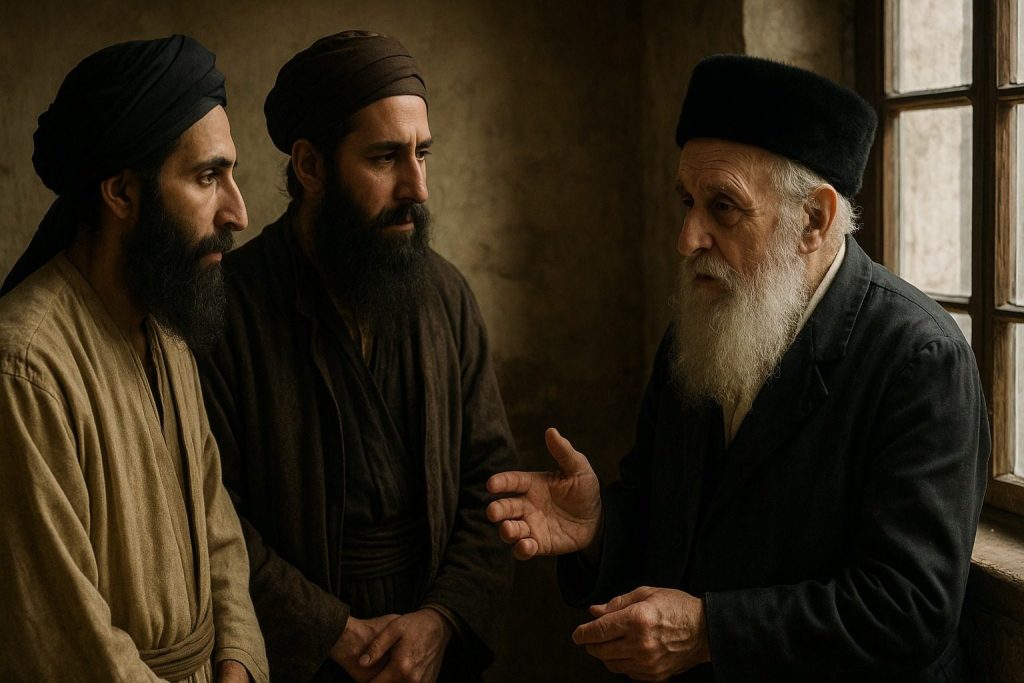
No Rabbi is making miracles… where would they get the power for such a thing…? maybe in the time of the Gemara, but not now…
That night, the Maharshal was in his study, past midnight. Piles of sefarim covered his whole desk.
“…Open Miracles…?”
The Maharshal looked in many sefarim, yet he couldn’t find any proof that a rabbi could bring down a miracle.
Special powers? From Rabbis? I’ve never heard of such a thing – especially in our times…
Who knows if they really come from kedusha? In galus, we didn’t have open miracles, like we had in the Beis HaMikdash…
By the morning, based on what he’d read and heard, he was sure there was something wrong with these people, and by the end of the week, the Maharshal felt he must be the rabbi to stand up and put a stop to this behavior.
This wasn’t a game – and a cherem would tell other Yidden they should avoid people who seem to use evil, magical powers, even if they look holy and claim it’s part of Torah. There was no way this stuff was holy!
It certainly wasn’t good, and he had to teach them a lesson in what Torah really has to say about these kinds of things.
* * *
Back in Eretz Yisrael, we see sefarim piling high in the Beis Medrash of the Arizal.
His holy face was shining as he explained to his students about the very high and holy ways Hashem hides His light, so the world could be created.
Something was bothering him –
…What was this about a cherem?
He’d heard through the heavens, through his Ruach HaKodesh…
Who was this great leader of the Yidden of the West, telling everyone he was doing something wrong chas v’shalom.
This person thought he was doing magic? Chas v’shalom.
This was a huge misunderstanding. The Maharshal probably just didn’t realize what the students of the Arizal meant. They were only servants of Hashem, of course! Chas v’shalom to think they did anything else! Or that this power came from any place but kedusha.
But how would he explain this to a Rav that was 540 hours away on foot, including crossing the Black Sea? A little faster by carriage… but a journey you couldn’t actually take, because it wasn’t possible to travel by carriage… How would this message get to the Maharshal?
He had to stop the cherem from getting out! A cherem is a document or a letter signed by the rabbi which basically says that this person or group is forbidden to be spoken to. It has deep spiritual effects…
Even though it was just a statement that people should stay away from this rabbi, this could affect him spiritually in a very bad way. And all over a big misunderstanding!
The Holy Ari closed his eyes and put his hands on the heads of his two closest talmidim, Rabbi Yisrael Sarug and Rabbi Chaim Vital. “Go, my sons, and share some of what we learn and how we serve Hashem to the Great Maharshal of Lublin in Poland.
“Tell him all about us and what we do here. Tell him it’s Kabbala – the secrets of Hashem’s Torah that are bringing about wonders – nothing else. No magic, chas v’shalom is being done here.”
“Yes, master. We’ll gather some food and tell our wives, right away. As soon as we can, we’ll head out..”
Rabbi Chaim Vital and Rav Yisrael Sarug met in the courtyard of the stone shul one hour later, with sandals for the journey and a sack full of food. After all, they were going to get hungry along the way.
The holy Ari paused his learning one more time.
“My students, you’re on a very important mission. Our circle and our families are at risk for being kicked out from all the other Yidden if you do not go now.
“As a reward, let me tell you yet another secret of the Torah that I learned with Ruach HaKodesh.”
“Wow! Thank you Rebbe,” said Rabbi Chaim Vital.
“What is it?” asked Rav Yisrael Sarug.
“I will show you Moshiach.”
This was a very special gift indeed. Such a holy, hidden person… Not always do people get to know who their generation’s Moshiach is. Surely meeting that person would teach them many things.
“Who is he? Is it you?”
“As you know,” The Arizal started, “Hashem places a Moshiach – someone whom Hashem chooses – in every generation. Many times, he is hidden. He’s waiting to see if we, the Yidden, are ready for Moshiach.”
There is a Moshiach from the children of Dovid HaMelech and a Moshiach from Yosef’s family. If the Yidden living at that time aren’t ready, then this person passes away without bringing the Yidden their Geula.
“Who is the Moshiach of our time?” said the holy Ari. “He’s a poor tailor in the town of Tisovich, right near Lublin. Go and seek him out while you’re on your mission.
“His name is Reb Elyokim, the son of Shmuel. If he is home, that’s good. If he isn’t home, that’s not a good sign. That means he’ll pass away soon. When he does, you make sure that you’re the ones to care for his burial.
“Go, my children,” the Arizal said, and they were lifted onto a cloud, and with a swish, they reappeared in the Maharshal’s shul, just a few minutes later.
Pop! There they were! The shul was in the middle of Mincha.
It was silent. Most people had finished Shemoneh Esrei. They were waiting for their great Rav to reach the end, so the chazzan could repeat for everyone to answer Amen. This was quite unusual, as the Rav usually finished at the same time as everyone else.
“What?”
One person, then more, turned around, and their eyes popped open at the sight of these two strange men.
Were these people from another planet? How did they get here?!
Why were they wearing sandals in the winter…? And why did they have colored robes? Why were their faces so browned by the sun? And what was that smell from their bags?! Who are they? They weren’t here a minute ago!
Still, it was silent. People stood in their places, not moving.
The children couldn’t help but laugh a little, pointing to their dusty toes. They certainly didn’t look like they were from around here.
“Slicha,” one visitor said to the gabbai, “You know, according to halacha, you don’t have to wait for someone to finish Shemone Esrei if they’re thinking about work things, like saddles for horses.”
“What?!” These strange… people… said what about our holy Rav?!
How dare they come to our Rav’s shul, dressed all crazy, and insult him, right there! Saddles? They think that’s what their rabbi was thinking about? During their prayers?!
“This is extremely rude! Our Rav is an elevated holy man. He’s concentrating deeply on the words of davening!”
As some shul members were about to force these two lost souls out the door, the Rav finished, and Chazaras Hashatz began.
Everyone was silent again. They weren’t allowed to speak, and carefully answered Amen and Kedusha, stuck to their spot.
The yelling began after everything was over; some people shook their fists. But the Rav calmed them. He shared something that quieted the crowd.
To be continued
Beis Moshiach #1460 • pp. 55-59
© 2026 Beis Moshiach Magazine. All rights reserved.
This article originally appeared in Beis Moshiach #1460. You are welcome to share it with friends and family by email or in print, provided that you do not change, add to or omit any part of it, you credit the author and Beis Moshiach, and you include a link to archive.bmoshiach.org (written out in full in printed copies).
To republish this article in a newspaper, magazine, book or website, please request permission in advance at [email protected].